
Learn how car dealerships can connect systems, reduce manual admin and automate booking to workshop with one tailored operating platform the business owns.
What software do most car dealerships use: What Breaks Daily
What software do most car dealerships use should connect bookings, people, communications and reporting in one reliable operating flow.
Car dealerships juggle a variety of complex workflows every day: lead management, vehicle preparation, finance hand-offs, workshop bookings, parts tracking, and vehicle handover inspections. These tasks typically rely on multiple software tools—often unconnected legacy systems or isolated Cloud apps with overlapping functions. This fragmentation causes delays, duplicated data entry, lost communications and operational confusion.
Common scenarios include missed follow-ups on hot leads due to siloed customer records; workshops lacking timely parts availability data; and finance teams struggling with paperwork delays. The everyday experience is characterised by slow manual cross-checks, repetitive admin, and difficulties keeping compliance checks visible and auditable.
In summary: disparate software and manual handoffs consistently break the smooth flow of a dealership’s core processes.

The Drain on Time, Accuracy and Cashflow from Manual Effort
Manual work in dealerships is not just tedious—it endangers cashflow and compliance:
- Time lost: Repetitive data entry and chasing internal approvals means staff spend hours each week on avoidable admin.
- Human error: Manual transcription of vehicle details, lead updates or finance paperwork spells risk for mistakes that delay sales or lead to safety audit issues.
- Compliance gaps: Vehicle safety inspections, finance permissions and customer data handling require strict controls. Without integrated workflows, organisations must rely on individuals remembering correct procedures.
- Cashflow impact: Delays in booking, workshop scheduling or finance hand-offs slow car delivery. Missed lead follow-ups lose sales opportunities.
- Subscription costs: Multiple SaaS tools with overlapping capabilities add recurring expenses without integration saving time or errors.
The truth is that most software used by UK car dealerships today only addresses fragments of these needs, adding to the burden rather than reducing it.
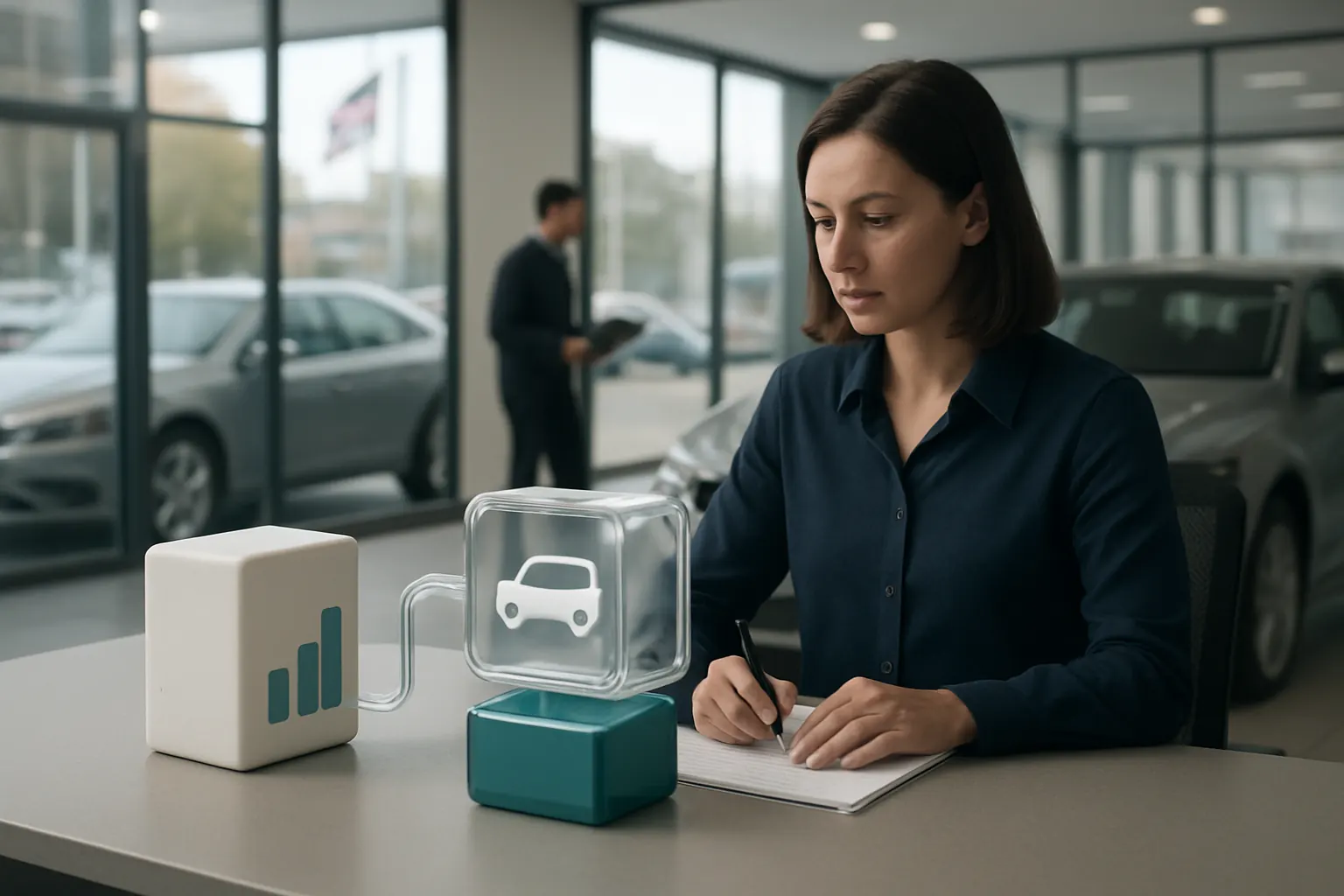
Connected Lead Follow-Up: Fast, Persistent Engagement
Reactive Lead Management Frustrates Sales Teams
Dealerships often use standalone CRM or lead management tools. Without connection to marketing platforms and sales workflows, leads can slip through cracks. Staff spend time chasing records or repeating details across systems.
Integrated Workflow Unifies Lead Handling
Our operating system links lead generation, follow-up automation and sales pipeline updates. Leads are imported directly from websites or advertising platforms, prioritised automatically using deterministic rules, and queued for follow-up actions in one owned record.
Useful Integration with Marketing and Communication Channels
Systems like email, SMS and calling tools stay connected for prompt outreach. Leads triggering interest can start an AI agent workflow for classification and summarisation to prepare the sales agent, while human approval remains at each conversion stage.
Example: AI Follow-Up to Close More Leads
A dealership receives 100 online enquiry forms daily. Using AI-driven prioritisation and automated appointment booking reminders within the connected system doubles the lead-to-appointment conversion rate. Sales teams focus only on leads already engaged, freeing hours each week.
Controls for Accountability and Consent
Configured workflows ensure opt-in communication consent is recorded at lead capture. Human sales approval is required before final finance offers are made, keeping compliance clear and auditable.

Booking to Workshop Automation: Streamlined Job Preparation
Bottlenecks in Workshop Booking and Vehicle Preparation
Manual handover of booking details from sales to workshop increases errors and slow turnaround times. Unconnected parts systems cause delays if components are unavailable or undocumented.
Unified Booking Workspace for Coordination
Our system offers an owned booking record shared live between sales, workshop and parts teams. Updates to vehicle requirements, job status and parts availability synchronise automatically.
Modules Connecting Parts Stock and Digital Inspections
Parts tracking integrates with vehicle inspections to alert workshop teams when critical spares are low. Digital inspection records collected via mobile devices feed directly into the workflow, preserving audit trails.
Example: Automated Booking with Parts Alerts
A dealership using the connected booking to workshop system reduces average vehicle turnaround by 30%. Parts availability alerts help avoid rebooking delays caused by missing components.
Audit Controls on Safety Inspection Evidence
Digital inspection photos and checklists attach securely to each vehicle booking, ensuring safety and compliance checks are captured and visible for quick review.
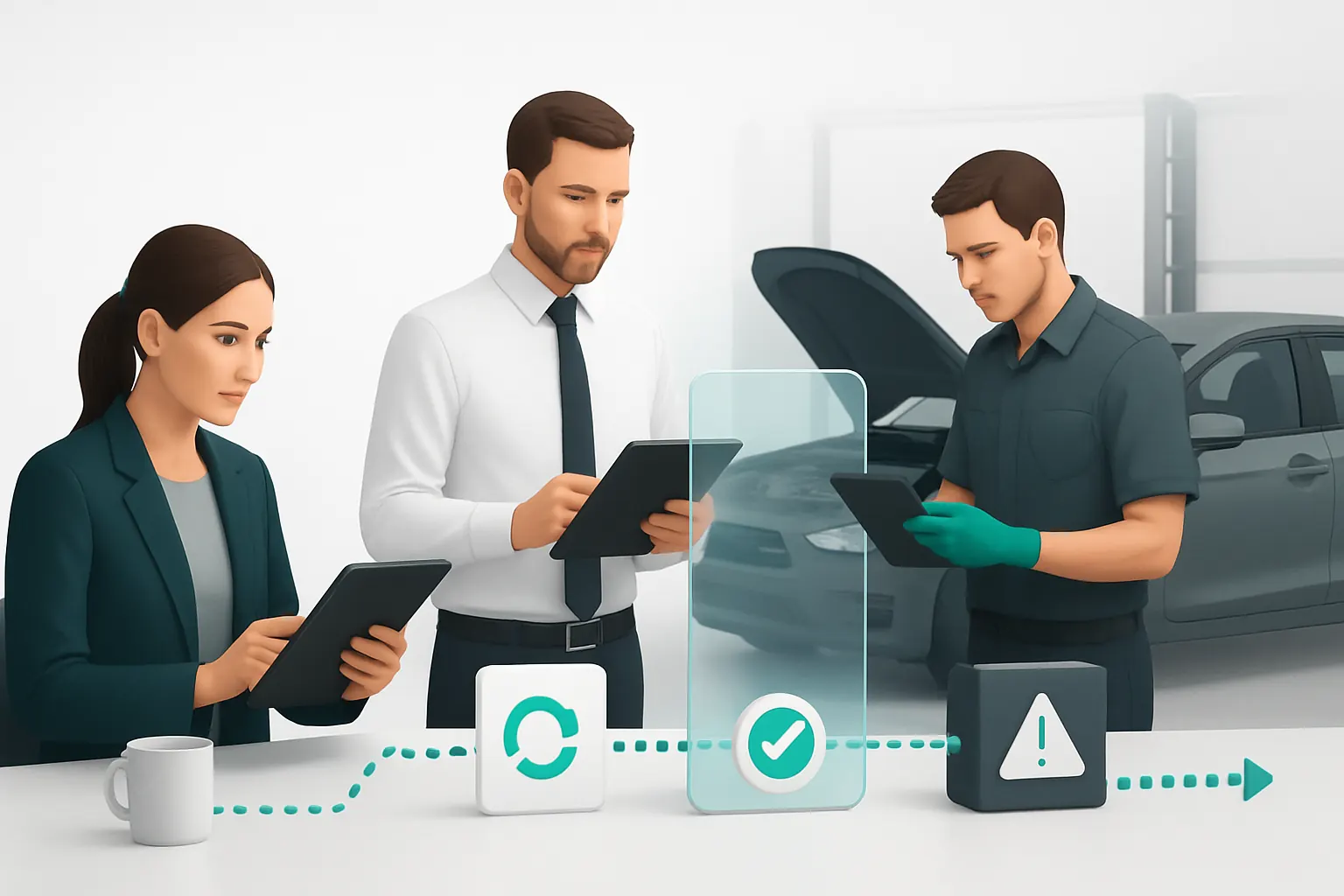
Replacing Redundant Subscriptions with Owned Modules
Overlapping Subscriptions Add Cost and Complexity
Dealerships frequently subscribe to multiple software packages covering functions such as invoicing, workforce scheduling, or customer records. Many features overlap and offer limited integration.
Consolidating Workspaces into One Owned System
We provide tailored modules owned and controlled by the dealership, replacing avoidable subscriptions. This reduces monthly costs and centralises data ownership.
Selective Naming of Specialist External Tools
External services such as payment processing or communications tools are integrated where they offer specialist, persistent functionality unlikely to be replaced (e.g., Stripe for payments, Twilio for SMS).
Example: Workforce Rota Module Eliminates External Scheduling Apps
By building a bespoke scheduling workspace into the core system, the dealership removes the need for a third-party rota or calendar app. Staff receive automated shift reminders without extra subscriptions.
Configuration Controls for User Access and Data Segregation
Role-based access and permissions ensure sensitive financial or customer data is only visible to authorised personnel, supporting GDPR and internal policy enforcement.

Bringing Operational Data Into a Single Trusted Record and Dashboard
Fragmented Data Hinders Decision-Making
Sales, finance, workshop status, parts inventory and vehicle inspections often live in separate systems. Reporting requires time-consuming manual consolidation, delaying insight.
Tailored Dashboard Displays Real-Time Combined Data
Our connected platform aggregates operational data into one trusted record with customised dashboards for each role—sales, workshop manager or finance controller.
Example: Vehicle Sales and Workshop Status Overview
By combining sales pipeline data with active workshop bookings and vehicle availability, a single dashboard highlights vehicles ready for delivery and alerts to potential delays. This proactive view accelerates completion.
Audit Trail and Exception Alerts for Compliance
Every action, update and approval is logged. Exceptions such as missing inspection evidence or finance permissions trigger alerts for human review before vehicle handover.
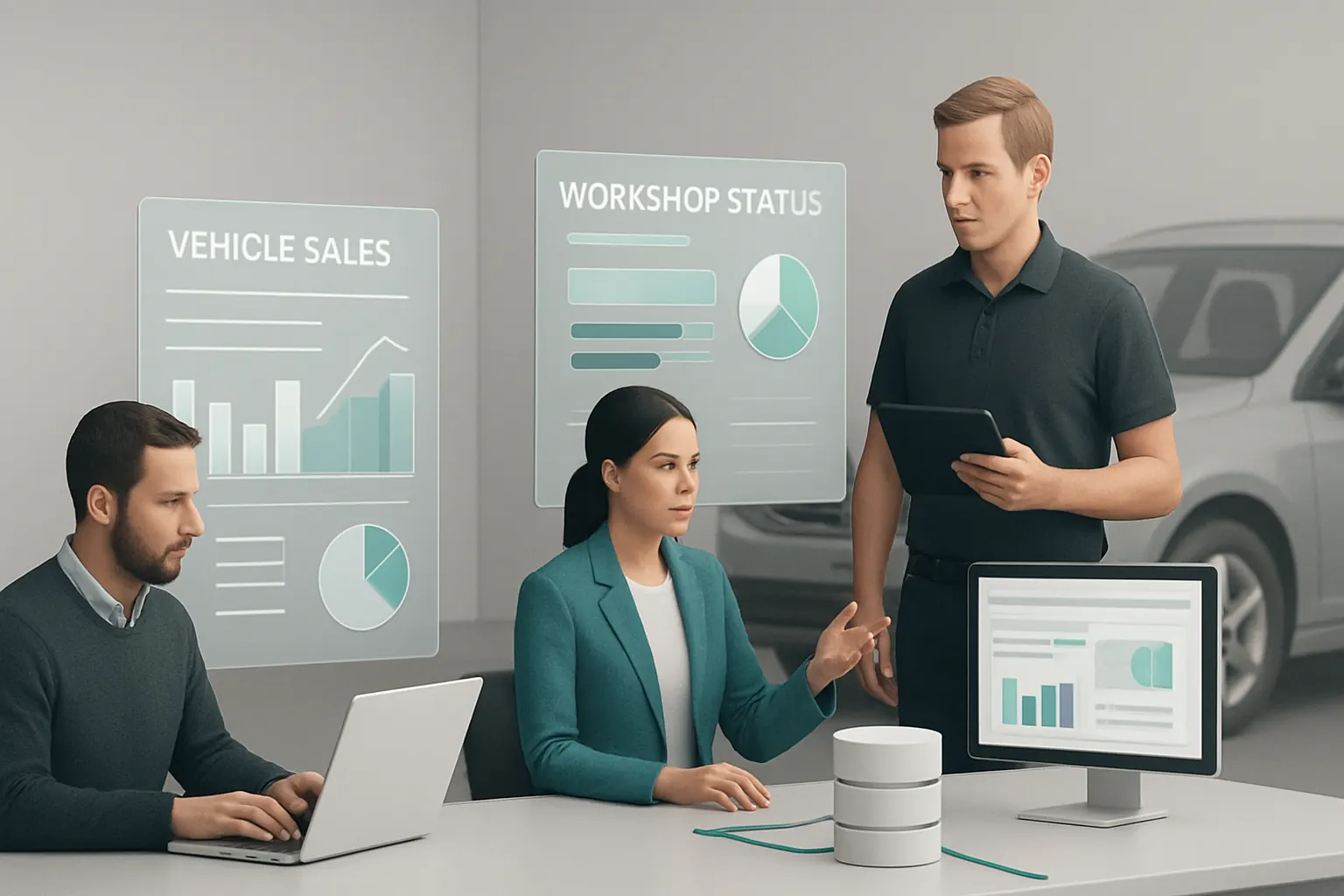
Applying AI Selectively for Variable Tasks, Retaining Human Control
AI as a Complement, Not a Replacement
AI in car dealership workflows is best suited to variable work: classifying lead quality, summarising communications, prioritising follow-ups or supporting decision-makers—not automating predictable core operations entirely.
Deterministic Rules for Routine Tasks
For high-volume predictable tasks like booking reminders, parts stock alerts or document generation, deterministic (rule-based) automation ensures consistency, speed and reliability.
Practical AI Use Cases with Human Approval
- AI agents classify incoming leads based on engagement signals.
- Summarisation tools prepare sales or finance staff with key points.
- Prioritisation algorithms recommend which leads to chase first.
Human staff retain full approval for important decisions such as finance offers, vehicle release or safety exceptions.
Example: AI Lead Prioritisation Increases Sales Efficiency
AI scores leads by purchase likelihood and customer urgency, enabling sales teams to contact the most promising enquiries first—and clear lower priority leads with automated messages. The human sales agent approves appointments.
Governance Controls for Responsible AI Use
All AI recommendations are transparent and explainable with visible audit logs. Staff can override AI outcomes, preserving accountability aligned with ICO and NCSC guidance.

Rolling Out Your Connected Operating System in 90 Days
Weeks 1–2: Discovery and Design Blueprint
- Map existing software and workflows.
- Identify key integration points and duplications.
- Define mandatory compliance controls and user roles.
- Establish data governance aligned with privacy regulation (see ICO guidelines).
Weeks 3–6: Build and Integrate Core Modules
- Develop lead follow-up and sales pipeline workspace.
- Connect booking and workshop scheduling with parts tracking.
- Deploy owned modules replacing non-specialist subscriptions.
- Integrate external communication tools like email and SMS.
Weeks 7–12: Test, Train and Optimise Daily Use
- Pilot workflows with sales, workshop, parts and finance teams.
- Configure tailored dashboards and exception alerts.
- Fine-tune AI lead classification and reminder automation.
- Train staff on human approval processes and compliance controls.
This plan accelerates digitalisation by delivering a connected system quickly without disruptive wholesale IT changes, allowing early ROI and continuous improvement.
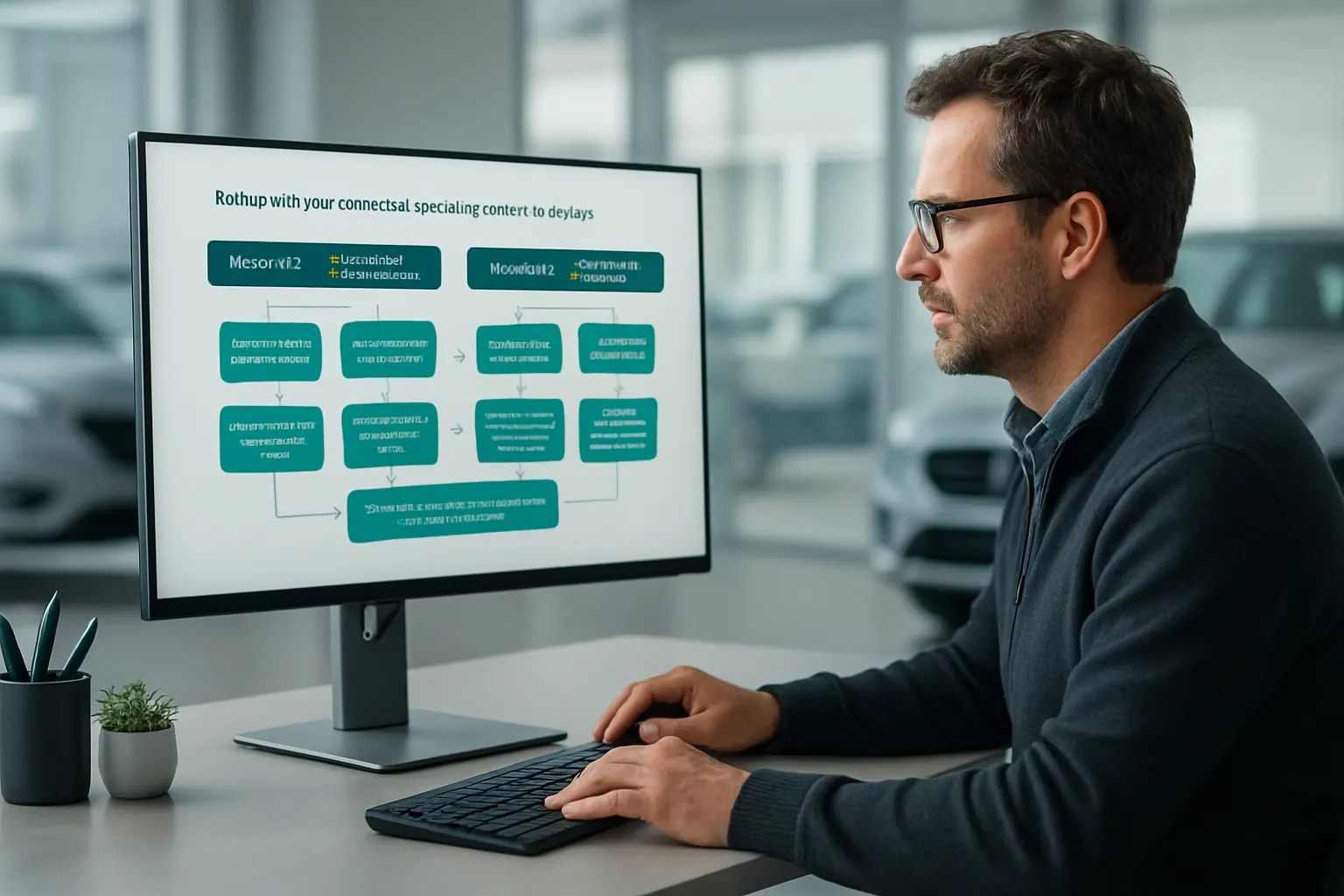
Why AI Implementation UK Is Your Partner for Owned, Connected Car Dealership Systems
The challenge facing most dealerships is not finding the latest disconnected SaaS apps but owning one connected workspace that fits how the business really works. AI Implementation UK builds tailored operating systems that:
- Preserve and connect useful existing software.
- Replace costly, overlapping subscriptions with owned, customised modules.
- Bring operational data into one reliable, auditable record with practical dashboards.
- Apply AI judiciously for variable work like lead classification or summarisation.
- Rely on deterministic rules for routine tasks and retain human approval for significant decisions.
- Integrate only essential specialist external services such as payments or communications.
Our approach accelerates workflow automation and business digitalisation in weeks, not months, while keeping you in control of your data and compliance responsibilities. This means your car dealership streamlines admin, accelerates lead follow-up and workshop throughput, and improves cashflow without costly multiproduct subscriptions.
To explore how we can connect, replace and automate your core operations through a platform your dealership owns, visit our process automation and RPA services or start planning your system upgrade with our platform planning team.
Building on a solid data foundation is key. Learn more about preparing your data infrastructure to unlock operational insight at AI Implementation UK’s dedicated service page: data infrastructure preparation.
Sources:
- ICO guidance on lawful processing and consent: ICO data protection guidance
- NCSC guidance on AI governance: https://www.ncsc.gov.uk
- FlowForma® Process Automation in Automotive: https://www.flowforma.com/automotive
- Practical dealer automation insights: https://ecarstrade.com/blog/automation-for-car-dealers?srsltid=AU7gw4X4MaDNXly0bl7ewYrSx0fnVtaLda2n8sw5SV5EIkGeUIxCBs9q
- Automotive workflow case studies: https://autoedocs.com/knowledge-centre/ai-automation