
Learn how waste management and recycling companies can connect systems, reduce manual admin and automate enquiry to contract with one tailored operating platform.
Waste-management and recycling company workflow automation: What Breaks Daily
Waste-management and recycling company workflow automation should connect bookings, people, communications and reporting in one reliable operating flow.
Waste-management and recycling companies face operational complexity at every turn. From managing collection rounds across diverse sites to handling fluctuating customer demands and complying with hazardous waste regulations, daily processes are fraught with disruption risks. Manual data entry errors, scheduling clashes, missed service verifications, and fragmented communications commonly cause delays and friction. While many operators rely on multiple specialised software tools, the lack of integration often means data silos grow, fragmenting workflow continuity.
A fractured operation creates churn that saps productivity and inhibits growth. Important decisions and verification steps get delayed or retraced. Missing or inconsistent waste documentation raises compliance risks. Customers face delayed invoicing or opaque service reporting. These operational breakpoints make it hard to deliver consistent, profitable services in a sector under high regulatory and commercial pressure.

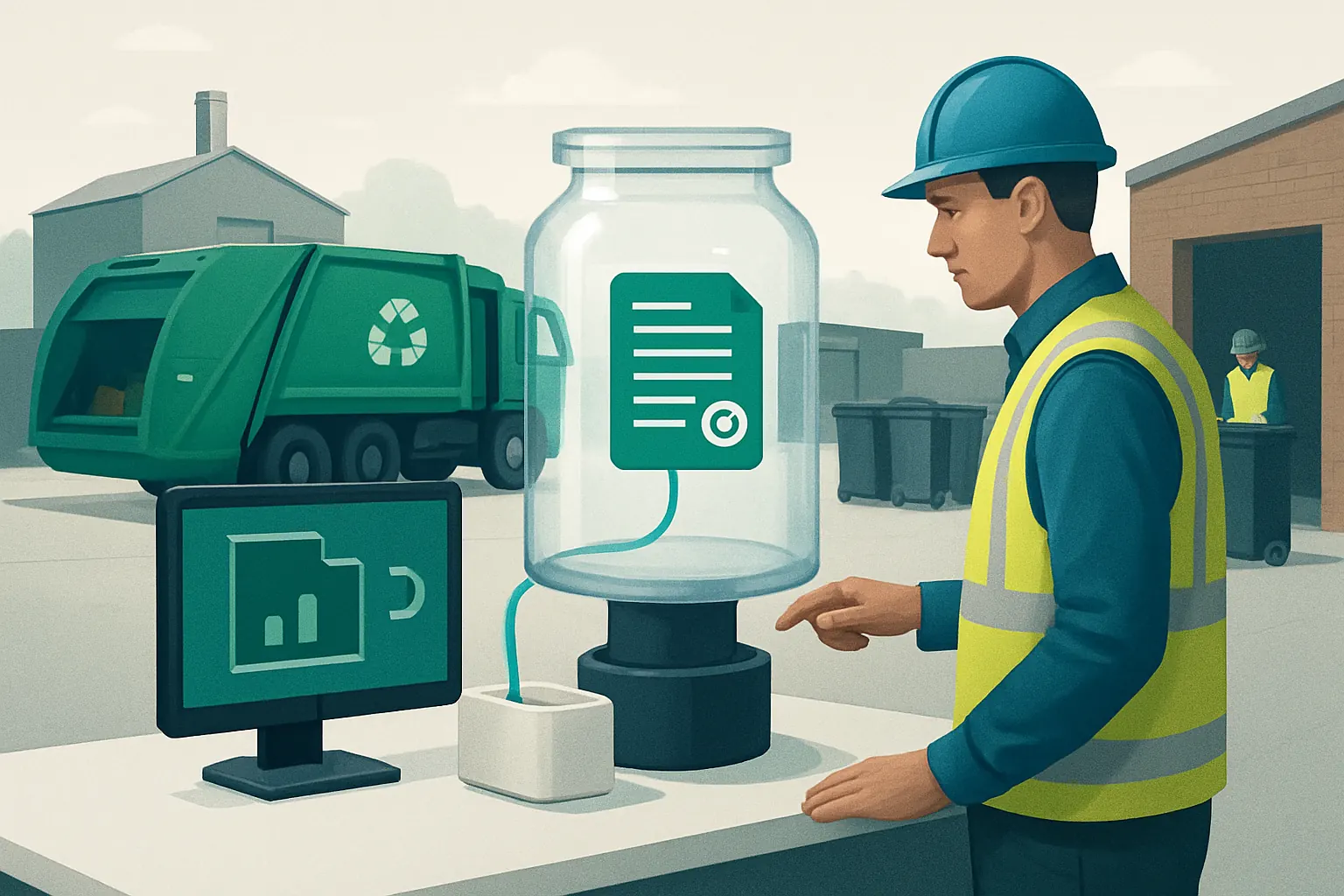
Centralising Enquiry to Contract Without Disconnected Software
Complex Contract Management Slows New Business
Waste-management firms often lose momentum between initial enquiries and signed contracts, juggling CRM tools, quoting systems, and document templates that are not linked. Manual quote preparation causes delays and risks errors in pricing or service scope.
Connected Workflow from Lead to Agreement
A single operating record, designed around your enquiry to contract process, records every lead interaction, pricing rule, and approval. This reduces repetitive data entry and ensures contracts are consistent and quick to produce. Integration with CRM modules or quoting templates can preserve familiar interfaces, while replacing standalone software subscriptions for contract management.
Useful Integrations for Sales Enablement
- Existing CRM or contact directories linked to your owned enquiry module
- Automated quoting and price calculation rules tailored to waste types and volumes
- Digital signature tools that remain embedded rather than disconnected SaaS
Practical Example: Rapid Contract Closure
A regional recycling firm had frequent delays in responding to new service requests. By centralising enquiry data and automating quote generation within one workspace, turnaround from enquiry to contract shortened from weeks to days. Staff saw all leads pipeline stages clearly, reducing chasing and lost opportunities.
Controls for Accuracy and Compliance
Quote templates and contract language are version-controlled, with mandatory approvals before issue. The system flags missing documents or unusual pricing and keeps an audit trail for any amendments, supporting adherence to industry standards and client agreements.

Streamlining Collection Rounds with Smart Job Allocation
Manual Scheduling Creates Inefficiency and Conflicts
Waste collection rounds cover many sites with changing volumes or time windows. Manually allocating jobs is time-consuming and error-prone, causing vehicle route overlaps or missed stops. This drives unnecessary mileage and fuel expense.
Connected Rota and Job Record
Automating job allocation using a rota module connected to your booking and vehicle records optimises collection schedules within the same system. You retain control over staff availability and vehicle capacity data, which can integrate with existing route-planning software specialised in geographical optimisation.
Useful Integrations for Route Execution
- Route planning tools that operate as a specialist module for mapping and navigation
- Mobile workforce apps linked to job records for on-the-go updates
- Vehicle telematics or fuel reporting connected into the system for operational insights
Real-World Impact: Efficient Round Execution
One waste-management company reduced duplicate journeys by linking daily jobs to rotas in their owned system. Staff received automatically allocated tasks on mobile devices, confirmed service completion, and noted exceptions instantly. Mileage and overtime dropped measurably.
Controls to Protect Operations and Security
Access controls safeguard who can adjust jobs or delete bookings, while time stamping mobile updates creates verifiable records of service delivery. Alerts notify managers of missed collections or compliance concerns, ensuring operational oversight remains tight.
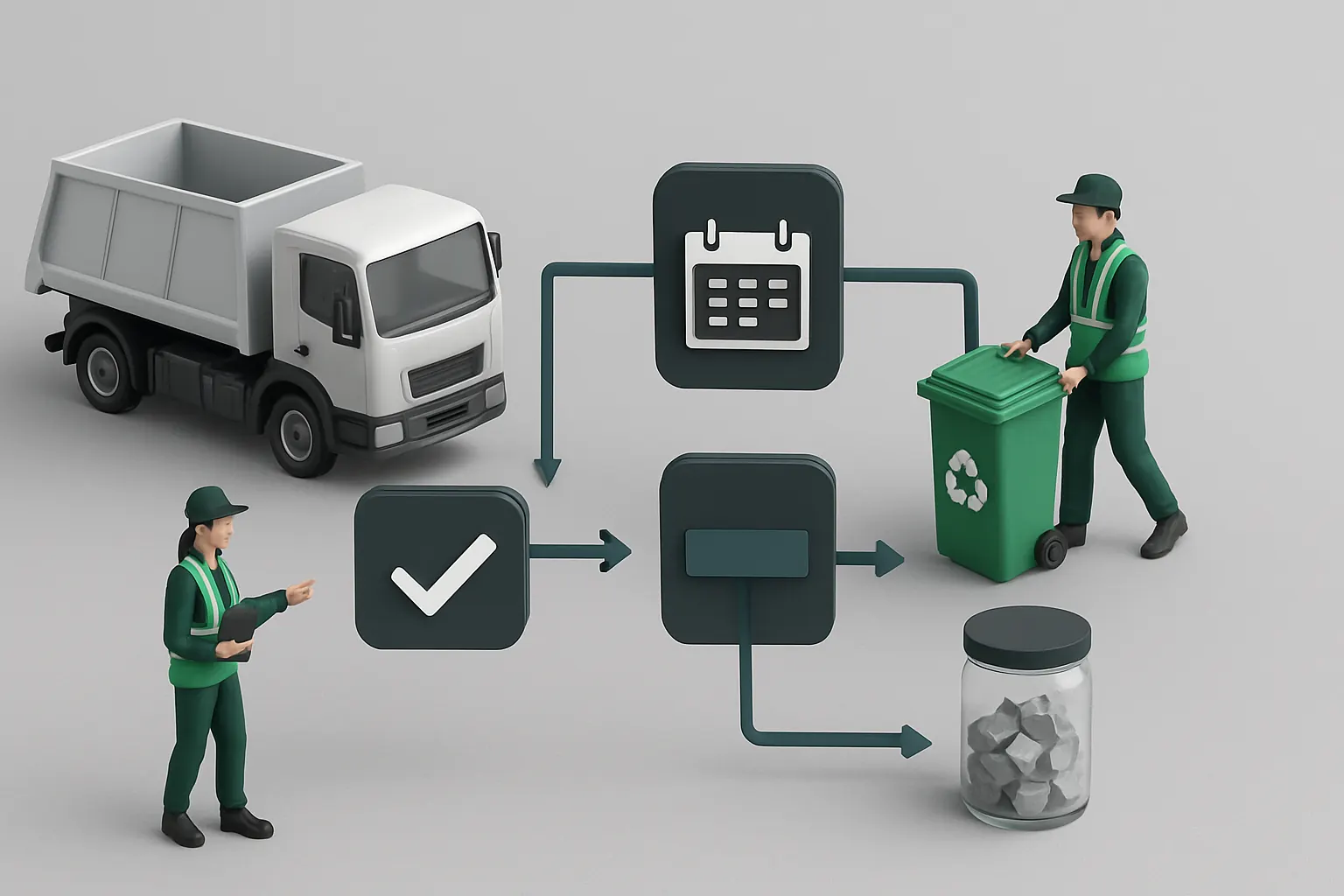
Unifying Waste Documentation for Audit-Ready Records
Fragmented Paperwork Undermines Compliance Confidence
Waste manifests, disposal certificates, hazard assessments, and environmental reports are critical but often stored separately or on paper. This fragmentation risks non-compliance, delayed audits, and challenges from regulators.
Tailored Digital Repository Within Daily Workflows
Your owned system can include an integrated module for waste documentation management. Documents link to individual jobs and contracts, making retrieval straightforward. Automated document generation and reminders ensure required paperwork is created and signed promptly.
Useful Specialist Services Kept
- Digital signature or certification validation integrated as specialist tools
- Secure cloud storage compliant with UK data protection standards (see ICO website)
- Automated data validation rules to detect incomplete forms
Example: Seamless Service Evidence and Approval
A recycling operator used their owned workflow to generate and collect all necessary waste transfer notes automatically after job completion. Validators signed documents on smartphones onsite, which then synced back to central records. This arrangement accelerated audit preparation and reduced mistakes.
Controls for Document Integrity and Access
Role-based permissions limit who can upload or approve documents. Automatic versioning registers edits or re-approvals. Notifications track document expiry dates for renewal or regulatory filing deadlines.

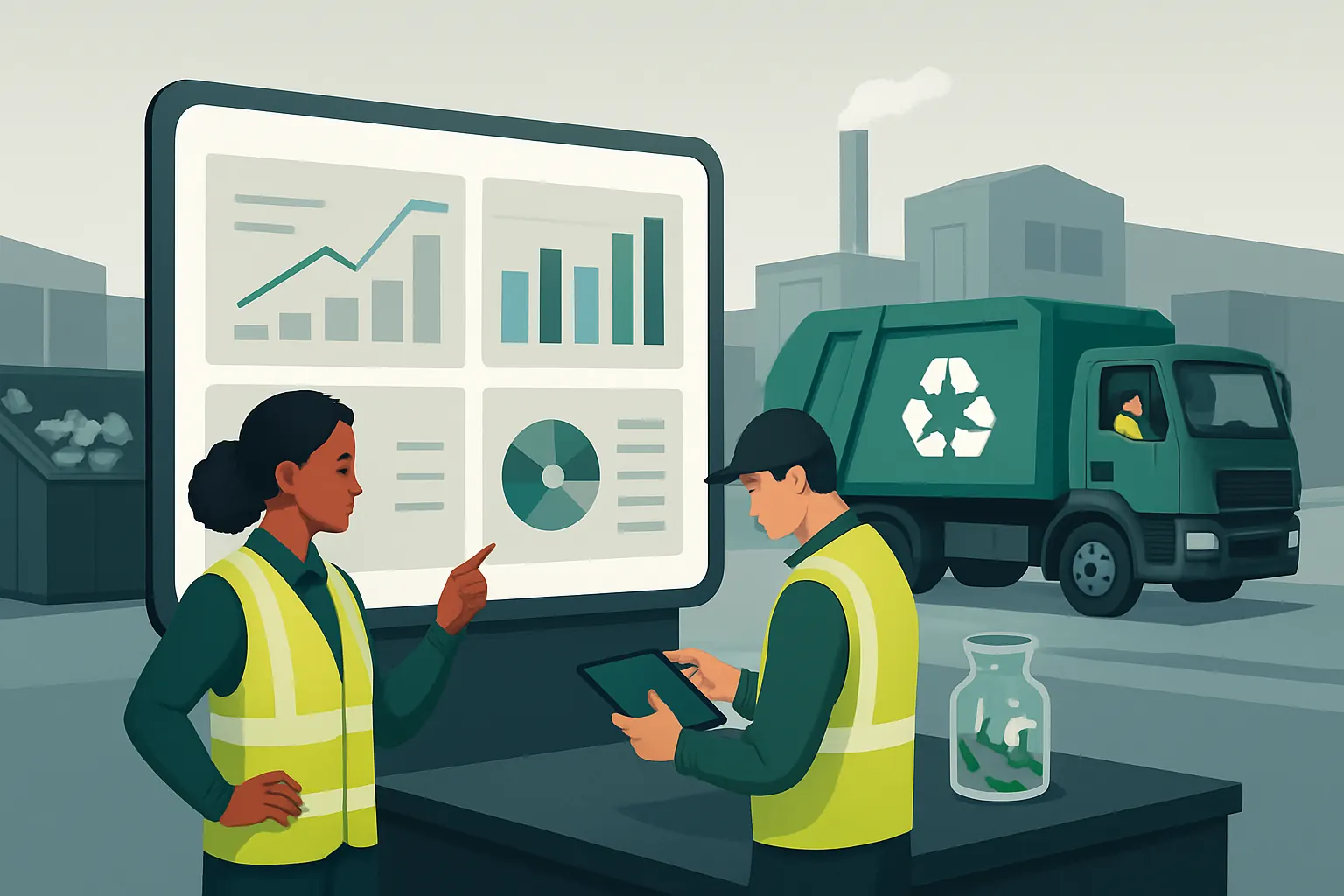
Bringing Operational Metrics Into One Reliable Dashboard
Operational Blind Spots Frustrate Management Decisions
Waste operations generate data in many places – bookings, vehicle logs, service times, exceptions – but these remain scattered. Without a single dashboard displaying tailored KPIs, managers lack insight into performance drivers, cost overruns or customer issues.
Custom Dashboard Built from Owned Data Sources
By building a bespoke dashboard within your business workflow system, you can bring together data feeds from existing modules as well as integrated tools, providing a real-time, reliable picture. Displayed KPIs help senior staff and supervisors manage workforce efficiency, contract profitability, and SLA compliance.
Valuable External Data Integration
- Financial software data for invoicing and payments (PCI DSS standards recommended)
- Customer portal activity and complaints tracking
- Route planning and fuel efficiency statistics
Practical Outcome: Data-Driven Operations Management
Waste managers accessed daily collection success rates alongside driver fuel usage and pending customer inquiries on one screen. Swift identification of rounds at risk of delay improved proactive problem-solving.
Controls to Maintain Data Accuracy and Security
Data validation logs maintain record histories. Access is restricted by user role to prevent unauthorised data views or manipulation. Alerts notify supervisors of KPI threshold breaches, preserving rapid response capability.
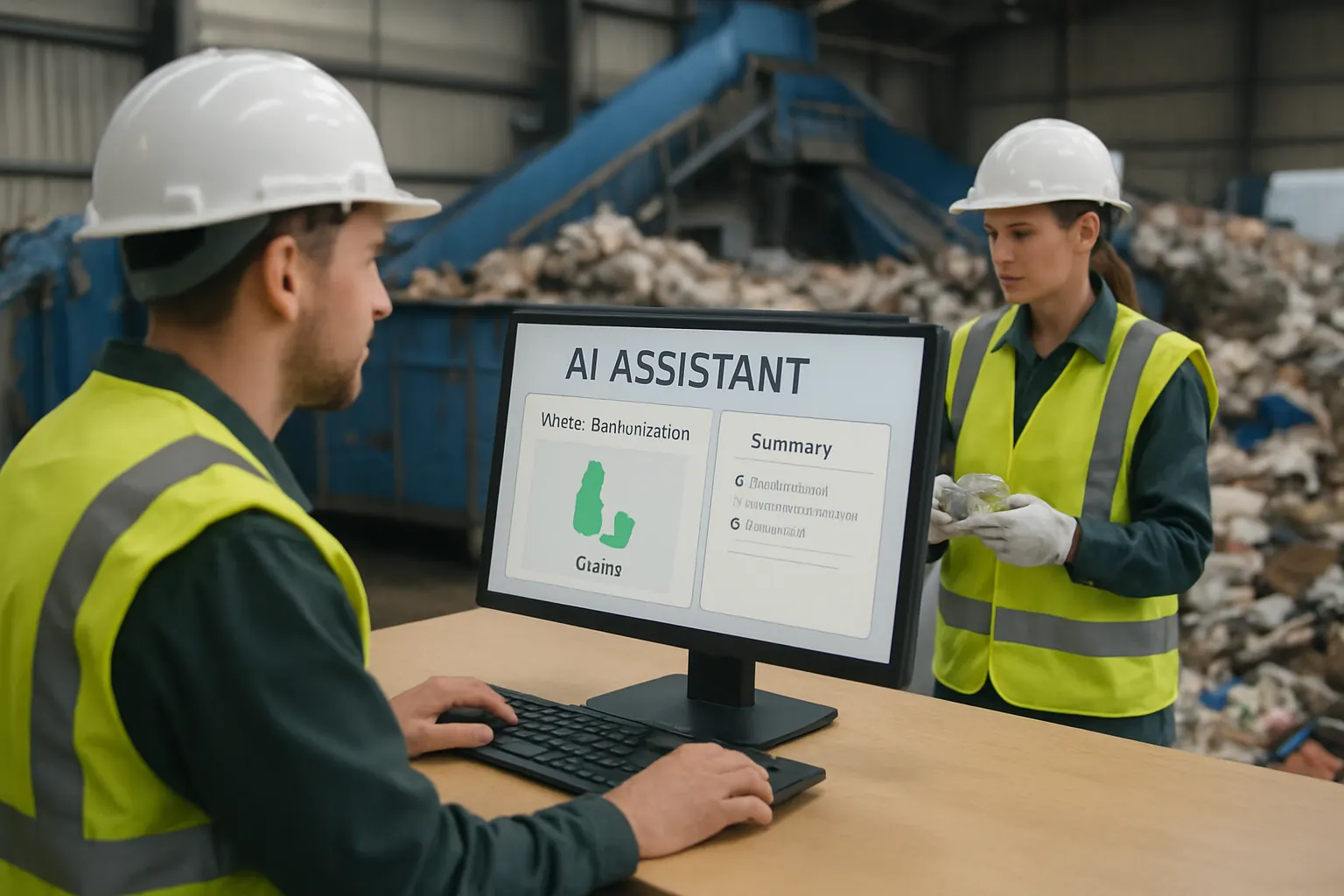
Implementing Selective AI for Variable Operational Tasks
Overreliance on Manual Decision-Making Drains Resources
Certain tasks—such as classifying waste types from descriptions, summarising compliance incidents, or prioritising customer enquiries—vary in complexity day to day. Purely manual handling is inefficient, yet automating everything with rigid AI risks errors in critical decisions.
AI as an Assistive Tool within Rule-Based Workflows
AI implementation within your owned software focuses on support functions: classification, summarisation, prioritisation, and decision support in ambiguous cases. Predictable tasks use deterministic rules. Human approval is retained for important decisions like contract acceptance, hazardous waste handling, or payment authorisations.
Integrations with Specialist AI and Communication Tools
- AI modules for image or text classification embedded in the workflow
- Summaries of large documents or records generated on demand
- Communication tools (such as Twilio or email services) for timely alerts and approvals remaining linked rather than separate
Case in Point: AI-Assisted Compliance Review
A waste-management company used AI to classify incoming service reports and highlight anomalies for supervisor review. Routine cases proceeded automatically, freeing time for staff to focus on exceptions that required human judgement and final approval.
Controls Ensuring Responsible AI Use
Transparent audit trails document AI recommendations and override decisions. Configured thresholds limit AI impact to assistive levels only. Staff roles define who can accept or reject AI outputs, supporting compliance work with governance and regulatory obligations.
A 90-Day Rollout Plan to Automate Your Waste and Recycling Workflows
Weeks 1–2: Discovery and Planning
- Map critical workflows from enquiry to contract, collection, documentation, and invoicing
- Identify current systems, data silos, and integration opportunities
- Define user roles and control requirements to align with compliance needs
- Set clear goals for automation improvements and dashboard KPIs
Weeks 3–6: Build and Integrate Foundational Modules
- Develop the enquiry, quoting, and contract management record based on existing business logic
- Integrate existing CRM and quoting tools where beneficial, replacing redundant subscriptions
- Setup job allocation and rota modules linked to booking and vehicle data
- Begin configuring user access controls and audit trails
Weeks 7–12: Extend Automation and Roll Out User Training
- Integrate waste documentation into daily workflows with electronic signatures and secure storage
- Deliver the operational dashboard customised with real-time KPIs and alerting
- Implement selective AI modules for classification and decision support functions
- Conduct training campaigns and phased user onboarding, adjusting workflows based on feedback
- Plan go-live support and continuous improvement cycles

Enabling Your Owned Digital Backbone with AI Implementation UK
Waste-management and recycling companies face significant challenges in uniting their operational data and automating processes efficiently without multiplying software subscriptions. AI Implementation UK delivers a tailored operating record that the client owns—designed precisely around your existing workflows and operational needs.
We preserve and connect your useful legacy systems rather than replacing them blindly. Our approach avoids introducing disconnected SaaS products. Instead, we architect integrations only where specialist external services—such as communications or payment gateways—are necessary and durable.
This owned system:
- Connects enquiry to contract, collection rounds, waste documentation, and invoicing workflows seamlessly.
- Replaces avoidable software subscriptions by offering owned modules tailored to your process.
- Consolidates operational data into one reliable record and customised dashboard for confident management.
- Selectively applies AI to support variable tasks with deterministic rules and human oversight.
- Maintains strict controls for access, security, compliance, and audit trail integrity.
For a proven pathway to transform your waste-management and recycling workflow automation, explore how our process automation services and data infrastructure preparation can build a platform you truly own. To align AI use with your business goals, consult our AI strategy and roadmapping expertise or review relevant examples in our case studies.
By gaining control over your digital workflows and intelligently automating where it matters, your operations can scale, costs reduce, and compliance risks diminish—without reliance on a growing bundle of disconnected tools.
For guidance on compliant payment processing and data security, consider official advice from the UK Information Commissioner's Office (ICO) and PCI Security Standards Council. Those managing financial services should reference the Financial Conduct Authority (FCA) website.
Waste-management and recycling companies embracing a connected, owned operating system are positioning themselves to meet today's operational demands and tomorrow's growth challenges with resilience and clarity.