
Learn how import and export businesses can connect systems, reduce manual admin and automate order to dispatch with one tailored operating platform the business.
Import and export business automation software: What Breaks Daily
Import and export business automation software should connect bookings, people, communications and reporting in one reliable operating flow.
Import and export businesses face ongoing operational challenges that disrupt smooth workflows. Tasks such as managing supplier orders, tracking shipping documents, monitoring customs milestones, and coordinating dispatch require constant oversight. Delays happen when critical information is scattered across disconnected tools. Manual steps cause errors in orders, shipments, and documentation, slowing down supply chains and exposing businesses to compliance risks. With multiple touchpoints involving human input, paperwork, and external service providers, inefficiencies quickly add up.
Without a single source of truth or coordinated workflow, teams struggle to maintain visibility and control. This fragmentation affects everything from route planning to proof of delivery. Importantly, these daily problems restrain growth by inflating costs and damaging the customer experience. Addressing these pain points requires more than piecemeal software solutions; it demands a connected operating environment built around how the business really works.

The Price of Manual Processes: Time, Errors, Compliance, Cashflow
Manual administration in import/export operations costs time and money in several concrete ways:
- Extended cycle times: Re-keying data between systems and chasing approvals create bottlenecks. Delays rippling through shipping schedules trigger penalties and unhappy clients.
- Increased error rates: Manual order entry mistakes or lost shipping documents generate costly fixes, customs holds, or regulatory red flags.
- Compliance risk: Export controls and customs formalities involve detailed checks that must be auditable. Manual tracking risks missing milestones or misclassifying goods.
- Cashflow constraints: Inefficient invoicing and payment processing delay revenue recognition and constrain working capital.
- Limited insight: Disconnected data silos hinder accurate forecasting, inventory management, and KPI analysis.
To tackle these issues sustainably, import and export business automation software must deliver an integrated, rule-driven, and data-centric approach that reduces human intervention without compromising control.
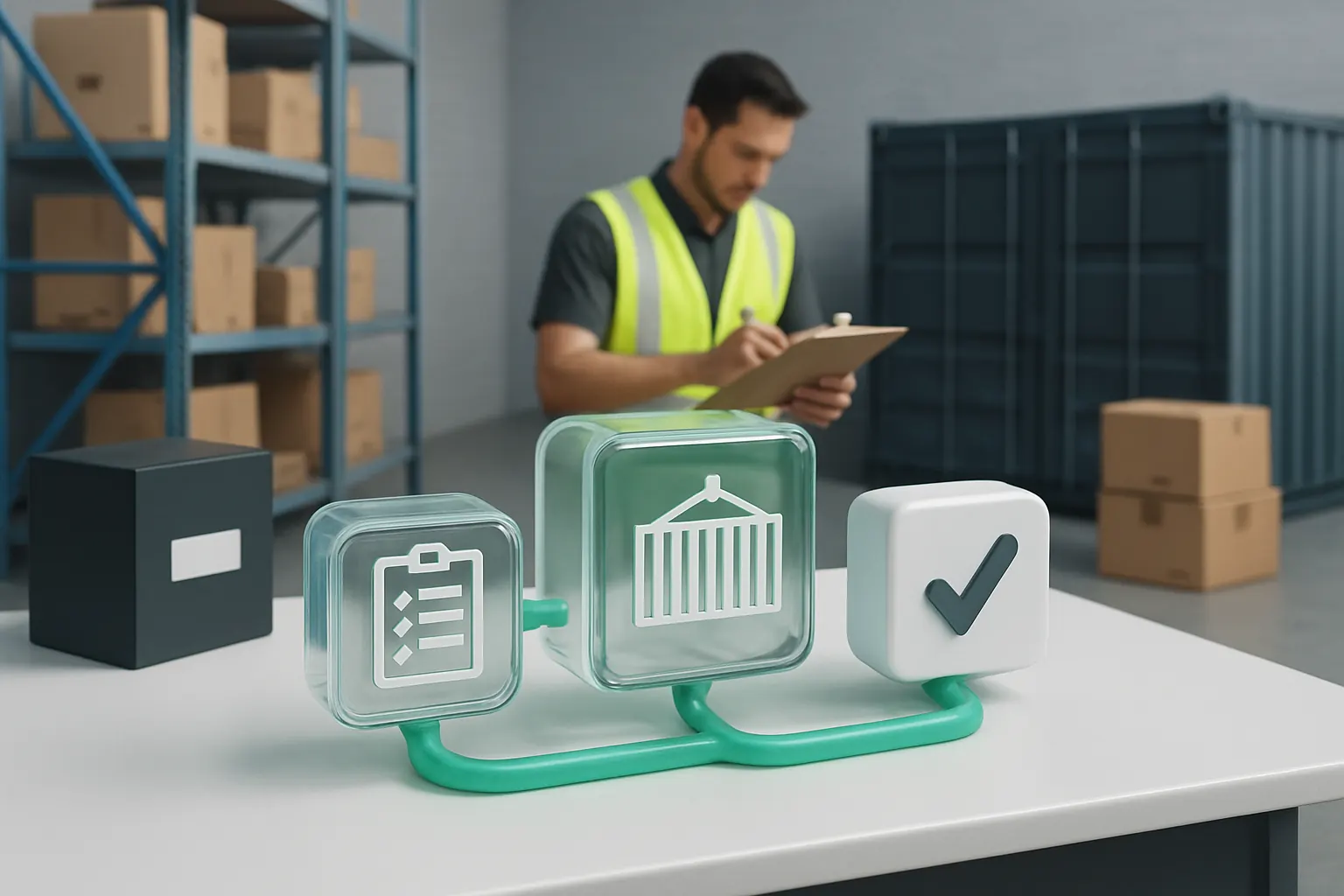
Connected Order to Dispatch Workflow Orchestration
Fragmented order management causes delays and errors
Import/export teams often manage orders using spreadsheets, emails, and legacy systems that don’t talk to one another. This leads to lost or duplicated orders, mismatched stock levels, and unclear shipment status.
Seamless flow from purchase order to dispatch record
Building a connected workflow means capturing all supplier orders, planning shipping routes, and managing capacity in one tailored workspace. The system updates stock availability, dispatch windows, and expected delivery dates automatically, ensuring teams have actionable information at every stage.
Integrations with existing inventory and carrier systems
Instead of replacing functional inventory or carrier booking software, integrations consolidate data in a single reliable record. Specialist tools such as payment gateways or communication services remain linked for streamlined processing.
Example: Automating booking updates to trigger route planning
When a supplier order is logged, the system automatically checks warehouse stock, schedules a carrier pickup, and alerts the route planner of any conflicts. Manual confirmation steps are reduced to exceptions only.
Controls for accuracy and audit trails
Deterministic rules validate key fields—such as product codes, quantities, and shipping deadlines—while human approval gates exceptions or high-risk changes. Documented audit trails support compliance with customs and goods control regulations.

Document and Compliance Milestone Tracking
The challenge of managing complex shipping documentation
Import/export operations require precise management of bills of lading, customs declarations, certificates of origin, and other regulatory paperwork. Misplaced or outdated documents cause shipment delays and compliance violations.
A unified system to track document status and deadlines
Centralising document capture and milestone monitoring in one system enables real-time visibility on customs progress and transport updates. Automated reminders prompt timely renewals or corrective actions.
Useful integrations with customs portals and scanning tools
Direct links to customs filing systems or OCR (optical character recognition) modules allow electronic document submission and automatic capture from scanned paperwork, reducing manual entry.
Example: Real-time alerts for customs clearance delays
If a customs milestone is missed, the system flags the shipment for follow-up and generates a delay notification to relevant stakeholders. This prevents last-minute surprises and facilitates proactive management.
Controls to safeguard restricted goods and chain of custody
Role-based permissions enforce driver access to documents, while digital signatures and tamper-proof logs maintain chain of custody compliance, vital for regulated or sensitive shipments.
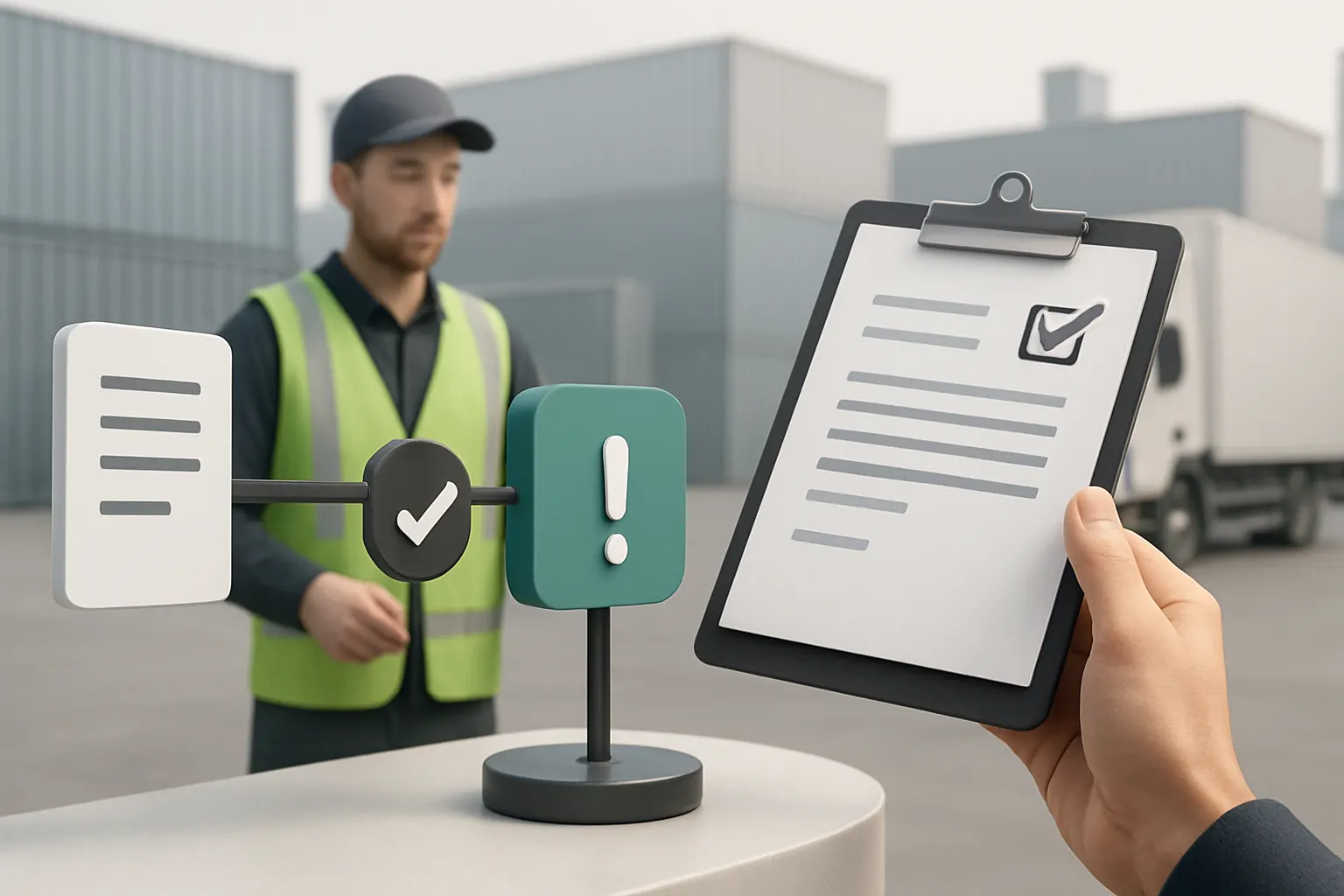
Owned Modules to Replace Avoidable Subscriptions
Current challenge: Multiple costly SaaS subscriptions
Many import/export businesses accumulate numerous standalone software subscriptions for tasks like order processing, invoicing, or task management. This inflates costs and creates data silos.
Replaceable functionality with bespoke owned modules
A connected operating environment provides built-in modules tailored to the specific workflows of import/export, replacing avoidable subscriptions. Examples include invoice generation, inventory updates, and proof-of-delivery capture.
Useful integration with unavoidable specialists
External tools for payment processing or live carrier tracking remain integrated but do not multiply administrative complexity. This helps keep operational costs predictable and controllable.
Example: Removing redundant document management subscriptions
Switching to an owned document management module, custom-configured for shipping and customs paperwork, eliminates recurring costs while centralising vital records.
Controls to maintain data ownership and security
Data resides under the organisation's control with secure access protocols and compliance-supporting features to align with ICO guidelines on data protection.

Bringing Operational Data Together as a Single Source of Truth
Fragmented data hinders actionable insights
Operational data is scattered across multiple spreadsheets, legacy applications, and email threads. Without consolidation, KPI tracking and decision-making lack accuracy.
A reliable record aligning orders, shipments, and deliveries
Import/export business automation software must merge supplier orders, shipping statuses, customs milestones, and delivery proofs into one coherent data set. This record powers customised dashboards with relevant metrics.
Integrations with BI tools and internal reporting systems
Data export or API connections enable further analysis or reporting within existing business intelligence frameworks, supporting strategic planning.
Example: Dashboard highlighting shipment delays and inventory levels
A dashboard shows real-time inventory, inbound shipment ETA, delayed customs clearance, and pending delivery proofs. This enables managers to prioritise actions efficiently.
Controls to maintain data integrity and audit readiness
Deterministic validation rules catch anomalies in data inputs, while exception reports flag inconsistencies. Human review points remain visible for critical decisions, helping meet audit requirements.

Selective AI for Variable Workloads with Human Oversight
Challenges in automating unpredictable tasks fully
Certain import/export activities like classification of goods, summarisation of shipment information, or prioritisation of exceptions require judgement, which software cannot fully automate safely.
Using AI for classification, summarisation, and decision support
AI capabilities such as NLP-based classification and document summarisation can handle variable workloads efficiently. For example, AI extracts key data from diverse shipping documents, reducing manual reading time.
Combining AI with deterministic rules and human approvals
Deterministic business rules automate predictable processes like invoice generation or compliance checks. AI suggestions trigger alerts for human review rather than automatic decisions, retaining accountability.
Example: Prioritising shipment exceptions for human review
AI analyses customs clearance exceptions and ranks them by risk. Humans then focus on the highest priority alerts, accelerating resolution without losing control.
Controls to preserve compliance and transparency
Final decisions on regulated goods classification or payment approvals require human sign-off. AI activity logs support inspections per NCSC recommendations on trustworthy AI use.

A 90-Day Rollout Plan to Automate Your Import and Export Workflow
Weeks 1–2: Analyse and map your current workflows
- Conduct detailed workflow mapping focusing on supplier orders, shipping documentation, and customs milestones.
- Identify existing tools and manual handoffs prone to delay or error.
- Define key business rules and compliance checkpoints for automation.
Weeks 3–6: Build integrations and replace avoidable subscriptions
- Connect core inventory, order management, and carrier systems into one tailored workspace.
- Replace redundant standalone software with owned modules customised for your workflows.
- Implement document management and milestone tracking functionalities with scanning and OCR.
Weeks 7–12: Pilot AI-assisted workflows and dashboards
- Deploy AI for classification, summarisation, and exception prioritisation in selected areas.
- Configure dashboards and reporting tools to provide actionable visibility on KPIs and delays.
- Train users on controls, approval processes, and new operating procedures.
- Collect feedback to refine automation and increase adoption.

How AI Implementation UK Connects, Replaces, and Automates Your Operation
At AI Implementation UK, we deliver one connected operating system tailored around how your import and export business works—no disconnected SaaS patchwork. Our approach:
- Connected environment you own: Unlike fragmented apps, we help you build a digital workspace that consolidates your workflows and data into a single reliable record.
- Keep and integrate useful existing systems: We integrate your current inventory or carrier booking systems, preserving investments and operational continuity.
- Replace costly subscriptions with owned modules: Bespoke modules reduce your dependency on recurring SaaS fees and match your precise operational needs.
- Data-driven dashboards for real-time decision making: We create customised dashboards that visualize key milestones, exceptions, inventory status, and financial KPIs.
- Selective AI empowerment with human control: AI capabilities focus on classification, summarisation, and prioritisation, working alongside deterministic rules and authorised approvals.
Our pragmatic platform helps you reduce errors, accelerate cycle times, maintain compliance, and improve cashflow visibility. For practical guidance on stepping up your digital workflows, explore our process automation services or reach out for a tailored platform planning consultation.
Import and export workflow automation is no longer optional for competitive businesses in logistics and wholesale. A connected, owned, and purpose-built software environment is essential to modernising your operations with precision and control.
Regulatory frameworks relevant to your operations include data protection under the ICO (Information Commissioner's Office) and cybersecurity best practices from the National Cyber Security Centre (NCSC). For payments integration, refer to the PCI Security Standards Council (PCI SSC) for guidance on secure cardholder data handling.