Learn how homecare staffing agencies can connect systems, reduce manual admin and automate referral to appointment with one tailored operating platform the.
Homecare staffing agencies worker compliance automation software: What Breaks Daily
Homecare staffing agencies worker compliance automation software should connect bookings, people, communications and reporting in one reliable operating flow.
Homecare staffing agencies face ongoing practical challenges in managing worker compliance and coordinating care delivery. Paper-based records, multiple disconnected systems, and manual processes regularly cause delays, errors, and uncertainty. Staff compliance qualifications expire unnoticed, shift coverage gaps emerge last minute, and timesheet reconciliation demands excessive administrative effort.
The referral to appointment process is a crucial choke point. Referrals arrive via email or phone, requiring data re-entry and verification before matching carers to visits. Uncoordinated communications increase risks of missed visits, while supervisors struggle to get real-time visibility of workforce readiness and documentation status.
These daily breakdowns accelerate workloads, undermine care continuity, and complicate regulatory oversight. Homecare agencies need a connected approach to automate worker compliance and staff management workflows around their operational practices — without multiplying disconnected software subscriptions or losing human oversight.

The Real Costs of Manual Compliance and Staffing Processes
Manual handling of compliance and shift workflows generates several systemic costs:
- Time lost in data duplication and chasing approvals. Paper forms and spreadsheets create bottlenecks. Office staff spend hours entering, cross-checking, and filing documents instead of strategic tasks.
- Errors and omissions in critical compliance records. Oversights on qualifications, DBS checks, or training renewals increase inspection risks and care quality concerns.
- Cashflow disruption by payment errors or delayed invoicing. Inaccurate timesheets or missed visit logs slow billing cycles and financial forecasting.
- Reduced worker morale and retention through poor communication. Inconsistent notifications and unclear shift details cause frustration and absenteeism.
Cutting these costs requires replacing fragmented tools with one reliable record shared across operations and tailored to each team’s needs. Only then can agencies automate workflows with confidence and maintain proper controls through human review.
Streamline Referral Triage and Initial Worker Matching
Challenges Managing Incoming Referrals
Referrals often arrive in various formats—emails, forms, phone calls—requiring manual data extraction and validation before carers are matched. This slows client onboarding and increases risk of mismatched or delayed appointments.
Enabling an Integrated Workflow from the Start
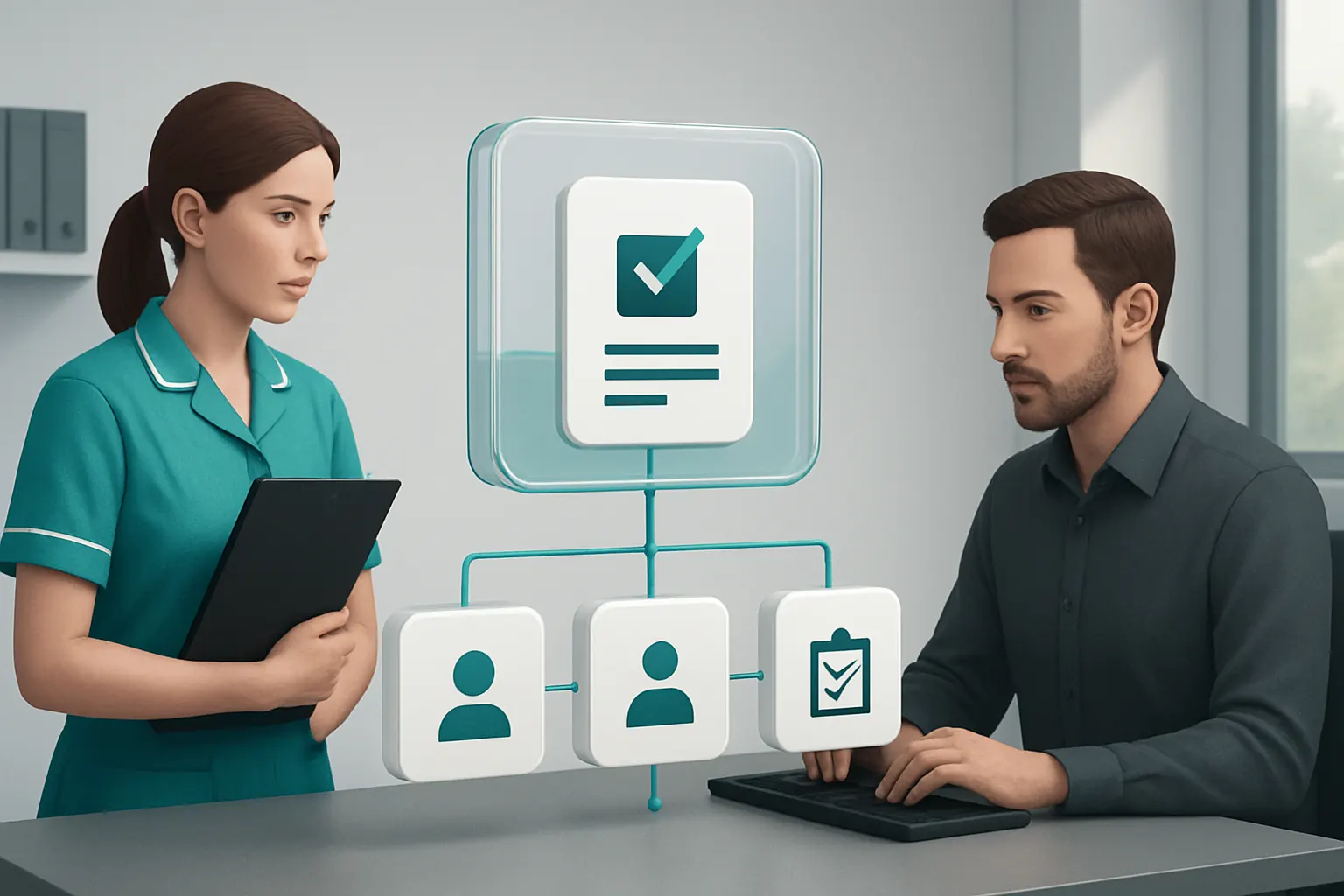
A connected workspace digitises incoming referrals directly into a single owned system, populated with client and care requirements. Rules automate initial triage to flag priorities or referral types needing specialist handling.
Example: Auto-assign qualified carers
When a referral specifying specific carer skills is received, the system filters compliance records and suggests match candidates. Supervisors then approve before invitations are sent to carers.
Controls to Maintain Quality and Oversight
- Rules can escalate exceptions for clinical or managerial review.
- Retain manual approvals for final assignments.
- Logs capture all actions for audit trails.
This reduces referral handling time and manual entry while maintaining human governance.

Connect Current Compliance Documentation to One Reliable Record
The Problem of Fragmented Compliance Data
Many agencies rely on paper, spreadsheets or multiple siloed software to track DBS checks, training certificates, and licenses. This causes delays in verifying worker eligibility and costly last-minute rota disruptions.
How a Connected Record Works in Practice
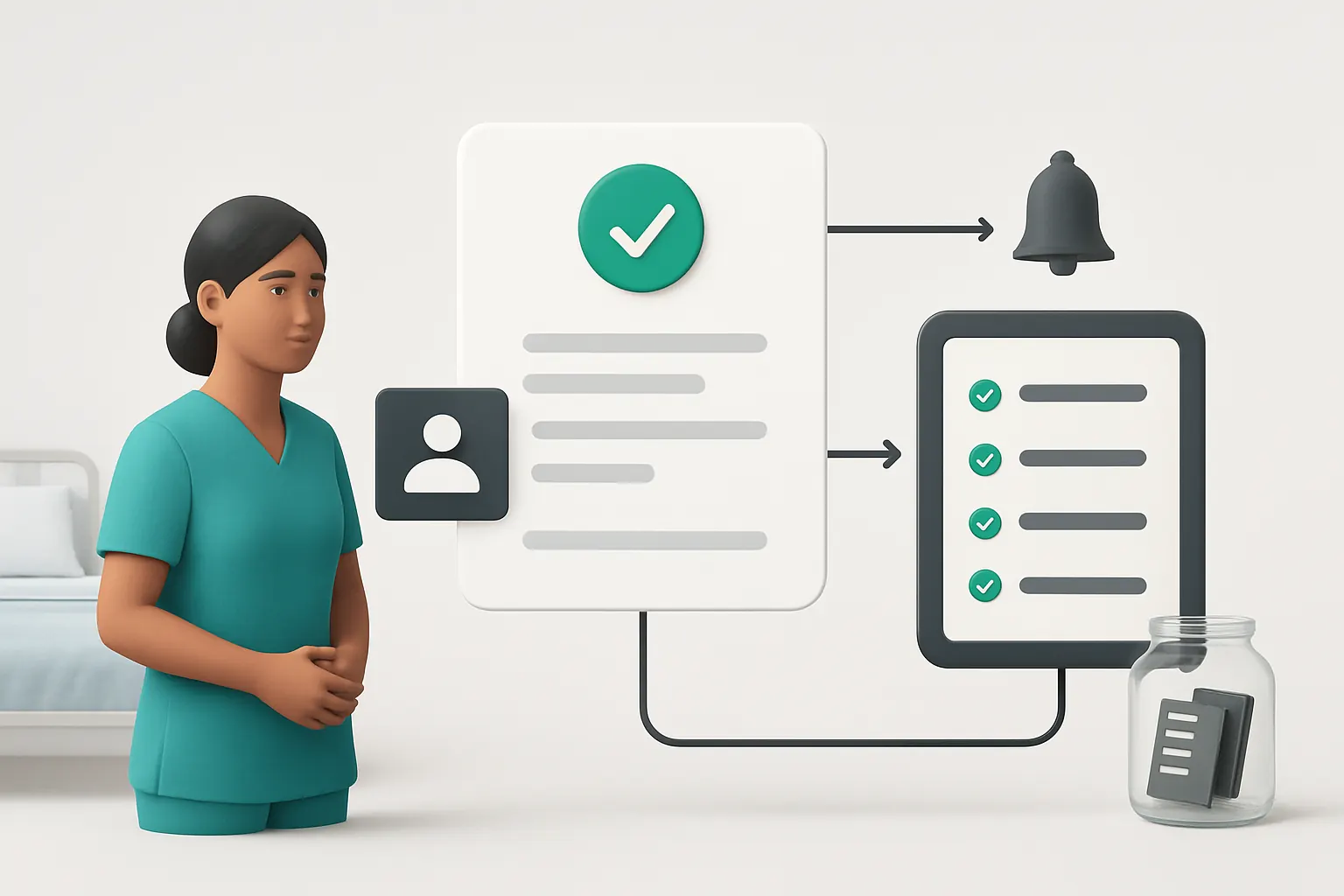
Data sources feed into one owned system that aggregates all compliance documentation for each worker. Automated alerts flag expiring credentials, guiding timely renewal workflows.
Example: Automated expiry reminders
A worker’s CQC registration due to expire triggers an automated email to the administrator and the individual worker. If unaddressed, escalation reminders proceed until renewal or review.
Auditable Controls and Data Security
- Access is role-restricted, respecting GDPR and sensitive health data confidentiality.
- Exceptions require supervisor approval before non-compliant workers are flagged for shift allocation.
- Integration uses secure APIs or direct uploads from trusted existing systems, avoiding unnecessary data duplication.
Simplify Shift Scheduling with Compliance-Aware Matching
Inefficiencies of Disconnected Scheduling Tools
Independent scheduling tools can lack integration with compliance or availability data, causing unfit assignments or last-minute cancellations.
How Integration Improves Shift Coverage
A rota module linked to the compliance record and calendar availability updates real-time worker status. Matching balances worker skills, compliance status, and preferences automatically.
Example: Automated shift offers and confirmations
Once shifts open, pre-qualified carers receive automated offers by app notification or SMS. Confirmations update the rota instantly and trigger communication workflows.
Supervisory Controls to Confirm Matches
- Managers hold override rights for reassigning or covering gaps.
- Compliance flags prevent offers to unapproved workers.
- Historical shift data informs future scheduling algorithms.

Automate Timesheet Collection and Verification
Manual Timesheets Causing Delays and Errors
Paper timesheets or disparate digital forms result in late submissions and reconciliation errors, delaying payroll and invoicing.
Connected Digital Timesheet Capture
Carers submit timesheets via a mobile-friendly portal linked to their shifts. Automated rules validate entries against scheduled working hours and compliance requirements.
Example: Electronic Visit Verification (EVV)
Using GPS-enabled EVV integration, time and location stamps verify the carer’s presence. Exceptions—such as missed clock-ins—trigger immediate alerts for review.
Compliance Controls and Auditing
- Any discrepancy flags require manual sign-off before payroll processing.
- All timesheet data is securely stored with audit logs.
- Third-party EVV integrations maintain data accuracy and compliance standards.
Centralise Client and Case Records for Continuity of Care
Fragmented Client Records Undermine Service Quality
Homecare agencies often keep client notes and care plans in separate systems or paper files, complicating comprehensive oversight.
Integrated Case Workspace Benefits
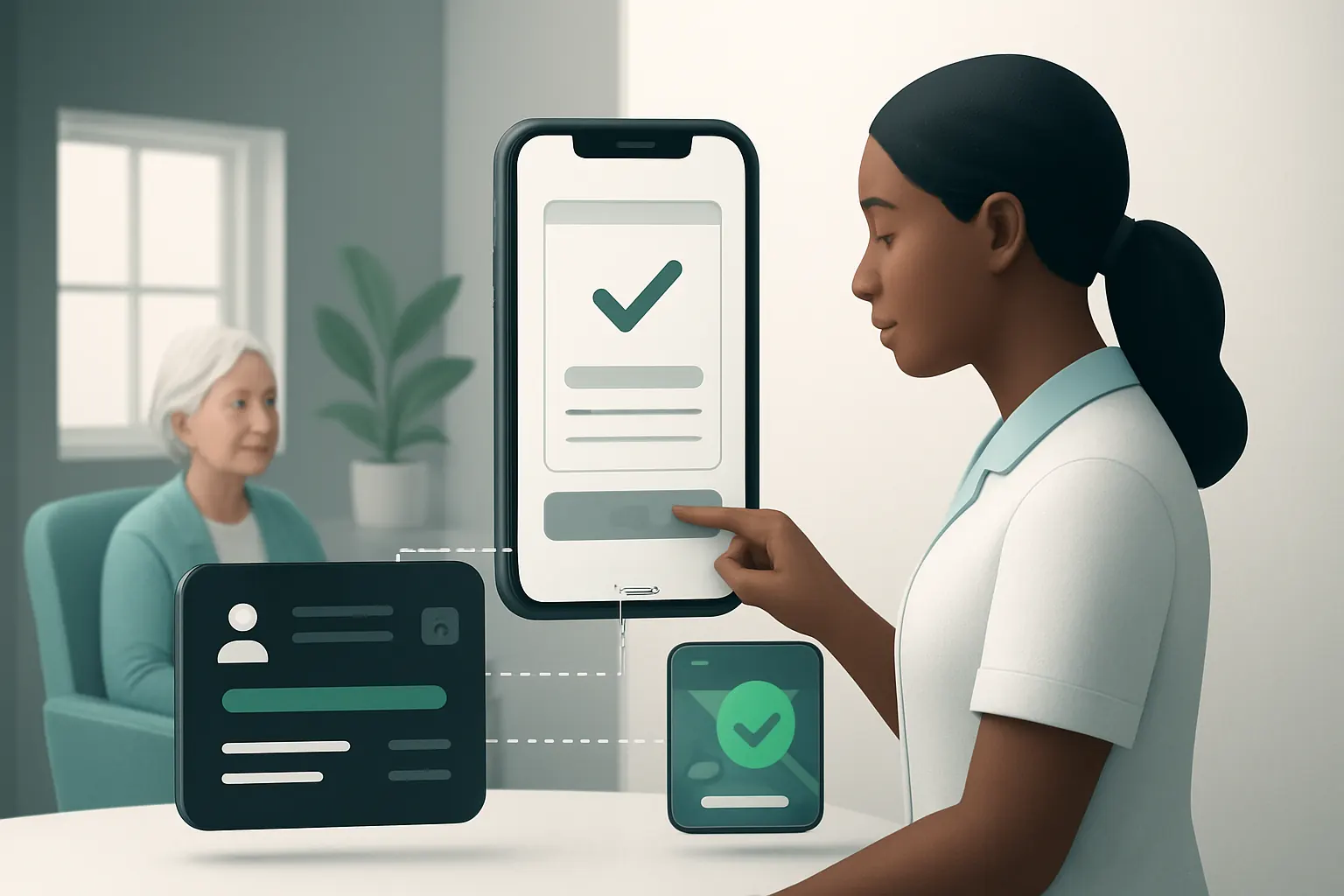
A unified record links client referral, care plan, visit history, and worker notes. This allows teams to access up-to-date information for consistent service delivery.
Example: Care worker handover notes
After each visit, carers record observations in a shared, structured form that updates the client record. Managers review summaries via customised dashboards.
Ensuring Privacy and Clinical Oversight
- Access controls comply with data protection laws and only authorised staff can view sensitive data.
- Human review is embedded for any risk-related updates.
- Audit trails provide transparency for inspections.

Replace Avoidable Software Subscriptions with Owned Modules
The Cost of Multiple Licenses and Vendor Fragmentation
Many agencies subscribe to overlapping SaaS products for rostering, compliance, communications, and billing, increasing costs and complexity.
How Owned Capabilities Reduce Dependence
Building tailored modules around core workflows consolidates functionality into one workspace the agency owns and controls. This reduces license fees and integration overhead.
Example: Built-in messaging and notifications
Instead of a separate app or SMS vendor, the platform includes automated notifications linked to shift status, compliance updates, and visits.
Configurable Controls for Messaging
- Communication templates are managed centrally.
- Delivery reports track message success.
- Human approval can govern urgent or sensitive communications.
Use AI Selectively to Lighten Variable Workloads
AI as a Support, Not a Replacement, for Human Judgment
AI excels at classifying unstructured data, summarising case notes, or prioritising tasks. However, predictable, regulated decisions require deterministic rules and human review.
Implementing AI in Key Workflows
AI modules can scan referral details to suggest urgency or match carers based on historical patterns. AI also helps summarise visit notes for supervisory review.
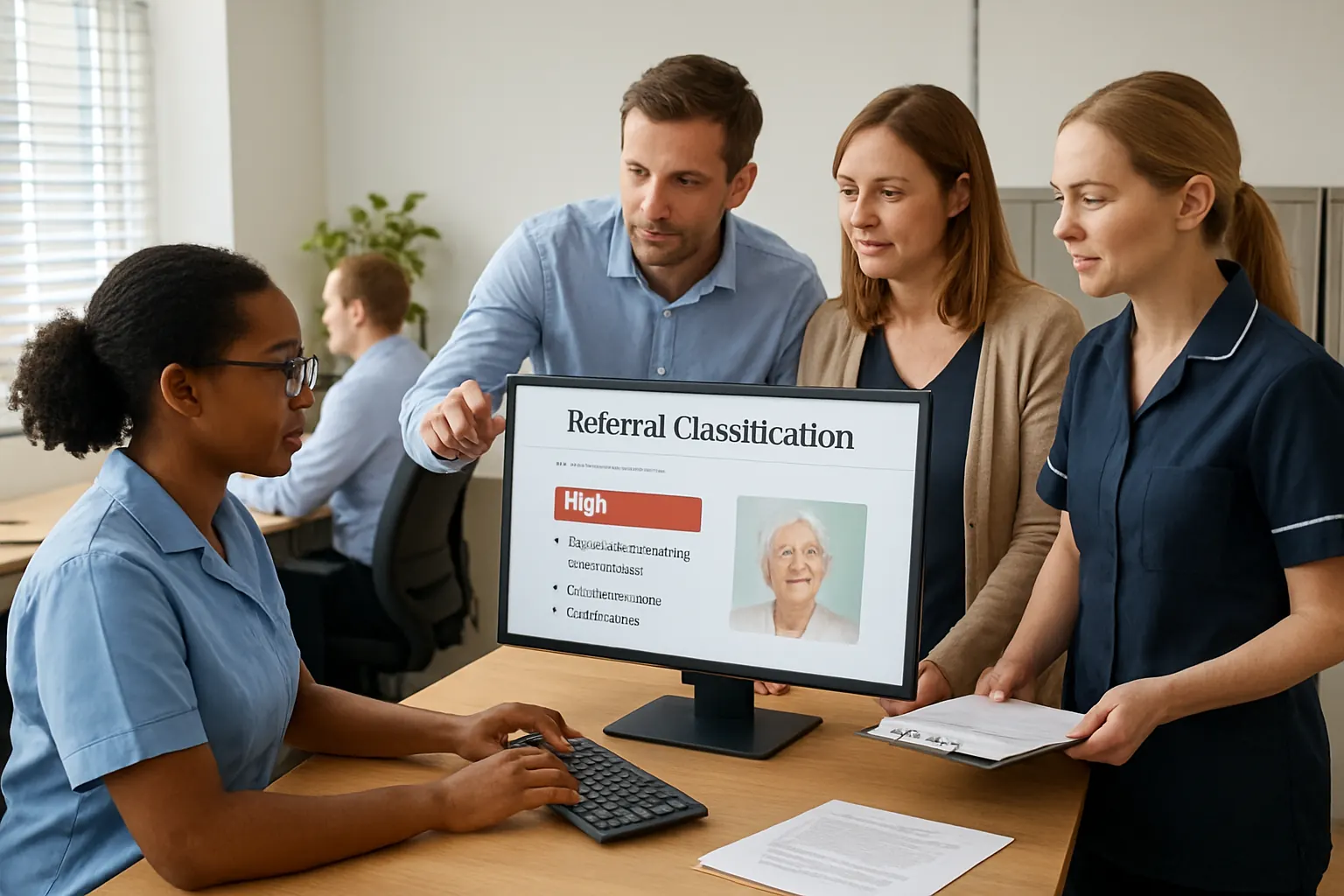
Example: AI-powered referral classification
The system highlights referrals with ambiguous details or higher care needs for senior review, expediting prioritisation.
Controls to Ensure Responsible AI Use
- AI outputs are suggestions, not final decisions.
- Human users validate or override AI findings.
- Transparent AI log reports support audit and improvement.
Automate Compliance Reporting and Audits
Legacy Reporting as a Time-Consuming Chore
Manually compiling compliance reports for inspections diverts resources from care delivery.
Dynamic Reporting Dashboards
Owned systems maintain real-time compliance statuses, generating audit-ready reports on training, DBS, visit completion, and incident logs.
Example: Instant compliance snapshot during inspection
Managers access tailored dashboards showing worker qualification expiry, visit adherence, and complaint trends during regulator visits.
Reporting Controls for Data Integrity
- Reports source live data with timestamps.
- Exceptions and overrides are documented.
- Reports can be customised per regulator requirements.

Improve Financial Control with Integrated Payment Systems
Payment Reconciliation Challenges
Disparate payment processes for workers, billing clients, and invoicing increase reconciliation errors and slow revenue cycles.
Integrating Payments with Work Records
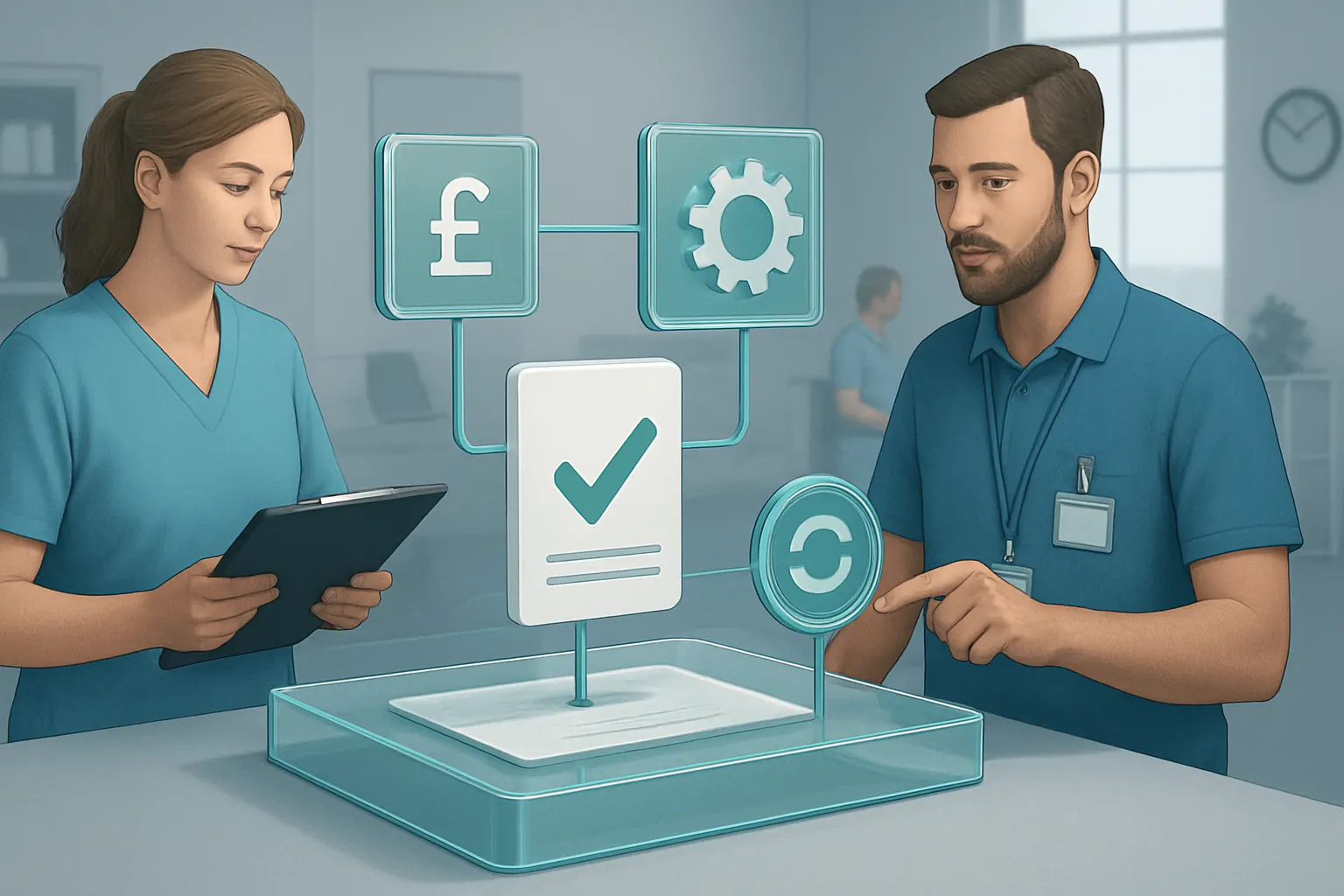
Where external payment providers are used for payroll or invoicing, integration with shift records ensures accurate payment matching and tracking.
Example: Automated payroll calculation
Timesheet data automatically triggers payroll runs with compliance checks before submission to payment systems.
Security and Compliance Considerations
- Integration follows PCI-DSS standards.
- Sensitive financial data access is limited.
- Payment records are auditable with transaction logs.
Facilitate Continuous Improvement Through Data Insights
Lack of Unified Data Hinders Operational Review
Agencies need consolidated data to identify bottlenecks, compliance risks, or care gaps.
Tailored Business Intelligence Dashboards
Owned systems aggregate operational metrics—worker availability, shift fill rates, compliance trends—into role-based dashboards for actionable insights.
Example: Monthly compliance risk heatmap
Supervisors review trends to prioritise training or recruitment efforts before accreditation assessments.
Controls on Data Use and Privacy
- Identified risks lead to documented action plans with approvals.
- Data minimisation policies protect personal information.
- Performance data is shared only with relevant stakeholders.

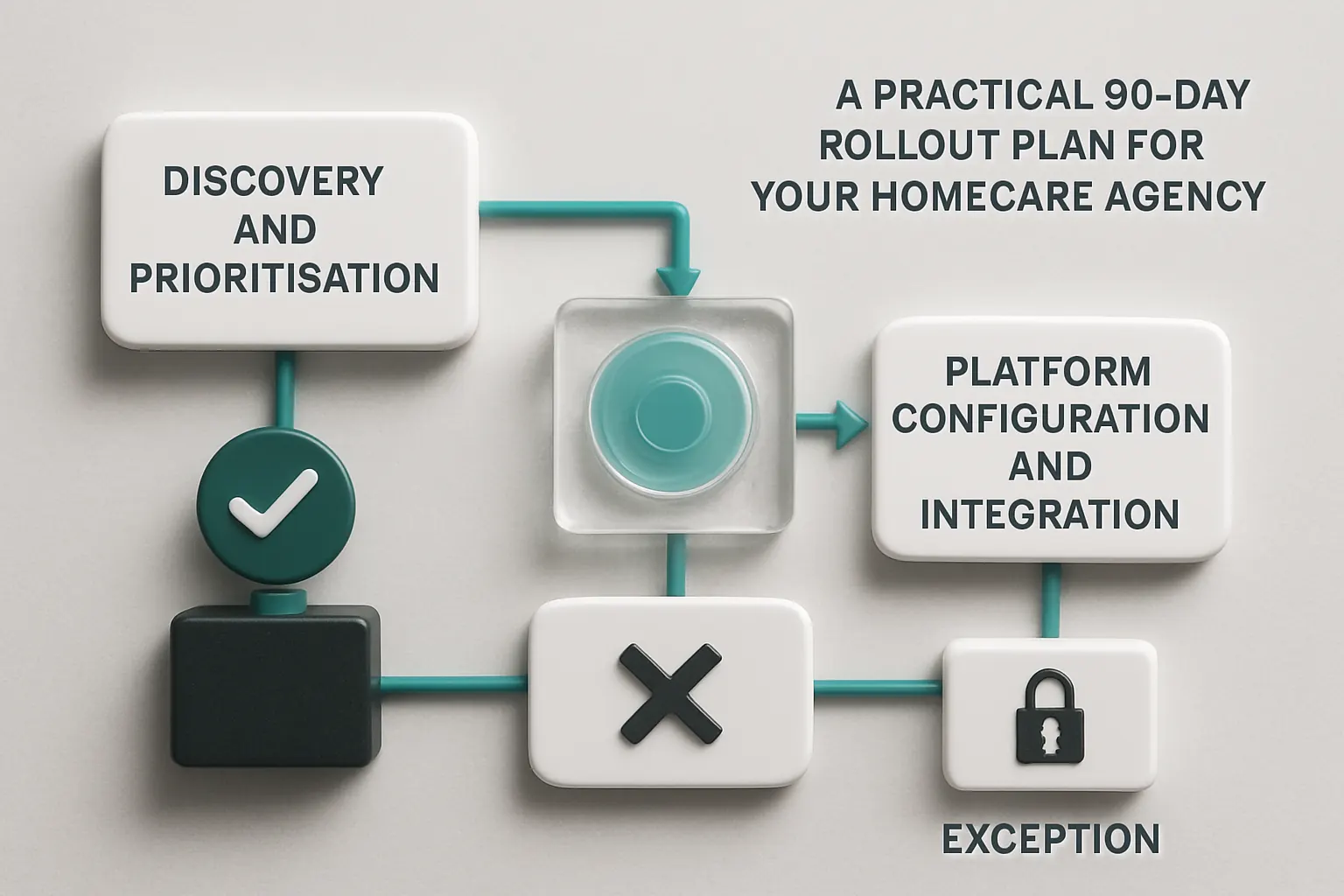
A Practical 90-Day Rollout Plan for Your Homecare Agency
Weeks 1–2: Discovery and Prioritisation
- Map current workflows, systems, and compliance pain points.
- Identify core data sources and define integration requirements.
- Engage key users to co-design automation priorities.
Weeks 3–6: Platform Configuration and Integration
- Connect existing compliance and scheduling data into the owned system.
- Build initial automated workflows for referral triage and compliance expiry notifications.
- Develop rule sets for shift matching and timesheet validations.
Weeks 7–12: Pilot, User Training, and Refinement
- Launch workflows with selected teams and monitor operational impact.
- Collect feedback and optimise AI suggestions and dashboards.
- Roll out messaging modules and prepare wider team adoption.
- Establish governance and audit procedures.
How AI Implementation UK Connects, Replaces, and Automates Your Operation
AI Implementation UK delivers one connected operating workspace tailored to how your homecare staffing agency works. Unlike patchworks of SaaS tools, we build around your existing data assets to connect your compliance records, scheduling, timesheets, and communications under your ownership.
Our approach preserves useful systems through integration while replacing costly subscriptions with bespoke modules that streamline your workflows. This single reliable record supports automated referrals, compliance monitoring, shift management, and reporting—with configurable rules that embed human oversight.
We deploy AI selectively, assisting variable work like referral triage and visit note summarisation without removing control from care managers. Our solutions secure sensitive data and payment processes in line with ICO guidance and NCSC best practice.
Start your automation journey with a practical plan that respects compliance, reduces administrative burden, and enhances workforce management. Explore how our process automation services, data infrastructure preparation, and AI strategy roadmapping can provide a tailored workspace you own and control.
Experience the difference from one connected system crafted specifically for the complexities of homecare staffing agency worker compliance automation software.