A practical guide to pest control software, connecting business systems, reducing repetitive admin and creating one operating platform the company owns.
What Breaks Daily in Pest-Control Companies
Pest control software should connect bookings, people, communications and reporting in one reliable operating flow.
Pest-control companies operate in a complex environment where frontline technicians, schedulers, customers, and compliance teams intersect. Daily breakdowns occur at multiple points: missed appointments, incomplete or lost treatment records, delayed invoicing, and fragmented customer communication. Many companies rely on a mix of standalone tools or spreadsheets, leading to duplicated data entry and inconsistent information.
Technicians struggle with manual paperwork in the field; schedulers lose control over dynamic job changes; managers lack real-time visibility of appointments, compliance status, or financial progress. These issues cause operational delays, frustrated customers, and compliance risks.
Despite existing software solutions, disconnects between scheduling, service delivery, billing, and reporting remain common. Without a unified system designed around the company’s actual workflows, these daily faults compound.
The Cost of Manual Work: Time, Errors, Compliance and Cashflow
Manual administration in pest control not only drains time but also increases the likelihood of errors. Here’s a snapshot of key costs:
- Wasted time: Technicians and office staff spend hours duplicating information across booking systems, paper forms, and invoicing software instead of focusing on service delivery.
- Data errors: Incomplete or inconsistent treatment records can lead to inaccurate billing, customer disputes, or failure to provide evidence for compliance audits.
- Compliance vulnerabilities: Regulatory demands for service verification, safety documentation, and data security become difficult to track without automatic controls and audit trails.
- Cashflow disruption: Delays between service completion and invoicing, or missed follow-ups on contracts, directly impact revenue realisation.
The right pest control software should alleviate these costs by uniting systems and automating routine processes — not just adding another disconnected SaaS subscription.
Create One Connected Booking and Contract Record
Managing Fragmented Schedules and Contracts
Pest control companies routinely juggle contracts that involve recurring visits, unplanned treatments, and emergencies. Multiple systems or spreadsheets often store customer data separately from visit schedules and contract terms.
Unified Booking and Contract Workflow
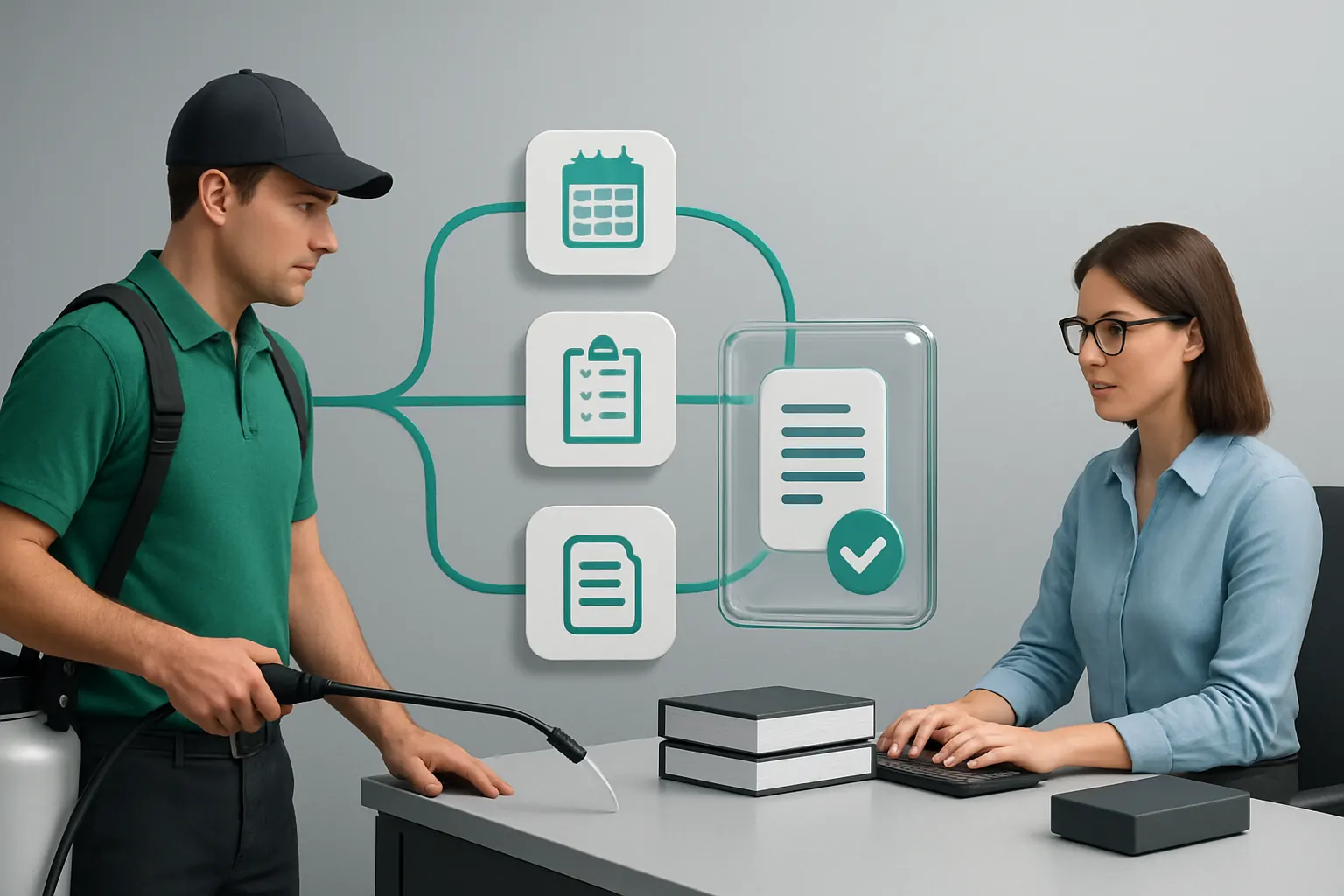
By merging bookings, contracts, and customer records into a single owned system customised around the company’s customer journey, every appointment links directly to the correct contract and site. This eliminates data re-entry and reduces errors.
Integrations That Keep Useful Legacy Tools
Existing CRM tools or commercial accounting software can be connected to the booking record. Financial transactions can continue through a trusted payment gateway like Stripe without disrupting workflow.
Practical Example
A commercial pest control company uses a module that creates recurring service plans with automated alerts linked to the contract. Scheduling staff assign jobs from this central record, guaranteeing the technician sees contract details onsite on their mobile device.
Control and Audit
Built-in workflows include approval checkpoints for contract amendments and automated notifications flag overdue visits or contract renewals to maintain service consistency and legal compliance.

Automate Technician Job Allocation and Route Planning
Dispatching Challenges in Dynamic Environments
Manual assignment of jobs and constant re-routing waste office time and reduce technician productivity. The absence of a system visually balancing workloads and geographic territory results in inefficiencies.
Smart Connected Scheduling and Routing
The system’s rota module processes job types, technician skills, and service priorities to allocate daily tasks efficiently. AI optionally supports route optimisation but deterministic rules govern SLA compliance and job sequencing.
Keeping Existing Workforce Management Tools
If a company uses established HR or payroll tools, these integrate seamlessly to keep personnel data current, removing duplicate maintenance.
Real-World Use Case
A mid-sized pest control firm dynamically assigns visits using a connected rota. When a high-priority pest outbreak emerges, the scheduler reallocates technicians with alerts triggered by contract SLA deadlines. Mobile apps provide real-time route updates.
Controls for Job Changes
All reassignments require scheduler confirmation; technicians report job status updates on mobile interfaces, ensuring transparency and accountability.
Deliver Mobile Treatment Records with Service Verification
The Burden of Paperwork Onsite
Technicians often carry clipboards, filling forms manually that must be input again into office systems later. This leads to errors and delays in recording work accurately.
Integrated Mobile Service Logging
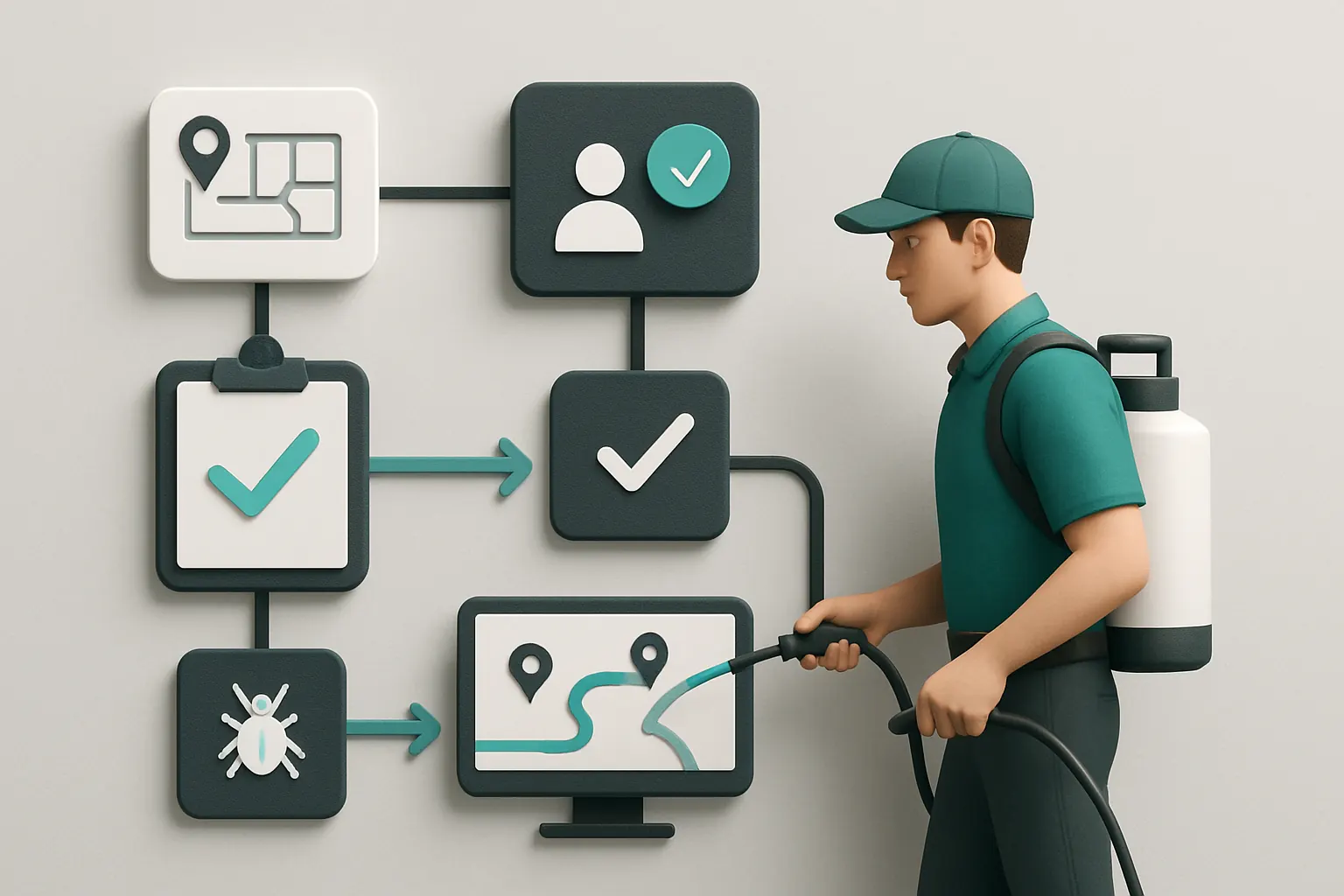
A mobile module connected to the operating record lets technicians capture treatment details, photos, materials used, and site notes instantly. GPS and time stamps verify treatment authenticity.
Specialist Tools for Compliance
When chemical use records or safety data sheets are needed, these can be linked through secure document management tools, retaining the specialist service while harmonising records.
Example Scenario
Upon completing a treatment, a technician clicks through checklists on their device. The data uploads to the central booking record, generating automated compliance reports accessible to auditors.
Human Oversight for Critical Entries
Certain adjustments trigger mandatory approval requests to regional managers to review and authorise, ensuring data accuracy and regulatory accountability.

Replace Multiple Admin Software Subscriptions with Owned Modules
The SaaS Fragmentation Problem
Many pest control businesses accumulate multiple subscriptions for scheduling, billing, customer communications, and field data. This inflates costs and causes integration gaps.
Consolidate with Customizable Owned Software
By configuring a connected operating system around the company’s workflows, overlapping software subscriptions can be retired and replaced with flexible owned modules. This saves ongoing fees and aligns capabilities directly with operational needs.
Selective Integration of Specialist Services
Payment processing (e.g., PCI-compliant Stripe) and external messaging platforms are incorporated as persistent integrations, maintaining reliability for core functions.
Concrete Illustration
A company consolidates its emailing, SMS alerts, visit scheduling, and invoicing modules into one owned workspace. This reduces subscription costs and improves data accuracy since information is entered only once.
Managing Change and User Access
Access rights are carefully configured to enable staff to use relevant modules only, supporting GDPR obligations and company data governance policies. Audit logs track usage and amendments.
Bring Data Into One Trustworthy Record and Tailored Dashboard
Fragmented Data Limits Insight
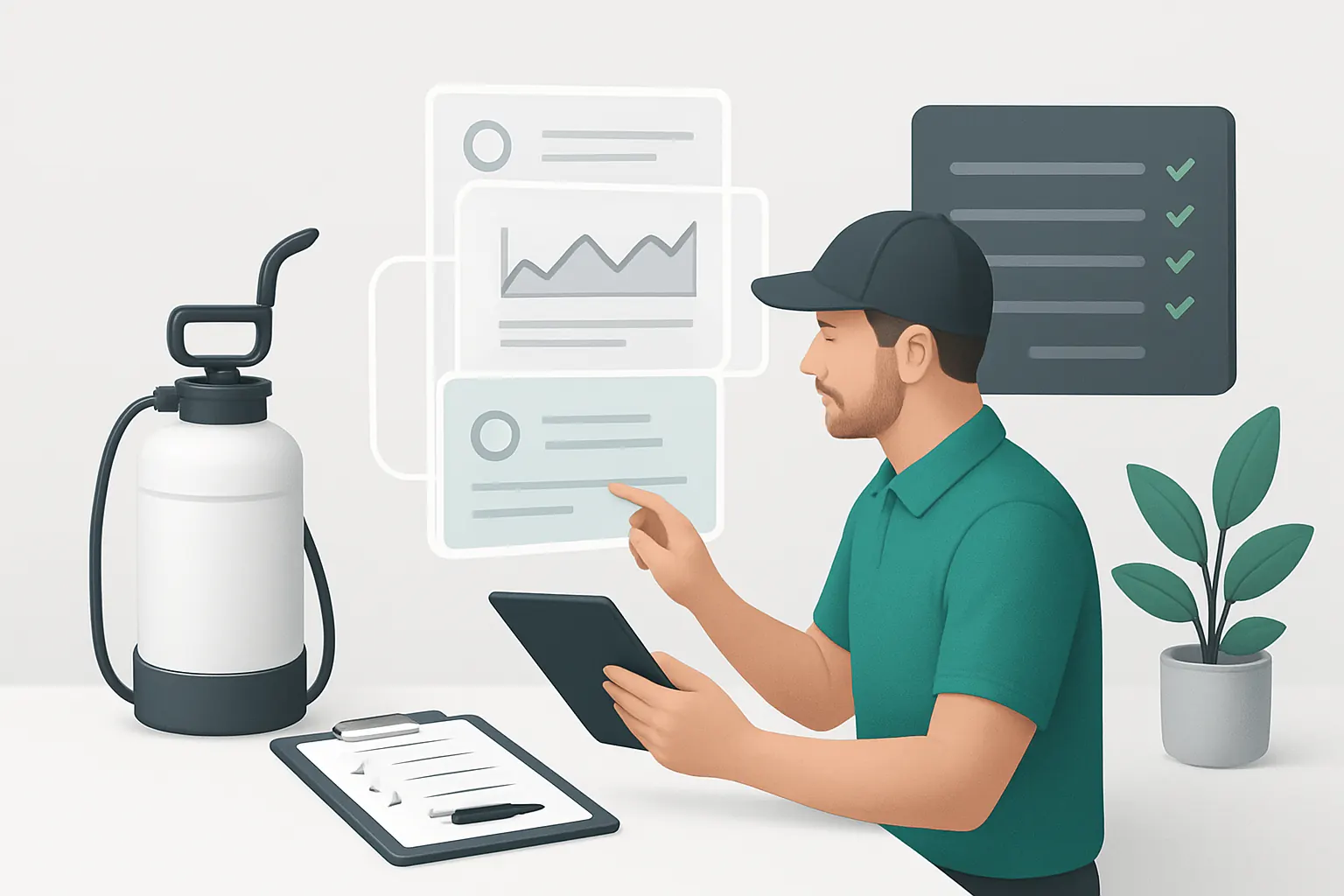
Information about sales, treatments, technician productivity, and compliance often sit in separate silos. Managers lack a single source of truth to make informed decisions.
Unified Data Model with Custom Dashboards
The operating system consolidates operational data feeds into one reliable record. Tailored dashboards present key performance indicators like job completion rates, contract status, billing summary, and technician utilisation.
Useful Legacy Data Connectors
Existing ERP or accounting software data extracts can be integrated to synchronise financial metrics without duplicating effort.
Example in Practice
A regional manager regularly tracks SLA compliance and outstanding contract renewals via a dashboard customised to their reporting preferences. Exceptions trigger workflow alerts for intervention.
Essential Controls
Dashboard filters control sensitive data visibility according to role and responsibility. Data updates are audited to maintain trustworthiness.

Use AI Selectively for Classification, Summarisation, and Decision Support
AI Cannot Replace Human Judgment in Pest Control
While AI capabilities can automate repetitive text classification, summarise service notes, prioritise tickets, or flag outliers, complex regulatory or safety decisions must retain human oversight.
Augment Routine Workflows with AI Agents
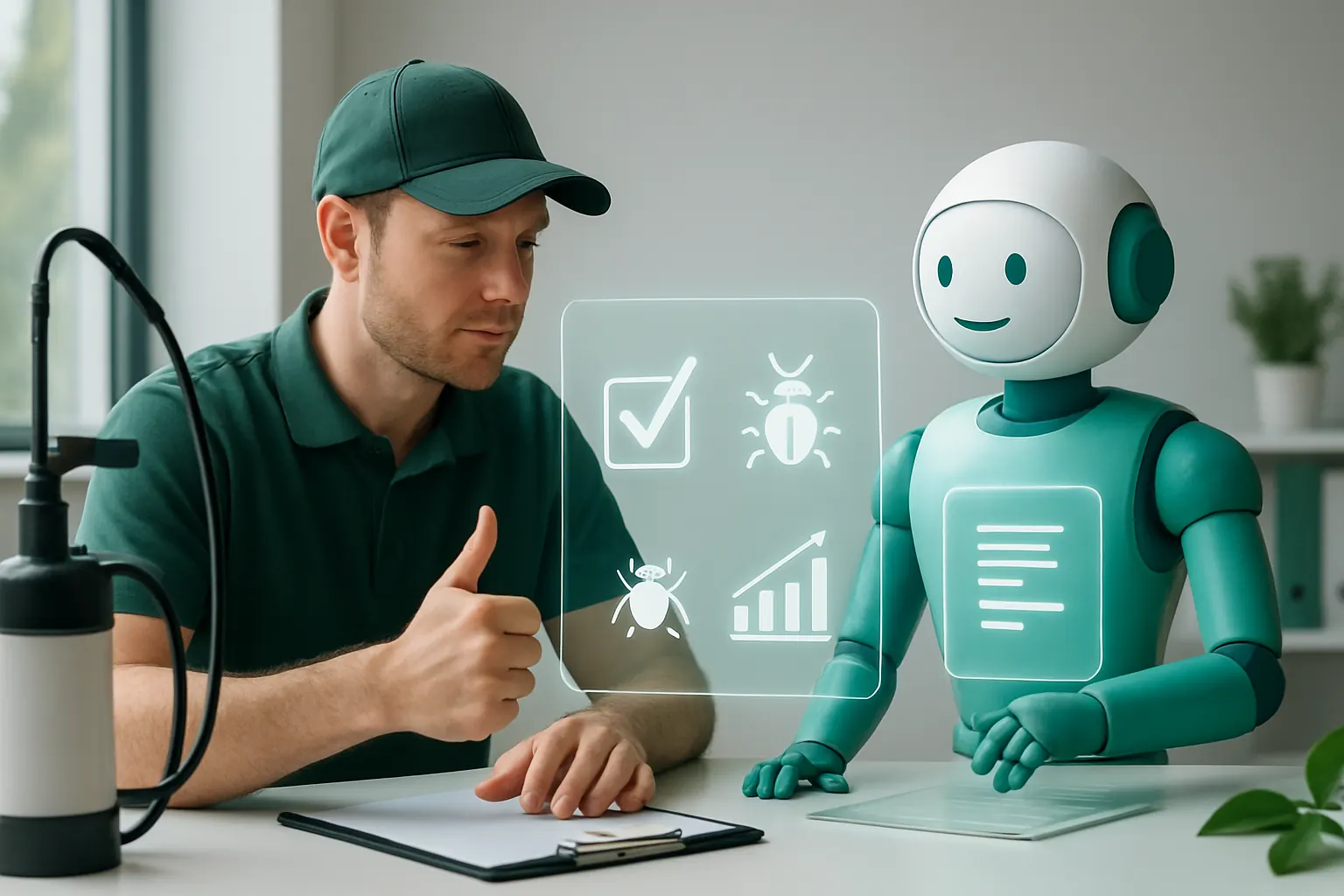
AI modules integrated within the owned system assist workflow handoff at predictable points, such as categorising incoming enquiries or summarising technician feedback for office review.
Specialist External AI Services Remain Connected
For example, natural language processing in customer communications may use cloud AI APIs, yet data flows remain under company control.
Concrete Use Case
An AI-driven assistant summarises daily technician service logs into high-level reports, prioritising jobs for follow-up, but all final decisions require manager approval.
Strong Controls and Transparency
AI outcomes are visible and auditable, with override options clearly explained and recorded, supporting compliance frameworks.
Streamline Customer Communications Without Disconnected Tools
Challenges of Multiple Communication Channels
Relying on separate email marketing platforms or SMS services that do not integrate with scheduling or billing causes fragmented customer experiences.
Integrated Communication Workflows
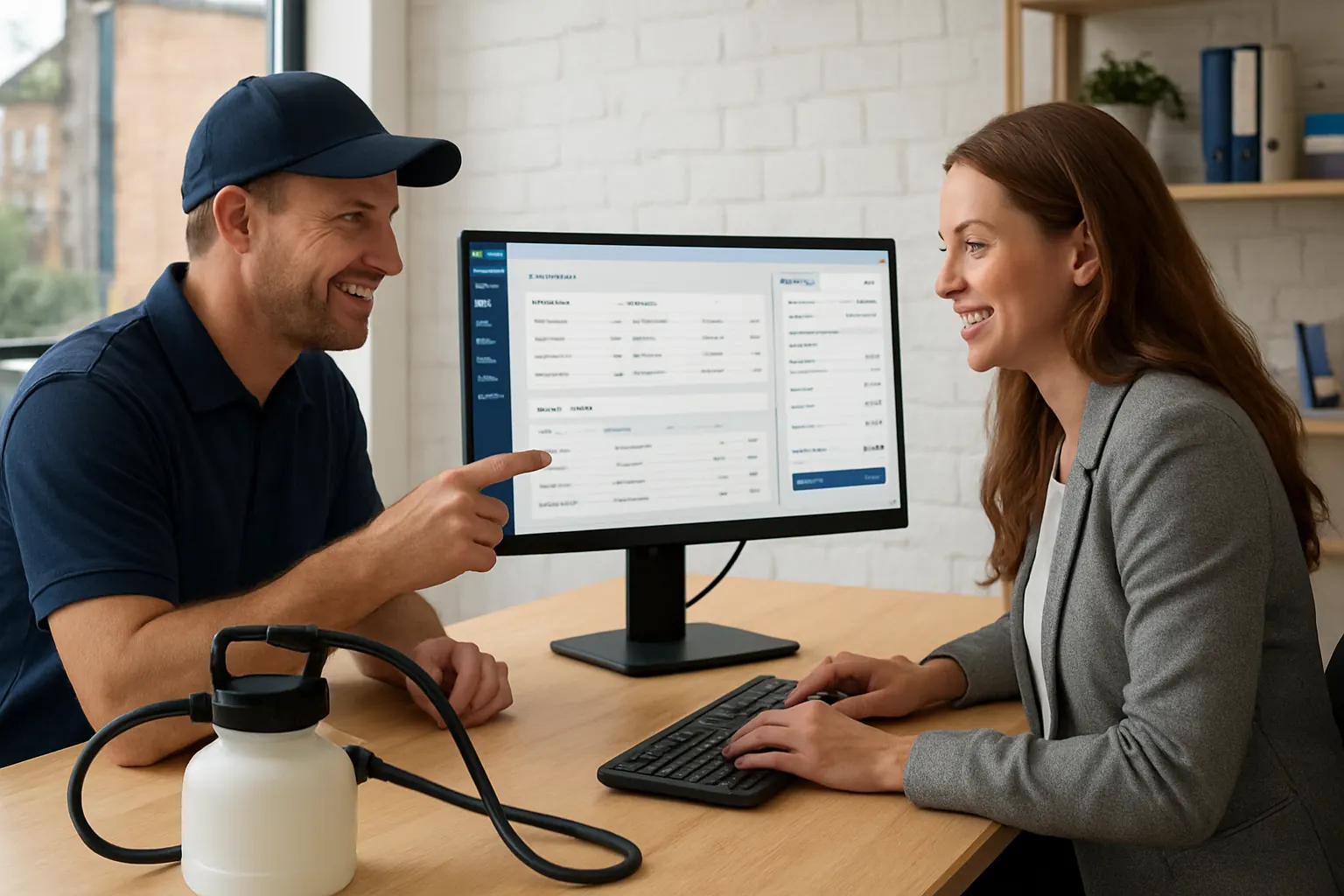
The owned operating system includes modules for automated appointment reminders, follow-up requests, and invoice notifications linked directly to the booking record.
Integrate Specialist API-First Tools
Where needed, a trusted external SMS provider integrates via API, ensuring messages are logged automatically against customer records.
Practical Example
Customers receive appointment reminders with technician details by SMS automatically. Any customer response triggers a workflow task for staff to follow up, reducing no-shows.
Controls for Customer Privacy
Message opt-in status and preferences are maintained per GDPR requirements. Communication logs are retained securely for audit purposes.
Improve Cashflow with Timely Invoicing and Payment Integration
Invoicing Delays Impact Revenue
Late or inaccurate invoices, separate billing systems, and manual generation slow payment cycles and hurt cashflow.
Centralised Billing Linked to Service Records
Invoices are generated automatically from validated treatment data and contract terms within the owned system. Payment status synchronises with chosen payment processors like Stripe.
Integration with Trusted Payment Gateways
Direct payment integrations prefer PCI DSS-compliant services with secure transaction handling, avoiding standalone point solutions.
Real-World Impact
An SME pest control firm reduces days sales outstanding by automating invoice release immediately after technician approval. Customers click links on emailed invoices for speedy payment.
Finance Controls
Approval workflows govern invoice adjustments, and system alerts notify finance teams of overdue payments for timely chasing.
90-Day Rollout Plan for Connected Pest Control Software
Weeks 1–2: Discovery and Configuration
- Map existing workflows, software tools, and pain points.
- Identify legacy systems to retain and connect.
- Configure core modules: booking, contracts, and technician scheduling.
- Setup role-based user access and security settings.
Weeks 3–6: Integration and Initial Automation
- Integrate mobile treatment logging and document management.
- Connect messaging and payment gateways.
- Deploy dashboards and establish reporting routines.
- Pilot technician mobile apps and job allocation workflows.
Weeks 7–12: AI Enhancements and Scaling
- Implement AI agents for classification and summarisation.
- Automate invoice generation and communication workflows.
- Monitor system usage and refine process automations.
- Train staff on change and collect feedback for continuous improvement.
How AI Implementation UK Connects and Automates Your Pest Control Operation
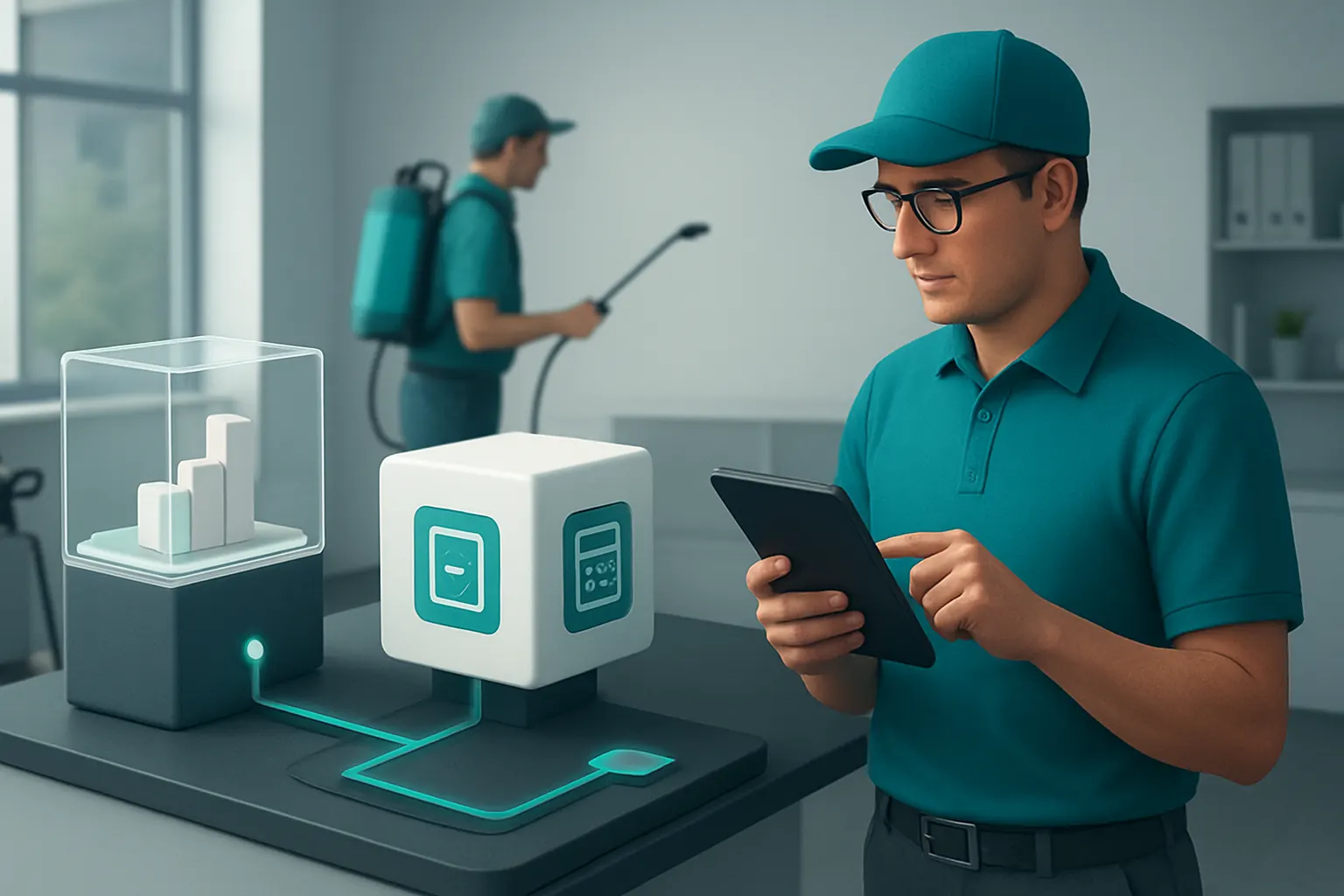
At AI Implementation UK, we specialise in replacing disconnected, costly software stacks with one connected operating system that your business owns. Built around how your pest control company actually works, our approach preserves useful current tools while bringing operational data from scheduling, technician records, billing, and compliance into a single accurate source of truth.
We selectively embed AI as an assistive capability for tasks like ticket classification and report summarisation, while deterministic rules and human approvals enforce operational and regulatory safeguards. Our expertise includes secure integration with trusted payment gateways and messaging services, avoiding unnecessary subscription proliferation.
This connected, modular system reduces repetitive admin, cuts errors, improves cashflow visibility, and gives managers tailored insights to run their businesses confidently.
If you want to discover how your pest control firm can achieve this transformation, start with our process automation services or explore data infrastructure preparation to lay a solid foundation. For strategic alignment and AI roadmap planning, see our AI strategy roadmapping. Success stories and practical insights are available in our case studies.
Investing in an owned, connected system ensures your pest control company won’t rely on disconnected SaaS subscriptions that fragment workflows. Instead, you gain clarity, control and scalability fitting the evolving business landscape.
Compliance and Security References
- For data protection and privacy management, refer to the ICO guidance on data security.
- PCI security standards for payment integration details are available at the PCI Security Standards Council.
- GDPR obligations for processing customer communications are outlined in GOV.UK guidance.