Learn how medical and pharmaceutical distributors can connect systems, reduce manual admin and automate order to dispatch with one tailored operating platform the.
Medical and pharmaceutical distributors workflow automation: What Breaks Daily
Medical and pharmaceutical distributors workflow automation should connect bookings, people, communications and reporting in one reliable operating flow.
Medical and pharmaceutical distributors operate within a tightly regulated, high-stakes environment. Every day sees challenges from order inaccuracies, stock inconsistencies, and delays in dispatch. Controlled substances demand rigorous tracking, with batch traceability and chain of custody protocols adding extra layers of complexity. Fragmented systems often result in duplicated effort, data silos, and inconsistent records, risking compliance breaches and costly errors. On top of these pressures, unexpected inventory shortages and late deliveries strain customer relationships and compromise patient safety.
Despite many existing IT investments, businesses frequently experience slow workflows hampered by disconnected software tools. Manual checks, multiple touchpoints, and error correction consume valuable labour hours. These issues highlight the need for an integrated approach: connecting reliable current systems, replacing unnecessary subscriptions with owned automation components, and centralising operational data for real-time visibility and control.

The Cost of Manual Work in Distributors’ Operations
Manual processing generates several hidden and direct costs for medical and pharmaceutical distributors:
- Time Inefficiency: Employees spend excessive hours reconciling orders, checking stock availability, and manually updating dispatch statuses.
- Error Rates: Human data entry errors on batch numbers or shipment details can cause compliance flags or regulatory reporting issues.
- Compliance Risks: Without auditable workflows and consistent controls, distributors risk non-conformance to MHRA regulations and chain-of-custody requirements.
- Cashflow Strain: Slow dispatch cycles delay invoicing and payments, while stock overages or expiry cause financial waste.
- Operational Fragmentation: Multiple SaaS products increase subscription costs, complicate integrations, and dilute data accuracy.
Automation of core workflows, utilising one connected operating system that clients fully own, offers a practical route to avoid these pitfalls without replacing every tool in use.

Connected Order-to-Dispatch Coordination
Daily Dispatch Challenges Demand Streamlined Workflows
Manual management of order processing through to dispatch is error prone. Separate systems for order capture, picking, packing, and transportation lead to delays and missing information.
A Single Record Integrates Workflow Progress
Our solution merges order workflows within a bespoke operating workspace that aggregates order data, stock levels, and delivery scheduling. This reduces the need to switch across systems.
Integrating with Specialist External Services
Interfacing with authorised courier APIs supports real-time booking updates. Payment gateways remain connected for billing while the system orchestrates dispatch steps.
Example: Batch-Controlled Dispatch with Alerting
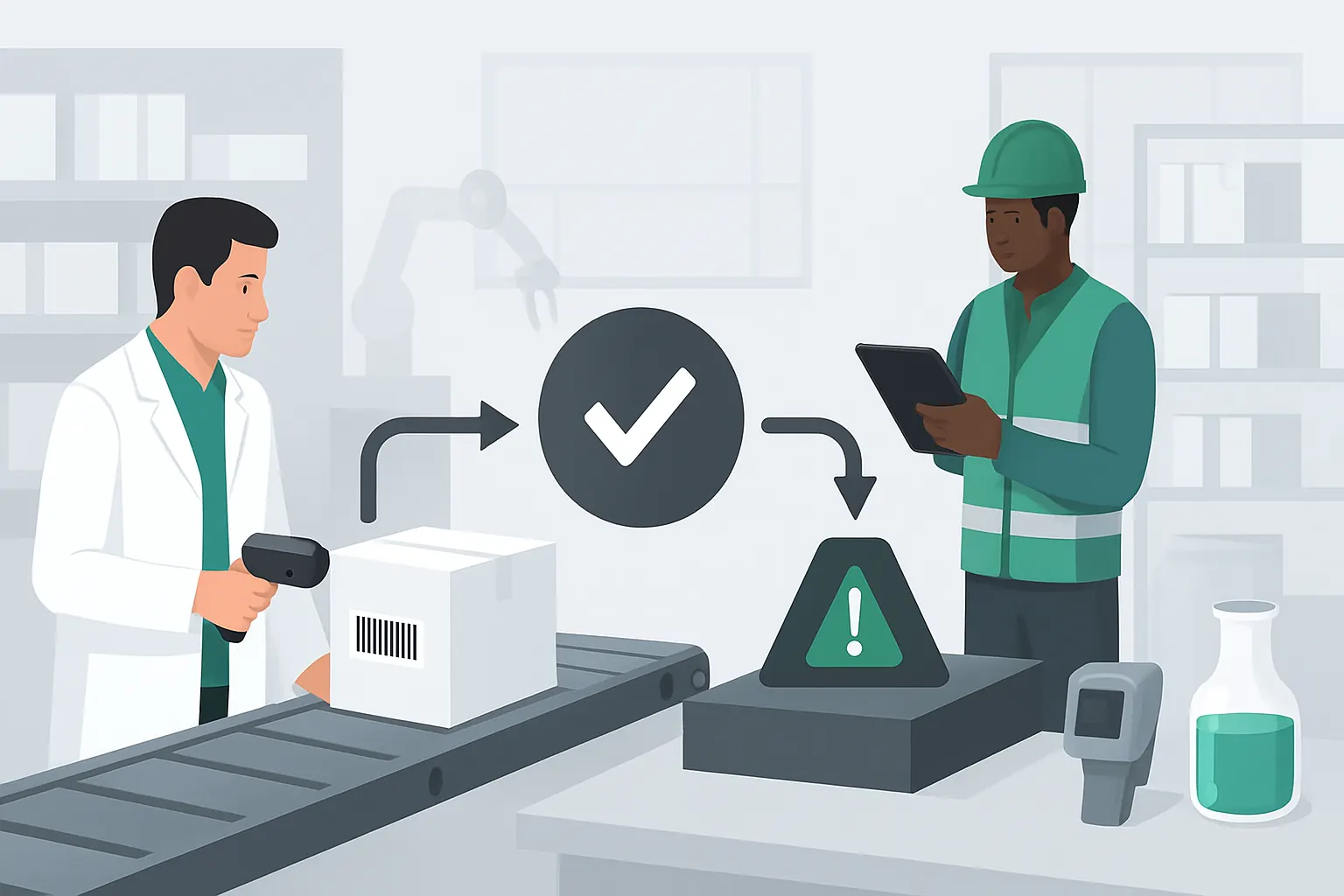
An order flagged for controlled drugs prompts automatic verification of batch numbers and expiry. Discrepancies trigger workflows for human approval before release.
Controls That Preserve Compliance and Security
All dispatch events have logged user actions with role-based permissions controlling who can approve and amend records, supporting audit requirements.

Controlled Stock Management with Full Traceability
Stock Handling Poses Complex Regulatory Demands
Errors in batch and serial number tracking can cause regulatory non-compliance and product recalls.
Consolidating Stock Data into One Reliable Record
The system consolidates stock movements, expiry dates, and batch traceability modules owned by the client, replacing scattered subscriptions.
Useful Interfaces to Warehouse Scanners and ERP Systems
Barcode scanning devices and existing ERP systems interface to maintain real-time, accurate stock counts feeding the dashboard.
Concrete Example: Automated Expiry Alerts
Stock about to expire triggers an alert on the dashboard for review, enabling timely redistribution or write-off procedures.
Ensuring Data Integrity and Human Oversight
Rules enforce mandatory batch capture on all stock updates, with exceptions flagged for user approval to catch anomalies early.
Route and Capacity Planning Automation
Manual Route Planning Causes Inefficiencies and Errors
Distributors need precise capacity allocation within tight delivery windows but often rely on spreadsheets or disconnected tools.
Mapping Capacity to Real-Time Order and Resource Data
A connected module matches available vehicles, driver schedules, and order priorities from the main operating record, dynamically adjusting routes.
Specialist Map and Communication APIs Retained
Integration with mapping services and mobile communication tools ensures navigation and delivery instructions remain seamless.
Use Case: Dynamic Re-Routing for Delayed Shipments
When a shipment delay occurs, the dispatcher receives a prompt to adjust routes and inform customers via automated messages.
Transparency and User Control Over Changes
Dispatchers see applied route changes in a real-time dashboard, retaining authorisation rights to adjust beyond automated suggestions.

Document and Proof-of-Delivery Capture
Paperwork Lags Slow Dispatch Completion
Distributors struggle to collect and verify proof-of-delivery (POD) documents, often losing signed papers or delayed record updates.
Paperless Collection Tied to Workflow Records
Mobile capture of POD images or electronic signatures updates the delivery record directly within the connected system.
Seamless Integration with Customer Communication Channels
Email and SMS gateways send delivery confirmations automatically once POD is logged, improving transparency.
Example: Exception Reporting and Resolution
If a POD image is missing or incomplete, the system flags the order for follow-up with driver notes and customer comments recorded.
Secure Access for Drivers with Role Restrictions
Driver access is limited to required input screens using secure login, safeguarding sensitive shipment data.

Prioritisation and Exception Management Using AI
Managing Urgent or Problematic Orders Creates Pressure
Sorting high-priority orders and identifying exceptions manually is inefficient and error prone.
Selective AI Supports Classification and Prioritisation
AI modules classify incoming orders by urgency and customer type, highlighting exceptions for human review.
Existing Rule Engines Manage Predictable Tasks
Deterministic rules handle routine checks such as stock availability or standard batch compliance, escalating unusual cases.
Practical Example: AI-Prioritised Picking Lists
Orders flagged as critical appear first in the picking workflow, improving responsiveness while preserving human approval for deviations.
Controls to Avoid Over-Automation
AI outputs are suggestions, with final decisions resting with trained staff reviewing flagged items, ensuring balanced automation.

Automated Notification and Delay Alerts
Manual Monitoring of Delays Causes Operational Blind Spots
Detecting and communicating shipment delays often happens reactively, frustrating customers.
Workflow Orchestration Sends Timely Alerts
Automated triggers monitor milestones within workflows, sending delay alerts to drivers, customers and internal stakeholders from the same operating record.
Useful Specialist Services: SMS Gateways and Email Servers
Notifications employ existing communication gateways retained for reliable delivery without disrupting core workflows.
Concrete Scenario: Temperature-Controlled Goods Alert
If temperature readings during transport breach set thresholds, the platform immediately warns operations teams for intervention.
Audit Trails for Notifications Maintain Accountability
All automated messages are logged, with records available for audit and follow-up actions.

Finance and Payment Integration Within Core Operations
Billing Delays Impact Cashflow and Financial Accuracy
Manual invoicing detached from dispatch and order records wastes time and risks mismatches.
Linking Payment Records to Completed Workflows
The payment module ties completed deliveries directly to invoices, replacing third-party billing subscriptions with an owned component.
Secure Integration with UK Payment Gateways
Payment transactions are routed via PCI DSS-compliant service providers, ensuring financial data security and regulatory adherence.
Example: Automated Invoice Generation Upon POD Confirmation
Invoices auto-generated accelerate payment cycles once proof-of-delivery is verified, reducing outstanding receivables.
Financial Controls and User Permissions
Invoice approvals require managerial sign-off before dispatch, maintaining robust control over cash flows.

Live Performance Dashboard and Reporting
Static Reports Do Not Support Dynamic Decision-Making
Operational managers need instant insight into key metrics such as dispatch times, stock levels, and compliance flags.
Custom Dashboards Consolidate Data into One View
The platform offers tailored live dashboards drawing from connected modules, providing actionable insights.
Useful Data Import Capabilities from Specialist Analytics Tools
Where specialist analytics are needed, selected external reports can be embedded without fragmenting data ownership.
Example: Real-Time Risk Indicators for Controlled Stock
Alerts on batch expiry, stock shortages, and delivery exceptions appear in one consolidated view, enabling timely intervention.
User Access Controls Tailor Information Visibility
Dashboards present role-based data aligned with responsibilities, preserving confidentiality and compliance requirements.

90-Day Rollout Plan for Medical and Pharmaceutical Distributors Automation
Weeks 1–2: Discovery and System Mapping
- Document existing workflows and software in use
- Identify key integration points and data sources
- Prioritise modules based on regulatory risk and operational bottlenecks
Weeks 3–6: Building the Core Operating Record
- Develop the owned platform framework matching business processes
- Integrate controlled stock and order management modules
- Migrate data ensuring batch traceability and audit trails
- Set up user roles, permissions, and basic reporting
Weeks 7–12: Automation, AI, and Dashboard Deployment
- Implement AI-powered prioritisation and alerting modules
- Integrate live communication services and financial workflows
- Customise dashboards and reporting views
- Staff training and gradual cutover from legacy systems
- Establish controls for approvals and exception handling

Connecting Your Operations with AI Implementation UK’s Owned Automation System
Medical and pharmaceutical distributors face complex but manageable challenges that cannot be solved by layering more disconnected SaaS products. Instead, AI Implementation UK offers a single connected operating system built precisely around your existing way of working.
We preserve valuable investments in current IT systems, integrating them securely and smoothly. Redundant software subscriptions are replaced by bespoke owned modules, reducing costs and dependency on multiple vendors. Operational data flows continuously into a consistent, auditable record and a tailored dashboard. This consolidates control over controlled stock, batch traceability, order processing, and dispatch management.
AI capabilities are applied judiciously to variable, high-value tasks such as prioritisation, classification, and summarisation. Predictable tasks remain in deterministic rules, with human approval retained for compliance-sensitive decisions. Our approach respects the regulatory environment, embedding controls that maintain auditability and human oversight rather than automating blindly.
Choosing this connected and owned route delivers:
- Greater operational efficiency and speed
- Lower subscription and integration complexity
- Improved compliance and traceability with built-in controls
- Real-time insights for better decision-making
To explore how this approach can be tailored for your medical and pharmaceutical distribution operation, visit AI Implementation UK’s workflow automation services and platform planning. For data readiness and AI strategy advice, our linked services help build a future-proof foundation.
By investing in one platform you control, your business streamlines workflows, works smarter, and stays compliant — all without the risks and costs of disconnected SaaS dependencies.
For guidance on data protection principles in these connected systems, consult the ICO's recommendations at ICO data protection guidance. For secure payment integration, reference the PCI Security Standards Council at PCI Security Standards Council guidance.
To turn these priorities into one coherent system, map the platform your business needs or explore our workflow automation approach.