Learn how warehousing businesses can connect systems, reduce manual admin and automate order to dispatch with one tailored operating platform the business owns.
Warehousing business automation software: What Breaks Daily
Warehousing business automation software should connect bookings, people, communications and reporting in one reliable operating flow.
Warehousing businesses in the logistics and wholesale sector are complex machines, with workflows that must synchronise seamlessly from inbound receipts to dispatch waves. Yet the daily reality for many warehouses is fragmented systems, manual data entry and disconnected software. These issues cause delays, errors and reduce transparency in activities like inventory location management, order processing, and route planning.
When teams rely on spreadsheets, standalone tools and multiple subscriptions to manage essential tasks such as storage allocation, proof of delivery or capacity planning, fundamental problems emerge. Information is duplicated or lost, with unclear ownership of data. This slows operational decisions and frustrates staff who lack reliable tools designed around how their business works.
The breaking points are evident:
- Incorrect or late inbound receipt data impacting inventory availability
- Dispatch waves planned on outdated information causing delays
- Manual chasing of delivery exceptions and driver communications
- Overlapping or redundant software items adding cost without clarity
- Hard-to-access performance insights for operational improvement
To overcome these issues at scale, warehousing businesses must embrace a connected, streamlined and owned automation approach built specifically for their workflows and realities.

Connecting Inbound Receipt Automation to Inventory Accuracy
Complexity of Receiving Workflows in Warehousing
The arrival of goods is a daily bottleneck, where vendor documentation, parcel sorting and quality checks must coordinate. Delays and errors here ripple through inventory and dispatch stages.
Streamlining Receipt Record Linkage and Inventory Locations
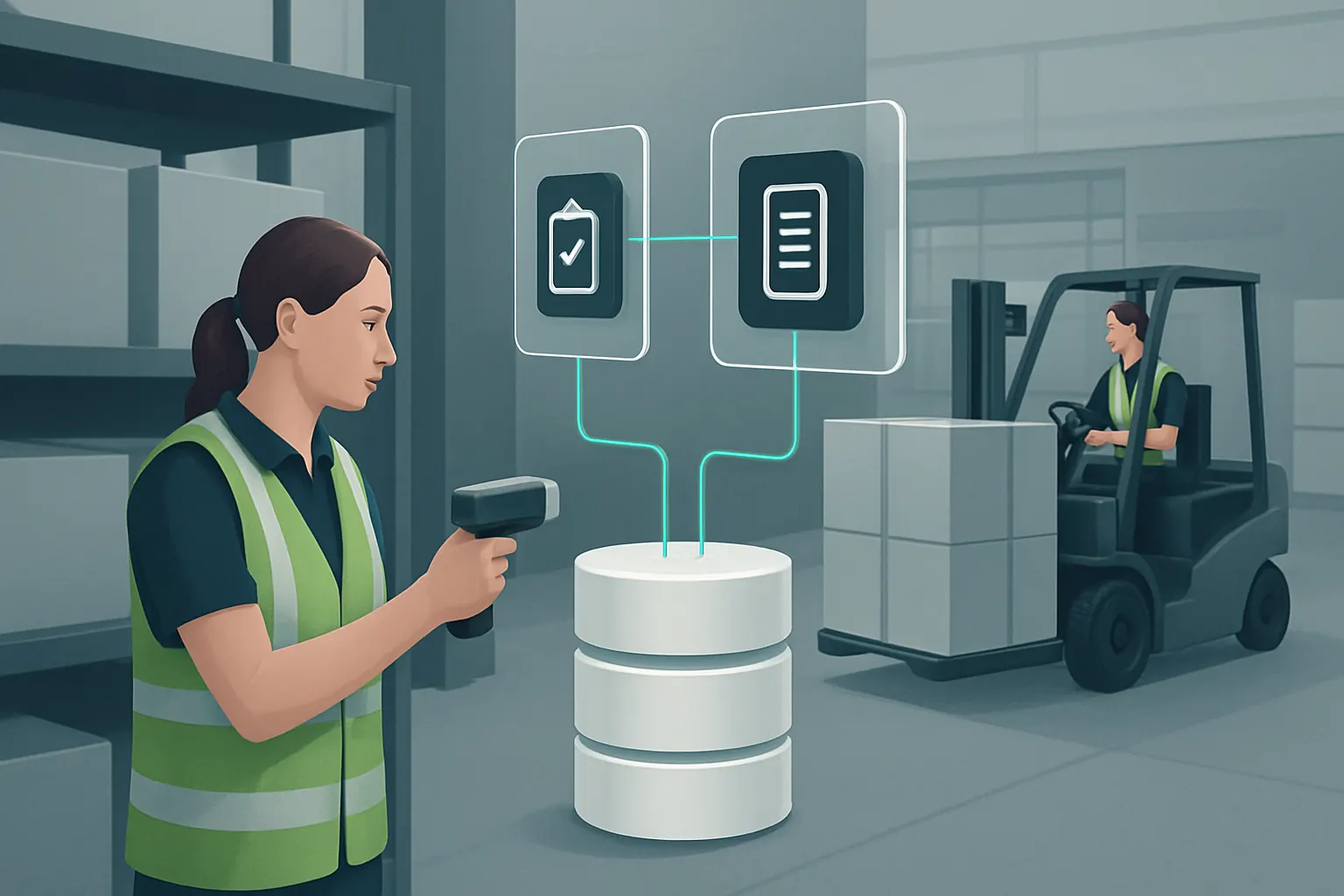
A connected operating system captures every inbound receipt transaction through digital data entry workflows aligned with physical receiving areas. It links supplier paperwork, batch numbers and customs status within an owned booking record.
Locations for storage and quarantine get assigned automatically based on predefined rules, updating the live inventory record and enabling immediate visibility.
Useful Integrations with Scanning and Customs Solutions
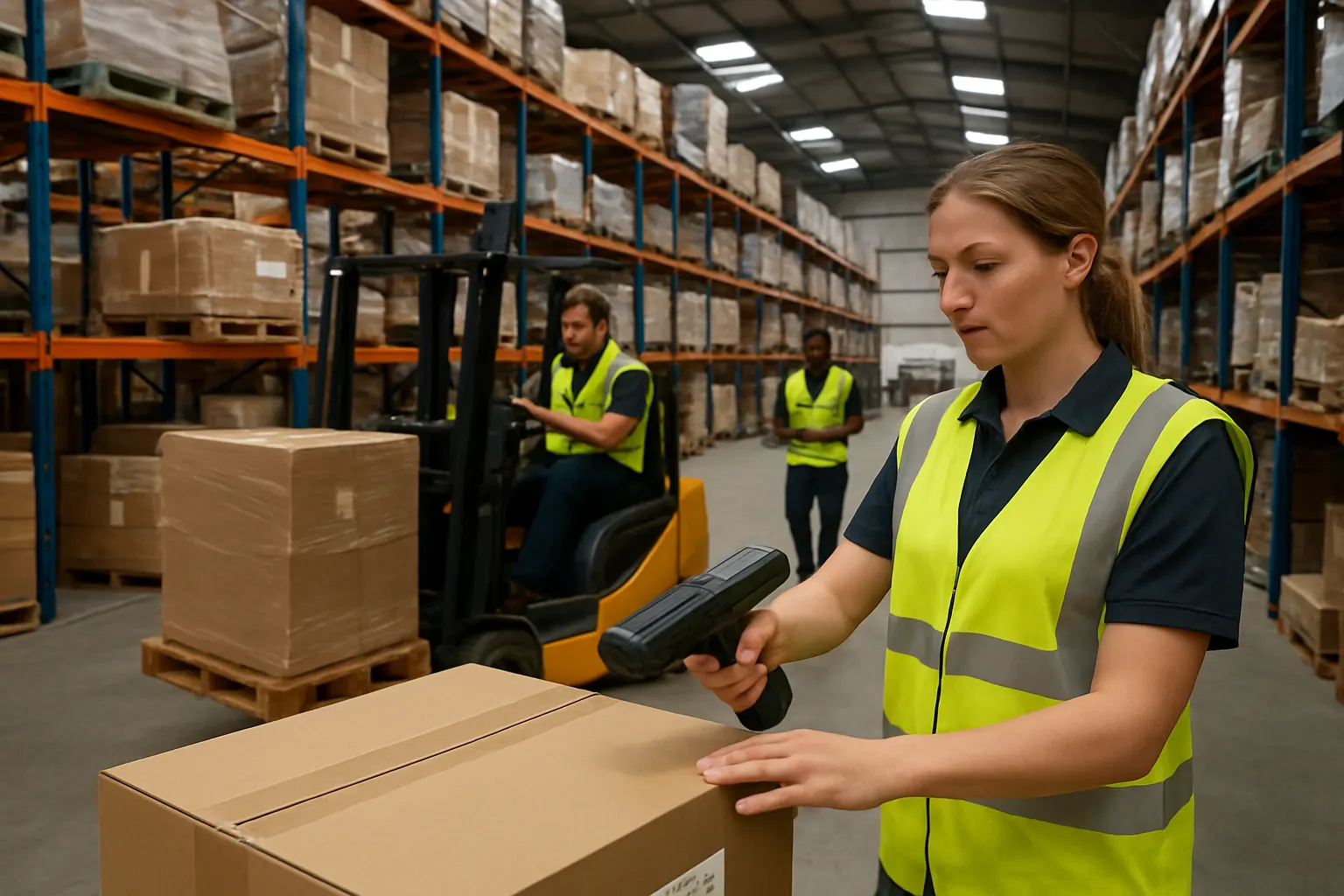
Existing barcode scanners, EDI messaging and customs clearance partners (such as those used for customs warehouses) connect into the system’s API, reducing duplicate manual inputs and ensuring traceability.
Practical Example in a Distribution Centre
Inbound pallets at a large warehouse enter the system via mobile device capture. The system verifies quantities, registers customs warehouse details and automatically assigns storage coordinates visible to floor staff and supervisors.
Controls Supporting Compliance and Quality
Predefined validations prevent recording incorrect batch data or noncompliant storage. Supervisors receive alerts on discrepancies requiring sign-off, ensuring audit trails and regulatory controls.

Orchestrating Order to Dispatch with Zero Data Silos
Challenges in Coordinating Order Picking and Delivery Waves
From order entry to picking and packing, then out for delivery, too many warehouses rely on disconnected spreadsheets, email notes and manual phone calls. This fragments workflow and hinders clear accountability.
Unified Dispatch Workspace Replacing Fragmented Tools
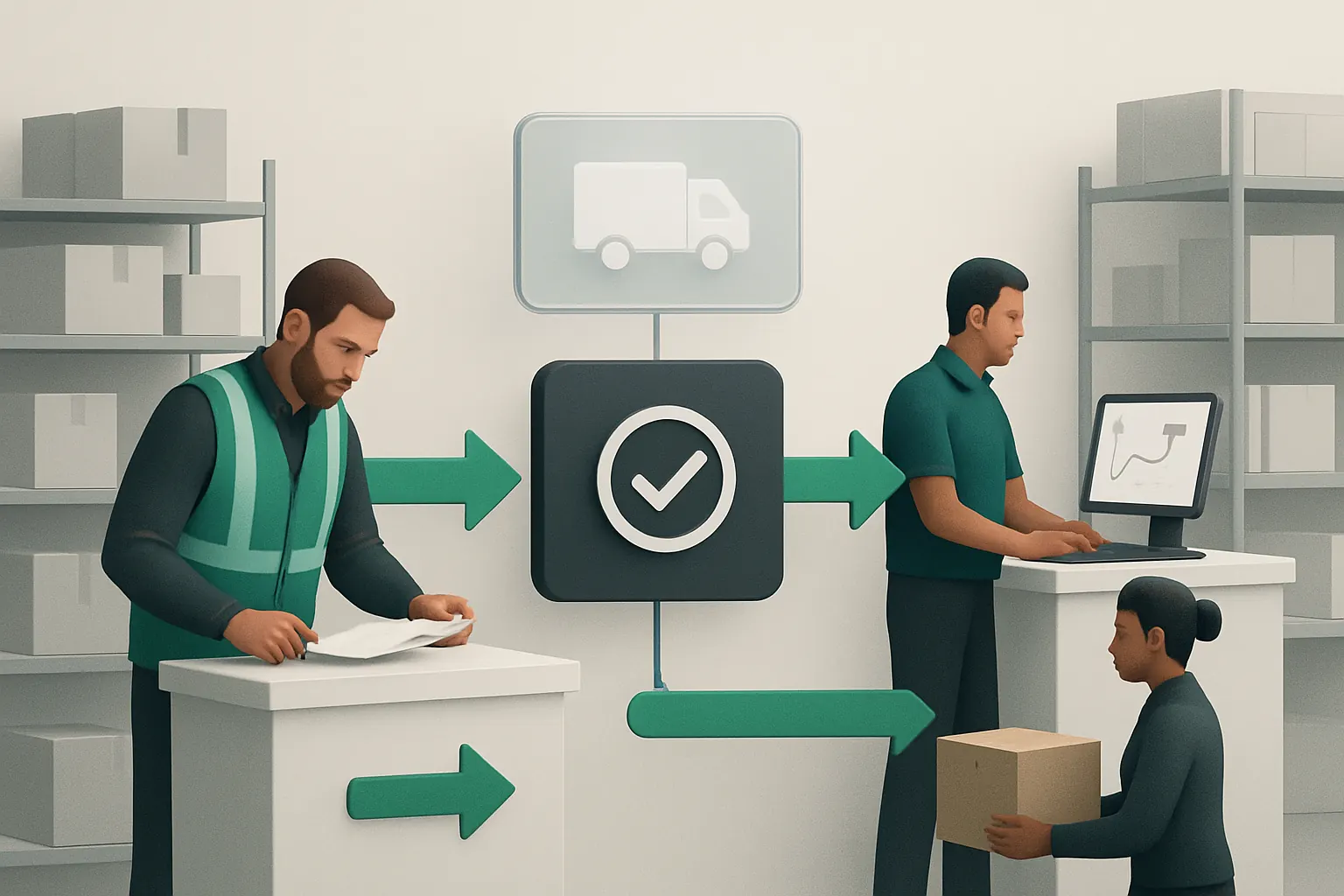
By building a single dispatch orchestration module, tasks like wave planning, route assignment and capacity calculation happen on one screen. Team members see the latest status in real time, reducing waiting and error recovery.
Integrations That Matter: Routing and Carrier Services
Specialised route optimisation and third-party carrier systems integrate into the owned system only when indispensable—keeping communication flows and proof-of-delivery capture within the same digital record.
Real-World Scenario for a Nuneaton Logistics Hub
Dispatchers at a busy Nuneaton warehouse coordinate multiple deliveries through daily waves. Their system suggests optimal loads and routes based on driver availability. Proof of delivery photos and signatures upload directly against each order, accessible immediately for invoicing.
Governance and Human Oversight in Dispatch Decisions
Deterministic rules handle common scheduling, but exceptions like urgent orders or driver shortages flag human review. Managers retain control through exception dashboards, supporting operational compliance and trusted decision making.
Replacing Software Subscriptions with Owned Workflow Modules
Pain of Multiple Disconnected SaaS Tools
Warehouses often pay for numerous specialised tools covering inventory, workload rostering, financial reconciliation and reporting. These services complicate data consistency and increase complexity and costs.
Benefits of Developing Tailored Modules for Core Tasks
An owned system built around your actual business workflow replaces redundant subscriptions. Essential operations like rota management, booking adjustments and exception handling unify into configurable modules.
Retaining Only Specialist External Services
External connections are limited to persistent specialists, for example, payment gateways and telecommunications providers for driver messaging. Prebuilt APIs ensure seamless integration and prevent island solutions.
Illustration: From Subscription Overload to Simplified Ownership
A mid-size warehouse trimmed four SaaS subscriptions by building owned modules for stock adjustments, employee shifts and inbound job logging. The solution kept existing payment and carrier integrations unchanged while cutting operational software costs.
Control Through Modular Configuration and User Rights
The business controls exactly who can change parameters, approve stock changes or initiate dispatch waves. All actions are logged and visible via audit reports, underpinning compliance and transparency.
Bringing Operational Data into One Reliable Record and Dashboard
Problem of Fragmented Visibility and Reporting Lag
Lack of a definitive operational source leads to decisions based on outdated or incomplete data. Teams run reactive rather than proactive workflows.
Creating a Single Source of Truth with Real-Time Updates
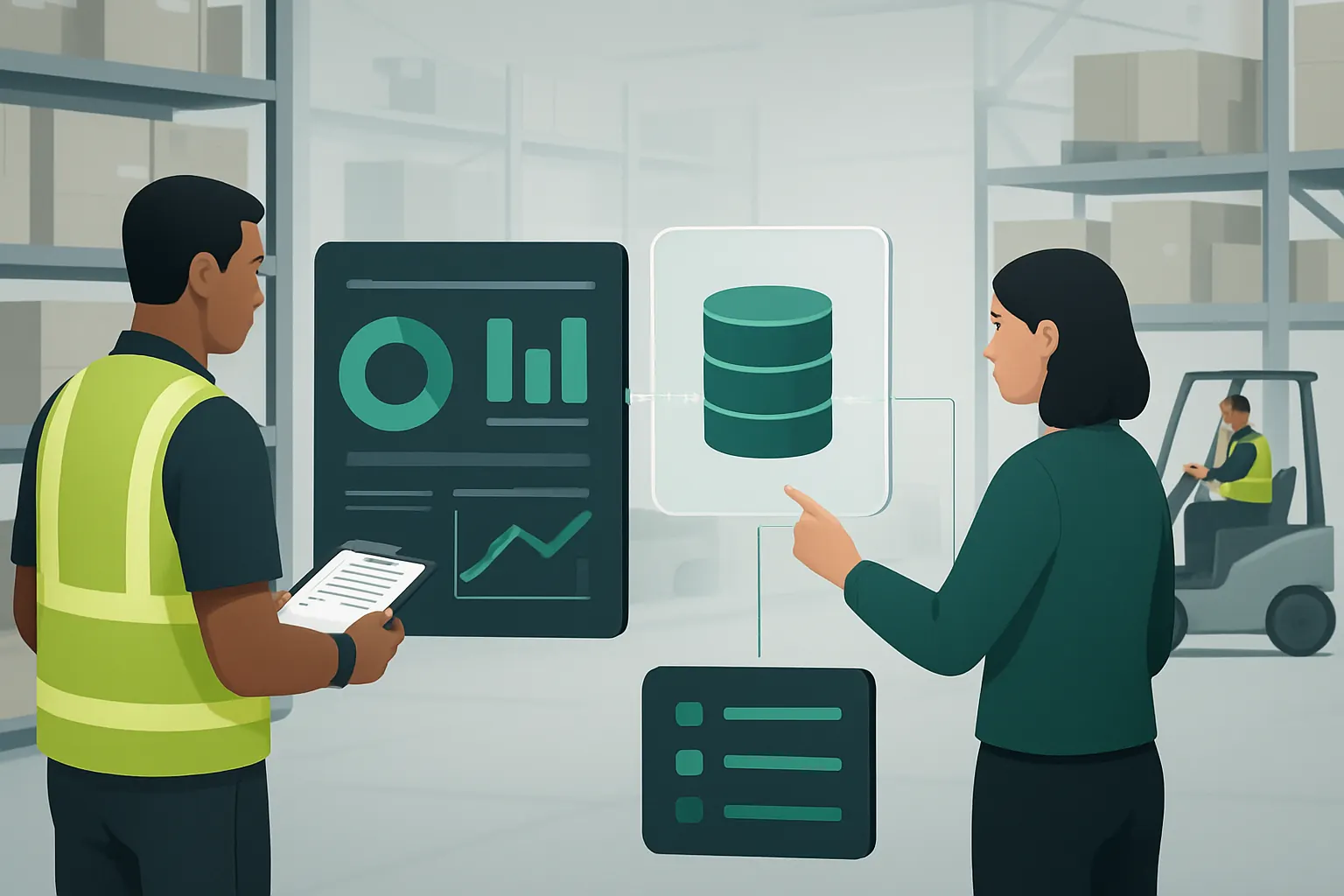
Centralising data streams from inbound receipts, inventory, picking and dispatch into one record enables timely, accurate reporting. Custom dashboards tailored to roles provide the metrics staff need daily.
Integrations with Existing ERP or Accounting Systems
Where core finance or purchase ledger systems exist, structured data output flows into them. This makes month-end reconciliation faster without manual exports or rekeying.
Concrete Example of KPIs for Warehouse Management
Warehouse managers get live views of picking accuracy, inbound timeliness, vacant storage locations and shipping exceptions. Alerts on potential bottlenecks drive focused operational improvements.
Controls: Data Access Governance and Exception Alerts
Role-based dashboards ensure sensitive data is visible to authorised staff only. Exception-based alerts notify managers of operational drift requiring human intervention, preserving accountability.
Leveraging AI Selectively for Variable and Complex Tasks
Limitations of Full Automation in Warehousing Decisions
Some tasks like workload forecasting or customer query classification require variable judgement and data pattern recognition. Pure rules cannot cover all scenarios reliably.
Incorporating AI as a Decision Support and Automation Aid
AI tools can classify order types, summarise daily logs and prioritise exceptions for review. However, critical decisions retain human approval, supported by clear deterministic logic.
Integration with Existing Processes for Proof of Delivery and Exception Handling
AI analyses delivery notes using natural language processing to flag potential issues. Staff then review flagged items through an automated workflow, reducing time spent on low-value filtering.
Example: Triage System for Inspection and Returns
An AI summarisation module highlights priority returns based on delivery notes content trends. Staff decide on next steps with intuitive desktop prompts, balancing efficiency with control.
Controls for Ethical and Transparent AI Use
Each AI action includes explanatory notes in the workflow. Human managers configure sensitivity thresholds and intervene on edge cases, maintaining regulatory and operational oversight.

Starting Your 90-Day Automation Rollout
Weeks 1–2: Assessment and Foundation Building
- Map current warehousing workflows end to end
- Identify key pain points ripe for automation
- Evaluate existing software and technical environment
- Agree on data governance, compliance and security protocols
Weeks 3–6: Connecting Existing Assets and Building Modules
- Integrate scanning, customs and carrier systems into a single owned record
- Develop workflow modules replacing manual tasks such as inbound records and inventory location assignment
- Build role-specific dashboards and exception alerting systems
- Define deterministic rules and human approval journeys for dispatch and compliance controls
Weeks 7–12: AI Enablement, Training and Continuous Improvement
- Introduce selective AI features for prioritisation and summarisation
- Pilot automated dispatch orchestration with human oversight
- Train staff on the new connected workspace and exception workflows
- Gather feedback and tune system parameters for optimal alignment
This phased approach delivers tangible benefits early while embedding automation safely within existing operational expertise. More details on process automation and RPA services can support this journey.
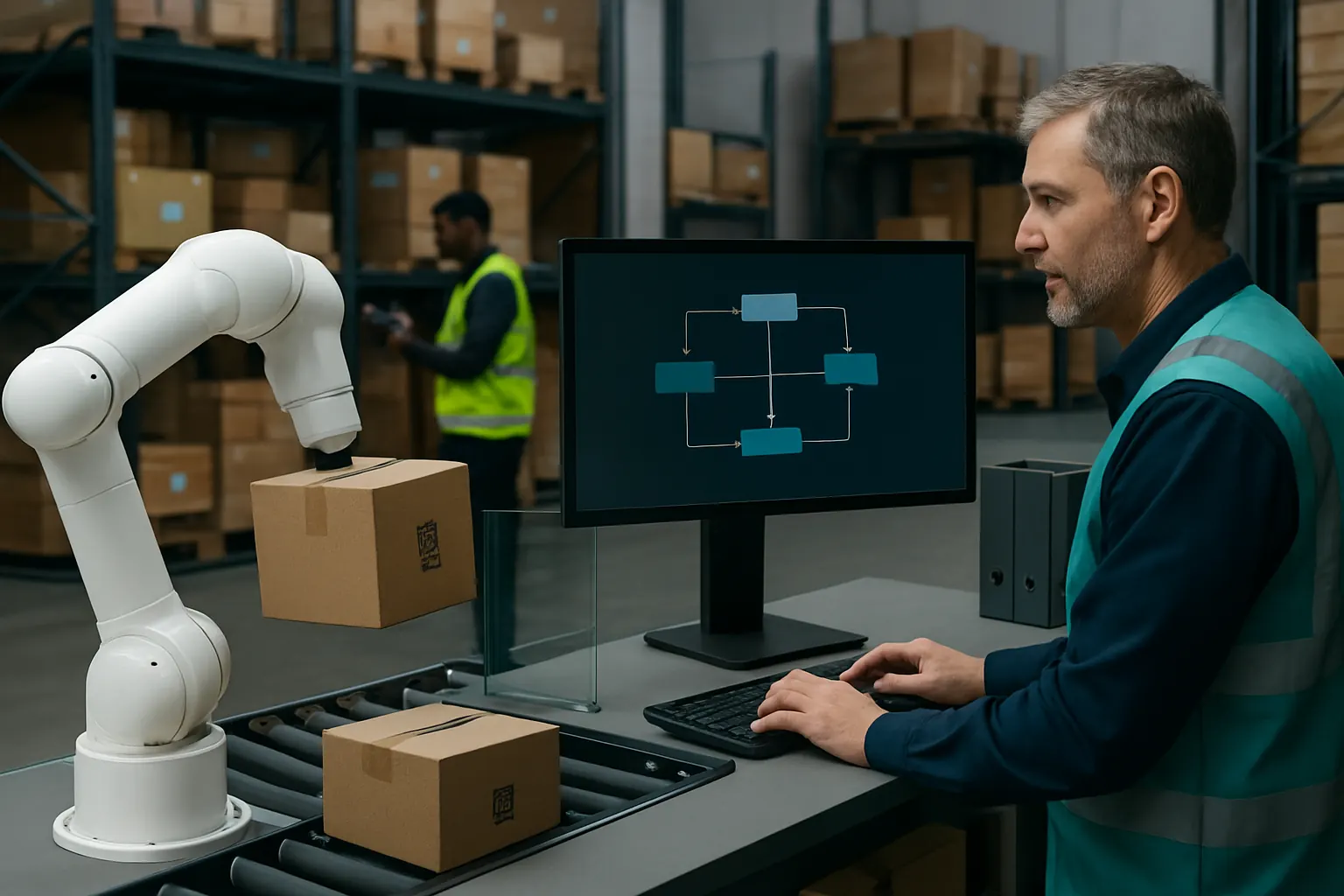
How AI Implementation UK Enables Warehousing Business Automation You Control
At AI Implementation UK, we build one connected operating system your warehousing business owns outright, tailored around your processes from inbound receipt to dispatch. We preserve and connect your existing useful technologies while replacing avoidable subscriptions with owned modules.
Instead of adding disconnected tools, our solution brings operational data into one trusted record with role-appropriate dashboards and exception workflows. We apply a hybrid approach of deterministic rules for predictable activity and selective AI capabilities only in variable work, such as classification, summarisation, prioritisation and decision support.
Controls remain in place for human approval of crucial decisions, maintaining compliance with chain of custody and regulatory requirements. Specialist external services, such as payment and carrier communications, integrate securely and remain manageable.
By doing so, we help you overcome the hidden costs of manual work, unify your warehousing business workflows and put you firmly in control of your technology for future scaling.
Explore how our data infrastructure preparation and AI strategy roadmapping services can help plan your connected automation platform today.
Further guidance on data privacy and cyber security standards relevant to warehousing automation can be found at ICO, NCSC and the PCI Security Standards Council. Ensuring your operational controls and audit trails align with these trusted authorities supports your ongoing compliance responsibilities.