Learn how medical staffing agencies can connect systems, reduce manual admin and automate referral to appointment with one tailored operating platform the business.
Medical staffing agency workflow automation: What Breaks Daily
Medical staffing agency workflow automation should connect bookings, people, communications and reporting in one reliable operating flow.
Medical staffing agencies operate in a complex, fast-moving healthcare environment where time is critical, compliance essential, and errors costly. Daily frustrations often include:
- Fragmented systems that don’t talk to each other, forcing repetitive data entry.
- Delays in processing candidate referrals and booking appointments.
- Difficulties verifying up-to-date candidate compliance with certifications.
- Manual shift fulfilment and timesheet logging plagued by errors and delays.
- Cumbersome reporting and limited visibility into operations.
These breakdowns interrupt the workflow, create bottlenecks, and increase operational risk. Without a connected approach, teams spend more time chasing errors than delivering efficient service.

The Real Cost of Manual Labour in Medical Staffing Workflows
Persisting with manual processes and disconnected software inflates costs in four interlinked ways:
- Time wasted: Staff spend hours duplicating tasks between systems instead of focusing on candidate quality and client needs.
- Errors and rework: Manual data entry leads to mistakes in compliance records and shift booking, increasing risk.
- Compliance risk: Keeping candidate credentials updated manually makes regulatory tracking inconsistent, risking penalties.
- Cashflow impact: Slower shift fulfilment means delayed invoicing and payment, impairing agency liquidity.
The truth: Poor automation puts medical staffing agencies at a competitive disadvantage and drains resources. The need is for one connected opportunity to own the workflow digitally.
Referral to Appointment Automation for Medical Staffing Agencies
Straightening the Referral Pathway
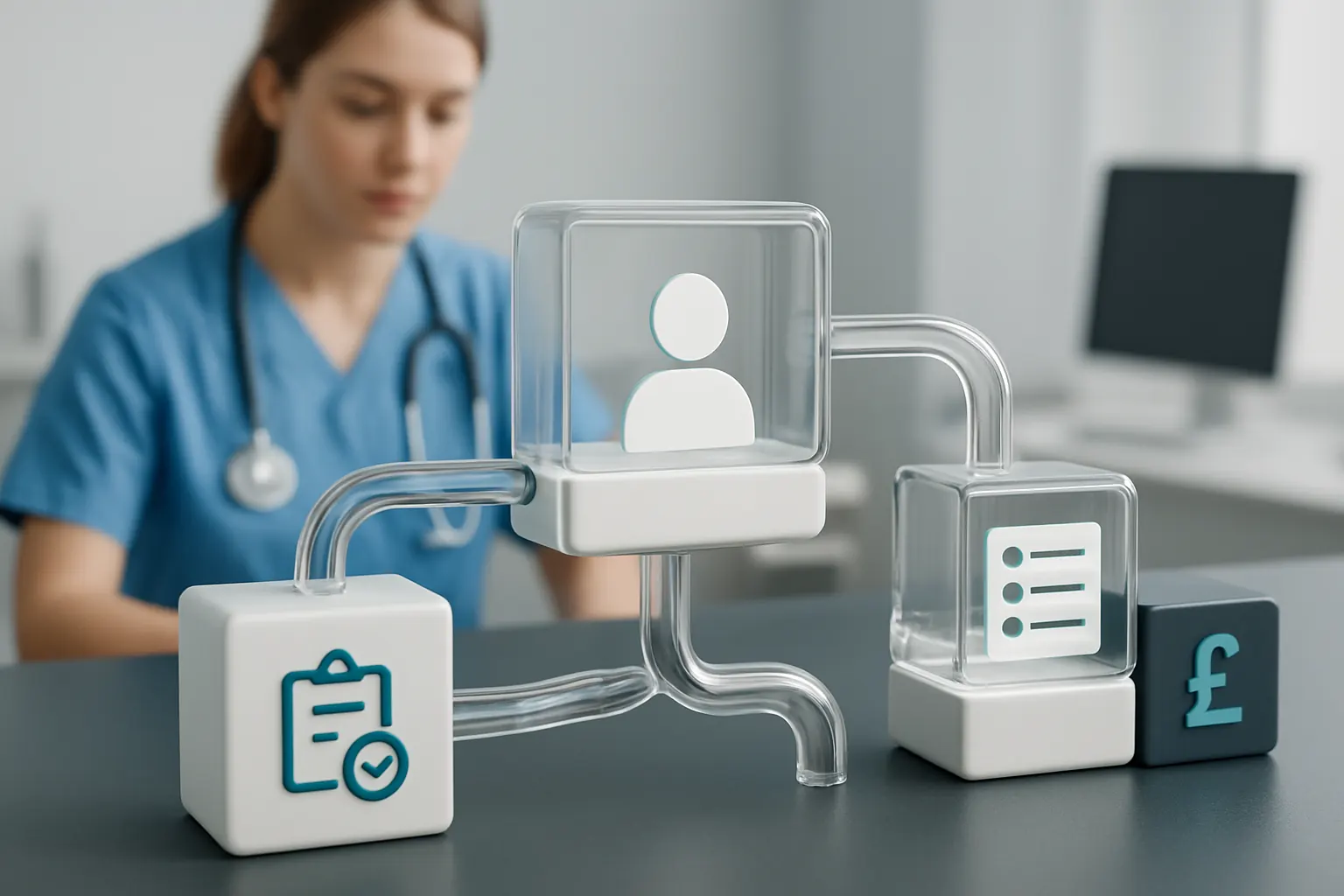
Referral processing is a critical starting point but often fractured across email, spreadsheets and different systems. Delays here cascade downstream, leaving shifts unfilled.
Creating a Connected Referral Record
A tailored booking record specific to referral details consolidates candidate data, role requirements and client preferences in one place. This record flows seamlessly into appointment scheduling.
Integrations That Simplify Processing
- Existing candidate management tools can be linked into the referral record.
- Calendar and communications apps sync to automatically propose appointment slots.
- External tools such as DocuSign for consent or NHS login verification integrate where needed.
Concrete Example: Auto-assigning Candidate Slots
When a nurse referral arrives, the system identifies matching availability instantly by evaluating prior commitments, automatically sending a calendar invite with pre-set checklists. Human approval checks conflicts before confirmation.
Managing Controls and Approvals
Referral automation uses deterministic rules for eligibility but flags exceptions for clinical or operational review, preserving human oversight where critical decisions involve patient care and data protection.

Candidate Compliance Automation Software
Navigating Rigorous Compliance Requirements
Staying on top of certificates, DBS checks, and mandatory training per candidate is time-consuming and risky when managed manually.
Building Owned Compliance Modules
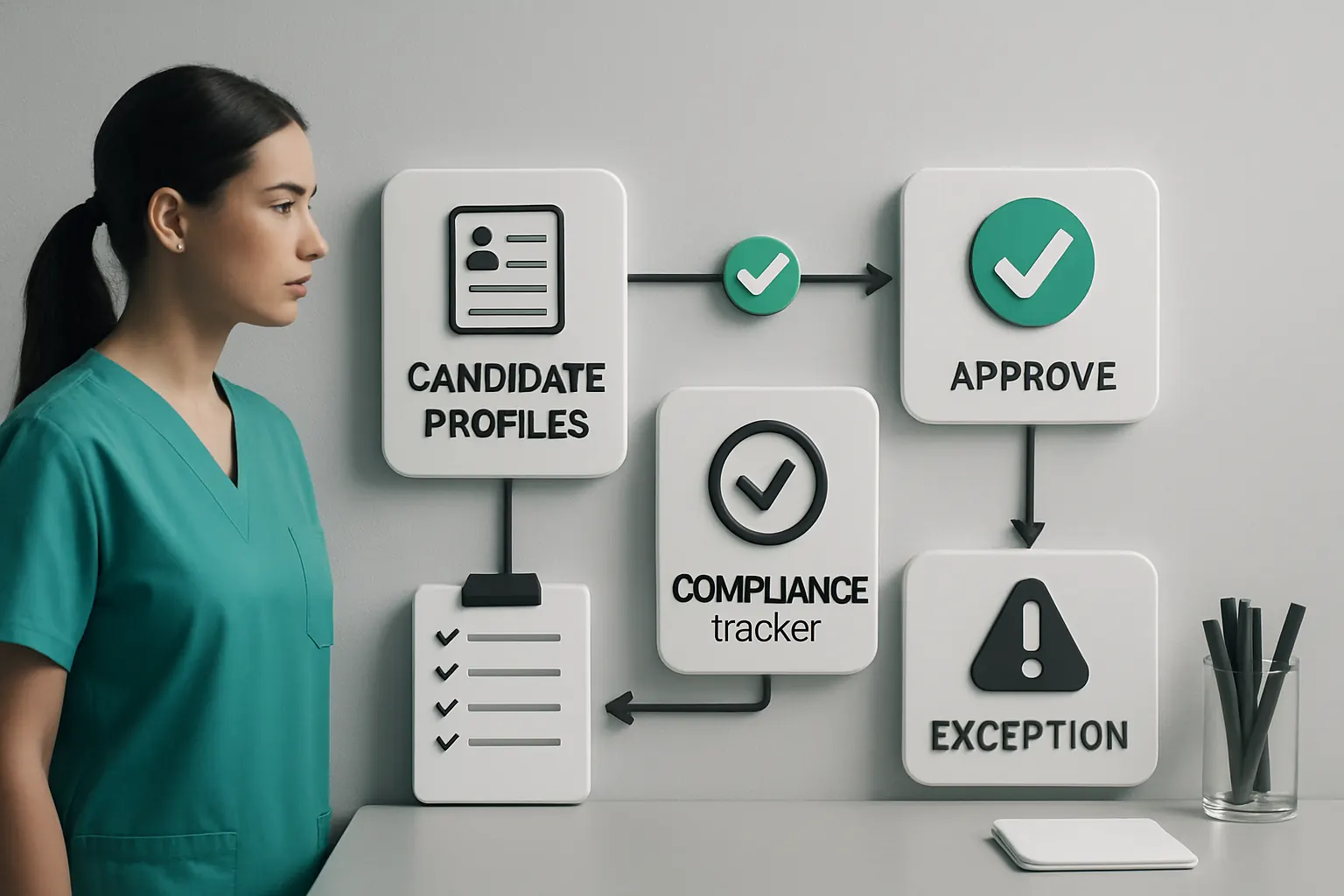
A dedicated compliance tracker module within the central system records expiry dates, document submissions, and alerts for updates. It connects to candidate profiles updated from existing HR or credential systems.
Useful Compliance Integrations
- Document management systems for secure certificate storing.
- Automated email notifications directly triggered by expiry data.
- Linkage to regulatory databases for identity checks.
Practical Scenario: Auto-Flagging Expiring Credentials
The compliance module detects a nurse’s first aid certification expiring within 30 days, triggering an alert to both recruiter and candidate with instructions for renewal, while locking out shift bookings beyond expiry.
Control: Preserving Human Review
Automated blocks on scheduling operate alongside manual override by compliance officers after review, ensuring safety and audit trails.
Shift Fulfilment and Rota Automation
Tackling Shift Fill Delays and Last-Minute Changes
Disjointed rota systems and last-minute cancellations cause operational headaches, risking understaffing at critical patient moments.
Centralised Rota and Shift Booking Workspace
An owned rota workspace integrates candidate availability, shift requirements, and client bookings in one interface, promoting visibility and rapid update cycles.
Seamlessly Linking External Calendars and Communication
Interfacing with Outlook, Google Calendar, or SMS gateways simplifies shift notifications and candidate confirmations without switching tools.
Example: Instant Swap and Replacement Suggestions
When a nurse drops out of a shift, built-in rules automatically propose suitable replacements based on certification, location, and recent workload, minimizing manual intervention.
Controls for Fairness and Safety
Rules ensure fair shift distribution and mandate managerial approval for exceptions like overtime or uncredentialed candidate allocations.

Timesheet and Payment Automation
Reducing Errors and Delays in Timesheet Processing
Manual timesheet collection and approval cause payroll bottlenecks and increase error rates, affecting both staff satisfaction and agency finances.
Owned Timesheet Module with Rule-Based Approvals
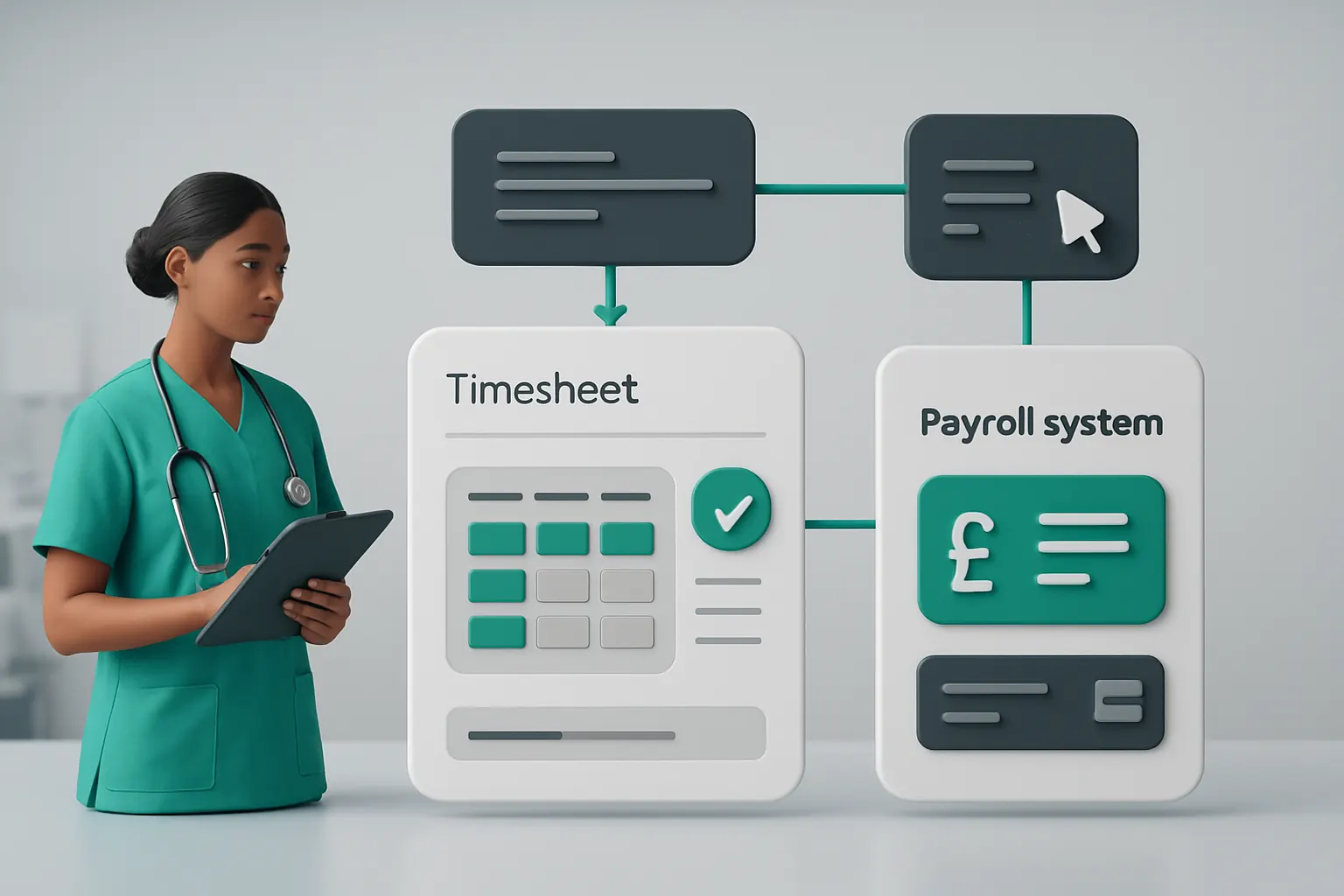
Timesheet data flows directly from shift records, validating hours worked against agreed rosters and automatically calculating pay rates per contract terms.
Connecting External Payment and Payroll Services
While payment systems like PayPal or bank processing remain external, integration ensures seamless approval-triggered payroll exports, expediting processing.
Case: Automated Timesheet Locking on Completion
Upon client sign-off or candidate confirmation, timesheets lock for payment scheduling, reducing amendments and disputes.
Controls: Ensuring Accuracy and Compliance
Timesheets with discrepancies flag for manual audit, requiring sign-off by payroll or finance teams per regulatory and contractual obligations.
Candidate Onboarding Workflow Management
Managing Complex, Multi-Step Onboarding Tasks
Onboarding involves multiple steps from application forms, background checks, training, to inductions—often tracked in disparate places.
Creating an Owned, Task-Based Workspace
An onboarding workflow module collates every task, assigns owners, and tracks completion status in real time, providing transparency and follow-up prompts.
Integration with Specialist Background and Training Checks
External verifiers and e-learning platforms integrate via APIs, streamlining credential verification within the owned onboarding process.
Concrete Illustration: Automated Compliance Checkpoints
When a candidate completes online training, the record automatically updates the compliance module and triggers the next onboarding steps such as issuing ID badges.
Controls for Compliance and Candidate Data Privacy
Strict role-based access and regular audits protect sensitive personal data, adhering to ICO guidance on special category data handling.

Client Communication and Feedback Loop
Improving Transparency and Responsiveness
Delayed or inconsistent client updates increase satisfaction risks and make staffing more reactive than proactive.
Owned Communication Workspace Linked to Booking Records
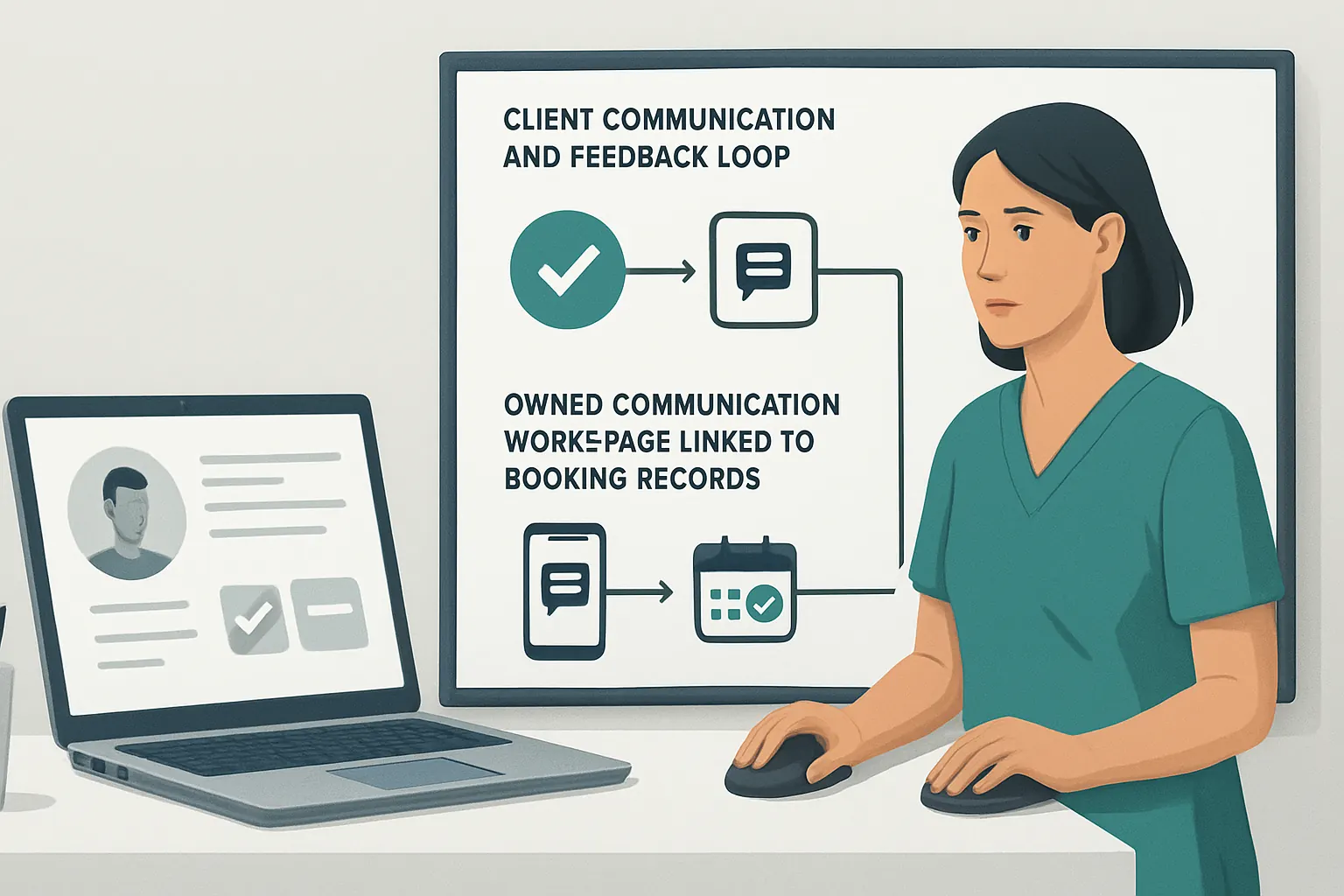
Centralised messaging ties each communication to specific shifts or candidates, offering audit trails and reducing “lost email” scenarios.
Using Specialist Communication Tools
Integration with secure email or text messaging providers ensures timely notifications, with escalation rules for urgent updates.
Example Use Case: Automated Shift Confirmation and Feedback Requests
After a shift, clients receive prompt requests to confirm attendance and rate performance, feeding into recruitment analytics for quality management.
Control Mechanisms to Preserve Privacy and Consent
Outgoing communications respect client and candidate preferences, and opt-out options are managed strictly to comply with the UK GDPR.
Reporting and Operational Dashboards
Bridging Fragmented Data for Decision-Making
Without integrated data, agencies lack a complete view of operations, causing reactive rather than strategic management.
Bringing Data into One Reliable Record
All operational data—shift fulfilment, compliance, timesheets, communication—is consolidated into a single owned database feeding interactive dashboards.
Useful Tech: Custom Report Builders and Live Data Feeds
Dashboards dynamically display KPIs such as fill rate, compliance status, cost-per-hire, and candidate utilisation.
Real-World Application: Monitoring Time-to-Fill and Cost Metrics
Managers can identify bottlenecks quickly, for example pinpointing referral processing delays impacting appointment rates within days.
Controls: Data Accuracy, Role-Based Views
Role-specific dashboards ensure sensitive data remains visible only to authorised personnel, with audit logs tracking changes and access.

Selective AI Support for Complex Workflow Tasks
Applying AI Where It Adds Value
AI enhances variable, data-heavy tasks such as candidate classification, summarisation of large records, prioritisation of referrals, and decision support.
AI as a Capable, Not Autonomous, Member
Deterministic rule sets handle predictable functions; AI outputs are presented with confidence scores and flagged for human review in crucial healthcare decisions.
Useful AI Integrations
Natural language processing assists in summarising candidate notes; classification models prioritise candidates based on matching criteria.
Example: AI Triage of Referral Urgency
AI classifies referrals into urgency bands and suggests actions but requires recruiter sign-off to balance clinical priorities.
Control Frameworks for Safety and Compliance
Human-in-the-loop controls audit AI decisions and maintain clinical and regulatory standards, ensuring accountability and traceability.

90-Day Rollout Plan to Cut Admin and Connect Workflows
Weeks 1–2: Discovery and Mapping
- Analyse existing workflows and systems.
- Identify key bottlenecks and integration points.
- Prioritise modules for phase-one automation.
Weeks 3–6: Core System Build and Integration
- Develop owned workspace for referral and compliance tracking.
- Integrate existing candidate and client data sources.
- Deploy initial communication and rota modules.
Weeks 7–12: Extending Functionality and Training
- Build timesheet automation and payment exports.
- Add AI-assisted workflow features.
- User training and controls fine-tuning.
- Implement dashboards and reporting for visibility.
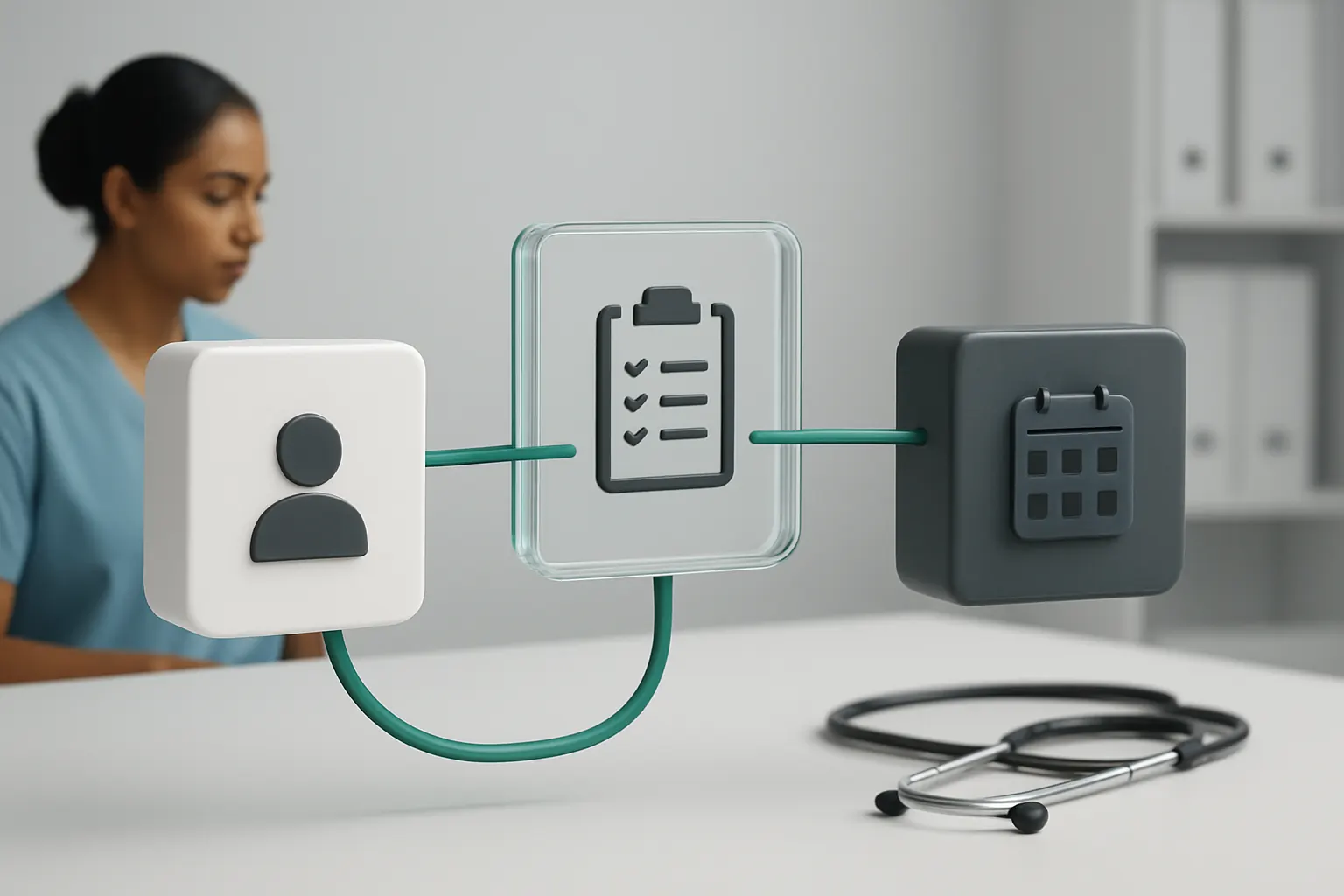
How AI Implementation UK Connects, Replaces, and Automates Your Operation
At AI Implementation UK, we deliver a single connected operating solution tailored to how your medical staffing agency works—owned and controlled by you. Unlike patchwork SaaS subscriptions, our approach:
- Keeps your useful existing systems connected and leveraged.
- Replaces multiple avoidable software subscriptions with custom-built owned modules.
- Brings operational data into one reliable single source of truth.
- Selectively applies AI as a capability for variable workload, preserving deterministic rules for predictable tasks and mandatory human approval for critical decisions.
- Integrates specialist external tools (payments, communications) only where their continued presence adds lasting value.
This approach sharply reduces admin overhead; streamlines candidate compliance automation software workflows; speeds referral to appointment automation for medical staffing agencies; and provides operational clarity through bespoke dashboards.
Explore how a connected system built to fit your business can transform medical staffing. Learn more about our process automation capabilities and start designing your workflow digital estate with support from our planning and platform services.
Adopting workflow automation with ownership and control at its core sets your medical staffing agency on a path to more reliable, efficient, and scalable operations, meeting compliance and patient safety needs with confidence.
For more on protecting personal data securely, visit the ICO’s guidance on data protection.
To support compliance work with financial transactions, the PCI Security Standards Council provides relevant standards for payment processing integrations.