
A practical guide to property maintenance company workflow automation, connecting business systems, reducing repetitive admin and creating one operating platform.
Daily Operational Breakdowns in Property-Maintenance Companies
Property-maintenance company workflow automation should connect bookings, people, communications and reporting in one reliable operating flow.
Property-maintenance companies regularly face challenges that disrupt smooth operations. Tasks like managing repair requests, scheduling different tradespeople, capturing completion evidence, and maintaining regulatory compliance frequently suffer delays or errors. Teams juggle multiple disconnected software tools, spreadsheets, emails, and paper records. Information silos create duplicate work, overlooked jobs, and fragmented communication between property managers, contractors, tenants, and owners.
For example, a tenant report of a leaking radiator may sit idle too long because the triage team is manually tracking emails. Contractors may struggle to access the latest job details or safety certificates, which causes repeat visits or compliance gaps. Meanwhile, business leaders lack real-time visibility over workload, costs, and performance.
This fragmentation frustrates staff and customers, reduces operational agility and profitability, and exposes the company to compliance risks. Workflow automation that genuinely connects the entire maintenance lifecycle and integrates with existing systems is the practical answer for UK property-maintenance firms keen on lasting improvements.

Enquiry-to-Instruction Streamlining: From Repair Requests to Work Orders
Tackling the Initial Intake Chaos
Handling incoming repair requests is typically fragmented between phone calls, emails, tenants’ portals, and agent reports. This creates bottlenecks, lost jobs, and long response times.
Establishing a Single Connected Record
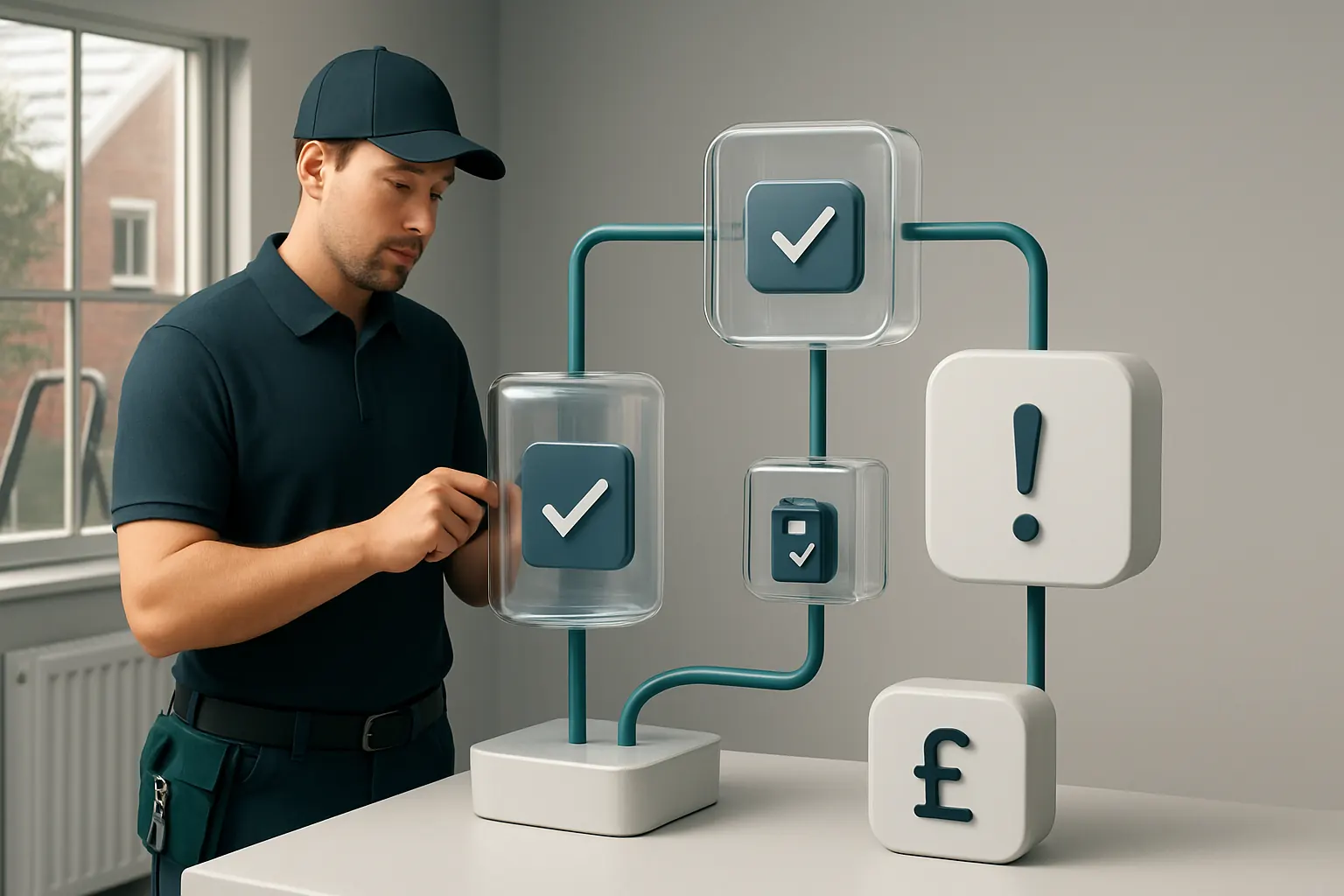
Create an owned, central enquiry module that captures every request uniformly—whether from tenants, owners or agents—and converts it directly into a work order. This module integrates with existing tenant portals or CRM tools to avoid replacing well-used interfaces.
Leveraging Specialist External Tools
Payment gateways and communication APIs (e.g., SMS or email reminders) stay external but tightly integrated to automate notifications and permissions without siloing data.
Practical Example
A call centre agent logs a leaking boiler request directly into the system, which triggers prioritisation rules for urgent issues and notifies the scheduling team instantly. The original enquiry, tenant details, and urgency level form a persistent linked record.
Retaining Controls
Deterministic rules prioritise based on urgency, but triage remains subject to human review to validate tenant safety or unusual conditions.

Integrated Multi-Trade Scheduling for Contractor Efficiency
Challenges of Manual Rota Management
Synchronising availability across multiple trade contractors and avoiding double-booking remains a pain point with spreadsheets and messaging apps, causing delays and no-shows.
A Unified Scheduling Workspace
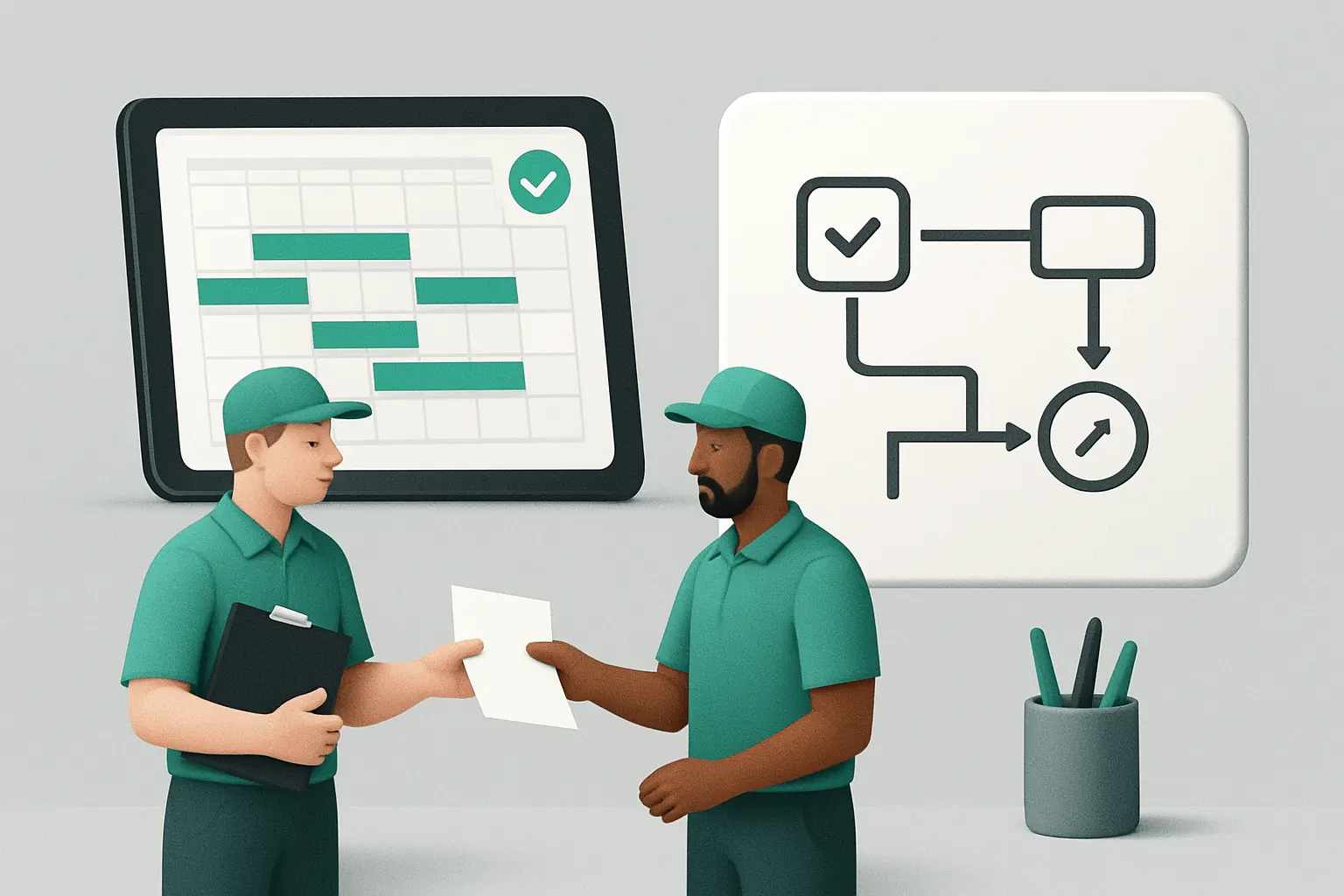
Use an in-house rota module customised for the business’s preferred work patterns, connecting contractor calendars and job records. It accommodates last-minute changes and skill-based routing.
Useful Vendor Connections
External tools for route optimisation can be integrated to reduce travel time, but scheduling logic and exceptions live in the owned system.
Concrete Use Case
When a plumber’s slot frees up, the system suggests high-priority jobs needing that skillset nearby, enabling dispatchers to fill gaps efficiently while preserving trade-specialist workflows.
Governance and Oversight
Schedulers review auto-suggestions with clear visibility of availability and priority before confirming bookings, ensuring human control over resource allocation.
Digital Evidence Capture and Compliance Recording
The Daily Challenge of Paperwork
Teams typically take photos, jot down notes on paper, and re-enter compliance data post-visit, leading to missing or inconsistent safety records.
Building Connected Evidence Capture
Integrate mobile-enabled modules for contractors to submit photos, certificates, and digital signatures directly linked to individual jobs in real time.
Key Integrations
Specialist services like DigiCert for certificate validation or secure file storage can be embedded while retaining a master repository owned by the business.
Example Scenario
A heating engineer uploads a pressure test certificate immediately after completion from their smartphone, triggering a compliance reminder to the property manager.
Compliance with Controls
The system flags missing certificates for manual review before job closure and maintains audit trails to support regulatory inspections, protecting tenant privacy.

Automated Reminder Workflows for Owners and Tenants
Communication Overload and Missed Deadlines
Manual reminders for inspections, payment deadlines, or repair follow-ups can easily be overlooked or sent inconsistently across channels.
Workflow-Driven Notification System
Set up an owned, rule-configured engine that sends automated messages for required events, such as safety certificate renewals and scheduled maintenance, broadly across SMS, email, or tenant portals.
Integration with Specialist Messaging Services
Use trusted APIs but maintain message logs and responses within the core system for unified recordkeeping.
Real-Life Benefit
Owners receive timely reminders about upcoming gas safety checks, reducing missed appointments and potential compliance penalties.
Maintaining Controls
Message templates and timing rules are approved by compliance teams and can be overridden or customised by authorised staff to meet specific needs.

Financial Permissions and Payment Reconciliation
Manual Financial Processes Risk Delays and Errors
Invoices generated separately from maintenance workflows can cause delayed payments and inaccurate accounting.
Seamless Invoice and Payment Modules
Embed payment authorisation and reconciliation functions within the owned workflow environment, linking costs and approvals directly to jobs and contracts.
External Payment Tech Use
PCI DSS-compliant gateways integrate for payments but do not silo financial data or workflow status.
Practical Illustration
A completed job auto-generates an invoice requiring landlord approval via the system, after which the tenant portal displays payment options, streamlining collections.
Financial Controls
Approval chains and exception reports ensure that transactions comply with company policy, and human review is mandated for large or irregular payments.

AI-Assisted Classification, Summarisation and Prioritisation
Variability Demands Selective Automation
Repair requests, contractor notes, and communications can be voluminous and inconsistent, making manual sift costly.
Using AI as an Assistive Tool
AI modules assist with classifying incoming requests, summarising lengthy technical notes, and prioritising urgent tasks. This is used selectively alongside deterministic rules for predictable workflows.
Integration with Proprietary Systems
AI works only inside the owned workspace, avoiding reliance on external AI platforms that fragment data or obscure control.
Example in Practice
An AI agent reads incoming repair descriptions, classifies them by trade and urgency, and flags anomalous cases for human triage.
Control Framework
Every AI classification triggers human approval for critical or safety-related decisions; rules for AI use are transparent and configurable.

Operational Dashboard for Real-Time Insight
Fragmented Reporting Hampers Decision-Making
Information spread across multiple tools limits visibility on job status, contractor performance, or compliance metrics.
A Tailored Owned Dashboard
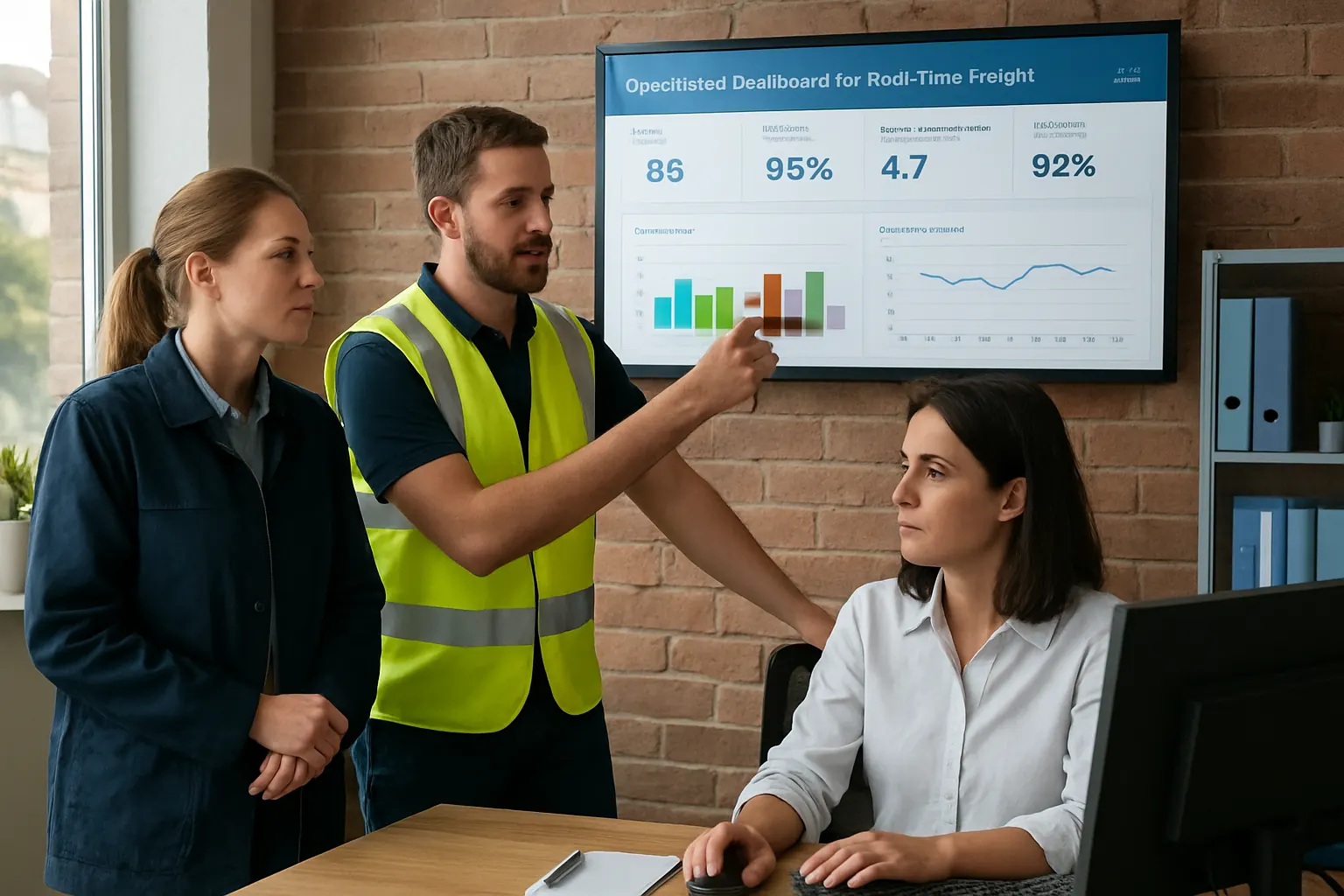
Create a live operational dashboard that aggregates data from all modules, providing a one-stop view on KPIs relevant to property-maintenance managers and directors.
Integrations with Existing Data Sources
Connect legacy finance, HR, or CRM data feeds so decisions are informed by comprehensive and consistent information.
Practical Use Case
Managers view which sites have overdue maintenance, outstanding invoices, and contractor utilisation in one workspace, enabling faster intervention.
Safeguards and Data Privacy
Role-based access controls limit sensitive contract and tenant data to authorised users, supporting GDPR obligations; please refer to the ICO for guidance on data privacy and processing.
Continuous Improvement with Configurable Automation Rules
Static Systems Fail to Adapt
Business priorities and compliance requirements evolve, so workflow automation must remain flexible.
Owner-Driven Rule Engine
Build a configurable layer where the client can modify workflows, triggers and permissions without recoding or multiple disconnected tools.
Integration for Change Management
Link change logs and version controls to governance frameworks to audit operational adjustments over time.
Example Scenario
A compliance inspector updates the safety certification reminder intervals in response to new regulations via a simple interface, with change approval recorded.
Operational Controls
Changes await supervisor approval and include fallback mechanisms for rapid rollback to protect service continuity.

90-Day Rollout Plan for Property-maintenance Company Workflow Automation
Weeks 1–2: Discovery and Assessment
- Map current workflows and software landscape in detail.
- Identify key pain points, integration points, and priority use cases.
- Define compliance and control requirements with stakeholders.
Weeks 3–6: Design and Build
- Configure the owned enquiry, scheduling, and evidence capture modules.
- Integrate specialist external communications and payment tools where needed.
- Develop initial AI-assisted classification and dashboard views.
Weeks 7–12: Testing and Deployment
- Pilot automation with a selected operational team.
- Refine based on user feedback and compliance audit.
- Roll out company-wide with training, support and change controls.
How AI Implementation UK Creates Your Connected Owned Workflow System
We design and deliver one connected operating system tailored to how your property-maintenance company really works. Rather than layering a new collection of disconnected SaaS tools, we build around your existing platforms to keep what works. Avoidable subscriptions are replaced with owned modules designed and controlled by your team.
By connecting your systems from enquiry through instruction, scheduling, compliance, communication, finance, AI-assisted work triage and live dashboards, all your operational data becomes one reliable record. This trusted workspace improves control, staff productivity and resident outcomes while maintaining strict compliance safeguards.
Our selective use of AI supports variable and knowledge work such as classification, summarisation and prioritisation. Routine predictable actions use deterministic rules, and important decisions always require human approval. Specialist services such as payments or messaging stay integrated but external, ensuring continuity and control.
Begin your connected journey today with a clear approach to your property maintenance software for multi-trade teams—created to fit UK businesses’ unique needs. Contact AI Implementation UK to discuss your automation roadmap and learn how our owned operating system can transform your workflows. Explore our process automation services and AI strategy roadmapping.
For more on preparing your data and integrating existing tools, see our data infrastructure preparation. To review client success, visit our case studies.
For data privacy guidance, see the ICO. For secure payment integration standards, refer to the PCI Security Standards Council.