Learn how used car dealerships can connect systems, reduce manual admin and automate booking to workshop with one tailored operating platform the business owns.
Used-car dealerships vehicle sourcing automation software: What Breaks Daily
Used-car dealerships vehicle sourcing automation software should connect bookings, people, communications and reporting in one reliable operating flow.
Used-car dealerships manage complex workflows that intersect across vehicle sourcing, enquiry handling, sales documentation, and workshop booking. Despite their best efforts, daily operations often break down due to disconnected systems, reliance on spreadsheets, manual data entry, and missed follow-ups.
Common issues include inconsistent inventory details across rooftops, lost parts allocation signals, delayed vehicle preparation, and compliance risks from incomplete inspections or finance approvals. Staff frequently chase missing information scattered across emails, phone notes, and legacy software, limiting response speed and accuracy.
This operational friction impedes the ability to source vehicles efficiently, respond promptly to customer enquiries, and manage workshop bookings from inspection through handover. A fragmented IT landscape leads to duplicated effort, avoidable subscription costs, and multiple data silos with no single source of truth.

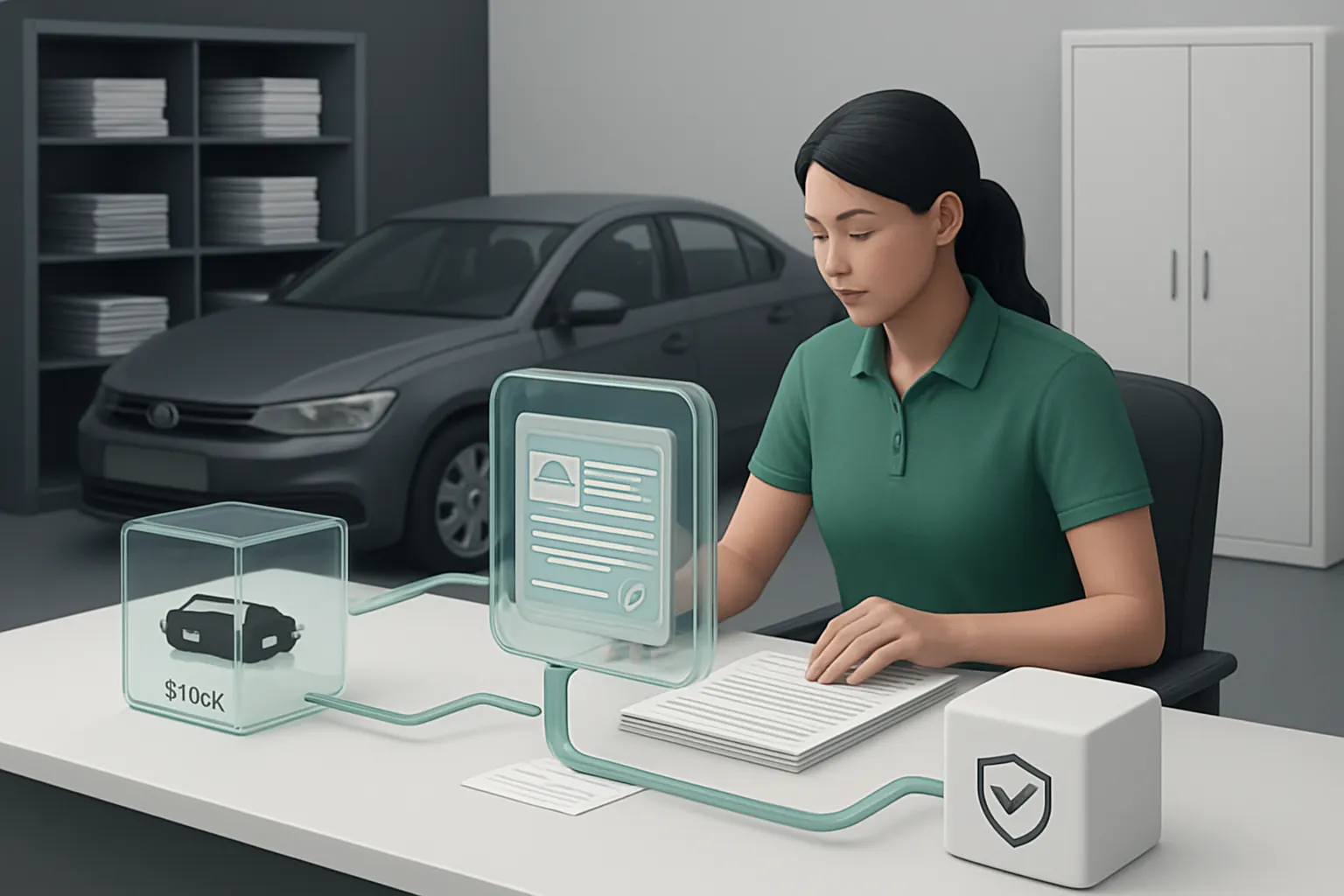
Centralising Vehicle Inventory Data Across Dealer Groups
The problem with fragmented stock records
Used-car dealership groups often maintain separate inventory lists per rooftop or sales channel. This fragmentation causes uncertainty over vehicle availability, pricing, provenance, and pending inspection status.
Connected workflow for reliable stock visibility
An owned system consolidates all vehicle data from each location into one trustworthy source. It connects to existing stock management tools and dealer management software via APIs, avoiding data duplication and ensuring consistency.
Useful integrations that maintain legacy investments
Pairs well with existing DMS platforms and online sales portals. Vehicle histories, warranties, and pricing updates feed into the central workspace, keeping familiar tools useful while adding a high-integrity unified vehicle record.
Example: Real-time stock transfer tracking
As a used car is moved from one showroom to another, this record updates automatically. Both sites confirm receipt, track mileage changes, and share inspection reports in the same record without email or calls.
Controls for accuracy and audit trail
Each update is timestamped with user identity and change reason. The system flags discrepancies for review, preserving compliance documentation and enabling authorised human clearance.

Automating Enquiry Response to Book Test Drives Faster
Enquiries that get lost or delayed
Manual follow-up emails or calls for test drives and valuations frequently fail to capture all leads or miss the fastest contact window, reducing sales chances.
Workflow that assigns and notifies instantly
Incoming enquiries automatically create lead records linked to customer, vehicle, and source. The system assigns leads by location, availability or sales team member and sends reminders or alerts.
Integrations that enhance communication
Integrates with e-mail, SMS tools, and telephony platforms for seamless, logged contact. Calendars update in real time to reflect booking slots, avoiding double booking.
Example: Booking automation
A customer requests a test drive online. The system confirms available slots and sends an SMS confirmation with workshop arrival instructions. Sales staff see the confirmed booking in their linked dashboard.
Controls for customer privacy and data security
Contact permissions and opt-in preferences are enforced per ICO guidelines, with accessible audit trails detailing communication timestamps and content.
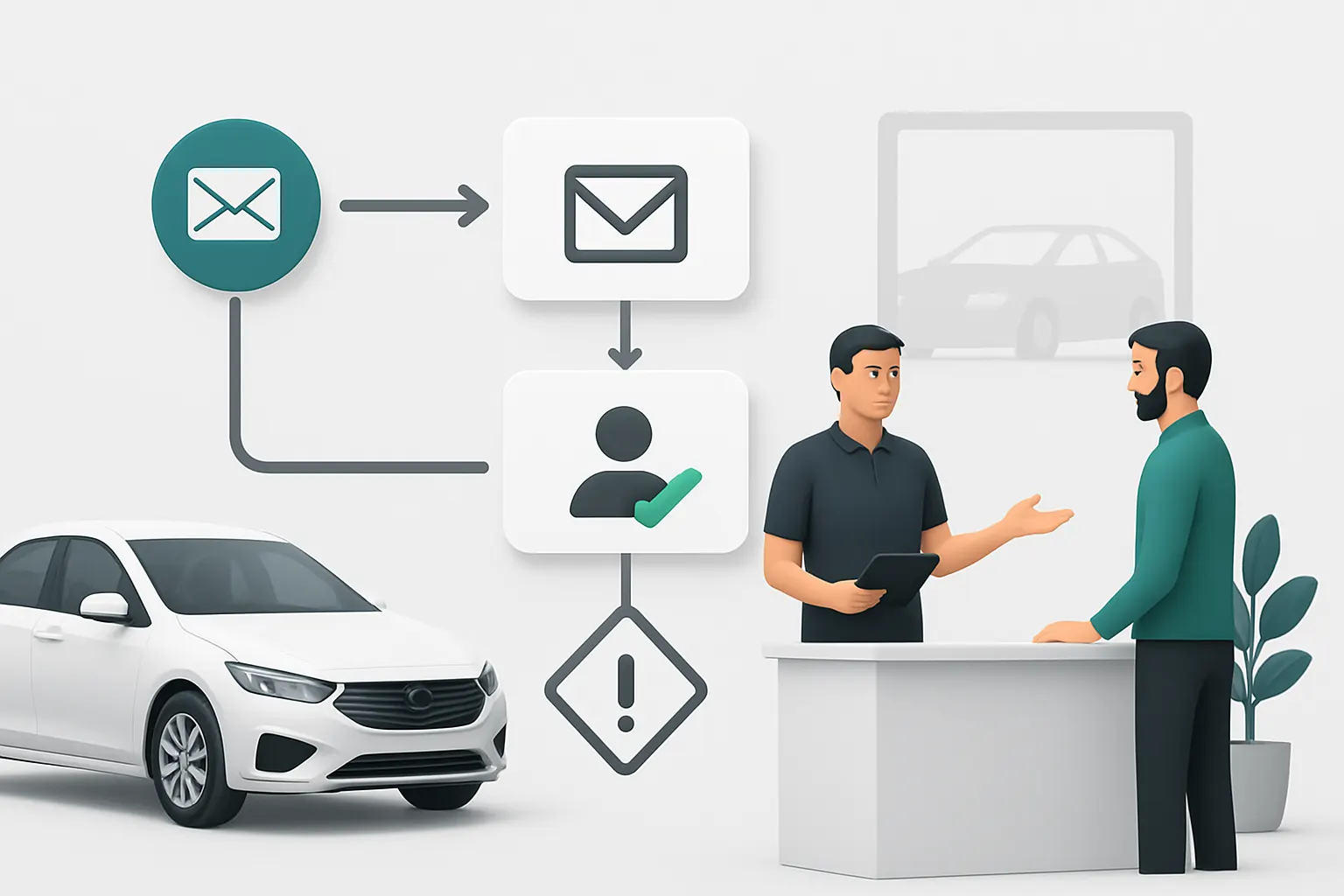
Streamlining Booking to Workshop Processes
Workshop bookings often misaligned with preparation
Workshop schedules and parts availability are handled separately or manually, leading to delays or cancellations.
A connected workflow driving operational efficiency
The booking record automatically triggers workshop notification, parts procurement, and inspection reminders. Staff can update inspection status or delay reasons in one place.
Integration with specialist workshop tools
Works alongside established parts ordering systems and workshop diagnostic platforms. Vehicle history and inspection data link directly to the booking record.
Example: Automated inspection scheduling
Once a vehicle arrives, an inspection slot is booked, and parts alerts are generated from integrated stock data. An inspection checklist links to the workshop team’s device for easy completion.
Controls for safety and compliance approvals
Inspection results require digital signatures from authorised staff, with exceptions logged and escalated to managers before sale clearance.

Replacing Multiple Subscriptions with Owned Modules
The burden of overlapping software
Disparate SaaS subscriptions for CRM, stock management, communications, and finance create repetitive costs and fractured user experiences.
Connected system modularity reduces spend
Replacing redundant software with tailored owned modules creates a unified workspace built precisely around dealership workflows. Modules interact seamlessly and evolve with business needs.
Selective use of specialist external services
Payment gateways and secure communications remain integrated as external services to ensure security and compliance — for example Stripe or Twilio — but all core operational data stays internal.
Example: Consolidated parts ordering and invoice generation
A parts module enables orders, stock updates, and invoicing within the system instead of multiple tools, reducing monthly licence fees.
Controls on access and subscription management
User roles are configured to prevent data overlap and proliferation of external accounts. Payment integrations use PCI standards with documented approval processes (PCI Security Standards Council guidance).

Bringing Sales and Workshop Data into One Reliable Dashboard
Fragmented reporting slows decisions
Managers struggle to get a ‘single pane of glass’ showing vehicle sourcing status, sales pipeline, workshop capacity, and parts availability.
A connected workspace tailored dashboard
A unified dashboard aggregates operational data into concise KPI views. It includes vehicle sourcing lead times, booking conversion rates, inspection completions, and parts turnaround.
Integrations that enrich data quality
Pulls detailed records from existing finance systems, workshop tools, and CRM data stores, refreshed automatically each hour or in real time.
Example: Daily operations overview for managers
A daily summary email highlights bottlenecked vehicles with delayed inspections and triggers a follow-up task for customer communications.
Controls on data access and refresh intervals
Dashboard permissions limit sensitive data to authorised managers. Data refresh schedules balance timeliness and system load.
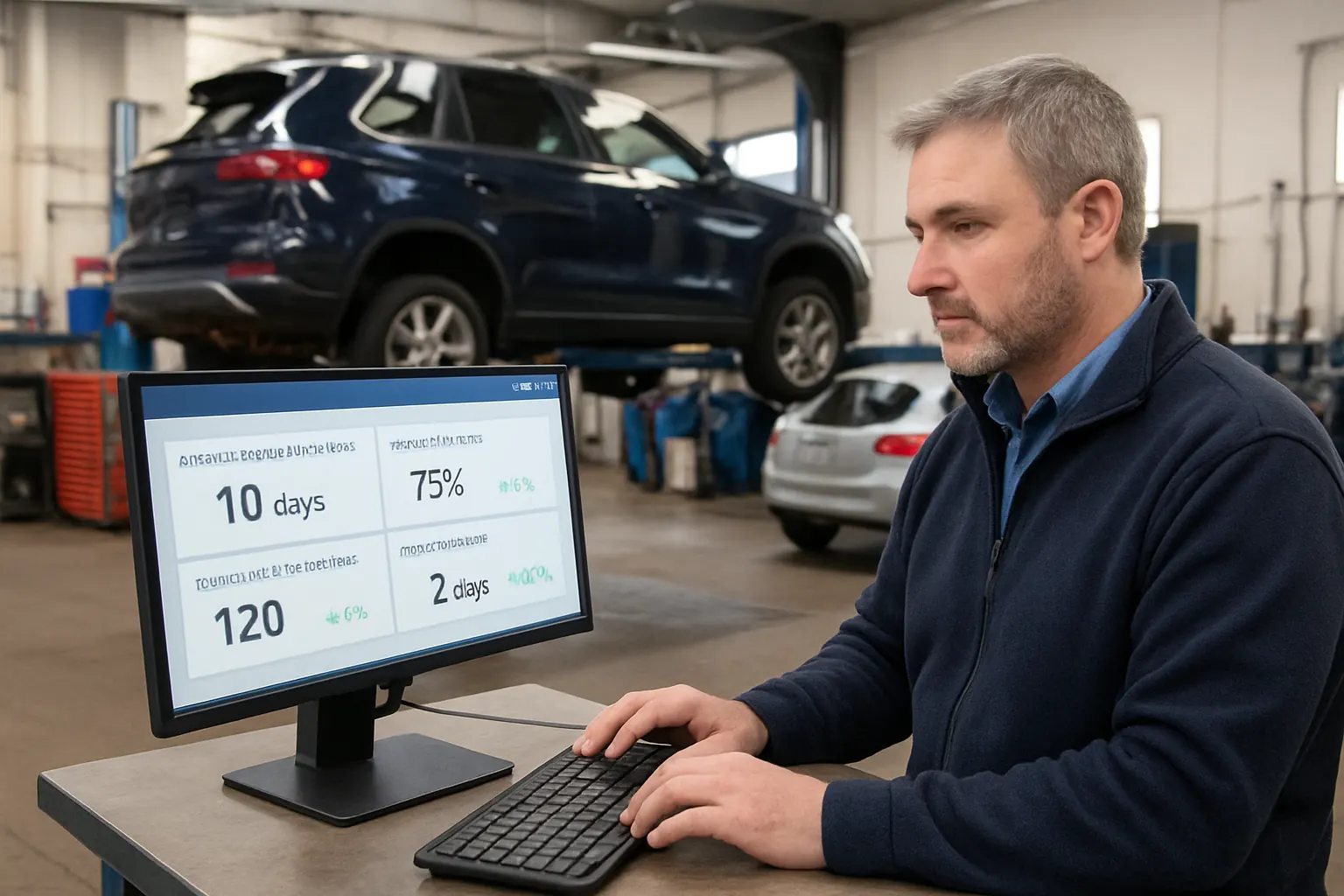
Leveraging Selective AI for Classification and Prioritisation
Sorting through variable workload challenges
Staff face unpredictable enquiry volumes, varying vehicle conditions, and competing prioritisation requests.
Targeted AI capabilities for dynamic workloads
AI modules classify enquiries by priority, summarise vehicle inspection reports, and recommend next steps based on rules and historic outcomes.
How AI complements deterministic rules
Routine steps (such as booking confirmations) follow deterministic automation, while AI handles variable data patterns needing flexibility. For example, AI summarises damage reports into key inspection flags.
Example: AI triages inbound enquiry emails
The system extracts customer intent and suggests priority level, accelerating test drive bookings for serious buyers.
Controls preserving human approval
AI recommendations require final review to confirm offers, finance eligibility, and inspection clearance before proceeding.
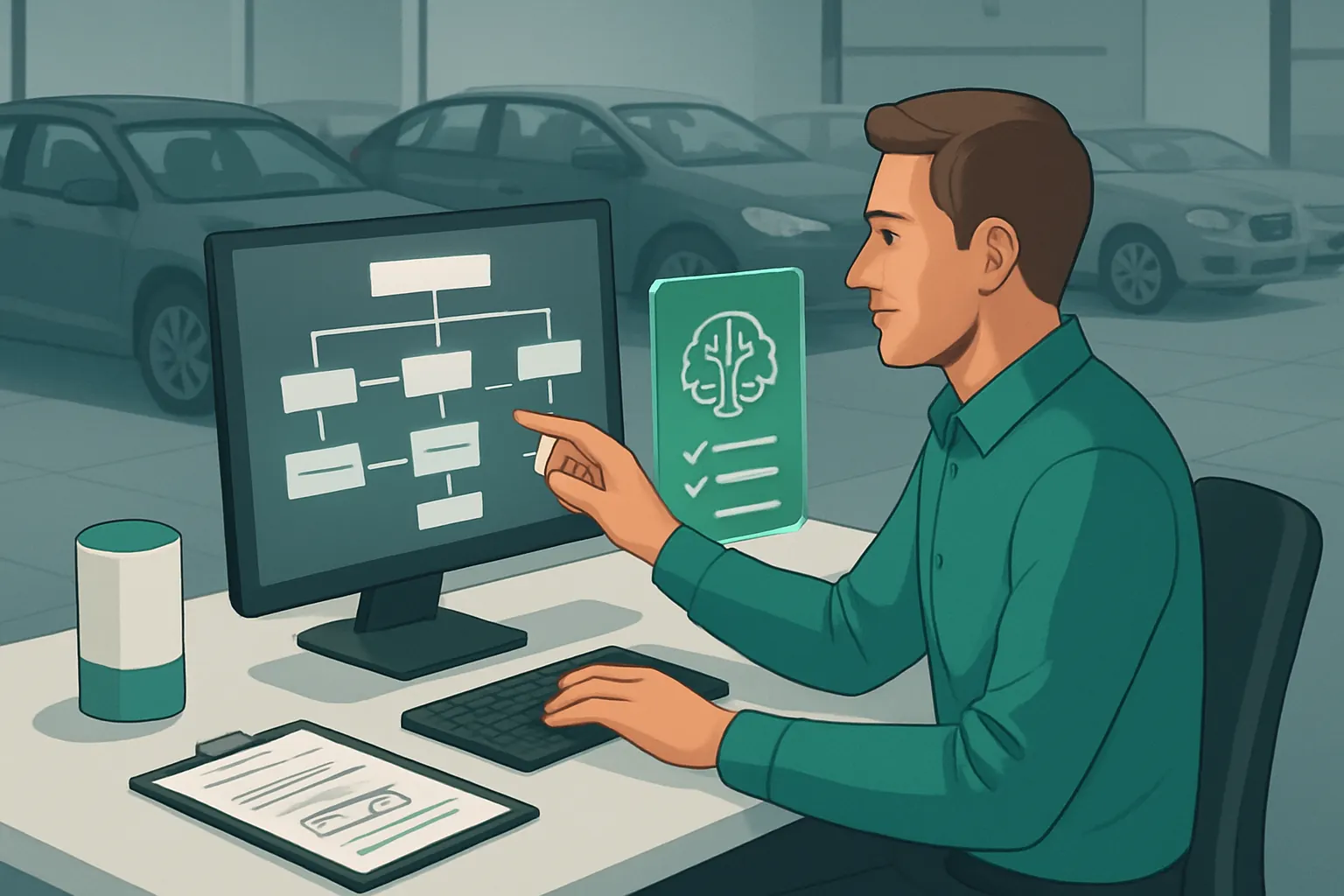
Automating Booking Reminders and Follow-ups
Missed appointments and no shows reduce revenue
Customers forget bookings, leading to idle workshop slots or lost sales opportunities.
Connected automation for appointment management
The system sends SMS or email reminders automatically and integrates with calendar apps to track confirmations and cancellations.
Integration with communication providers
Uses specialist SMS platforms that provide delivery and read receipts linked back to the booking record for traceability.
Example: Follow-up reminders with opt-outs
A reminder goes out 24 hours before the test drive, inviting confirmation or rescheduling options, reducing no-shows by proactive engagement.
Controls for customer consent and message frequency
Opt-in data is managed per ICO guidelines (ICO data protection guidance), with configurable limits on message volume and types.

Real-Time Parts Availability Alerts to Workshop Teams
Parts shortages disrupt vehicle preparation
Delays sourcing parts due to poor visibility and manual checks reduce throughput and harm customer experience.
Connected inventory and alert system
Parts stock levels and incoming orders feed into a central tracking module, which issues alerts when stocks fall below thresholds or deliveries arrive late.
Integration with suppliers and warehouses
Links with supplier order systems and internal inventory databases for up-to-the-minute stock status.
Example: Automated parts shortage warning
A workshop technician receives an instant alert that a needed brake pad delivery is delayed, triggering an escalation for alternative sourcing.
Controls on alert prioritisation and escalation
Alerts are categorised by criticality, with escalation paths defined to ensure timely resolution without alarm fatigue.

Creating Digital Vehicle Inspection Records
Paper inspections are slow and error-prone
Manual inspection notes risk incomplete records, lost documents, and inconsistencies across teams.
Digital inspection workflow integrated with sourcing
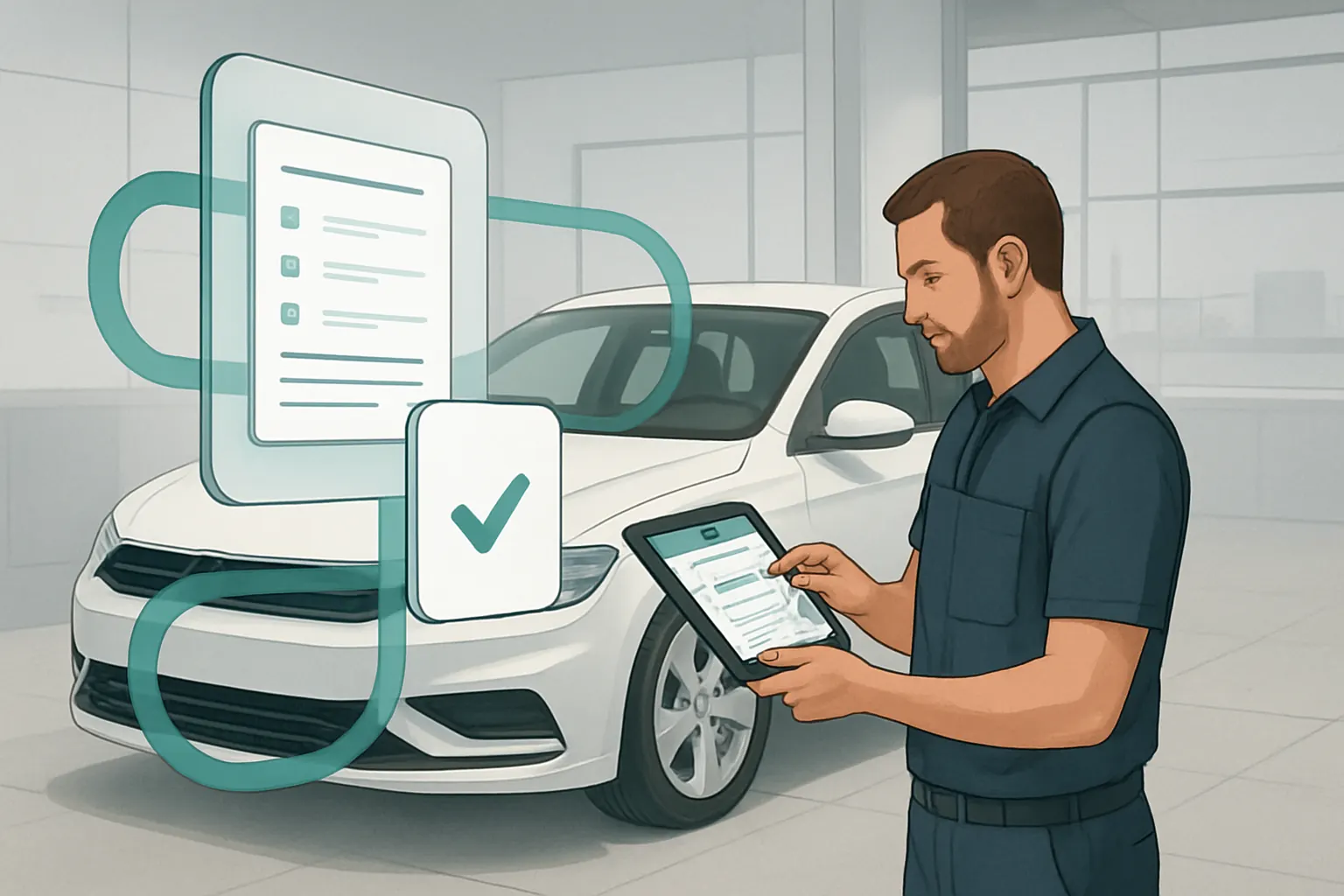
Inspection data is captured on tablets or mobiles, instantly linked to the vehicle record and workshop booking.
Useful integrations for inspection evidence
Photos, videos, and measurement data are added and timestamped. Integration with safety compliance checklists supports audit readiness.
Example: Pre-sale vehicle condition report
A technician completes a digital checklist with images highlighting wear and damage, stored in the vehicle sourcing record accessible to sales and compliance teams.
Controls maintaining inspection integrity
Detailed version control and authorisation workflows prevent tampering and ensure evidence meets regulatory standards.
Managing Finance Approvals within the Workflow
Finance decisions often break the operational chain
Separately processed credit approvals cause delays and reduce transparency.
Connected finance decision support
Finance eligibility checks and approvals integrate into the workflow, sending notifications at key stages while preserving decision privacy.
Integration with lenders and credit check services
Automates credit enquiry submissions and status updates through secure API connections.
Example: Early finance approval alerts
A sales advisor receives instant notification when a buyer’s finance pre-approval arrives, enabling faster documentation and deal closure.
Controls preserving regulatory requirements
Compliance with FCA requirements (https://www.fca.org.uk/) is supported by documented decision paths and mandatory human review for all credit decisions.

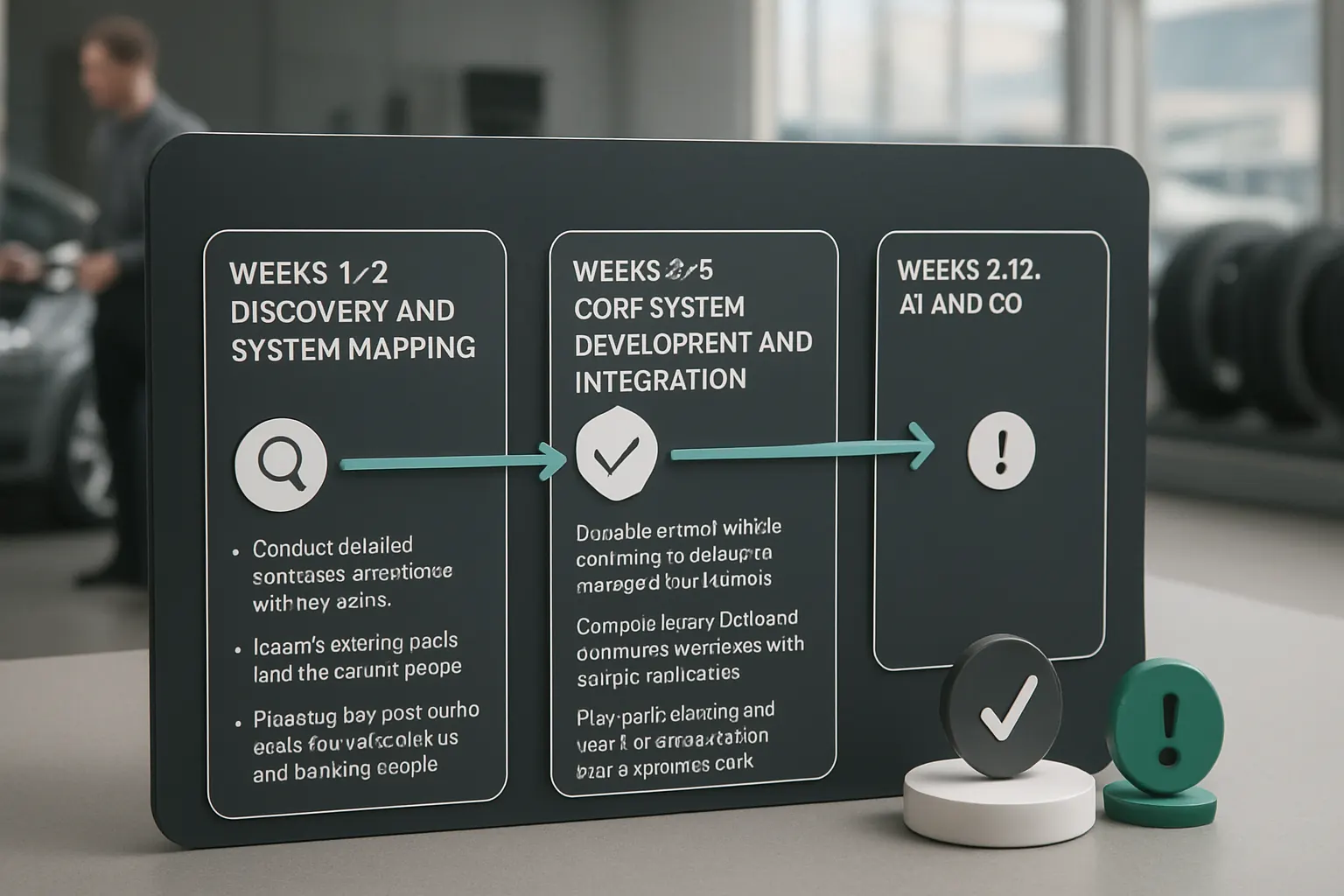
90-Day Rollout Plan for Vehicle Sourcing Automation
Weeks 1–2: Discovery and System Mapping
- Conduct detailed workflow interviews with key users
- Identify existing tools and integration points
- Prioritise key pain points such as stock visibility and booking delays
Weeks 3–6: Core System Development and Integration
- Develop central vehicle inventory and enquiry management modules
- Connect legacy DMS and communication tools with owned workspace
- Pilot parts tracking and booking automation with a selected team
Weeks 7–12: AI and Compliance Modules Deployment
- Implement AI classification and summarisation capabilities
- Deploy digital inspection workflows and finance approval integration
- Build and refine tailored dashboards for operational visibility
- Conduct staff training and refine controls
How AI Implementation UK Powers Your Own Connected System
AI Implementation UK specialises in building one connected operating system tailored precisely to how your used-car dealership works. We integrate your current software investments and replace avoidable subscriptions with owned modules designed around your workflows. This avoids the trap of adding disconnected SaaS stacks with overlapping functionalities and admin overhead.
Our approach brings all your operational data—from vehicle sourcing to booking and workshop turnaround—into a single reliable record. We build dashboards tailored to your decisions, enabling you to see the full picture instantly.
AI is deployed selectively to support variable tasks such as customer enquiry classification, inspection report summarisation, prioritisation of workload, and decision support. Deterministic automation handles routine predictable steps, while human approval remains integral for key compliance and finance decisions.
We work closely with you from initial process automation and data infrastructure preparation through to AI strategy roadmapping. Our solutions preserve your data privacy and security, complying with ICO and NCSC guidelines, while integrating securely with specialist external services like payment and communications tools.
Explore how your dealership can reduce manual effort, eliminate duplication, and operate with clearer workflows at AI Implementation UK’s Process Automation Services and plan your tailored connected system at Plan My Platform.
By connecting your workflows, replacing redundant tools, and applying AI in a controlled manner, your used-car dealership can improve sourcing efficiency, enhance customer responsiveness, and maintain compliance with confidence. This approach delivers measurable operational improvements without sacrificing ownership or control of your critical data.