
Learn how warehousing businesses can connect systems, reduce manual admin and automate order to dispatch with one tailored operating platform the business owns.
Warehousing business workflow automation: What Breaks Daily
Warehousing business workflow automation should connect bookings, people, communications and reporting in one reliable operating flow.
Warehousing businesses in the UK routinely face a cascade of operational disruptions—delays in inbound receipts, misplaced inventory in complex location schemes, manual errors during dispatch waves, and inefficient route planning. These daily breakdowns arise from fragmented systems, manual data re-entry, and duplicate software subscriptions that slow down workflows instead of speeding them up.
Manual processes increase the risk of errors, reduce visibility across operations, and create bottlenecks that hurt compliance and customer satisfaction. Meanwhile, legacy or disconnected systems generate data silos, forcing staff to toggle between spreadsheets, third-party apps and paper-based records.
For a warehousing business focused on logistics and wholesale, these gaps translate into costly inefficiencies and missed opportunities to automate order to dispatch workflows. The usual quick fix—patching together multiple SaaS products—often deepens complexity and dependency on external subscriptions.
Instead, a joined-up approach built around one connected operating system that the business owns can transform workflows. It connects useful existing systems, replaces avoidable software with custom-owned modules, and brings operational data into one reliable record and tailored dashboard.

The Cost of Manual Work in Warehousing Workflows
Manual work increases risk at multiple points:
- Time wasted on repetitive admin: Staff spend hours copying data between systems, chasing approvals and manually updating inventory locations.
- Errors and delays: Hand-entered data leads to misplaced stock, incorrect dispatches and poor customer experiences.
- Compliance gaps: Without clear audit trails and chain of custody controls, meeting safety and regulatory standards becomes harder.
- Cash flow strain: Inventory inaccuracies affect billing cycles and forecast models, causing invoice disputes and delayed payments.
Replacing manual and disparate systems with one integrated workflow reduces friction, delivers accuracy, and improves transparency. This is not about adopting a dozen SaaS tools but building operational capabilities the business controls—supported by AI for selective variable tasks like classification and decision support.
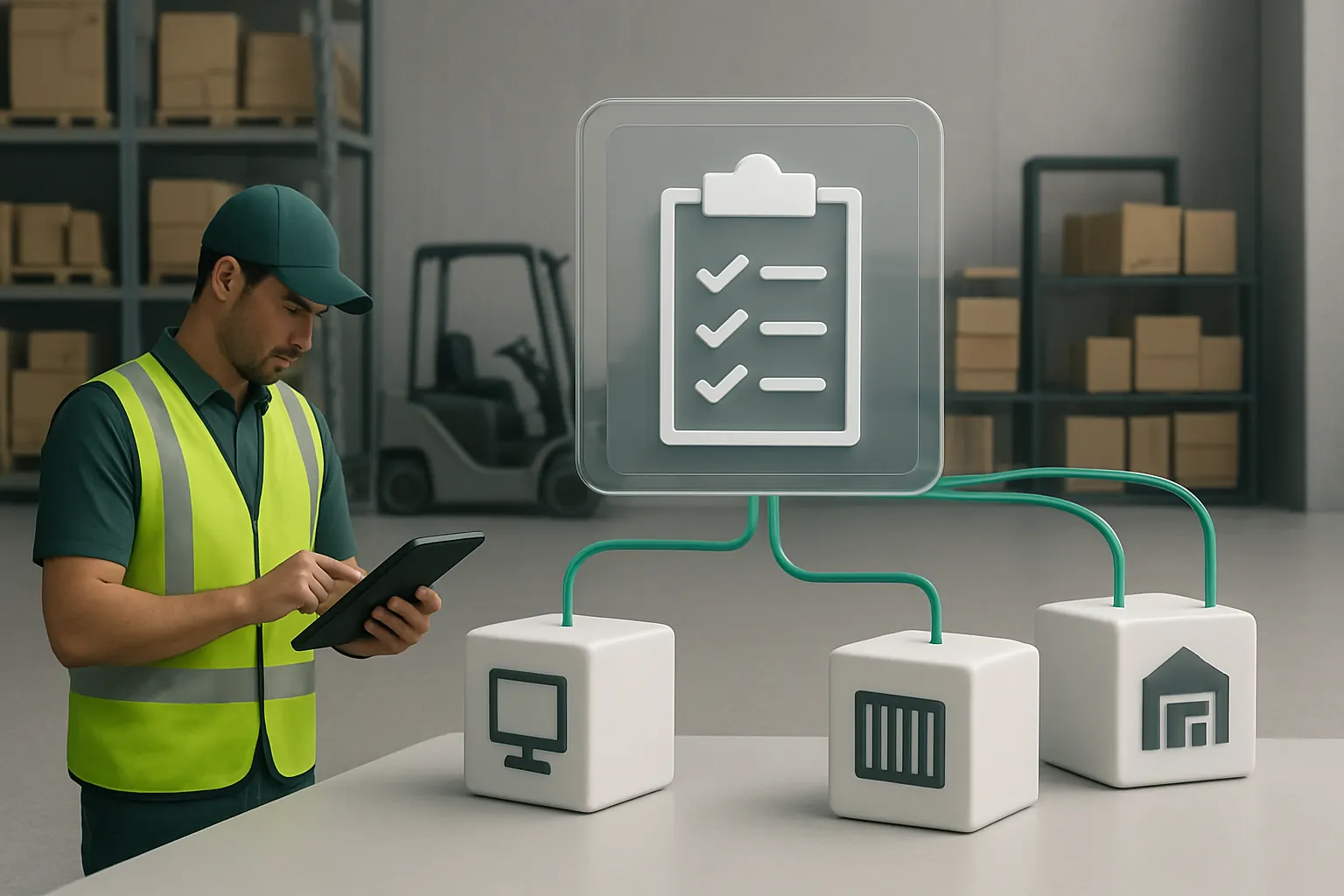
Seamless Inbound Receipts Management
Overcoming the bottleneck of manual goods intake
Warehousing businesses face daily delays in inbound receipts due to manual checks, duplicated data entry, and unclear inventory allocation. These inefficiencies cause hold-ups and confusion.
Synchronized intake and location assignment
A connected workspace ties receipts to purchase orders and supplier communications. Data from existing Enterprise Resource Planning (ERP) systems is linked without replacement, ensuring legacy investments remain valuable.
Practical integration examples
Integrating barcode scanners and handheld devices updates the central system in real time, replacing multiple software subscriptions used for scanning and stock updating. For example, a business using AEB warehouse management software can connect it directly to their bespoke inbound receipts module.
Built-in controls for accuracy and compliance
Checkpoint alerts flag damaged or delayed goods, while chain-of-custody logs support regulatory audits. Human review remains mandatory for irregular receipts, safeguarding compliance.

Inventory Locations Optimised and Unified
The daily challenge of scattered stock data
Inventory locations are often held across multiple spreadsheets or systems, leading to misplaced stock, inaccurate counts, and costly search time.
Centralised inventory mapping and tracking
A single source of truth consolidates location data and stock movements. The system connects with existing warehouse management tools through APIs, retaining useful features without redundancy.
Concrete application in dispatch readiness
Dispatch waves benefit from real-time stock location updates, ensuring that picking lists are accurate and prioritised by actual item positions, cutting down picking errors.
Controls to safeguard data integrity
User permissions restrict who can update key inventory fields. Audit trails track changes, helping maintain regulatory and audit standards.
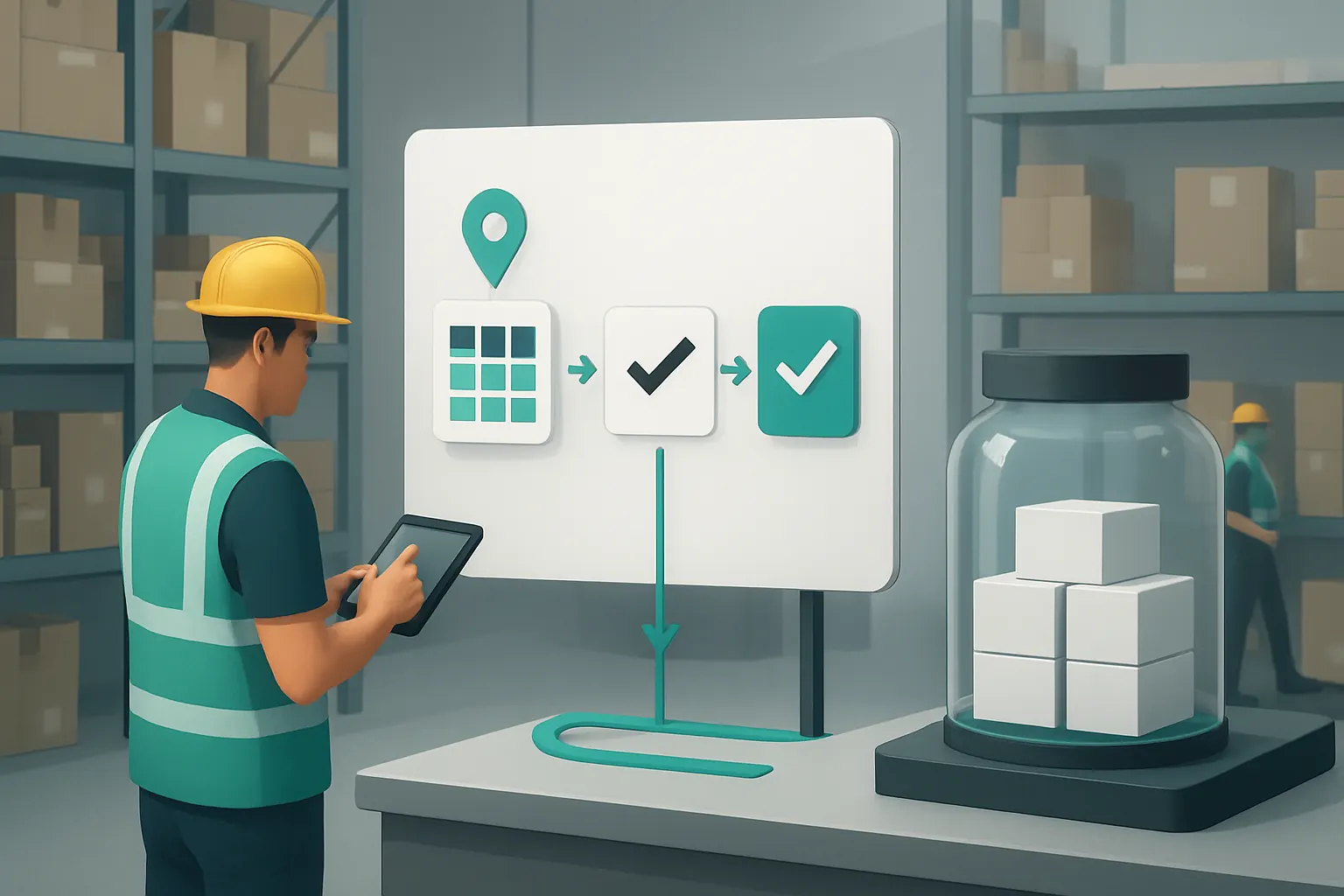
Orchestrated Order to Dispatch Workflows
Complexity in managing orders to delivery stages
Operational fragmentation causes delays in order fulfilment and dispatch planning, with last-minute manual adjustments.
Workflow automation that mirrors business processes
Custom-owned modules automate task sequencing across order booking, picking, packing, and dispatch waves—all visible on a single dashboard tailored to the warehouse workflow.
Example with payment and communication integration
Payment platforms like Worldpay or communication tools such as Twilio are integrated for specialist, stable services without replacing core workflows with SaaS products unsuitable for full operational control.
Decision points with human oversight
Automated prioritisation suggests dispatch waves, but final schedules require manager approval, enabling risk management and operational flexibility.

Real-Time Dispatch and Route Planning
Inefficiencies due to unconnected route and vehicle planning
Manual route mapping and vehicle capacity planning cause costly delays and underused transport resources.
Data-driven dispatch orchestration
The system links dispatch records with transport management details, optimising routes and capacities dynamically.
Practical use case scenario
On a busy day, dispatch data automatically updates route plans, alerting planners in advance of potential delays or overcapacity before trucks leave the yard.
Secure controls and driver access
Role-based access for drivers enables proof-of-delivery capture and exception reporting without compromising data security or chain of custody.
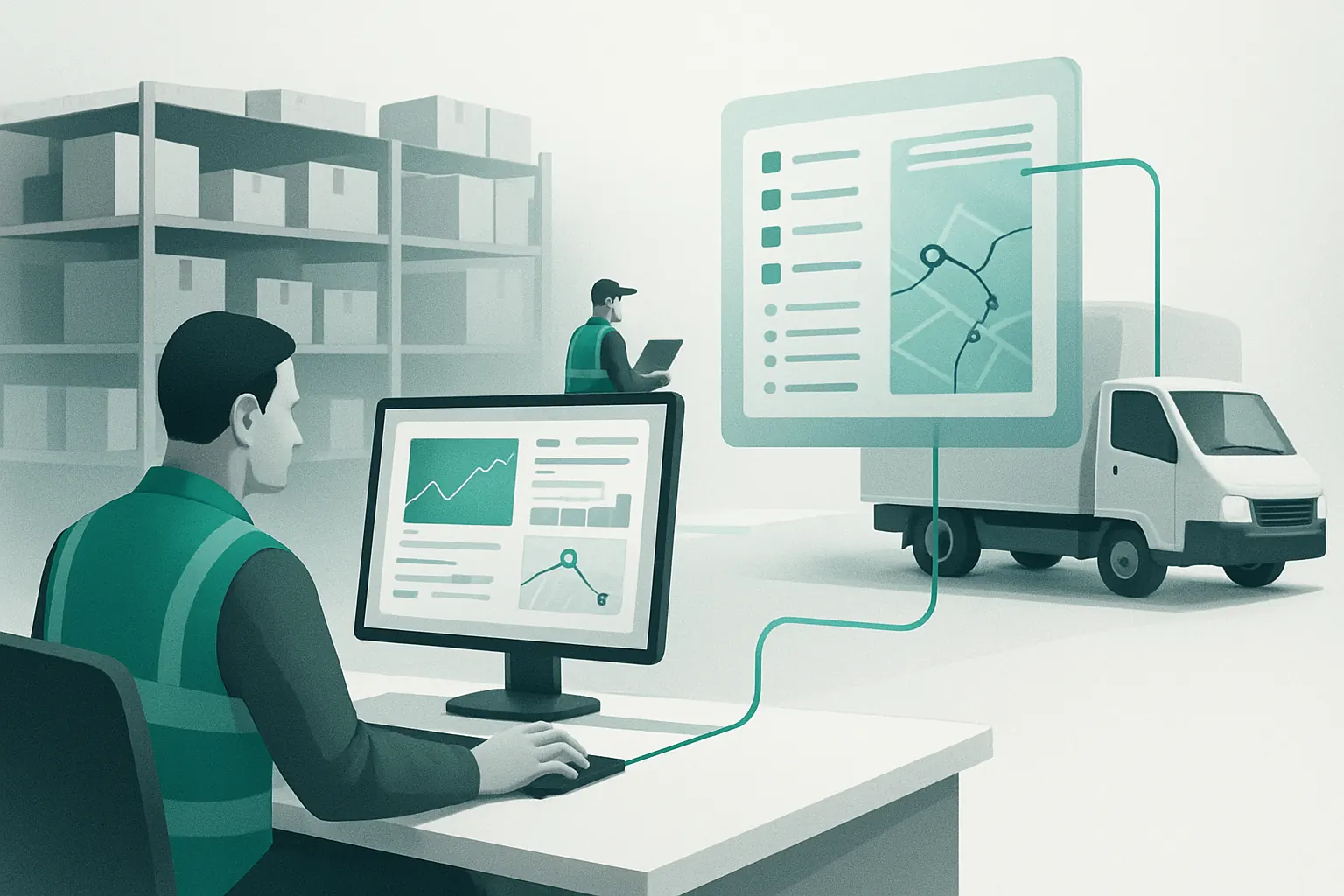
Automated Document and Proof-of-Delivery Capture
Manual paperwork slows proof processes
Reliance on paper proofs and manual follow-ups introduces delays and errors, complicating billing and compliance.
Digitised document workflows
Captured documents flow into the owned system, linked to dispatch and customer records. Optical character recognition (OCR) aids in summarisation while documents remain in controlled ownership.
Example for exception management
Exceptions flagged during proof-of-delivery are automatically routed for human review, while summaries are prepared using selective AI capabilities.
Control safeguards on sensitive data
Secure storage and access logs align with UK General Data Protection Regulation (ICO guidance), helping businesses meet privacy obligations (ICO data protection guidance).

Selective AI for Classification, Summarisation, and Decision Support
Varied workflows require flexible technology
Repetitive, predictable tasks use deterministic rules. Tasks needing discretion employ AI selectively—for instance, classifying inbound goods or summarising delays.
AI as an assistive, not autonomous, layer
The system flags priorities and prepares decision options but requires human approval for critical decisions such as order exceptions or regulatory steps.
Integration with operational dashboards
AI-driven insights feed tailored dashboards, providing weighted priorities and potential risk alerts that synchronise with workflow modules.
Manual override and audit trails
Every AI suggestion includes an easy option for manual correction, recorded for compliance and continuous improvement.
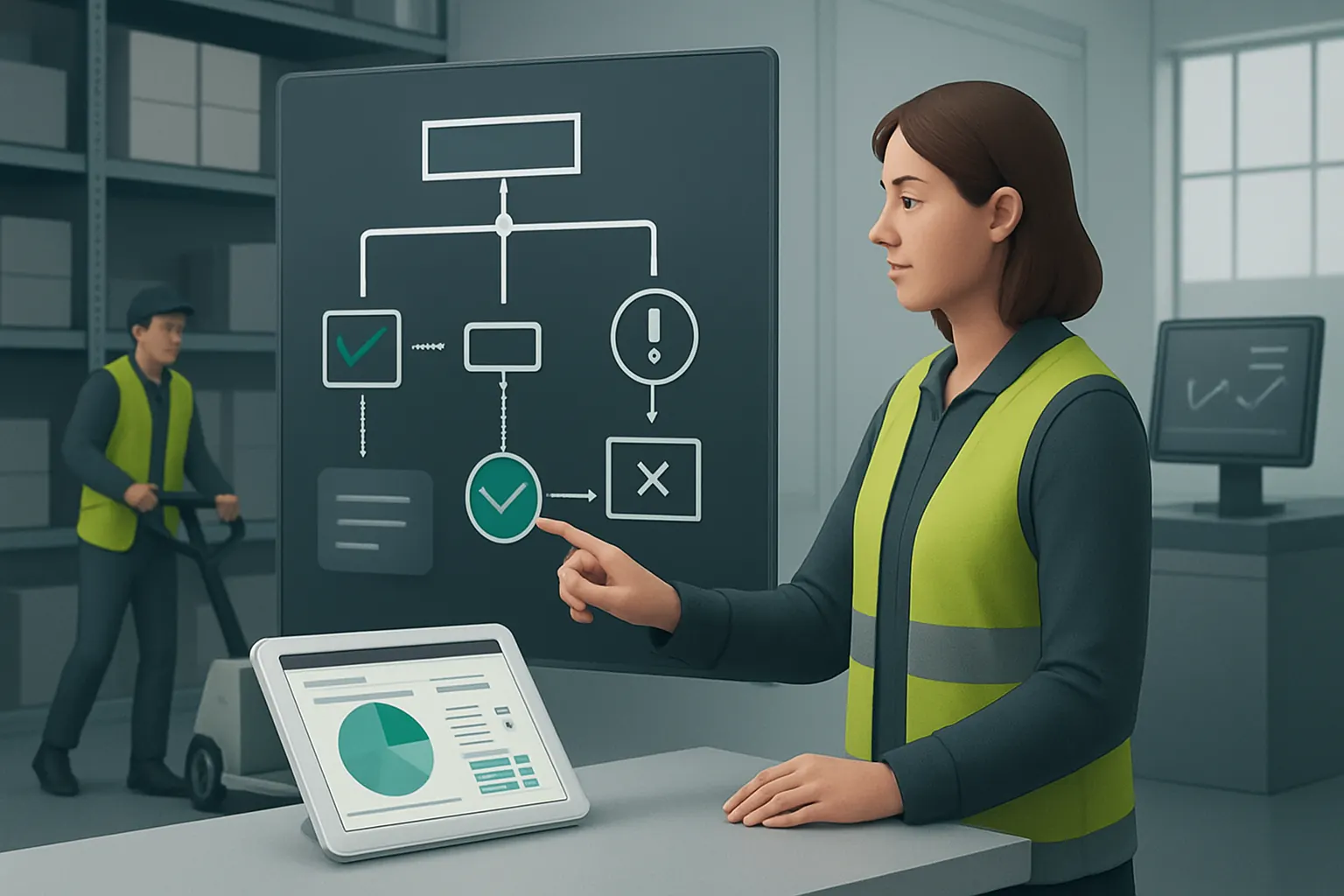
Replace Avoidable Software Subscriptions with Owned Modules
Subscription proliferation drives up operational costs
Warehousing setups often pay for multiple overlapping SaaS tools to handle scanning, inventory, order management, and dispatch coordination.
Building internal capabilities you own
Core warehousing workflows such as inbound receipt tracking, inventory control, and dispatch scheduling are built as owned modules inside one connected system, reducing dependency and cost.
Real-world saving and efficiency gains
Many businesses have reduced SaaS expenditure by consolidating to an owned system integrated with specialist external services only where necessary.
Governance over updates and customisations
Owning workflow components empowers businesses to adapt processes without waiting on external vendors, improving reliability and agility.

Unified Operational Data and Tailored Dashboarding
Fragmented reporting hampers decision making
Operational data scattered across systems obstructs clear business visibility and timely decision-making.
Consolidated data repository with custom insights
Reliable data gathered from all integrated workflows feeds into dashboards tailored for roles across operations, logistics and management.
Example: a morning briefing dashboard
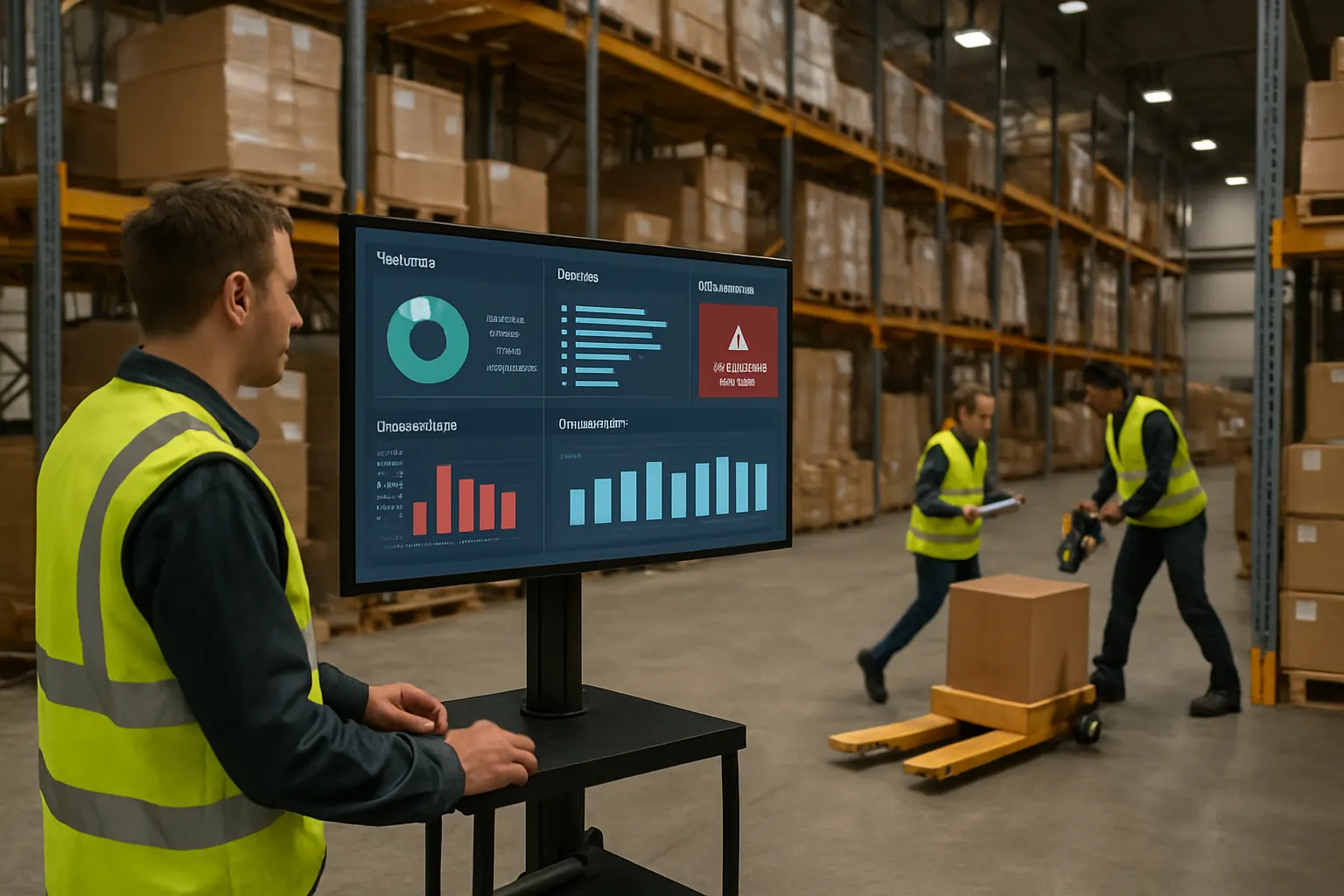
Operations managers receive visual alerts on dispatch status, inventory discrepancies, and compliance exceptions on a single screen, replacing multiple reports or ad-hoc queries.
Controls for security and data accuracy
Access roles ensure sensitive data partitioning, while configurable rules allow the business to enforce necessary compliance checks within reports.
90-Day Rollout Plan for Warehousing Workflow Automation
Weeks 1–2: Discovery and Process Mapping
- Map current workflows, focusing on high-impact areas like inbound receipts and dispatch waves.
- Identify useful existing systems and data sources that can be connected rather than replaced.
- Define compliance and control requirements with input from operations and governance teams.
Weeks 3–6: Platform Foundations and Integration
- Develop owned modules for inbound receipts and inventory locations, integrating barcode and scanning tools.
- Link existing ERP and warehouse management systems (e.g., AEB warehouse management software) for seamless data flow.
- Establish secure user roles and permissions to safeguard data integrity and audit trails.
Weeks 7–12: Workflow Automation and AI Enablement
- Build automated order to dispatch process workflows, including route planning and document capture.
- Implement selective AI features for classification and decision support with human approval checkpoints.
- Deploy tailored dashboards across operational roles and train staff on new workflows and controls.

A Practical Next Step with AI Implementation UK
AI Implementation UK specialises in connecting warehousing business systems to cut admin and improve accuracy through tailored operating workspaces owned by our clients. Our approach avoids the pitfalls of relying on disconnected SaaS collections. Instead, we build custom workflow modules around your existing systems, keeping valuable capabilities intact while replacing redundant subscriptions.
We help you unify data into one reliable record, visible on dashboards designed precisely for your operational roles. Selective AI capabilities assist where variability demands, leaving deterministic rules to handle predictable work and humans in control of important decisions.
To explore how AI Implementation UK can streamline your warehousing business automation with ownership and control, visit our detailed services on process automation and RPA or data infrastructure preparation. Our case studies demonstrate how connected systems reduce manual admin and increase operational resilience.
For a no-obligation discussion tailored to your warehousing workflows, use our platform planning tool. Together we can deliver the connected automation your logistics and wholesale business needs—cutting complexity and improving delivery every day.
To turn these priorities into one coherent system, map the platform your business needs or explore our workflow automation approach.