
Learn how private hospitals and day surgery centres can connect systems, reduce manual admin and automate referral to appointment with one tailored operating.
Private hospitals and day-surgery centres referrals automation software: What Breaks Daily
Private hospitals and day-surgery centres referrals automation software should connect bookings, people, communications and reporting in one reliable operating flow.
Private hospitals and day-surgery centres face a persistent challenge: how to handle large volumes of referrals efficiently without compromising patient care or operational rigour. Typically, referrals arrive through a mixture of channels—fax, email, online portals—necessitating manual data entry, record updates, and staff follow-ups.
Daily, this causes fragmentation. Referral details may sit in a separate silo from appointment scheduling systems and clinical records. Follow-up actions rely on manual tracking, which risks missed or delayed patient communication. Staff time is consumed by repetitive tasks instead of value-added coordination. This operational friction can lead to late bookings, underutilised theatre capacity, patient dissatisfaction, and potential compliance risks.
The opportunity lies in automating and connecting these workflows directly around how your hospital or centre operates. Instead of acquiring and managing multiple disconnected tools, you gain one owned connected system. Referral data, appointment scheduling, patient records, and task routing live in a single unified record. This shrinks manual work, supports clinical human oversight, and improves information accuracy along the referral-to-appointment pathway.

Manual processes drain resources and risk compliance
Manual interventions along referral and patient booking processes generate costly delays and errors:
- Staff spend excessive time retyping referral information, chasing missing data, and coordinating diaries, distracting from patient-facing activities.
- Manual email or phone-based appointment communications increase no-shows, amplifying lost capacity and revenue.
- Fragmented data storage hinders effective audit trails required for regulatory oversight, especially concerning special-category health data.
- Subscription to multiple SaaS tools for scheduling, reminders, record-keeping, and task management inflates tech costs without guaranteeing integration or smooth workflows.
- Failure to automise repetitive processing steps risks timely claim submission delays and disrupts clinical continuity.
By replacing this patchwork work with a connected and client-owned workflow system tailored to your business operations, private hospitals and day-surgery centres can regain time, improve patient experience, maintain care quality, and retain control of their data infrastructure.
Streamlined referral intake and triage with tailored integration
Referral handling complications slow care commencement
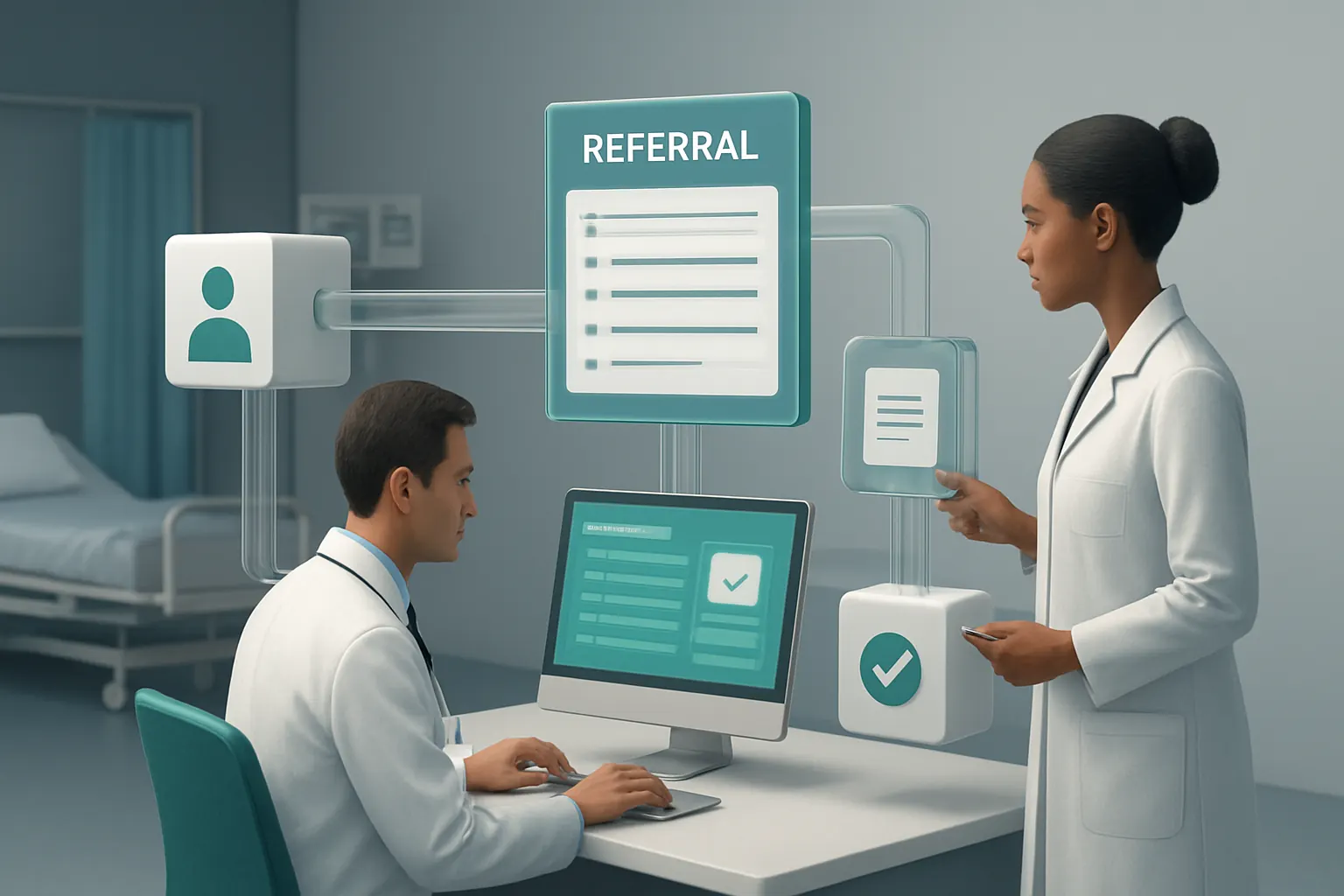
Referrals can come from NHS trusts, private consultants, or directly from patients. Inconsistent formats and incomplete information create bottlenecks at intake. Manual review to confirm patient eligibility and required documentation further delays onward processing.
Connecting referral sources into one business-driven intake workflow
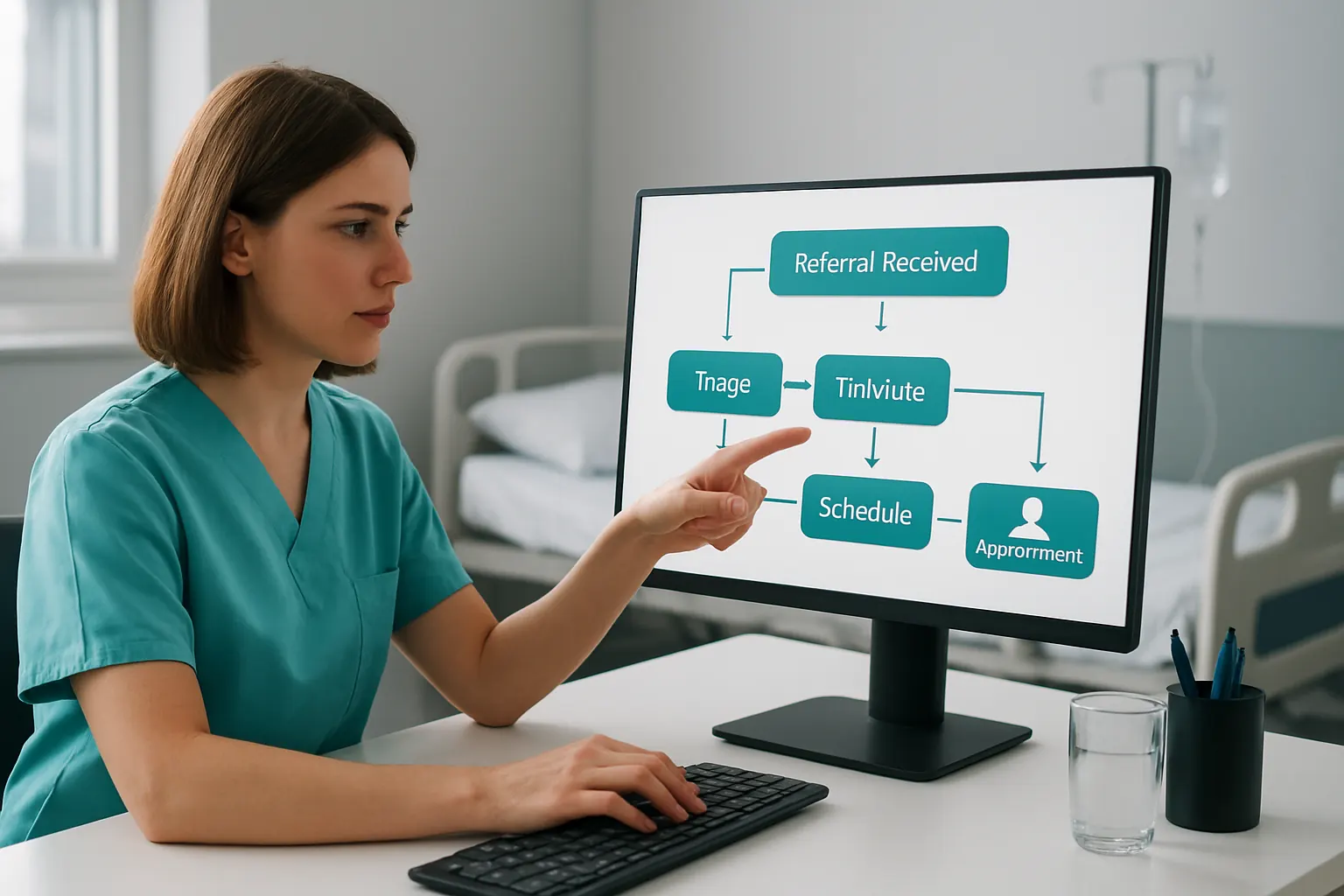
Link your existing referral capture points—fax servers, referral portals, emails—into one owned records workspace. Data extracted from referrals feeds directly into your hospital information system. Custom triage rules automate classification by specialty, urgency and special requirements according to your protocols.
This direct integration means data does not need re-entry or transcribing, minimising transcription issues or lost information. The central record enriches over time with clinician notes and test results, preserving care continuity.
Useful existing system integrations
- Fax to electronic document capture connectors
- NHS e-Referral Service notification triggers
- Existing Electronic Patient Records (EPR) systems
- NHS Digital GP Connect interfaces for patient verification
Real-world example: automating referrals in a day-surgery centre
A London day-surgery centre connected its fax and online referrals into a workflow module set up to flag incomplete referrals for fast triage. Using built-in email notifications, the system alerted clerks only if human input was necessary. This reduced intake time by 40% and reduced referral rejections caused by administrative errors.
Control for compliance and clinical oversight
Configured deterministic rules identify exceptions requiring human review, keeping clinical decision-making in-house. Audit trails track all actions from referral receipt through triage to appointment planning, supporting trust and regulatory requirements such as data protection oversight by the ICO.

Automated appointment scheduling with dynamic availability
Inefficient manual scheduling drives resource under-utilisation
Booking patient slots often involves back-and-forth calls or emails, reconciling surgeon availability, theatre schedules and patient preferences. Manual shifts can cause double-bookings or underused capacity.
One connected rota and bookings module for dynamic scheduling
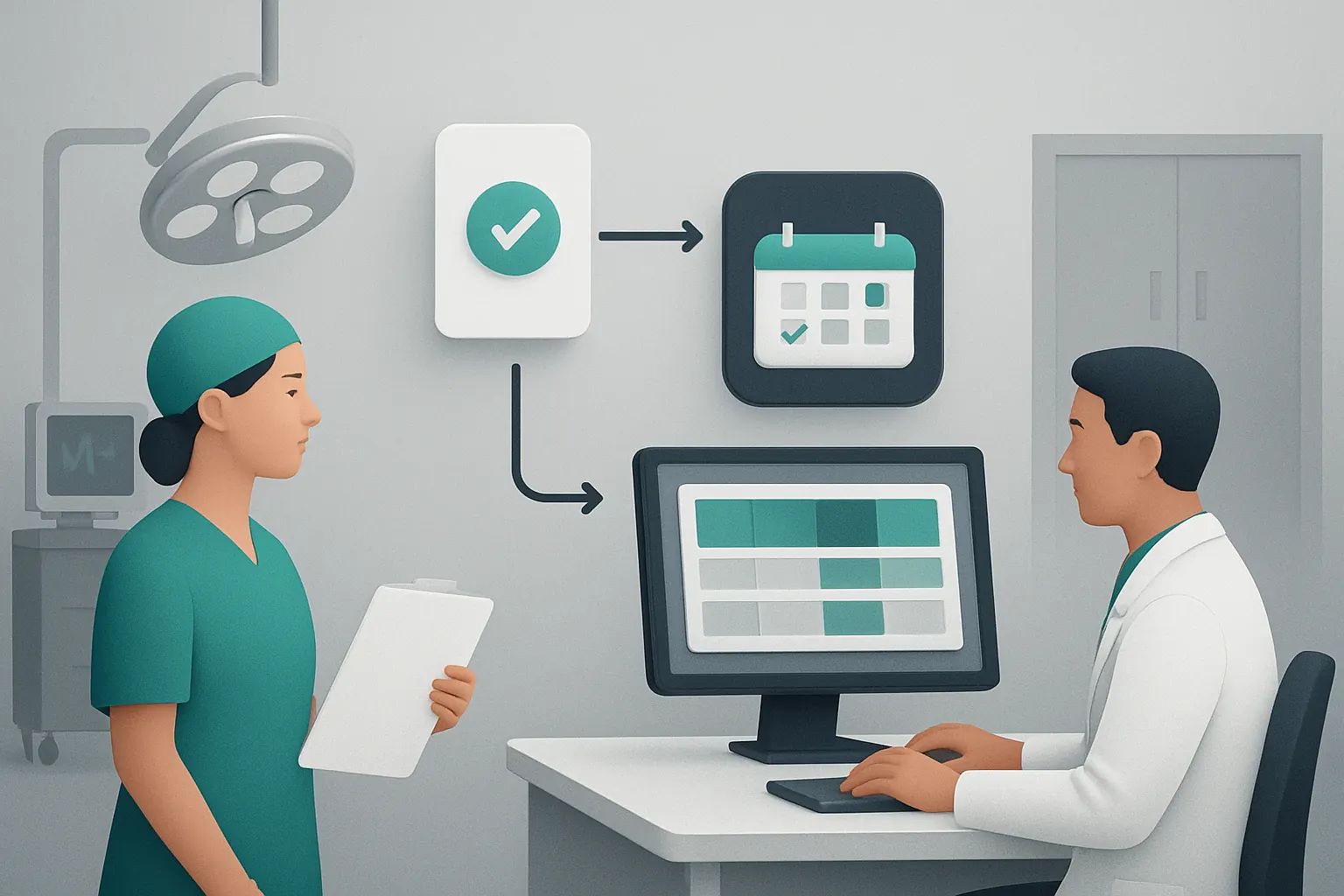
An owned scheduling system gathers real-time availability from theatre, clinical and administrative rotas. Referrals approved through the triage workspace automatically generate provisional bookings with patient preferences. Automated checks identify conflicts, with workflow triggers launching prompts for rescheduling before confirming slots.
Synchronised booking records update all involved parties via text and email. Follow-ups for confirmations or cancellations are automated, reducing no-shows and maximising theatre use.
Integration with specialist external tools only where needed
Where specialised services such as secure patient text messaging or online card payment collections operate best externally, these plug into the owned system to retain seamless workflow continuity.
Real-world example: reducing no-shows through automated reminders
A Birmingham private hospital deployed an automated appointment confirmation engine integrated with their booking record. AI-supported scheduling predicted high-risk no-show patients and sent intelligent reminders via SMS and email. This improved attendance rates by 15%, directly enhancing revenue flow.
Controls to maintain clinical and patient consent safeguards
All interactions comply with the hospital consent policies and use encrypted communication channels aligning with NHS Digital and NCSC guidelines. Clinicians review and override automated scheduling exceptions to ensure patient safety and care appropriateness.
Owned modules to replace avoidable software subscriptions
Fragmented vendor tools lead to escalating costs and data silos
Many hospitals subscribe to multiple independent SaaS solutions for referrals, bookings, billing, follow-up task tracking, and communication, resulting in disparate records and costly overlapping licensing fees.
Modular workflow components tailored to your business
Replacing these with owned software modules reduces recurring subscription expenses and integrates workflows. For instance, a task routing module consolidates clinical follow-up reminders, billing alerts, and audit compliance tasks in one system. Built around your exact operational flows, this reduces reliance on multiple third-party products.
Ideal external integrations limited to specialist providers
Payments interfaces to PCI DSS-compliant processors or third-party telephony services remain integrated but distinct to ensure resilience and compliance.
Real-world example: clinical follow-up scheduling inside a single workspace
A Manchester day-surgery provider implemented a follow-up task module to automatically flag patient check-ups and tests post-procedure, reducing missed appointments and improving care continuity—all managed within their owned referral and scheduling workspace.
Controls for security and compliance embedded by design
These owned modules enforce role-based access controls and encrypted storage, supporting GDPR and Health and Social Care regulations. Human review points are configured for all clinical task escalations.

Actionable, tailored dashboards bringing operational data together
Disconnected data causes costly blindness and fragmented decision-making
Operating without a unified data view means managers rely on manual report collation or multiple dashboards with inconsistent timings and metrics. This slows response to scheduling bottlenecks, referral delays, or patient no-shows.
One connected dashboard offering real-time status and insights
Your owned system consolidates referral intake rates, appointment statistics, task completion progress and financial tracking in customised dashboards. Workflow metrics highlight hold-ups, enabling rapid managerial intervention and resource adjustments.
Multiple user views support clinical teams, administrators, and executives with the most relevant KPIs tailored for their role.
Integration of core internal data with external specialty tools
Specialised patient payment or communication systems feed activity summaries back into the dashboard for cohesive operational visibility.
Real-world example: executive monitoring of day-surgery utilisation
A private hospital CEO used a customised dashboard displaying referral-to-appointment lead times, cancellation trends, and theatre utilisation to identify capacity gaps and negotiate additional surgeon sessions timely, boosting throughput.
Controls to ensure data relevance, accuracy and audit traceability
Data refresh frequencies and validation checks are designed to sustain accurate operational decisions. Audit logs maintain transparency for governance and compliance purposes.

Selective AI assistance embedded within deterministic workflows
The temptation to over-automate risks loss of clinical control
Hospitals must balance AI automation with the need for human clinical judgment, especially with sensitive patient data and critical care decisions.
Using AI notably for variable, complex tasks
AI capabilities are deployed selectively for tasks benefiting from classification (e.g., referral type), summarisation (e.g., key clinical notes extracted), prioritisation (e.g., urgent cases flagged), and decision support (e.g., suggested booking slots based on predicted no-shows). Predictable repeatable actions are governed by deterministic rules.
AI outputs are advisory and always subject to human approval where patient safety or care standards require.
Integration with owned workflow ensures seamless collaboration
AI-powered triage suggestions or scheduling risk signals appear as task prompts in the main workspace, with clinicians reviewing and confirming before execution.
Real-world example: AI-supported referral prioritisation pilot
In a recent NHS pilot, AI models analysing referral content helped prioritise urgent cases, speeding up appointment booking for those patients while flagging less urgent referrals for routine processing. Private hospitals replicating this benefit within their own owned systems gain similar efficiencies without vendor lock-in.
Controls reinforcing transparency and clinical governance
AI decision suggestions are logged and explainable, with override options and audit trails allowing oversight teams to monitor automation effectiveness and intervene promptly.
A 90-day rollout plan for referrals automation transformation
Weeks 1–2: Discovery, system connections, and configuration
- Map existing referral, scheduling, and patient record systems and workflows.
- Specify integration points to connect fax, email, portals, and clinical software.
- Develop initial data import and triage rule configurations.
- Establish data compliance and access control policies aligned with ICO guidance.
Weeks 3–6: Workflow automation and scheduling implementation
- Deploy referral intake automation and triage modules.
- Integrate surgeon, theatre, and admin rotas with dynamic booking tools.
- Implement automated patient communication for appointment reminders.
- Train staff on new workflows and change management.
Weeks 7–12: Modular extensions, dashboards, and AI trial
- Introduce task routing for clinical follow-ups and administrative alerts.
- Launch tailored operational dashboards for different user roles.
- Pilot selected AI features for prioritisation and scheduling support.
- Refine controls, audit trails, and user feedback incorporation for governance.
This phased approach ensures staged value delivery, controlled organisational adoption, and operational continuity.
How AI Implementation UK connects and automates your referral workflows
At AI Implementation UK, we deliver one connected, owned operating system tailored to how your private hospital or day-surgery centre works. We integrate your best existing systems—from record storage to scheduling—within a single workspace, preserving valuable investments while eliminating duplication and manual rekeying.
Our modular owned components replace avoidable subscriptions, reducing costs and data silos. We prioritise workflows with clear, deterministic rules for predictable processes and embed selective AI capabilities only where they add measurable value, such as referral classification and no-show prediction. Every automated step includes built-in controls and authorisation points that uphold clinical oversight, data privacy, audit requirements and regulatory standards.
You avoid the complexity and security risks of managing multiple disconnected SaaS products. Instead, your data, workflows and operational insights flow cohesively through a reliable, transparent system whose design reflects your unique practice and strategic priorities.
Discover more about our approach to process automation and RPA in healthcare, or explore how we prepare your data infrastructure for intelligent automation. To start building your own connected referral automation ecosystem, plan your platform with us today.
For secure payment handling, we ensure integration only with PCI Security Standards Council-compliant providers. Data protection practices strictly follow ICO guidance, ensuring protection of special-category health information throughout referral and care workflows.
By taking ownership of your referral-to-appointment workflows, private hospitals and day-surgery centres gain operational clarity and flexibility critical for today’s evolving healthcare landscape.
To turn these priorities into one coherent system, map the platform your business needs or explore our workflow automation approach.