
Learn how exhibition and event organisers can connect systems, reduce manual admin and automate enquiry to contract with one tailored operating platform the.
Exhibition and event organisers workflow automation: What Breaks Daily
Exhibition and event organisers workflow automation should connect bookings, people, communications and reporting in one reliable operating flow.
Exhibition and event organisers face a complex web of operations every day. From managing exhibitor enquiries to contracting, coordinating suppliers, scheduling workforce, and handling on-site service delivery and invoicing, the daily workflow is intensive and fragmented. Repetitive manual tasks, incompatible legacy systems, and siloed data create operational bottlenecks. Teams often wrestle with multiple disconnected software subscriptions and face data inconsistencies that threaten service quality and business agility.
The challenge is not just speed but control. Critical approvals often rely on human intervention, yet systems do not support seamless collaboration or visibility. As events scale, variable work like exhibitor classification, task prioritisation, and SLA monitoring become overwhelming without automation. Organisers must keep operational data accurate and accessible while meeting compliance requirements for security, worker access, and payments.
In short, the workflows needed to run successful events are breaking daily around these issues of integration, control, and scalability.

The Cost of Manual Work in Exhibition and Event Organising
Manual processes in exhibition and event management add hidden costs that severely impact financial and operational health:
- Time wastage: Repetitive admin tasks consume hours that could be better spent on relationship building or creative work. Scheduling errors and delays slow down event preparation.
- Data errors: Manual data entry and patchy system links generate inaccuracies, leading to contract disputes and invoicing mistakes.
- Compliance risks: Without clear workflows and role-based access controls, regulatory requirements around site security and contract management are harder to meet.
- Cashflow impact: Delays in service verification and erroneous invoicing slow payments from exhibitors and suppliers.
- Fragmented insights: Disconnected systems prevent managers from gaining a clear operational picture, affecting decision-making and resource allocation.
Organisations using multiple SaaS tools often pay more yet struggle to synchronise data, undermining both efficiency and control. The financial and reputational cost of these fracturing issues can be significant.

Capturing and Automating Enquiry to Contract Workflow
Frequent delays and manual hand-offs in initial exhibitor engagement
The enquiry to contract stage is critical. Exhibitors are often managed across email, spreadsheets, and standalone CRM tools, creating lost information and slower responses.
Connecting enquiry records to automated contract creation
A well-structured booking record module that the organiser owns can connect front-end enquiries to tailored contract templates. Automatic generation of contract drafts based on enquiry data reduces manual drafting.
Integrating payment gateways for deposit processing
Integration with specialist payment services like Stripe or Worldpay seamlessly links contract acceptance with deposit payments.
Example: A modular enquiry form auto-fills contract fields and routes approval notifications to sales staff, reducing turnaround from enquiry to signed contract by several days.
Controls: Configurable business rules enforce contract clauses, and human approval is retained for contract finalisation.

Replacing Redundant Software Subscriptions with Owned Tools
Multiple SaaS subscriptions inflate costs and complicate workflows
Many organisers rely on several SaaS products with overlapping functionality, increasing costs and data silos.
Consolidating capabilities into modules tailored to business processes
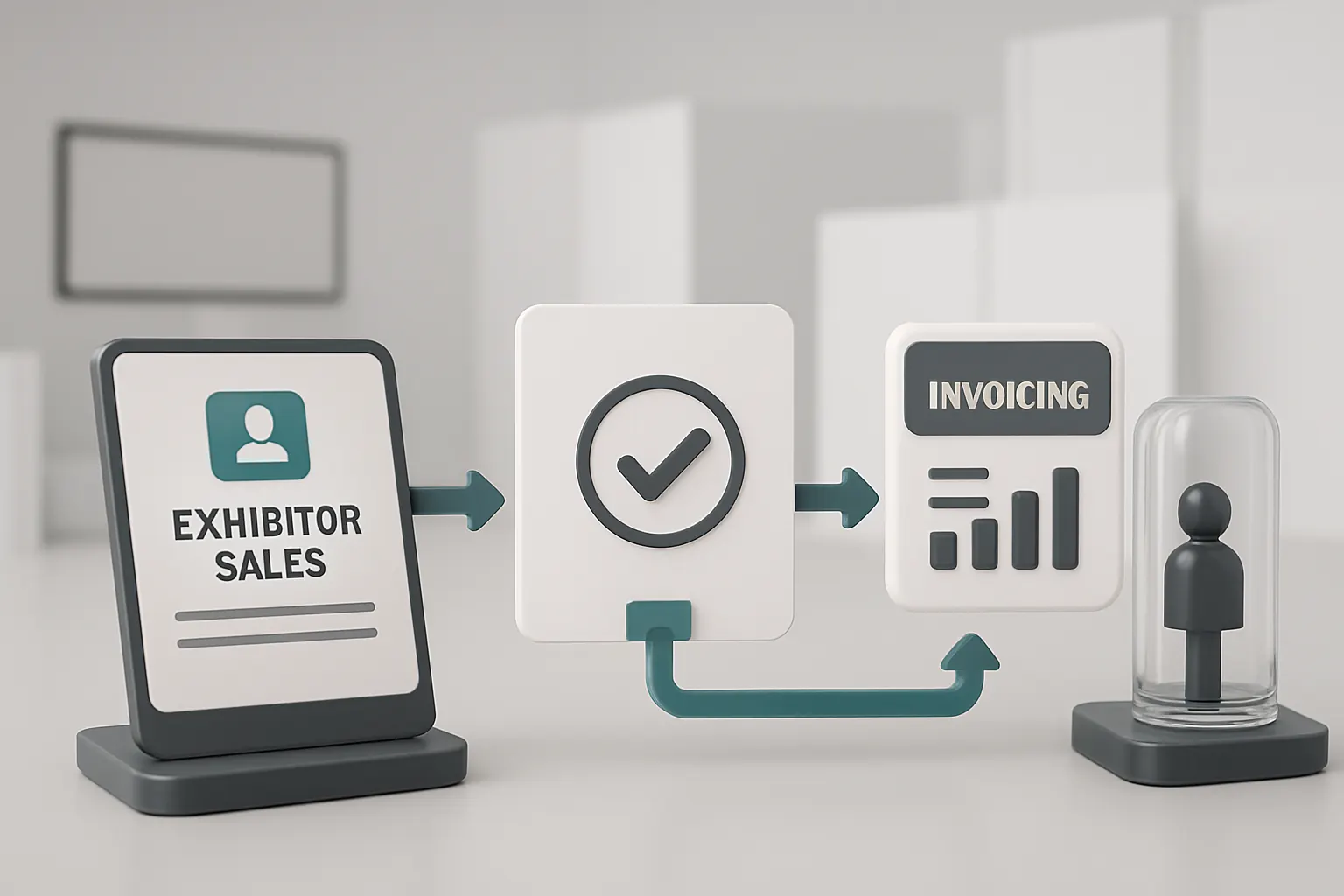
Replacing generic tools with owned modules for exhibitor sales and supplier plan management enables tighter integration and cost control.
Example: An owned exhibitor sales module connected directly to invoicing and workforce scheduling means no separate subscription for CRM or invoicing software.
Controls: Access rights ensure sensitive sales data remains secure, while visibility is shared with finance for accurate cashflow tracking.
Workforce Scheduling with Integrated Job Allocation
Manual rota planning leads to misallocations and communication errors
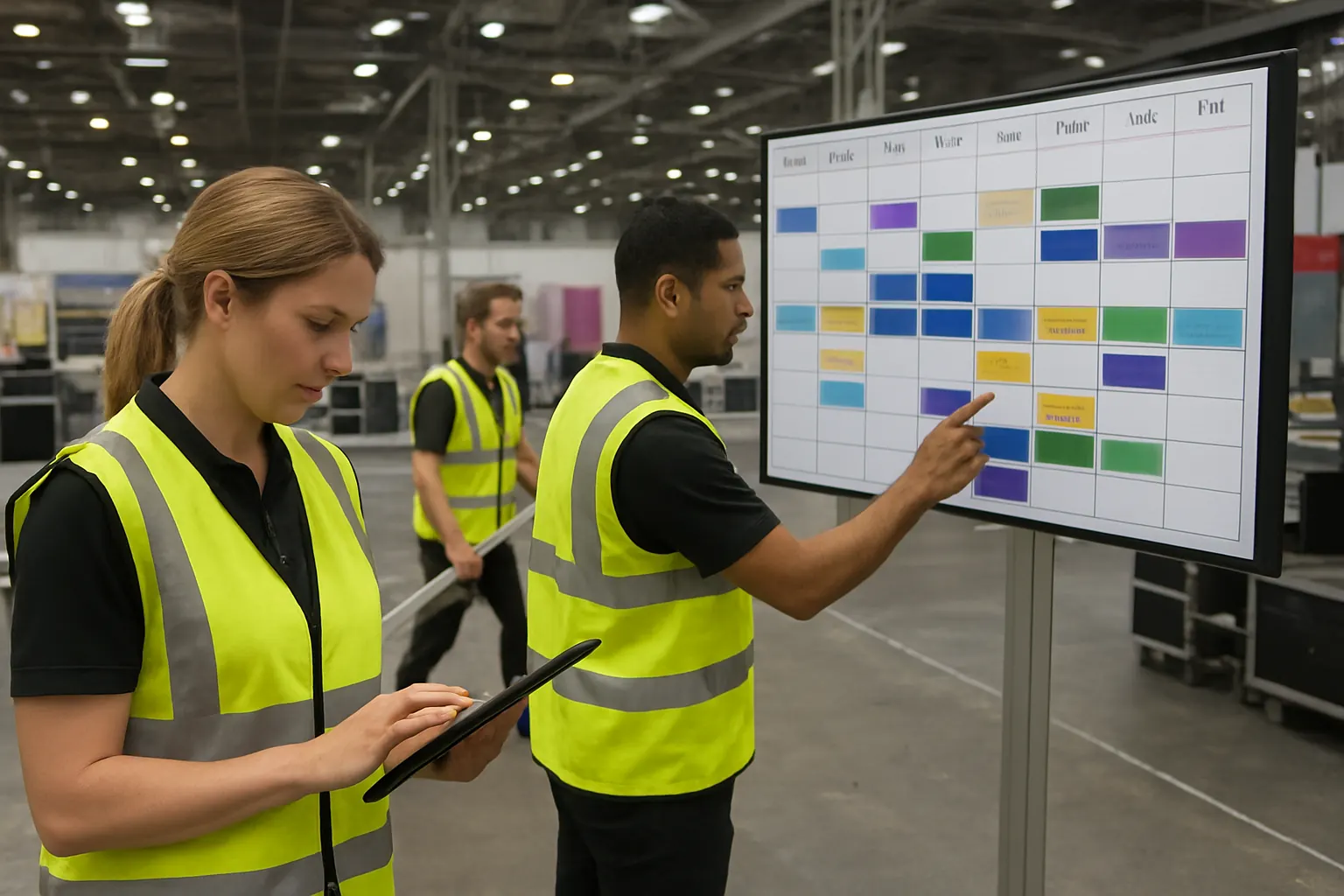
Scheduling event staff and allocating jobs by hand can cause gaps in coverage and delayed response times.
A connected rota module linked to operational bookings ensures tasks dynamically update staff schedules
Real-time SLA alerts inform team leads of upcoming deadlines or incomplete tasks, tracked within a single workspace.
Example: Allocating installation teams via a shift scheduler that automatically adjusts staffing based on exhibitor numbers and supplier readiness.
Controls: Site access rights and mobile verification records support compliance and secure workforce management.
Mobile Service Records to Verify On-site Delivery
Service evidence is often paper-based or recorded in isolated apps
Manual signing and paper trails slow invoicing and weaken audit capability, risking disputes.
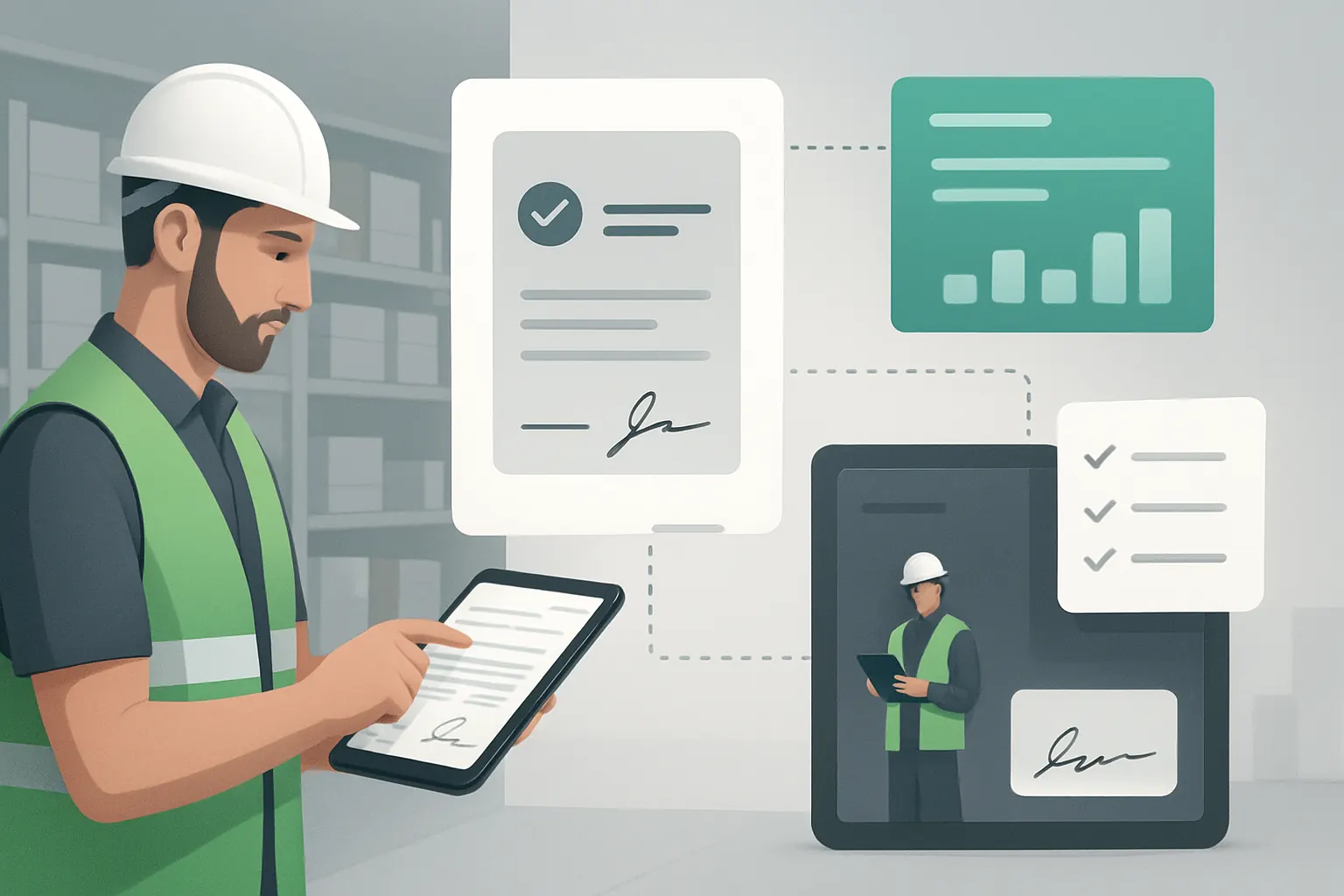
Mobile forms connected to the owned platform capture on-site service completion data instantly
Photos, signatures, and notes flow directly into job records, enabling real-time verification and transparent supplier performance reviews.
Example: On-site technicians completing service checklists via tablets, with immediate sync to the event dashboard.
Controls: Location permissions and tamper-evident records ensure authenticity of delivered services.
Tailored Operational Dashboards for Real-time Insight
Fragmented reporting tools delay access to insights
Managers rarely get a unified view of sales, staffing, supplier status, and cashflow before issues escalate.
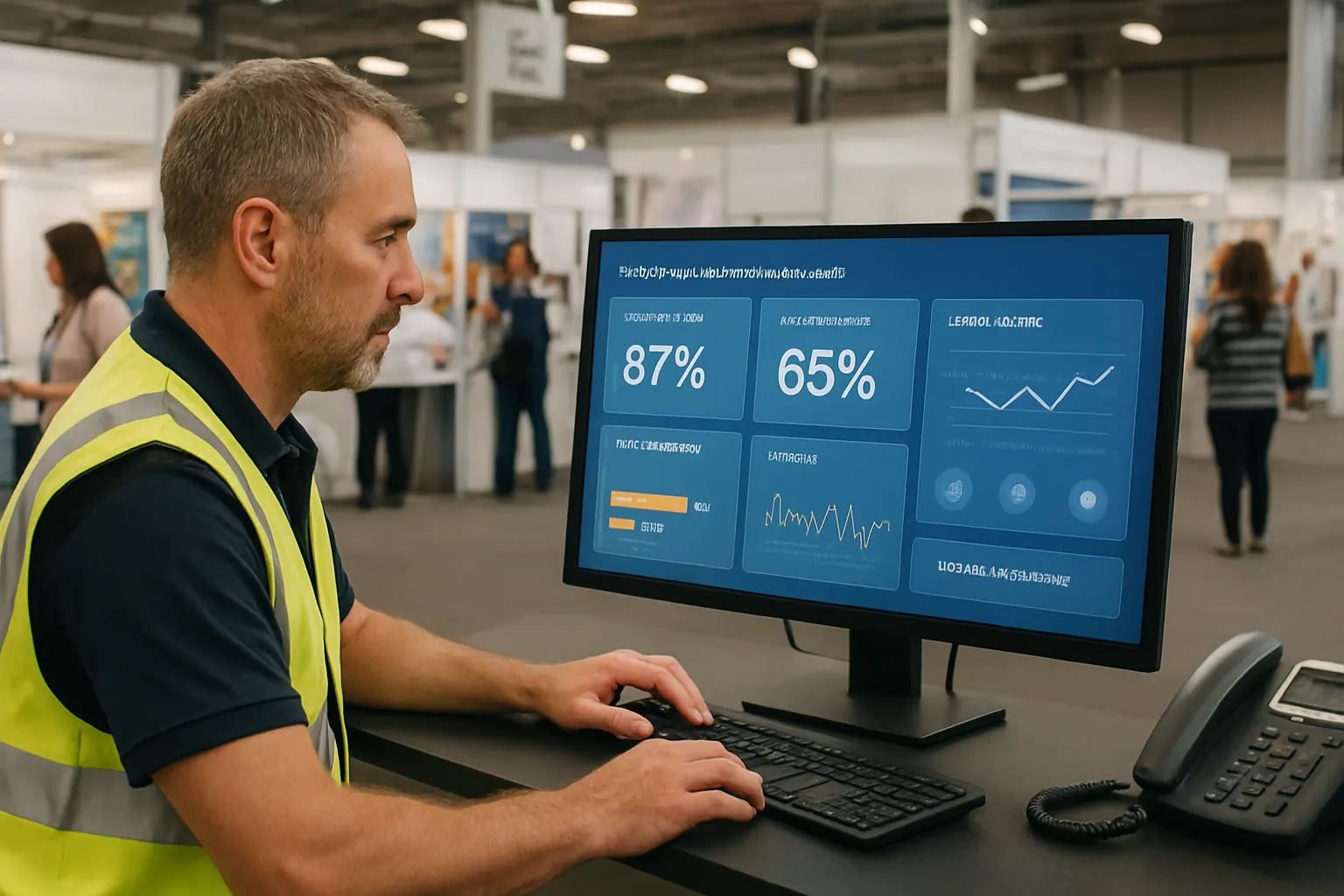
A configurable dashboard pulling data from all modules provides a single reliable operational record
Custom widgets display priority tasks, financial KPIs, and event traffic status at a glance.
Example: A dashboard showing live stall occupancy, payment statuses, and job completion rates.
Controls: Role-based dashboards keep sensitive data visible only to authorised users.
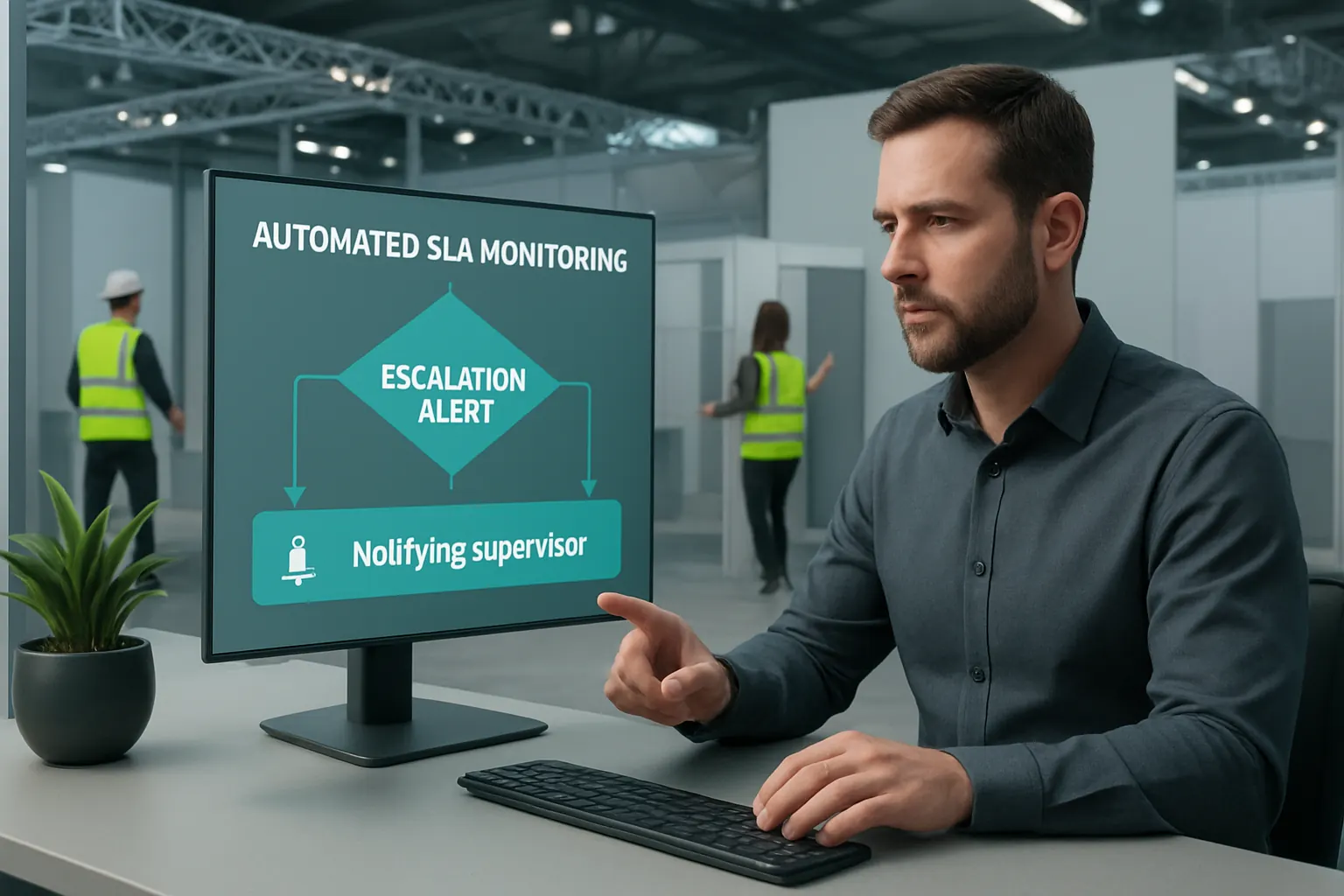
Automated SLA Monitoring and Escalation Alerts
Missed service level agreements reduce exhibitor satisfaction
Without continuous SLA tracking, teams cannot proactively resolve potential failures.
The platform’s workflow engine monitors event milestones and escalates issues when delays occur
Prioritisation of urgent tasks adjusts workloads dynamically.
Example: The system triggers notifications to supervisors if exhibition space setup lags behind schedule.
Controls: Escalation rules are configurable and visible to supervisors who hold approval to override.
Selective AI Use for Classification and Summarisation
Repetitive classification of exhibitor types or supplier categories consumes time
AI modules trained to classify enquiries and summarise large contracts reduce manual workload.
Using deterministic rules for predictable steps and human approval for high-risk decisions
AI assists with quick wins like summarising lengthy exhibitor requirements but defers final approval to staff.
Example: AI flags urgent exhibitor requests for prioritisation in sales team workflows.
Controls: Users review AI outcomes and have full audit trails for transparency.

Secure Integration with Payment and Communication Specialists
Specialist functions maintain best practice and future-proof operations
Rather than replacing every tool, payment and communication services remain integrated via secure connectors.
Payment modules integrate PCI DSS compliant gateways for deposits and final invoices
Communication via SMS or email services like Twilio supports automated notifications.
Example: Exhibitors receive automated reminders for contract signing and booth preparation updates directly from the platform.
Controls: Payment reconciliations are transparent, and communication opt-ins are managed per ICO guidance.

Data Ownership and Compliance Built-in by Design
Data fragmentation and lack of ownership pose legal and operational risks
Retaining all operational data within a platform the organisation owns strengthens control and compliance with GDPR, security, and audit requirements.
Customised access controls safeguard exhibitor and supplier data
System logs support traceability for audits.
Example: The organiser maintains a complete record of all contracts, payment transactions, and service verifications accessible only by authorised personnel.
Controls: Regular security reviews and data backup protocols align with NCSC standards.

Closing the Loop with Accurate Invoicing and Cashflow Monitoring
Manual invoicing and delayed reconciliation affect cashflow and supplier relations
Linking invoicing directly to completed jobs and confirmed contracts reduces errors and speeds payments.
Automated invoice generation and status tracking increase financial transparency
Cashflow dashboards help finance teams forecast payment cycles.
Example: Final invoices automatically created after service delivery confirmation trigger instant payment reminders.
Controls: Finance reviews invoices before sending, maintaining compliance with accounting standards.

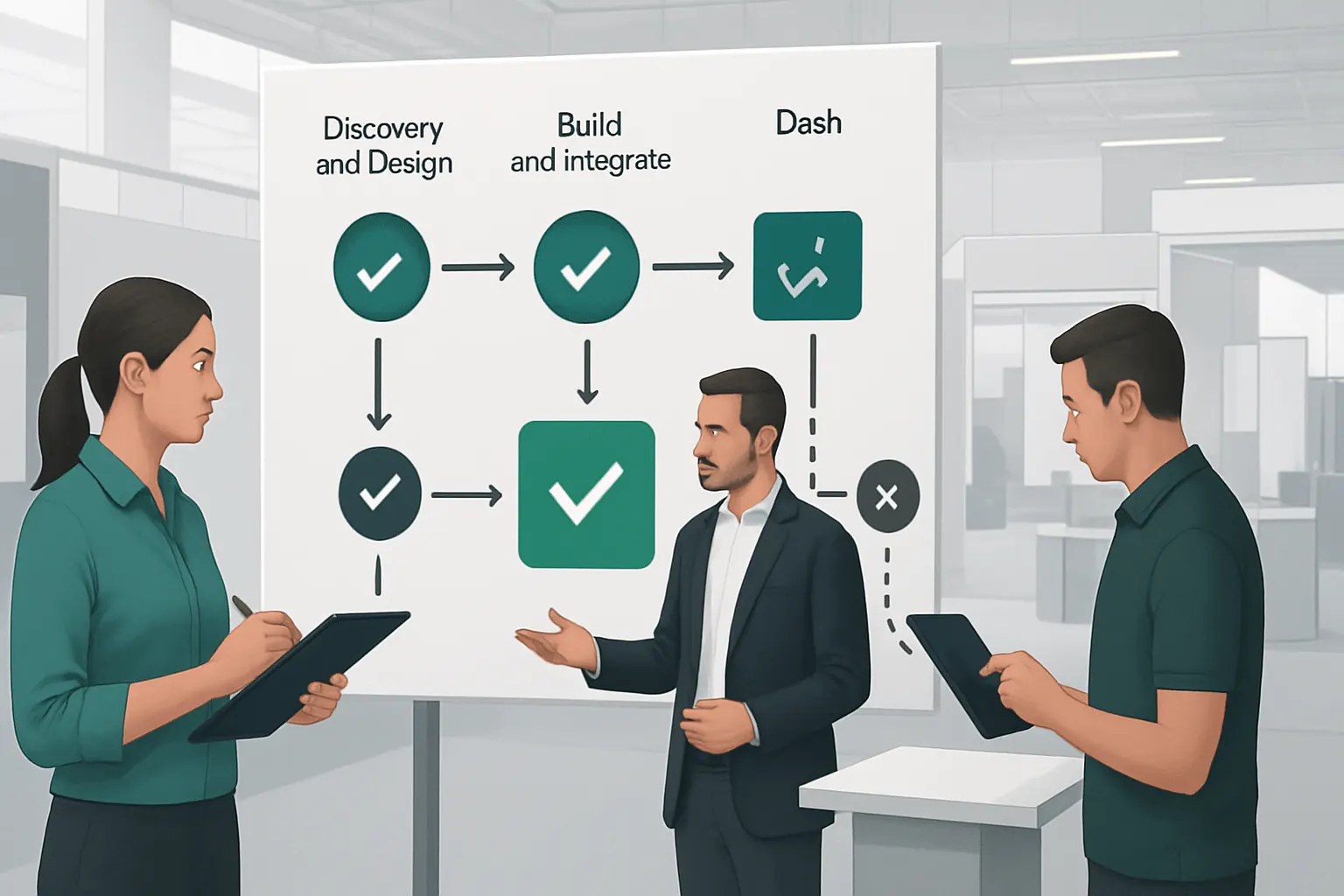
A 90-Day Rollout Plan for Exhibition and Event Organisers Automation
Weeks 1–2: Discovery and Design
- Map existing workflows from enquiry to contract and event delivery
- Identify legacy systems to retain and those to replace
- Define compliance and control requirements
- Develop initial platform design and module specifications
Weeks 3–6: Build and Integrate
- Configure owned booking records, contract automation, and workforce modules
- Integrate payment and communication services securely
- Pilot data captures in mobile service records
- Establish dashboards and SLA monitoring rules
Weeks 7–12: Test, Train, and Deploy
- Conduct end-to-end testing across live workflows
- Train user teams on new modules and controls
- Enable selective AI capabilities with human oversight
- Monitor live operations, gather feedback for optimization
How AI Implementation UK Can Connect, Replace, and Automate Your Operation
AI Implementation UK specialises in creating one connected operating system designed around your exact event business needs. Unlike a patchwork of disconnected SaaS tools, our approach builds a platform you own, centred on your workflows—from enquiry through to invoicing and workforce scheduling.
We preserve valuable existing systems by integrating them seamlessly, replacing redundant tools with bespoke owned modules, and bringing your operational data under one reliable record. Your management gains tailored dashboards and the workflow automation needed to reduce manual work while maintaining precise control.
Selective AI capabilities support variable tasks like enquiry classification, summarisation, prioritisation, and decision support—always combined with deterministic rules and mandatory human approval where it matters. This hybrid approach preserves compliance and quality while accelerating routine work.
We also ensure secure integration of specialist external services like payments and communications, maintaining your operational edge without fragmenting control.
By partnering with AI Implementation UK, exhibition and event organisers can transform workflows to be more agile, controlled, and cost-effective. Learn more about how we tailor workflows for your business on our process automation and RPA services and data infrastructure preparation pages. Explore practical examples in our case studies.
For a granular plan to unify your event operations under one owned system, visit our plan my platform consultation service.
This practical workflow automation guide enables exhibition and event organisers to reduce admin complexity, connect existing systems, and establish a unified, controllable operating environment that supports scaling without excessive overhead.