
Learn how ecommerce fulfilment providers can connect systems, reduce manual admin and automate order to dispatch with one tailored operating platform the business.
Ecommerce fulfilment providers client orders automation software: What Breaks Daily
Ecommerce fulfilment providers client orders automation software should connect bookings, people, communications and reporting in one reliable operating flow.
Ecommerce fulfilment providers operate in a high-pressure environment where client orders must move seamlessly from receipt to dispatch. Yet daily operational glitches are all too common:
- Manual data entry errors creep into order records.
- Disconnected software tools cause inaccurate stock updates.
- Exceptions in carrier fulfilment lead to delays and lost packages.
- Inefficient workflows create administrative bottlenecks.
- Visibility of order status across multiple systems is limited.
These issues not only disrupt your supply chain but also damage client trust and increase operational costs. The need to automate and connect your client orders processing is urgent, but piecing together multiple SaaS apps only adds complexity and recurring costs.
At AI Implementation UK, we focus on delivering one connected operating environment you own, designed around the way your business works. This tailored solution integrates your existing systems, reduces reliance on external subscriptions, and brings order, efficiency, and clarity to your ecommerce fulfilment workflows.

The Cost of Manual Work: Why Automation Is Critical
Manual processes in ecommerce fulfilment are expensive and risky:
- Wasted Time and Labour: Administrative staff spend hours re-keying orders, tracking carrier issues, and reconciling inventory across siloed systems.
- Increased Errors: Manual input mistakes lead to shipment inaccuracies, incorrect dispatch labels, and ultimately unhappy clients.
- Compliance Risks: Chain of custody and regulated goods require strict controls. Manual tracking exposes you to audit risks and potential regulatory penalties.
- Cashflow Impact: Delayed payments and returns due to fulfilment errors reduces your working capital and cashflow certainty.
- Lost Operational Insights: Fragmented data hides performance bottlenecks and exceptions, preventing continuous improvement.
Replacing manual steps with one owned, connected record of all client orders—from booking to proof of delivery—enables you to reduce costs, improve accuracy, and manage compliance more effectively.

Connected Order Intake and Validation Workflow
Challenges in Receiving Client Orders
Ecommerce fulfilment providers often receive order information through multiple channels—email, EDI, online forms—and manual validation is necessary to prevent errors. This leads to:
- Delayed processing when staff check orders individually.
- Lost or duplicated orders when systems are disconnected.
- Incomplete data that affects picking and dispatch accuracy.
Streamlining with One Owned Booking Record
We help you build an order intake module that consolidates all client orders into a single, owned booking record:
- Orders enter a shared workspace, whatever the source.
- Deterministic rules automatically validate key data points (SKU codes, quantities, delivery instructions).
- AI assists with classification and summarisation of client comments to highlight special handling needs.
- Where uncertainties remain, human approval gates prevent errors from progressing.
Practical System Integrations
Connecting your existing ERP or WMS eliminates data silos. Use specialist integrations for payment verification, like Stripe or Worldpay APIs, ensuring financial transactions link directly to orders in your system.
Real-World Example
A UK fulfilment centre connected its Shopify and bespoke order management system via a unified intake module. This halved order verification times and reduced entry errors significantly—thanks to clear rules and selective AI aiding classification.
Control Measures
- Validation rules are kept under your control and adjustable at any time.
- All exceptions, AI annotations, and overrides are recorded for audit trails.
- Authorised staff approve flagged orders before picking instructions are released.

Automated Pick and Pack Coordination
Bottlenecks in Fulfilment Floor Communication
Pick and pack teams often rely on printed sheets or separate software to execute orders. Disconnected tools cause:
- Picking errors from outdated or conflicting information.
- Overloads during peak times due to manual KPI tracking.
- Slow updates on order status shared with client services.
One Point of Truth for Fulfilment Workflow Execution
We transform your picking and packing into orchestrated workflows:
- Use your existing WMS or warehouse scanning devices connected into a unified task workspace.
- Automate batch picking assignments according to real-time stock levels and staff availability.
- Incorporate deterministic rules to flag prioritised orders or sensitive goods requiring special handling.
- Capture packing confirmation, including photographic proof or barcode scans, directly linked to the booking record.
Integration Highlights
Your inventory system and hardware scanners interface with the owned pick and pack module. Carrier APIs such as DHL or Hermes feed dispatch slots and label data back into the system.
Case Study
A Midlands-based ecommerce fulfilment provider replaced their manual pick lists with an integrated workflow. This connection improved accuracy, reduced pick times by 20%, and allowed real-time supply chain visibility via dashboards.
Oversight and Controls
- Dynamic work queues balance workload without overloading teams.
- Detailed audit logs track who handled each order stage.
- Human checks remain for orders flagged by the system’s priority rules.

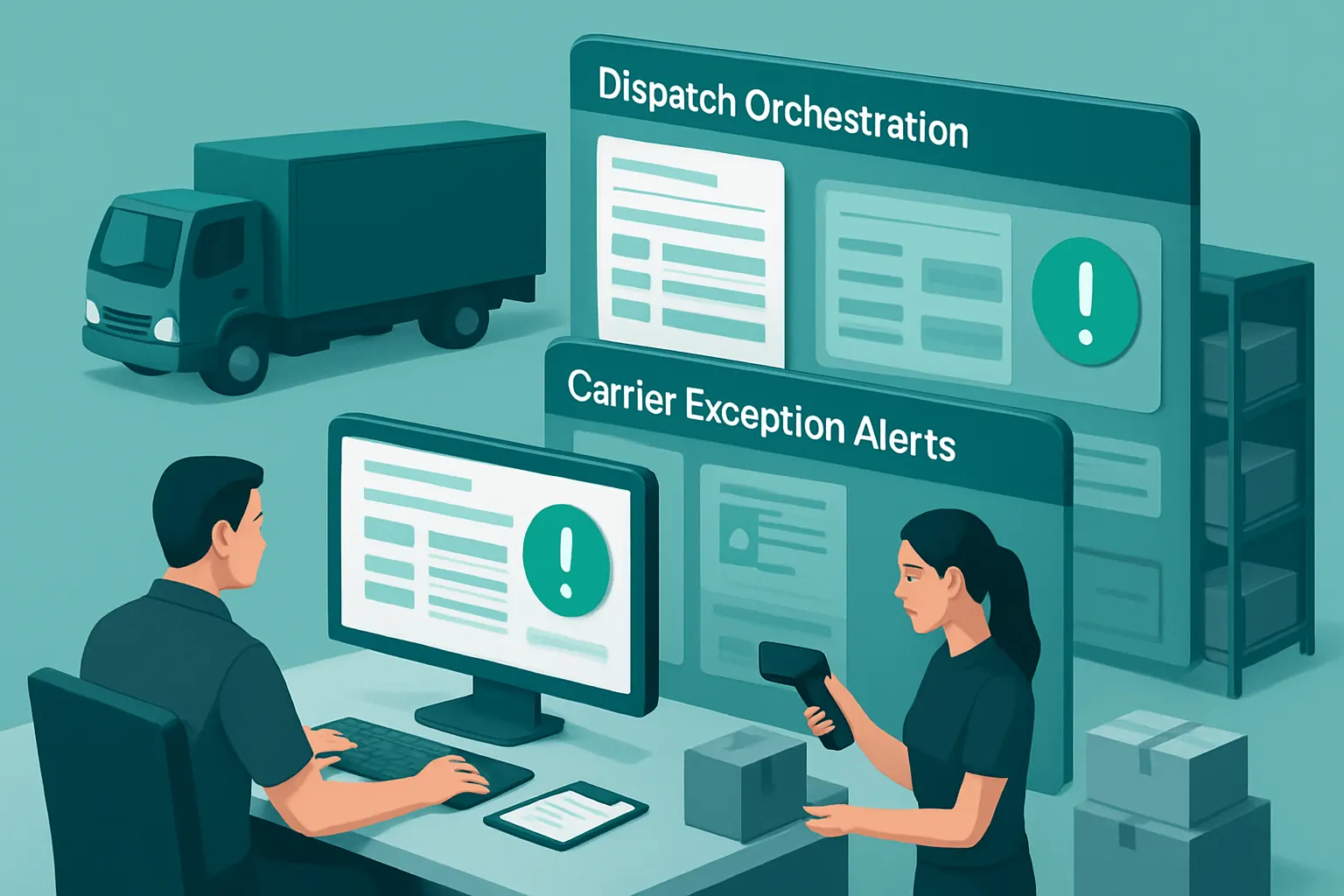
Exception Monitoring and Carrier Management
The Complexity of Handling Carrier Issues
Carrier exceptions such as delays, lost parcels, or failed deliveries must be identified and resolved fast:
- Without automation, exceptions are detected too late, impacting client satisfaction.
- Multiple carrier systems make monitoring fragmented and manual.
- Lack of timely proactive communication with clients increases support calls.
Unified Exception Tracking Dashboard
Our solution consolidates carrier data into a central exceptions dashboard:
- Carrier status updates flow directly into your owned record—no need to log into multiple portals.
- AI summarises exception reasons to help prioritise urgent cases.
- Trigger alerts for delayed parcels reaching pre-set thresholds.
- Automate workflows to notify clients or initiate reorder/return steps with approval controls.
Useful Integrations
Link easily to shipments tracked via Royal Mail, Parcelforce, or international couriers while maintaining chain-of-custody controls for any regulated goods.
Illustrative Example
A UK ecommerce fulfilment provider connected multiple carrier APIs into their exception workspace. They halved the average time to detect and respond to delays, improving client trust significantly.
supporting compliance work
- Access to exception details is restricted by user role.
- Secure logs maintain complete chain of custody.
- Any remedial actions must be authorised by designated staff prior to escalation.

Integrated Proof of Delivery and Documentation Capture
Risks in Manual POD Processing
Proof of delivery (POD) is vital for client reconciliation and dispute resolution but often relies on manual paper trails or separate systems:
- Lost or misplaced PODs cause payment delays.
- Documentation duplication wastes time.
- Inability to correlate POD with order and invoice data reduces operational clarity.
Streamlined POD Workflow Within One Owned System
Our tailored solution captures POD digitally:
- Drivers use dedicated mobile modules recording signatures, photos, and time stamps.
- PODs attach directly to the booking record, available immediately to client service and invoicing teams.
- Automate workflows to flag missing documentation and request driver follow-up.
- Archive all delivery records securely in one place subject to data protection policies.
System Connectivity
Mobile apps connect with your hosted records, plus integration with client billing software closes the order-to-payment loop efficiently.
A Practical Scenario
A London fulfilment hub equipped drivers with our POD capture tool. Integration with their dispatch module eliminated paper POD loss, accelerating invoice turnaround by several days.
Controls and Security
- Driver access is tightly controlled by authentication protocols.
- Data retention and privacy policies comply with ICO recommendations.
- POD signatures and images timestamped and logged for audit purposes.
Customisable Business Intelligence Dashboards and Reporting
Lack of Real-Time Operational Insight
Without a connected workflow, managers depend on fragmented spreadsheets and delayed reports:
- Spotting bottlenecks or recurring exceptions is difficult.
- Resource planning and route optimisation suffer from guesswork.
- Strategic decisions are hampered by incomplete data.
Tailored Operational Dashboards for Ecommerce Fulfilment
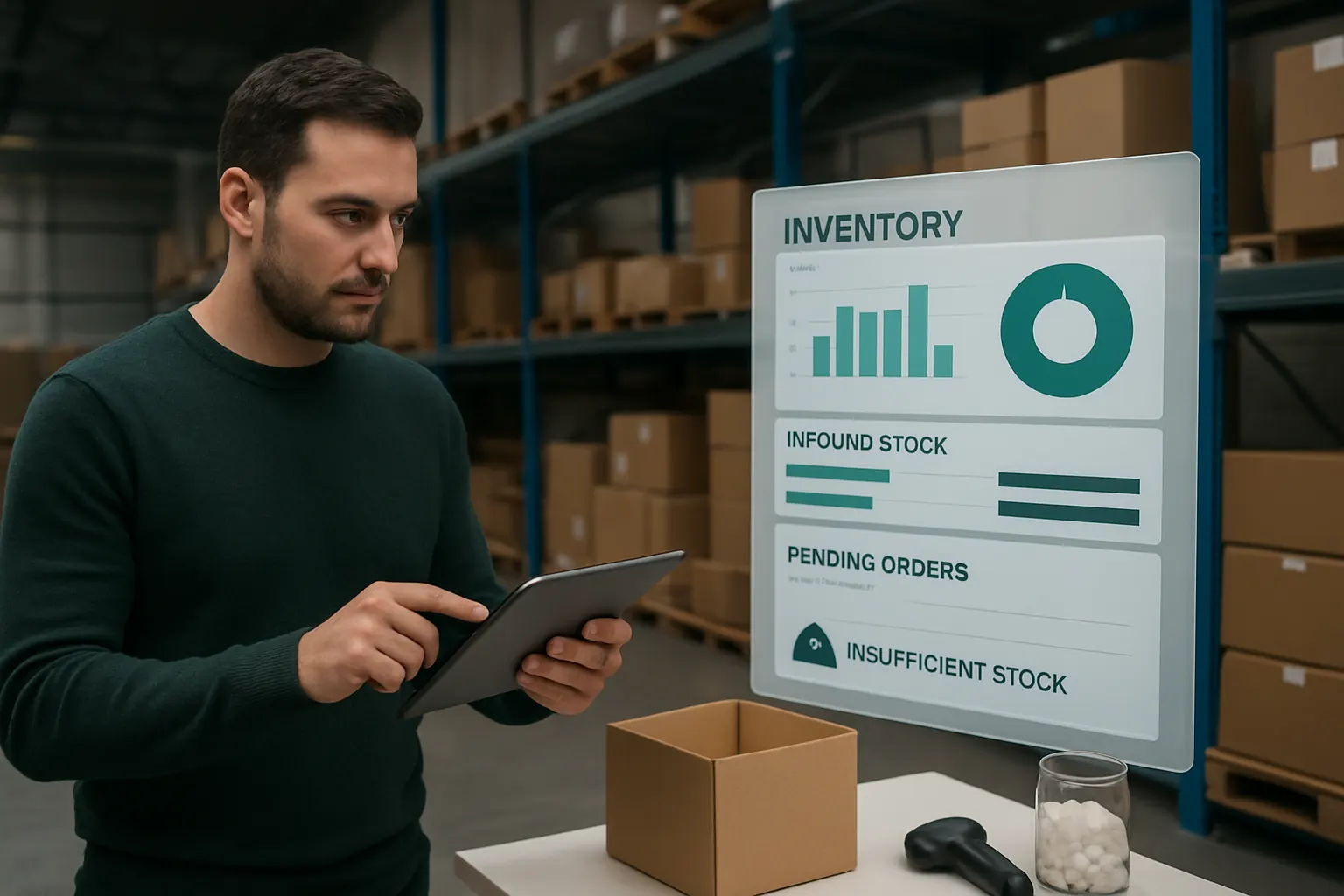
Our system provides a single source of truth:
- Data from orders, pick and pack, carrier updates, and POD feed into custom KPIs.
- Role-specific dashboards empower supervisors and executives with actionable metrics.
- Drill-downs quickly identify exception trends or resource constraints.
- Export functions support compliance reporting and continuous improvement initiatives.
Integrations That Add Value
Keep using your existing analytics tools but import data directly from the owned workflow database to avoid manual exports and inconsistencies.
Example Outcome
A UK wholesaler operating an ecommerce fulfilment division gained near real-time insights into order throughput and carrier performance. This enabled data-driven adjustments saving time and cost.
Oversight and Governance
- Dashboard access restricted by role and department.
- Historical data archived securely in line with retention schedules.
- Dashboards designed with compliance reporting in mind, supporting regulated environments.

A 90-Day Rollout Plan for Ecommerce Fulfilment Providers Automation
Weeks 1–2: Assess and Map Existing Workflows
- Conduct operational review identifying manual choke points in order-to-dispatch.
- Map integrations to current ERP, WMS, carrier and payment systems.
- Define automation goals and compliance requirements.
- Engage stakeholders across order intake, picking, carrier and customer service teams.
Weeks 3–6: Develop and Deploy Connected Booking and Fulfilment Modules
- Build central order intake and order validation workspace.
- Integrate pick and pack workflows aligned with existing hardware.
- Set up carrier exception feeds and alert workflows.
- Pilot modules with real operational data in low-risk environments.
Weeks 7–12: Roll Out POD Capture & Intelligence Dashboards; Refine Controls
- Deploy mobile POD capture integrated into dispatch processes.
- Launch tailored business intelligence dashboards.
- Embed human approval gates and exception workflows in compliance with data protection and chain of custody.
- Train users, gather feedback, and optimise configuration for broad rollout.
How AI Implementation UK Connects, Replaces, and Automates Your Ecommerce Fulfilment Operation
At AI Implementation UK, we specialise in delivering one connected operating environment you own and control. Our approach enables ecommerce fulfilment providers to:
- Retain and connect useful existing systems rather than rip and replace.
- Replace avoidable software subscriptions with tailored modules owned by your business.
- Bring operational data into one reliable source: linked booking records, workflows, proof capture, and dashboards.
- Use AI selectively for variable tasks such as order classification, summarisation, prioritisation, and decision support.
- Rely on deterministic rules and human approval for critical decisions, preserving compliance and operational control.
We understand the crucial interfaces between client orders, pick and pack, carrier monitoring, and final delivery proofing. Our solutions embed digital workflows and AI capabilities without fragmenting your operation into disconnected software silos.
You will benefit from improved accuracy, faster order-to-dispatch cycles, better visibility, and reduced operational costs. This is a pragmatic route to automation that respects your business’s existing investments and compliance obligations.
To learn more about how we can tailor your ecommerce fulfilment provider workflows and automation, visit our business process automation service page or explore our case studies showcasing successful deployments.
For preparing your data infrastructure ahead of automation, see our detailed guidance at data infrastructure preparation.
Getting your ecommerce fulfilment workflows integrated and automated with one owned system is within reach. Let us help you start your digital transformation journey with a practical, controlled 90-day plan.
For details on data protection in automated systems, refer to the ICO’s guidance on data security and privacy.
For secure payment integration compliance, review the PCI Security Standards Council website: [PCI Security Standards Council guidance](https://www.pcisecuritystandards.org/).
To turn these priorities into one coherent system, map the platform your business needs or explore our workflow automation approach.