
Learn how freight forwarding companies can connect systems, reduce manual admin and automate order to dispatch with one tailored operating platform the business.
Freight-forwarding company workflow automation: What Breaks Daily
Freight-forwarding company workflow automation should connect bookings, people, communications and reporting in one reliable operating flow.
Freight-forwarding companies face persistent operational challenges that sap efficiency and frustrate staff. Shipment bookings can be repeatedly rekeyed across different systems. Customs documentation workflows are fragmented, complicating compliance and delaying clearances. Status updates are often manual, inconsistent, or incomplete, leaving customers and teams in the dark. Handling exceptions such as delays or damaged goods tends to trigger reactive firefighting instead of proactive workflow management.
This fractured approach leads to frequent errors, costly delays, and poor visibility across the supply chain. Fragmented software tools can exacerbate these problems, creating silos of data and redundant work. Yet many forwarders rely on disparate freight-forwarding company automation software or a patchwork of SaaS solutions that do not talk to each other well.
A fresh approach is critical — one that connects existing systems around the way the business actually works, replaces avoidable subscriptions with owned modules, and builds a single reliable operational record. This guide explains how freight-forwarding company workflow automation brings real value, optimising shipments from order to dispatch with precision while retaining necessary controls and human judgment.

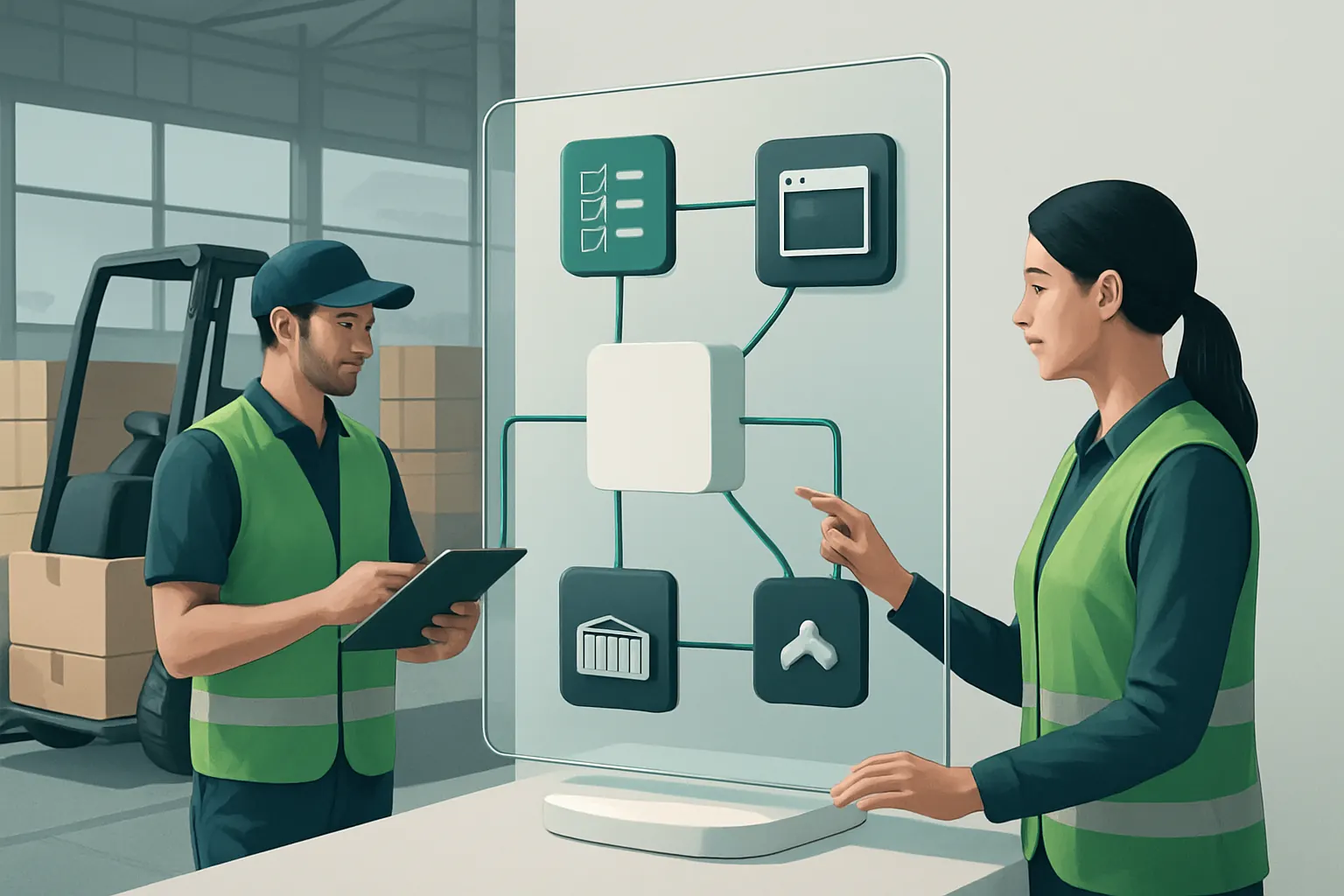
Booking and Dispatch Integration Simplifies Pre-shipment Workflows
Challenges of Booking Data Duplication
Forwarders often maintain shipment bookings across multiple systems — carrier portals, internal sheets, CRM, and customs platforms. This duplication invites errors and consumes valuable time.
Connected Workflow for Seamless Bookings
A single owned booking record consolidates all shipment details, customer requirements, and carrier schedules. This record feeds automated dispatch orchestration, triggering notifications, document preparation, and route planning without manual intervention.
Useful Integrations with Specialist Tools
Specialist services such as DPD for delivery and communication tools like Microsoft Teams or WhatsApp can be integrated to maintain familiar customer and carrier contact points while avoiding costly subscription overlap.
Concrete Example: Booking to Dispatch
A UK forwarder automates booking confirmations: once entered into their owned system, the booking record updates carriers via EDI, generates export documentation, and schedules proof-of-delivery capture — all visible on a business dashboard.
Controls Maintain Human Oversight
Rules manage booking eligibility and carrier allocation with alerts for exceptions, but the final dispatch approval remains with the operations manager. Key customs documents prompt mandatory review before clearance requests.

Customs Documentation Automation Reduces Compliance Overheads
The Complexity of Customs Paperwork
Customs processes demand accuracy on HS codes, licenses, and declarations. Manual form filling delays shipments and risks fines.
Automating Document Creation and Validation
An owned customs module generates paperwork from the booking record, applying deterministic rules for regulatory checks. AI assists with classification and summarisation of product descriptions, accelerating data entry.
Integration with Official Systems
Links to HMRC’s CDS and other government portals enable uploads and retrieval of statuses without multiple logins, while maintaining audit trails for compliance.
Practical Use Case: Export Documentation
A forwarder automates export declarations, reducing manual errors and speeding submission. The customs dashboard highlights filings awaiting review, flagged automatically for high-risk goods needing special licensing.
Approval and Audit Controls
Every customs submission requires human sign-off, with versioned records kept for audit. Exception workflows alert compliance officers to missing or suspicious data.
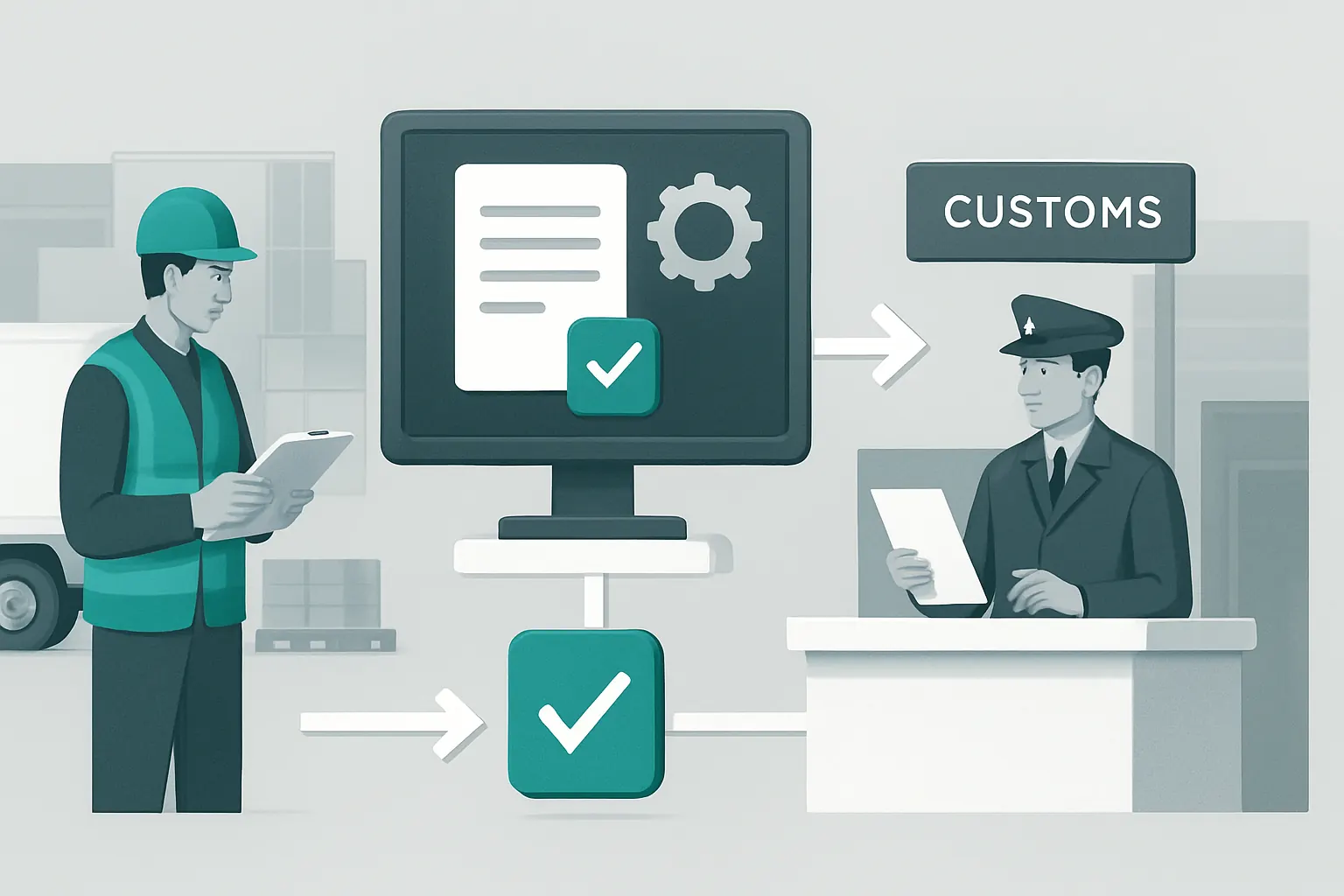
Operational Status Consolidation Enhances Visibility
Status Updates Struggle to Flow through Disparate Channels
Manual status sharing between teams, carriers, and clients often results in inconsistent or delayed information.
Centralising Status Feeds into One Trusted Record
All shipment events, from pickup to proof of delivery, update a single owned operational record. Automated delay alerts use AI-driven classification to prioritise exceptions needing human attention.
Integrations to Satellite Data Providers and Proof Capture Apps
Incorporating data from telematics, warehouse systems, and digital proof-of-delivery apps consolidates status insights for route and capacity planning.
Example: Real-Time Shipment Monitoring
A freight forwarder connects telematics and delivery confirmation tools into their operational record. Late pickups or damaged goods trigger alerts directly to operations and client services, dramatically improving response.
Data Governance and Access Controls
Driver access to status update interfaces is role-based, ensuring chain of custody integrity. Sensitive data on regulated goods is access-restricted with secure audit logs.

Invoice and Billing Workflow Automation Improves Cashflow
Challenges of Matching Carrier and Client Billing
Matching carrier invoices to recorded consignments and generating client bills manually delays reconciliations and risks errors.
Connected Workflow Bridging Operations and Finance
Consignment activity recorded in the owned system feeds invoice generation automatically. Automated matching uses deterministic rules with AI assisting on invoice classification for complex cases.
Integration with Accounting and Payment Gateways
Exports to finance systems like Sage or Xero support seamless billing. Payment integrations like Stripe facilitate online client payments, reducing days sales outstanding.
Concrete Example: Invoice Matching Efficiency
A UK forwarder automates the carrier invoice matching process and generates client invoices based on shipment activity logs. The finance team reviews flagged exceptions only.
Controls to Preserve Financial Accuracy
Invoice generation rules are transparent and configurable. All financial documents require sign-off before issue, supporting audit requirements and regulatory controls as outlined by the ICO.
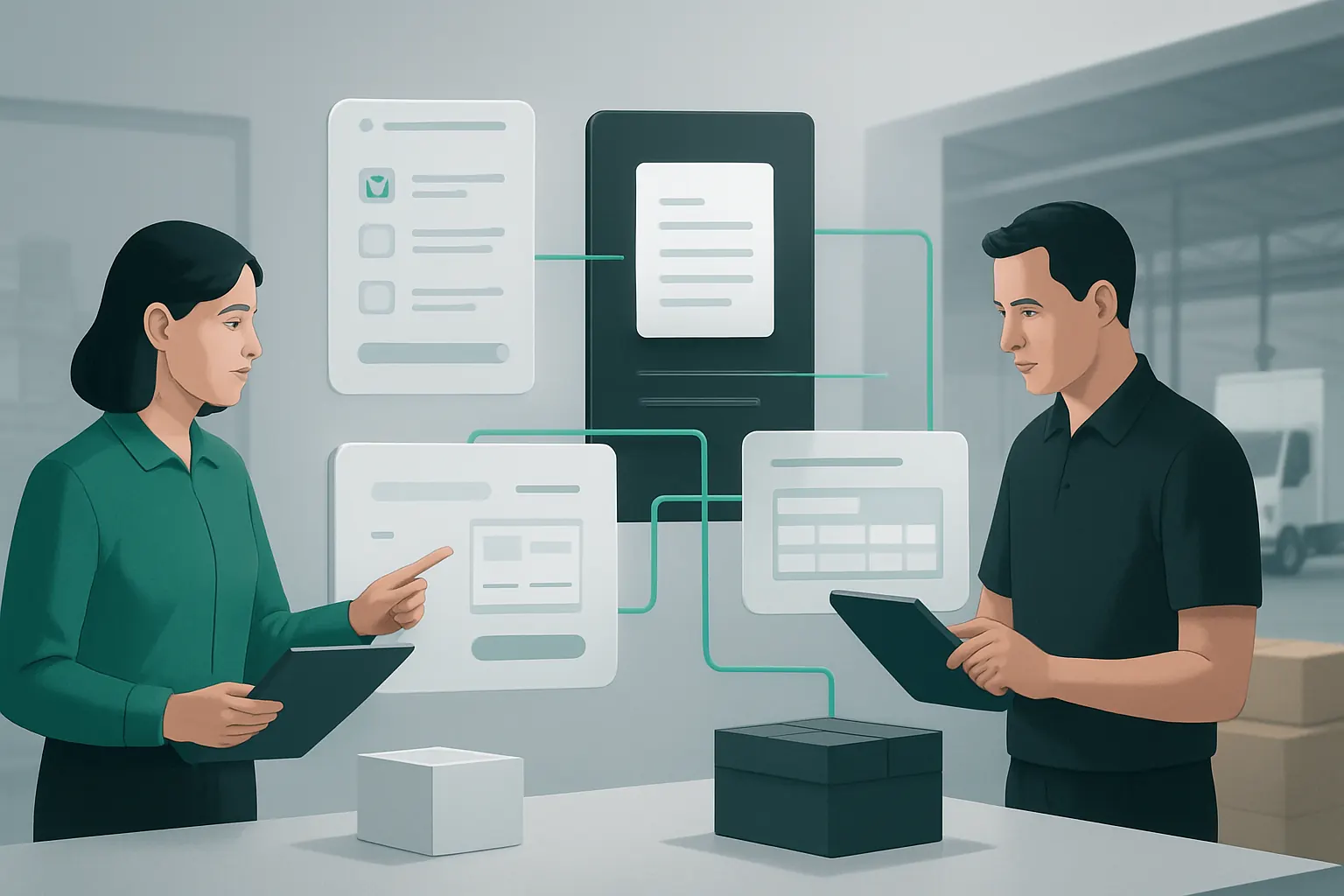
Exception and Approval Management Streamlines Problem Resolution
Manual Exception Handling Prolongs Delays
Issues like damaged goods, customs holds, or capacity shortages often trigger paper trails and siloed communications.
Workflow Automation with AI Classification of Exceptions
An exception module flags and classifies issues automatically. AI assists with document summarisation and prioritisation, enabling rapid response.
Integration with Communications and Incident Management Tools
In-system messaging and integration with platforms like Microsoft Teams keep stakeholders aligned. Escalations follow defined deterministic rules to alert responsible persons.
Example: Managing Regulated Goods Incidents
When a customs hold occurs on regulated items, the system automatically alerts the compliance team. Workflow documentation captures every step for audit readiness.
Controls for Critical Decision Points
No critical exceptions progress without mandated human approvals. The system logs decisions and retains supporting evidence, instilling confidence in compliance and operational governance.

Kickstarting Your Automation Journey: The 90-Day Rollout Plan
Weeks 1–2: Discovery and System Mapping
- Map existing workflows and systems, identifying data sources, integration points, and manual pain areas.
- Define key operational records and dashboards needed by different teams.
- Assess governance and control needs based on regulatory obligations for customs and finance.
Weeks 3–6: Building Connected Modules and Integrations
- Develop owned booking, customs, status, billing, and exception modules aligned to mapped workflows.
- Integrate external specialist tools, such as payment gateways and carrier APIs.
- Set up data governance frameworks, including role-based access and audit logging.
Weeks 7–12: Testing, User Training, and Optimisation
- Conduct end-to-end workflow tests incorporating deterministic rules and selective AI capabilities.
- Deliver targeted training to ensure human approval points and controls are understood and respected.
- Roll out dashboards for live operational visibility and begin continuous improvement cycles.
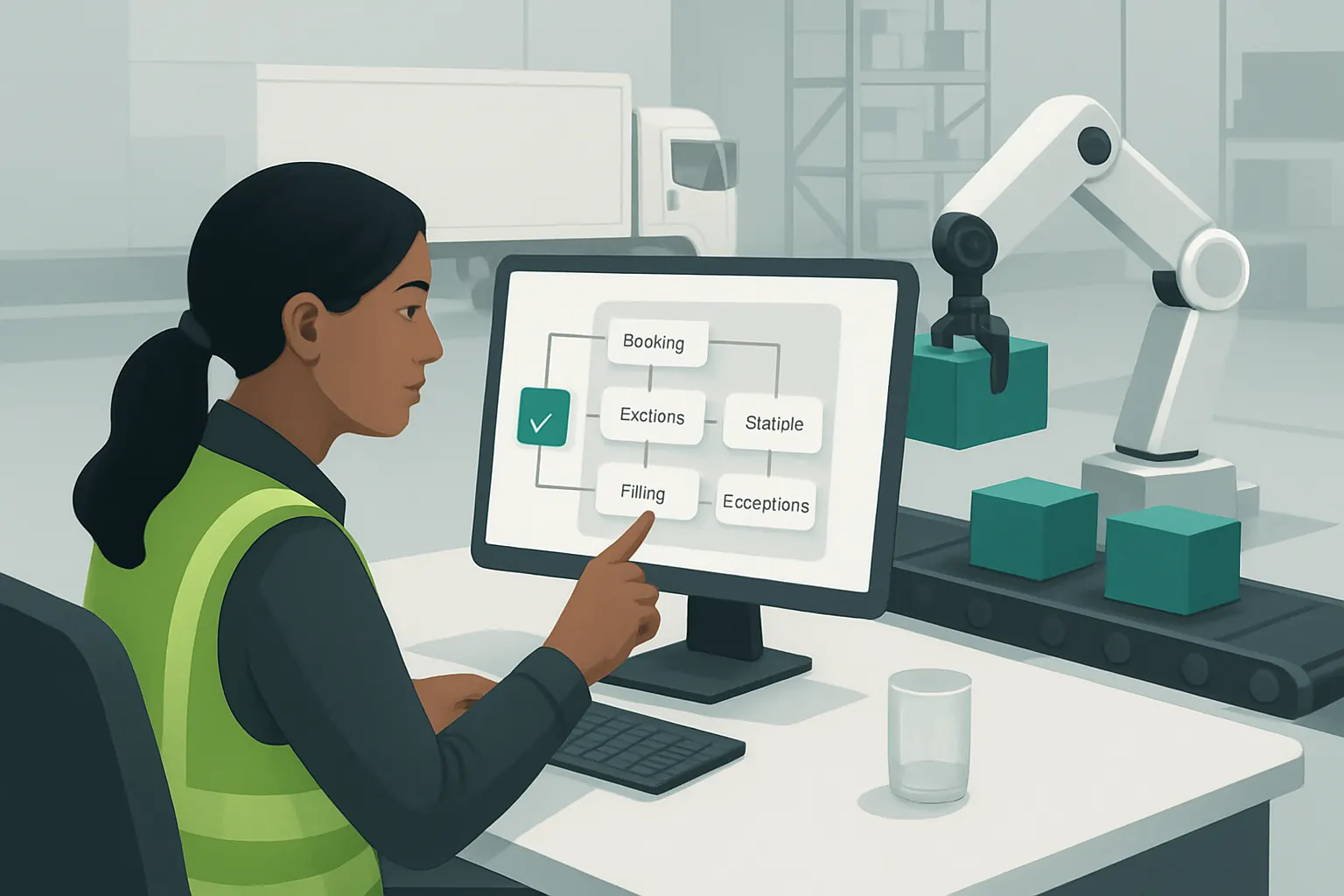
How AI Implementation UK Delivers Connected, Owned Workflow Automation
At AI Implementation UK, we champion a tailored approach suited to the precise workflow needs of freight forwarders. Our offer is a single connected operating environment the client owns — not a collection of disconnected SaaS products. We integrate existing useful systems while replacing costly subscription modules with owned capabilities that reflect the actual business process.
Our approach:
- Connect and Keep What Works: Preserve valuable existing software that performs stable functions or specialist tasks with durable APIs.
- Replace Avoidable Subscriptions: Build owned modules for core workflows prone to manual handling, such as bookings, customs documentation, and billing.
- Centralise Data into One Reliable Record: Create a consolidated operational record and custom dashboard tailored to your teams and leadership.
- Selective AI Support: Use AI judiciously for variable tasks like classification, summarisation, and prioritisation while relying on deterministic rules for predictable jobs.
- Human-in-the-Loop Controls: Retain demanding decisions and approvals for humans with visibility into exceptions and audit trails.
This modernisation approach offers UK freight-forwarding companies the agility, reliability, and control they need to streamline processes and scale efficiently. Success stories highlight how integrated, owned workflows reduce delivery admin, improve visibility, and simplify compliance — all while safeguarding sensitive regulated goods and preserving chain of custody.
To learn more about bespoke freight-forwarding company business process automation and how it can transform your operations, explore our Process Automation and RPA services and Data Infrastructure Preparation.
The complexity of freight forwarding calls for deliberate, connected automation — not a jumble of apps. With AI Implementation UK, gain one tailored operational system you own that supports your team and your compliance framework while cutting costs and delays. Our method moves your business forward, not just your software footprint.