Learn how import and export businesses can connect systems, reduce manual admin and automate order to dispatch with one tailored operating platform the business.
Export-import workflow automation | custom software for: What Breaks Daily
Export-import workflow automation | custom software for should connect bookings, people, communications and reporting in one reliable operating flow.
Import and export businesses face constant operational pressures. From managing supplier orders to navigating customs milestones, the day-to-day workflow frequently encounters delays and errors. Manual entry of shipment details, fragmented software solutions, and disconnected communication channels create bottlenecks that risk missed deadlines, inaccurate documentation, and compliance challenges. Dispatch orchestration, route planning, carrier coordination and proof of delivery tracking often rely on a patchwork of spreadsheets and siloed SaaS tools that don’t talk to each other. This fragmentation wastes time and masks real-time visibility of shipments, inventory and costs.
For UK wholesalers and logistics operators trading globally, these broken workflows slow down order fulfilment and add unnecessary admin overhead. The practical reality is clear: you cannot scale or optimise export-import operations without connecting processes and data in one reliable, owned system designed specifically around how your business works.

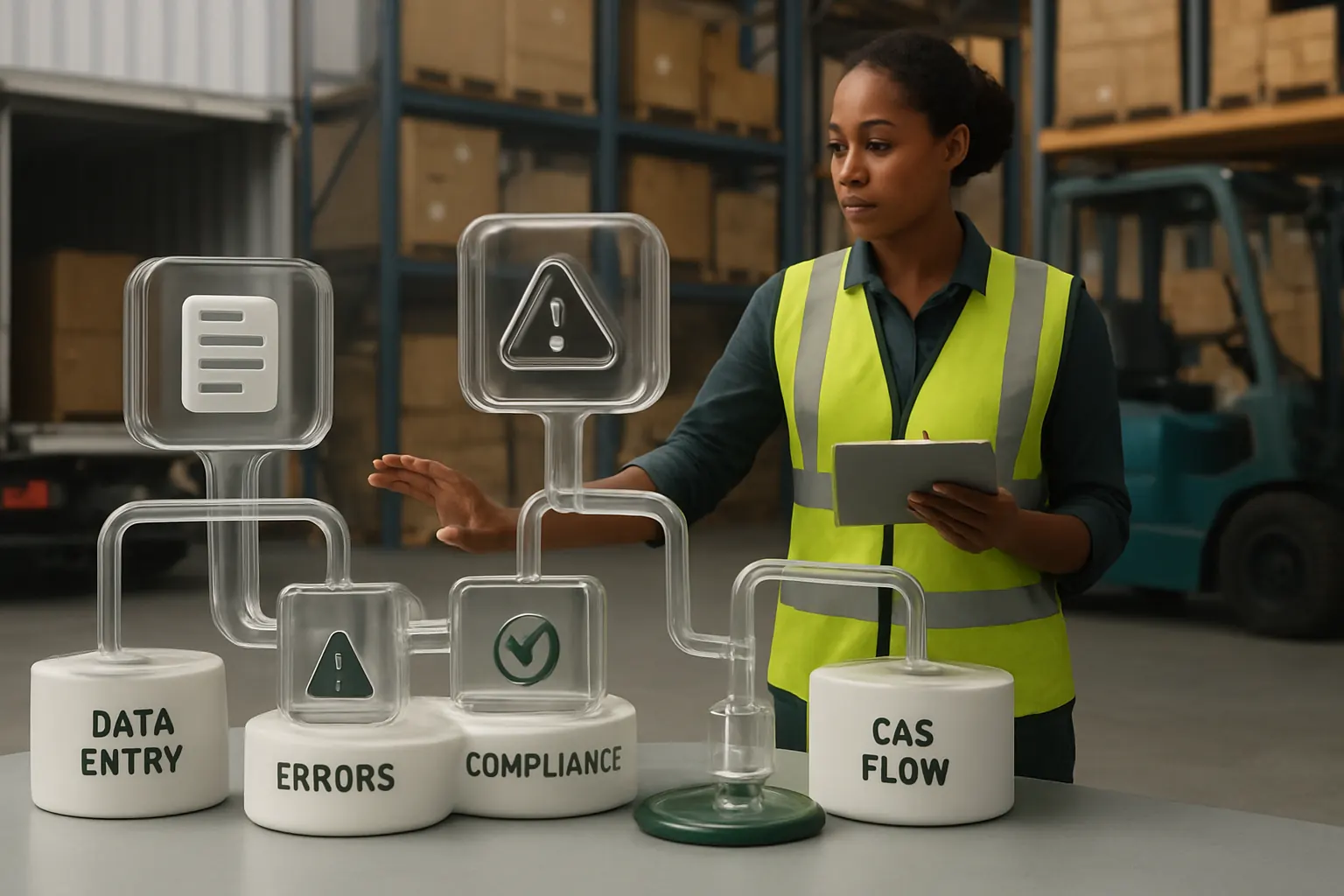
Comprehensive Order Management and Booking Tracking
Avoiding manual order chase and data duplication
Order initiation and supplier booking details are typically processed from multiple email threads, spreadsheets, and sometimes isolated platforms like Amazon FBA or Shopify. This fragmentation creates duplication and delays in confirming purchase orders, shipping timelines, and landed costs.
Unified order-to-booking workspace
Our system connects supplier orders, inventory, and booking records in one workspace tailored to your terminology and process. Each order automatically generates workflow steps, updates shipment ETA, and tracks landed cost components without double entry.
Leveraging existing IT assets
Existing ERP or inventory systems integrate via standard APIs to sync stock and order data. Avoid moving away from proven stock management—our solution brings that data into the connected flow.
Example: Purchase order and booking dashboard
A UK wholesaler can track supplier order status alongside shipping details and customs deadlines on one screen, with alerts for missing documentation or price discrepancies.
Control mechanisms for accuracy and compliance
Role-based access controls limit order edits. Change logs and approval gates for purchase value changes secure financial and audit compliance.

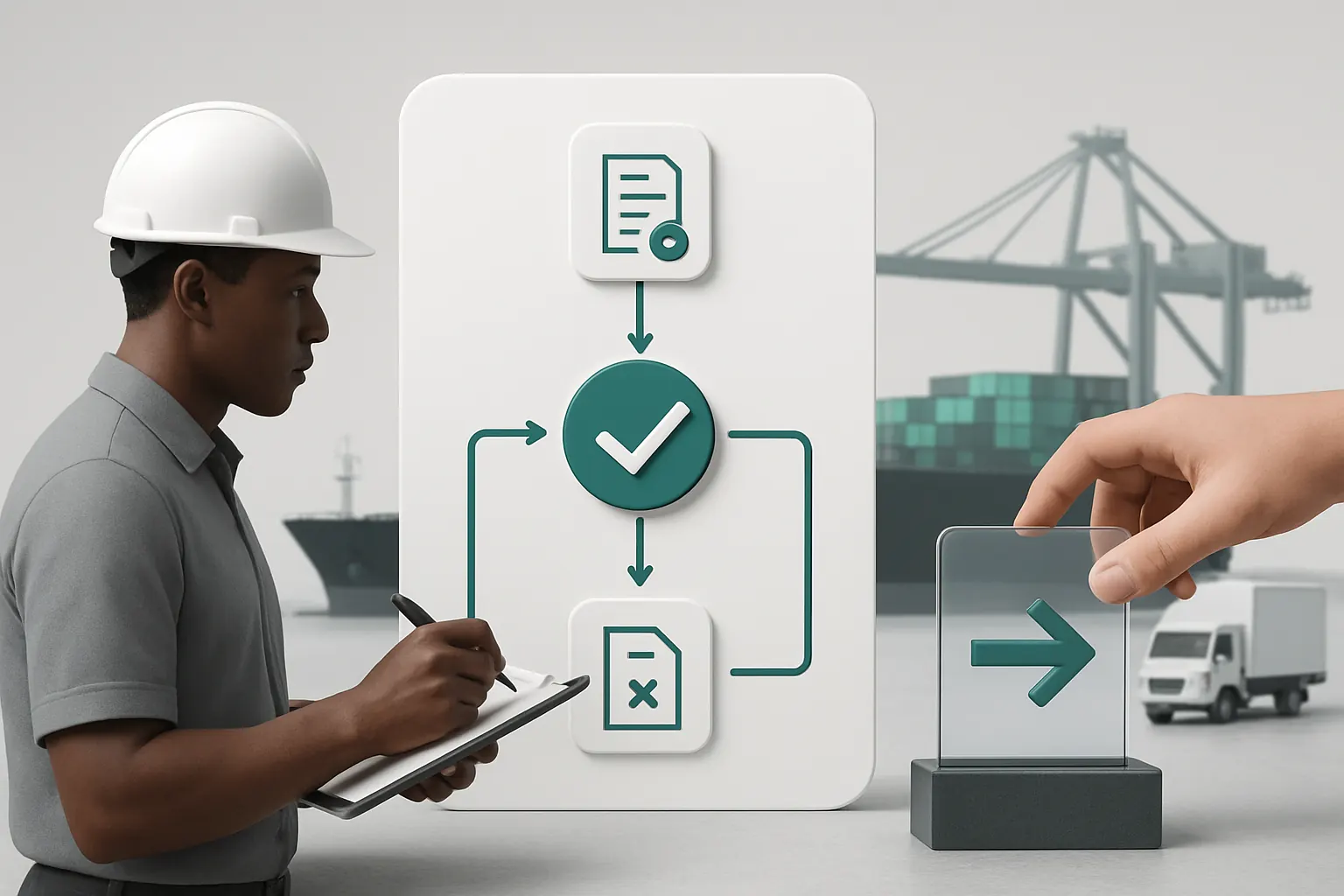
Automated Export Documentation and Customs Milestones
The pain of generating, tracking and updating export documents
Generating export documentation—commercial invoices, packing lists, certificates of origin—and keeping them aligned with customs milestones is traditionally manual and error-prone.
Centralised document workflows
Our operating system automates document creation based on order data and shipping parameters, integrates with specialist customs software only when necessary, and centrally tracks all milestone completions.
Specialist integration for customs clearance
When specialist customs clearance tools are needed, our solution links via API to automatically update status without manual re-entry.
Concrete example: Export invoice generation automation
For exports to the EU, documents like the Single Administrative Document (SAD) can be pre-populated and routed for approval, cutting processing time dramatically.
Controls for audit trail and compliance
Document versioning, time-stamped updates and required human approvals maintain transparency for audit and regulatory scrutiny.
Intelligent Route and Capacity Planning Automation
Inefficiencies from manual scheduling and route planning
Many businesses struggle coordinating carrier schedules, vehicle load capacity, and multi-route delivery windows manually—often juggling phone calls, spreadsheets and emails.
Tailored route planning workflows
Our connected system models vehicle capacity, delivery priorities, and service level agreements dynamically within the workflow workspace. Dispatch rosters are automatically adjusted as orders and delays update in real-time.
Carrier communication and third-party integration
We link direct carrier APIs or common messaging platforms (e.g., WhatsApp for business) to automate delivery status updates and exceptions alerts.
Example: Dynamic delivery route optimisation
If unforeseen delays arise, the system reroutes subsequent deliveries and promptly alerts the driver’s mobile app to maintain chain of custody.
User controls for safety and exceptions
Driver access rights control sensitive shipment details. Exception flags trigger notifications sent to supervisors for decision-making.

Automated Proof of Delivery Capture and Exception Tracking
Risks of delayed or lost delivery confirmations
Manually collecting signed delivery proofs wastes time and risks disputes over shipment completion.
Digital proof-of-delivery workflows
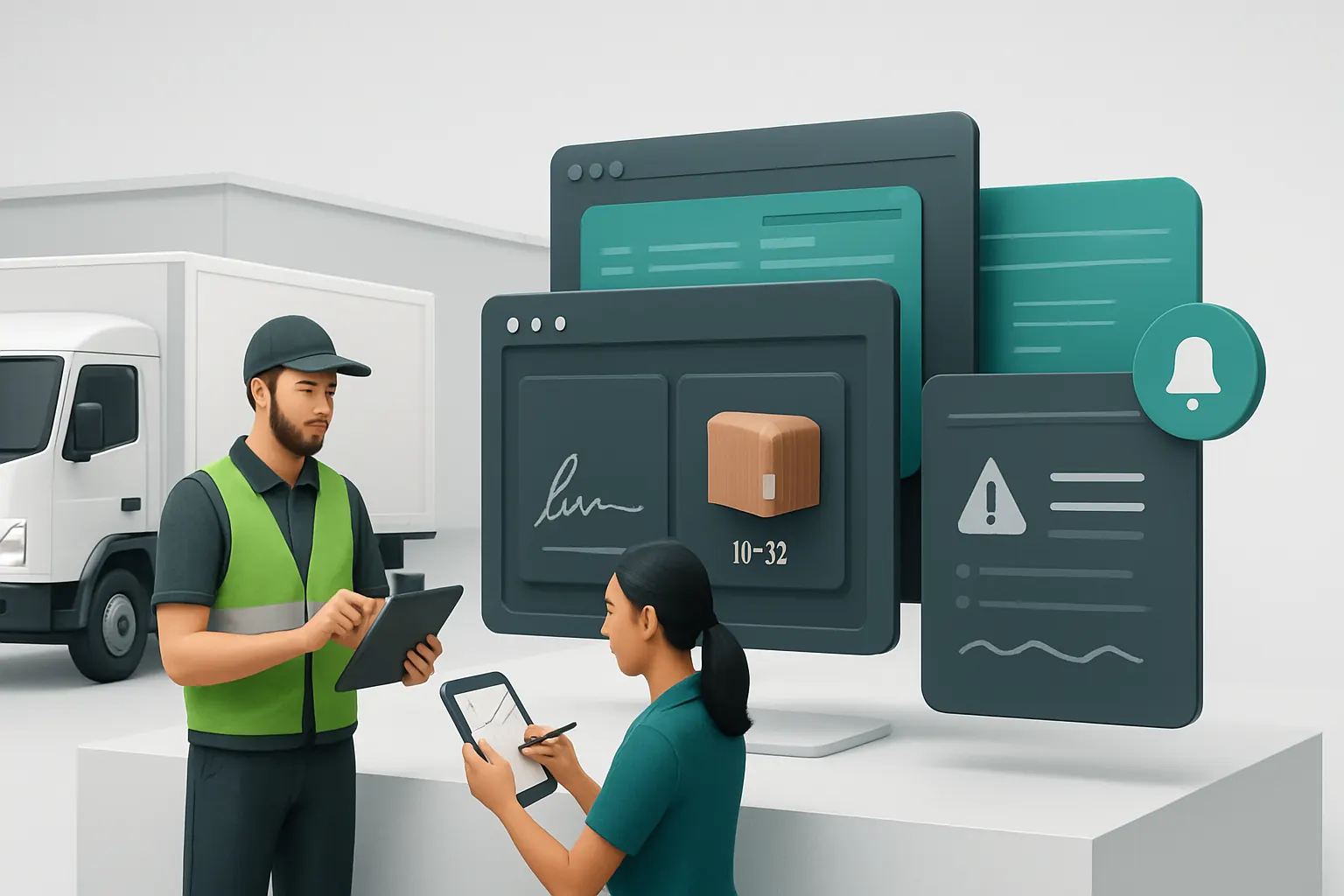
Our owned module captures delivery evidence signatures, photos, and time stamps via mobile devices and ties directly to the shipment record.
Seamless exception escalation
If proof is missing or incomplete, automated alerts escalate issues to customer service teams or managers.
Example: Real-time POD capture at UK ports
A UK exporter receives immediate notification of delivery confirmation, enabling faster invoicing and clearing customs hold-ups.
Controls for chain of custody and regulatory compliance
Signed records and time-stamping, combined with role-specific access, support audit trails and goods handling regulations.
Centralised Inventory and Landed Cost Management
Fragmented visibility limits profitability analysis
Importers and exporters often struggle to reconcile landed cost components—duties, taxes, shipping—with inventory and invoicing in real time.
Integrated inventory and cost tracking workspace
Our system integrates stock levels, purchase orders and landed cost calculations within one owned record, eliminating lookup errors or delays.
Using existing accounting software alongside owned modules
Finance systems such as Sage or Xero can remain your trusted ledgers, with our platform feeding reconciled cost figures via secure API transfers.
Concrete example: Landed cost tracking for Amazon FBA shipments
Importers streamline cost visibility from order to stock allocation, enabling precise margin calculations across SKU lines.
Control of margin rules and cost exceptions
Configurable rules flag unusual cost items for review and ensure human validation before financial approval.
Automated Customer and Supplier Communication Logs
Communication silos cause information loss and delays
Fragmented email, phone and messaging channels mean vital supplier or customer updates can be missed or repeated.
Connected communication history within context
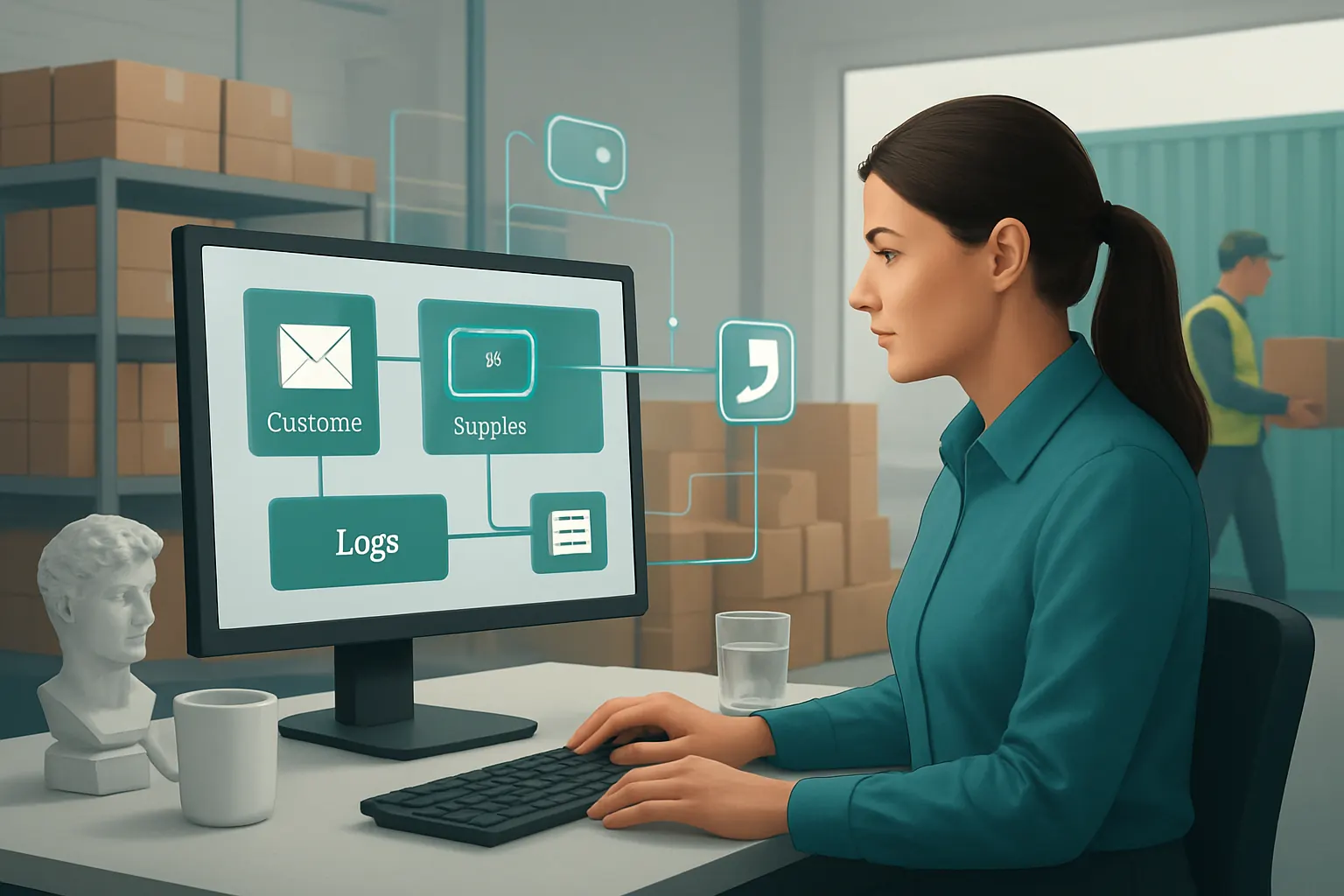
Our system records emails, calls, chat transcripts and notes directly linked to each order, shipment or booking.
Useful integration with specialist communication tools
Specialist services for payments or bulk SMS remain integrated but streamlined within the workflow, avoiding disconnected third-party windows.
Example: Supplier enquiry history linked to order records
Customer teams instantly view previous communications and pending supplier enquiries, reducing duplicate follow-ups.
Controls for data privacy and communication security
Conformance with ICO and NCSC guidance protects personal data. User controls limit access based on role and case sensitivity.
Selective AI Capabilities for Variable and Complex Tasks
Challenges in classifying documents, summarising status and prioritising exceptions
Some export-import tasks require variable judgement and unstructured data handling unsuitable for deterministic rules alone.
AI applied as a targeted assistant
We deploy AI selectively for classification of shipment documents, summarisation of order status, and prioritisation of exceptions needing human review.
Maintaining human-in-the-loop controls
All AI-generated outputs require human approval before critical decisions or compliance submissions.
Use case: Automated summarisation of customs clearance status
The system suggests priority cases for customs follow-up but defers final action to an authorised operator.
Controls to minimise error and bias
AI confidence scores and traceable reasoning logs preserve transparency and regulatory governance.

Real-time Dashboard for One Reliable Operational View
The problem with scattered reporting and KPI monitoring
Reporting on shipments, costs, and inventory often involves extracting data from multiple unaligned sources, delaying insight and action.
Custom dashboards tailored to your vocabulary and priorities
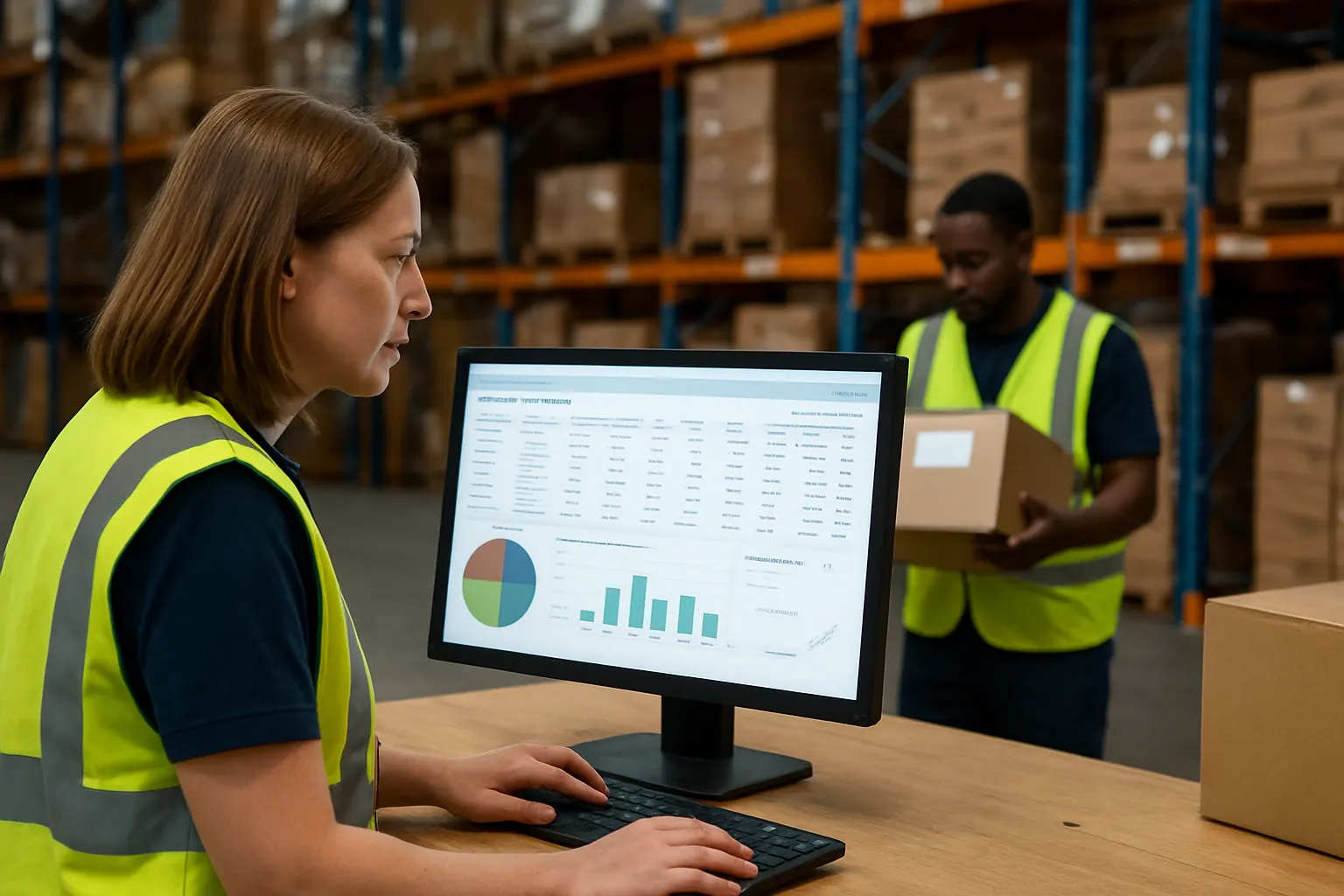
Our owned dashboard displays integrated operational KPIs, shipment milestones, cost variances and compliance status in one live workspace.
Embedding drill-down capability and alerting
Users can explore shipment details, document checklists and exception histories directly from dashboard widgets.
Example: Executive dashboard consolidating order-to-dispatch metrics
UK import/export managers gain immediate visibility into on-time performance and exception backlogs.
Controls for financial and compliance transparency
Role-based dashboard views protect sensitive data. Audit trails track report generation and access.

A 90-Day Rollout Plan for Export-Import Workflow Automation
Weeks 1–2: Discovery and Integration Planning
- Map key operational workflows and pain points with stakeholders.
- Inventory existing IT systems and assess integrations.
- Define roles, approvals and controls.
- Prioritise quick-win modules such as order management and export documentation.
Weeks 3–6: Core System Build and Pilot Testing
- Develop initial workspace connecting supplier bookings and documentation.
- Link existing inventory and accounting systems via API.
- Pilot automated customs document creation and export milestone tracking.
- Deploy digital proof-of-delivery capture and begin driver app onboarding.
Weeks 7–12: Full Workflow Automation and AI Enablement
- Complete integration of route planning, communication logging, and landed cost tracking.
- Roll out selective AI capabilities for classification and prioritisation.
- Configure dashboards and alerting for management visibility.
- Conduct staff training and refine controls based on feedback.
- Establish ongoing support and continuous improvement processes.
Building Your Own Export-Import Automation Platform with AI Implementation UK
For UK import-export businesses, breaking free from the inefficiencies of disconnected SaaS tools means owning your workflows and data in one connected system. AI Implementation UK specialises in designing and delivering custom operating workspaces that reflect exactly how your organisation works—from order to final delivery—with automation replacing repetitive manual tasks.
We retain your useful current systems by integrating them into the whole, replacing avoidable software subscriptions with bespoke modules owned by you, and establishing one reliable operational record and dashboard that become your single source of truth.
Our approach deploys AI judiciously—supporting human decision makers, not replacing them—to improve classification, summarisation, exception prioritisation and decision support. At every point, deterministic rules underpin predictable workflows, maintaining robust controls that preserve compliance, auditability and data security.
If you want to simplify and scale your export-import operations, reduce costly errors and delays, and get real-time visibility into your order-to-dispatch flow, contact AI Implementation UK for a tailored solution designed around your business needs.
Explore our related services in process automation and data infrastructure preparation to start your journey towards connected, effective workflow automation.
Make your export-import business future-ready with software that works for you—not against you.
To turn these priorities into one coherent system, map the platform your business needs or explore our workflow automation approach.