
Learn how pest control companies can connect systems, reduce manual admin and automate enquiry to contract with one tailored operating platform the business owns.
Pest-control company workflow automation: What Breaks Daily
Pest-control companies in the UK face continuous operational turbulence. Staff juggling bookings, technicians scrambling to follow manual schedules, fragmented service records, and compliance complexities create a day-to-day strain. Often, data is scattered across multiple software subscriptions—booking tools, spreadsheets, CRM systems, plus invoicing packages—none of which communicate effectively. This fragmented ecosystem leads to misaligned workflows, delayed responses, duplicated efforts, missed compliance deadlines, and billing errors.
Technicians in the field struggle with disconnected mobile apps, forcing time-consuming manual updates. Meanwhile, office teams chase paperwork and struggle to maintain a single source of truth for service histories, pesticide tracking, and customer contracts. As a result, customer experience slips, costly errors increase, and management loses visibility on business health.
The challenge is clear: pest-control company workflow automation must be practical, connected, and built around how each individual business operates. A consolidated workspace under company ownership—where teams collaborate fluidly, compliance data is audit-ready, and operations gain agility—is the answer.

The Cost of Manual Work: Time, Errors, Compliance, Cashflow
Manual administrative work and disconnected systems escalate costs significantly:
- Time wasted by teams duplicating data entries between booking, scheduling, compliance, and invoicing tools.
- Human errors from entering data multiple times or inconsistently updating records, resulting in incorrect invoices or incomplete service logs.
- Compliance risks when pesticide use, HSE, FSA, or BRC reporting isn’t timely or accurate, risking audits or penalties.
- Cashflow disruption due to delayed invoicing, payment mismatches, and poor tracking of contract renewals or SLA breaches.
These issues drain staff morale, inflate operating expenses, and compromise business growth potential. Practical pest-control company workflow automation, centred on ownership of a single connected system, reduces these costs by streamlining workflows and bringing all operational data into one reliable record.
Unified Enquiry-to-Contract Workflow
How enquiry handling breaks down
Many pest-control operators still use phone, email, and multiple portals to manage new enquiries. Data collection is manual and fragmented, increasing turnaround delays and lost leads.
Streamlining the enquiry workflow
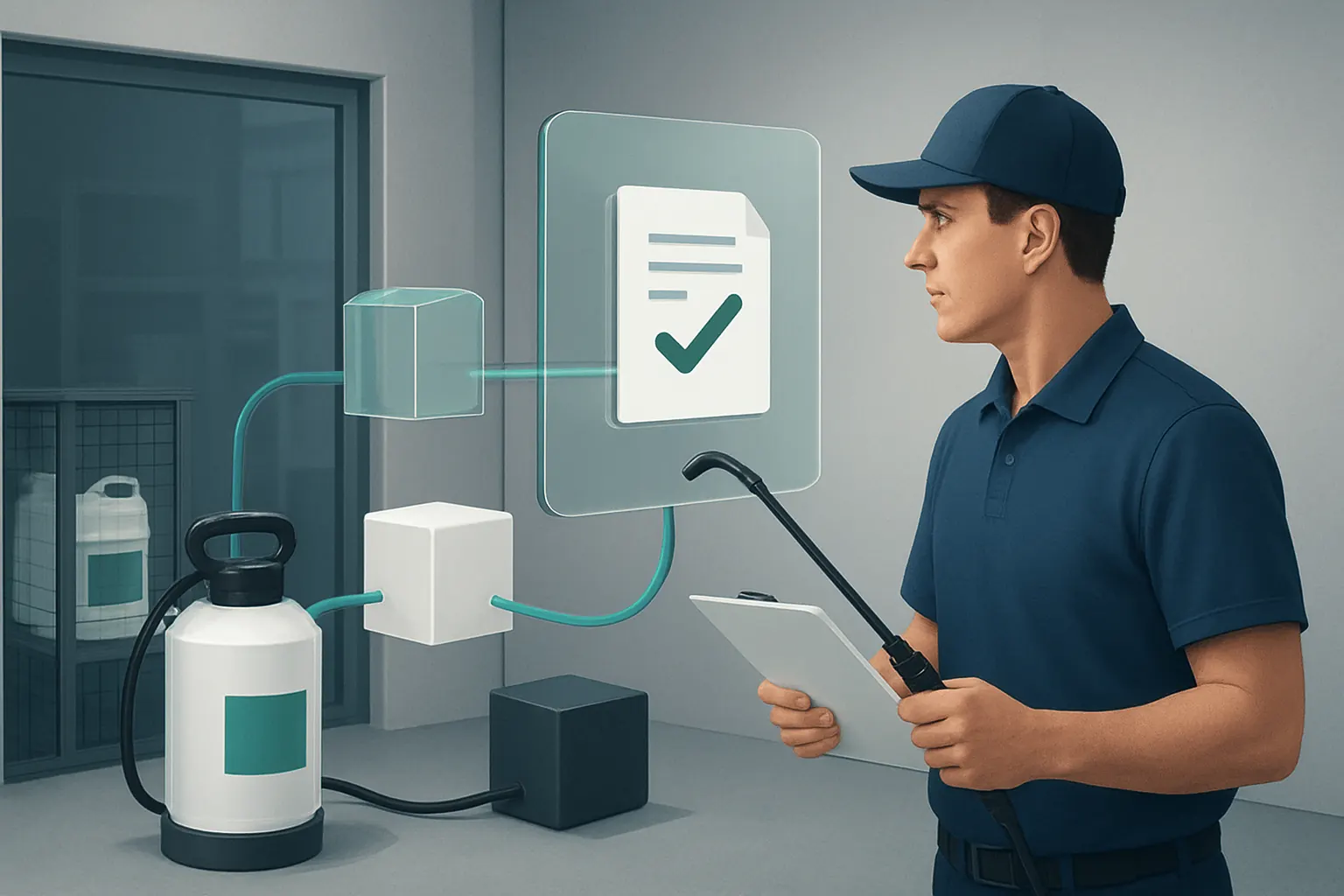
A connected operating system captures new enquiries directly into a central booking record linked to quote-generation, follow-up reminders, and contract templates tailored to each business’s services.
Integrating existing tools
Existing contact forms, company websites, and email systems can feed data automatically into the enquiry record. External SMS or email marketing platforms may remain linked for customer outreach.
Practical example
A pest-control company receives a phone call about a commercial pest complaint. The operator inputs details once, triggering a tailored quote and automated follow-up. Upon customer approval, the system converts the quote to contract and schedules the first visit—no data reentry needed.
Control and oversight
Supervisor dashboards display enquiry-to-contract conversion rates and highlight stalled leads for coaching. Data validation rules ensure key fields (site address, contact details) are complete before advancing.
Automated, Contextual Scheduling
Scheduling pain points in pest control
Manual scheduling causes conflicts, inefficient travel routes, and missed SLA windows, especially when juggling temporary staff or urgent responses.
Connected scheduling module benefits
Scheduling within the owned system allocates jobs automatically based on technician skillsets, location, and contract requirements. It updates in real time to reflect changes or cancellations.
Integration with navigation and calendar tools
Mobile route optimisation tools and calendar apps link in so field teams get efficient travel routes, and office staff view updated technician availability.
Example scenario
A technician’s calendar auto-populates with jobs matching their certifications and proximity, with alerts if treatment intervals approach SLA limits. Last-minute urgent requests are slotted in dynamically.
Controls for conflict resolution
Alerts flag double bookings or jobs outside certified zones. Managers can override schedules where necessary, with audit trails recording changes.
Mobile Service Evidence Capture
Fragmented service records hinder compliance
Field data often remains handwritten, transcribed later, or lost, undermining audit readiness.
Mobile tools for live data capture
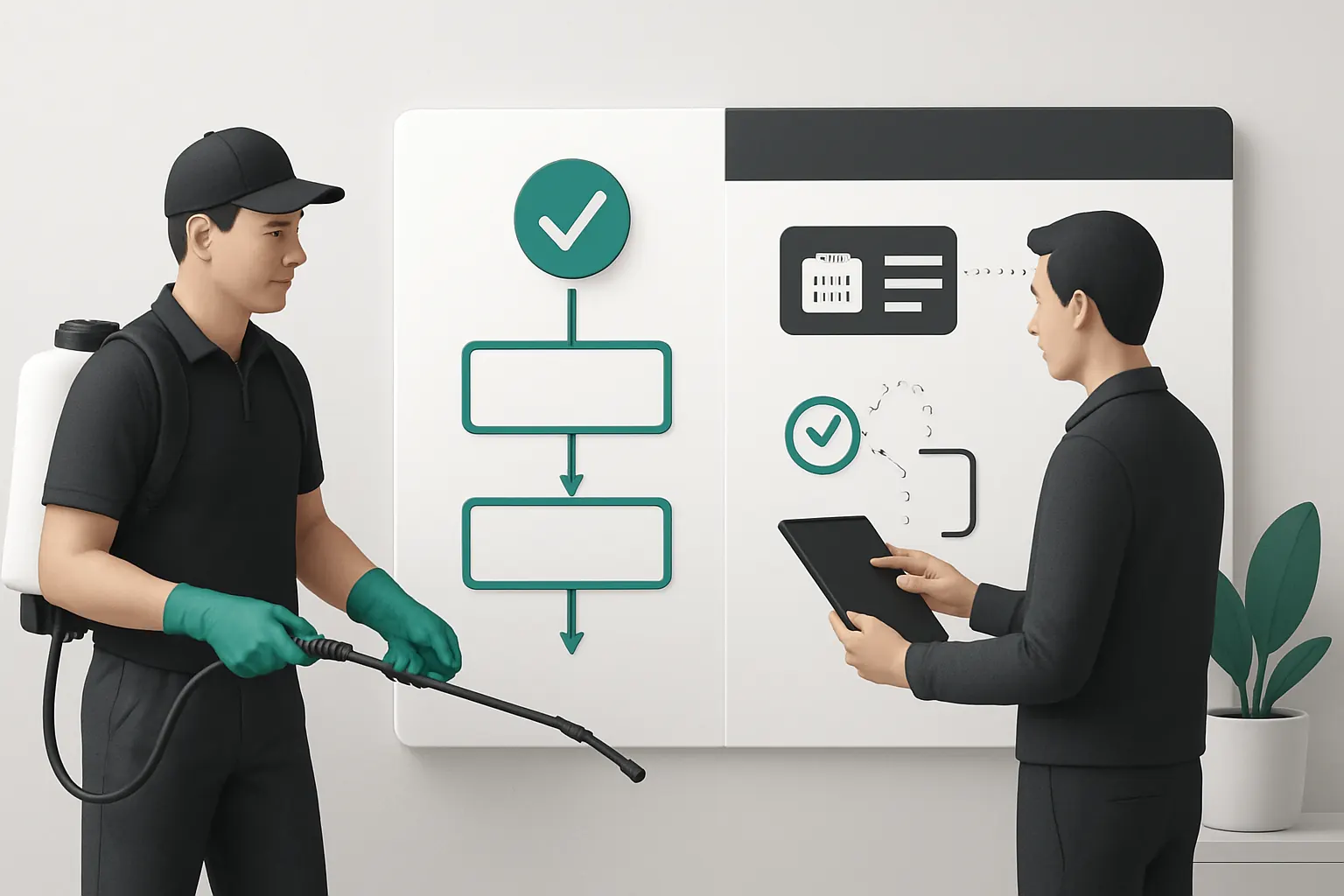
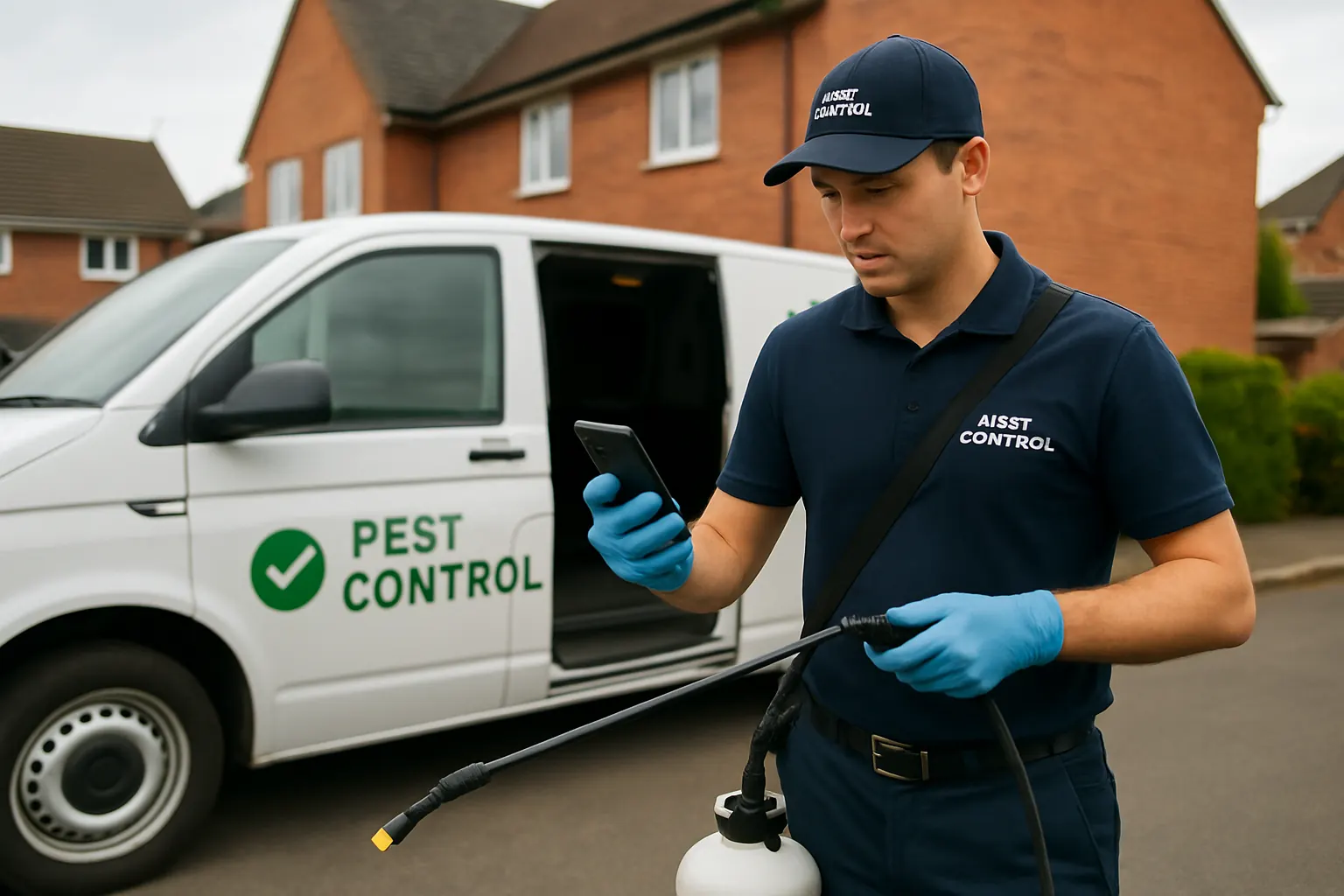
Technicians update treatment records, pesticide usage, photos, and compliance checklists directly on company-issued or BYOD mobile devices linked to the central system.
Specialist integrations retained
Barcode readers for pesticide batch tracking or external weather APIs for treatment timing can remain integrated for specialist functions.
Daily field example
While at a customer site, a technician logs the treatment details via an app offline if required, syncing data on return. Photos of bait stations and expiry warnings for chemicals are uploaded automatically.
Data integrity and verification
System enforces mandatory fields with validation against licensed pesticide inventory. Supervisors review flagged exceptions before final approval.
Real-Time Compliance and Audit Reporting
Compliance requirements are complex and evolving
Businesses must keep audit-ready records for HSE, FSA, BRC, and internal policies, plus pesticides usage logs and site inspections.
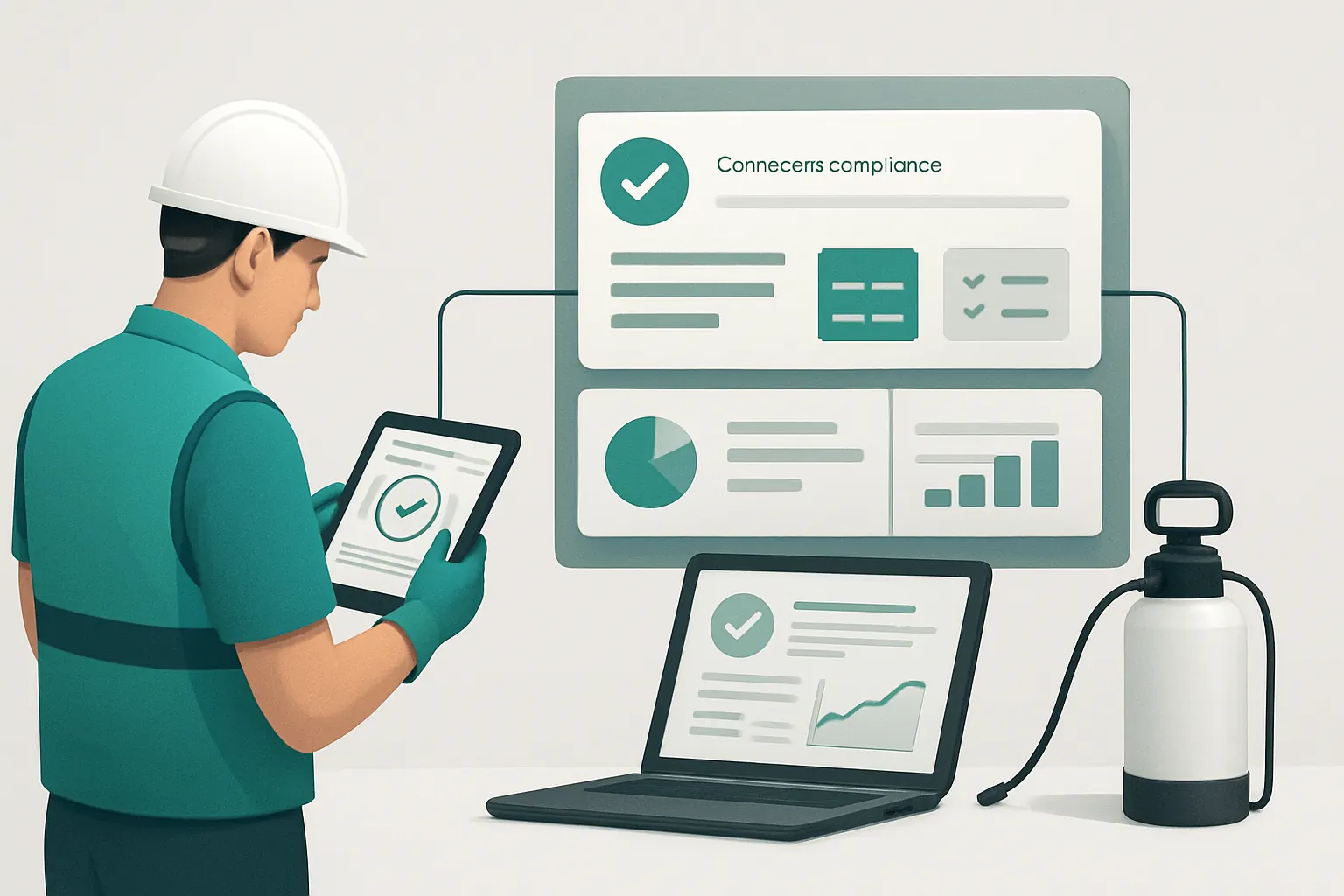
Connected compliance dashboard
A dedicated workspace consolidates compliance data, flags missing records, and generates tailored reports accessible to both management and auditors.
Useful automated integrations
OCR scanning of paper documents or automatic extraction from digital supplier reports can be integrated to reduce manual entry.
Concrete use case
Monthly pesticide usage is automatically summarised and correlated with treatment records to identify anomalies, supporting monthly reporting cycles with evidence packaged in the platform.
Compliance controls
Notifications warn when records are overdue or incomplete. Managers can assign follow-up tasks to specific workers and retain final sign-off responsibility.
Client and Contract Data Centralisation
Disjointed customer records cause inefficiency
When client details, contract terms, and service histories are stored across multiple systems, upselling and renewals suffer.
Owned system storing client lifecycle data
Consolidate customer CRM, historic contracts, service outcomes, and payment statuses in one workspace accessible to sales and operations.
External payment gateways kept where optimal
Licensed UK payment processors integrate with the system to securely handle transaction processing, minimising PCI scope.
Practical workflow example
A client calls to amend a contract scope. The adviser reviews service history and current pesticide licences instantly, adjusts terms in the owned system, and triggers updated invoicing without rekeying.
Data control and privacy safeguards
Access is role-based. Client data is encrypted and retained as per ICO guidelines. Automated alerts help ensure data retention policies are followed.

Invoice Generation and Payment Tracking
Manual billing delays cashflow
Manual or semi-automated invoicing is labour-intensive and prone to delay, complicating cashflow management.
Automated invoice workflows
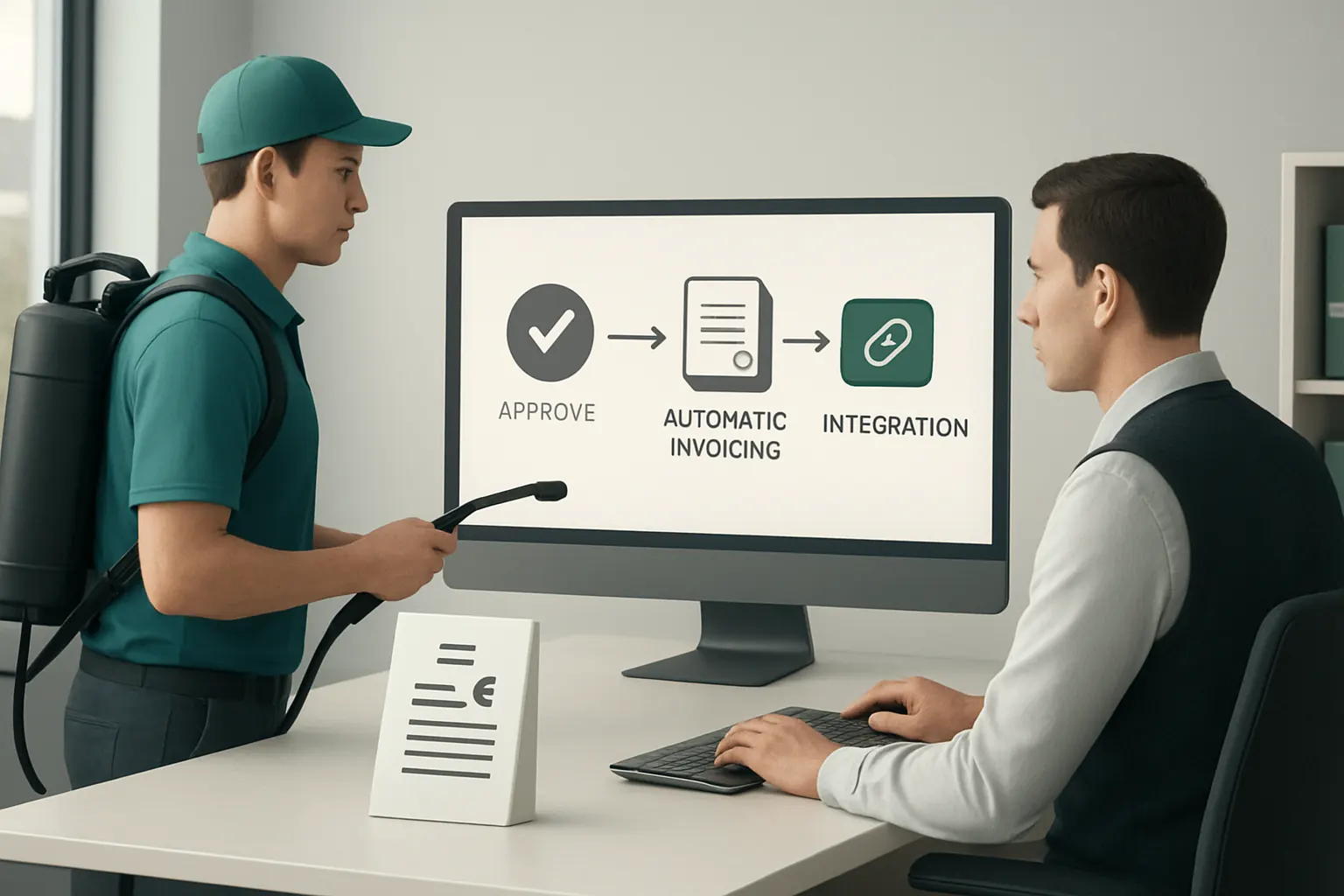
Once a job’s service evidence is approved, invoice drafts are generated automatically, matching contract pricing with any variable charges like extra treatments.
Integration with accounting software
Invoices sync via APIs with UK accounting packages to maintain finance records accurately without double entry.
Example scenario
After a scheduled treatment concludes with signed off service notes, the system generates and emails the invoice, updating payment status when funds clear.
Controls for financial accuracy
Managers can review invoices before sending. Exception reports alert for unpaid invoices past terms, enabling timely follow-up.
Technician Access and Site Security
Security gaps risking service integrity
Unchecked access to sensitive service data or client sites increases risk to company reputation and compliance.
Secure workforce permissions
Access to the system and specific client information aligns to technician roles, training qualifications, and assigned contracts.
Onsite security tech integration
Badge readers or electronic check-ins for sensitive sites can be connected, logging technician presence and time spent.
Scenario of use
A technician’s mobile device locks out access to pesticide data unless they have current certification. Site entry is logged with timestamp and geolocation.
Oversight and auditing
Administrators receive alerts to any access attempts outside approved scopes. Audit logs support dispute resolution and compliance verification.
AI-Enhanced Classification and Prioritisation
Overwhelmed by variable workloads
Enquiries and service cases differ widely; triaging by urgency, pest type or contractual status is manual and inconsistent.
Selective AI to assist staff
AI modules classify incoming service requests, summarise notes, and prioritise jobs for scheduling, integrated within the owned record workflow.
Retaining human approval
AI recommendations prompt, but do not replace, dispatcher decisions. Deterministic rules manage predictable scheduling tasks.
Daily workflow example
An AI assistant tags new enquiries by pest severity and client tier, ensuring rat infestations in food-handling sites get priority, with alerts routed to supervisors.
Controls ensuring accuracy
Operators review AI tags before final allocation. Any misclassifications are logged for AI retraining and compliance audits.

Tailored Dashboard and Analytics
Fragmented data limits insights
Without consolidated data, understanding business performance and spotting opportunities is slow.
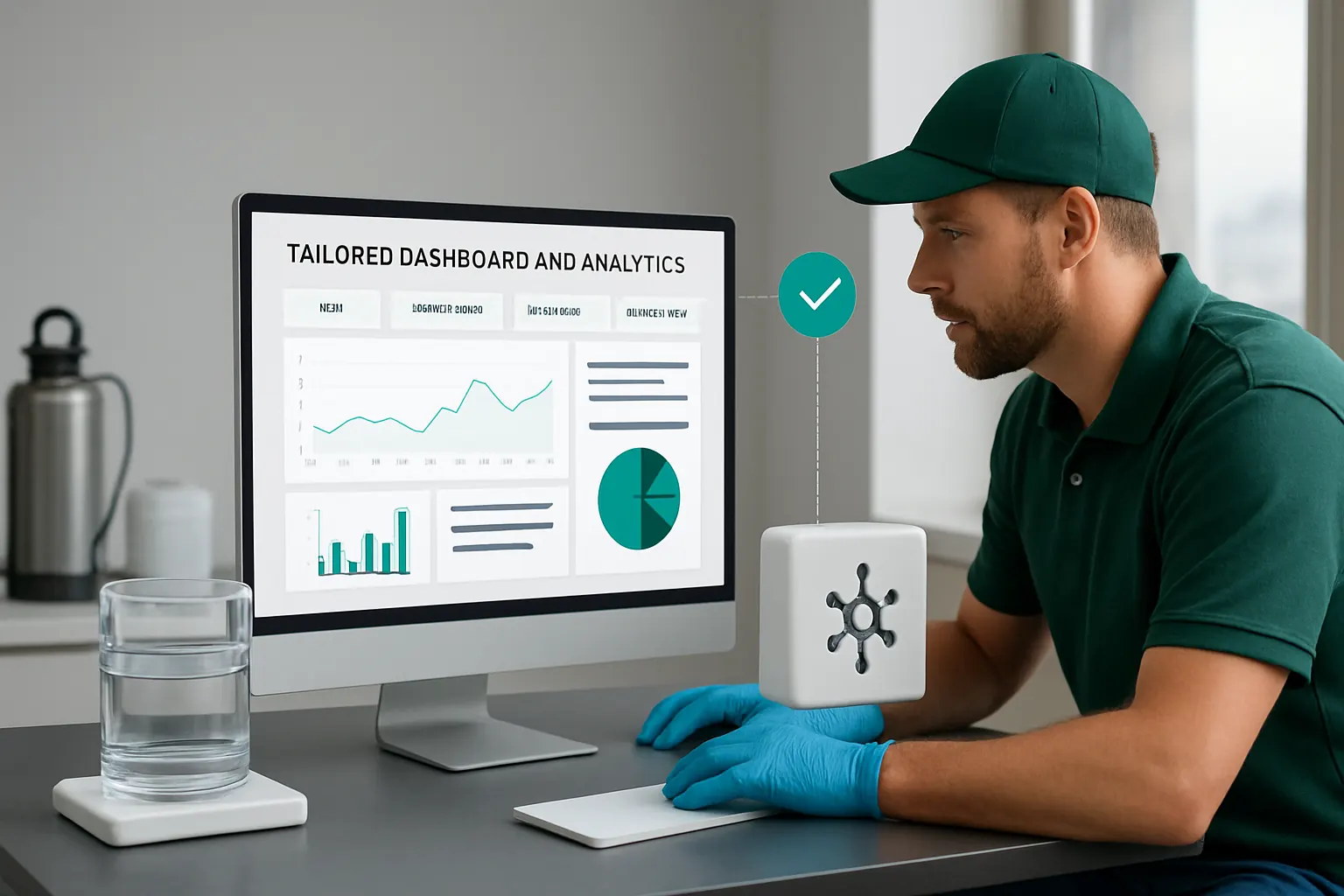
Custom dashboards consolidate KPIs
Owned dashboards combine scheduling, invoicing, compliance, and customer data to present actionable insights tailored to each manager.
Integration of external BI tools if needed
Specialist BI tools can connect to aggregated data feeds for deep analysis while preserving core operational accuracy in the owned system.
Example insight
Weekly dashboard highlights technician utilisation rates versus contract SLAs, pinpointing underperforming routes for adjustment.
Controls on data visibility
Access levels manage who sees sensitive financial or compliance metrics. Audit trails track dashboard changes.
Streamlined Customer Communications
Disjointed communications dilute service quality
Using separate email or SMS tools risks inconsistent messaging and follow-up gaps.
Integrated communications workflow
A communications module within the owned system automates appointment reminders, follow-up surveys, and contract renewal alerts.
Specialist external tools retained
UK-compliant bulk SMS gateways or email marketing platforms continue linked for specialist delivery functions.
Practical example
After service completion, an automated SMS thanks the customer and offers a feedback form. Reminders for upcoming treatments are also sent reliably.
Communication controls
Messaging templates are centrally approved. Customers can opt-out via accessible links, ensuring GDPR compliance (see ICO guidance).

90-Day Rollout Plan for Pest-Control Company Automation
Weeks 1–2: Assessment and Planning
- Review current systems, workflows, and pain points in enquiry handling, scheduling, service recording, compliance, and finance.
- Map core processes to identify integration points with existing software subscriptions like payment gateways or navigation tools.
- Define clear automation goals with stakeholders, supporting compliance work and data security requirements are included.
Weeks 3–6: Build and Integrate Core Modules
- Develop or configure the enquiry-to-contract workflow and centralised client data records.
- Connect scheduling with mobile workforce tools and configure technician access controls.
- Link payment processors and accounting systems for streamlined invoicing.
Weeks 7–12: Implement AI, Compliance, and Analytics
- Deploy AI capabilities focused on classification, job prioritisation, and summarisation within workflows.
- Build compliance dashboards, define reporting templates, and automate audit trail logging.
- Tailor management dashboards for insight and integrate communication automation.
- Train staff, review system controls, and rollout full mobile service evidence capture.
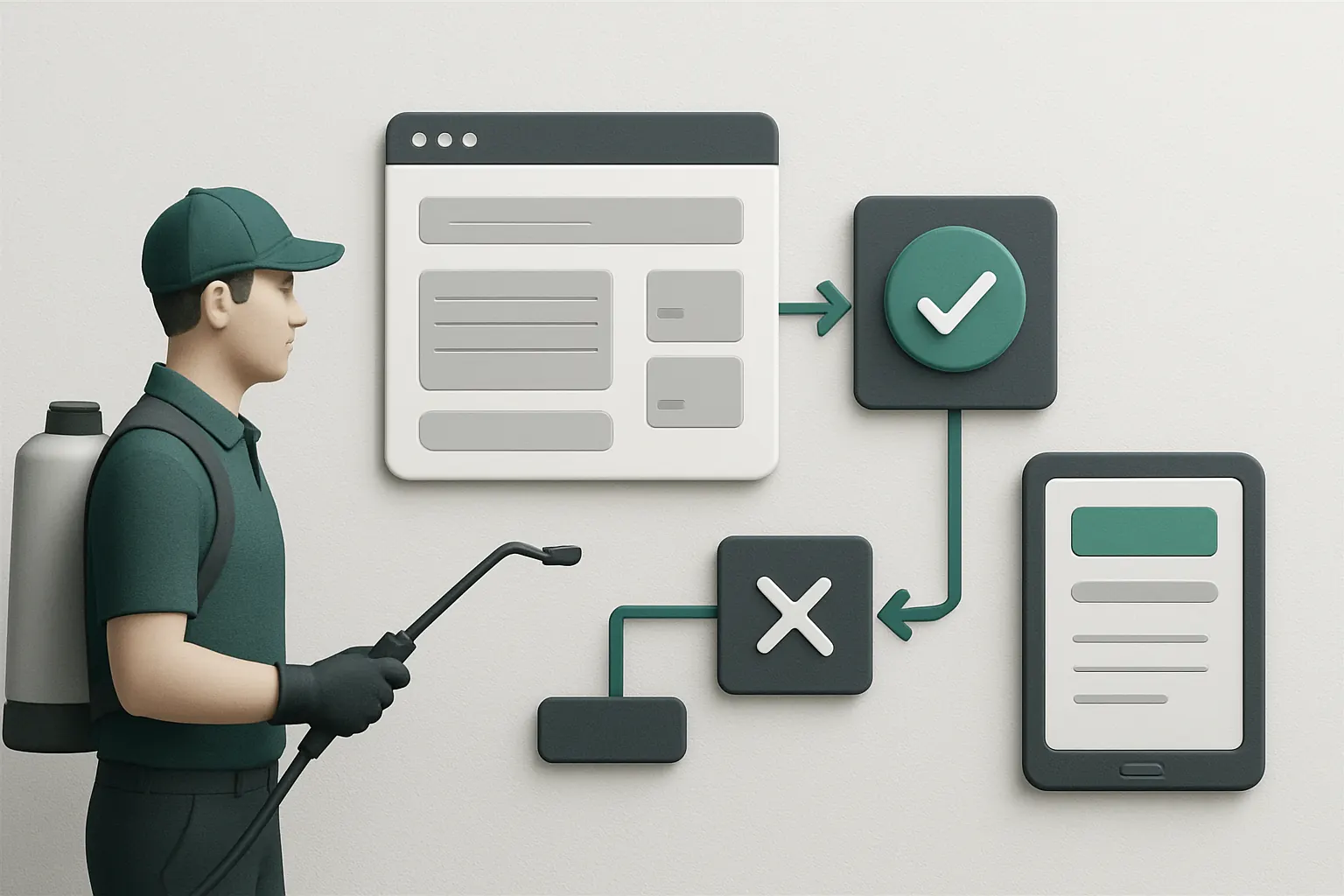
How AI Implementation UK Connects, Replaces, and Automates Your Operation
AI Implementation UK specialises in delivering one connected operating system bespoke to your pest-control business’s workflows. Rather than piecing together disconnected SaaS tools, we work with you to:
- Connect your existing investments — retaining useful software and integrating it seamlessly with your owned system.
- Replace avoidable subscriptions — consolidating repetitive or siloed functions into owned modules that reduce ongoing costs.
- Own your data and workflows — giving you control, visibility, and agility without vendor lock-in.
Our approach focuses on realistic automation powered by selective AI supporting variable tasks like classification and decision support. Deterministic rules handle routine operations, with all critical decisions retaining authorised human oversight. Together, this improves accuracy, compliance preparedness, efficiency, and customer satisfaction.
For UK pest-control companies, ownership of a single connected system means a reliable source of record for bookings, schedules, compliance data, and financial transactions — designed around how your teams actually work. It enables streamlined reporting, transparent audit trails, and dynamic workforce management.
Explore how your business can progress from fragmented admin to joined-up automation by visiting our process automation services or planning your platform with us at AI Implementation UK's bespoke system planning.
Together, we deliver pest control software automation that works — built for your unique challenges, fully controllable, and future-ready.
References and further reading:
- ICO guidance on data protection in customer communications: ICO data protection guidancefor-organisations/guide-to-pecr/marketing-and-consent/
- GOV.UK pest control business compliance overview: https://www.gov.uk/guidance/pest-control-businesses-and-regulations
- PCI Security Standards Council: PCI Security Standards Council guidance
For compliance audits and safe data handling, ensuring your technology supports your obligations is key. AI Implementation UK builds these controls into every stage of your automation project.