
Learn how financial advice firms can connect systems, reduce manual admin and automate client onboarding with one tailored operating platform the business owns.
Financial-advice firm automation software: What Breaks Daily
Financial-advice firm automation software should connect bookings, people, communications and reporting in one reliable operating flow.
Financial-advice firms in the UK face constant disruption from fragmented systems that do not talk to each other. Staff spend hours manually transferring data across multiple software packages. Fact finds get delayed. Review scheduling is error-prone. Suitability documents are laborious to prepare and verify. This daily inefficiency slows operations, risks compliance lapses, and adds hidden costs.
Advisers often rely on a patchwork of SaaS subscriptions—each solving one piece of the workflow without a seamless connection to others. These disjointed tools create duplicate data entry, inconsistent records, and limit visibility over operational status. Firms lack a single reliable source of truth, which weakens management oversight and client experience.
The pressing challenge is to automate and streamline these workflows while preserving human insight where it matters most. Automation must integrate with existing assets, avoid introducing a tangle of new subscriptions, and put ownership of key systems back in the firm’s hands.

How Manual Work Undermines Financial-advice Firms
Manual processing within financial-advice firms significantly slows service delivery and inflates costs. Frequent errors and data gaps expose firms to compliance risks, especially under FCA regulation for client suitability and financial promotions. Late or omitted reviews can lead to regulatory scrutiny and erode client trust.
Time spent on repetitive administration detracts from advisers’ ability to focus on client engagement and business growth. Cashflow suffers: onboarding delays slow fee generation and untimely reporting hampers financial planning.
A strategic, connected approach to automation is essential. It reduces administration expenses, improves data accuracy, supports compliance workflows, and delivers a comprehensive operational view for better decisions.

Integrate Fact Find Processes into One Owned System
The Burden of Disparate Fact Find Tools
Client fact finds frequently involve copying information from paper or PDF forms into CRM or other software. This duplication introduces error and wastes time. Some firms subscribe to costly fact find platforms alongside their CRM, leading to overlapping capabilities and unnecessary expense.
Connecting Inputs to a Unified Operational Record
A connected workspace ensures that all client onboarding data feeds into one owned system custom-built around your business workflow. Existing CRM and document management systems can be linked as external modules, ensuring data flows without repeated entry.
Example: Automated Data Capture and Verification
Post-call, client information entered via an owned digital fact find populates the client record directly. AI modules perform classification to highlight missing fields or inconsistent answers for adviser review, avoiding premature automation risks.
Controls for Compliance and Review
Validation rules ensure all mandatory fields are completed and mark sensitive data for encryption. Human sign-off on suitability triggers final document generation. Audit trails capture who accessed or modified fact find data.

Replace Multiple Appointment Scheduling Tools with a Central Booking Record
Challenges of Fragmented Review Scheduling
Many firms juggle separate tools and calendars for review appointments, complicating rescheduling and reporting. Staff manually chase clients to confirm slots, increasing no-shows and administrative overhead.
Simplify Workflow with a Single Booking Module
A proprietary booking record can replace external scheduling tools, syncing with staff calendars and client portals. Automating reminders and status updates reduces reliance on email threads or separate apps.
Practical Use: Automated Review Cycle Management
Pre-configured review intervals trigger review booking invitations via SMS or email. Clients can select slots from available time windows, updating the central record in real time visible to advisers.
Operational Safeguards
The system flags overdue reviews automatically. Permission controls limit who can reschedule or cancel within defined compliance parameters, ensuring reviews remain timely and properly recorded.

Connect Suitability Document Generation and Versioning
Fragmented Document Workflows Risk Errors
Suitability documentation is critical for compliance but often created using disconnected word processing tools. Version control issues risk missing updates or inconsistent information.
Ownership through an Integrated Documentation Workspace
An owned document management module linked to the client record automates merging verified data from fact finds and reviews into templates. Amendments are tracked within the system.
Example: Tailored Suitability Reports
When facts and advice inputs are confirmed, the system assembles a draft suitability report for adviser review. Suggested summaries and prioritised points are generated using selective AI capabilities.
Compliance Controls and Audits
Built-in financial promotions flags identify sections requiring extra review. Final reports are locked post-approval, with audit trails on edits and access. This supports FCA compliance reviews.

Consolidate Client Transaction and Communication Records
Disconnected Communication and Transaction Logs
Financial-advice firms often track client transactions in separate finance tools while maintaining communications via email or other external apps. This dispersal obscures insights across the client journey.
Building One Trusted Client Record
Integrating transaction platforms and communication modules into one owned system brings all operational data into a unified client record. Key external tools like payment processors remain connected but under firm control.
Real Example: Automated Transaction Alerts
When a client transaction occurs, the record updates automatically with flags for adviser review if thresholds or patterns trigger alerts. Communication histories linked to transactions provide context.
Controls for Confidentiality and Security
Role-based access manages who can view sensitive financial data. Encryption in transit and at rest protects client confidentiality, meeting data protection requirements under ICO guidance.

Automate Compliance Tracking and Exception Alerts
Manual Compliance Checks are Time-Consuming
Regulatory compliance requires constant monitoring of timelines, document statuses, and approval workflows. Reliance on spreadsheets or memory invites oversight.
A Workflow Engine for Proactive Compliance Monitoring
An owned module uses deterministic rules to track deadlines, flag overdue or incomplete tasks automatically, and escalate exceptions for human intervention.
Concrete Workflow: Client Suitability and Review Alerts
The system generates alerts when client suitability documents are due for update or reviews approach deadline. Advisers receive daily exception reports customised by team.
Ensuring Human Approval and Visibility
All automated alerts require acknowledgement and documented follow-up steps, preserving audit readiness and FCA-compliant supervision.

Summarise and Prioritise Advisers’ Daily Tasks with AI Assistants
Overwhelmed Advisers Need Focused Worklists
Advisers juggling fact finds, reviews, and reporting can struggle to prioritise urgent tasks. Manual task management risks missing deadlines.
Select AI Use for Task Classification and Summarisation
AI capabilities classify incoming documents and summarise outstanding actions by urgency, freeing advisers to focus on decision-critical work while deferring predictable routine tasks.
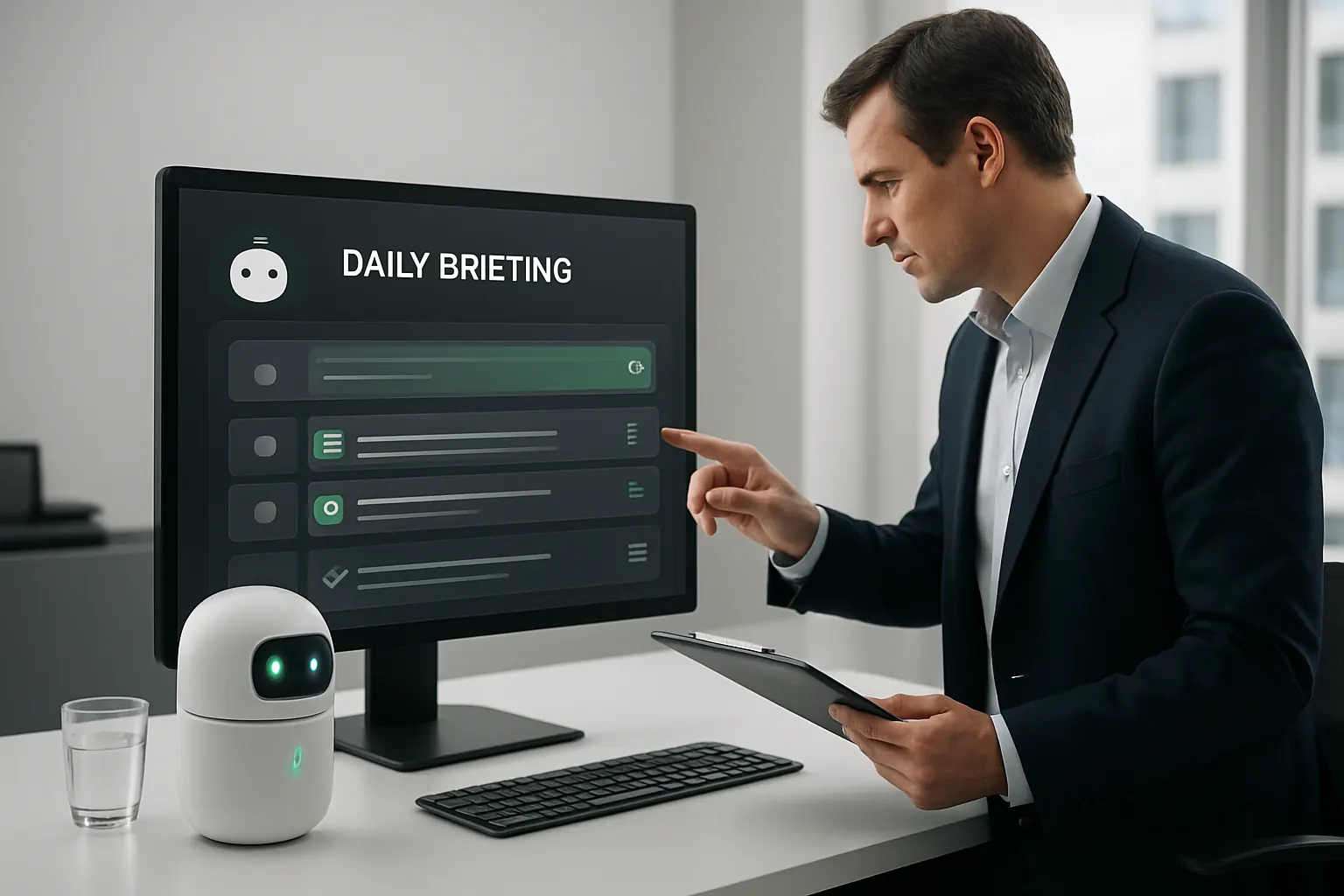
Example in Practice: Daily Briefing Dashboard
An AI-powered dashboard aggregates client status updates, prioritises tasks needing immediate attention, and summarises recent client communications.
Controls for Transparency and Confidence
Advisers can drill down into AI classifications and summaries, verify suggested priorities, and override where necessary, ensuring they retain final decision control.
Retain Human Judgement with Deterministic Rule-Based Decision Support
Avoid Overreliance on Black-Box AI Decisions
Financial advice demands transparent and explainable decisions. Automated recommendations must be traceable and reversible, protecting client outcomes and regulatory compliance.
Combining Rules and Human Approvals
Workflows are built predominantly on deterministic business rules with AI as a selective assistant. Human authorisation gates critical approvals, guided by tailored system alerts.
Case Example: Suitability Document Sign-Off
Rules verify all data points and disclosures before flagging the document for human review. AI suggests possible areas requiring clarification, but authorisation remains with the adviser.
Regulatory and Audit Oversight
Clearly defined approval checkpoints and activity logs provide evidence for compliance monitoring by audit teams and FCA inspectors.

Replace Avoidable Software Subscriptions with Owned Modules
Subscription Fatigue and Rising Costs in Advisory Tech
Firms often subscribe separately to CRM, scheduling, document management, and compliance tracking tools leading to redundant complexities and rising license fees.
Consolidation through Owned, Customised Modules
Replacing these with proprietary modules built to fit your bespoke workflows provides long-term savings, data ownership, seamless integration, and full control over updates.
Practical Outcome: Unified Client Lifecycle Management
From onboarding fact finds through document generation to review scheduling, the owned system supports each phase with tailored automation embedded within a single interface.
Controls on Updates and Integration
Version management of modules is coordinated by your IT or implementation partner, ensuring changes serve business needs and maintain integration integrity.

Rolling Out Your Automation in 90 Days
Weeks 1–2: Baseline Analysis and Planning
- Map current workflows, pain points, and software assets
- Identify integration priorities and owned module needs
- Establish compliance and data security requirements
Weeks 3–6: Design and Build Core Modules
- Develop central fact find and client record modules
- Integrate booking and document workflows with existing systems
- Configure compliance rules and AI assist components
Weeks 7–12: Pilot, Train and Iterate
- Pilot automation on a sample client group
- Train advisers and admin staff on new workflows
- Refine workflows based on feedback and performance metrics

How AI Implementation UK Enables Connected, Owned Automation
AI Implementation UK specialises in uniting your firm’s operational landscape into one owned system crafted around how you work. We prioritise connecting and integrating your current useful systems rather than replacing technology outright. Our teams design modular workflows that replace subscription bloat with customised owned tools, embedding AI as a selective assistant only where it adds genuine value.
By consolidating transactional, fact find, documentation, review scheduling, and compliance functions, the firm gains a reliable single source of client truth enhanced by tailored dashboards. Deterministic rules automate routine validations and task tracking, while human oversight remains decisive for advice suitability and client-critical approvals.
We adhere strictly to FCA guidelines for audit trails, data confidentiality per ICO and NCSC standards, and support controlled integrations with specialist external tools like payment gateways or communications platforms. Our approach optimises operational efficiency, reduces cost, and strengthens compliance without forcing you into a disconnected patchwork of technologies.
To discover how your firm can streamline operations and own a tailored automation workspace, explore our process automation services or schedule a consultation via plan my platform.
This practical, connected automation strategy enables financial-advice firms to control their workflows, reduce manual overhead, improve data reliability, and ultimately deliver higher quality service with confidence and compliance.
To turn these priorities into one coherent system, map the platform your business needs or explore our workflow automation approach.