Learn how warehousing businesses can connect systems, reduce manual admin and automate order to dispatch with one tailored operating platform the business owns.
Warehousing business automation software: What Breaks Daily
Warehousing business automation software should connect bookings, people, communications and reporting in one reliable operating flow.
Warehousing businesses in the logistics and wholesale sector face a complex terrain of daily operational challenges. From inbound receipts arriving unpredictably to orchestrating dispatch waves, the warehouse is a hub of simultaneous activities. Typical breakdowns include duplication of manual data entry, siloed inventory records, delayed picking and packing schedules, and fragmented documentation on deliveries and exceptions.
These breakdowns often arise because today’s warehouse software environments comprise multiple discrete tools, partial automations, and legacy systems that struggle to interoperate seamlessly. The patchwork of subscriptions and software modules creates inefficiency, fragmented data, and frustrates warehouse managers striving to maintain an accurate chain of custody. Without a cohesive view and control, errors creep in, compliance risks grow, and cashflow depends heavily on labour-intensive rectifications.
To break this cycle, warehousing businesses need automation software designed not just to digitise individual tasks but to connect and streamline workflows end-to-end under one operating system that the business owns and configures.

The True Cost of Manual Work in Warehousing Operations
Manual labour, duplication, and disconnected systems exact costs well beyond wages. These stem from common pain points including:
- Wasted time on repetitive, low-value tasks such as printing paperwork, transferring data manually between spreadsheets and systems, or chasing document approvals.
- Increased error rates arising from manual transcription, mismatched inventory locations, or incomplete dispatch notes, driving costly rework or shipment delays.
- Compliance gaps through poor traceability of regulated goods, fragmented records for audits, and inconsistent chain of custody procedures.
- Poor cashflow visibility when billing and payment data lag or fail to reconcile with order fulfilment status.
- Hidden software spend due to multiple overlapping SaaS subscriptions that the business neither fully owns nor controls.
Replacing this complex, error-prone ecosystem with one connected, user-configurable system can slash admin burden, enhance operational accuracy, and maintain authorised human control over critical decisions.
Streamlined Inbound Receipts and Inventory Location Management
Complex receipt processes slow warehouse start points
Daily inbound shipments vary widely in size and complexity. Multiple suppliers, variable lead times, and differing packaging require flexible handling. Legacy receipt systems often operate disconnected barcode scanners, spreadsheets, or siloed apps, forcing duplicated input and manual checks on stock locations.
Connecting inbound workflows in one owned system
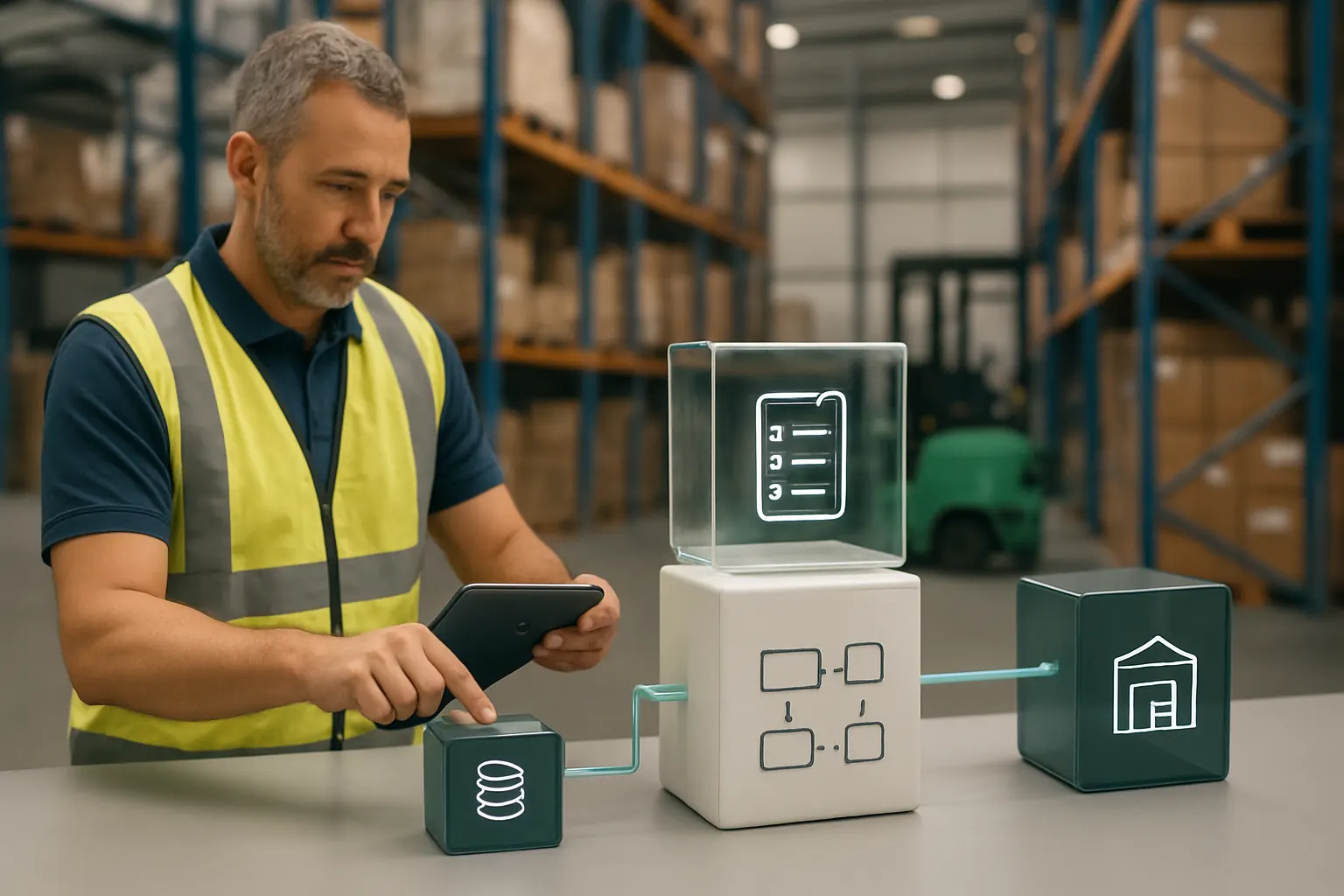
A unified, configurable system brings inbound receipts into a central digital workspace linked directly to live inventory records. Automated workflows set predictable rules for parcel sorting, pallet registration, and location assignment without losing manual override ability for exceptions.
Integrations that complement inbound handling
Existing warehouse control systems, hand-held scanners, and ERP stock modules integrate seamlessly to maintain real-time inventory levels. Specialist external services include carrier tracking APIs for inbound status or electronic document exchange for supplier proofs.
Concrete example: Digitising pallet receipt and put-away
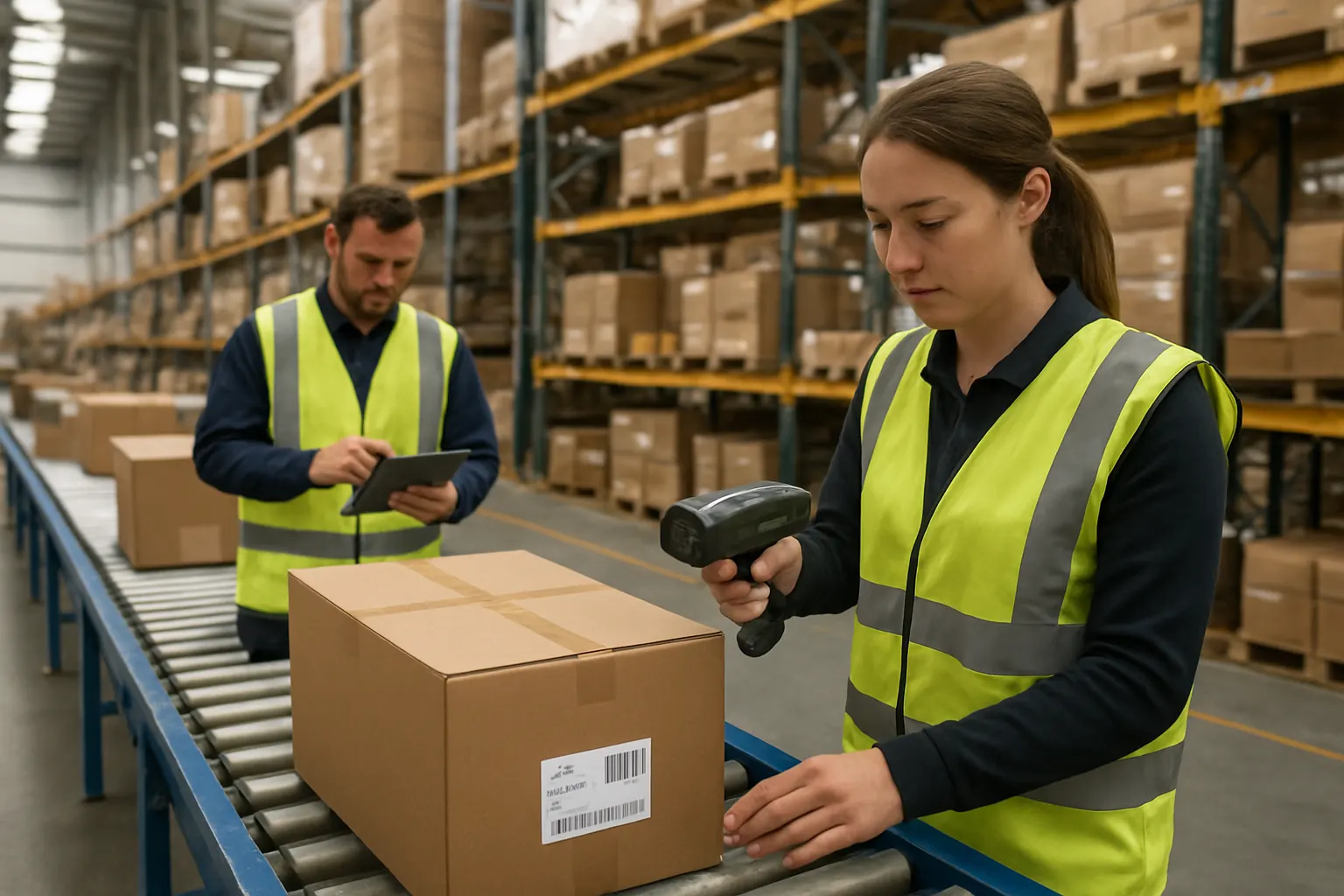
Warehouse operatives scan pallets with a mobile device connected to the system. The platform verifies purchase order data, automatically assigns pallet locations based on live space availability, and updates inventory counts. A custom dashboard instantly highlights unprocessed receipts or location conflicts requiring intervention.
Controls to ensure accuracy and compliance
Rules govern allowable location changes, require human approval for regulated goods storage updates, and document audit trails for chain of custody. This preserves compliance while automating routine updates and captures exceptions for timely action.

Automated Order to Dispatch Orchestration
Dispatch complexities cause delays and errors
Orders arrive with varying priority, delivery windows, and packaging requirements. Manual wave planning, packing lists compiled in multiple systems, and manual hand-offs increase the risk of picking mistakes, missed deadlines, and costly reworks.
A connected workflow for seamless order fulfilment
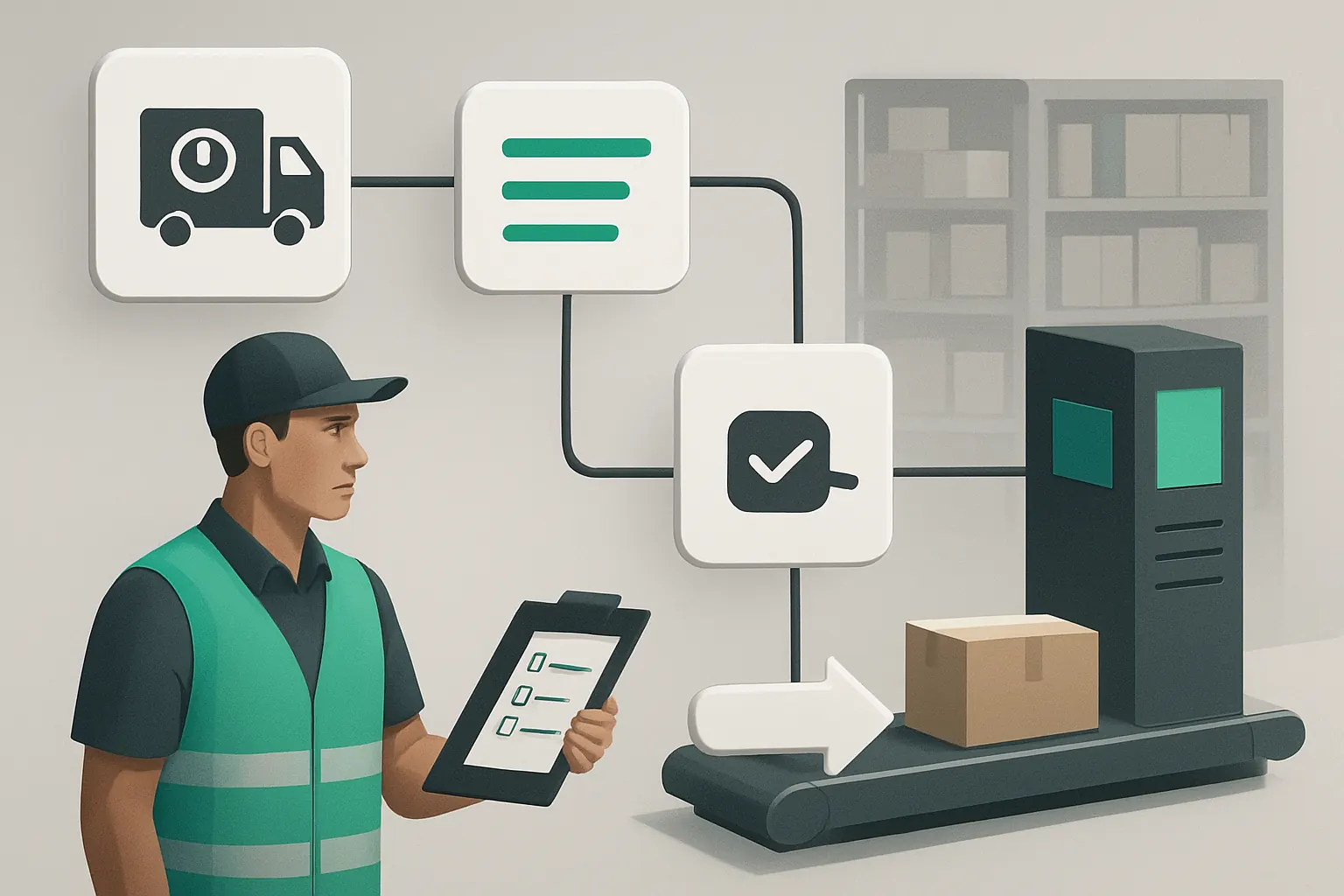
An orchestrated workflow links order intake, picking waves, packing checklists, and dispatch documentation. The same system schedules capacity planning, routes batches to packing stations, and triggers proof-of-delivery capture with integrated driver handsets.
Useful integrations supporting dispatch
Integration with specialist route planning software ensures optimal delivery runs remain connected to warehouse schedules. Payment gateways for COD orders and communications tools for driver alerts or client updates maintain a continuous flow.
Case study: Orchestrating high-volume dispatch waves
Batch orders from multiple clients are automatically grouped by destination zones and delivery times. Pick lists generated dynamically reflect up-to-the-minute stock locations. Dispatch teams receive electronic packing confirmations and can capture delivery exceptions on handheld devices, all interfaced via one controlled system.
Controls safeguarding operational integrity
Deterministic rules prevent packing confirmation until stock picks are verified. Exceptions such as route delays or damaged goods generate alerts for supervisor review. Final dispatch confirmation requires authorised sign-off, ensuring human validation remains integral.
Replacing Disjointed Software Subscriptions with Owned Workflow Modules
The cost and complexity of multiple subscriptions
Many warehousing businesses subscribe to several SaaS products for inventory management, order handling, document storage, and reporting. Overlapping features, vendor lock-in risks, and fragmented data stores increase costs and complicate change management.
Owning tailored modules built for the business
By developing owned software modules that replicate required features but operate within the same system, businesses reduce license overheads and gain absolute data control. Modules can be customised for specific workflows like inventory audits or vendor management without dependence on third-party providers.
Keeping current tools where vital
Where specialist or stable third-party services are essential—such as payment platforms conforming to PCI DSS, or communications apps preserving carrier relationships—these remain integrated components within the owned system’s workflows.
Practical example: Consolidating document-heavy workflows
Instead of using separate tools for inventory tracking and vendor document management, owned modules automate signature capture, exception logging, and deliver consolidated reports. Integration with AI-driven text recognition can be selectively applied to extract key data from delivery notes, reducing manual entry and improving accuracy.
Maintaining controls over software evolution
Change management governance ensures new modules and integrations align with regulatory obligations and operational needs. User permissions define who can manage or edit modules and data, preserving security and audit readiness.
Generating a Single Reliable Record and Tailored Dashboards
Data fragmentation obstructs decision-making
Fragmented data across systems obstructs managers’ ability to see reliable inventory levels, order status, and operational KPIs. Reporting from multiple sources often produces inconsistent or outdated insights.
One source of truth for all operational data
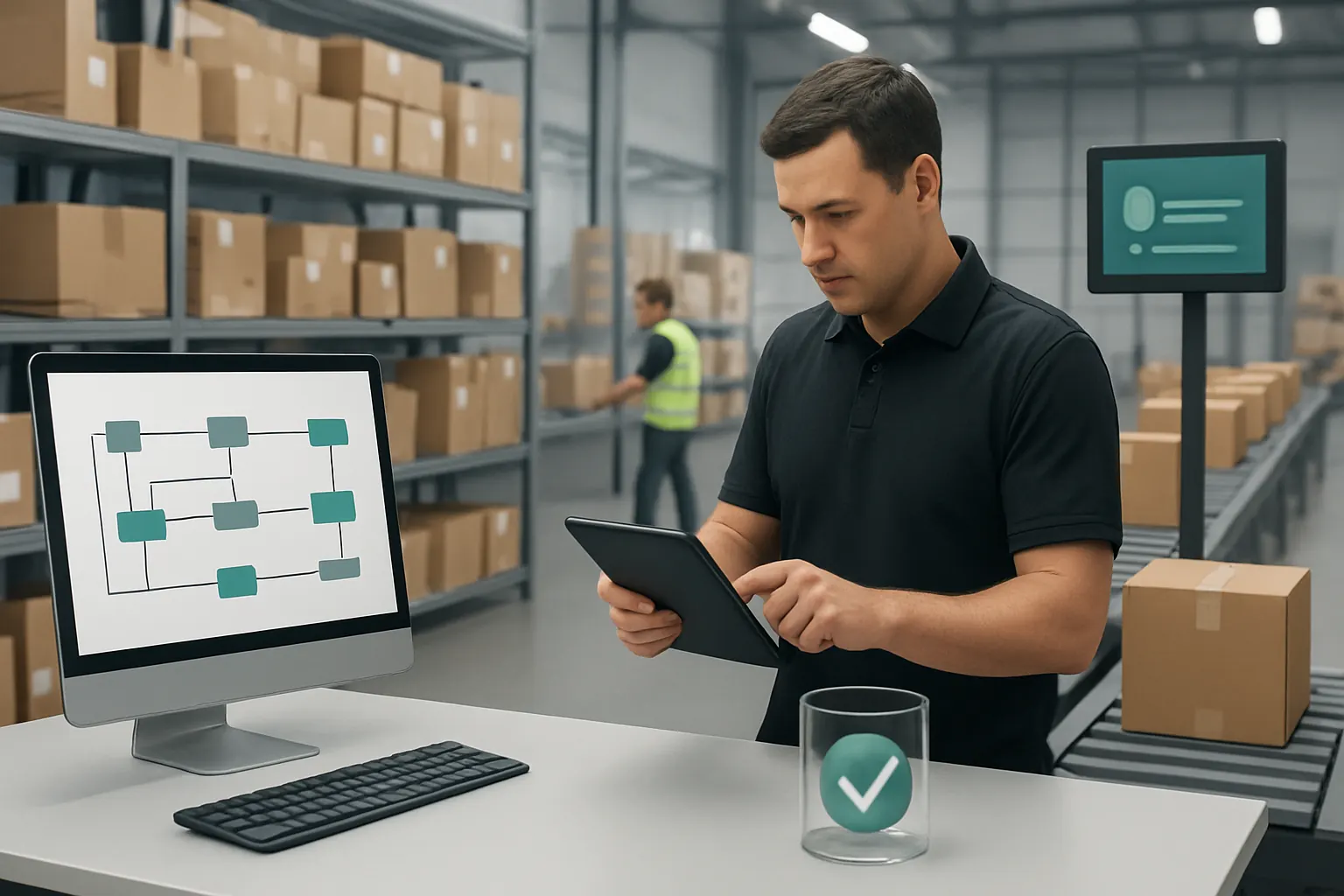
A centralised database integrating inbound receipts, inventory locations, order fulfilment, and exceptions delivers a single reliable record. This supports customised dashboards tailored to roles from warehouse floor staff to senior management.
Useful integrations enriching warehouse intelligence
External data feeds such as real-time carrier tracking, weather alerts impacting deliveries, or labour schedules feed into a unified repository. Specialist analytic tools may integrate with the core data for advanced forecasting.
Example: Real-time dashboards boosting responsiveness
A warehouse manager views a dashboard showing inbound shipment status matched with available storage, picking wave progress, and dispatch exceptions. Alerts highlight any overdue pickups or stockouts, enabling proactive resolution before disruption.
Embedding governance and controls in reporting
Access permissions control data visibility by role. Automated data validation checks preserve record integrity. Compliance-related information such as chain of custody or proof of delivery is securely archived for audit.

Applying AI Selectively to Enhance Variable Workflows with Human Oversight
Balancing automation with human decision-making
Warehousing workflows include predictable repetitive tasks but also often require variable judgements, such as prioritising orders or deciding exception handling. AI capabilities best serve these variable tasks rather than trying to automate everything blindly.
Integrating AI for classification, summarisation, and prioritisation
AI modules can classify shipment types, summarise inbound document contents, prioritise order queues based on custom rules, and support decision processes with contextual insights. Deterministic rules handle predictable tasks like stock updates to retain clarity and control.
Practical integrations for AI-enhanced tasks
Natural language processing for extracting fields from delivery notes, machine learning for demand forecasting, or decision-support algorithms for route optimisation can be integrated securely while preserving human approval for exceptions.
Concrete example: AI supporting exception handling
Incoming shipment documents are automatically categorised by type and summarised to highlight critical details. Dispatch exceptions flagged by the system are prioritised based on impact predicted by AI, then passed to supervisors for final review and action.
Controls ensuring responsible AI use
Human-in-the-loop principles require all regulated decisions, such as quality control holds or chain of custody exceptions, pass through authorised personnel. AI outputs remain transparent and explainable, supporting compliance and trust.

Effective 90-Day Rollout Plan to Automate and Connect Warehousing Operations
Weeks 1–2: Assessment and Foundations
- Conduct detailed process mapping of warehousing workflows, inbound receipts, and dispatch operations.
- Identify existing systems to retain or integrate.
- Define compliance and control requirements for inventory and regulated goods.
- Set baseline KPIs and pain points for improvement.
Weeks 3–6: Connected Automation Build and Integration
- Develop core owned modules for inbound receipt digital capture and inventory location management.
- Connect existing warehouse control and ERP tools.
- Implement order to dispatch orchestration workflow.
- Integrate specialist external services for payments and communications.
- Configure dashboards consolidating key operational data.
Weeks 7–12: AI Enablement, Testing and Training
- Deploy selective AI modules for document summarisation and prioritisation.
- Establish deterministic rule sets for routine task automation.
- Train operational teams on new workflows and systems.
- Conduct controlled pilot runs with ongoing refinements based on feedback.
- Rollout access controls and audit trails supporting compliance.
How AI Implementation UK Helps Warehousing Businesses Own Their Automation Journey
At AI Implementation UK, we deliver a connected operating system designed around your unique warehousing workflows — not a disconnected set of SaaS products. Our approach starts with understanding your daily challenges, existing tools, and compliance demands.
We craft one owned solution that links inbound receipts, inventory management, order orchestration, documentation, and exceptions management seamlessly. Our system integrates specialist external services only where essential, eliminating redundant software spend and centralising data for trustworthy, real-time insights.
By layering in AI selectively on variable or document-driven tasks, combined with deterministic rule-based automation for predictable processes, you retain human oversight where it matters most. The platform’s modular design means you can adapt and extend functionality as your business evolves.
Explore how joining hands with us for your warehousing business automation software can cut manual admin, connect systems reliably, and embed operational control. Learn more about our process automation services and data infrastructure preparation to get started with your own connected system. Our proven rapid rollout plans ensure you see practical benefits quickly while preserving control and compliance.
Automation success in warehousing is not about acquiring more disconnected tools — it is about owning one platform that works with your business every day. That’s how warehousing organisations sharpen efficiency, boost accuracy, and safeguard their operations in a competitive UK market.