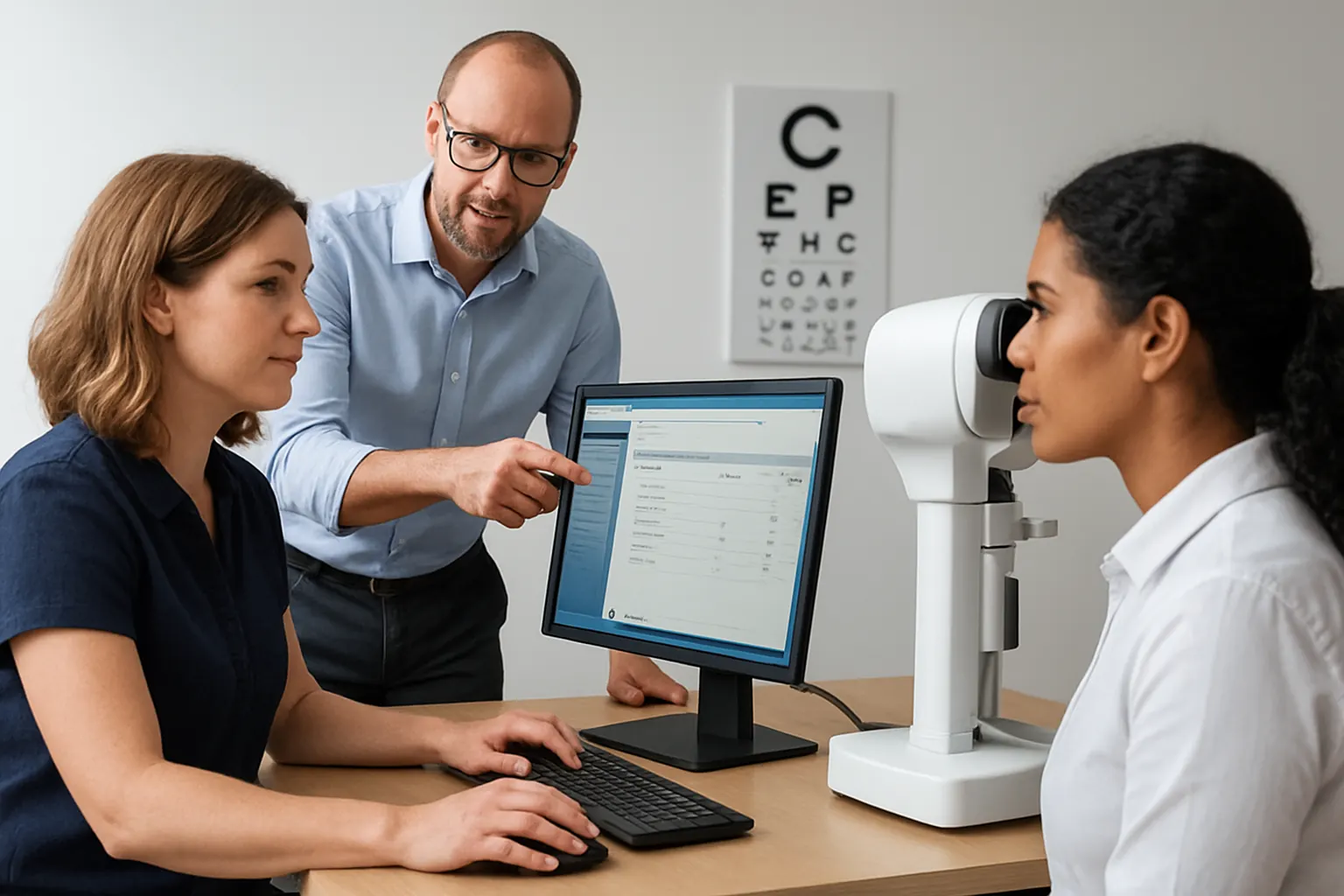
Learn how opticians and optometry practices can connect systems, reduce manual admin and automate referral to appointment with one tailored operating platform the.
Opticians and optometry practices eye-test recalls automation software: What Breaks Daily
Opticians and optometry practices face persistent operational challenges that disrupt the smooth delivery of care. Manual eye-test recall management, convoluted appointment scheduling, and fragmented referral handling frequently cause administrative backlogs. Paper records or multiple disconnected systems often drown staff in duplicated effort and costly errors. These inefficiencies lead to missed recalls, no-shows, and delays in patient care—effects that ripple across both service quality and practice profitability.
While many current systems hold useful data and capabilities, their disjointed nature often prevents meaningful integration. Time-critical workflows like referral to appointment require automation that aligns with clinical oversight and compliance. The promise of opticians and optometry practices eye-test recalls automation software is not simply automation for its own sake but an operating environment built around how the practice actually works—connecting existing systems and replacing unnecessary subscription tools with modules the practice fully owns.

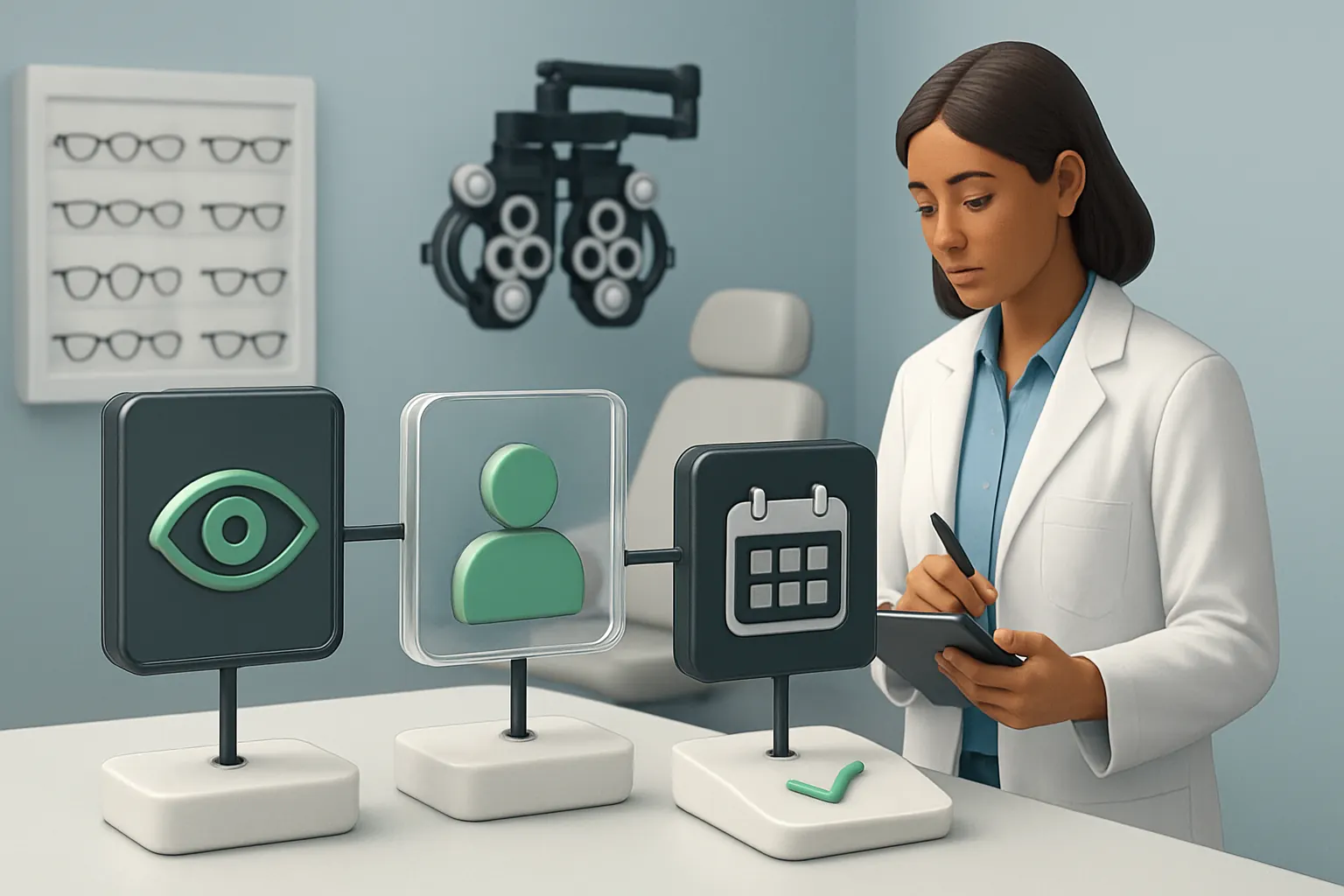
Connected Recall Management Tailored to Practice Needs
Navigating Recall Challenges in Daily Operations
Eye-test recalls are a cornerstone of practice operations but are often managed manually or using disparate calendar reminders. Staff expend valuable time cross-checking, rescheduling, and making reminder calls or messages. Errors are frequent, and patients sometimes miss recalls, impacting care continuity and practice revenue.
Seamless Workflows Through System Integration
A connected recall management module centralises patient records, historical test data, and appointment bookings into one reliable source of truth. It automates scheduling according to clinical guidelines predefined by the practice. Automated reminders via SMS or email are dispatched based on patient preference, with engagement data feeding back into the record to inform staff.
Leveraging Existing Systems Without Disruption
Existing electronic medical records (EMRs) and appointment software are preserved and integrated rather than replaced. This avoids duplicated effort and unnecessary new subscription costs. The automation connects to popular communication tools while ensuring recall updates are instantly reflected in the owned patient record.
Example: Reducing No-Show Rates with Automated Reminders
A mid-sized practice reduced its no-show rate by 20% within two months by adopting automation that acted on recall data and sent reminders tied directly to clinical urgency. The system routed exceptions—such as patients requesting reschedules—to staff workflows for prompt action.
Controls and Compliance Safeguards
The workflow includes human review steps for recalled patients flagged with complex history or special needs. All data handling complies with ICO guidance on patient records and audit trails are maintained for clinical oversight.

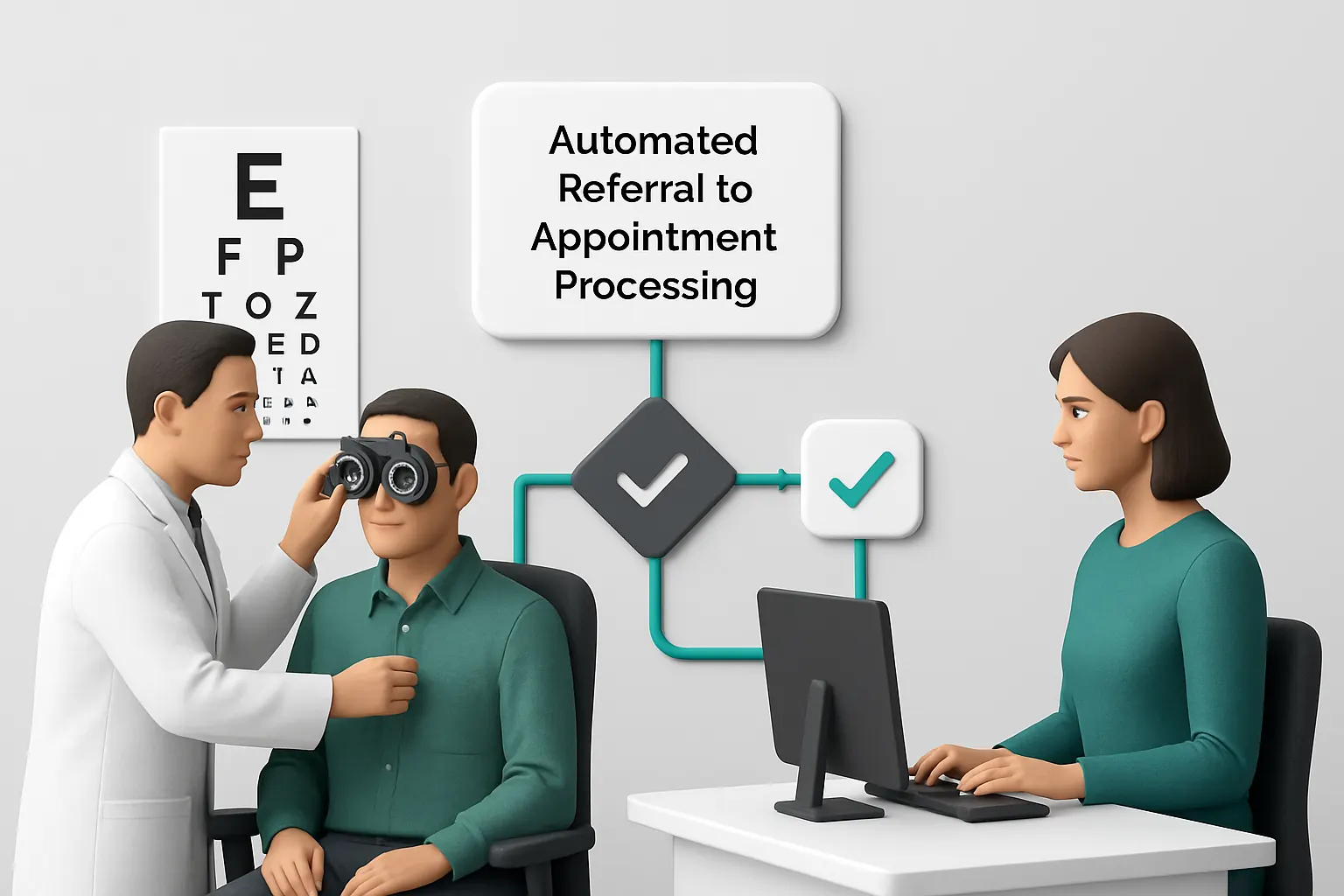
Automated Referral to Appointment Processing
Improving Referral Bottlenecks
Referral management is often hampered by manual triage and follow-up, delaying appointments and causing patient frustration. Referrals come from different sources and must be prioritised according to urgency and specialist availability.
Streamlining with Prioritisation and Routing Logic
The automation platform applies rules for categorising referrals based on condition severity or patient profile, supported by AI-assisted classification to highlight urgent cases. Approved referrals generate automated appointment offers aligned with clinic schedules, with patient communication managed centrally.
Integrating Specialist Services
Integration with communication providers and existing booking systems means appointment confirmations, cancellations, and reschedules flow seamlessly between parties. Referral tracking is unified within the owned system, avoiding data duplication.
Example: Faster Path from Referral to Appointment
One practice saw a 30% reduction in time from referral receipt to confirmed appointment by automating triage and notifications. Staff were freed to focus on clinical assessments rather than administrative chasing.
Essential Controls for Clinical Oversight
Referral triage outcomes and automated appointment generation remain subject to human approval rules, maintaining responsibility with clinicians. Exceptional cases trigger alerts for manual intervention.
Prescription Ordering and Fulfilment Automation
Tackling Prescription Errors and Delays
Manual prescription orders and lab communication can lead to errors or broken workflows that slow down patient product delivery. Tracking order status involves multiple software or manual calls, increasing risk and overhead.
End-to-End Prescription Workflow Connectivity
Owned modules automate the generation, validation, and transmission of prescription orders directly to dispensing labs or internal stores. Real-time status updates feed back into patient records, triggering automatic follow-ups or alerts where delays occur.
Using Specialist Tools for Payment and Lab Integration
Where appropriate, specialist external systems such as PCI-compliant payment gateways or lab-specific interfaces are integrated but never fragment patient data. This connectivity speeds up billing and delivery confirmation.
Example: Reducing Lab Turnaround from Days to Hours
A practice automated lab order workflows and real-time status updates to reduce error rates and turnaround times. Staff workload fell significantly as manual follow-ups were replaced by automated tracking and notifications.
Governance and Audit Trails
Every order includes verification steps and clinical approval where needed. Logs record every status change, supporting compliance with healthcare records standards.

Unified Appointment and Staff Scheduling
The Daily Chaos of Manual Scheduling
Typical scheduling involves juggling multiple calendars with frequent clashes or inefficient use of clinician time. Manual rotas fail to react quickly to no-shows, emergencies, or patient reschedules, leading to lost capacity.
Integrated Booking and Rota System
A shared scheduling workspace consolidates appointments, staff rotas, and clinic resources. Rules-based automation handles routine routing such as reallocating slots from cancellations or suggesting optimal appointment times based on clinician availability and patient needs.
Useful Integration with Communication and Reminder Tools
Integration with SMS or email reminders complements the scheduling system to reduce no-shows further. The system also connects with existing staff management software to capture absences and availability.
Example: Maximising Utilisation and Reducing Gaps
One practice implemented the booking workspace and saw a 15% increase in daily patient throughput by efficiently rescheduling cancellations and using waitlist notifications automatically.
Accessibility and Control Features
Scheduling changes are tracked and require authorisation for critical shifts, preserving human control. Data access respects role-based permissions aligned with data protection standards.
Operational Dashboard for Clinical and Business Insights
Overcoming Fragmented Data Visibility
Without centralised insight, practices struggle to monitor recalls, appointments, prescription orders, and staff utilisation effectively. Relying on multiple reports from disconnected systems wastes time and risks conflicting data.
Tailored Dashboard for Real-Time Monitoring
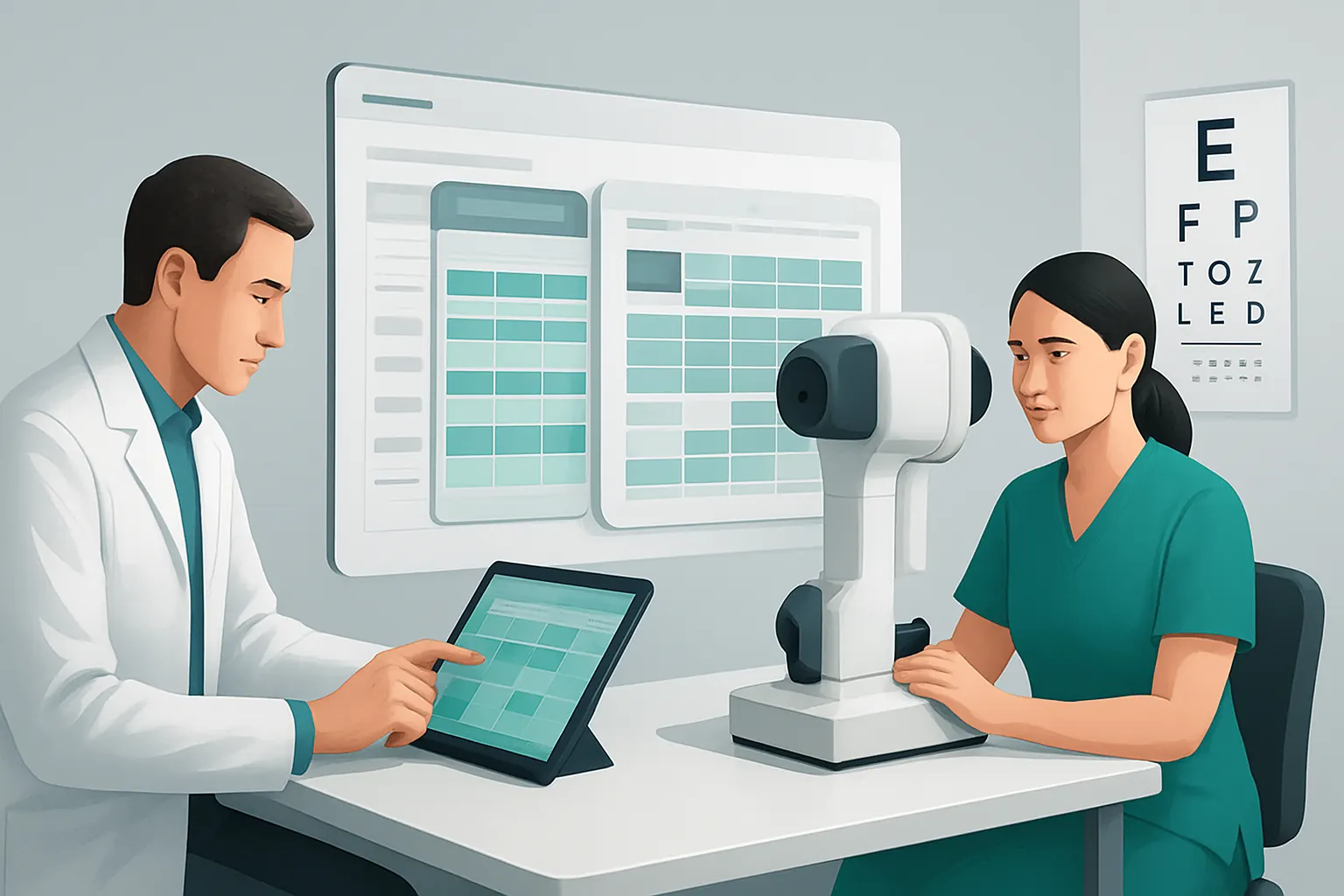
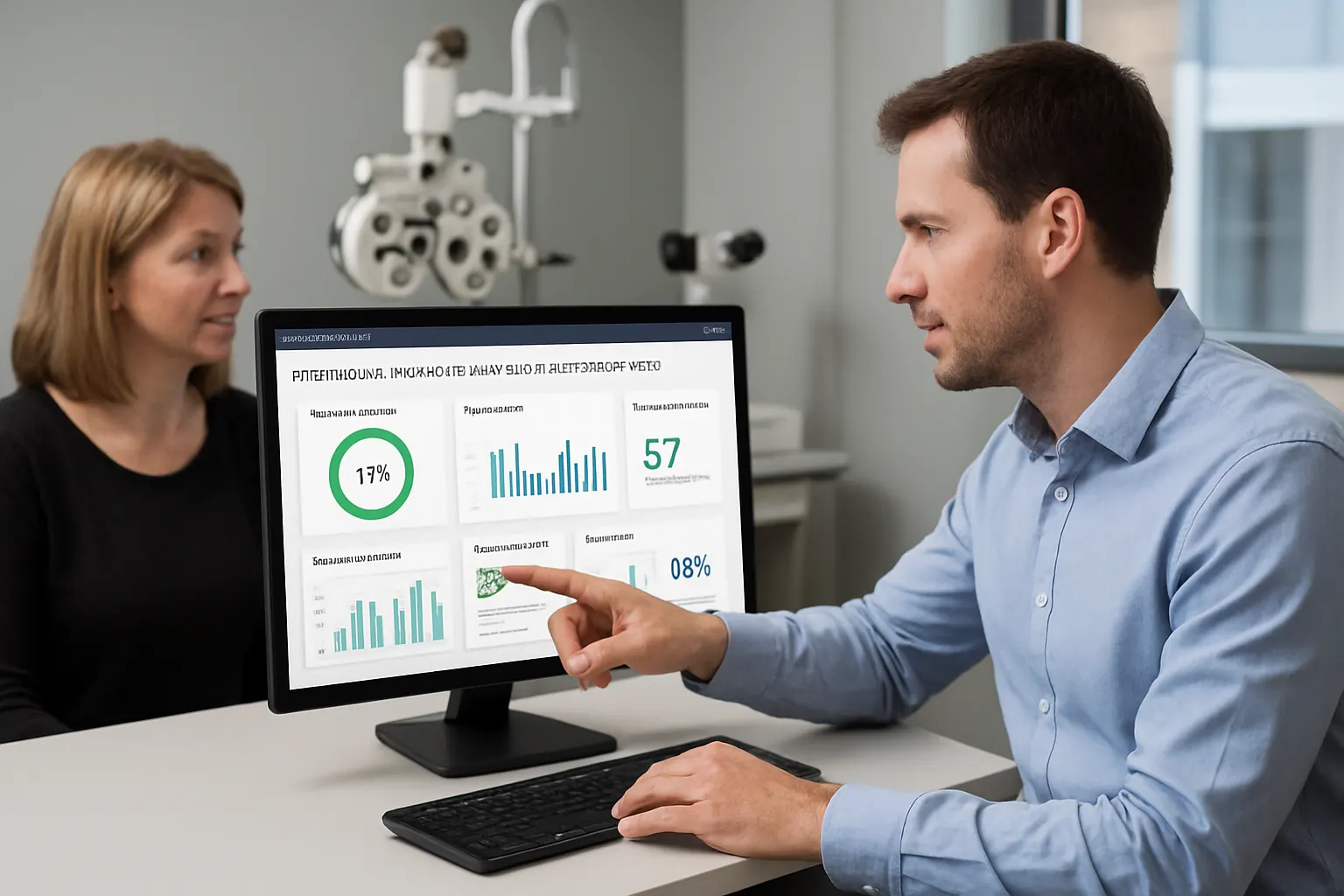
The dashboard consolidates operational data into a single interface tailored to practice workflows. It provides actionable indicators such as recall compliance rates, referral processing times, prescription order status, and appointment fill rates.
Connecting Data from Legacy Systems and New Modules
The data infrastructure pulls from existing EMRs, booking systems, and new modules into one reliable record. AI summary features highlight anomalies or trends without replacing clinical judgement.
Example: Enabling Data-Driven Operational Improvements
Practice managers used the dashboard to identify a repeat lag in referral processing on a specific weekday. Adjusting staff allocation accordingly improved patient flow and reduced backlog.
Data Security and Privacy Controls
Access to the dashboard is tightly controlled with audit logs, ensuring sensitive patient data remains protected under ICO and NHS information governance advice.
90-Day Rollout Plan for Eye-Test Recalls Automation
Weeks 1–2: Discovery and System Assessment
- Map existing workflows and software landscape.
- Identify key manual pain points around recalls, referrals, prescriptions.
- Ensure data privacy baseline with ICO standards and clinical governance teams.
- Engage staff for practical input on workflow requirements.
Weeks 3–6: Platform Build and Integration
- Configure recall and referral modules with data feeds from legacy EMRs.
- Integrate with existing communication and scheduling systems.
- Develop automated workflows applying deterministic rules with human approval points.
- Pilot scheduling workspace and prescription order automation.
Weeks 7–12: Staff Training, User Acceptance and Refinement
- Provide role-specific training to clinical and administrative staff.
- Monitor early adoption, collect feedback, and refine rules or interfaces.
- Deploy operational dashboard with real-time insights.
- Embed controls for compliance, audit, and escalation protocols.
- Plan phased rollout to remaining sites or clinicians if multi-location.

A Practical Next Step with AI Implementation UK
AI Implementation UK specialises in delivering one connected operating solution for opticians and optometry practices. We build tailored systems around how your business works, connecting useful existing software and replacing avoidable subscriptions with owned modules that you control.
Our approach treats AI as a selective capability to support variable tasks like classification, summarisation, and decision support—never replacing clinician responsibility but enhancing efficiency. Deterministic rules govern predictable tasks, while human oversight remains central for important clinical decisions.
By consolidating operational data into one reliable source and presenting it on tailored dashboards, we enable faster, safer decisions and improved patient care. Rather than adding disconnected SaaS tools, our solution integrates essential specialist external services, such as compliant payment gateways or secure communications, into a seamless workflow.
Start your journey toward streamlined recalls, referrals, prescriptions, and scheduling with a clear rollout plan designed to minimise disruption and maximise operational benefits. Learn more about how we can help your practice own its workflow automation at AI Implementation UK—where healthcare automation meets practical business needs.
For more on connecting workflows and data, see our services in process automation and RPA and data infrastructure preparation.
For data protection guidance, review ICO’s healthcare data handling advice.
By investing in tailored opticians and optometry practices eye-test recalls automation software designed around your workflow, your practice gains control, transparency and efficiency—all key to delivering better patient outcomes and operational resilience.