
A practical guide to facilities management company workflow automation, connecting business systems, reducing repetitive admin and creating one operating platform.
Facilities-management company workflow automation: What Breaks Daily
Facilities-management company workflow automation should connect bookings, people, communications and reporting in one reliable operating flow.
Facilities-management companies face relentless operational pressures. From responding to reactive maintenance calls to managing multiple suppliers under complex SLAs, daily tasks frequently fracture into disconnected workflows. Paper forms, siloed spreadsheets, and multiple standalone software tools often compound inefficiencies rather than resolving them.
For many FM providers, the real frustration lies in juggling many systems: the CAFM software, tenant portals, supplier databases, and compliance records, none of which fully align with bespoke ways of working. This mismatch leads to repeating data entry, delayed responses, lost audit trails, and errors. As urgency increases in reactive jobs, the lack of connected workflows can mean costly miscommunication and slow decision-making.
The tools at hand—while capable—are too often addressed as separate point solutions rather than components of a single, business-owned operation. This disconnect impacts growth, compliance and client satisfaction.

The unrecognised cost of manual and fragmented processes
The burden of manual processes in facilities management shows up in multiple dimensions:
- Time drains: Administrative overheads tied to chasing paperwork and updating multiple systems cut directly into technician and manager availability.
- Error risk: Duplicate data entries and inconsistent records cause billing delays, missed maintenance, and compromised safety.
- Compliance uncertainties: Without a single source of truth, audits of safety certificates or tenant notifications become laborious and error-prone, increasing regulatory risk.
- Cashflow impacts: Payment delays and reconciliation challenges grow when finance data sits isolated from operational records.
Many companies either tolerate these costs or try to patch them with off-the-shelf SaaS tools. Unfortunately, these tools rarely integrate seamlessly or adapt exactly to operational needs, often creating new silos and repeated subscriptions.
Facilities-management company workflow automation addresses these issues by uniting the operation in one owned, adaptable system. The rest of this guide lays out five practical automation steps to move FM businesses from fragmentation to flow.

Unify maintenance scheduling from enquiry to completion
Reactive job chaos: a bottleneck in oversight and resource allocation
The daily fire drill in FM is managing reactive maintenance tasks swiftly and clearly. Enquiries come via phone, email, or portals, but updates on progress rarely flow back in a timely or automated way. Tracking which jobs are pending, assigned, or completed often relies on disparate systems and manual updates, risking double-booking or delays.
Creating a continuous work record
By building an owned maintenance workflow module around your core enquiry-to-closure process, jobs can move through clearly defined stages automatically. This includes:
- Capturing enquiry details once, with unique job IDs
- Automating triage rules to prioritise and assign tasks
- Tracking status updates and SLA deadlines with alerts
- Feeding closure and feedback data back for records and billing
Integrations that matter
Rather than replacing your existing CAFM or helpdesk system outright, connect these tools through APIs or secure data connectors. Similarly, integrate with your communication platforms such as Teams or SMS gateways for instant technician alerts. Payment integrations like Stripe or GoCardless can automate client invoicing post job completion.
Real-world example
An FM company implemented an owned job-tracking workspace that linked customer enquiries with its scheduling system and suppliers. The result: responsive job allocation, automatic SLA monitoring, and elimination of manual status emails. Technicians received notifications on mobiles, and clients accessed progress via tailored dashboards.
Built-in controls for accountability
Configurable business rules safeguard response priorities. Transparent history logs maintain audit trails for compliance. Critical decisions, such as overriding prioritisation, require manager approval, preserving human judgment.

Connect inspections and compliance records with workflow triggers
Scattergun compliance management exposes risk
Property inspections and safety record-keeping are vital yet often fragmented tasks. Multiple certificates, inspection schedules, and follow-up actions may be managed in spreadsheets or third-party tools, disconnected from day-to-day operations.
Automate reminders and documentation flow
An integrated compliance module tailored to your inspection cycles ensures scheduled reminders go out automatically, documents upload directly into asset records, and follow-up tasks generate instantly when defects are noted.
Useful connections to existing systems
Your property management or CAFM system likely holds asset information—link this data dynamically to your inspection workflow for a single source of truth. Calendar integrations can schedule site visits, while document management connectors handle storing certificates securely.
Example in action
One FM provider created a compliance workflow that automatically triggers inspection reminders 30 days before expiry, uploads completed certificates to asset files on completion, and generates prompt rectification jobs when deficiencies appear. This cut administrative overhead and improved safety record visibility.
Control measures for sensitive data and compliance
Tenant data processed within inspection records is restricted by role-based access controls. Digital signatures and timestamping enhance document authenticity, with automated alerts for missing data preserving compliance readiness without manual oversight.
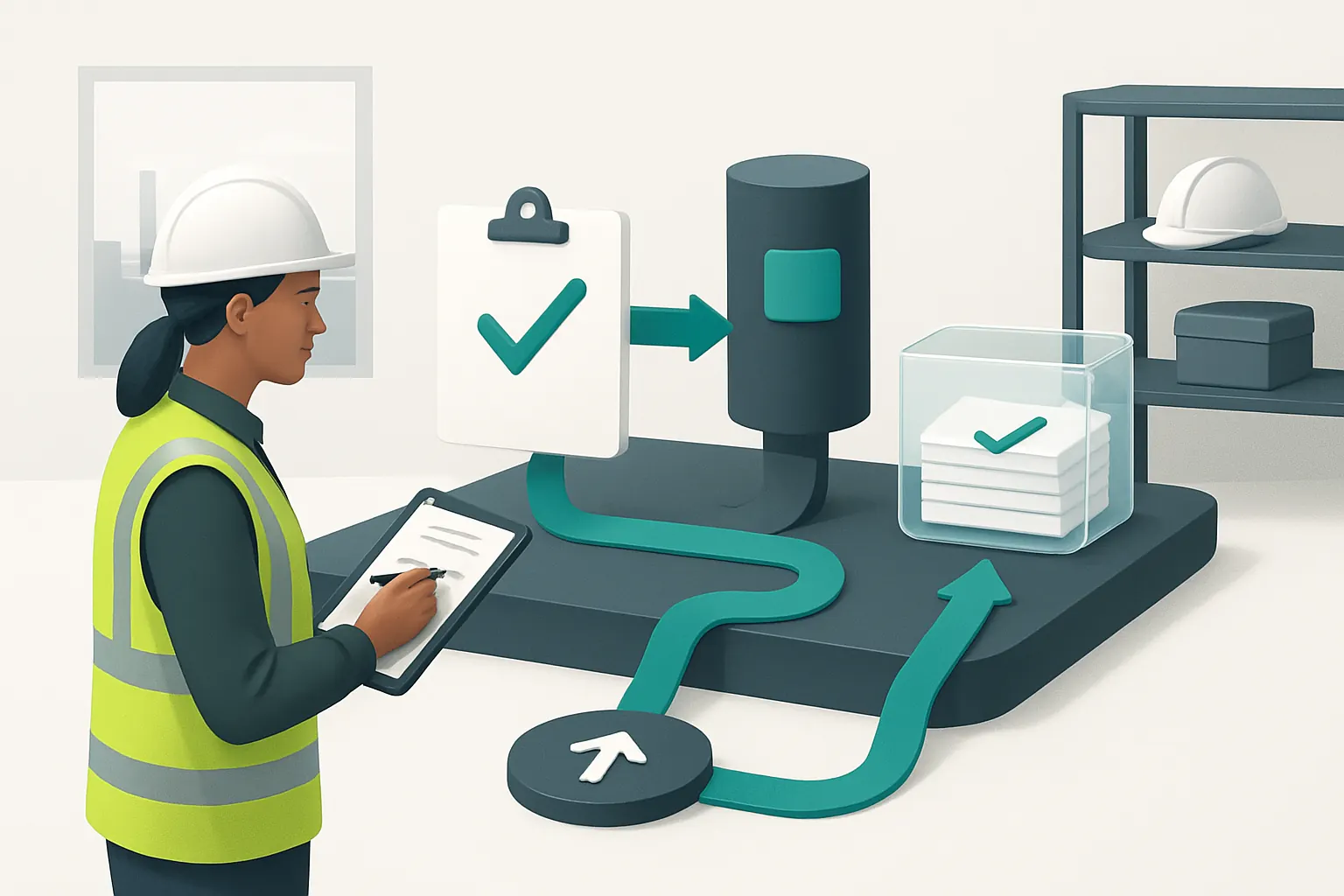
Replace avoidable software subscriptions with owned workflow modules
The subscription trap and disconnected tools proliferation
Many FM businesses accumulate SaaS subscriptions to address fragmented problems—separate booking apps, timesheets, reporting tools and more. These add monthly costs and increase data silos and switching friction.
Building business-owned modules to replace recurring costs
Our approach prioritises developing owned modules customised around your actual workflows, such as shift rotas, asset booking, or helpdesk job logging. Once built, these modules:
- Work seamlessly together without repeated logins
- Store data securely under your ownership and control
- Remove license fees on multiple third-party platforms
Select specialist external tools where they add lasting value
Where specialist capabilities such as payment processing or multi-channel communications are required, continue integrating reliable external services that provide stable APIs, ensuring their inputs feed directly into your owned data set.
Case example
A small FM business cancelled three recurring SaaS subscriptions after integrating rota scheduling and work allocation directly into its owned platform. This saved costs and simplified onboarding new operatives, who now access all task info via one workspace.
Oversight and change management
Configuration tools permit administrators to update workflows as needs evolve without coding. Built-in audit logs track changes to processes, ensuring visibility and governance over evolving automation.

Bring diverse operational data into one reliable record and tailored dashboard
Data scattered across tools impairs insight and decision-making
Operational data often lives separately in CAFM records, finance spreadsheets, supplier portals, and inspection documents. Without a unified view, managers cannot quickly assess performance or compliance status.
A connected data record for holistic visibility
By aggregating data into one central, business-owned record, your management team gains:
- Accurate live views of maintenance backlogs, workforce capacity, and SLA compliance
- Real-time financial syncs between jobs completed and invoices raised
- Tenant and property-specific operational summaries easily filtered and reported
Dashboarding tuned to your needs
Custom dashboards present the data you need when you need it, whether for shift briefings, compliance audits, or board reports. They refresh automatically and provide drill-down options for investigation.
Application scenario
An FM operator serving schools consolidated asset data, maintenance schedules, and supplier SLA metrics into one workspace. Their dashboard displayed overdue works, spend category breakdowns, and compliance expiry alerts, helping reduce risk and optimise resource allocation.
Data governance and security controls
Access permissions govern who sees which records or dashboard elements. Data handling aligns with ICO guidelines and tenant privacy best practices. Regular backup and recovery procedures minimise data loss risk.

Leverage targeted AI capabilities to enhance variability without losing control
Where AI fits in fluctuating tasks
AI is best used selectively in FM workflows—handling classification, summarisation, prioritisation and decision support rather than fully autonomous control. Many routine tasks remain deterministic and rule-based, enabling predictability and transparency.
Smart automation augmenting human decision-making
Examples include:
- Automatically classifying maintenance request urgency based on text inputs, flagging for manager review if uncertain.
- Summarising inspection reports highlighting anomalies for technician follow-up.
- Prioritising work orders using historical response times and SLA risk scores.
- Suggesting optimal resource allocations while preserving human scheduling approval.
Specialist AI integrations
Incorporate AI functions via APIs into your owned system, ensuring data flows return to your controlled records. Avoid black-box solutions with unexplainable outcomes.
Concrete application example
An FM company used AI to triage incoming tenant repair requests overnight, automatically flagging high priority leaks for immediate action and summarising less urgent jobs in daily reports. Managers reviewed AI suggestions before final task assignments.
Controls for ethical and legal compliance
Configure AI thresholds to ensure sensitive or high-risk decisions retain human review. Maintain audit logs documenting AI recommendations and final human decisions to support regulatory oversight.

A clear 90-day rollout plan to streamline your FM workflows
Weeks 1–2: Assessment and foundation building
- Map current workflows, identify pain points and data sources.
- Define priority automation opportunities aligned with business goals.
- Secure necessary data access and stakeholder buy-in.
- Begin connecting key existing systems such as CAFM and communication tools.
Weeks 3–6: Development and early testing
- Develop owned modules for core workflows (e.g., maintenance scheduling, compliance reminders).
- Integrate specialist external services (payments, messaging) as needed.
- Build dashboards and consolidate data records.
- Initiate sandbox testing with select users; gather feedback.
Weeks 7–12: Refinement and company-wide adoption
- Implement targeted AI capabilities for classification and prioritisation.
- Train staff on new workflows and dashboards.
- Monitor system performance and compliance controls.
- Gradually retire redundant subscriptions and manual processes.
- Iterate based on user input and operational outcomes.

How AI Implementation UK accelerates your transformation with owned automation
At AI Implementation UK, we understand the unique challenges facilities-management companies face. Our approach centres on building one connected operating platform you own—designed precisely around how your business works.
We take your existing systems and connect them through custom, secure integrations. This means your tried and tested CAFM, tenant portals, and supplier systems remain valuable components rather than replaced or duplicated. Avoidable subscriptions which fragment data or incur ongoing fees can be removed by building owned modules tailored to your workflows.
Operational data from maintenance jobs, inspections and finance are brought together into one reliable source of truth. Custom dashboards provide actionable intelligence for your teams, freeing managers to focus on strategic tasks.
We implement AI selectively to automate variable tasks such as job triage or report summarisation, while deterministic rules govern routine operations. Importantly, human oversight remains central for important decisions, balancing speed, accuracy and compliance.
By partnering with us, FM companies benefit from a scalable system — free from the patchwork of disconnected SaaS tools — fully aligned with your operation and investment in your own data. To explore how to start your business process automation journey for facilities-management companies, visit our process automation service overview or consider our data infrastructure preparation offering. Our proven roadmap can help you move from fragmented systems to one orchestrated operational workspace, tailored for your property sector needs.
Further reading on regulations and data controls:
- Information Commissioner's Office (ICO): Data protection overview
- National Cyber Security Centre (NCSC): Cyber security guidance for businesses
- PCI Security Standards Council: Merchant data security standards
With the right connected platform owned by you, facilities-management workflow automation ceases to be an abstract goal. Instead, it becomes a practical enabler of efficiency, insight and service excellence in your everyday business.