Learn how patient transport providers can connect systems, reduce manual admin and automate referral to appointment with one tailored operating platform the.
Patient-transport providers journey bookings automation software: What Breaks Daily
Patient-transport providers journey bookings automation software should connect bookings, people, communications and reporting in one reliable operating flow.
Patient-transport providers face daily operational challenges that disrupt seamless service delivery. Common pain points include:
- Manual input errors when booking journeys from referrals or calls.
- Lack of integration between booking, dispatch, vehicle tracking and communications.
- Constant firefighting to reschedule or reassign journeys due to incomplete or delayed information.
- Fragmented data from multiple software tools creating unreliable records.
- Difficulty maintaining compliance and audit trails around clinical oversight and patient data.
The result is wasted staff time, dissatisfied patients and inefficient use of vehicles and crews. Patient-transport workflows are complex, involving referral triage, appointment confirmations, vehicle allocation and arrival updates. Yet many providers manage these with disconnected spreadsheets, standalone apps or manual processes. This mismatch breaks workflows and inflates operational costs.

The Cost of Manual Work in Patient Transport Operations
Manual administration in patient-transport bookings translates directly into:
- Wasted time searching for data, copying information between systems and manual double checks.
- Higher error rates when details are hand-keyed, resulting in missed or late journeys.
- Compliance risks due to lack of clear records or incomplete clinical oversight.
- Cashflow delays from missed billing opportunities and longer cycle times.
- Poor patient experience caused by last-minute changes and lack of journey visibility.
These costs multiply as organisations scale. A one-stop solution built around your unique workflow reduces repetitive work, consolidates data records and enables better workforce utilisation. The right software does not mean more subscriptions but replacing avoidable tools with modules you fully control. Designed well, it protects sensitive data, supports authorised decision-making and retains human input where necessary.
The value lies in bringing your existing useful systems into a connected workspace and selectively applying AI to variable and complex tasks, rather than adopting disjointed SaaS products. This article explores five ways you can automate journey bookings and workflows through an owned operating system designed for patient-transport providers.
Referral Intake to Booking Module: Streamlining Initial Journey Creation
Managing Referral Overload and Data Fragmentation
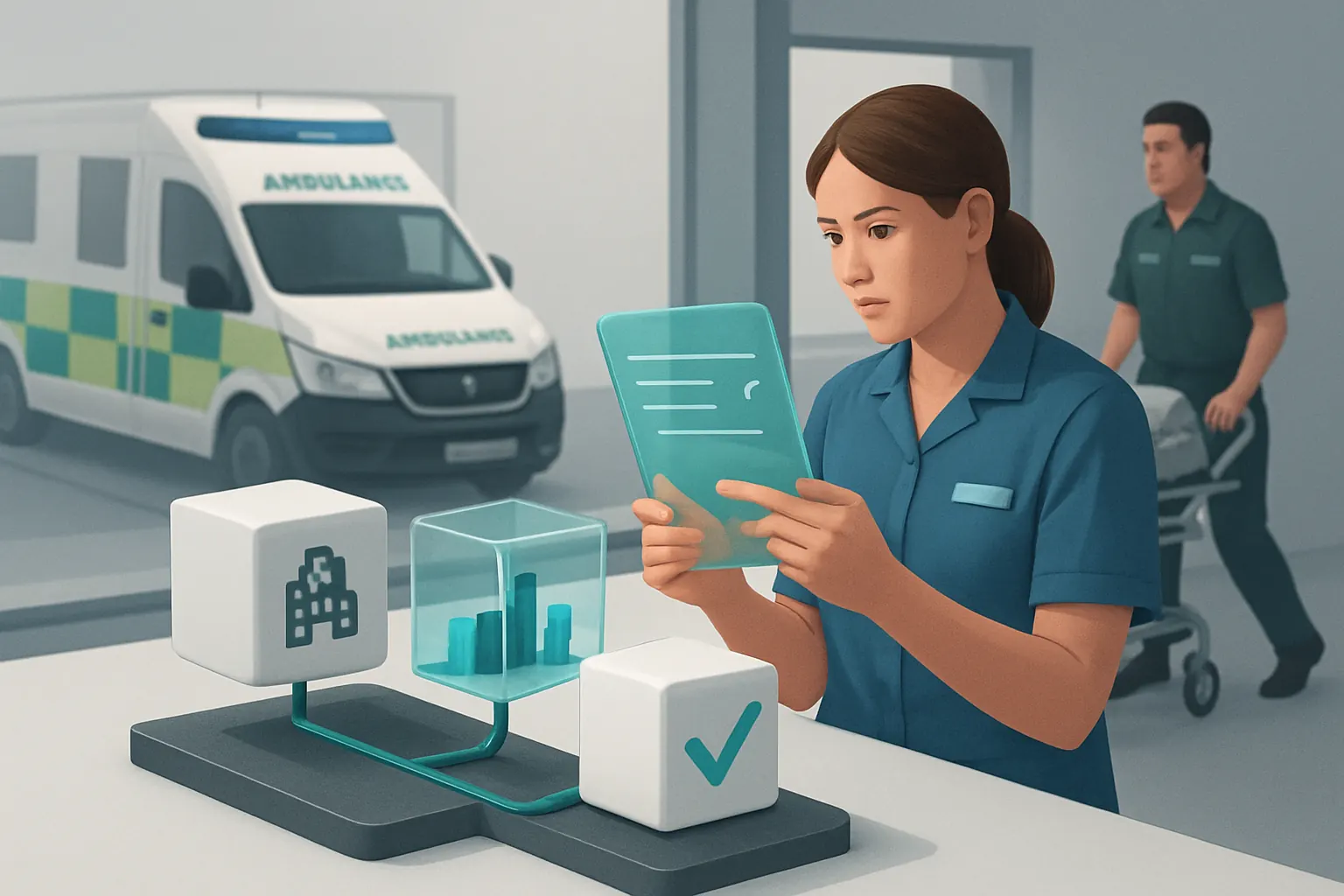
Patient-transport providers often receive referrals in multiple formats—emails, faxes, phone calls, PDF attachments—and struggle to collate details into a single booking record. Staff spend excessive time opening documents, searching for fields and manually creating journey entries.
Workflow Automation for Referral to Booking Conversion
By automating intake, you create a connected booking module customised to your referral formats. This module can:
- Accept referrals via email, form submissions or integrated hospital systems.
- Extract key data using AI-assisted classification and summarisation for human review.
- Create or update a single booking record that includes patient details, journey requirements and clinical notes.
The system links referral data directly to appointment times and transport resources, eliminating re-keying.
Integration with Useful Existing Systems
You can connect your current Electronic Health Record (EHR) or hospital scheduling system via API to avoid duplicate input. External tools like NHS digital appointment systems or clinical dashboards also integrate for reference without data proliferation.
Example: Referral Email Auto-Import and Validation
A provider receives patient referrals by email. AI modules identify patient details and requested journeys within email attachments, draft a booking record, then notify staff for clinical review and approval. This cuts referral processing time significantly.
Controls and Compliance Safeguards
- Human approval required before any booking moves to dispatch.
- Audit trail records referral source, data extraction and review decisions.
- Secure handling of special-category patient data aligned with ICO guidance on healthcare information.

Dynamic Journey Scheduling and Vehicle Dispatch Module
Combatting Scheduling Complexity and Manual Coordination
Matching patient bookings with appropriate vehicles and drivers is time-critical and complex. Dispatchers juggle manual rota checks, GPS monitoring, and ad hoc reassignments.
Automating Scheduling Based on Deterministic and AI-Assisted Rules
A connected module designed around your operational rules uses:
- Deterministic logic for fixed scheduling constraints (working hours, vehicle capacity, patient priority).
- AI-powered sorting to prioritise journeys by urgency and geographic clustering.
- Real-time dispatch updates integrated with vehicle GPS and driver apps.
This eliminates double bookings and ensures balanced workload distribution across vehicles.
Keeping Useful Existing Tools in the Loop
Your current GPS tracking system or route optimisation app remains connected. Automated updates from these systems feed into your booking record for live status and ETA calculations.
Example: Automated Vehicle Allocation with Real-Time Adjustment
When a new urgent referral arrives, the system flagging priority uses geographical proximity and vehicle availability to allocate a driver and update schedules. GPS trackers confirm vehicle departure, enabling accurate arrival time predictions for patient communication.
Dispatch Controls to Preserve Oversight
- Dispatchers receive AI recommendations but keep final control for manual overrides.
- Exceptions flagged for human review when scheduling conflicts arise.
- Workflow rules ensure workload balance and regulatory compliance.
Patient Communication and Appointment Confirmation Workspace
Reducing Missed or Late Patient Notifications
Currently, many providers manually phone or message patients about journey details, risking delays or errors. Notifications can be inconsistent or untimely.
Automating Patient Updates via Owned Communication Modules
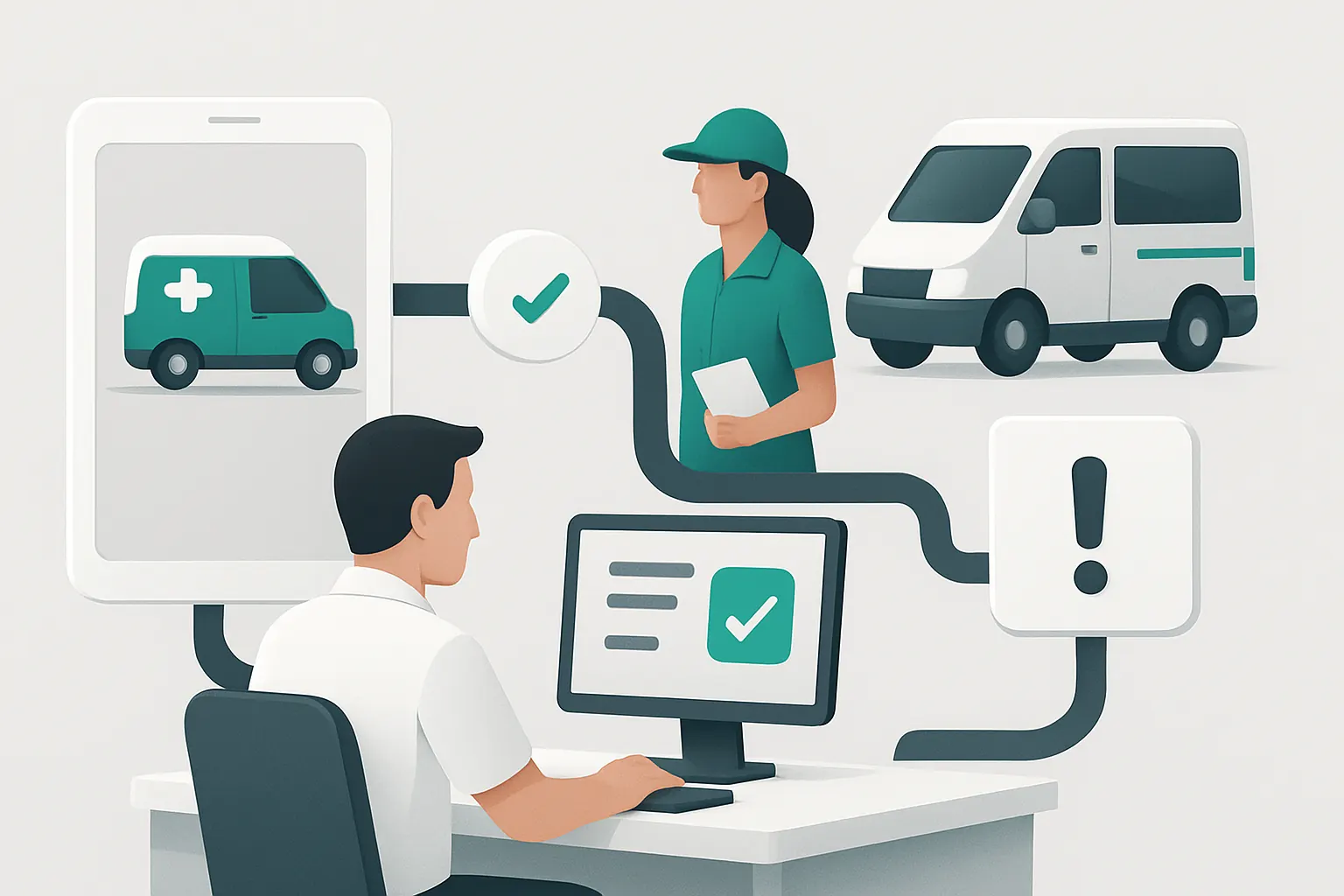
A communication workspace linked directly to the booking records automates:
- Appointment reminders via SMS or email based on patient preference.
- Journey updates including driver details and pick-up timings.
- Alerts for delays or last-minute schedule changes.
This module replaces avoidable third-party notification tools by embedding messaging in your owned system.
Integration with Preferred Communication Channels
You maintain direct links to specialist communication providers such as NHS-approved SMS gateways or telephony services. This preserves security and allows audit of messages sent.
Example Use Case: Automated Appointment Reminder and Change Alerts
Patients flagged for journeys the next day automatically receive a reminder text in the afternoon, followed by a confirmation once the vehicle is dispatched. If a driver runs late, an alert is sent immediately to reduce patient waiting.
Controls for Patient Consent and Privacy
- Patients’ communication preferences recorded in their booking record.
- Messages encrypted in transit and logged.
- Option for staff to override auto-messages in special cases.

Centralised Journey Monitoring and Data Dashboard
Eliminating Fragmented Record-Keeping and Visibility Gaps
Providers often rely on multiple spreadsheets and software tools to monitor journey statuses, vehicle locations and staff assignments. This fragmentation creates unreliable operational insights.
Building One Reliable Record and Real-Time Dashboard
By consolidating booking, dispatch and vehicle data into a shared workspace:
- Managers access a tailored dashboard showing journey progress, potential delays, vehicle utilisation and pending tasks.
- Operational data is updated in near real-time via system integrations.
- Historical data supports performance analysis and audit reporting.
Useful Data Integrations for a Unified View
Connect your existing vehicle GPS feeds, booking records and driver logs seamlessly. GPS tracking systems remain an external but tightly integrated source.
Real-World Example: Dashboard Alerts for Missed or Delayed Journeys
Dispatch supervisors monitor the dashboard to spot any journeys flagged as delayed. Alerts prompt immediate action to reassign vehicles or notify patients, improving adherence to schedules.
Control Features to Support Compliance and Decision-Making
- Access roles regulate visibility of patient and clinical data.
- Exceptions and incident logs feed into a secure audit trail.
- Managers approve scheduling changes flagged by the system.
Follow-up Task Routing and Referral Feedback Loop
Avoiding Post-Journey Administrative Overload
After each journey, providers must record delivery details, update care records and handle possible referrals for return or future travel needs. Manual task routing can lead to delays and information loss.
Automating Task Assignment with Workflow Rules
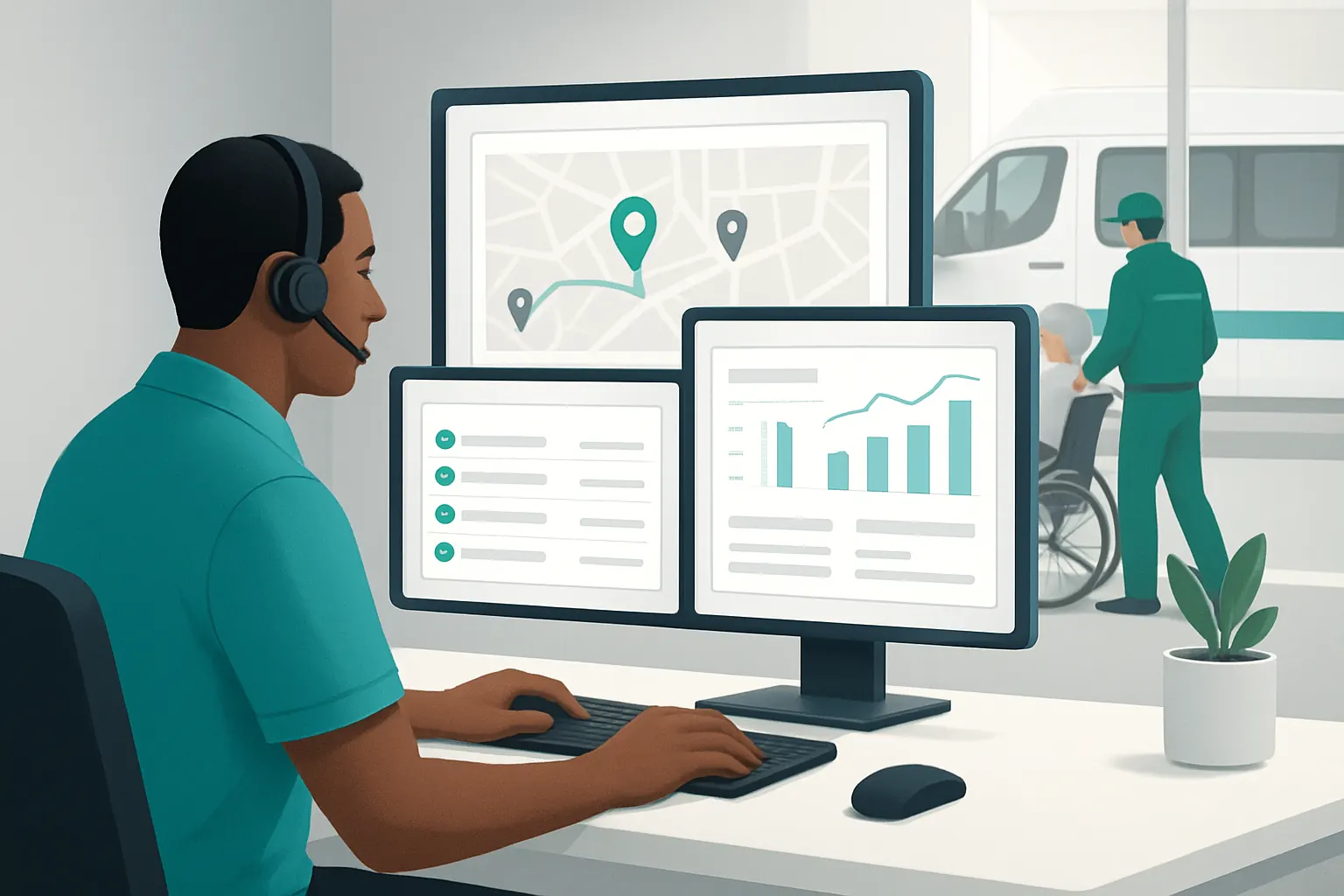
Once a journey completes, your owned system automatically:
- Updates patient transport records with journey outcomes.
- Routes follow-up tasks to appropriate teams — administrative, clinical or finance.
- Generates referral feedback to hospital or care providers, closing the loop.
Integration with Finance and Clinical Systems
Useful external finance software or NHS clinical systems receive status updates via secure API. Automated billing triggers improve cashflow without additional manual input.
Example: Auto-Task Creation for Return Journey Booking
At journey end, if a return trip is required, the system generates a task for the bookings team to schedule it, attaching all relevant clinical notes and patient preferences.
Compliance and Audit Trail Considerations
- Task assignments logged with timestamps and responsible staff.
- Sensitive information protected under data privacy policies.
- Decisions requiring clinical review flagged for authorised sign-off.

Rolling Out Automation in Patient-Transport Operations: The 90-Day Plan
Weeks 1–2: Discover and Map Your Current Workflows
- Conduct process audits identifying pain points and manual handoffs.
- Gather stakeholder input including clinicians, dispatchers and finance.
- Define data flows, existing systems and integration points.
- Align on automation priorities linked to referral to appointment workflows.
Weeks 3–6: Design and Build Core Modules
- Develop referral intake and booking creation workspace tailored to your data formats.
- Construct journey scheduling logic aligned with your capacity and regulatory rules.
- Connect GPS and communication tools for dispatch and patient messaging.
- Establish secure data frameworks respecting clinical and GDPR standards.
Weeks 7–12: Validate, Train and Transition to Live Operation
- Pilot test individual modules with real data and staff users.
- Refine interfaces, controls and exception-handling based on feedback.
- Train users on the new operating system and approval processes.
- Gradually migrate workflows from legacy tools ensuring continuity.
- Implement dashboards and reporting for operational visibility.
This staged rollout curtails disruption and embeds practical automation that fits your existing ways of working.

How AI Implementation UK Can Connect, Replace and Automate Your Patient-Transport Booking Operation
AI Implementation UK specialises in creating one connected operating workspace that you own and tailor. Our approach prioritises:
- Connecting your useful current systems into one trusted data record supporting streamlined booking and dispatch.
- Replacing avoidable third-party software subscriptions with owned modules customised for patient-transport workflows.
- Applying AI selectively for variable tasks such as referral classification, prioritisation and summarisation while retaining deterministic business rules for predictable actions.
- Preserving human oversight with configurable controls for clinical authorisation of key decisions.
- Creating a single reliable dashboard that provides real-time journey status, workforce visibility and compliance transparency.
You avoid the pitfalls of multiple disconnected SaaS products that fragment data, create security risks or increase vendor complexity. Instead, you gain a modular, secure, auditable operating environment designed for healthcare transport providers under UK regulations.
Learn more about our AI strategy and roadmapping services and how we prepare your data and processes with data infrastructure preparation. See real-world successes in our case studies to understand the practical benefits of owning your workflow automation.
By partnering with us, you invest in technology that works around the way your business operates. Your owned system evolves with your needs, enabling efficient, compliant, and patient-focused transport services.
For patient-transport providers seeking to reduce manual admin, automate referral to appointment workflows, and maintain effective control, adopting one connected operating approach is the most practical, cost-efficient choice. Let AI Implementation UK help you realise that vision.
For information on healthcare data protection and regulatory best practices, see the ICO’s guidance on healthcare data and NHS Digital’s data privacy requirements.