A practical guide to commercial property agency workflow automation, connecting business systems, reducing repetitive admin and creating one operating platform the.
Commercial property agency workflow automation: What Breaks Daily
Commercial property agency workflow automation should connect bookings, people, communications and reporting in one reliable operating flow.
Commercial property agencies rely on complex workflows that tie together instructions, viewings, deal progression, and ongoing tenant management. Yet, daily operations reveal many pain points:
- Manual chasing of leads and instruction paperwork slows deal flow.
- Fragmented legacy systems and multiple SaaS tools cause duplication and lost data.
- Inconsistent follow-ups reduce conversion rates from enquiry to tenancy.
- Maintenance coordination and compliance tracking rely heavily on spreadsheets and emails.
- Data silos reduce reporting accuracy and timely decision-making.
These challenges often create stress points for staff and hamper both client experience and operational efficiency.


Streamlining Enquiry to Instruction with Connected Automation
Daily Challenges in Enquiry Management and Conversion
Many agencies face bottlenecks converting initial enquiries into formal instructions. Data must often be copied between CRM, scheduling tools, and contracts. Manual follow-up leads to missed opportunities. Agents spend too much time chasing paperwork rather than engaging clients.
Tying Enquiry, Viewing, and Instruction in One Workflow
A connected system captures every enquiry once, processes it through AI-enabled classification and prioritisation, and guides the lead through personalised next steps. Viewing bookings, contract issuance, and instruction approval happen in one workspace. This end-to-end connection avoids duplicated data entry and manual reminders.
Practical Integrations That Retain Core Systems
Instead of replacing existing CRMs or document management platforms outright, owned modules link and enrich these tools. Scheduling systems and e-signature platforms remain integrated but share a single source of truth for contacts, instructions, and status updates. Specialist services like payment gateways or client communications are connected seamlessly.
A Concrete Example in Action
An enquiry comes in via web form and is automatically categorised. The system triggers a viewing offer and pre-fills contract templates with instruction data. The agent approves the instruction internally with one click, while progress dashboards update in real time. Email and SMS follow-ups are automated based on predefined workflows.
Maintaining Control and Compliance
Deterministic rules handle routine classification and reminders, but human oversight remains for key approvals. Agents verify instruction terms before sending contracts, preserving compliance safeguards. Data privacy controls ensure that tenant and owner information is stored securely and used strictly within granularity limits aligned with ICO guidelines.

Centralising Property and Tenancy Records into a Single Trusted Source
The Daily Complexity of Distributed Data Records
Property details, tenancy contracts, rent schedules, maintenance logs, and compliance certificates often reside in separate spreadsheets, emails, and systems. This fragmentation makes it difficult to maintain accurate, up-to-date records or generate consolidated reports.
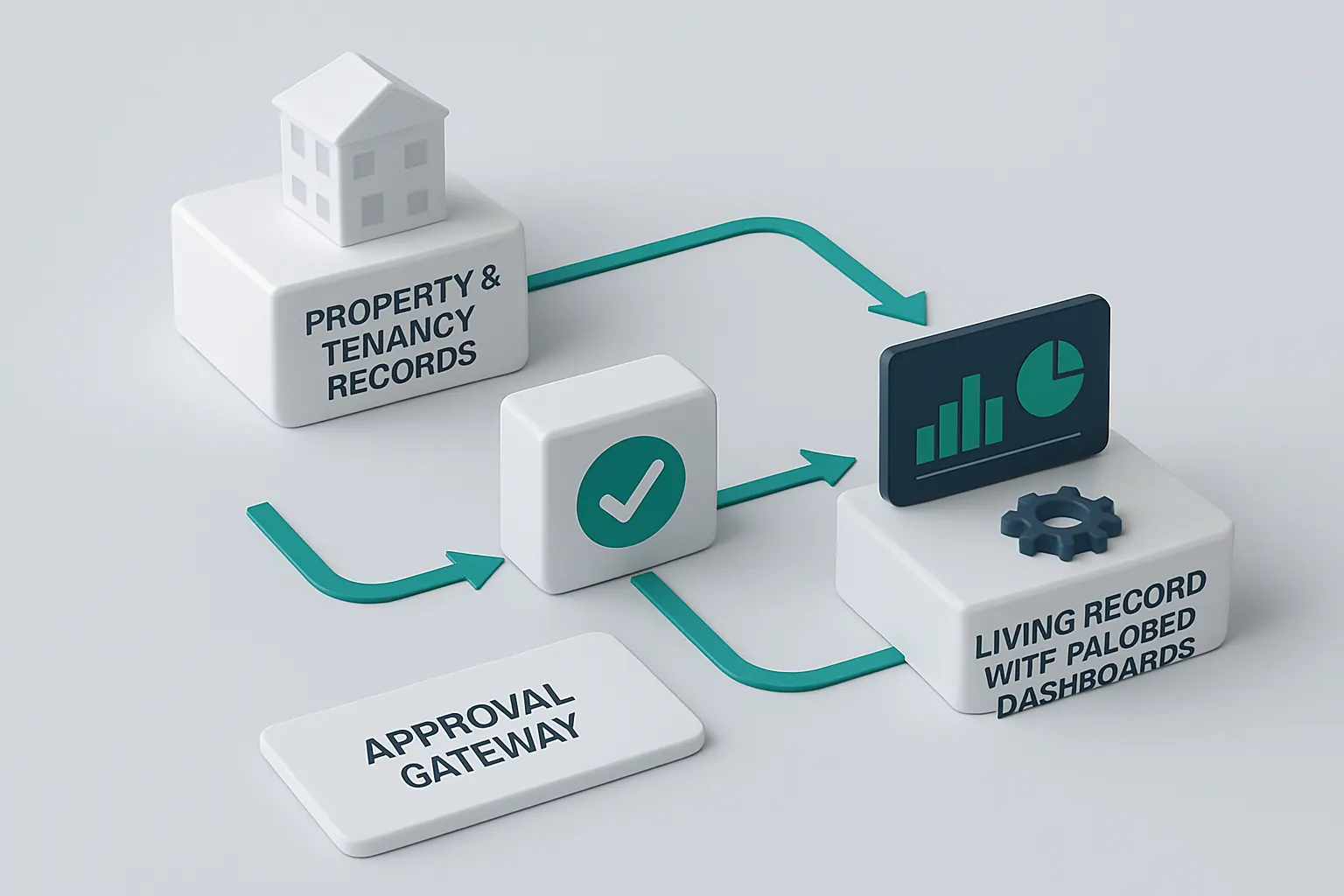
Building One Living Record with Tailored Dashboards
A connected operating environment captures and updates all property and tenancy data into an owned repository. Custom dashboards visualise key metrics for lease expiry, rent arrears, compliance deadlines, and maintenance history. This reduces risk and speeds access to crucial information.
Useful Existing Data Systems to Connect
Property management software, accounting platforms, and CRM systems can remain operational as data sources but feed into the unified record. Automated synchronisation tools update the central database regularly to avoid duplication or stale information.
Real-World Illustration of Integration Benefits
A property manager overseeing multiple sites can quickly see which properties require safety certificate renewals or have rent payment delays. Automated alerts prompt proactive action, with document access and tenant communications all managed from a consistent interface.
Retaining Accuracy and Robust Data Governance
Rules validate incoming data and flag inconsistencies for review. Access permissions restrict sensitive financial or personal tenant data. Such controls help compliance with data protection laws and regulatory frameworks like the NCSC cyber essentials standards.
Automating Maintenance Coordination and Service Requests
The Challenge of Maintenance Triage and Tracking
Maintenance requests are often raised via phone, email, or portals, leading to inconsistent logging, prioritisation, and follow-up. Lack of visibility impacts tenant satisfaction and compliance with safety regulations.
Defining a Workflow for Maintenance Capture and Resolution
A connected module captures service requests directly from multiple channels. AI assists with classifying urgency and routing requests to relevant contractors or in-house technicians. Progress updates and approvals flow through the same workspace.
Integrations Ensuring Seamless End-to-End Service
Property management software for scheduling and contractor payments, plus communication tools for tenant updates, remain integrated but linked into the owned workflow. Historical maintenance logs inform prioritisation and budgeting.
Practical Scenario: Efficient Maintenance Handling
A tenant reports a heating issue via an app. The system logs the request, classifies it as high priority, and automatically notifies the preferred heating engineer. Scheduled visits are tracked, and post-service tenant satisfaction surveys are sent automatically.
Safeguarding Tenant Privacy and Safety Compliance
Maintenance data collection complies with tenant privacy protections — information shared only on a need-to-know basis and stored securely. Safety certificate expirations are monitored, with exception reports requiring manager review to satisfy audit trails.

Automating Document Reminders and Contract Renewals Without Extra Subscriptions
Routine Administrative Burdens Weighed Down by Manual Follow-up
Tracking lease expirations, contract renewals, and review dates manually or with multiple calendars invites risk of missed deadlines. External reminder tools add cost and fragment control of client interactions.
Creating Owned Modules to Replace Avoidable Software
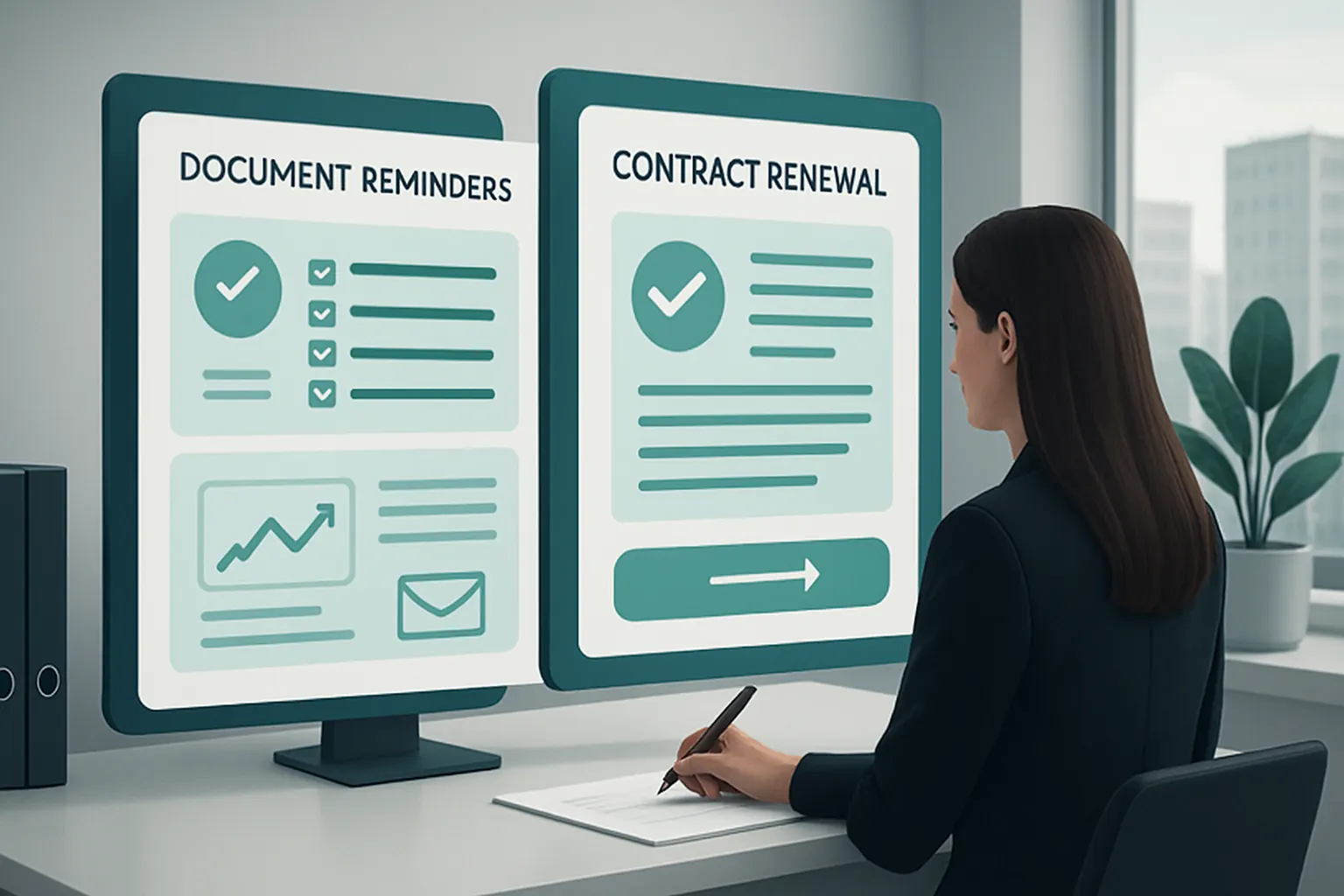
Custom workflow modules embedded in the owned system comprehensively track all contract lifecycle milestones. Automatic reminders and templated communications for renewals or inspections replace third-party subscription tools.
Combining Emails and Digital Workflow with Existing Software
Email servers and document repositories integrate with owned workflows to send notifications on a set schedule. The system records all interactions in one place, giving a clear audit trail.
A Concrete Example: Contract Renewal Automation
The system generates reminders 90, 60, and 30 days before lease expiry. Agents review and personalise renewal terms before sending. Subsequent client responses and contract updates all synchronise automatically with CRM.
Control Mechanisms for Accuracy and Authorisation
Rules prevent premature renewals and flag any contract deviations for manual approval. Communication templates are editable but standardized to reduce errors. Audit logs help demonstrate regulatory compliance.
Leveraging AI Selectively to Support Decision-Making, Not Replace It
Misconceptions About AI Fully Automating Complex Property Decisions
AI is useful for variable, time-consuming tasks like classification, summarisation, and prioritisation of leads or maintenance requests — but it cannot replace human judgement where legal, financial, or compliance decisions occur.
Using AI Capabilities as One Part of a Connected Workflow
AI tools embedded in owned systems filter and summarise incoming information, highlight exceptions, and suggest next actions. Deterministic rules govern known repetitive tasks. Human approval gates control decisions involving contract terms or tenant disputes.
Integrating AI with Existing Decision Frameworks and Systems
AI assists but feeds results into workflows already linked to CRM, document management, and compliance records. This ensures decisions are based on complete and accurate data.
Example in Practice: Lease Document Summarisation
AI extracts and summarises key lease clauses for quick agent review before renewal discussions. Potential risks or unusual terms are flagged in a dashboard but require sign-off from a qualified person.
supporting compliance work and Accountability with Human Oversight
AI outputs are transparent and explainable. The agency retains ultimate control and accountability, ensuring adherence to data protection (ICO) and operational governance best practices such as those recommended by GOV.UK.

A Clear 90-Day Rollout Plan to Transform Commercial Property Agency Operations
Weeks 1–2: Assessment, Prioritisation and Data Mapping
- Audit existing systems, workflows, and pain points.
- Identify high-value workflows to connect and automate first.
- Map data sources and integrations required.
- Set objectives aligned with compliance and user experience.
Weeks 3–6: Building the Core Connected Workspace and Modules
- Develop owned modules for enquiry management and instruction workflows.
- Integrate key legacy systems (CRM, document repositories).
- Test automated notifications and reminders.
- Train staff on new connected workspace.
Weeks 7–12: Expanding to Maintenance, Renewals, and AI Assist
- Deploy maintenance triage and reporting workflow.
- Implement contract lifecycle automation.
- Activate AI modules for selective tasks.
- Establish monitoring dashboards and audit controls.
- Optimise based on user feedback and reporting.
How AI Implementation UK Connects and Automates with One Owned Workspace
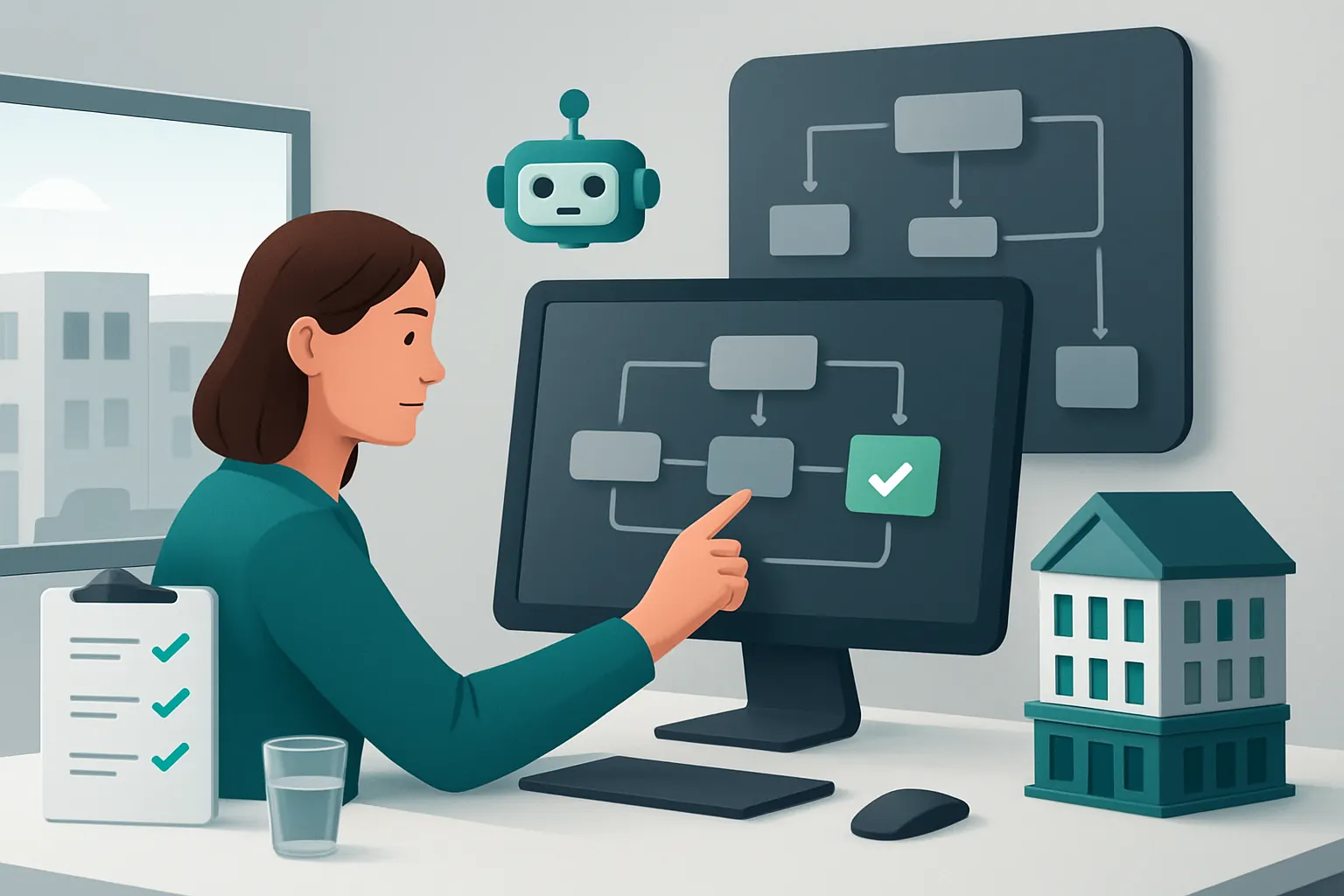
Our approach focuses on delivering one connected operating environment tailored to your commercial property agency. We integrate and extend your current systems, avoiding costly, siloed SaaS subscriptions. Modules replace repetitive manual processes, centralising data for reliability and control.
We embed AI capabilities selectively to augment your team’s work, not replace essential human decisions. Workflows align with your operational needs from enquiry to tenancy, maintenance coordination, and compliance records. Data privacy, financial permissions, and tenant safety remain paramount, enforced by configurable rules and transparent controls.
Our services include process automation choreography (process automation), data infrastructure preparation (data infrastructure) and AI strategy roadmapping (AI strategy). With AI Implementation UK, your agency gains ownership of the system, reduces overhead, and builds scalable, compliant workflows that improve efficiency and client satisfaction.
For data privacy best practices, visit the UK Information Commissioners Office (ICO). For security guidance, consult the National Cyber Security Centre (NCSC).
To turn these priorities into one coherent system, map the platform your business needs or explore our workflow automation approach.