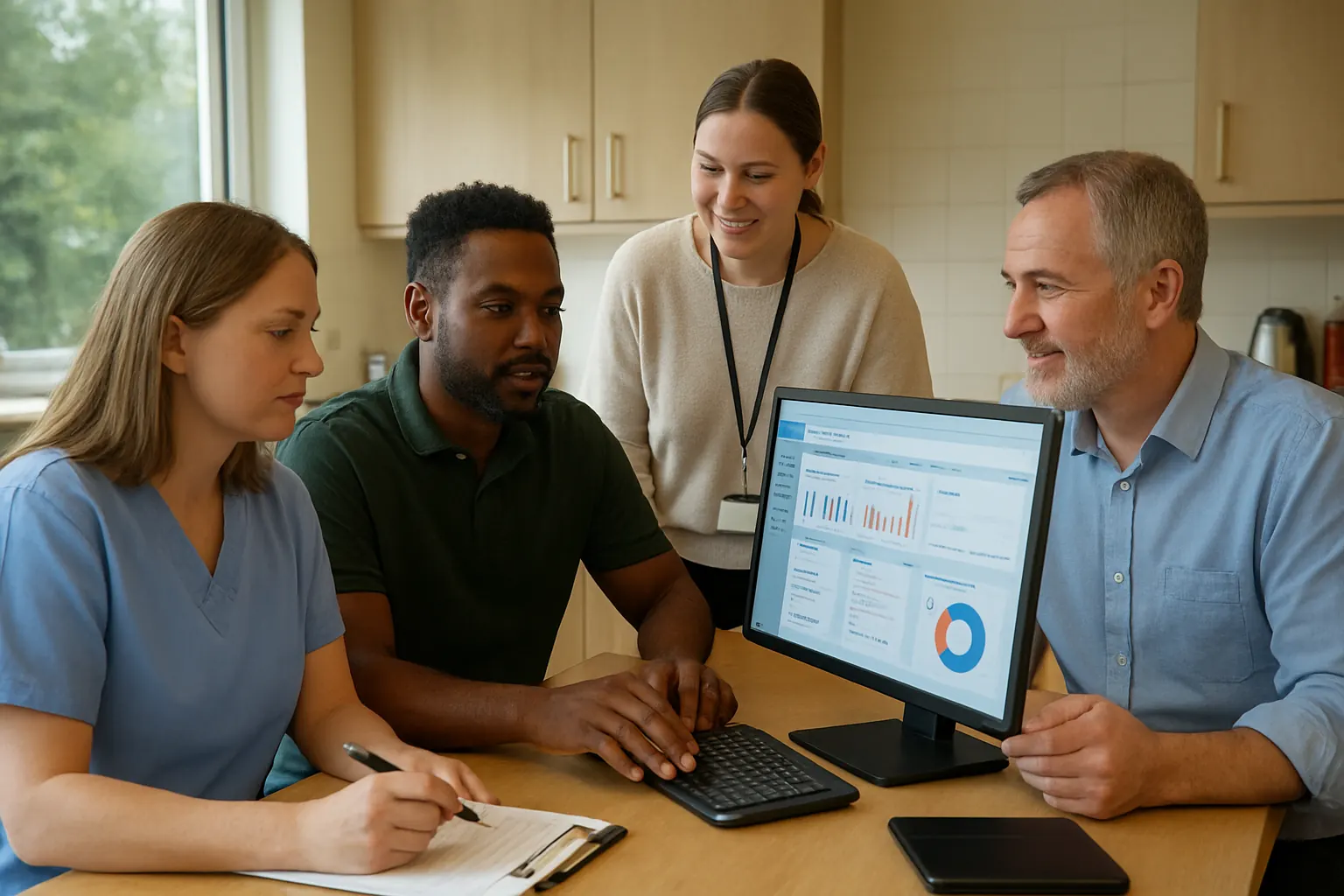
Learn how supported living providers can connect systems, reduce manual admin and automate referral to appointment with one tailored operating platform the.
Supported-living providers support plans automation software: What Breaks Daily
Supported-living providers support plans automation software should connect bookings, people, communications and reporting in one reliable operating flow.
Supported-living providers operate under significant pressure managing complex care plans, staff schedules, and regulatory compliance. Daily tasks often break down due to fragmented systems, manual entries, and poor data connections. Teams waste hours switching between software for referrals, appointments, incident logs and rostering. Errors creep into care records and payroll due to duplicated or inconsistent information.
Without a single connected operating system tailored to the provider’s workflow, supported living risks delays in service delivery and audit deficiencies. Critical communications about client needs or staffing availability are lost or delayed. Staff face unpredictability in scheduling, impacting morale and continuity of care.
Providers need a solution that joins the dots between existing systems and replaces redundant software subscriptions. Only then can they eliminate repetitive admin, improve data accuracy and maintain human control where it matters most.

The Burden of Manual Processes on Supported-living Providers
Manual work in supported-living care multiplies costs in several ways:
- Time wasted on duplicate data entry and chasing information
- Errors in referrals, support notes, and incident follow-ups causing rework
- Risks around maintaining compliance with special-category data handling
- Cashflow issues caused by inaccurate timesheets and delayed billing
- Staff dissatisfaction due to poor visibility on rotas and cancellations
These issues affect operational performance and client outcomes alike. National regulators highlight record-keeping inconsistencies and gaps in care continuity as ongoing challenges. The reliance on paper and disconnected software limits providers’ agility in adapting to changing needs.
Using automation selectively for tasks like referral triage, appointment reminders, and task routing reduces errors without sacrificing human oversight. Providers benefit most when data across support plans, rostering and reporting flows through one owned system shaped around their workflows.
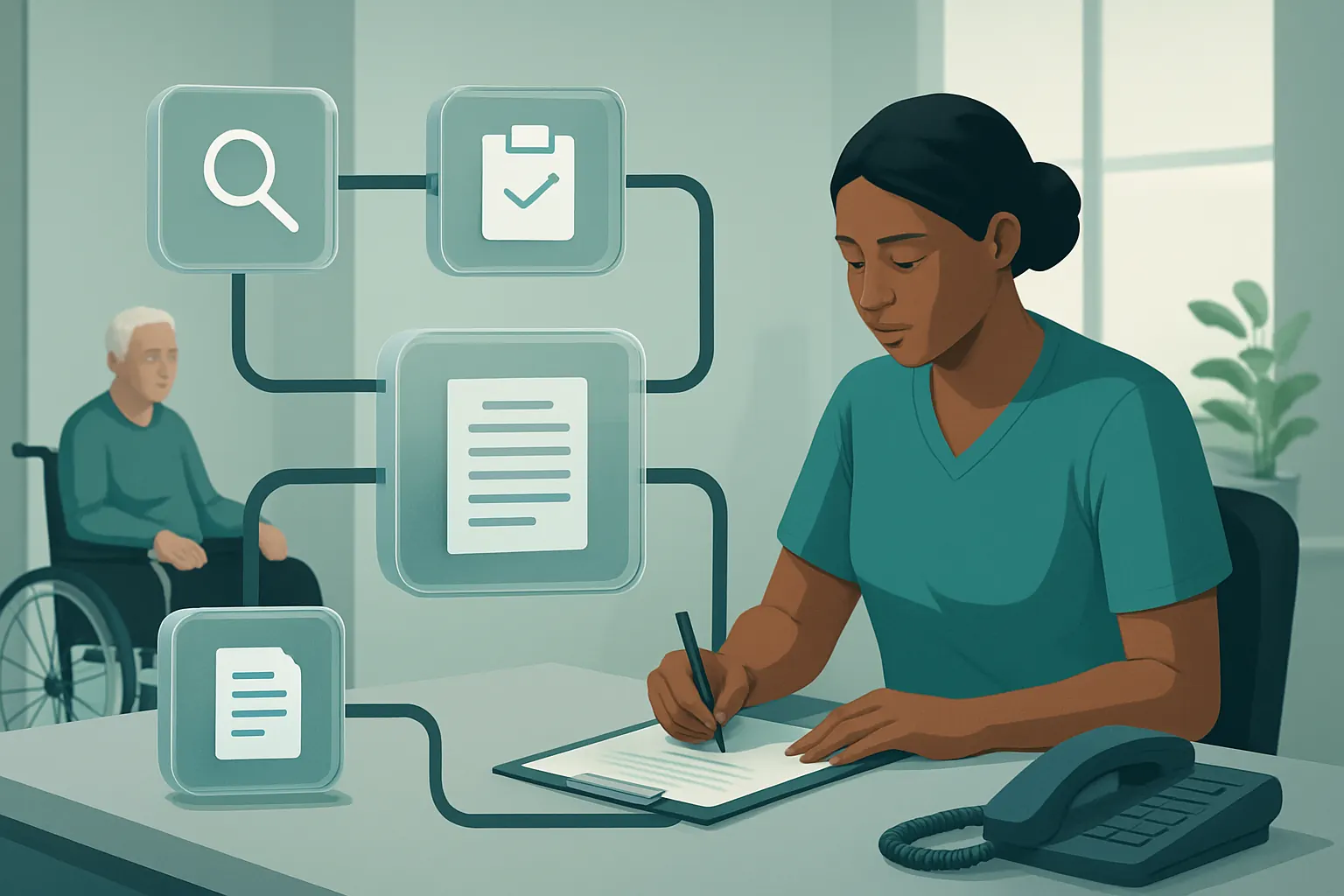
Referral to Appointment Automation for Supported-living Providers
Addressing Referral Bottlenecks and Communication Delays
Supported-living providers often lose time managing referrals across email, phones and separate care records. Manual tracking creates bottlenecks: information arrives incomplete, appointments clash or get missed, and urgent cases are overlooked. This disrupts the referral-to-appointment pipeline and wastes clinician time.
Streamlining Processes with a Connected Workflow
A tailored booking record module integrates referrals directly with client data, appointment slots and staff availability. Automated alerts flag scheduling conflicts and late cancellations. Communications are handled within the system, reducing scattered emails and calls. Referral triage benefits from AI-assisted classification and prioritisation to flag high-need cases — with human review preserved.
Integrations That Enhance Referral Handling
- NHS or local authority referral forms kept linked but stored in a single, auditable record
- Staff rota module preventing booking clashes
- SMS/email gateways for automated appointment reminders
Real-world Application: Streamlined Referral in Practice
For example, a provider reduced referral processing time by integrating existing referral emails into their owned system. Automated triage AI flagged urgent cases. Staff received smart alerts about clinic availability, avoiding double-booking. Clients got appointment reminders by text, reducing no-shows.
Controls and Safeguards to Build Trust
- Human sign-off on triage decisions and appointments
- Data encryption for special-category care information following ICO guidance
- Audit trails for all booking changes and communications

Centralised Support Plan and Incident Follow-up Management
Tackling Fragmented Client Records and Incident Tracking
Supported-living providers juggle multiple documents: support notes, care plans, incident reports and compliance logs often housed in separate systems or on paper. This disrupts care continuity and complicates regulatory audits.
Connected Operating System for One Reliable Care Record
Bringing all operational data into one owned system creates a single source of truth. Support plans, incident follow-ups and client notes link directly to relevant appointments, staff records and property tasks. Routine alerts flag incomplete incident responses or overdue plan reviews.
Useful Integrations to Maintain Existing Systems
- Integration with electronic health records (EHR) or local authority care management systems
- Mobile apps for real-time incident logging by staff on-site
- Connection to compliance modules tracking supervision, medication and training
Practical Example: Improving Incident Management
A provider connected mobile incident logs to client support plans held in their owned system. Follow-up tasks automatically routed to the right staff member, with AI summarising incident notes into care supervisor dashboards. This reduced delays and manual chasing.
Oversight and Compliance Controls
- User permissions strictly aligned to clinical oversight roles
- Configured rules managing incident prioritisation and escalation
- Regular review cycles enforced with system reminders
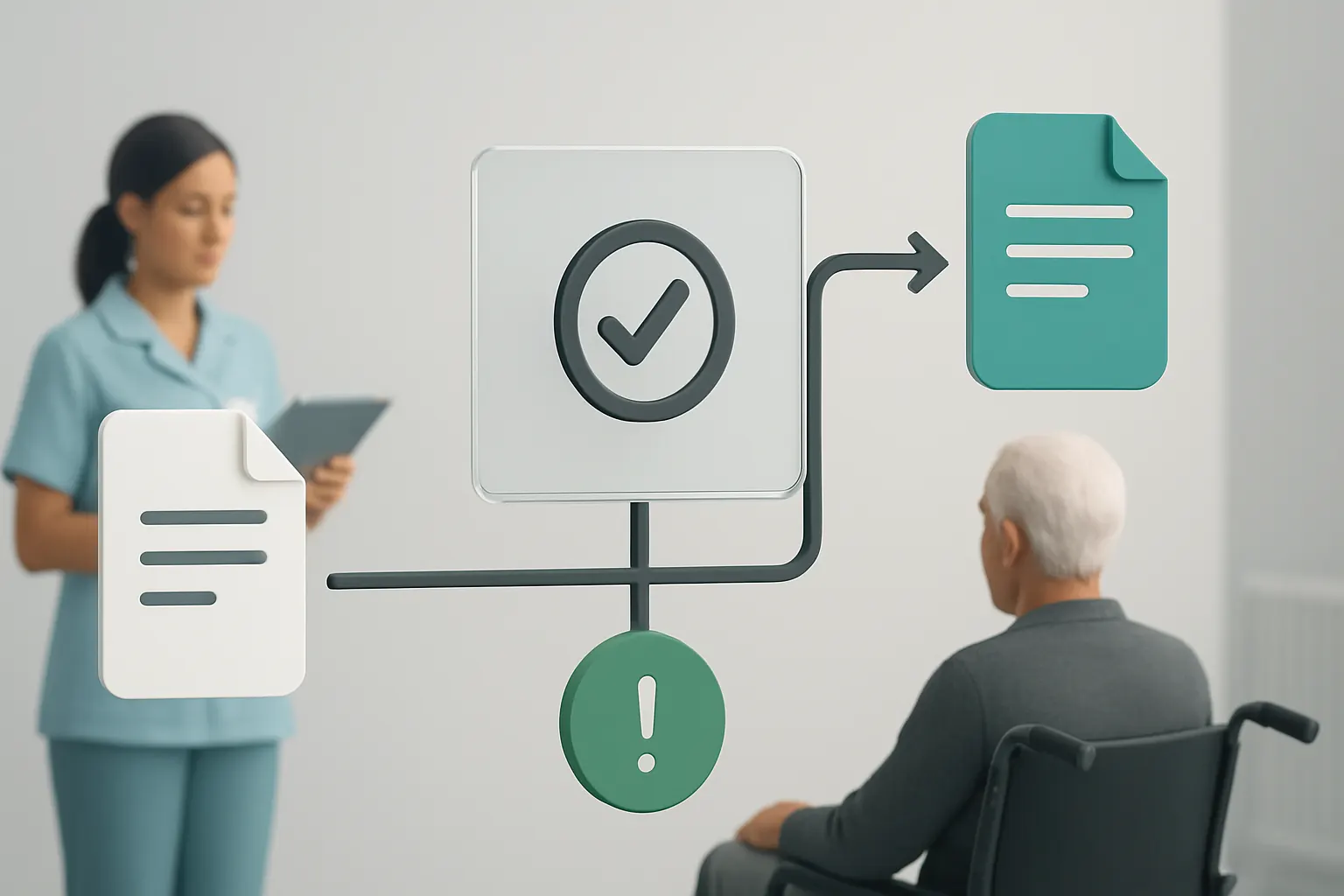
Efficient Staff Rostering and Workforce Management
Resolving Rota Conflicts and Manual Timesheet Woes
Supported living care must balance complex staff availability, client needs and regulatory shift patterns. Often rostering is done in spreadsheets or disjointed software, increasing the risk of gaps or over-worked staff. Timesheet inaccuracies cause payroll issues.
Workflow-Centric Rota and Timesheet Module
An owned rota system designed around the organisation’s shifts links directly to referral and care delivery workflows. AI can assist by prioritising qualified staff for specific client needs while deterministic rules handle recurring schedules. Timesheets flow into payroll without rekeying.
Integration with Payroll and Communications
- Existing payroll software can receive timesheet data automatically
- Messaging integrations for shift reminders and swap requests
- Access controls for managers to approve timesheets before payment
Example in Use: Reducing Payroll Errors and Clashes
One provider replaced multiple third-party rota and timesheet apps with an integrated module. This aligned shifts with client bookings and automatically flagged unauthorised overtime. Automated shift reminders reduced late cancellations.
Controls to Ensure Fairness and Compliance
- Configurable approval workflows on timesheets
- Clear audit trails for schedule changes
- Safeguards enforcing staff qualification requirements in shift allocation

Owned Modules Replacing Unnecessary Software Subscriptions
The Cost and Complexity of Multiple SaaS Tools
Many providers rely on multiple SaaS products for rostering, referral admin, communication reminders and data reporting. This creates integration headaches, subscription redundancies and data silos. Risks increase when these tools share special-category care data without unified controls.
Designing Owned Modules to Cover Key Needs
Targeted development or configuration of owned transportable modules replaces subscription software performing general business functions. These modules unify booking, staff management and reporting. Data ownership resides fully with the provider, reducing ongoing costs.
Keeping Specialist Integrations Where Required
- Payment gateways for client billing (PCI DSS standards)
- Telephony and messaging for communications remaining integrated
- EHR connections maintained for clinical data exchange
Case Example: Subscription Replacement Saves Cost and Complexity
A provider cancelled three subscriptions for rostering, client notes, and incident tracking after switching to a connected owned system. AI-assisted workflows handled referral triage and appointment reminders. The new owned modules cut subscription spend and reduced manual reconciliations.
Operational Controls for Owned Systems
- Version control and testing for software updates
- Role-based access and data segregation
- Data backup and recovery plans complying with NCSC principles
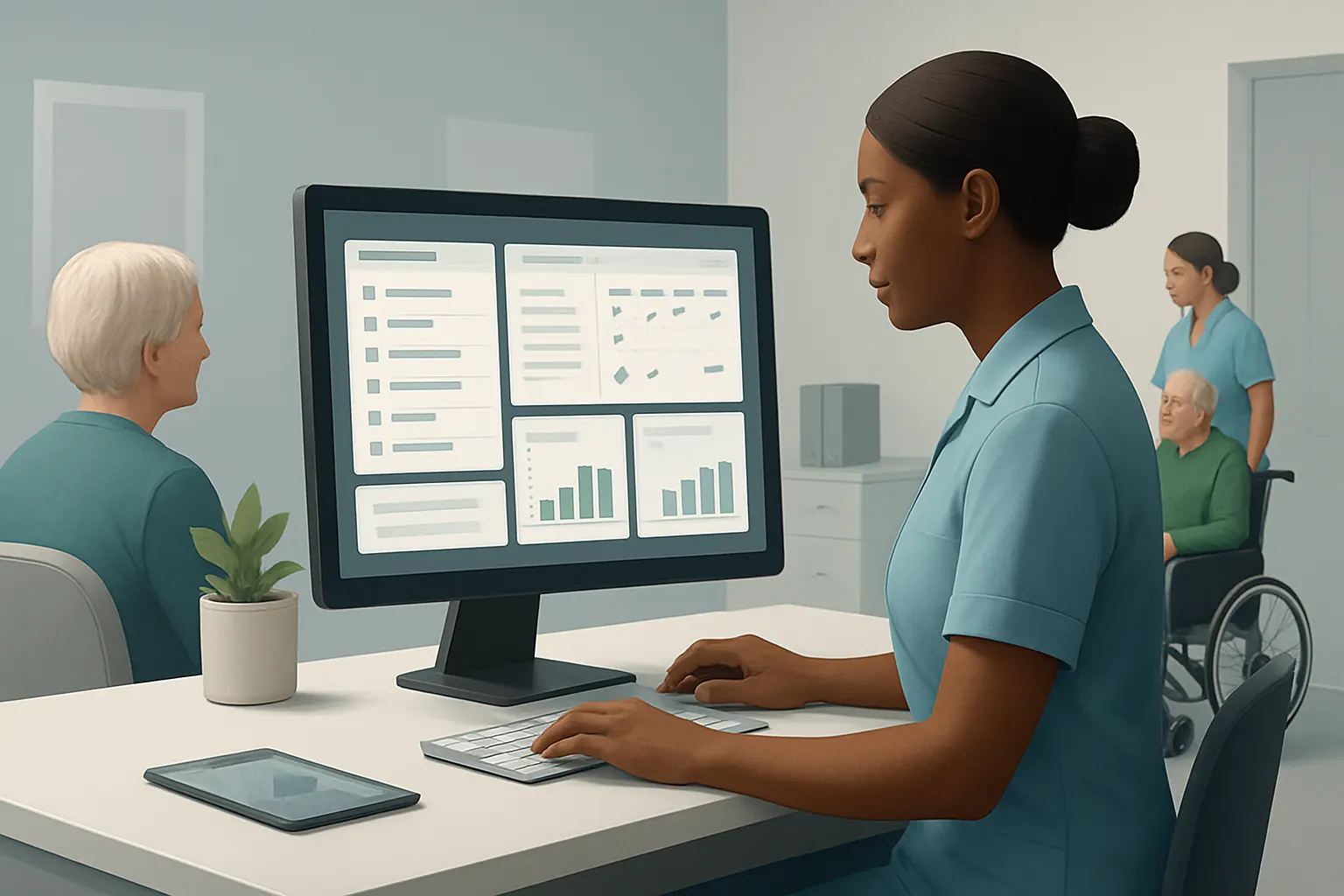
Tailored Dashboards to Converge Data for Actionable Insight
The Challenge of Disparate Reporting and Oversight
Operational leadership in supported living requires clear visibility over referrals, appointments, incidents, staff performance and compliance metrics. Data scattered across systems reduces situational awareness and slows incident responses.
One Dashboard Surface from Connected Data Sources
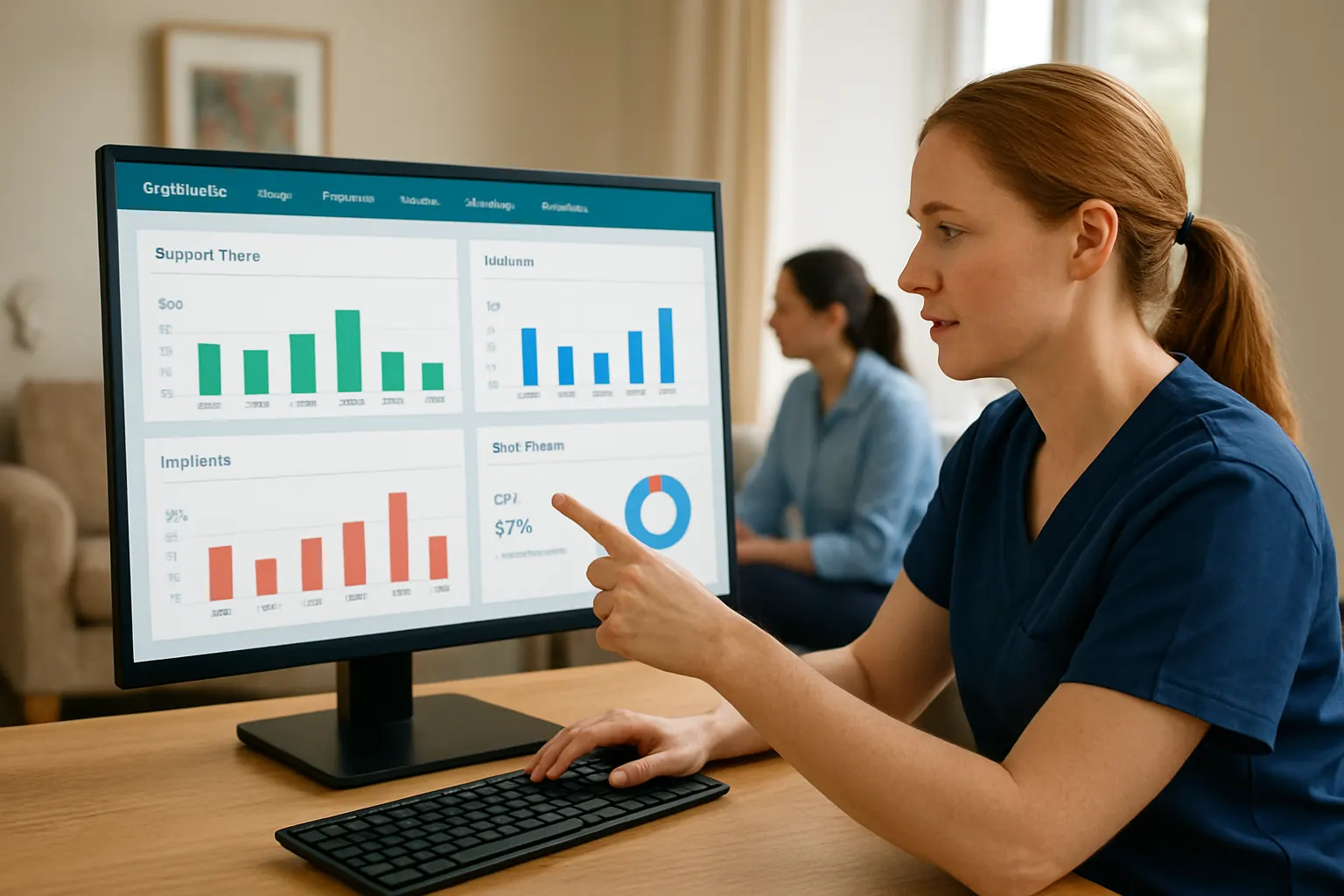
A customised dashboard draws feeds from bookings, support plans, incidents, staff rotas and compliance modules. Users select real-time or summary views tailored by role. Alerts highlight overdue tasks or threshold breaches using deterministic rules combined with AI summarisation.
Linking External Specialist Tools for Payments and Communications
- Payment status indicators connected to billing systems
- Messaging systems integrated to track appointment confirmations
Dashboard Example: Empowering Managers with Insights
A service manager accesses a dashboard showing live appointment schedules alongside incident follow-up status and rota gaps. AI flags upcoming compliance renewals for staff training. This cohesive workspace streamlines daily oversight and planning.
Controls to Preserve Data Integrity and Approval
- Data provenance clearly displayed per widget
- User-level filters and permissions limit access to sensitive metrics
- Manual override options and audit logs ensure transparency
Crafting a 90-Day Rollout Plan for Supported-living Automation
Weeks 1–2: Assessment and Design
- Map current supported-living workflows and data sources
- Identify key integration points and subscription overlaps
- Define priority workflows for replacement or enhancement
- Consult clinical and operational stakeholders on necessary controls
Weeks 3–6: Build Core Modules and Integrations
- Configure owned booking, rota and incident modules around business needs
- Connect existing EHR and payroll systems where mandatory
- Apply AI capabilities selectively for triage, summarisation and prioritisation
- Test automation in controlled environments with user feedback
Weeks 7–12: Deploy, Train and Refine
- Roll out automation for referral-to-appointment and rota workflows
- Provide training on dashboard use and approval controls
- Collect operational data to tune rules and AI models
- Evaluate cost savings and error reductions for further improvements
How AI Implementation UK Connects Your Supported-living Operation
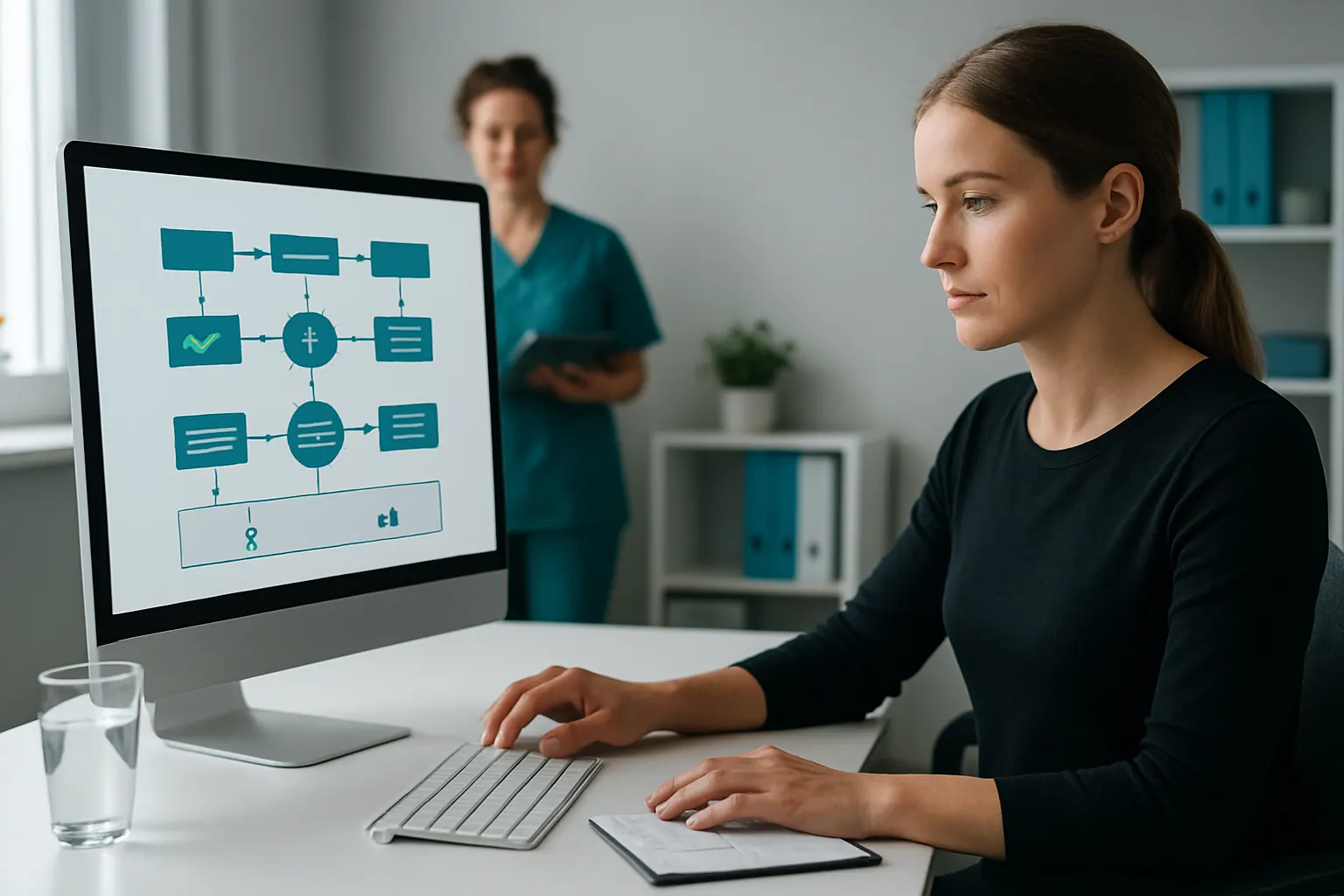
AI Implementation UK offers a bespoke, connected operating system built around your supported-living provider workflows. We focus on consolidating your operational data into one reliable record that you own, avoiding the common trap of stitching together disconnected SaaS subscriptions.
Our approach includes:
- Connecting valuable existing systems such as payroll or clinical records without forcing data duplication
- Replacing avoidable software subscriptions with modular, owned components configured precisely for your workflows
- Introducing AI capabilities judiciously for tasks like referral classification, appointment prioritisation and decision support while preserving human approvals in sensitive areas
- Delivering tailored dashboards featuring combined operational insights and integrated communications
- Applying robust controls aligned with regulatory obligations and care continuity
Our methodology ensures you retain complete data ownership and operational transparency, crucial for compliance and continuous quality improvement. We invite supported-living providers to explore how digital workflow automation can replace time-consuming manual tasks and enable smarter care delivery.
To learn how we can support your organisation in automating key workflows and bringing operational clarity, visit our detailed services on process automation and RPA and data infrastructure preparation.
This guide is intended to inform supported-living providers of practical, secure automation options that improve efficiency while retaining essential human oversight and control. For information on responsible data handling and safeguarding your clients’ privacy, consult the ICO’s guidance as well as the NCSC’s cyber security best practices.
To turn these priorities into one coherent system, map the platform your business needs or explore our workflow automation approach.