A practical guide to block management company workflow automation, connecting business systems, reducing repetitive admin and creating one operating platform the.
Block-management company workflow automation: What Breaks Daily
Block-management company workflow automation should connect bookings, people, communications and reporting in one reliable operating flow.
Block-management companies in the UK face daily operational challenges that strain their teams and impact resident satisfaction. Requests from residents, contractor coordination, service charge administration, and compliance activities often rely on a patchwork of disconnected systems. Time-consuming manual processes commonly result in duplicate data entry, missed notifications, and inconsistent reporting.
The problem is not just inefficiency. Fragmented systems make it harder to maintain control over sensitive financial and tenant information. Complex regulatory obligations such as rent accounting, Section 20 notices, and health and safety certificates add to the administrative burden. Day-to-day tasks like triaging maintenance requests and communicating with residents consume disproportionate amounts of time.
Most managers know current software tools could be better integrated or even replaced with bespoke modules designed to fit their exact workflows. They want a connected operating solution that puts them in control—no longer stuck juggling subscriptions to multiple SaaS products without a single source of truth.

The Real Cost of Manual Work in Block Management
Manual workflows are costly in more ways than one:
- Time waste — Teams spend hours collating data from emails, spreadsheets, and standalone apps rather than servicing residents or strategic planning.
- Data errors — Disconnected systems and human retyping increase risks of mistakes, affecting billing, compliance records, and maintenance scheduling.
- Compliance risk — Missing a regulatory deadline or inaccurate record-keeping can result in fines or disputes.
- Cashflow strain — Delayed invoicing and reconciliation reduce visibility on service charge collection and contractor payments.
- Resident dissatisfaction — Slow response times and inconsistent communication damage trust.
Block-management companies must bridge these gaps with automation that connects existing systems, eliminates redundant software subscriptions, and consolidates operational data into one reliable workspace tailored around how they work.
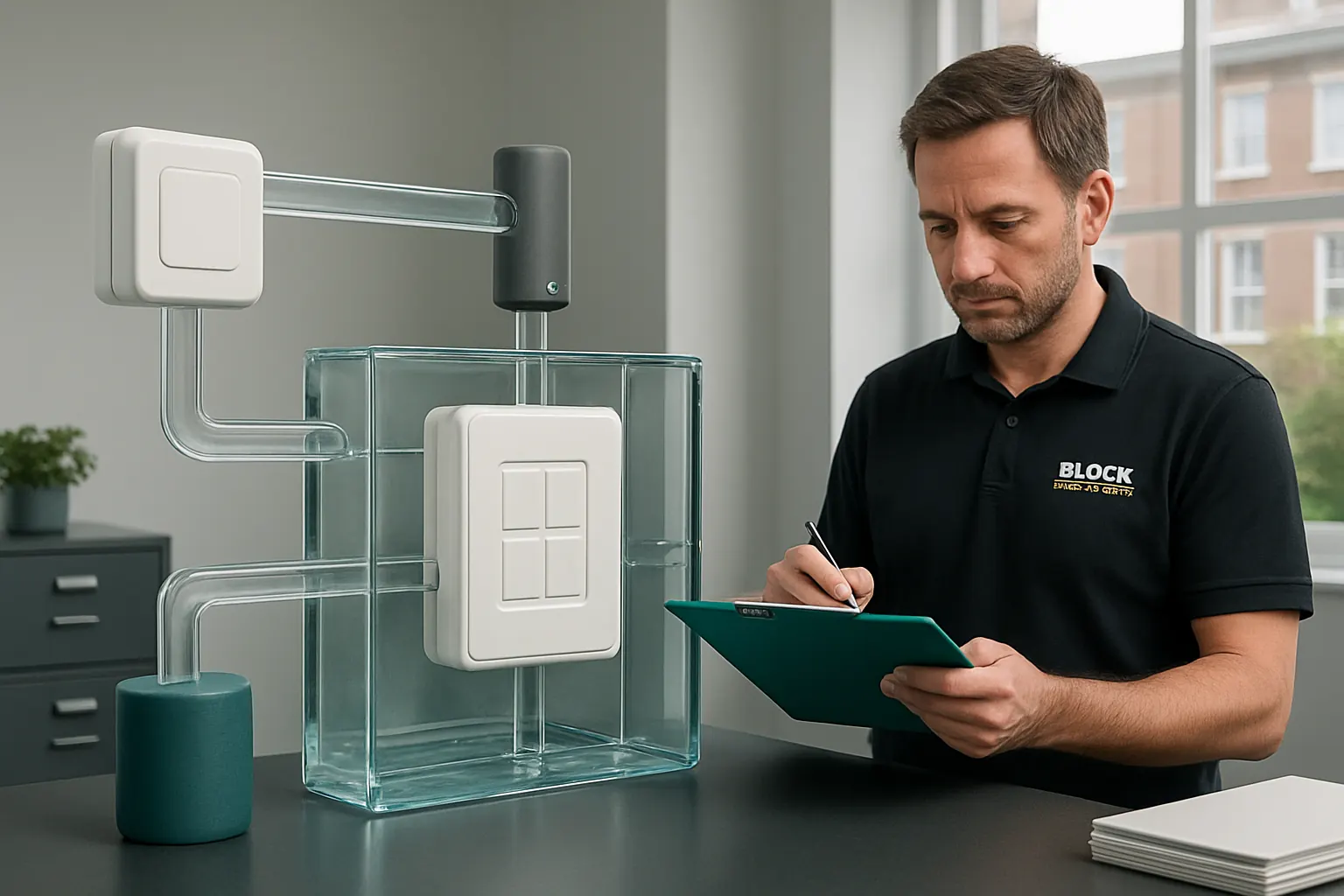
Connected Resident Request and Maintenance Workflow
The daily operational hurdle of triage and contractor coordination
Residents submit diverse maintenance requests—from urgent repairs to routine inspections—that need swift yet precise handling. Teams typically use email, phone calls, and multiple spreadsheets to manage this flow, leading to delayed responses and missed follow-ups.
Joining up the maintenance coordination process
A connected booking record can log resident requests from any channel, apply deterministic rules to prioritise urgent work, and route tasks to relevant contractors. AI tools can assist by classifying requests based on content, summarising key points for quick assessment, and flagging urgent issues for immediate action.
Integrating with existing specialist tools
- Retain contractor scheduling software or vendor portals for detailed booking and compliance support.
- Continue using payment processors like Stripe or GoCardless for secure collection of maintenance deposits.
- Use dedicated communication providers (e.g., Twilio) to automatically notify residents of request progress.
Practical example
A resident reports a broken boiler through the resident portal. The system automatically classifies it as urgent heating failure. It triggers an SMS alert to the on-call contractor and schedules an inspector visit within 24 hours. The maintenance team receives a tailored dashboard highlighting open urgent cases and compliance certificates attached to contractor profiles.
Built-in controls for safety and privacy
Human review remains required for high-priority tasks and safety-related decisions, with visible audit trails and permissioned access to tenant and contractor data protecting privacy and regulatory compliance.

Replacing Redundant Software with Owned Business Modules
Inefficiencies caused by multi-licence SaaS expansion
Many block-management companies rely on multiple separate cloud products to manage documents, leases, payment tracking, and service charge calculations. This creates friction from swapping between systems and recurring monthly fees.
Implementing bespoke owned software modules
An operating workspace built around the business’s own exact workflows can replace these avoidable subscriptions. Modules for document management, financial tracking, and task reminders integrate seamlessly without requiring new logins or data exports.
Useful blends of retaining specialist external services
A payment gateway like GoCardless remains linked for payment processing, but service charge summaries and reports are created within the owned system. Resident portals continue for user logins, while all backend data flows into the same connected record.
Concrete case
After replacing three software subscriptions with bespoke modules, a block-management company reduced admin time by 25%. Lease terms, compliance reminders, and batch invoicing work inside one environment custom-fitted to their workflow, eliminating duplication.
Control measures to safeguard data
Role-based access ensures that only authorised staff can update financial or tenancy records. Document versioning and electronic signatures are logged for auditing, supporting compliance with ICO and GDPR principles.
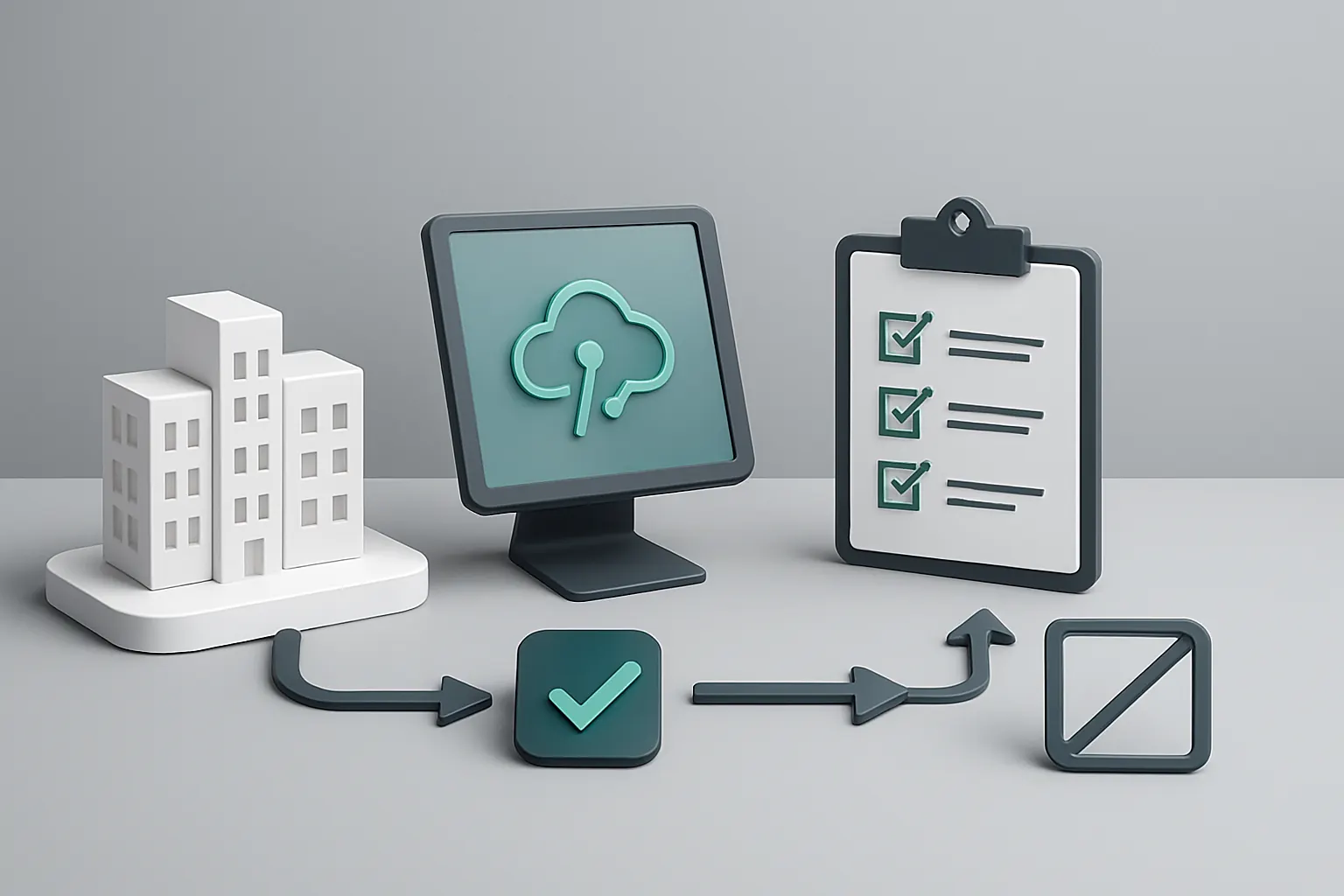
Bringing Operational Data into One Trusted Record and Dashboard
Challenges with fragmented data sources and reporting
Critical management decisions are hindered when financial records, maintenance logs, and compliance certificates exist in separate silos. Disparate reporting leads to conflicting information for owners and tenants.
Creating a single record and tailored operational dashboard
Connecting all operational data into one database creates a reliable source of truth. A dynamic dashboard customises views for different roles—whether block managers, owners, tenants, or contractors—highlighting KPIs, upcoming tasks, and alerts in real-time.
Integrations that enrich the dashboard
- Import service charge payment data automatically from accounting packages or bank statements.
- Link compliance documents via document management modules for quick access.
- Incorporate AI-generated summaries and task lists for efficiency.
Example in practice
A block manager uses a tailored visual dashboard to see unpaid service charges, upcoming safety inspections, outstanding tenant requests, and contractor certifications at a glance. Automated reminders flag upcoming deadlines, preventing lapses.
Control framework and audit considerations
Dashboard access is subject to detailed permission settings. Historical changes are maintained, ensuring accountability for data updates. This supports regulators’ expectations for traceable and auditable records.

Using AI Selectively for Variable Tasks While Retaining Human Control
Addressing routine variability without compromising judgement
Block-management workflows often include many variable tasks, such as prioritising incoming queries, summarising long correspondence, or identifying relevant compliance documents. These tasks can be automated without full autonomy.
Applying AI as a selective capability within defined boundaries
AI modules handle classification, summarisation, prioritisation, and decision support, accelerating routine work. Deterministic rules govern straightforward processes like task assignment and notification. Human approval is retained for critical or complex decisions such as safety validation or service charge exceptions.
Integration with other systems
AI components process data streams within the owned system, enhancing resident communication workflows and maintenance coordination. These capabilities operate behind the scenes in owned modules, not as stand-alone external cloud services.
Practical deployment example
An AI-powered triage tool screens incoming tenant emails, summarising urgent maintenance tasks and notifying staff. The manager confirms contractor orders before dispatch, ensuring safety and budget controls remain firmly governed.
Safeguards for regulatory and privacy compliance
Systems log all AI-assisted decisions and retain clear user override options. Sensitive personal and financial tenant data is processed under strict access controls, supporting ICO and NCSC data security guidance.

Enabling Continuous Improvements With Connected Workflow Automation
Overcoming the barrier of fragmented process improvements
Without connection and ownership, individual workflow automations remain isolated and inflexible. This adds complexity rather than reducing workload.
Automating end-to-end business processes in one connected workspace
A fully integrated operating workspace automates sequences such as maintenance request to invoice approval, document expiry reminders to tenant notification, and service charge reconciliation. Automated audit trails and continuous data sync maintain integrity across modules.
Useful ongoing integrations to maintain speciality
- Payment systems ensure prompt reconciliations.
- Email and messaging providers automate resident communications without manual intervention.
- Document signing tools support lease renewals digitally.
Practical scenario
Section 20 notice deadlines are monitored automatically. When approaching, the system issues reminders and generates required documents, escalating to human review for authorisation. Subsequent maintenance procurement follows a structured automated workflow tied to budget controls and contractor compliance checks.
Control environment for business continuity and regulatory alignment
Process exceptions trigger alerts for team intervention. All automation runs under established governance policies documented to satisfy FCA and other regulatory expectations relevant to financial handling within property management.

A Pragmatic 90-Day Rollout Plan
Weeks 1–2: Discover and Define Current Workflow Realities
- Conduct detailed process mapping of resident request handling, service charge management, and compliance tracking.
- Identify existing software, integrations, and pain points.
- Set project scope focused on connecting key workflows and reducing software licenses.
Weeks 3–6: Build Connected Modules and Vital Integrations
- Develop owned modules replacing duplicate SaaS tools (e.g., document management, invoicing).
- Connect resident request logging, maintenance triage, and contractor scheduling workflows.
- Integrate essential external services such as payment gateways.
Weeks 7–12: Deploy, Test, and Refine AI Capabilities and Dashboards
- Introduce selective AI features for request classification and summarisation.
- Implement tailored operational dashboards for different roles.
- Train users, collect feedback, and adjust controls and workflows.
- Complete governance documentation and compliance checks.

How AI Implementation UK Connects, Replaces, and Automates for Block-Management Companies
At AI Implementation UK, we believe block-management companies need control and transparency above all. Our approach is pragmatic. We work closely with you to build one connected operating workspace you own and tailor around your existing workflows. Rather than adding more disconnected SaaS or generic software stacks, we:
- Connect your existing useful systems for resident interactions, finance, and contractor management into a seamless workflow.
- Replace avoidable subscription tools with bespoke modules that your team controls, reducing hidden costs.
- Bring operational data into one trustworthy record and customised dashboard to support informed decisions and regulatory oversight.
- Use AI as a precise capability for variable tasks—classification, summarisation, prioritisation, and decision support—while ensuring human approval for all important decisions.
- Automate end-to-end workflows across your business with reliable, auditable processes aligned to privacy and compliance requirements.
Our service includes robust data infrastructure preparation and process automation to streamline your operation and enable continuous improvements. If you want to see how a tailored platform can transform your block-management workflows, we provide personalised AI strategy roadmapping and practical implementation plans.
Make block-management company workflow automation work for you—not against you. Let’s connect, replace, and own your operation. Explore our case studies to see real-world examples.
For data privacy best practices, see the ICO’s guide and advice from the NCSC.
For payment security, refer to PCI DSS guidance.
Empowering block-management companies with clarity, control, and efficiency through owned connected automation is not the future. It’s today’s practical solution.