Equipment Leasing Software: learn how to connect systems, cut manual admin and automate enquiry to contract through one tailored platform the business owns.
What’s Breaking Daily in Equipment-Leasing Companies
Equipment leasing software should connect bookings, people, communications and reporting in one reliable operating flow.
Equipment-leasing companies deal with numerous operational challenges every day. Teams struggle to keep lease enquiries, contract management, asset servicing, workforce scheduling, and invoicing coordinated. Information is fragmented across multiple disconnected tools and spreadsheets. Staff double-handle data, waste hours hunting for contract updates, and risk compliance slips. Managers miss real-time insight, slowing decisions and renewal activities. Service engineers work with paper records or siloed apps, leading to errors and delayed billing.
This disconnection fragments workflows. Automated tools promise relief but often pile on complexity with standalone SaaS products that don’t talk to each other. Lease contracts, asset portfolios, compliance records, job schedules, and customer communications remain scattered. The daily grind sees lost time, avoidable errors, and uneven customer experience. For UK equipment leasing firms aiming to automate and scale, the real barrier is not adopting new tools, but owning one connected operating system that fits how the business really works.

The Cost of Manual Work in Equipment Leasing Operations
The price of fragmented leasing software manifests in four main ways:
- Time wasted on manual data entry, cross-checking contract terms, chasing service engineers for signed off work, or importing reports between systems.
- Errors in service records, lease invoice generation, asset status, and renewal deadlines, often leading to customer complaints, rework or financial adjustments.
- Compliance risk due to lack of trusted, real-time evidence and audit trails around asset maintenance, contract variations or data privacy controls.
- Cashflow delays from slow contract approval, missing payment runs, or invoicing mismatches caused by partial information.
Replacing costly subscriptions to multiple SaaS products with a single owned system reduces licensing fees and vendor lock-in. It also brings operational data under one dependable source of truth. This unified approach leads to better workflow automation, fewer errors, and stronger governance, accelerating business growth for equipment-leasing companies.

Enquiry Management Workflow: Capture and Connect Leads Seamlessly
From Fragmented Enquiries to Consistent Lead Records
Daily enquiries arrive through email, website forms, phone calls, and intermediaries. Without connected tracking, potential deals get lost or delayed.
Integrating Existing CRM and Website Forms
Rather than rip out your current CRM or website, connect and synchronise the enquiry data automatically into one owned enquiry record. This keeps your lead source intact while centralising follow-up tasks.
Practical Example: Automated Enquiry-to-Quote Handoff
New lease enquiries captured from your site or call centre flow immediately into a shared workspace, where quotes can be created with contract templates. Notifications alert sales teams and trigger follow-up reminders.
Control Through Role-Based Access
Each team member sees only enquiries relevant to their responsibility, with controlled data edits. This reduces data duplication and enforces confidentiality while maintaining agility.

Contract Management: Automate Renewals and Version Control
Manual Contract Tweaks Cause Errors and Delays
Changing terms, updating service schedules, and chasing signatures eat up valuable resources and increase error rates.
Linking Contract Data to Asset and Customer Records
Connect contracts to underlying assets and customer profiles in one system. Automate alerts for upcoming renewals and proposed changes for faster decision cycles.
Example: Automated Renewal Workflow with Human Approval
When a contract nears expiry, the system highlights renewal terms customised to the asset and customer. Managers review and approve any modifications before issuing new documents.
Enforce Audit Trails and Secure Document Storage
Track every contract version, approval, and amendment, supporting compliance work controls are transparent and verifiable.
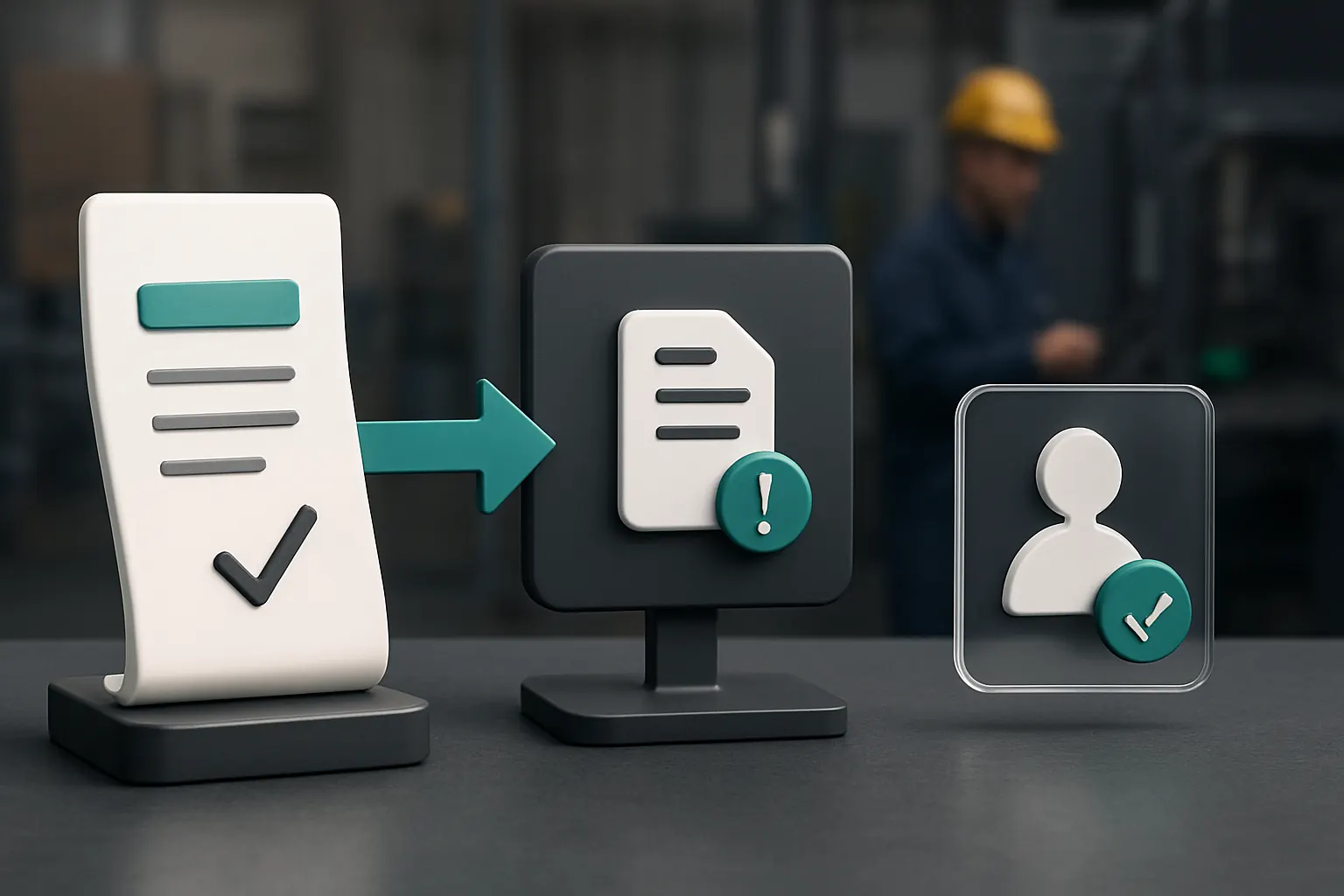
Asset Portfolio Integration: Maintain Reliable Lifecycle Records
Fragmented Asset Data Increases Risk
Details about lease start/end dates, maintenance history, and condition reports are often scattered, risking service gaps and compliance issues.
Connect Asset Records with Contracts and Service Schedules
Aggregate all asset data into one module linked to contract and service workflows. This enables accurate status reporting and proactive maintenance management.
Example: Mobile Access to Service History
Field engineers access full asset and lease data on mobile devices, logging service activity that updates the portfolio record in real time.
Control Worker Access and Data Security
Role-based permissions ensure only authorised users can edit or view sensitive asset information, supporting site security policies.

Workforce Scheduling Automation: Match Jobs with Available Staff Efficiently
Inefficient Manual Scheduling Means Delays and Overruns
Assigning engineers to service calls or installations often involves juggling availability via phone or spreadsheets.
Dynamic Scheduling Integrated with Job and Customer Records
Assign jobs based on skill, location, priority, and availability within a connected scheduling workspace. Automated adjustments handle cancellations or emergencies.
Example: SLA-Driven Job Prioritisation and Alerts
Service Level Agreement (SLA) deadlines trigger job escalation alerts if unresolved, keeping customer commitments on track.
Maintain Oversight with Supervisor Dashboards
Instant visibility into team workloads, job progress, and exceptions allow proactive management and rescheduling.

Service Evidence Capture: Mobile, Real-Time, and Verifiable
Paper-Based or Disconnected Mobile Notes Create Rework
Manual recording of service completion and asset condition causes delays in invoicing and contract compliance checks.
Integrated Mobile Service Forms Linked to Job and Asset
Use mobile devices to capture signed service reports, photos, and compliance checklists during site visits, synchronising this evidence immediately.
Example: Digital Signature and Photo Attachments in Field Service
An engineer completes checks on a leased forklift, appends a photo and digital signature confirming work done, seamlessly updating contract records.
Control Verification and Approval Steps
Automated workflows notify office staff to review and approve submitted service evidence before proceeding to billing.

Invoice Automation Tied Directly to Service and Contract Data
Billing Errors and Delays Arise from Disjointed Systems
Invoicing depends on confirming service delivery and contract terms but is often generated manually from separate platforms.
Trigger Invoices Automatically From Verified Service Records
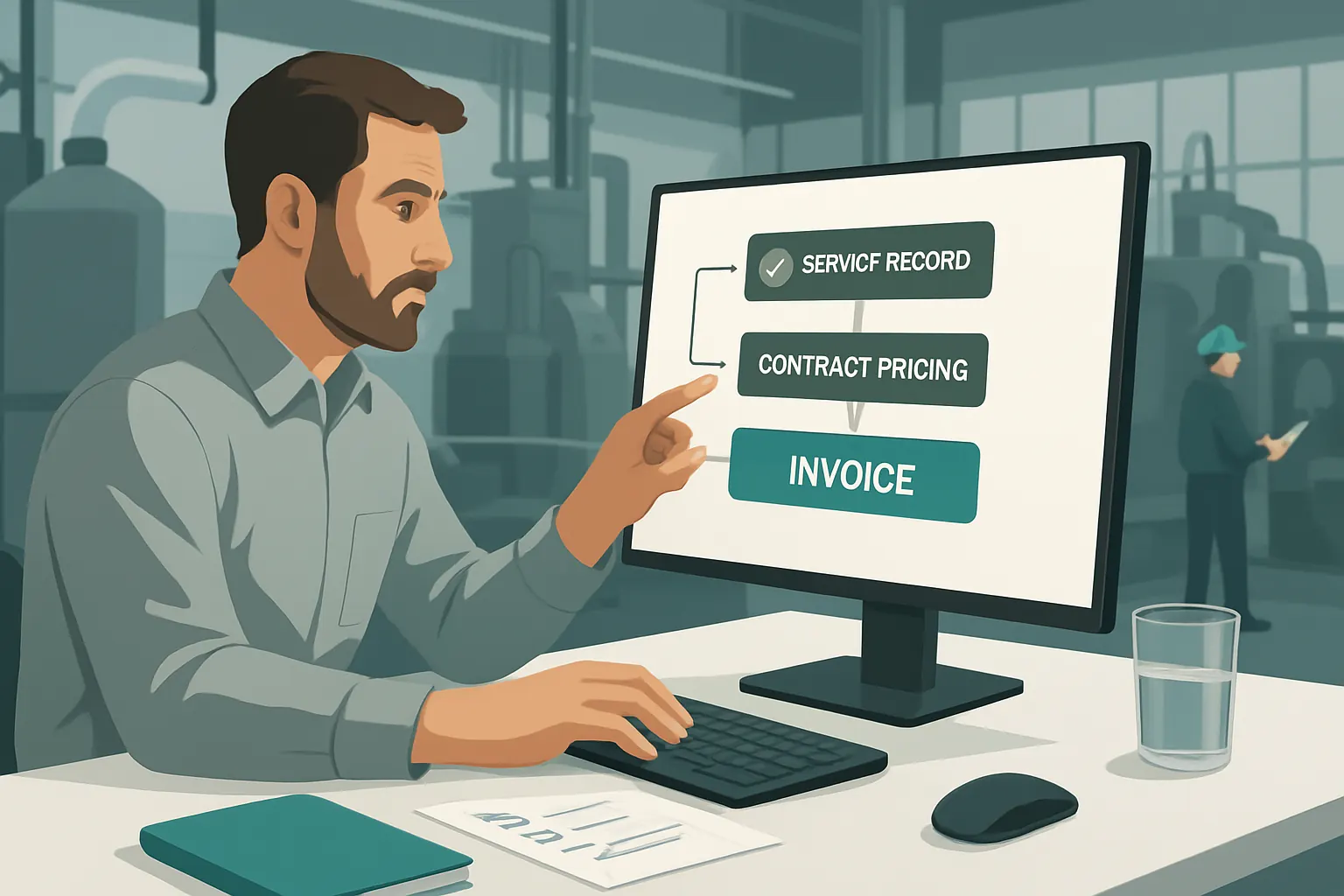
Integrate invoicing modules with approved service evidence and contract pricing rules to automate correct invoice creation.
Example: Scheduled Monthly Billing with SLA Rules
For long-term leases with periodic service, monthly invoices are generated and queued for approval, reducing manual processing time.
Keep Payment Integrations Standard and Secure
Use industry-standard, owned payment processing modules or trusted specialist external services for transactions, maintaining control of financial data.
Portfolio Reporting: One Source of Truth for Compliance and Performance
Reporting Is Stalled by Data Silos and Multiple Exports
Consolidating lease status, asset conditions, and financial performance requires excessive manual effort and reconciliation.
Build a Customisable Dashboard From Connected Data Streams
Create tailored dashboards showing contract renewals, asset utilisation, compliance deadlines, and cashflow forecasts in real time.
Example: Compliance Alerts for Service SLA Breaches
Management receives automated reports highlighting contracts with upcoming or overdue compliance tasks, enabling timely remediation.
Secure Role-Restricted Access to Reports
Data visibility is restricted by roles, ensuring confidentiality and supporting audit and regulatory requirements.

AI-Powered Classification and Summarisation for Lease Documents
Reading and Categorising Leases Manually Is Time-Consuming
The complexity of contract language and variation calls for selective automation to reduce time spent searching documents.
Use AI Selectively for Document Classification and Summaries
Employ AI to extract key clauses, classify document types, and summarise contract terms as a support tool, not a replacement for human review.
Example: Prioritise Contracts Needing Human Attention
AI flags unusual clauses or missing data, prompting lease administrators to review those contracts first.
Retain Human Control for All Critical Decisions
AI outputs feed into workflows with clear checkpoints requiring human approval, reinforcing controls over compliance and risk.

Job Prioritisation and Decision Support Across Workflows
Competing Priorities Challenge Staff and Managers Daily
Balancing urgent service calls with scheduled maintenance and contract renewals demands comprehensive visibility and intelligent decision support.
Combine Deterministic Rules and AI to Optimise Workflows
Use fixed business rules for predictable priorities, and AI for scenarios requiring pattern recognition or contextual classification.
Example: AI Suggests Optimal Job Sequences with Human Override
An AI-driven scheduler suggests a daily roster optimising travel time and SLA adherence, but supervisors retain final assignment control.
Transparent Audit Logs of Decisions and Overrides
Maintain records of AI recommendations, human approvals and overrides to support process audits and continuous improvement.

Integrated Communications Aligned to Lease and Asset Workflows
Disconnected Communication Channels Cause Lost Information
Emails, calls, and messages about lease enquiries, service requests or contract renewals scatter across platforms.
Embed Communication Tools Within Leasing and Service Workflows
Integrate email and SMS using specialist external services, ensuring every communication is logged against contract or job records.
Example: Automated Customer Notifications for Service Visits
Customers receive automated reminders and status updates via SMS or email, reducing no-shows and enquiries.
Control Messaging with Role-Based Permissions
Only authorised team members can send or view sensitive contract-related messages, supporting compliance with data privacy policies.

90-Day Rollout Plan for Equipment Leasing Software Transformation
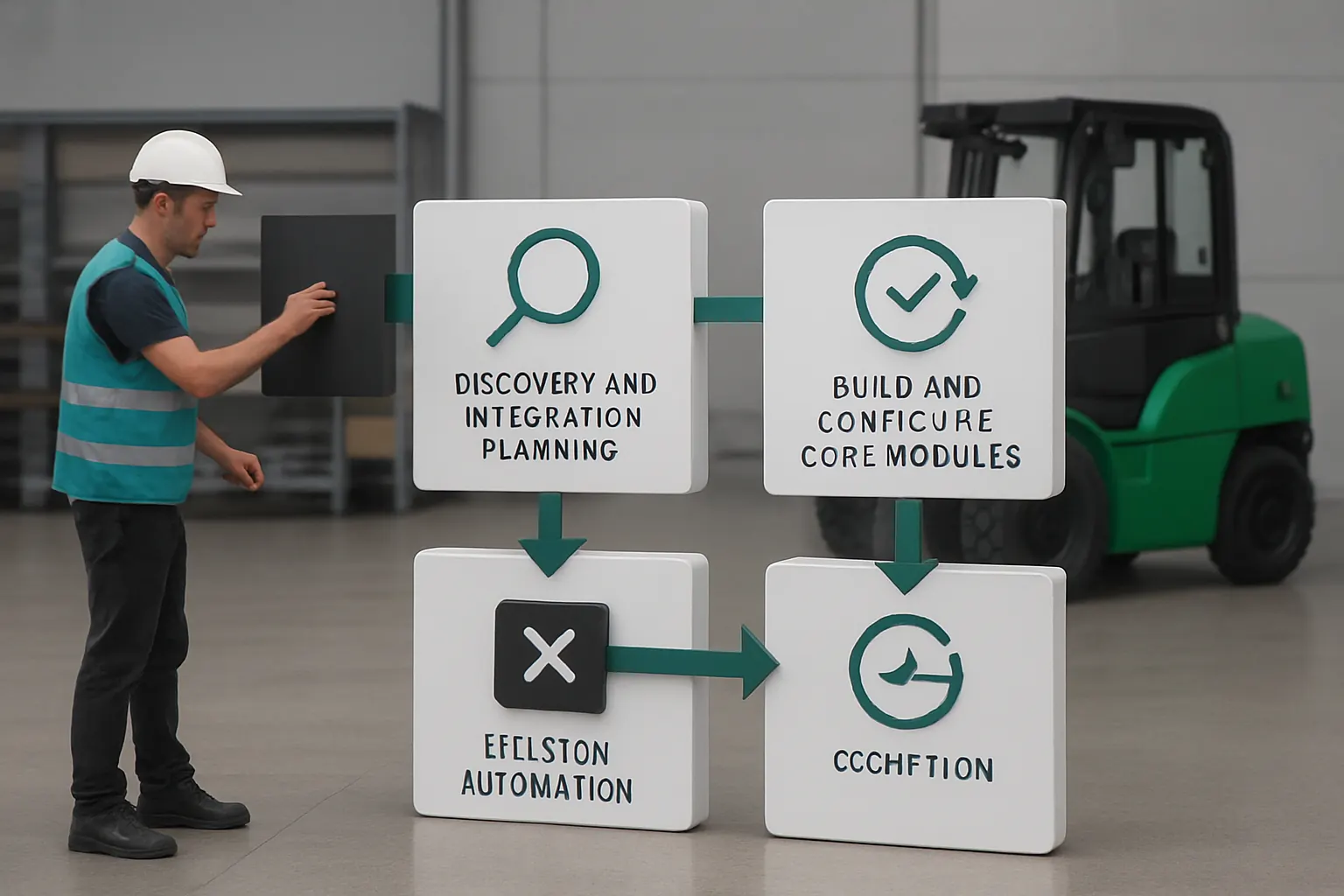
Weeks 1–2: Discovery and Integration Planning
Conduct business process mapping centered on asset contracts, service scheduling and invoicing. Identify existing systems to be connected and legacy software to replace. Plan data migration paths.
Weeks 3–6: Build and Configure Core Modules
Develop enquiry management, contract lifecycle, and asset portfolio modules. Establish role-based access controls and integrate mobile service capture tools. Begin workflow automation of renewal alerts and invoice generation.
Weeks 7–12: Deploy AI Capabilities and Workforce Automation
Implement selective AI for classification and prioritisation within workflows. Configure workforce scheduling and job allocation with SLA alerts. Activate integrated communications for service notifications. Train teams and refine dashboards.
How AI Implementation UK Connects, Replaces, and Automates Equipment Leasing Operations
AI Implementation UK offers a tailored workspace that merges your existing technology investments into one unified system you own and control. We connect your current CRM, asset management, service field tools, and finance systems through bespoke integrations, preserving valuable data and workflow continuity.
Our approach replaces unnecessary SaaS subscriptions with modules built specifically around your leasing company’s unique contract and asset workflows. This means your operational data consolidates into a single trusted source, with custom dashboards giving you instant access to business insights.
Artificial Intelligence is applied carefully and selectively—to classify documents, summarise complex contracts, prioritise service jobs and support decision-making—always combined with deterministic business rules for predictable tasks. Critical compliance and lease variations remain under human review, ensuring you remain in control.
This connected system improves accuracy, accelerates cashflow, reduces manual admin, and safeguards data privacy and security aligned with ICO and NCSC guidelines. Payments and communications integrate with trusted external providers to maintain resilience without fragmenting your operational control.
For a practical discussion about how we can transform your lease enquiry-to-contract workflows and asset servicing operations into one streamlined, owned solution, explore our offerings in process automation and data infrastructure preparation. Review client success stories in our case studies and use our platform planning tool to take the first step towards cutting admin and accelerating your equipment leasing growth.
To turn these priorities into one coherent system, map the platform your business needs or explore our workflow automation approach.