
Learn how vehicle bodyshops can connect systems, reduce manual admin and automate booking to workshop with one tailored operating platform the business owns.
Vehicle bodyshops workflow automation: What Breaks Daily
Vehicle bodyshops workflow automation should connect bookings, people, communications and reporting in one reliable operating flow.
Vehicle bodyshops face constant pressure from inefficient manual tasks, fragmented software tools, and disconnected data. On a daily basis, teams wrestle with disparate damage estimates, slow insurer approvals, and a disjointed booking to workshop cycle. Workshops often rely on multiple siloed systems—scheduling apps here, parts ordering systems there, and separate inspection logs—each with their own subscriptions and user interfaces. This creates tab overload, duplicated effort, and precious minutes lost hunting down information.
The complication multiplies when digital inspection records and vehicle certification requirements are layered on. Staff juggle vehicle safety checks alongside admin-heavy invoice processing and parts tracking. Without a connected operational system owned by the business, bottlenecks, data mismatches, and compliance risks multiply. Ad hoc AI tools only confuse the picture if not integrated sensibly.
Vehicle bodyshops need practical workflow automation that links core operational processes under one owned system. This approach cuts admin, replaces avoidable software, and surfaces reliable data on tailored dashboards. Smart AI capabilities support decision-making selectively—handling tasks like damage classification or scheduling prioritisation—while deterministic business rules automate predictable, repeatable work.
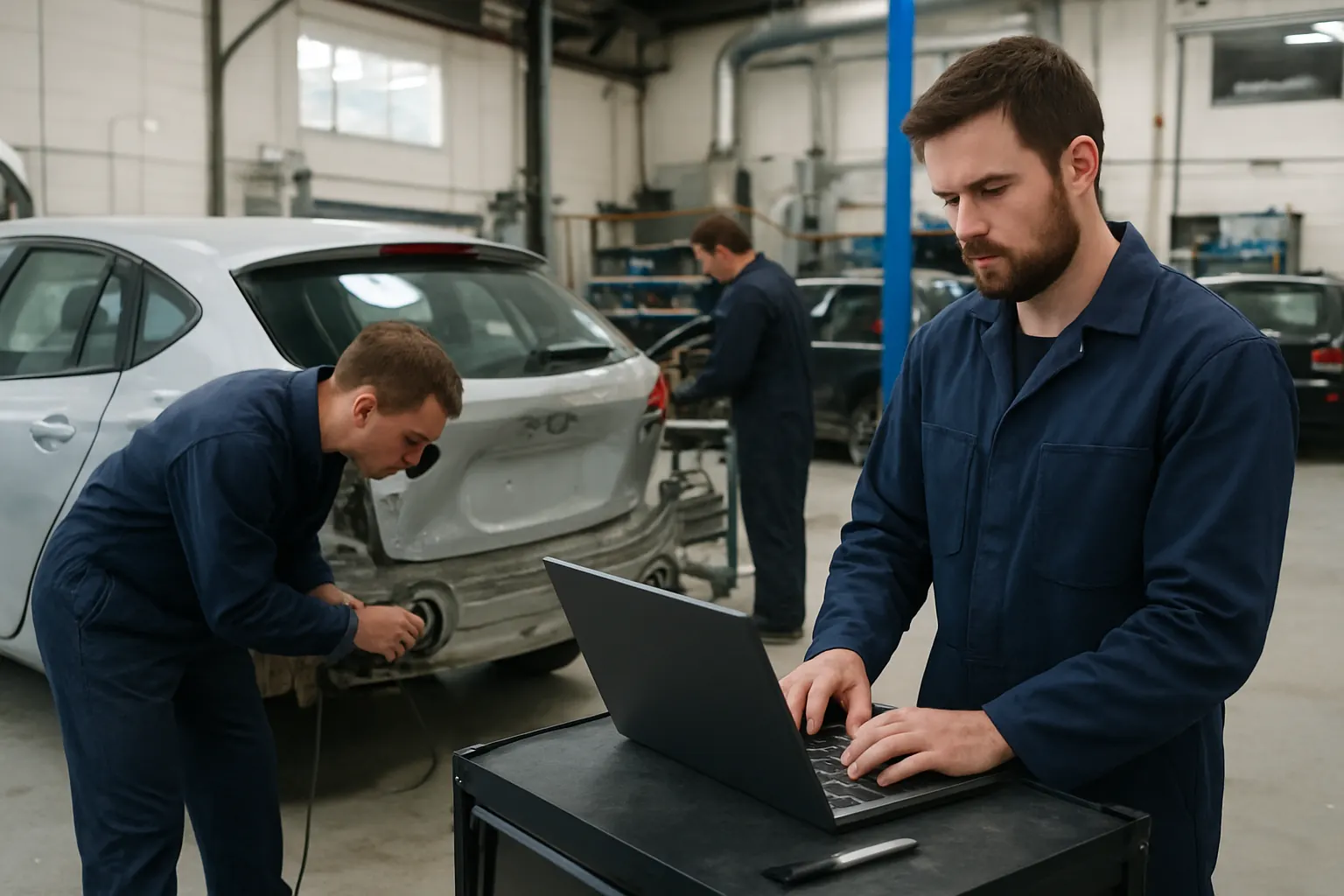

Automating Booking to Workshop Workflow for Seamless Scheduling
Booking Bottlenecks and Fragmentation
Vehicle bodyshops experience booking delays and miscommunications between reception, insurer approvals, and workshop allocation. These disconnects cause job start delays, confusion over priorities, and underutilised bays.
Connecting Booking Records with Workshop Planning
By consolidating bookings into one owned scheduling workspace, bodyshops can automate appointment confirmations, track insurer milestones, and allocate resources dynamically. Integration with online booking portals and insurer systems reduces manual data transfer.
Example: Auto-confirmation and Slot Allocation
When a vehicle owner requests a repair estimate online, the system auto-checks available workshop bays, confirms an appointment based on insurer approval status, and sends reminder texts. The booking record flows directly into the workshop rota without duplicate entry.
Control Features for Reliable Scheduling
Built-in alerts handle exceptions like insurer delays or parts unavailability, prompting manual review only as necessary. Human approval gates critical exceptions ensuring oversight.

Integrating Damage Estimates with Insurer Approvals Using Owned Modules
Challenges in Estimate Accuracy and Approval Delays
Separate estimating software and insurer portals cause delays and inconsistencies, increasing vehicle repair cycle times.
Owned Estimating Modules Bridging the Workflow Gap
Replacing multiple subscriptions with an owned damage estimate module enables seamless transitions from estimate creation to insurer review. Historical repair data can be referenced to support accurate itemisation.
Practical Case: Streamlined Estimate Submission
A technician records damage with photos. The damage estimate module classifies and summarises repair items using AI-supported templates, then routes the file to insurer portals automatically for digital approval.
Controls Ensuring Audit Trails and Human Review
All estimate changes and cancellations are logged with timestamps. Approval flags require a bodyshop manager or insurer agent to review before works proceed.
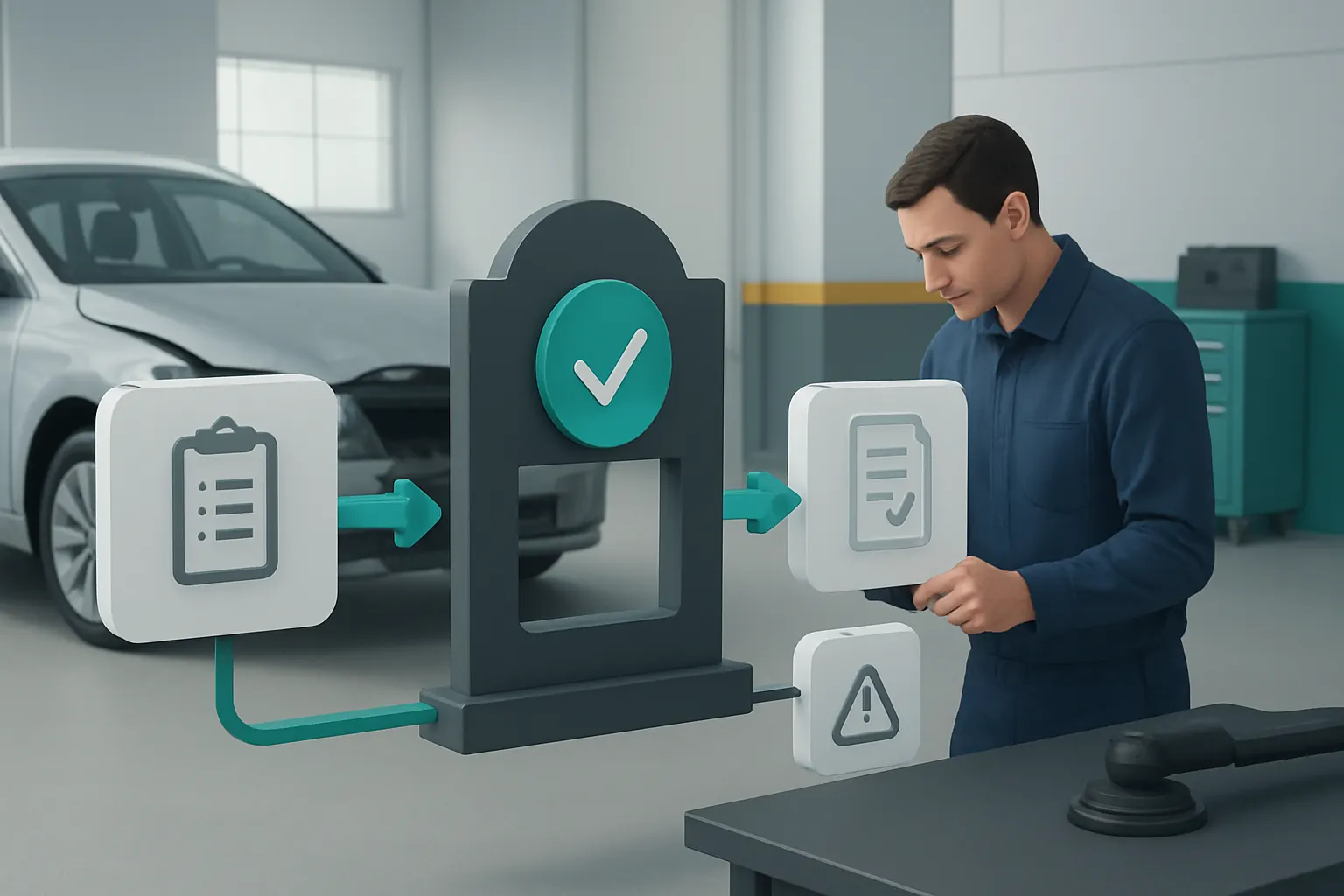
Parts and Asset Tracking Linked to Repair Progress
Problems with Parts Delays and Inventory Chaos
Without unified systems, parts ordering and stock visibility is inconsistent, causing repair stoppages and price overruns.
Centralised Parts Tracking Connected to Repair Jobs
An owned inventory and procurement workspace tracks parts availability in real time and automatically generates alerts based on repair status. Integration with specialist suppliers’ systems helps manage lead times.
Example: Automated Parts Alert and Requisition
Upon inspection, if a part is needed, the system checks stock and supplier delivery estimates, then generates a purchase request. Workshop staff and management receive notifications once parts arrive.
Control Workflow for Cost and Quality Checks
Purchase approval workflows ensure high-value or non-standard parts require managerial sign-off. Quality inspections are recorded with photographic evidence upon receipt.

Digital Inspection Records with Evidence Capture
Operational Strain of Paper-Based and Disparate Inspection Logs
Physical inspection documentation or multiple software apps complicate vehicle safety assurance and traceability.
Central Digital Inspection Workspace Customised to Bodyshop Needs
An owned digital inspection module captures detailed vehicle condition data and repair milestones. Integration with mobile devices allows real-time photographic and signature capture.
Concrete Example: Driving Safety Inspections Logged Digitally
Technicians use tablets to complete safety checklists and upload inspection photos as part of the job card. Data synchronises immediately to a central dashboard visible to managers and clients.
Safeguards Maintaining Compliance and Verification
Sequential workflows enforce step-by-step approvals, retaining human control for critical safety verdicts and maintaining detailed logs for audits.

Streamlined Customer Communication and Approval Flow
Missed Updates Undermine Customer Confidence
Fragmented communication channels lead to delayed repair updates and multiple contact points for customers, generating dissatisfaction.
Workflow Integration for Messaging and Document Sharing
An owned communications module integrates email, SMS, and document sharing linked to individual job records. It tracks message delivery status for customer transparency.
Real-World Scenario: Automated Repair Status Messaging
Progress milestones trigger scripted notifications. For example, when a damaged part arrives or an insurer approves a repair stage, the system sends an update with a secure link to vehicle status photos.
Ensuring Control over Sensitive Information
Templates and messaging triggers are configured carefully with manual override options to protect personal data and prevent premature info sharing. For data security, see ICO guidelines.

Payment Processing Tied to Job Milestones and Finance Controls
Payment Challenges with Disconnected Systems
Payments are often processed separately from job completion data, leading to reconciliation issues and delayed cashflow visibility.
Secure Payment Integration Linked to Workflow
While payment processing relies on specialist external providers to meet security standards, the owned operating system triggers payment requests tied to repair completion milestones. Integration with bank and card payment gateways is seamless.
Example: Automated Invoice Generation and Payment Reminder
Once all repair stages are approved, the system generates an invoice and sends a payment link to customers. Reminders escalate automatically if a payment is overdue.
Controls for Financial Integrity and Compliance
The payment workflow includes managerial approvals for write-offs or discounts. Payments data are recorded for audit and compliance with PCI DSS standards.
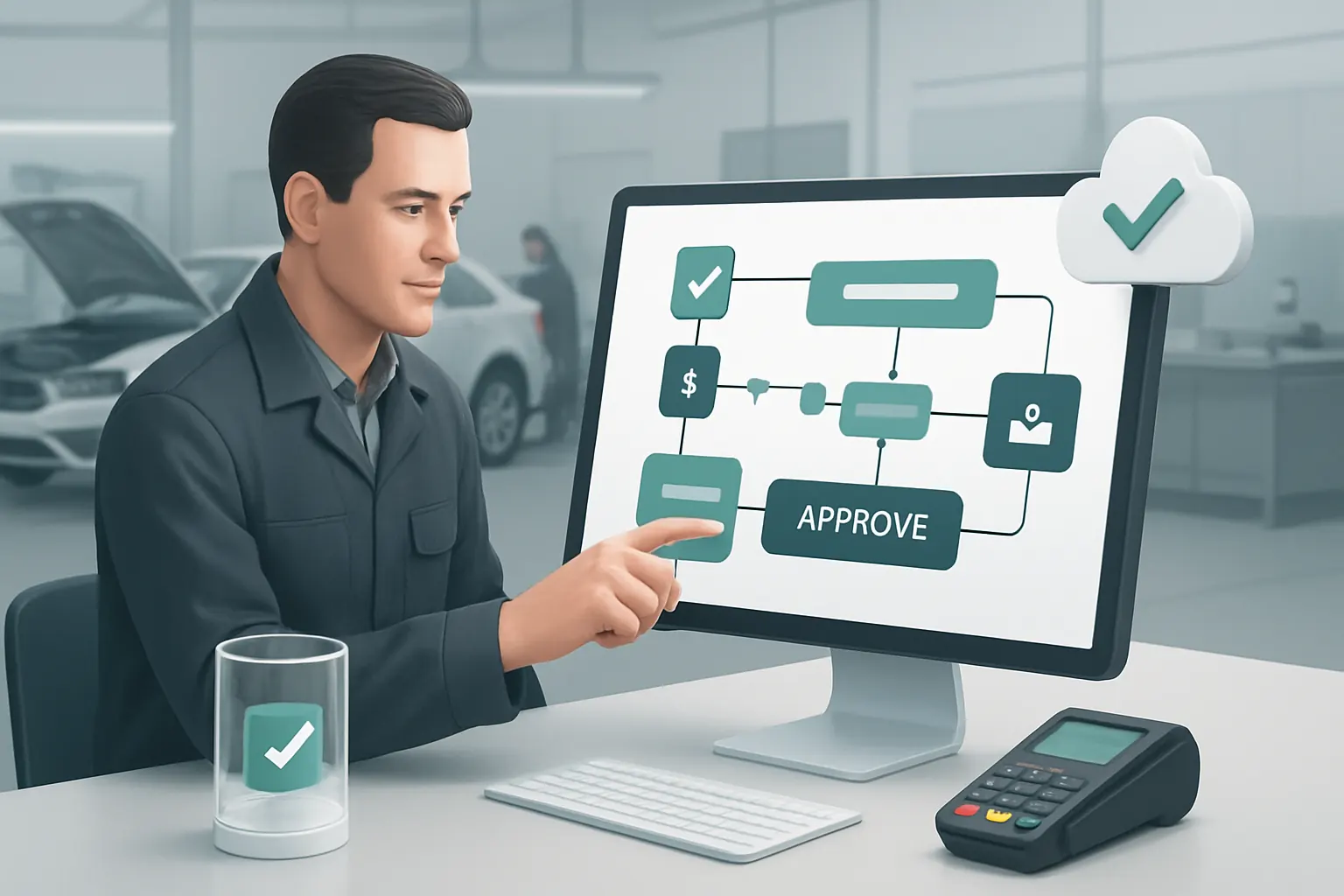
AI-Enabled Classification and Prioritisation of Repair Tasks
Manual Prioritisation Slows Workshop Efficiency
Deciding which repairs and jobs take priority is time-consuming and prone to subjective delays.
Selective AI Use to Support Decision-Making
AI algorithms analyse historical repair data and classify damage severity to prioritise workflows. For example, minor cosmetic repairs are scheduled optimally around urgent safety fixes.
Scenario: AI-Assisted Job Card Prioritisation
The system flags high-priority jobs based on damage classification and insurer urgency while routing routine tasks for batch servicing windows.
Human Oversight Retained for Final Decisions
Deterministic rules provide predictable scheduling control, but human managers retain approval for all final workshop prioritisation to reflect customer or safety concerns.

Consolidated Dashboard Reporting for Real-Time Business Insights
Lack of Unified Data Hampers Timely Management Decisions
Fragmented reports from multiple tools hide the full picture of repair cycle times, parts usage, and technician productivity.
A Single Operating Workspace Providing Reliable Reporting
The owned system aggregates operational data from bookings, parts, inspections and finance into tailored dashboards. Visualisation tools provide key performance indicators (KPIs) in real time.
Practical Use Case: Repair Cycle and Technician Utilisation Metrics
Managers access a dashboard displaying average job durations, parts delivery delays, and technician workload balance — unlocking data-driven decision making to optimise workflow.
Controls Ensuring Data Accuracy and Security
Data inputs are validated at source, and access is restricted based on roles to preserve business confidentiality. The system maintains logs to support compliance with UK data protection laws.

90-Day Rollout Plan for Workflow Automation
Weeks 1–2: Discovery and System Assessment
- Map current workflows, identify key pain points and manual bottlenecks.
- Review existing systems and software subscriptions for replacement or integration potential.
- Conduct stakeholder interviews to define automation priorities and compliance requirements.
Weeks 3–6: Platform Development and Integration Build
- Design and develop owned modules addressing scheduling, damage estimates and inspection records.
- Integrate specialist external payment and communication services securely.
- Set up deterministic business rules and AI components for selective automation.
Weeks 7–12: Pilot, Training, and Live Roll-Out
- Run pilots with small teams to gather feedback and adjust workflows.
- Provide staff training focusing on new workflows, control processes and data stewardship.
- Gradually migrate all operational data to the owned system and decommission legacy tools.

Practical Next Step: How AI Implementation UK Connects and Automates Operations
At AI Implementation UK, we understand the vehicle bodyshop space—from booking to workshop delivery, parts tracking, inspections and finance management. We build one connected operating environment tailored to how your business works. Our approach:
- Connects your current, useful systems through bespoke integration points, preserving your existing investments.
- Replaces expensive software subscriptions with owned, custom modules designed for your workflows.
- Brings your operational data together in one reliable record, surfaced through dashboards and controls.
- Selectively incorporates AI to classify damage, prioritise jobs and summarise inspection notes without removing human oversight.
- Automates predictable tasks via deterministic rules while preserving human approvals for critical decisions.
Rather than recommending a patchwork of disconnected SaaS tools, we deliver control and long-term value by giving you ownership of your digital workspace. This improves compliance safeguards around vehicle safety, finance permissions, and inspection evidence while reducing manual admin burdens.
Learn more about our process automation and RPA services and data infrastructure preparation solutions. Explore case examples in our case studies or get started with a bespoke plan on how your business can transition from fragmented workflows to one powerful connected system at plan my platform.
By investing in a tailored, owned vehicle bodyshops workflow automation system, your workshop can reduce admin overhead, cut errors, accelerate repairs, and improve customer confidence—without adding software complexity.