Learn how equipment leasing companies can connect systems, reduce manual admin and automate enquiry to contract with one tailored operating platform the business.
Equipment-leasing company workflow automation: What Breaks Daily
Equipment-leasing businesses face a continuous battle with inefficient workflows. Day-to-day operations often falter because asset contracts, service schedules, and renewals are fragmented across multiple disconnected systems. Administrators wrestle with manual data entry, error-prone follow-ups, and redundant software subscriptions that span leasing, scheduling, invoicing, and asset tracking.
Moreover, leasing teams struggle to access a single reliable record of operational data. This lack of centralized oversight slows decision-making and exposes the company to compliance risks. Meanwhile, workforce scheduling and service evidence checking require time-consuming manual checks. These challenges reduce responsiveness and strain cash flow, threatening customer satisfaction and business growth.
This guide explores how equipment-leasing company workflow automation can transform daily challenges into streamlined operations—not by adding more disconnected apps but by building one connected operating environment tailored to your business.

Why Manual Work Costs More Than You Think
Manual processing inflates costs in four key ways:
- Time Drain: Re-keying data and chasing approvals multiply work hours unnecessarily.
- Errors and Rework: Typing mistakes and missed contract renewals cause payments delays and disputes.
- Compliance Risks: Discrete systems make tracking lease compliance and service SLAs difficult to verify, exposing the business to regulatory scrutiny.
- Cashflow Impact: Inefficient invoicing and delayed renewals reduce the speed of payments.
As UK equipment-leasing companies embrace digital transformation, the best business process automation moves beyond patchwork SaaS stacks to a unified platform the company owns, embedding rules and integrations that fit the way leasing works. This keeps essential legacy systems interconnected while eliminating redundant subscriptions and unlocking reliable data visibility in real time.

Enquiry to Contract Automation: Seamless Lead to Agreement Progression
The Daily Struggle of Enquiry Handling
Leasing teams spend hours handling enquiries spread across emails, spreadsheets and CRM systems. Important customer and asset details get lost in siloed software, slowing contract approval and asset allocation.
Connected Workflow for Contract Creation
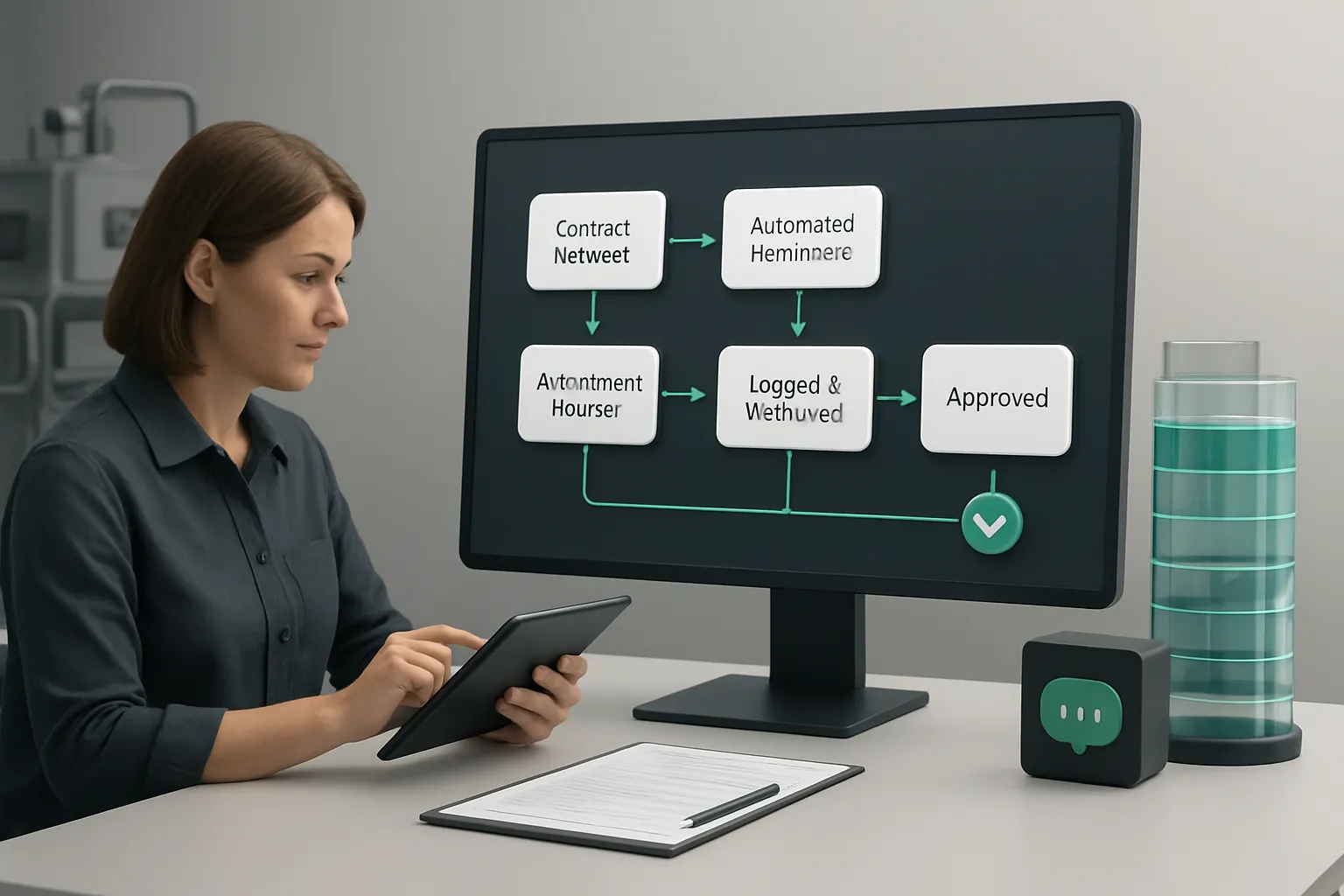
An owned system captures enquiries directly, auto-classifies asset type requests using AI, and routes them for prioritisation based on customer criteria. Deterministic rules initiate credit checks and asset availability reviews. Contract drafts are generated automatically and circulate for human approval.
Key Integrations with Finance and E-Signature Tools
Integrating specialist external platforms for instant credit assessment or e-signature services maintains security while keeping all other contract data owned. This avoids expensive SaaS silos and ensures a single leasing record under company control.
Example: Auto-routing Asset Enquiries with Status Dashboards
When XYZ Leasing receives an enquiry for warehouse automation equipment, the enquiry is logged automatically; AI classifies urgency and the rota module allocates the sale specialist. A connected dashboard shows contract pipeline status, improving visibility and reducing manual follow-ups.
Controls to Protect Contract Integrity
Rigorous approval workflows confirm contract terms, while real-time audit trails track all changes. User roles limit who can modify pricing or sign agreements, supporting governance and compliance.

Asset and Contract Management: Unified Record for Lease Lifecycle
Complex Contract and Asset Tracking
Managing diverse asset types and multiple lease contract terms manually increases risks of renewal oversights and compliance gaps.
Connected Operating Record for Assets and Contracts
A bespoke system centralises all asset and contract details, linking service histories, warranty data, and financial terms in one reliable record. Notifications trigger renewal reviews and SLA alerts.
Useful Integrations with ERP and Payment Gateways
ERP integration automates invoicing schedules and reconciles payments. PCI-compliant payment gateways handle transactions under secure protocols, keeping sensitive financial data outside the owned system.
Example: Lease Renewal Alerts Prevent Revenue Leakage
ABC Leasing’s platform flags contracts due for renewal 90 days in advance, automating customer reminders and scheduling negotiations, reducing manual calendar checks and missed opportunities.
Controls for Data Accuracy and Compliance
Configured validation rules to check contract completeness, plus human approval steps for renewal changes. Secure access controls restrict data edits to authorised lease managers.

Workforce Scheduling and Job Allocation: Optimising Service Delivery
Daily Job Scheduling Challenges
Equipment maintenance and support require precise scheduling of technicians, who operate across multiple sites. Manual rota planning leads to missed appointments and inefficient workloads.
Workflow Automation for Technician Allocation
A workforce scheduling module matches technicians’ skills and availability automatically to service requests. AI-assisted prioritisation ranks urgent repairs while deterministic rules allocate routine maintenance evenly.
Integrated Mobile Workforce Apps
Mobile service apps enable real-time job status updating and capture of service evidence, feeding back instantly into the owned system for invoicing and SLA management.
Example: Intelligent Rota Reduces Overtime Costs
At DEF Equipment Leasing, automation halved overtime expenses by optimising technician routes and balanced workload, improving service times and contractor utilisation.
Controls Ensuring Site Security and Access
Access control systems manage technician permissions for sensitive locations, while digital service records require sign-off by onsite personnel, maintaining verification chains.

Service Evidence and Compliance Recording: Verifiable SLA Management
The Problem with Paper-Based or Disconnected Logs
Proving contracted service delivery relies heavily on manual completion of service logs, often delayed and prone to loss or incomplete details.
Digital Service Records Within One Owned Workspace
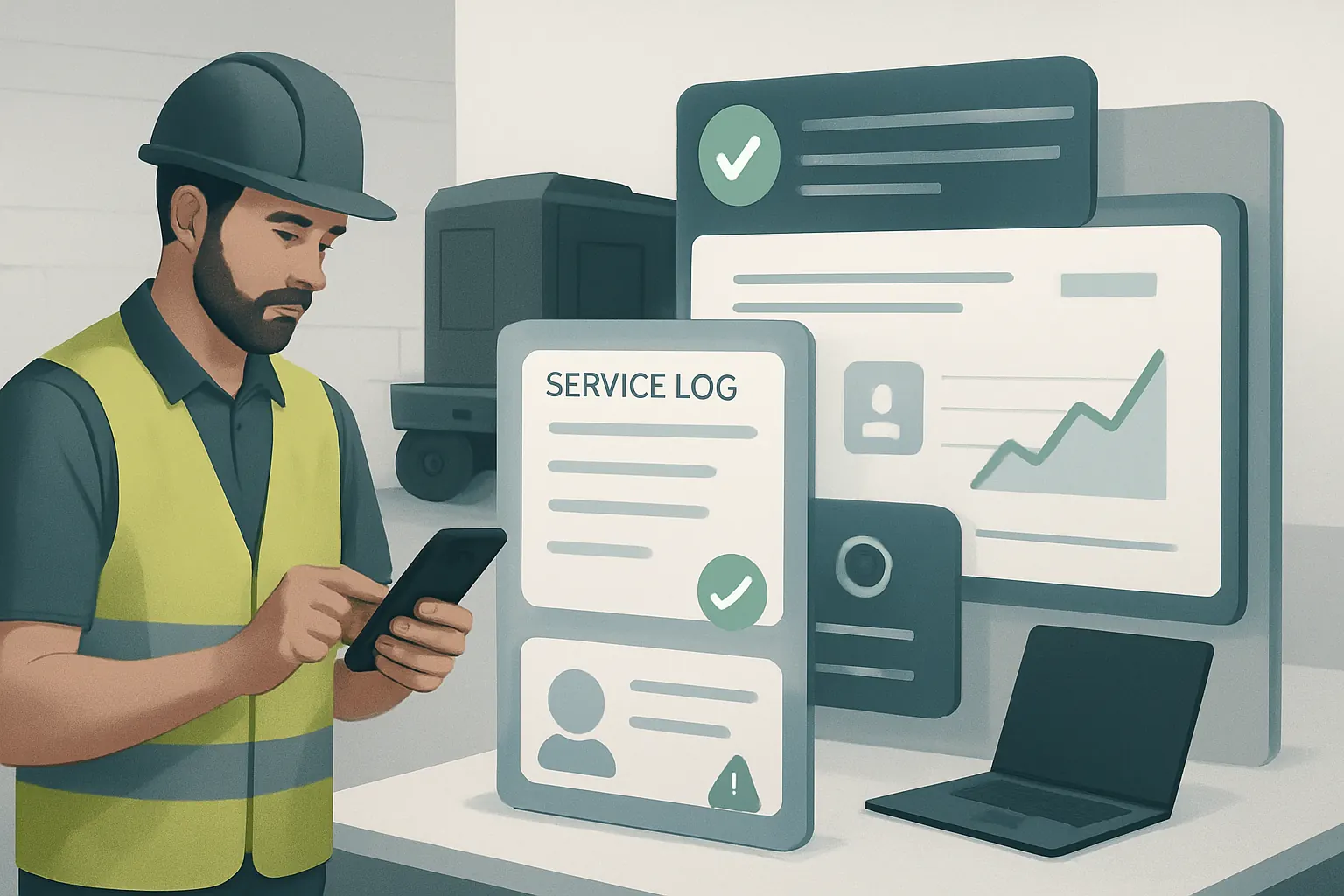
Technicians can submit time-stamped service logs, photos, and customer signatures directly via mobile apps linked to the owned system. AI summarises notes, while exception flags alert supervisors.
Links to Compliance and Quality Systems
Integration with compliance checklists and quality-control modules ensures that service evidence matches contract SLAs, ready for audit queries without manual collation.
Example: Automated SLA Reporting Streamlines Audits
GHI Leasing no longer scrambles for proof during audits. The system generates SLA compliance reports automatically, saving weeks of labour and boosting audit readiness.
Controls: Human Review of AI-Supported Summaries
AI highlights unusual variations for supervisor review; critical service issues flagged require manager approval before closure, preserving accountability.
Invoice Generation and Payment Reconciliation: Accurate, Timely Billing
Manual Invoice Creation and Payment Gaps
Legacy finance systems delayed invoicing following service completion. Payment reconciliation was slow, risking late payments and cashflow challenges.
Connected Invoicing and Finance Workflow
The owned system generates invoices immediately after service verification, integrates with ERP ledgers, and reconciles incoming payments via secure payment gateways, providing live cashflow visibility.
Specialist Integrations for Payment Processing
PCI DSS-compliant merchant services platforms handle customer card payments, while invoices track outstanding balances and alert credit control teams when limits near.
Example: Immediate Invoicing Improves Cashflow Cycle
JKL Leasing reported a 30% reduction in payment delays once invoicing became real-time, helping fund reinvestment and reducing overdraft costs.
Controls Supporting Financial Governance
Invoice approval flows apply checks on discounting and compliance with payment terms; discrepancies prompt credit control review before customer communication.

Contract Renewal and Amendments Management: Proactive Customer Engagement
Risks of Overdue Renewals and Amendment Errors
Without proactive alerts, contracts lapse unnoticed or amendments are improperly recorded, creating legal and revenue hazards.
Automated Renewal Workflow Embedded in the System
Automated reminders combined with customer portal access streamline negotiation cycles. Amendment requests are logged, versioned, and routed for authorised approval.
Integration with Customer Relationship Tools
Live customer communications via integrated messaging services and scheduled follow-ups ensure renewals do not slip through cracks.
Example: Automated Renewal Workflow Reduced Churn
MNO Leasing cut contract churn by 25% within six months by using alerts and streamlined amendment workflows in their owned system.
Controls for Authorised Contract Changes
Change requests require formal approvals, with audit trails and “locked” contract versions ensuring historic terms remain preserved for reference.
Asset Tracking and Maintenance Scheduling: Lifecycle Visibility
Challenges of Manual Asset Oversight
Tracking asset location, condition, and scheduled maintenance across multiple customers and sites is time consuming and error-prone.
Ownership of Asset Lifecycle Data
A single connected register logs asset movement, maintenance history, and warranty expiry dates, linked with service scheduling.
Specialist Integrations with IoT and Sensor Data
Where appropriate, IoT sensors feed real-time asset condition data into the system, enabling predictive maintenance alerts alongside schedule-based servicing.
Example: Improved Asset Uptime Through Scheduled Alerts
PQR Leasing reduced unexpected breakdowns by 15% using condition monitoring and scheduled maintenance reminders from their tailored operating system.
Controls: Verification and Exception Handling
Scheduled servicing prompts require technician confirmation, capturing service evidence for SLA compliance; delay exceptions trigger escalation alerts.

Reporting and Analytics: Business Intelligence That Drives Decisions
Manual Data Collation Slows Strategic Insight
Decking reports from several systems makes it hard to get a reliable snapshot for forecasting or operational reviews.
Unified Dashboard and Reporting Workspace
The connected platform consolidates operational data across contracts, finance, service, and workforce into real-time dashboards. AI summarises trends and prioritises areas needing management focus.
Specialist Tools for Financial or Compliance Reporting
Integration with specialist reporting tools focuses on financial forecasting and regulatory compliance analyses within the owned data ecosystem.
Example: Real-time KPIs Facilitate Proactive Management
STU Leasing’s leadership uses customised dashboards showing overdue renewals, technician utilisation, and payment status in one place, enabling quick corrective management actions.
Controls to Safeguard Data Confidentiality
Role-based dashboard access ensures sensitive data is visible only to authorised personnel, aligned with ICO data protection guidance.

A Practical 90-Day Rollout Plan for Workflow Automation
Weeks 1–2: Discovery and System Design
Map existing workflows, identify critical pain points, and conduct stakeholder workshops. Prioritise which legacy systems to integrate and which subscriptions to sunset. Confirm regulatory and security requirements.
Weeks 3–6: Build and Integrate Core Modules
Develop enquiry-to-contract and asset-management modules linking current CRM and ERP data. Begin workforce scheduling automation and integrate mobile service apps. Establish payment gateway security.
Weeks 7–12: Rollout, Training and Continuous Improvement
Deploy service evidence capture, automate invoicing, and activate renewal workflows. Train staff on new operating environments with focus on controls and human approval steps. Gather feedback and adapt dashboards for reporting needs.
Connecting, Replacing and Automating: How AI Implementation UK Helps
At AI Implementation UK, we specialise in consolidating your multiple disparate systems into one connected operating environment tailored around your equipment-leasing business. Rather than layering disconnected SaaS solutions, we prioritise preserving useful current systems and replacing avoidable subscriptions with owned modules. This approach secures your operational data in one reliable record augmented by custom dashboards.
We treat AI as a selective capability: deployed where it adds value in classification, summarisation and prioritisation, but always complemented by deterministic rules for predictable processes and human approval for critical decisions. Our solutions integrate specialist external services such as PCI-validated payment gateways or trusted communication tools that remain embedded reliably within your owned system.
Our modular approach means you control your data and workflows, reduce dependence on subscription software, and gain a stable, scalable foundation for both operational efficiency and regulatory compliance.
For organisations ready to start their automation journey with pragmatic, connected solutions, our process automation services and data infrastructure preparation provide the foundation, while our AI strategy roadmapping ensures future-proof capabilities.
Explore how we have helped equipment-leasing firms transform in our case studies, or secure your own tailored automation plan with a platform consultation.
By implementing a connected and owned operating environment for equipment-leasing company workflow automation, businesses can streamline enquiry handling, contract management, scheduling, invoicing, and reporting—supporting compliance with a clear audit trail and improving cashflow and customer satisfaction. This controlled automation, combined with selective AI use, turns daily operational pain into sustainable competitive advantage.