Learn how roofing contractors can connect systems, reduce manual admin and automate enquiry to estimate with one tailored operating platform the business owns.
Roofing software features for contractors: What Breaks Daily
Roofing software features for contractors should connect bookings, people, communications and reporting in one reliable operating flow.
Roofing contractors face relentless operational pressures. Managing leads, preparing accurate estimates, organising site schedules, and handling evidence for certification all must happen smoothly. Yet, breakdowns in process flow are common. Information resides in disconnected systems, estimates rely on manual measurement or error-prone data, and scheduling clashes cause unnecessary downtime. Communication lags between office teams, site crews, and customers add to the complexity.
This daily friction generates avoidable costs, operational delays and risks such as missing safety certification steps or delayed invoicing. Contractors need a practical approach to tame complexity without introducing yet another disconnected software. The solution lies in connecting and automating through an owned, business-specific system — one that maps directly to roofing workflows while keeping existing tools useful.

The High Price of Manual and Fragmented Processes
Manual processes and scattered records raise significant costs for roofing contractors, revealing effects on various critical areas:
- Time lost in double entry and chasing updates: Manual data duplication between spreadsheets, emails and separate CRM or scheduling tools consumes productive hours.
- Increased errors and inconsistencies: Hand-typed data, manual measurements, or out-of-date quotes cause reworks, customer disputes and compliance risks.
- Compliance challenges: Siloed evidence from site surveys, safety documents and certificates raise the risk of overlooked obligations or missing approvals.
- Cash flow and invoicing delays: Job details spread across multiple tools delay invoicing and recognition of revenue, impacting cash flow.
- Subscription fatigue: Paying for multiple SaaS licences that cover overlapping features drives unnecessary cost without system integration.
A tailored operating system that connects current software, replaces avoidable subscriptions and creates a reliable operational record delivers significant relief. To illustrate, we will explore five core automation areas critical to roofing contractors.

Enquiry to Estimate Automation That Reflects Real Workflows
The Challenge with Roofing Leads and Estimates
From first customer contact to final quote, roofing contractors handle enquiries from multiple sources — web forms, calls, emails. Collating site details, verifying measurements, and generating accurate estimates requires back-and-forth coordination. Many roofing contractors rely on spreadsheets or disconnected CRM tools that do not sync with measurement data or scheduling outcomes.
Connecting Lead Management with Estimation Tools
A connected enquiry-to-estimate workflow links lead capture, survey evidence, and calculation rules into a unified system the contractor owns. This system integrates with external specialist tools for precision, such as AI roofing estimator modules supporting roof measurements software. The system automates key steps:
- Automatic lead entry from web or phone inquiries
- Scheduling on-site surveys matched to available engineers
- Survey evidence upload (photos, videos) linked to enquiry records
- Template-based, configurable quote generation rules reflecting material costs and labour time
- Automated follow-ups nudging prospects towards approval
Practical Example: Quote Follow-Up with Embedded Evidence
A roofing business receives an enquiry via the website. The platform automatically books a survey slot, with engineer routes optimised through the scheduling module. On site, the engineer captures photos and measurements using a linked app. These images are stored against the enquiry record, then used to auto-fill the estimate template.
Once the estimate is generated, the system emails the customer with an approval request and follows up automatically if no response arrives within three days.
Key Controls and Ensuring Human Oversight
While automation speeds estimation, human review is critical before sending quotes to customers. The system flags any estimate exceeding configured thresholds or missing evidence for explicit manager approval. This balance keeps the process time-efficient without sacrificing accuracy or compliance.

Scheduling and Dispatch Integration for Crew and Site Coordination
The Daily Complexity of Site Scheduling
Coordinating roofing crews, site access, and material deliveries presents a complex logistical puzzle. Last-minute changes, weather delays or incomplete safety clearances cause schedule disruption. Separate booking records and communication channels increase the risk of clashes or missed jobs.
A Unified Scheduling Module Connected to Estimates and Sites
Roofing scheduling works best when integrated with estimates and site records. Dispatchers see real-time job statuses including approved quotes and survey evidence, enabling optimal crew allocation. Key capabilities include:
- Dynamic rota module showing daily and weekly job loads
- Engineer skills and competency embedded as mandatory profile data
- Weather conditions and site safety clearance status input
- Automatic conflict detection and rescheduling alerts
- Synchronised notifications via integrated messaging services (Slack or MS Teams)
Illustrative Scenario: Rescheduling with Alerted Constraints
After an accepted quote, the system locks the required material procurement and shows site access in the scheduling workspace. If a forecasted storm threatens the scheduled date, the system alerts dispatchers and suggests alternative slots. Crews receive messages on their mobile devices automatically.
Maintaining Control and Compliance on Site
Competency records and safety certificates bind tightly to site bookings. Only engineers with relevant qualifications or mandatory health and safety training appear in the scheduling options. Any exceptions generate alerts requiring supervisor approval, supporting the organisation’s compliance obligations and safety standards.
Centralising Survey Evidence and Certification Records
Challenges with Maintaining Clear Site Documentation
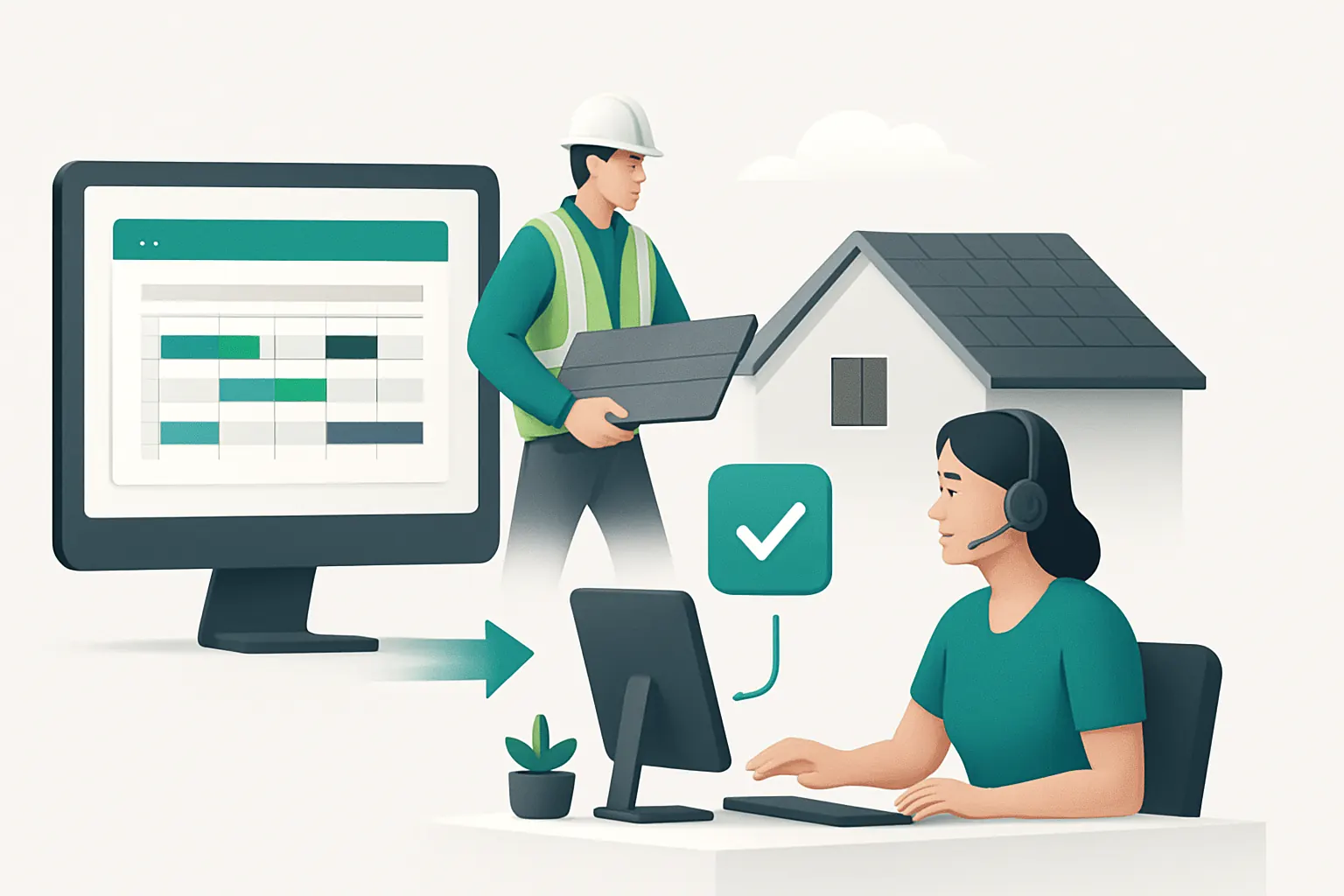
Roofing contractors collect evidence such as photos, videos, checklist completions and certification documents for each job. These often sit scattered across cloud drives, emails or paper, leading to lost files or inconsistent access. This hinders audit readiness and post-job quality control.
Bringing Evidence into One Owned Workspace
A dedicated evidence and certification module connects directly with scheduling and job records, building a single source of truth. Operational data storage is customised to the business workflow, allowing:
- Upload and tagging of site photos/videos with metadata on date, location and engineer
- Digitised checklists linked to site safety and quality control requirements
- Version-controlled digital certificates automatically appended post-inspection
- Easy search and reporting of evidence per project for internal teams and customers
Concrete Case: Automated Certificate Generation and Client Notification
Upon completion of a roofing job, the site engineer uploads a completed safety checklist and environmental compliance certificates into the system. The system bundles these with site photos and generates a job completion report, emailing it to the client and archiving it against the job record.
Operational Controls for Data Integrity
Access to upload or edit certificates is tightly controlled by role-based permissions. Audit trails record all modifications and document submissions. This control framework supports regulatory and customer compliance obligations, without imposing rigid vendor lock-in.

Reducing Redundant SaaS with Owned Integrated Modules
The Problem of Disconnected Software and Rising Subscription Costs
Many roofing contractors rely on a patchwork of SaaS tools for CRM, scheduling, estimates, timesheets, invoicing, and customer communication. Overlap and lack of integration generate manual work reconciling records across platforms, delay workflows and inflate operational expenses.
Replacing Avoidable External Systems with Custom-Built Modules
An owned connected operating system provides bespoke modules replacing software functions that do not require specialist third-party capabilities. The business retains security and data ownership while eliminating redundant subscriptions. Examples include:
- Custom CRM workflows that integrate lead management with scheduling and quoting
- Native communication tools replacing Slack or Trello for task management
- Job pack generation and document storage replacing generic cloud file shares
External specialist tools, such as payment processors (Stripe, WorldPay) or telecom providers, remain integrated but controlled through secure APIs.
Example: Eliminating Duplicate Customer Records Across Systems
Contractors sometimes duplicate customer and job data between CRM and invoicing tools. Integrating invoicing into the central system avoids this. A paid invoice automatically closes the associated job in workflow, triggers payment reconciliation and provides a summary on the finance dashboard.
Ensuring Oversight in System Consolidation
Transitioning from multiple SaaS solutions involves phased data migration and user training. Controls maintain data validation at import and monitor user activity for anomalies. Human approval remains in payment release and pricing decisions.

Applying AI Selectively for Intelligent Task Assistance
Practical AI Use Cases in Roofing Contractors’ Workflows
While AI promises automation gains, it should be applied selectively for variable, knowledge-intensive tasks such as classification, summarisation, prioritisation and decision support, rather than replacing deterministic processes. Examples include:
- Image classification assisting survey evidence tagging (e.g., identifying roofing materials or damage types)
- Summarisation of lengthy customer email threads or site reports to highlight key actions
- Prioritisation of incoming enquiries based on urgency and project type
- Decision support dashboards presenting risk scores or suggested next steps for managers
Combining AI with Clear Deterministic Rules and Human Controls
Predictable tasks such as quote calculation or scheduling remain deterministic, rule-driven and auditable. AI outputs remain suggestions, reviewed and approved by staff. This reduces errors and avoids regulatory risks around site safety, pricing or payment decisions.
Illustrative Workflow: AI-Aided Roof Measurement with Human Check
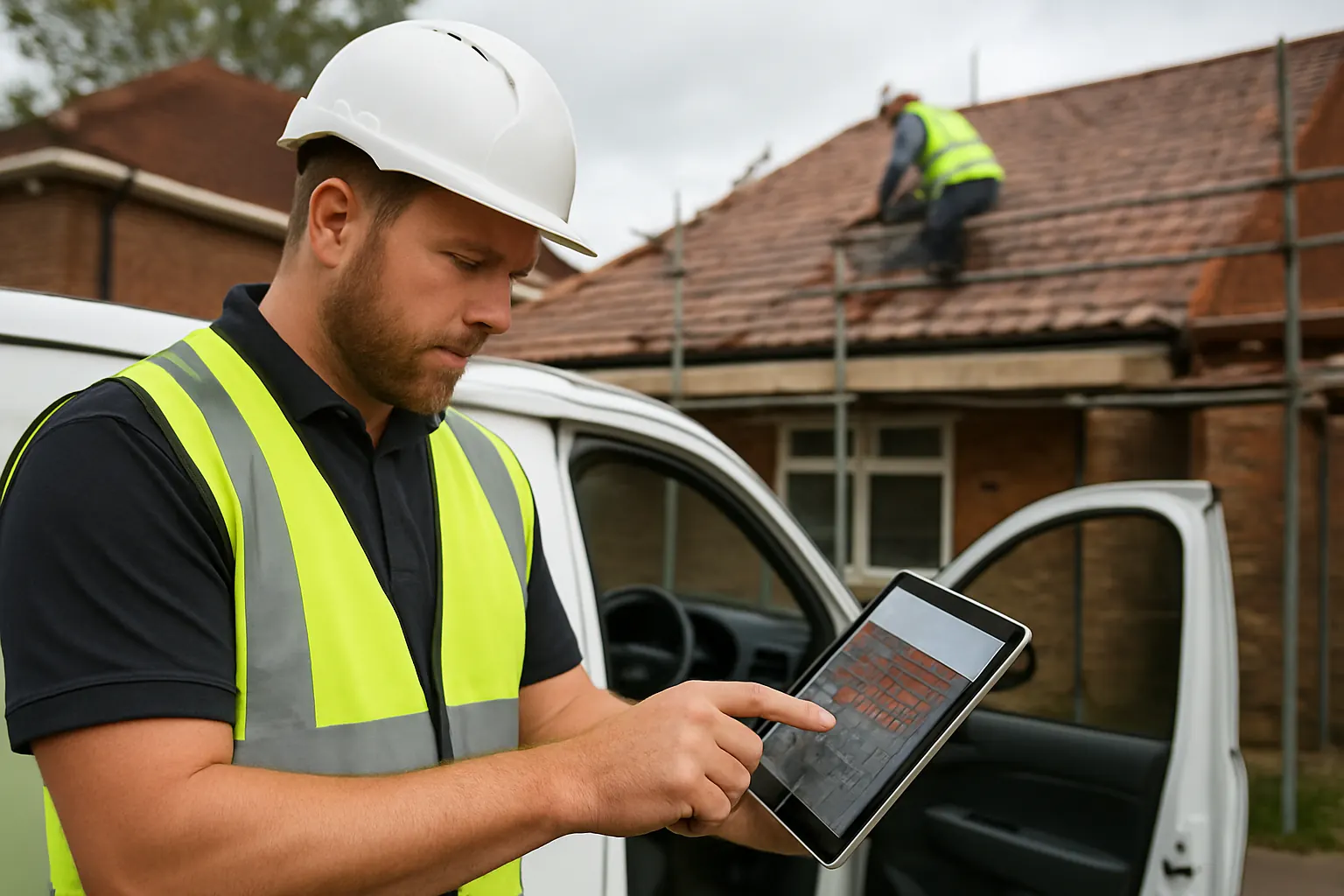
An AI roofing estimator module analyses drone images to produce initial roof measurements. The engineer receives this data on a tablet, checks and adjusts where needed before submitting the estimate. This hybrid approach speeds work while maintaining critical accuracy.
Transparency and Audit Trail Controls
AI model inference results, confidence scores and decision paths are logged in the system’s evidence records. These facilitate compliance checks and internal reviews, supporting governance standards and highlighting when humans must intervene.
90-Day Rollout Plan for Connected Roofing Business Automation
Weeks 1–2: Discovery and Baseline Integration
- Conduct a detailed workflow mapping session with key staff
- Identify current software in use and data sources for lead-to-estimate, scheduling, and evidence
- Setup initial data connectors to central repository
- Define rules for automation and user roles for security and compliance
- Begin user training on the new enquiry capture and scheduling interface
Weeks 3–6: Building Core Connected Modules
- Develop estimate templates automated with live material cost data
- Introduce integrated rota module with competency and availability inputs
- Link survey evidence collection to job records and engineer mobile tools
- Pilot AI roofing estimator on a selected job segment with frontline engineer input
- Setup notifications and follow-up automation for quotes and site changes
Weeks 7–12: Refinement, Consolidation and Handover
- Implement certificate generation workflows and client reporting
- Phase out overlapping legacy SaaS subscriptions and data reconciliation tasks
- Expand AI capabilities for evidence classification and dashboard decision support
- Roll out compliance controls with audit trails and exception approvals
- Conduct final user training and embed ongoing support processes

How AI Implementation UK Helps Roofing Contractors Own Their Automation Journey
AI Implementation UK delivers one connected operating system that the client fully owns, building on how the business actually works rather than imposing generic software. Our approach:
- Keeps current useful systems connected, avoiding costly rip-and-replace. We integrate lead management and communication tools with your existing measurement and job booking software.
- Replaces avoidable SaaS subscriptions with tailored modules for CRM, quoting, scheduling, and certification tracking that belong to your business.
- Consolidates operational data into a reliable single record that drives tailored dashboards, giving clear visibility from enquiry through to invoicing and certification.
- Applies AI selectively to assist with complex or variable tasks such as roof measurement and image classification, while deterministic rules automate predictable tasks.
- Preserves human control for important decisions over safety, approvals and pricing, supported by controls and audit trails aligned to UK regulatory expectations such as ICO data protection rules, NCSC cybersecurity guidelines, and PCI Security Standards for payment handling.
Together, we create a roofing contractor automation system that connects, replaces and streamlines without adding subscription costs or operational risk. To explore how this can reshape your operations, visit our detailed process automation services or discuss your unique data readiness with our data infrastructure specialists. Our strategic AI roadmapping service can help prioritise your most valuable AI use cases.
For examples of real-world success, view our case studies.
By migrating from fragmented tools to an owned, connected operating system, roofing contractors unlock time savings, improve accuracy and compliance, and build a scalable foundation for growth. The future of roofing contractor automation lies not in more SaaS, but in one practical system built around your business.