
A practical guide to residential property management company workflow automation, connecting business systems, reducing repetitive admin and creating one operating.
Residential property-management company workflow automation: What Breaks Daily
Residential property-management company workflow automation should connect bookings, people, communications and reporting in one reliable operating flow.
In the hectic world of residential property management, daily operations hinge on complex workflows—from tenant enquiries to maintenance coordination. Yet many companies struggle with disconnected systems, manual data entry, and fractured communications. Tenant requests get lost in email threads, contractors miss scheduled repairs, and owners wait days or weeks for accurate reporting.
These breakdowns occur because operational data remains siloed across multiple software subscriptions and spreadsheets. Without a single source of truth built around how the business actually works, teams waste time reconciling errors, chasing information, and duplicating tasks. As a result, resident satisfaction falls, risk compliance gaps widen, and cashflow unpredictability increases.
The challenge is clear: property-management companies must automate workflows in a way that connects existing systems, reduces unnecessary software dependencies, and centralises critical operational data into one accessible record. This guide explains a 10-step approach to achieving that goal—transforming everyday chaos into streamlined, reliable workflows backed by selective AI capabilities.

The True Cost of Manual Work in Residential Property Management
Before improvement, companies face heavy costs from manual processes:
- Wasted time: Teams spend hours re-entering tenant or contractor data and chasing approvals.
- Data errors: Manual handling leads to mistakes in rental payments, safety certificates, or maintenance logs.
- Compliance risks: Safety and privacy regulations require document checks that are often incomplete or delayed.
- Cashflow disruptions: Invoices misrouted or payments delayed cause financial uncertainty.
- Poor tenant and owner experience: Slow responses to queries and unclear reporting damage reputation.
Effective residential property-management company automation software seeks to replace repetitive work with connected workflows, letting teams focus on value-added activities. This reduces risks and improves outcomes for tenants, owners, and staff alike.
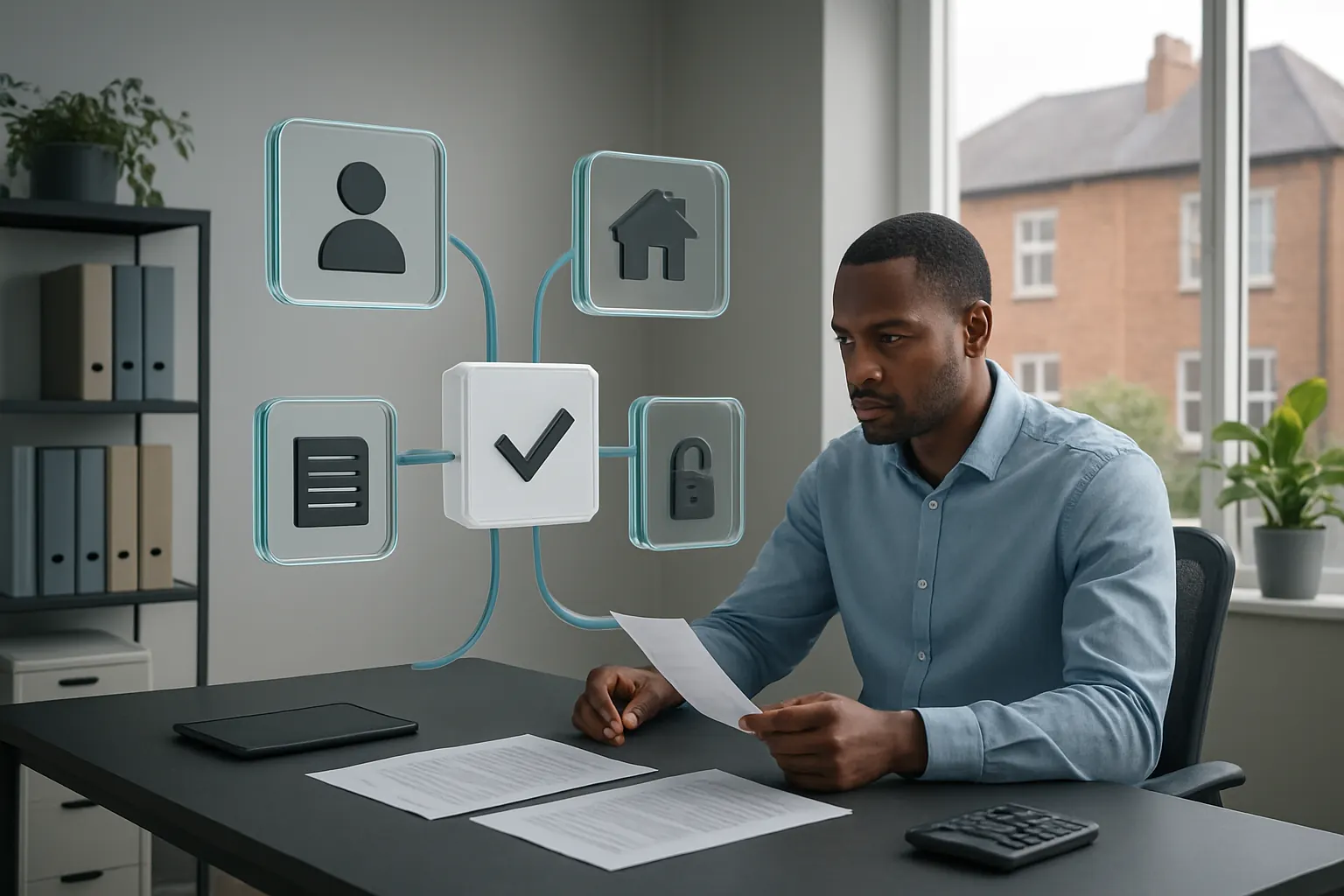
Lead Enquiry and Viewing Automation
Streamlining Tenant Enquiries Without Losing Control
Leads from property viewings generate critical data and feedback but often become bottlenecks. Manual scheduling and follow-ups waste admin time.
Connected Workflow for Tenant Insight and Engagement
Automate reminders to leads for booking confirmations, cancellations, or feedback after viewings. Integrate this with your CRM and calendar so property managers have instant visibility on status.
Useful Integrations Retain Existing Tools
Your current contact management and calendar applications stay in use. You gain an owned booking record that acts as a central log for tenant communications.
Example: Automated Viewing Feedback Request
After a viewing is attended or cancelled, an automated prompt requests feedback with options to reschedule. This data is emailed to the property manager and stored in the owned record.
Controls to Respect Tenant Privacy and Data Sharing
Ensure data capture complies with ICO guidance on tenant personal data. Tenants can opt-out of automated messages while important decisions, like tenancy offers, retain manager approval.

Tenant Application and Screening Workflow
Automating Application Capture Without Losing Human Insight
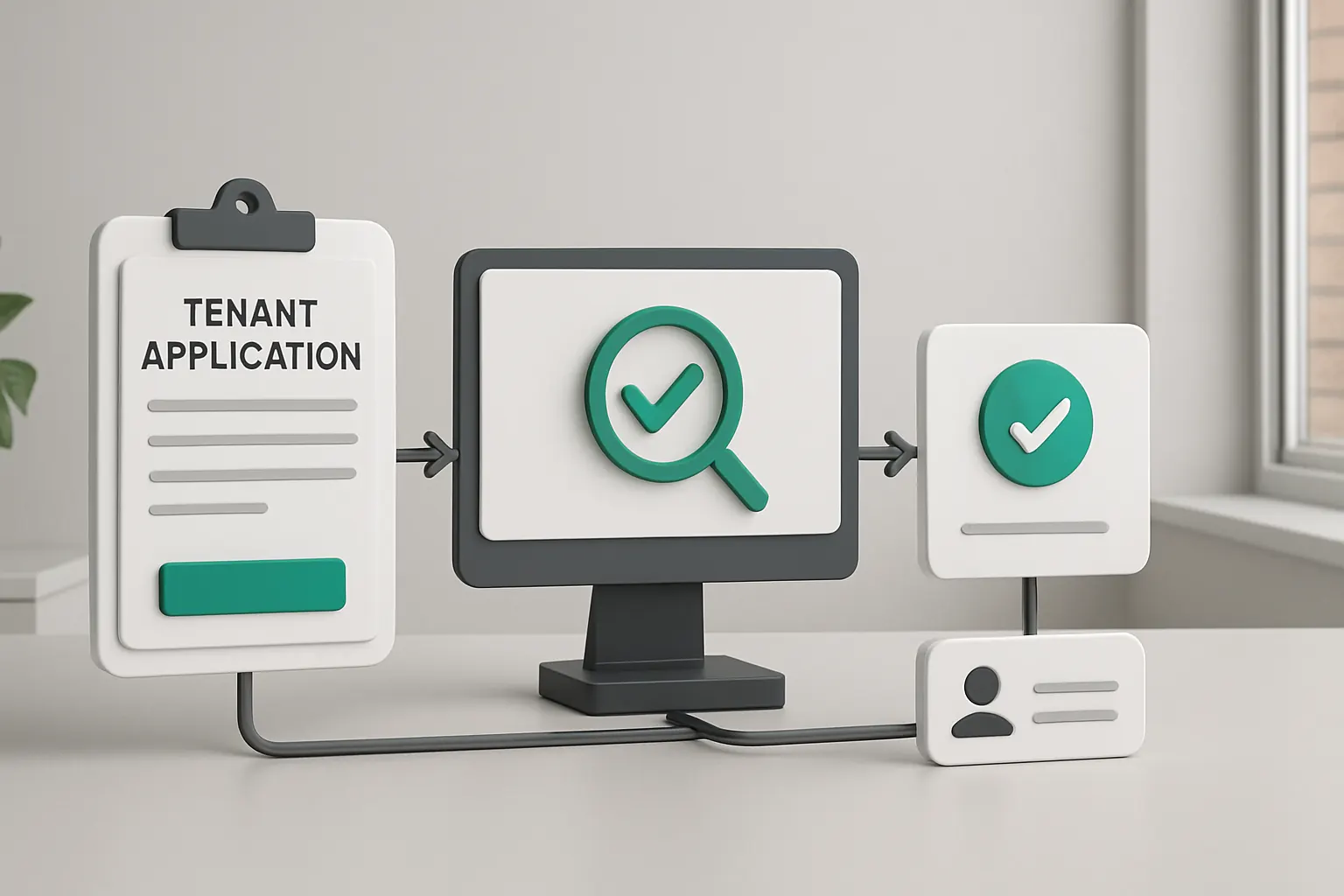
Tenant applications involve multi-step processes prone to delay. Online applications can reduce errors but need integration with background checks.
Bringing Tasks Together in One System
An owned tenant screening module collects applications, triggers automated income verification or background checks, then routes results for human review.
Useful Integrations to Support Specialist Checks
Selective external providers handle verifications or credit checks. These remain integrated but data flows into your own operational database.
Example: Streamlined Application Approvals
Applications enter via an online form linked to owned workflow. Automation flags incomplete submissions, then routes complete files to screening staff.
Compliance and Approval Controls
Rules govern data retention and sharing as per UK data protection law. Manager approval is required before tenancy acceptance notifications are sent.
Maintenance Request Triage and Scheduling
Tackling the Volume of Tenant Maintenance Requests
Maintenance is a workflow heavy with repetitive prioritisation, updates, and contractor coordination.
Connected Process to Categorise and Assign Requests
A triage module classifies requests by urgency and type using AI-assisted summaries. Routine cases trigger automatic assignments; complex cases escalate to staff.
Integration with Contractor Booking and Logs
Use APIs to send jobs to contractor scheduling tools, maintain a full owned record of when visits were booked, attended, or delayed.
Example: Automated Maintenance Prioritisation
AI reviews tenant submission describing a leaking tap, summarises issue, prioritises as low-urgency, and creates a work order visible to the contractor and tenant.
Safety and Privacy Controls
Systems track compliance with safety certificate dates and notify risk officers of pending renewals. Tenant location data is masked according to privacy requirements.
Routine Inspection and Compliance Reminders
Managing Inspection Frequency Without Missing Deadlines
Property inspections and compliance certificates must be conducted timely. Manual reminders often fail.
Centralised Scheduling with Automated Alerts
An inspection module monitors expiry dates for gas, electrical, and fire safety certificates. Automated reminders prompt teams or contractors weeks in advance.
Useful Integrations for Inspection Reports
Digitised reports are uploaded into the owned compliance record, linked to each property. External certifier portals remain but feed data automatically.
Example: Proactive Certificate Renewal Workflow
As a gas safety certificate approaches expiry, automated reminders schedule inspections. Reports update the compliance dashboard for owner review.
Controls for Compliance Traceability
All inspection approvals remain with responsible persons. Audit trails and attachments support regulatory checks by HSE or local authorities.

Owner Reporting and Financial Transparency
Improving Timely and Accurate Owner Communications
Owners demand up-to-date reports on rent collection, maintenance spend, and overall property performance. Manual report assembly is time-consuming.
Dynamic Dashboards Reflecting Real-time Data
A connected financial workspace pulls data from rent payments, invoice processing, and maintenance records into owner-specific dashboards.
Integrations for Payment and Invoice Processing
Retain specialist payment gateways and invoice OCR tools that feed clean data into your owned workflow with visibility over exceptions.
Example: Monthly Owner Dashboard Automation
At month-end, a customised report detailing income, expenditure, and upcoming maintenance posts to the owner portal automatically, reducing queries.
Controls Over Financial Data Sharing
Data-sharing is compliant with ICO guidance. Owners access only authorised financial summaries. Complex or disputed transactions await human review.

Invoice Routing and Approval Workflow
Reducing Invoice Processing Delays and Errors
Invoices come from multiple contractors with varying detail, causing delays in accounts.
Automating Invoice Capture and Routing
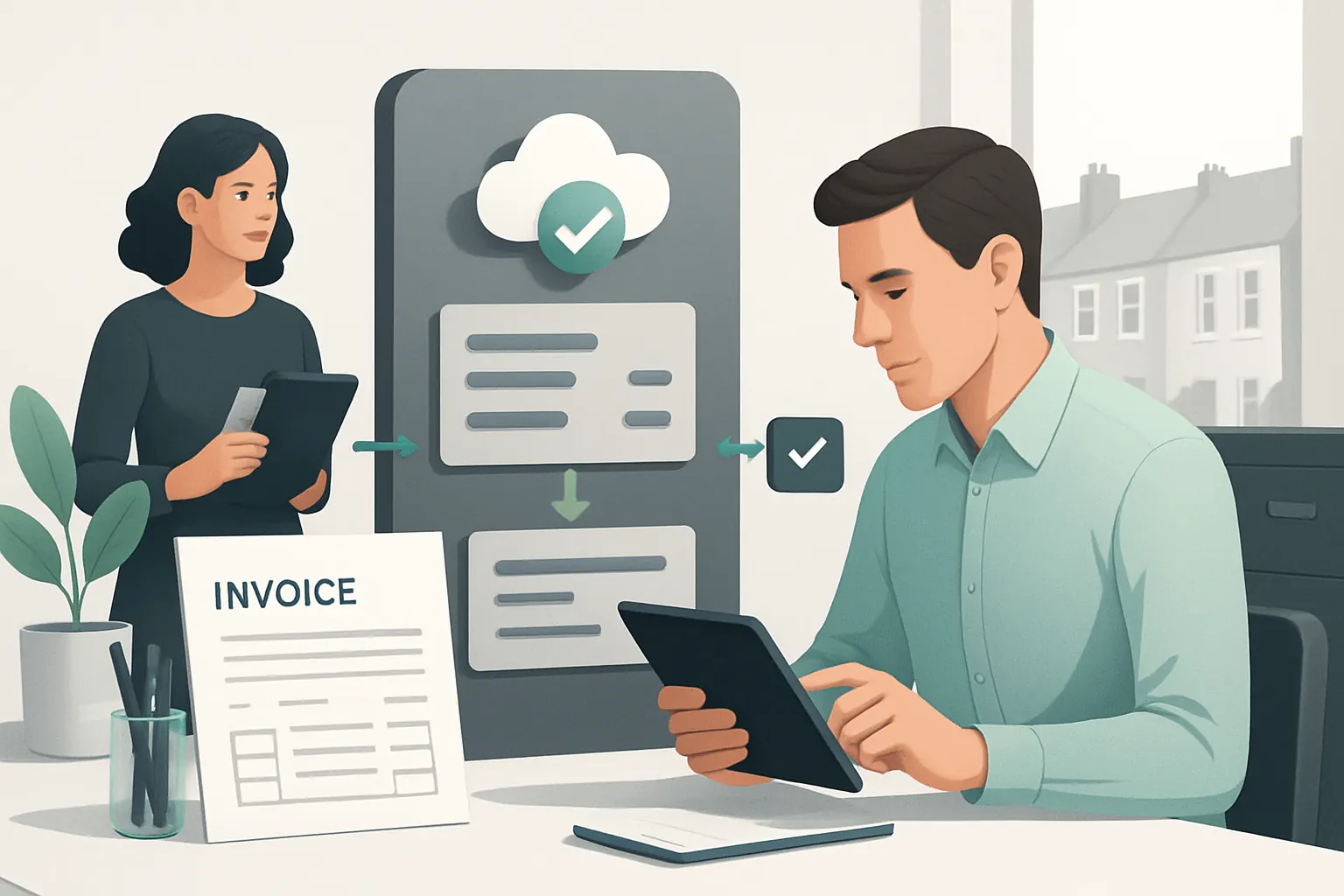
Your system extracts key invoice details and matches them to work orders, routing them to the correct finance team member for approval.
Seamless Integration with Finance Software
Invoices trigger payment requests in the existing accounting system, retaining specialist functionality but eliminating manual data entry.
Example: Automated Invoice Assignment
A painting invoice for a block’s communal area is auto-assigned to the contract manager for scrutiny and fast approval, speeding cashflow.
Controls to Safeguard Financial Accuracy
Rules prevent payments without verification of completed work. All approvals and rejections are logged for audit purposes.
Tenant Communication and Notification Workflows
Handling Diverse Tenant Communications Efficiently
Tenant queries, notices of entry, rent reminders, or updates require consistent, timely responses.
Tailored Messaging Workflows in One Owned System
Automate routine messaging by tenant segment and status. Track all communications within the tenant record, accessible to the property manager.
Integrations with Email and SMS Tools
Use external channels specialised in delivery and tracking but ensure message data flows back into your system.
Example: Automated Rent Reminder Cycles
Rent due reminders are sent in stages; initial notice, follow-up, and late payment alerts with escalation options to the finance team.
Controls for Tenant Data Privacy and Opt-outs
All communication complies with ICO consent regulations; opt-out manages marketing preferences without impacting mandatory messages.

Document Management for Tenancies and Compliance
Avoiding Document Fragmentation and Version Confusion
Important tenancy agreements, certificates, and notices are often dispersed.
Unified Document Repository Linked to Property Records
An owned digital document store enables controlled editing, version control, and easy retrieval by authorised users.
Integrate Digital Signing and Storage Solutions
Third-party e-signature providers remain connected, with final signed copies imported and linked within the system.
Example: Automated Tenancy Document Generation and Storage
Upon tenancy approval, agreements generate automatically with tenant data merged correctly, then stored securely with audit trail access.
Controls Over Document Access and Retention
Access permissions limit viewing to appropriate staff and tenants, respecting data protection and retention policies.

AI-assisted Prioritisation and Summarisation in Workflow
Applying AI Selectively to Reduce Cognitive Load
Instead of automating decisions, AI helps by classifying emails, summarising tenant requests, or prioritising maintenance.
Combining AI with Rule-based Deterministic Automation
Repeatable tasks use predefined rules; AI provides variable insights for exceptions that require human review.
Integration with Workflow Modules
AI outputs feed directly into owned task management, helping assign work accurately without replacing professional judgement.
Example: Summary of Complex Tenant Request for Team Review
An AI-generated summary highlights key points of a detailed email about damp, flagging urgency and recommended next steps.
Controls Ensuring Human Approval for Key Decisions
All AI suggestions are guidelines awaiting property manager approval before escalation or tenant updates.

Complaint and Feedback Tracking Automation
Capturing Resident Feedback Without Admin Burden
Manual collection of tenant complaints and post-maintenance feedback is inconsistent.
Workflow-embedded Feedback Requests and Escalation
Automated surveys are sent after maintenance jobs or tenancy renewals, feeding into a complaint management module for prompt attention.
Useful Integrations with Survey Tools
Specialist survey platforms interface to collect data, while summary scores and comments update your owned dashboard.
Example: Automated Issue Escalation Flow
Negative survey responses trigger alerts to managers, prompting outreach and rapid remediation.
Controls on Data Retention and Disclosure
Feedback data is confidential, stored securely under data protection rules with visibility restrictions.

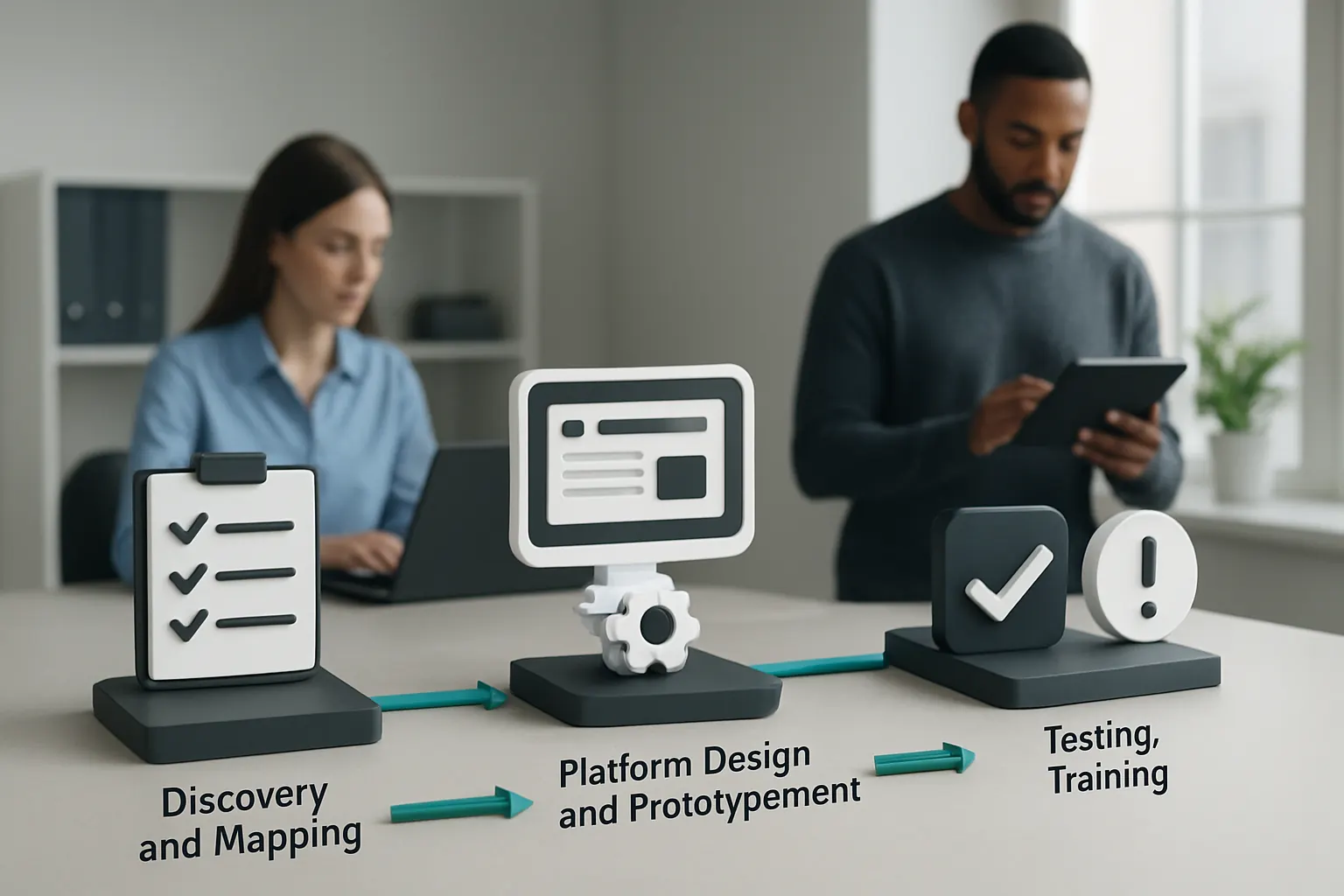
90-day Rollout Plan for Workflow Automation Success
Weeks 1–2: Discovery and Mapping
- Analyse current workflows, systems, and pain points.
- Map key tenant, owner, and contractor interactions.
- Identify integrations and data sources for connection.
Weeks 3–6: Platform Design and Prototype Development
- Build owned modules for lead booking, maintenance triage, and document management.
- Configure AI-assisted classification and prioritisation rules.
- Integrate specialist payment and communication services.
Weeks 7–12: Testing, Training, and Rollout
- Conduct pilot tests with real user groups.
- Train operational teams on new workflows and controls.
- Adjust automation rules based on feedback.
- Roll out fully with ongoing monitoring and support.
How AI Implementation UK Unifies and Automates Your Property Management
Our approach delivers one connected workspace crafted around your daily operations. We don’t replace your trusted systems but connect and extend them intelligently. By replacing avoidable software subscriptions with owned modules, we bring key operational data into a single reliable record and dashboard.
Selective AI capabilities support variable work like tenant request classification and reporting summarisation. We rely on deterministic, rule-based automation for predictable tasks. Most importantly, your team retains full control over critical decisions—supporting compliance work with ICO and security standards.
Partnering with AI Implementation UK means transforming residential property-management company workflow automation from patchy to powerful. Discover how to unlock lasting efficiency and transparency by consolidating your operation on a platform you own. Contact us to explore the next steps or visit our process automation services and data infrastructure preparation. Our case studies showcase success stories tailored to your sector.
For privacy and regulatory best practice, see guidance from the ICO and the NCSC. For payment processes, we align with advice from the PCI Security Standards Council.
Streamline your property management operations, reduce administration, and enhance tenant and owner satisfaction by moving beyond fragmented software. Embrace a connected, owned system designed around your way of working.