
A practical guide to property maintenance company automation software, connecting business systems, reducing repetitive admin and creating one operating platform.
Property-maintenance company automation software: What Breaks Daily
Property-maintenance companies manage complex workflows daily—from tenant repair requests and emergency repairs to contractor scheduling and evidence capture for compliance. Despite their critical role, many firms still struggle with disconnected systems, manual data entry, and siloed information that breaks operational flow. This results in delayed responses, missed maintenance deadlines, unhappy tenants, and compliance risks.
Common daily breakages include duplicated work orders, inefficient contractor matching, unreliable record-keeping, and a flood of repetitive admin tasks pulling focus from urgent property needs. Fragmented software subscriptions add costs and complicate integrations, while critical data stays locked away in spreadsheets or emails rather than becoming a single, actionable source of truth.
A smarter, integrated approach to property-maintenance company automation software is essential. One that owns the workflow, links existing technology where it matters, replaces expensive recurring tools with owned modules, and brings operational data into a single, reliable record with tailored dashboards. This is exactly where AI Implementation UK steps in.

The Cost of Manual Work in Property Maintenance
Manual processes in property maintenance result in direct and hidden costs:
- Wasted staff time on data duplication, chasing paperwork, and manual scheduling.
- Increased error rates leading to overlooked repairs or incorrect prioritisation.
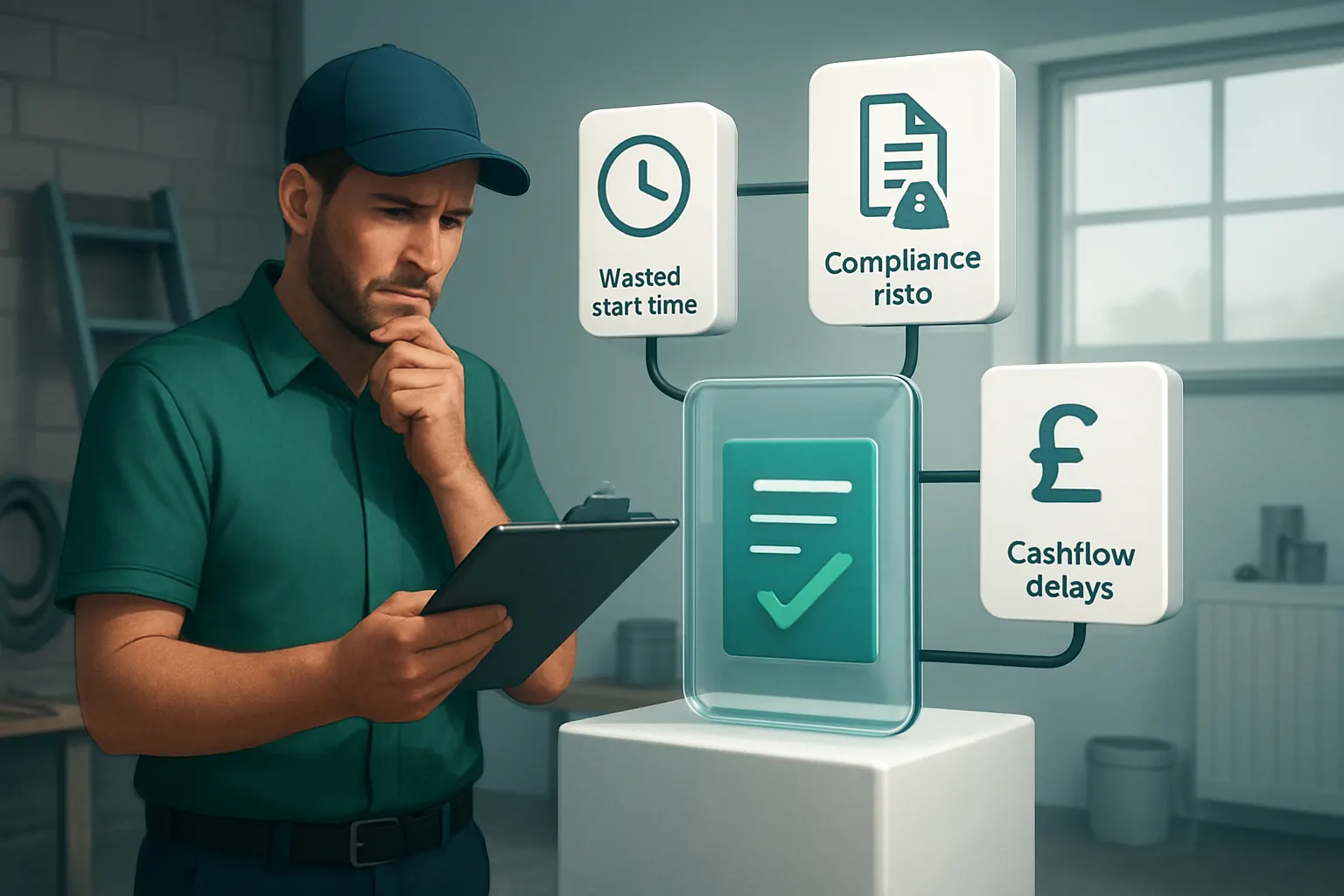
- Compliance risks from poor record-keeping, document expiry, and missing safety certificates.
- Cashflow delays as faulty invoicing and payment handling slow down revenue.
These factors reduce customer satisfaction and impact profitability. Automating repetitious tasks and connecting workflows enables property-maintenance companies to focus on high-value decisions, maintain compliance controls, and improve financial precision.
Moving from a fragmented toolset to a connected operating structure creates resilience and unlocks growth opportunities.
Enquiry to Tenancy or Instruction: Seamless Workflow Integration
Fragmented Intake Slows Repair Triage
Manual capture of tenant repair requests or new tenancy instructions often results in lost details or duplicated communication. Property managers spend hours juggling emails, calls, and spreadsheets rather than progressing the job.
Connected Workflows Remove Silos
Integrating enquiry intake with automated triage modules routes tasks based on urgency and type. Existing CRM or tenant portals can feed into owned workflow engines that assign priority, open work orders, and notify relevant teams or contractors.
Useful Integrations in Practice
Common integrations include tenant portal APIs, email parsing, and SMS gateways to capture enquiries centrally. External tools like Twilio or Stripe may remain for outbound communication or secure payments but are embedded into one system.
Example: Overnight Triage with Rule-based Prioritisation
At AI Implementation UK, we configure triage logic to flag emergency plumbing request at 2am, immediately escalating and opening an emergency work order—with request summaries generated automatically but subject to human review.
Clear Controls for Compliance and Quality
The triage module logs timestamps, exceptions, and human approval points, supporting compliance with tenant safety and privacy standards.

Contractor Scheduling and Rota Management: Coordinated and Responsive
Overlapping Assignments and Manual Route Planning
Scheduling contractors manually leads to overlapping jobs, missed deadlines, and inefficient routing. Operations teams spend significant time rearranging rotas if last-minute tenant availability changes or urgent repairs arise.
Dynamic Scheduling with Owned Modules
A central scheduling workspace linked to contractor profiles, availability calendars, and job status updates reduces errors and delays. The system dynamically optimises routes while preserving flexibility.
Integrations with CalDAV and Geolocation
Connecting with calendar standards and mapping APIs improves route efficiency. Specialist tools for communication, such as Microsoft Teams or Slack, stay integrated but do not replace core scheduling records.
Example: Automated Reassignment for Emergency Repairs
When an urgent repair arises, the system identifies the closest available contractor and reassigns jobs accordingly, sending notifications and updating dashboards instantly.
Controls for Contractor Credentials and Availability
The database enforces that only qualified contractors receive certain job types, with alerts for impending expiries of required certificates or insurance.

Completion Evidence Capture: Reliable Record-keeping in One Place
Paper Forms and Emails Cause Fragmentation
Proof of completed repair work often exists in photo attachments, manual forms, or verbal reports—leading to lost evidence and compliance risks.
Embedded Evidence Upload and Verification
Owned systems provide mobile-friendly interfaces for contractors to upload photos, sign-off forms, and notes directly against work orders. This keeps the data linked to tenancy and property records.
Use of Digital Signatures and Time Stamps
Integrating timestamping mechanisms and secure digital signatures maintains data integrity. External specialist tools (e.g., DocuSign) may be linked but embedded within the overall workflow.
Example: Mobile Contractor App for Evidence
A contractor finishing a boiler repair uploads photos and completes a digital checklist via an app. The submission triggers a supervisor review workflow before finalisation.
Compliance Controls and Audit Trails
All uploads are logged and accessible via dashboards supporting compliance audits, including GDPR and safety certificate enforcement.

Document Reminders and Expiry Management: Staying Ahead of Compliance
Missed Renewals Create Safety and Legal Risks
Expiring safety certificates, insurance documents, and compliance reports present ongoing administrative challenges, with penalties or insurance gaps resulting from missed deadlines.
Automated Alerting and Follow-ups
An owned module captures document expiry dates and automatically reminds relevant staff or contractors. Repeat reminders are configurable with escalation policies.
Helpful Calendar and Email Integrations
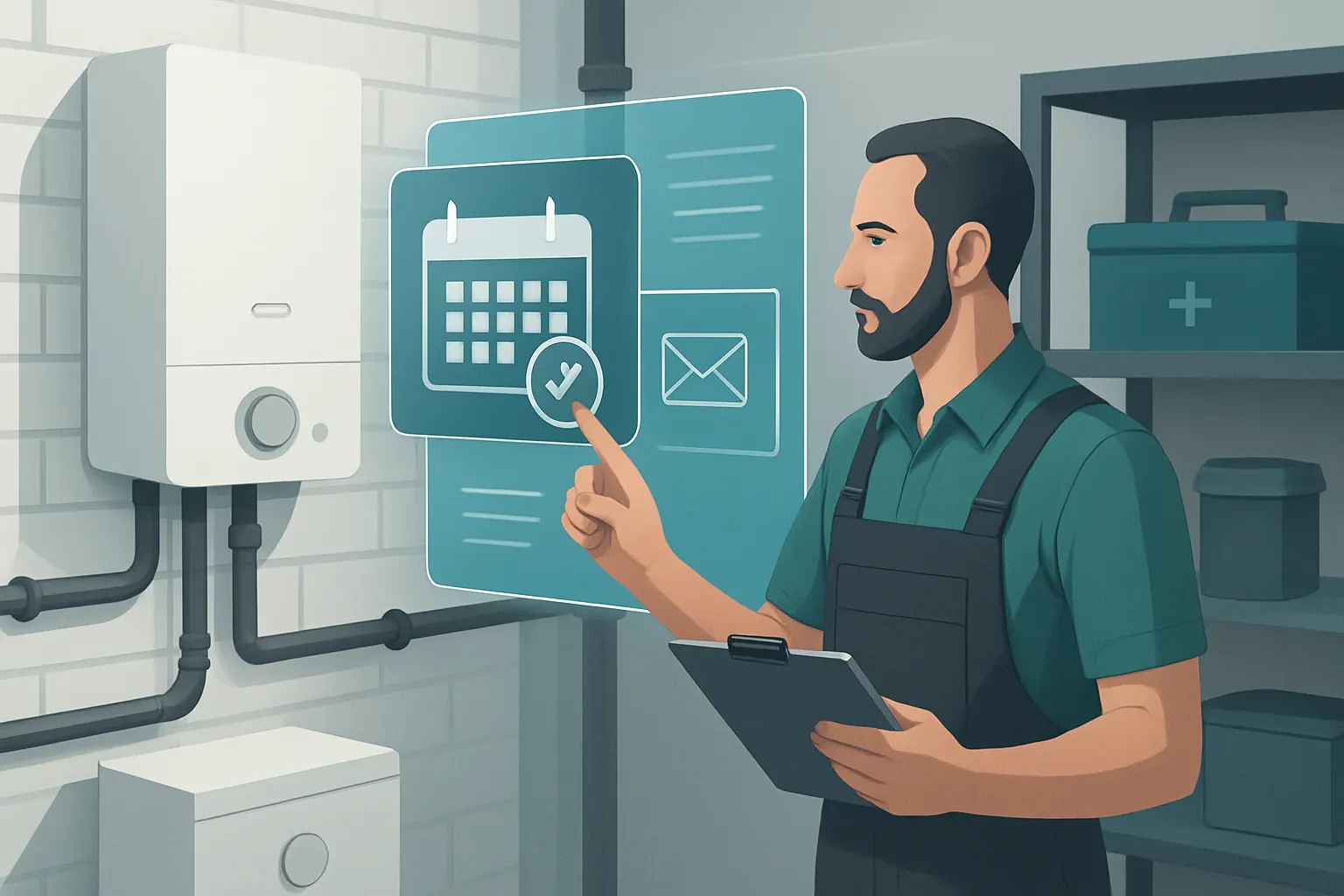
Integrations with Microsoft Outlook or Google Workspace calendars push reminders to individuals, while email templates automate follow-ups.
Example: Safety Certificate Renewal Workflow
When a gas safety certificate approaches expiry, the system emails contractors a reminder and escalates if no response within 7 days, flagging management if overdue.
Controls Prevent Premature Renewal Actions
Approval checkpoints and exception handling allow verification that all prerequisites are met before renewal actions proceed.
Owner and Tenant Reporting: Transparent and Tailored Dashboards
Fragmented Reporting Frustrates Stakeholders
Owners and tenants often receive inconsistent updates, impacting transparency and trust.
Single Data Record Drives Feedback
By consolidating operational, financial, and status data, the system generates consistent, personalised reporting for each stakeholder.
Examples of Real-time Tenant Portals
Dashboards offer status tracking of ongoing repairs, upcoming inspections, and financial statements. Email and SMS alerts summarise updates.
Real-world Example: Owner Dashboard with Financial Summary
A landlord accesses a secure portal summarising maintenance costs by property and highlights compliance deadlines—with filters and export capabilities.
Controlled Access and Privacy Safeguards
User roles and permissions restrict what data tenants versus owners can view, ensuring GDPR compliance.

Variable Work AI: Selective Automation for Complex Decisions
Daily Human Decisions Require Support, Not Replacement
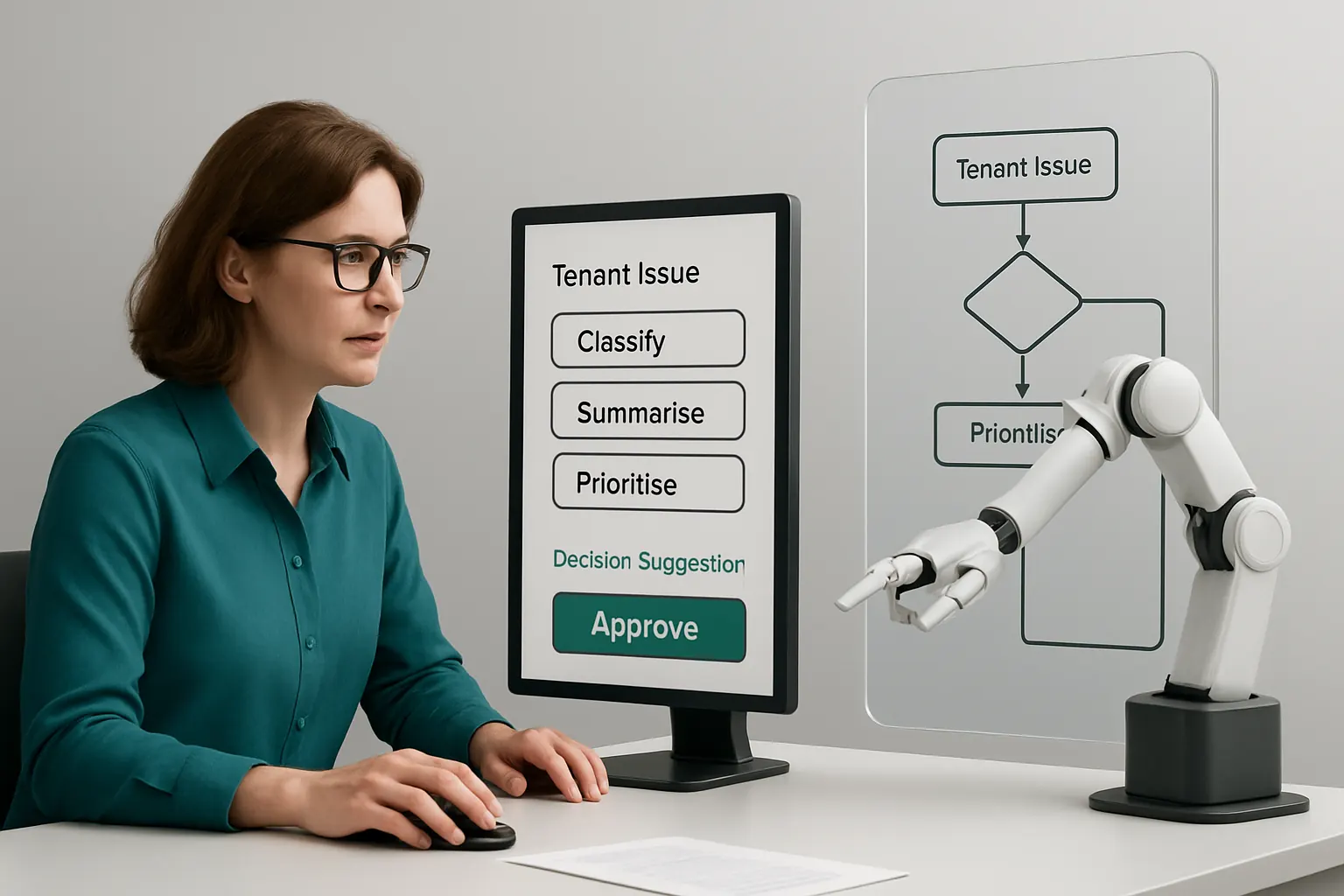
Understanding tenant problems or maintenance impact often requires human judgement. AI here assists with task classification, summarisation, prioritisation, and decision suggestions.
Hybrid Model: AI plus Deterministic Rules
Predictable tasks use deterministic rules, while AI handles variable scenarios. Human approval remains mandatory for important decisions like emergency escalation or financial authorisations.
Integration with Natural Language Processing Modules
AI processes incoming textual enquiries or contractor notes, summarising main points and evaluating sentiment or urgency for triage.
Example: AI Summarises Tenant Repair Requests Overnight
AI parses emails received outside office hours, drafts summaries, and pre-fills work orders pending human review the next business day.
Controls and Transparency Built-in
AI outputs are logged, with all exceptions flagged for manual review supporting compliance work and trustworthiness.
Replacement of Avoidable Software Subscriptions: Cost Savings on Owned Modules
Multiple Small SaaS Subscriptions Bloat Costs
Companies often pay monthly for many specialised apps that duplicate functionality.
Consolidate Core Functions into Owned Systems
AI Implementation UK builds owned modules for workflows such as rota management, document tracking, and evidence capture—eliminating several recurring licenses.
Using SaaS Selectively for Specialist Services
Only critical, stable external tools like payment gateways (e.g., GoCardless) or communications (e.g., Twilio) are retained and tightly integrated.
Example: Replacing Separate Route Planning and Document Storage Tools
Replacing separate desktop route planners and cloud file storage with integrated built-in maps and document management reduces complexity and cost.
Budget Controls Through Usage Monitoring
Dashboards track module utilisation and subscription costs, providing financial visibility and control.
Bringing Operational Data into One Reliable Record
Challenge of Scattered Data Sources
Data about properties, tenants, contractors, maintenance tasks, and payments often spread across systems or manual files.
Unified Records Enable Reliable Decisions
Centralising relevant data in a single owned system produces a reliable, auditable work record.
Integration with Existing Databases and APIs
Legacy property management systems stay connected via APIs or data import routines. New forms and documents feed directly into the unified record.
Example: Comprehensive Property History for Each Asset
When scheduling maintenance, staff can instantly access prior issues, contracts, and compliance status aggregated in one place.
Data Integrity Controls
Automated validation routines and exception reporting detect inconsistencies or missing data, supporting operational accuracy.

Workflow Automation Tailored Around the Business
Off-the-shelf Software Doesn't Reflect Daily Reality
Standard SaaS products impose fixed workflows that may not align with your specific business processes or compliance obligations.
Custom Workflow Engines Designed with the Team
A core strength of AI Implementation UK is designing workflow automation built around your actual operational steps—supporting flexibility, exceptions, and human decision points.
Connecting Systems Without Lock-in
Existing tools continue working where suited, integrated rather than replaced, preserving investments while enhancing efficiency.
Example: Approval Chains for Contract Authorisation
Automated notifications guide managers through contract and purchase approvals, with pause points for review supported by digital audit trails.
Rigorous Change Management and Training
Configurations evolve with business needs, involving user input to prevent process drift or inadvertent compliance breaches.
Financial and Payment Integration with Operational Controls
Disconnect Between Operations and Payments Causes Revenue Delays
Uncoordinated invoicing, payment collection, and contract records cause bottlenecks and errors in cashflow.
Embedded Financial Workflows Linked to Jobs
Integrating payments directly within the workflow ensures all billable work triggers invoicing and tracks payment status.
Selective Use of Trusted Payment Providers
PCI-compliant payment gateways such as Stripe or GoCardless handle financial transactions securely, while the owned system tracks authorisation and exceptions.
Example: Auto-generation of Invoices Post-Completion
Once a job is marked complete with evidence accepted, the system automatically generates and sends an invoice, flagged for human review if any exception arises.
Controls Supporting FCA and PCI Security Standards
Financial permissions and audit logs align with FCA guidance on outsourcing and the PCI Security Standards Consortium best practices.

90-Day Rollout Plan for Automation Success
Weeks 1–2: Discovery and Prioritisation
- Assess current processes, software landscape, and pain points.
- Identify key workflows for immediate automation impact.
- Map data sources and compliance requirements.
Weeks 3–6: Build and Integrate Core Modules
- Develop enquiry triage, contractor scheduling, and document reminder modules.
- Connect relevant existing systems and external APIs.
- Test workflows with end users and refine controls.
Weeks 7–12: Scale, Train, and Embed
- Deploy completion evidence capture mobile tools.
- Roll out owner and tenant dashboards.
- Configure AI-assisted classification and summarisation.
- Conduct comprehensive user training and support.
- Monitor usage, exceptions, and financial impact.
How AI Implementation UK Connects, Replaces and Automates Your Operations
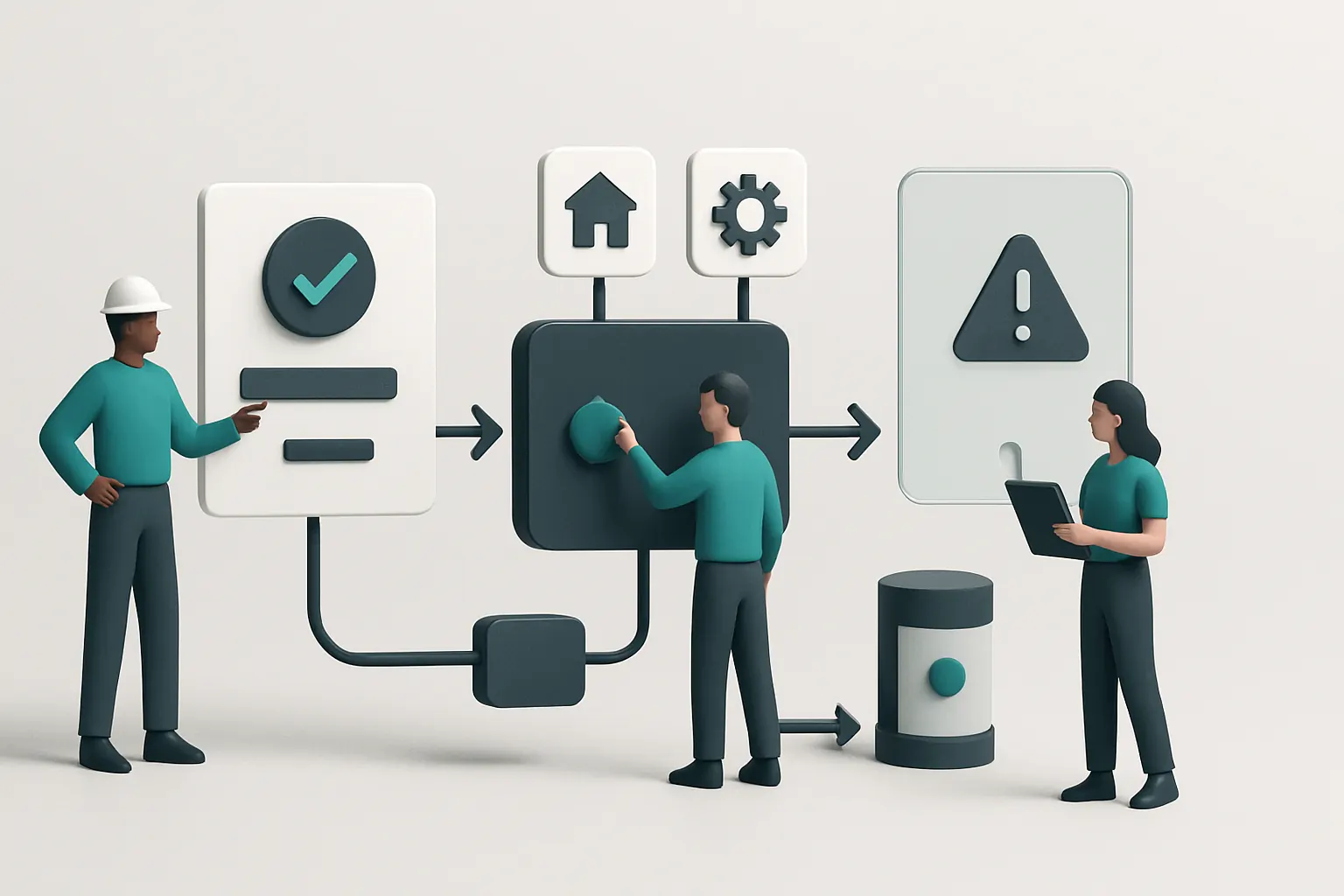
AI Implementation UK helps property-maintenance companies move from fragmented, manual-heavy environments to automated, integrated operating workspaces that the client owns. We begin by connecting useful existing systems rather than replacing everything all at once. Next, we identify costly and avoidable subscriptions, building owned modules that save money and simplify workflows.
Our approach centres on creating one reliable record that consolidates data from tenants, contractors, and financial systems into tailored dashboards for staff, owners and tenants. AI is deployed selectively—handling variable, knowledge-intensive work such as repair request summarisation or job prioritisation—while deterministic rules drive routine tasks. Importantly, key decisions remain subject to human review and control, preserving compliance and operational oversight.
If you want to explore how property-maintenance company automation software can be customised around your business—and see practical examples of repair triage, contractor scheduling and completion evidence automation—visit our process automation and RPA services page or plan your platform with our team.
For a robust data foundation enabling automation and AI integration, have a look at our data infrastructure preparation solutions. Staying compliant and secure is crucial—refer to the ICO guidance on data protection and the NCSC for security best practices.
Efficiency, resilience and tenant satisfaction start with owning your automation workflows. Let us help you make that happen.