Learn how medical staffing agencies can connect systems, reduce manual admin and automate referral to appointment with one tailored operating platform the business.
Medical staffing agency workflow automation: What Breaks Daily
Medical staffing agencies operate in a high-pressure environment, juggling candidate sourcing, compliance checks, shift fulfilment and timesheets to meet the fast and complex demands of healthcare clients. Yet, day-to-day operations frequently fracture under avoidable issues:
- Delays caused by manual referral triage and candidate onboarding.
- Duplicate data entries across multiple disconnected systems.
- Missed or incomplete compliance documentation, risking contractual penalties.
- Inefficient shift scheduling and last-minute cancellations.
- Fragmented reporting and unclear visibility of operational performance.
These breakdowns ripple through workflows, interrupt care continuity and place undue stress on clinical and administrative staff. Frontline employees end up firefighting data errors and admin bottlenecks, rather than focusing on service quality and candidate care.
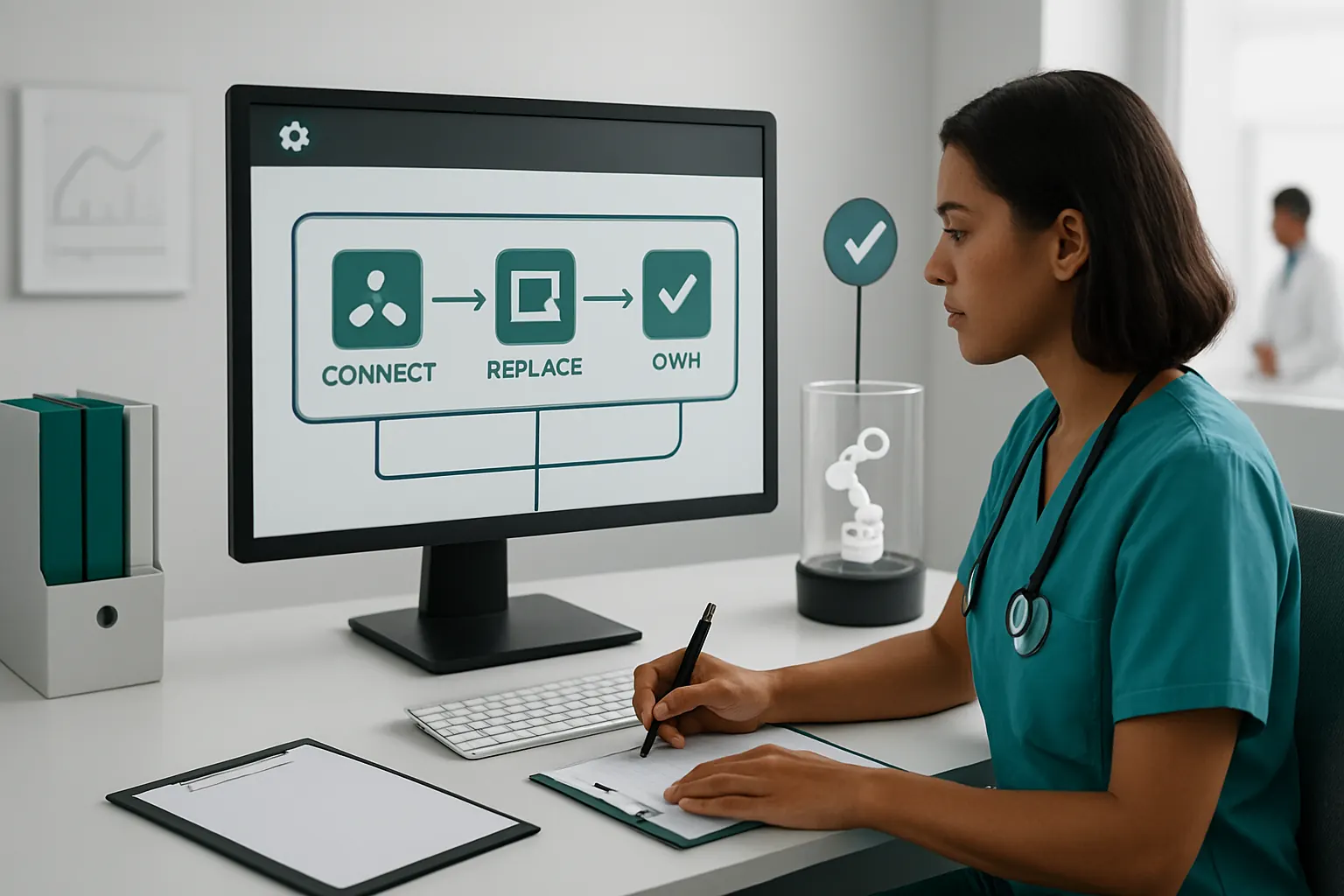
Medical staffing agency workflow automation is no longer optional. It must be aligned with how the business actually works—building a single, owned record that connects existing systems, replaces unnecessary subscriptions, and deploys AI selectively to enhance rather than replace human judgement.

The real cost of manual and fragmented processes
Beyond daily friction, small inefficiencies accumulate significant costs:
- Excess hours spent on repetitive data entry and chasing paperwork reduce profitability.
- Compliance oversights risk fines or contract termination with NHS trusts and private providers.
- Payment cycles stall due to invoice errors, putting pressure on cashflow.
- Candidate experience suffers from slow communication and unclear shift details.
- Lack of consistent operational data inhibits confident decision making.
For medical staffing agencies, each manual step or disconnected piece of software is a risk multiplier. The right connected automation recaptures time, sharpens compliance controls, accelerates billing, and brings transparency without forcing wholesale replacements.

Unifying Candidate Referral to Appointment Processes
Fragmented referral workflows cause delays and frustration
Referral to appointment is the front door of operations. Agencies rely on spreadsheets, email threads and standalone applicant tracking systems (ATS) that don’t sync with compliance records or shift schedules. This results in missed communication, lost candidate details and slow onboarding.
Streamlining referral intake within a connected workflow
A connected workflow digitises referral capture and screening to a single owned record, populated from existing HR or ATS modules. It enforces eligibility checks before progressing and flags non-compliance early, without duplicate data input. Shift availability and client requirements feed directly into scheduling modules.
Keeping specialist ATS and communication tools integrated
Where agencies rely on a specialist healthcare ATS for candidate sourcing, this can remain connected via secure API links. Similarly, SMS or email communications stay subscribed but integrate with the central system to log outgoing messages and candidate responses.
Example: Faster compliance checks and shift offers
An agency reduces candidate vetting from referral to first offered shift from 7 days to 48 hours by replacing spreadsheet checks with automated rule-driven triage. Candidate compliance documents are scanned into the owned record, and the rota module immediately presents available shifts matching candidate qualifications.
Human controls and audit trails support compliance work
All AI-assisted classification and document routing include human review steps before candidates move to appointment. The central record maintains evidence of compliance and approval timestamps to support audit requirements and clinical oversight.

Enhancing Candidate Compliance Automation
High error rates and missing documents are operational risks
Manual management of clinical qualifications, DBS checks and professional registrations is time-consuming. Missed renewals or gaps expose clients to risk and slow payroll processing.
Owned compliance modules replace subscription overheads
Instead of multiple paid compliance solutions, agencies benefit from an integrated owned system with configurable rules and scheduled expiry alerts. AI classification assists by scanning uploaded evidence for key renewal dates and document types.
Integrations with professional bodies and document verification
Where available, direct integration with professional registers or verification services checks candidate status and updates records automatically. When real-time verification isn’t feasible, flagged exceptions prompt human intervention.
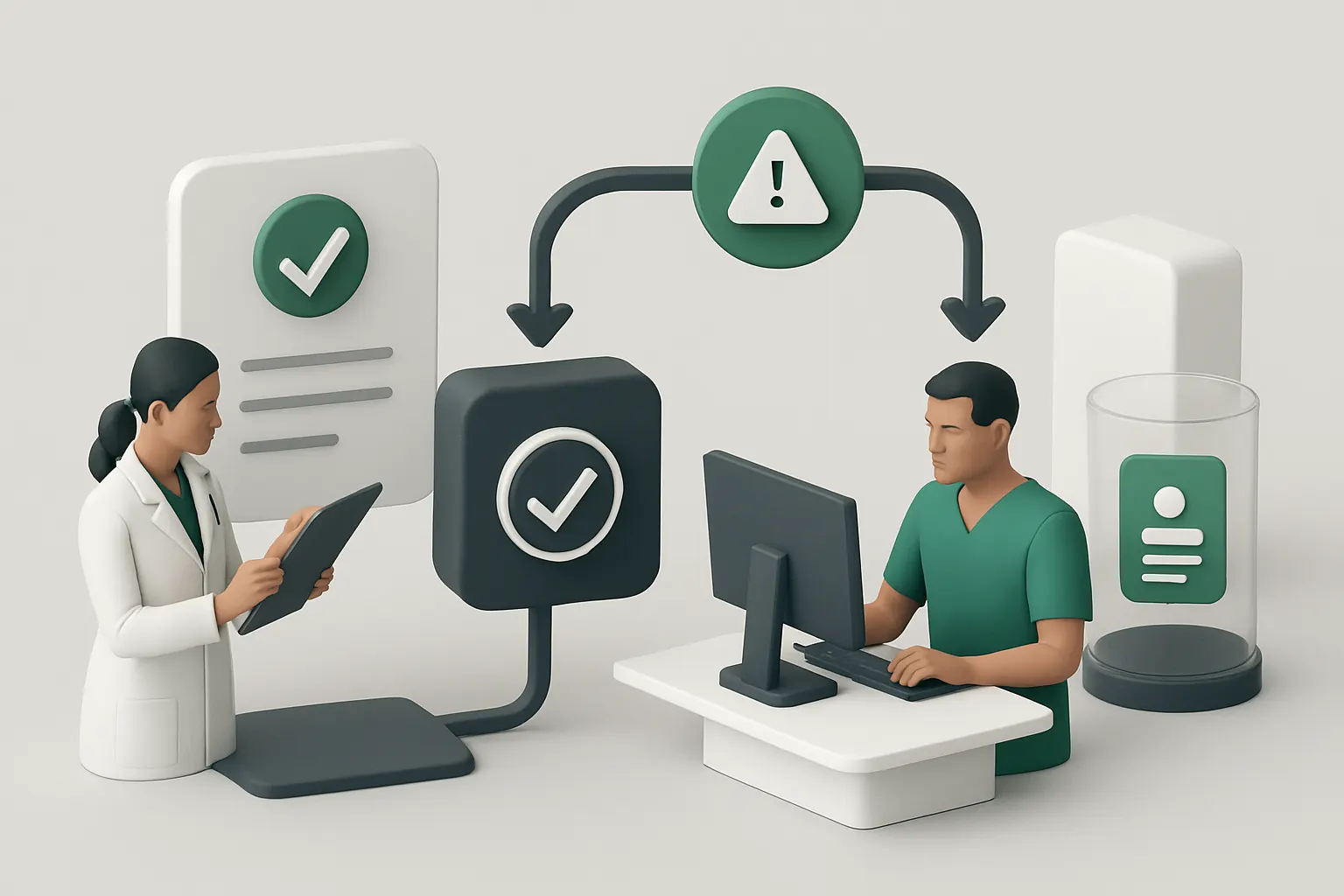
Example: Automated expiry alerts and compliance scoring
A compliance manager receives weekly digests highlighting expiring credentials, prioritised by risk level. Candidate records are scored on completeness and flagged for immediate follow-up weeks before expiry, reducing last-minute compliance emergencies.
Compliance remains a human responsibility
Rule-based compliance scoring informs reviewers but does not replace their decision. Audit logs record every data change and approval. This supports compliance with GDPR special category data standards overseen by the ICO and care continuity obligations.
Optimising Shift Fulfilment and Rota Management
Last-minute cancellations and shift swaps disrupt operations
Manual rota management struggles to balance candidate availability, client demand and real-time changes. Lack of a connected system leads to overbooked shifts or unfilled roles.
Connected scheduling with workflow-driven automation
An owned rota module feeds automatically from candidate availability and client bookings. Automated notifications remind candidates of upcoming shifts, offering streamlined swap or cancellation requests that update the central record.
Integrating payments and communications channels
Payment services integrate to push or pull data for shift pay calculations. Appointment reminders and swap confirmations use existing communications subscriptions but remain linked to the central workflow, ensuring clear audit trails.
Example: Automated prioritisation of shift replacements
When a shift is cancelled, AI categorises candidate pool by compliance status, past attendance and proximity. Rules assign highest priority to qualified substitutes, notifying them instantly. Human rota managers retain final approval to assign replacements.
Controls ensure customer contractual obligations
Shift fulfilment automation includes dashboards displaying fill rates and pending approvals in real-time. Alerts for low coverage enable proactive staffing, supporting NHS contract performance monitoring by supervisors.

Streamlining Timesheets and Invoice Processing
Manual time capture delays payroll and invoicing cycles
Fragmented timesheets collected by paper or multiple systems create delays and errors. Payment reconciliation is slowed by mismatched or missing timesheets, impacting agency cashflow.
Single owned timesheet record with automated validations
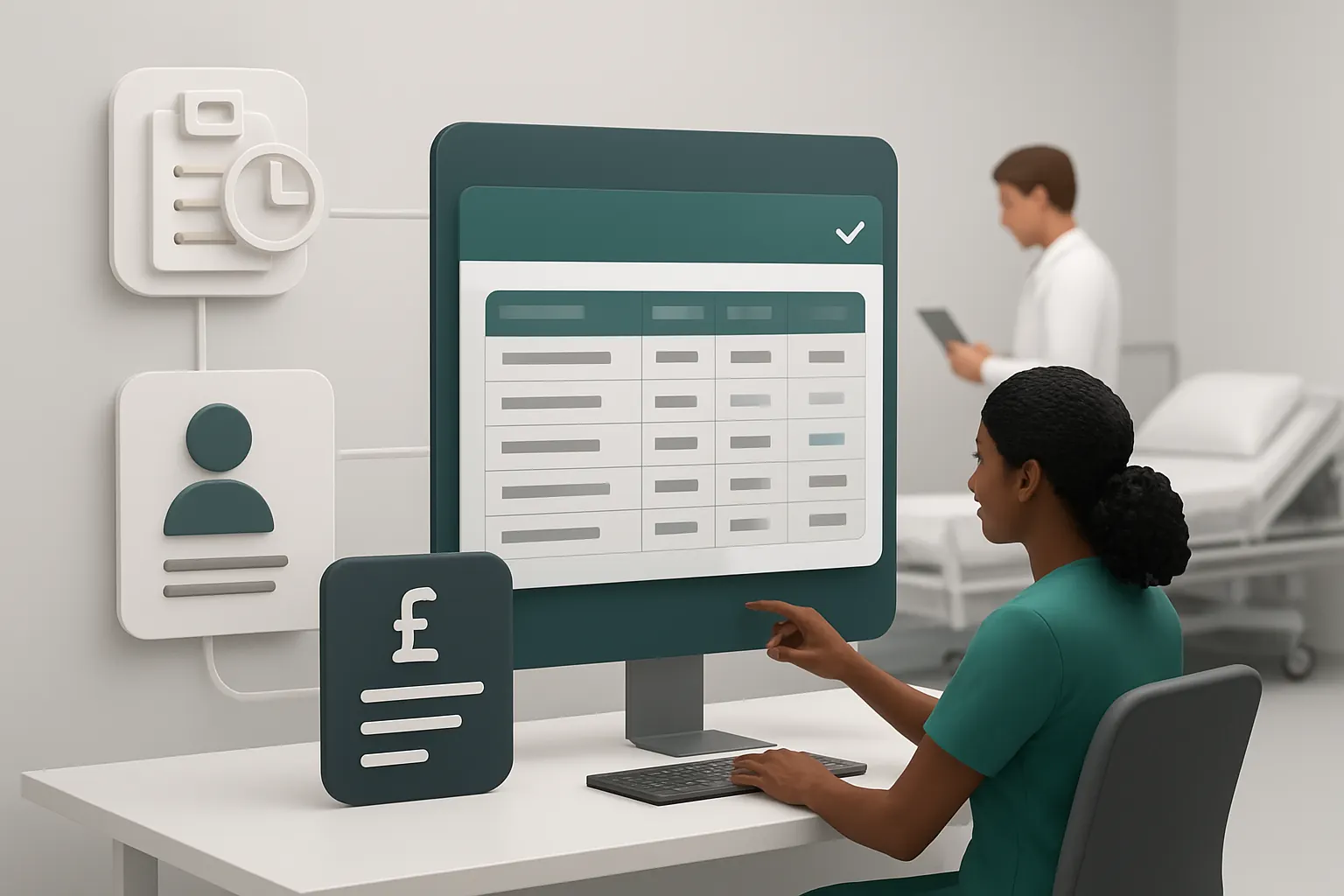
Timesheets feed into an owned financial workspace verifying shifts against rotas and compliance status. Automatic rule-based validation detects anomalies—missing signatures or overtime—and generates prompts for resolution before invoicing.
Specialist payment gateway integration
Payment processing integrates with secure merchant services compliant with PCI standards, reducing manual handling of card details and providing clear transaction histories linked to staff payments.
Example: Reducing invoice processing from weeks to days
The new system cuts administrative overhead by triggering invoice drafts automatically once timesheets clear validation. The finance team reviews flagged exceptions rather than chasing every record, accelerating client payments and stabilising cashflow.
Financial controls preserve audit and regulatory standards
All time and payment data are permanently recorded with user actions timestamped, preserving audit trails. This supports client contract requirements and adherence to FCA guidelines on financial data security where relevant.
Consolidated Operational Data and Tailored Dashboards
Disparate systems obscure true operational performance
Without a single source of truth, agency leaders waste time aggregating reports from disconnected software. Decision-making reflects fragmented or outdated information.
Bringing data into one coherent workspace
An owned business intelligence layer consolidates operational, compliance and financial data streams into a reliable record. Tailored dashboards deliver role-specific KPIs to recruitment managers, compliance officers and finance teams.
Incorporating AI-driven summarised insights
AI summarisation highlights bottlenecks—such as referral backlogs or compliance shortfalls—and suggests actionable areas. Prioritisation modules help direct human attention where it matters most.
Example: Real-time visibility for proactive management
A compliance director’s dashboard displays daily candidate compliance trends alongside shift fill rates and timesheet accuracy. Automated reports highlight exceptions for quick resolution meetings, reducing operational surprises.
Controls balance automation and human judgement
Insights are advisory, not prescriptive. Detailed drill-downs enable managers to verify data sources or override AI-suggested actions. Transparency of algorithms and data versioning ensure trust and regulatory compliance.

A 90-day rollout plan for sustainable automation success
Weeks 1–2: Discovery and foundation-building
- Map existing workflows, systems and pain points with key stakeholders.
- Identify critical integration points (HR systems, ATS, verification services).
- Establish data governance policies considering ICO and GDPR guidance on healthcare data.
- Design the owned record structure aligned to business processes.
Weeks 3–6: Core system build and integrations
- Develop owned modules for referral intake, compliance tracking and rota scheduling.
- Connect existing specialist tools (communication platforms, ATS) via APIs.
- Configure AI rules for document classification, triage support and prioritisation.
- Conduct initial user training focused on compliance and data entry controls.
Weeks 7–12: Testing, refinement and adoption
- Pilot automation workflows with select teams, iterating fixes based on feedback.
- Deploy dashboards with real-time indicators for operational teams.
- Establish review procedures and approval controls supporting compliance and audit readiness.
- Formalise ongoing support and expansion roadmap including potential finance workspace integration.
How AI Implementation UK can connect, replace and automate your operation
Medical staffing agencies must evolve beyond patchy SaaS collections towards owning their process automation within a single, connected operating environment. AI Implementation UK specialises in delivering this outcome by:
- Designing an owned workspace built around how your business functions, not forcing adaptation to generic software.
- Connecting your existing useful systems securely to safeguard your investment and preserve specialised capabilities.
- Replacing avoidable subscription software with tailored owned modules for candidate compliance and shift management.
- Introducing AI selectively for tasks such as referral triage and prioritisation while preserving human oversight for regulated decisions.
- Consolidating operational, compliance and finance data into one reliable record with intuitive, role-based dashboards.
Our approach aligns with UK healthcare regulations and data privacy best practices. We prioritise transparency, human controls and audit trails throughout the automation journey.
Discover more about how we help healthcare workforce providers automate complex workflows without fragmentation at our process automation services and prepare your data infrastructure at data infrastructure preparation. Real-world success stories demonstrate the benefits at solution blueprints.
For a practical consultation on building your owned automation solution, explore the tailored options in our platform planning services.
By tightly integrating workflows from referral to payment and embedding compliance at every stage, your medical staffing agency can cut costs, accelerate candidate onboarding and stabilise cashflow—while improving care continuity and audit readiness.
Automation built for your business, not the other way round: that is medical staffing agencies automation done properly.