
Learn how pest control companies can connect systems, reduce manual admin and automate enquiry to contract with one tailored operating platform the business owns.
Pest-control company workflow automation: What Breaks Daily
Pest-control company workflow automation should connect bookings, people, communications and reporting in one reliable operating flow.
Pest-control companies operate under continual pressure from unpredictable customer demand, strict safety regulations, and urgent service schedules. The daily reality includes missed or delayed customer enquiries, inefficient technician routing, fragmented records from multiple systems, and cumbersome manual administration.
Disconnected software tools or reliance on spreadsheets create bottlenecks. Vital information often sits trapped in siloed apps: booking details on one system, service compliance on another, invoicing elsewhere. Manual data transfers and duplicate entry increase errors and frustrate staff. Critical compliance steps risk being missed or poorly documented.
Without a streamlined workflow, this stress compounds. Service quality can deteriorate, missed jobs become lost revenue, and cashflow suffers due to invoicing delays. The industry demands a practical, connected approach that links people, processes and data — with automation targeted where it makes daily work simpler and more reliable.

The Cost of Manual Work in Pest Control Operations
Manual workflows in pest control expose businesses to multiple costs:
- Time Waste: Staff spend hours on repetitive admin tasks — booking management, data entry, manual scheduling adjustments — reducing billable time.
- Error Risks: Hand-keyed inputs and patchy data transfers create inaccuracies in treatment records, service confirmations and invoices.
- Compliance Hazards: Regulatory and health safety documentation may be incomplete or inconsistent, raising audit risks.
- Cashflow Delays: Late or incorrect invoicing slows payments, complicating financial forecasting.
- Disjointed Customer Experience: Inefficient enquiry handling and uncoordinated communication undermine client retention and reputation.
Digital transformation must preserve useful legacy systems yet unite operational data into a trusted source. Avoidable subscription fees for overlapping applications can be eliminated through replacing modules with owned capabilities tailored to the business. AI capabilities should be selectively applied to augment, not replace, human judgement especially on critical decisions.
Automated Enquiry Capture and Lead Management
Capturing Demand Beyond Working Hours
Missed or delayed customer calls have a direct financial impact. Pest-control enquiry volumes peak unpredictably, and many businesses lose confirmed jobs every week due to unanswered calls or slow follow-up.
Connected Workflow from Lead to Contract
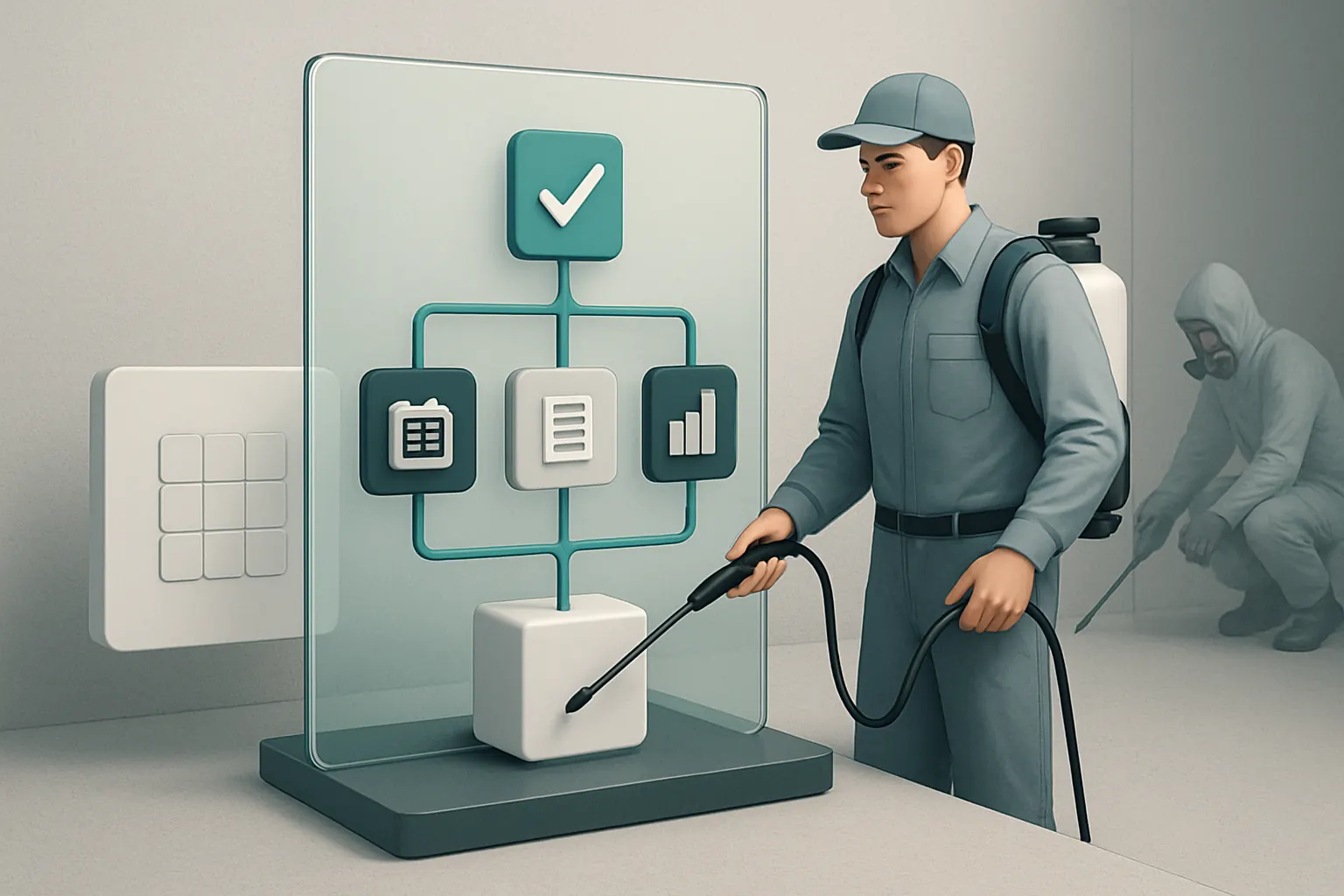
A digital enquiry module interfaces directly with website chatbots, telephony or forms, logging every lead into one system. Captured enquiries auto-create follow-up tasks for sales teams with SLA-based prioritisation. Automated SMS or email prompts keep prospects engaged until human contact.
Integration with Existing CRM and Scheduling Tools
This module links with your CRM and booking system to avoid double entry. If preferred, you retain core CRM workflows, only replacing the manual booking and lead tracking layers.
Concrete Example: Night-Time AI Booking Assistant
An AI-powered enquiry bot takes calls after hours, interviews prospective clients on pest type and urgency, and books tentative service slots. The system alerts the sales rep each morning to confirm and convert these leads.
Controls to Ensure Human Oversight
Clear escalation rules and SLA timers ensure all AI-captured leads receive human approval before contract finalisation. Customer data access complies with ICO guidelines.

Dynamic Technician Scheduling and Route Optimisation
Tackling the Complexity of Time-Pressured Rosters
Pest-control companies face fluctuating workloads, seasonal surges, and varying technician skills. Manual scheduling struggles to optimise routes and maximise billable hours.
Unified Scheduling Workspace
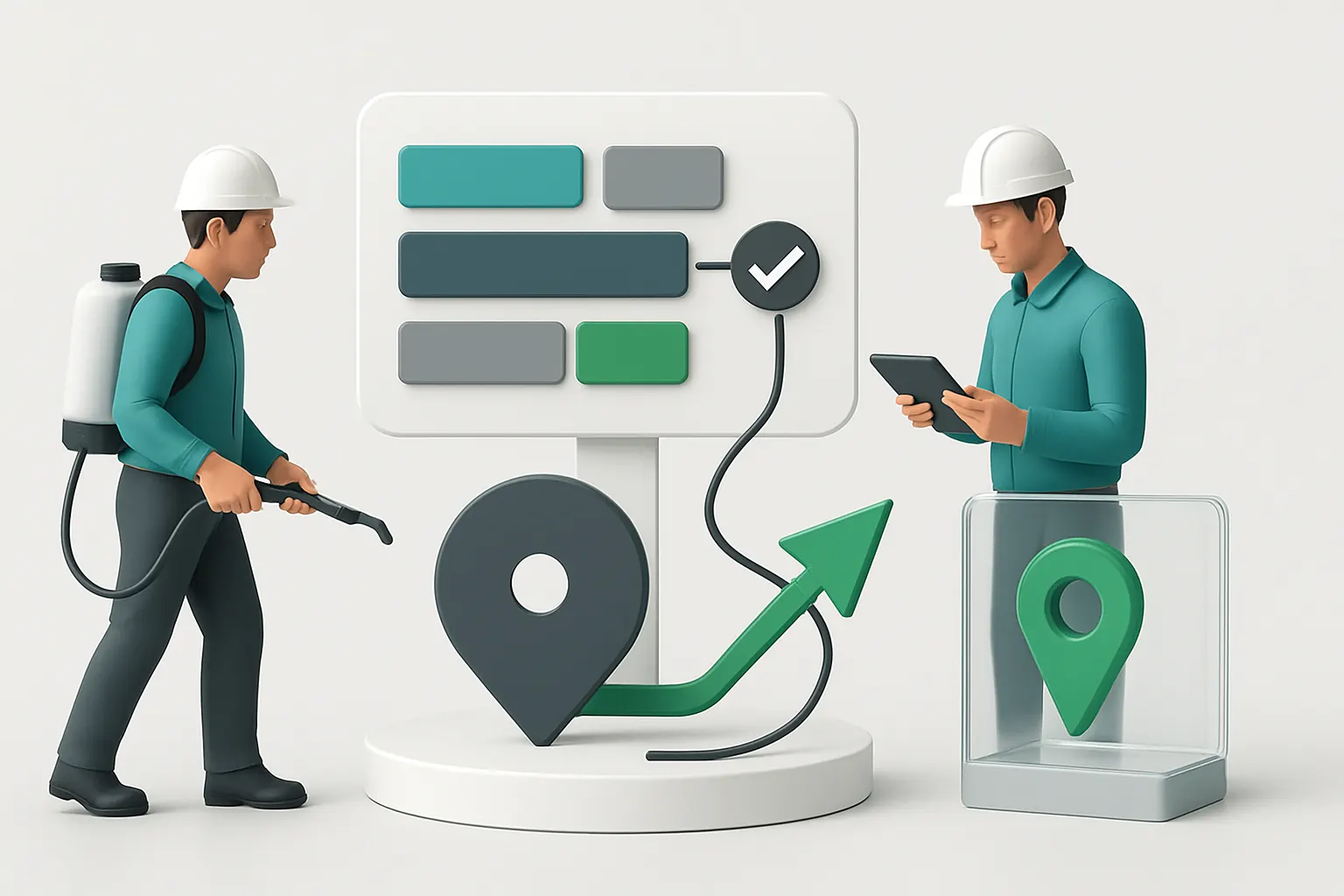
A central scheduling module maintains technician availability, skills, certifications and vehicle status. It triggers alerts for skill mismatch or conflicts based on pre-configured rules.
Use of Routing Integration
While the routing engine from specialist providers (e.g., Google Maps API) optimises daily work orders, the workflow system owns job allocation, logging changes and managing exceptions.
Real-World Scenario: Surge Season Rota Automation
During peak summer, the system automatically reallocates jobs to available certified technicians and reoptimises routes in real time as cancellations or urgent requests emerge.
Governance Through Defined Rules and Revisions
Schedulers retain override access, with all changes logged. Route amendments trigger SLA alerts notifying managers of significant disruptions.
Seamless Service Delivery Recording on Mobile
Eliminating Paperwork and Multiple Entry Points
Technicians currently use paper forms or separate apps for treatment records, risking lost data and delayed updates.
Mobile-First Service Records Linked to the Booking
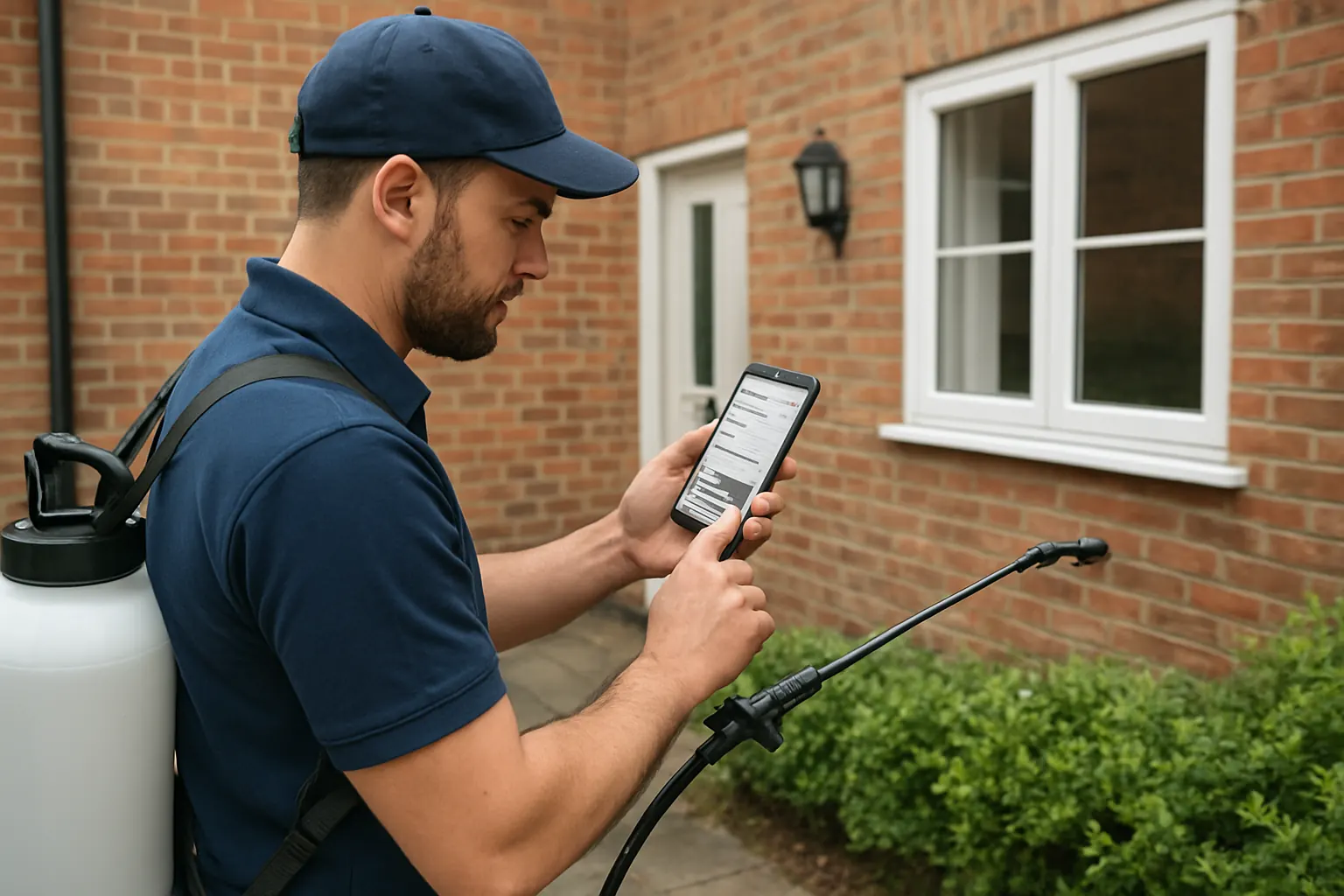
Technicians use a mobile module that captures checklists, photos, and digital signatures linked directly to the job record. Offline mode supports remote sites with automatic sync.
Integration With Existing Compliance Systems
Where compliance software is already in use, this module exports relevant fields or imports from legacy tools to maintain official audit trails.
Example: Instant Customer Sign-off and Safety Checks
After treatment, the technician completes the safety checklist and obtains the customer’s digital signature, instantly updating the record for invoicing and regulatory purposes.
Access Controls and Audit Trails
Technician app access is role-based and location-aware to ensure data security. All entries are time-stamped and immutable after approval.
Invoice Automation and Payment Integration
Reducing Errors and Delays in Billing
Manual invoice generation from service logs can cause delayed payments and reconciliation errors.
Automated Invoice Generation from Service Data
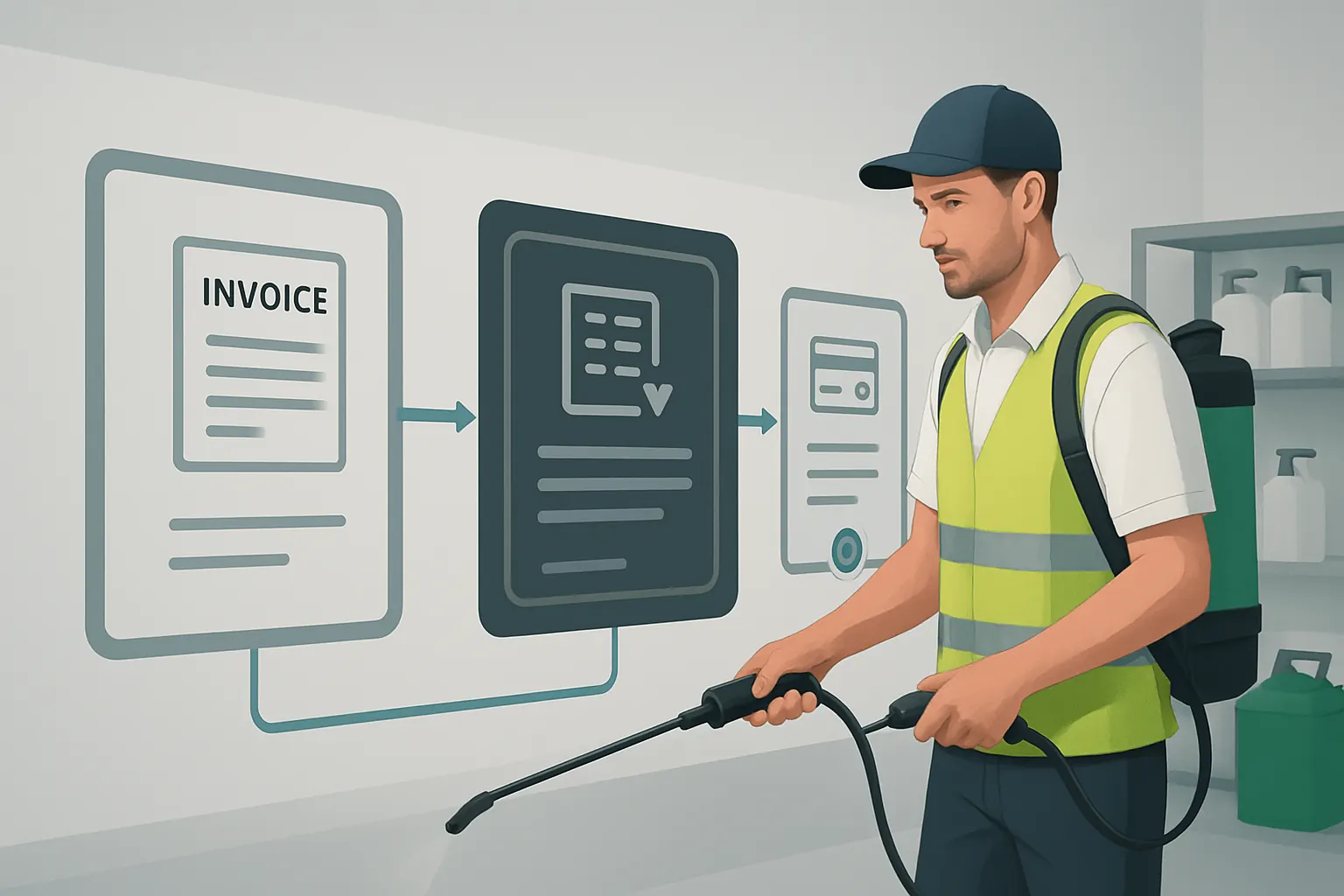
Invoices populate automatically from verified job completion records, pricing rules and contracts stored within the owned system.
Payments Through Trusted Gateways
Payment capture integrates with reputable external services like Stripe or GoCardless for card or direct debit transactions, reducing manual follow-up.
Example: Immediate Invoice Upon Service Confirmation
Once a technician mark completes the job and submits the record, the system queues an invoice which sends automatically via email along with payment links.
Control Points for Financial Accuracy and Compliance
Invoice creation requires prior technician approval and billing validation by the finance team. Payment data handling adheres to PCI Security Standards Council recommendations.
Real-Time SLA Monitoring and Alerting
Preventing Missed or Late Services
Meeting contractual SLAs is critical for pest-control compliance and customer satisfaction.
Centralised SLA Engine With Monitored KPIs
The workflow tracks each job against SLA timeframes from enquiry to service delivery. Breaches generate automatic escalation alerts to supervisors.
Connecting Alerting With Communications Tools
SLA notices trigger automated emails or SMS notifications to relevant team members and clients, integrating with specialist communications services (e.g., Twilio).
Use Case: Alerting on High-Risk Treatment Delays
If a high-risk treatment is not completed within SLA, an alert escalates to senior managers for immediate intervention.
Controls for Exception Handling and Review
All SLA breaches go through a resolution workflow and require managerial sign-off explaining delays. Records support regulatory audits.
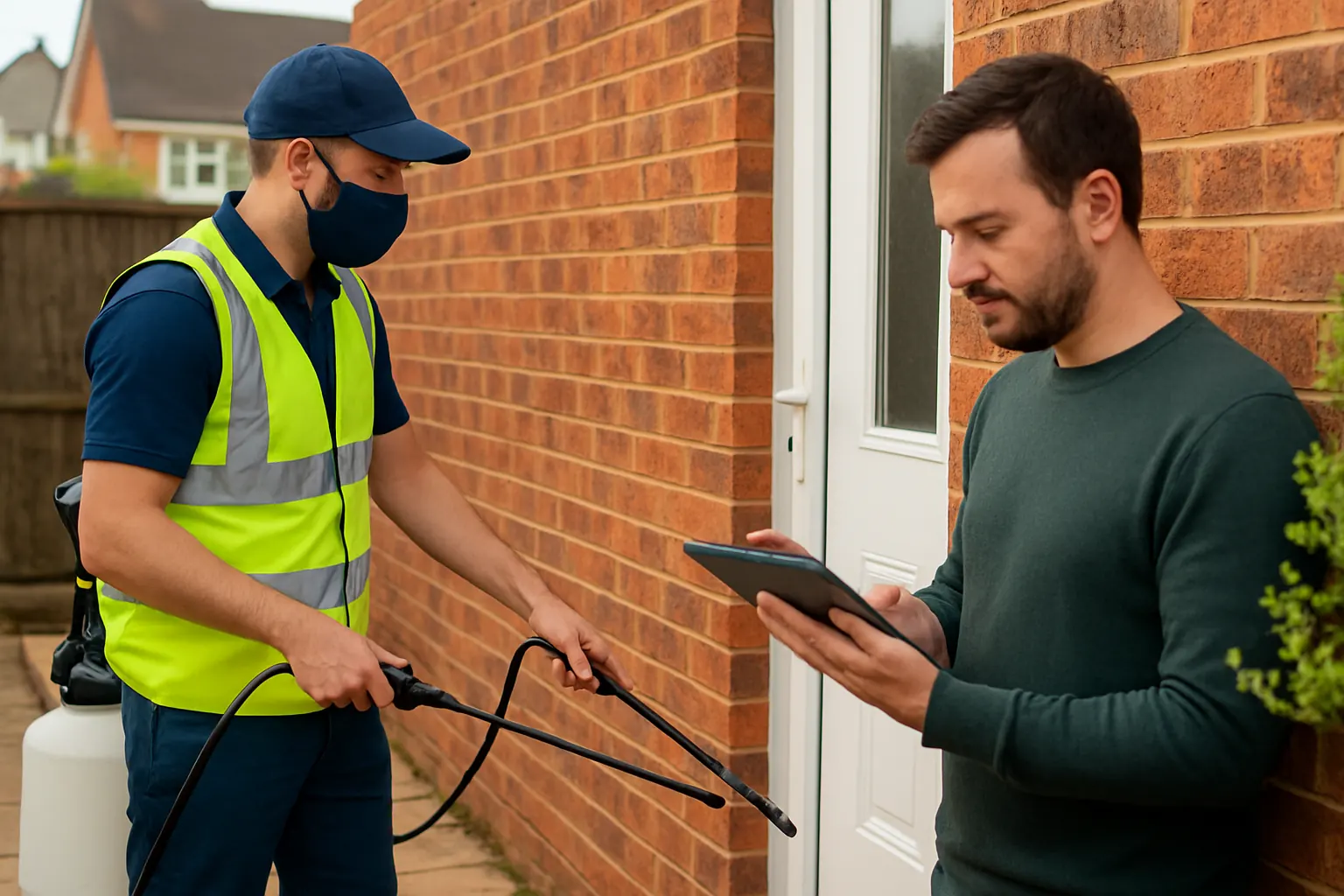
Integrated Customer Communication Hub
Keeping Clients Informed Without Manual Effort
Customers expect timely appointment confirmations and service reminders to reduce no-shows.
Owned Workflow Module for Multi-Channel Notifications
The system automates appointment confirmations, reminders, and follow-up surveys via SMS and email linked to each booking record.
Linking with Specialist Messaging APIs
Outbound notifications leverage reliable external APIs for delivery, integrated smoothly into the platform’s workflow engine.
Example: Automated Renewal Campaigns Using AI Prioritisation
AI models analyse customer usage patterns to trigger renewal reminders for contractual pest control services, prioritising likely renewals.
Opt-Out Controls and Privacy Management
All digital communications comply with GDPR opt-out requirements, with preferences stored and respected in the owned system.
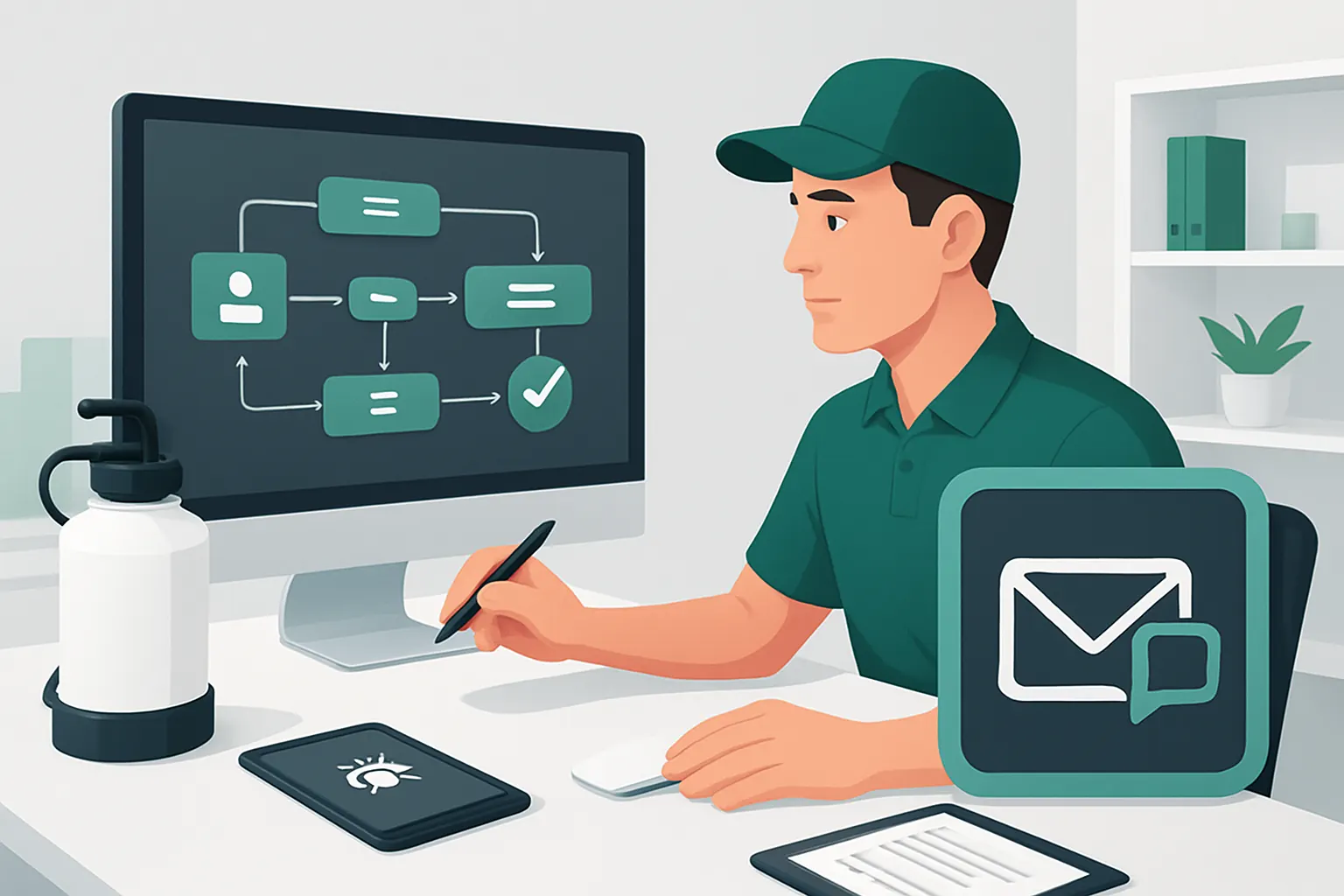
Centralised Data Dashboard and Reporting
Breaking Data Silos for Accurate Operational Insights
Scattered information prevents accurate visibility into performance, compliance, and finances.
Single Dashboard Combining All Operational Data
A connected business intelligence module aggregates data from enquiry capture, scheduling, service delivery, and finance into real-time reports and KPIs.
Dashboard Integration With Existing Analytics
Where external BI tools are used, data exports maintain compatibility while the main operational workspace remains owned.
Example: Real-Time Compliance and Revenue Tracking Dashboard
Managers view up-to-the-minute metrics on SLA compliance, technician productivity, and collected revenue in a single interface.
Control Over Data Access and Sensitivity Levels
User roles define which sections of the dashboard team members can view, supporting data security and internal audits.
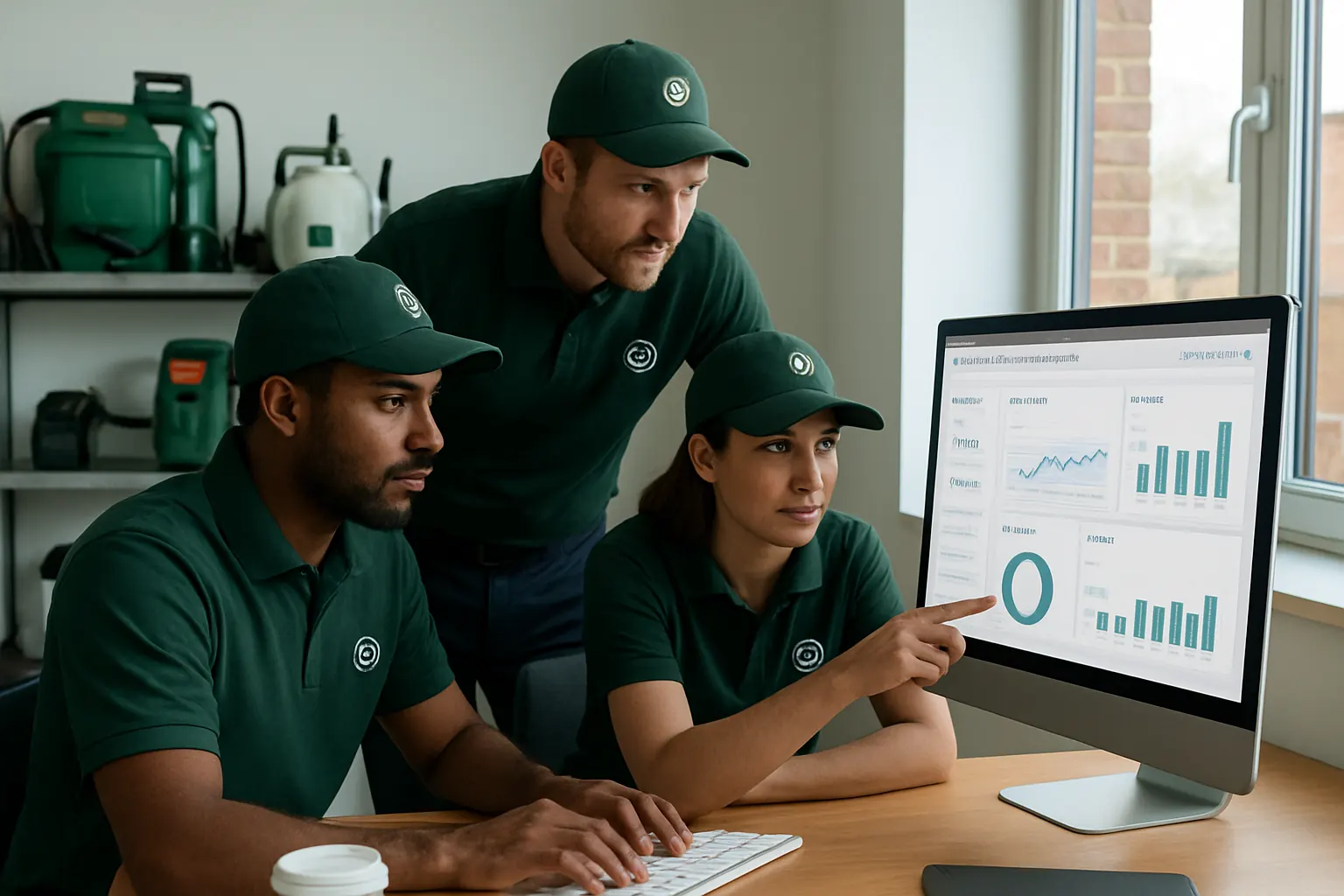
Consistent Worker and Site Security with Role-Based Access
Managing Access and Preventing Data Leakage
Data from sensitive customer sites and confidential service logs require careful control.
Role and Location-Based Access Controls
System access is restricted by worker roles, shift times and geographical zones. Technicians only access jobs assigned to their regions.
Integration with Secure Identity Systems
Existing identity tools can be connected for single sign-on and multi-factor authentication.
Practical Example: Pre-Job Site Validation and Technician Check-In
Before starting a job, the technician verifies their identity and site access permissions via the system to unlock service records.
Audit Logging and Incident Reporting
All access events are logged centrally, with alerts for unauthorized attempts helping meet security obligations recommended by the National Cyber Security Centre (NCSC).
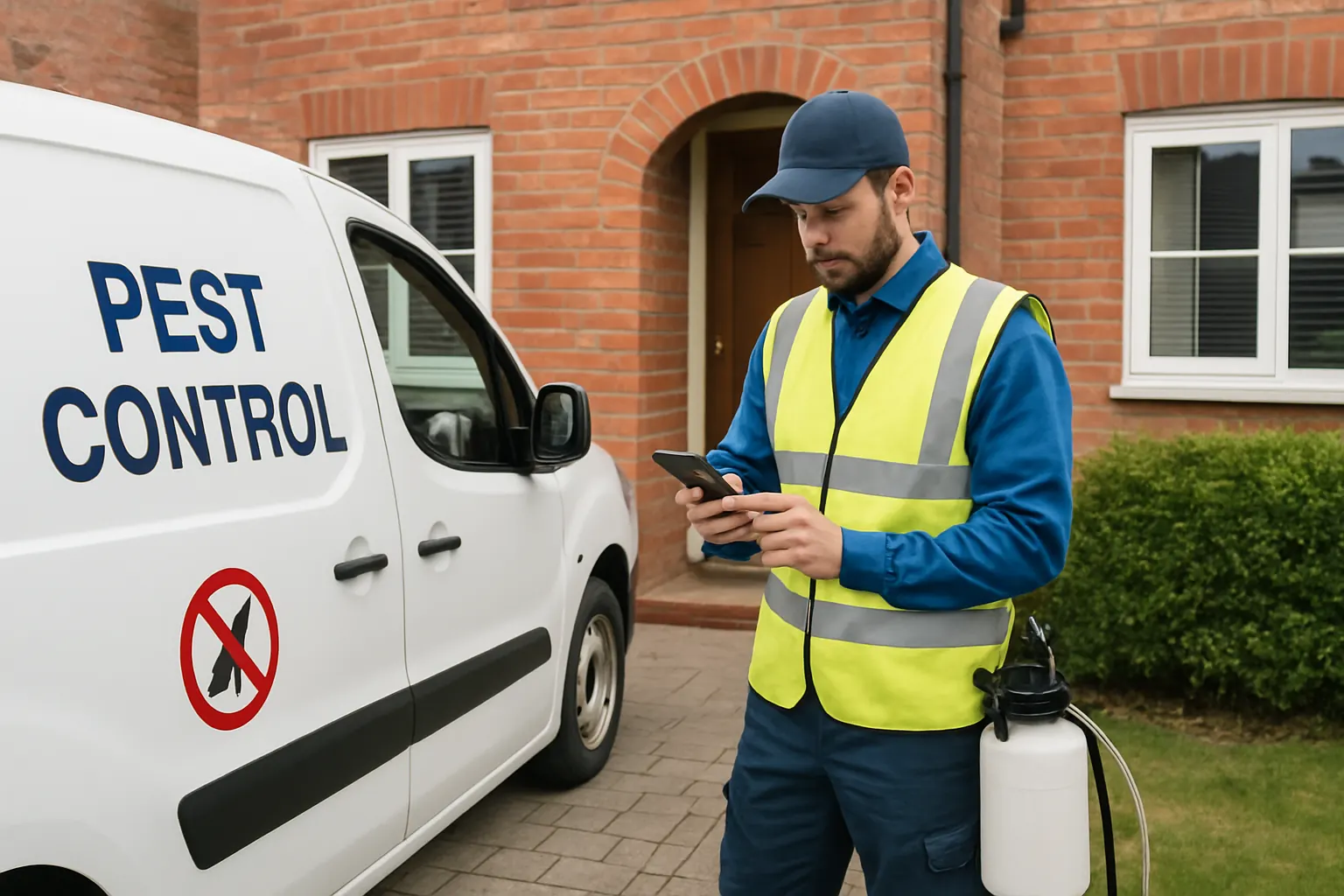
90-Day Rollout Plan for Connected Pest Control Operations
Weeks 1–2: Diagnostic and Scoping Workshops
- Map current workflows and existing system integrations
- Identify automation targets and regulatory constraints
- Define success metrics and data ownership
Weeks 3–6: Core Infrastructure and Enquiry Automation
- Deploy enquiry capture and lead management modules
- Integrate basic scheduling workspace with current calendars
- Train staff on new enquiry workflows
Weeks 7–12: Service Delivery, Invoicing, and Monitoring
- Roll out mobile service record app
- Enable automated invoicing and payment links
- Activate SLA alerting and communications hub
- Provide real-time dashboard access for managers
- Implement role-based security controls
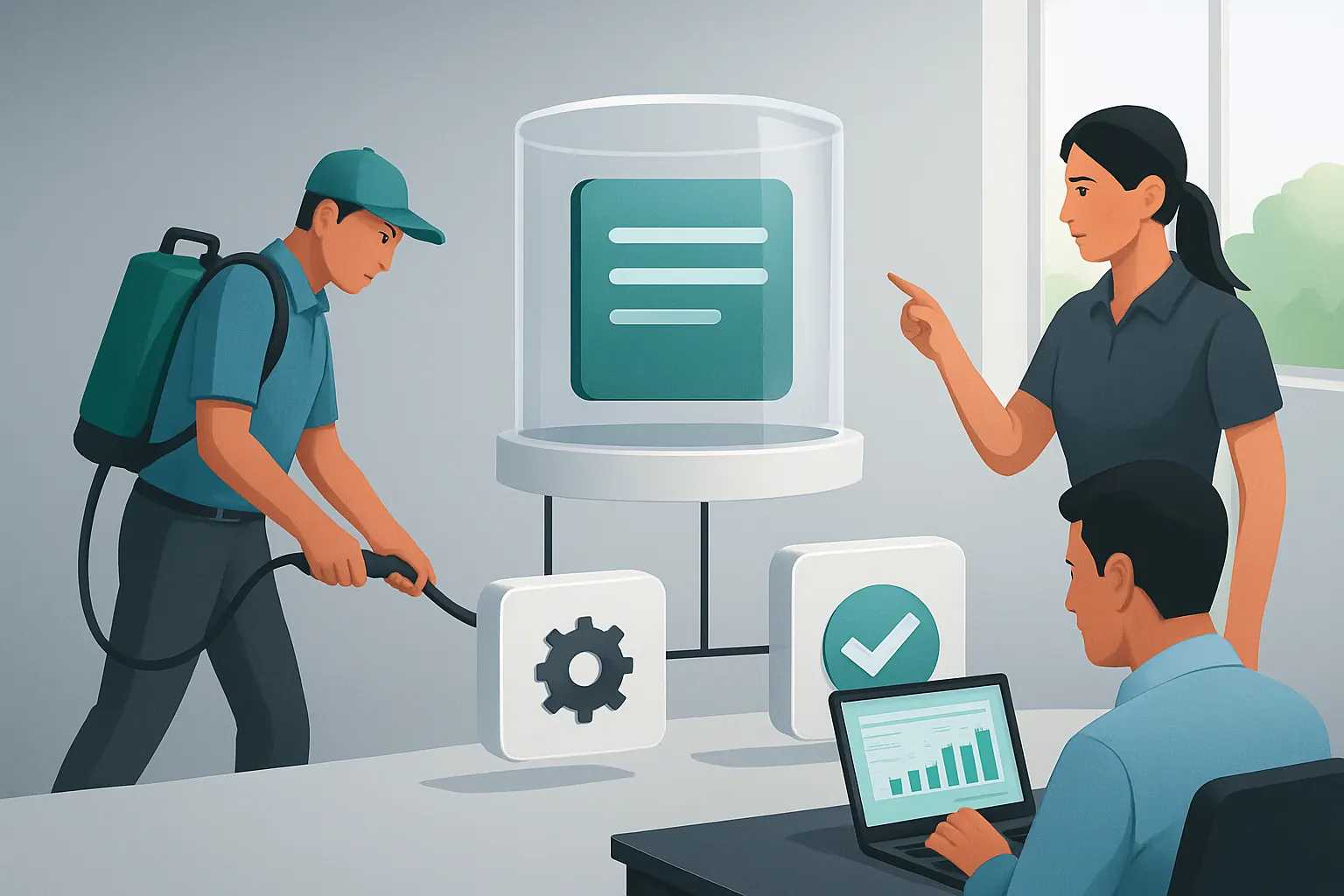
Enabling Connected, Automated Pest Control Business with AI Implementation UK
At AI Implementation UK, we specialise in delivering one connected operating workspace tailored precisely to how your pest control business works. Our approach is practical: we retain your existing useful systems and connect them seamlessly into a single owned record of operations. Avoidable software subscriptions are replaced by owned modules designed specifically to reduce the administrative burden and improve business insight.
We help you selectively integrate AI capabilities — for enquiry classification, prioritisation, and decision support — while preserving human approval over critical operational and compliance decisions. Specialist external services such as payments or communications remain integrated but securely and reliably connected.
Our services combine process automation (process automation and RPA) with extensive data preparation (data infrastructure preparation) to ensure you get an automation system you can trust, control and evolve.
Begin your practical journey to connect systems, cut admin and build a resilient, efficient pest control operation with AI Implementation UK. Discover how we can help you own your workflow on your terms by visiting our plan my platform.
For further guidance on data protection in automation systems, consult the ICO’s automation and AI compliance. Safe payment processing advice is detailed by the PCI Security Standards Council, ensuring your financial operations meet industry best practices.
To turn these priorities into one coherent system, map the platform your business needs or explore our workflow automation approach.