
Learn how management consultancies can connect systems, reduce manual admin and automate lead to engagement with one tailored operating platform the business owns.
Management consultancies lead qualification automation software: What Breaks Daily
Management consultancies lead qualification automation software should connect bookings, people, communications and reporting in one reliable operating flow.
Management consultancies routinely juggle numerous client engagements, proposals, and internal approvals. Despite their expertise in optimising complex business processes, day-to-day operations often stumble over fragmented systems and repetitive manual tasks. Teams lose time switching between disconnected tools for lead tracking, assessment, document routing, and reporting. This fragmentation breeds errors, slows response times, and clouds overall visibility over the sales pipeline and project progress. Confidence in data reliability erodes, impacting both strategic decision making and service delivery.
The root cause is typically not a lack of potential automation technology but a reliance on a patchwork of off-the-shelf SaaS products and manual workarounds. These solutions do not integrate seamlessly, resulting in silos of information, redundant data entry, and costly licence fees for software that does not fully fit the consultancy’s unique workflows. Without a single, owned operating environment that mirrors the consultancies’ methods, these breakdowns will persist.


Unified Lead Capture and Qualification Workflow
The bottleneck of scattered lead data in consultancies
Consultancies often collect leads from multiple sources: emails, web forms, or event lists. These leads must be qualified quickly to prioritise follow-ups and estimate engagement potential.
Connecting existing systems into one intake workflow
Integrating current marketing and CRM tools into one owned workspace can automatically capture and qualify leads. This avoids re-keying data across different systems and provides a central “source of truth.” Customisable lead scoring modules can replace separate subscriptions for lead management applications.
Example: From enquiry to qualified opportunity in minutes
A lead arriving via website form is automatically routed through qualification questions using AI classification modules. The system applies deterministic rules — such as sector fit or project budget thresholds — and flags leads requiring human review. Qualified leads move to the proposal generation stage without delay.
Controls to maintain quality and compliance
Permissions and conflict checks are embedded before lead progression. Human overrides remain for borderline decisions. All actions are logged for audit trails to support professional privilege and data privacy obligations.

Streamlined Proposal Generation and Approval Routing
Manual proposal drafting delays engagement starts
Consultancies spend excessive time customizing proposals, checking compliance with engagement terms, and routing drafts through various approvers. This wastes resources and risks inconsistent messaging.
Automating templated content with human review checkpoints
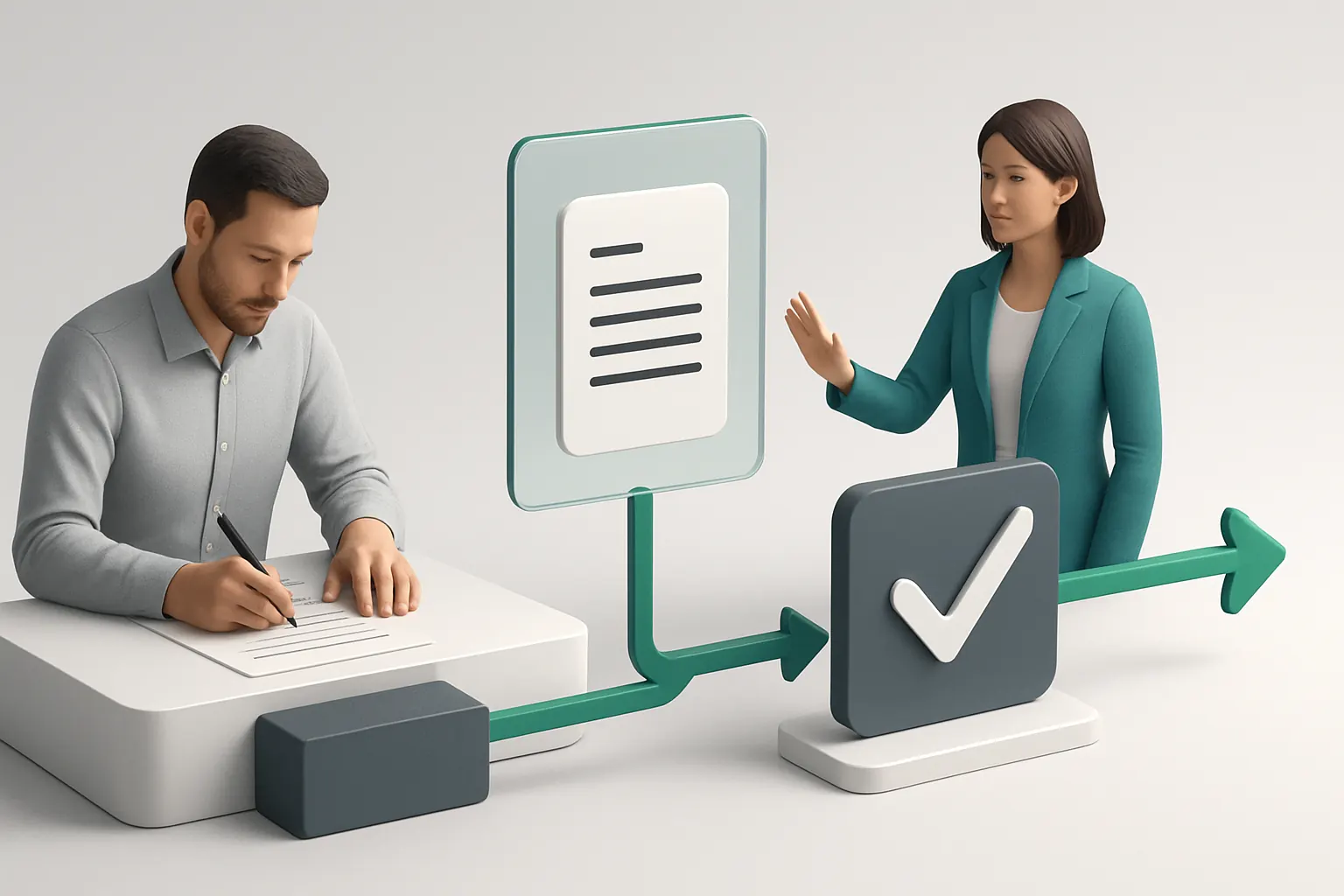
Owned systems can generate proposal documents by merging client data with pre-approved templates. Workflow rules send drafts automatically for legal or partner review, reducing email back-and-forth.
Case in point: Faster turnaround on complex proposal cycles
A consultant enters client project parameters once. The proposal, including pricing and scope, is auto-assembled, then routed sequentially for partner sign-off. AI summarisation assists reviewers by highlighting key changes versus previous versions.
Ensure oversight with configurable approval gates
Approval stages cannot be bypassed and exceptions trigger alerts. Editable templates are stored securely under version control. Clear role-based access controls ensure the right people intervene when needed.
Consolidated Project and Document Delivery Tracking
Disconnected tools hinder progress visibility and documentation control
Maintaining project timelines and managing client documentation across multiple tools causes errors and loss of traceability. Teams can miss deadlines or struggle to verify final deliverables.
Central record with integrated task status and document check-in
An owned, connected system tracks projects from engagement acceptance through milestone delivery. Documents are versioned and linked to relevant tasks, providing a single trustworthy source for progress and audit.
Practical example: Real-time dashboards for utilisation and status
Project managers see staffed roles, current workload and deliverable due dates in one utilitarian view. Automated reminders nudge teams to update task status and upload completed documents promptly.
Controls to protect confidentiality and permissions
Access rights restrict document visibility by project and client. Audit logs record modifications. Professional privilege designations prevent accidental disclosure.

Intelligent Time and Approval Management for Consultants
Manual time capture and approval slow billing and analysis
Tracking billable hours, especially during client meetings and workshops, is manual and prone to underreporting or approval delays. This hampers accurate project costing and revenue recognition.
Workflow automation combined with selective AI assistance
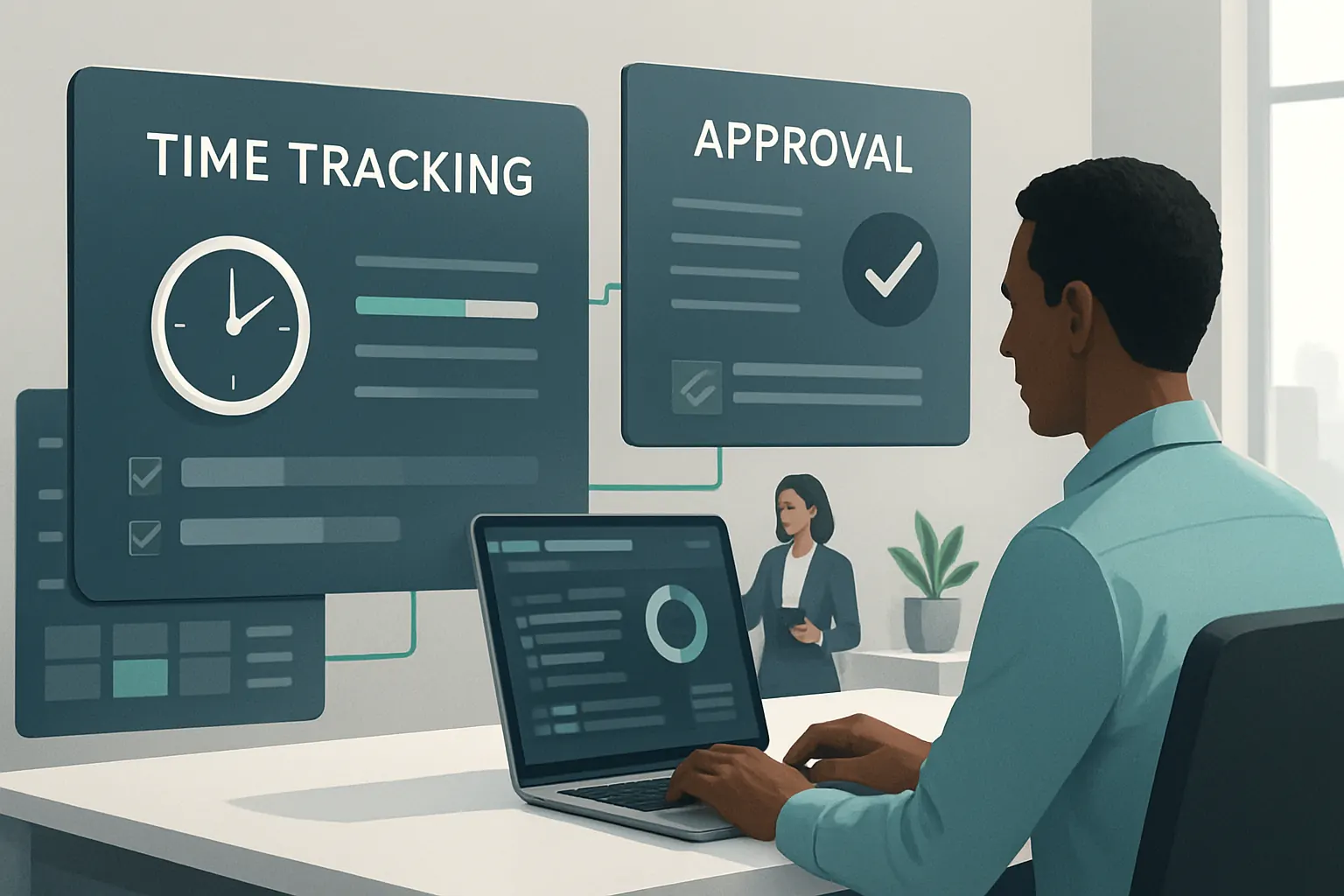
A time recording module integrated with calendars and project schedules prompts consultants to log time entries automatically. AI suggests classification of activities to proper workstreams, and managers receive automated alerts for timely approval.
Example: Improving billing accuracy with fewer bottlenecks
Consultants receive optimised daily reminders via owned communication tools. Supervisors can approve or query entries directly from dashboards, speeding up invoicing cycles without additional software.
Built-in controls for compliance and conflict avoidance
Configuration ensures time is only attributed to authorised engagements. Exceptions and unusual entries generate flags for review. Integration with client permissions avoids conflicts.
Tailored Dashboards for Client and Internal Reporting
Fragmented reporting reduces strategic insight and client confidence
Clients demand timely, insightful updates on project status, costs and outcomes. Internally, management struggles to spot underutilisation or pipeline gaps without unified data.
Bringing operational data into an owned reporting workspace
Data from lead management, projects, time capture and delivery reporting converges into a single dashboard environment customised for stakeholders present and future.
Concrete scenario: Dynamic client progress reports with drill-down
Consultants generate client-facing reports with live data on milestones reached, hours consumed and budget status. Internally, leaders analyse pipeline trends alongside resource utilisation.
Controls for data accuracy and regulatory adherence
Data is drawn from the owned system’s single source of truth, reducing manual compilation errors. Sensitive information is masked or restricted on a need-to-know basis in line with professional obligations.

Progressive 90-Day Rollout Plan for Automation Success
Weeks 1–2: Discovery and Mapping
Engage workflow consultants to map current lead qualification and engagement processes, identifying bottlenecks and manual tasks. Select key integrations and define required controls for compliance and permissions.
Weeks 3–6: Build and Integrate Core Modules
Develop the owned lead capture, qualification, and proposal generation modules, integrating existing CRM and marketing tools. Configure approval workflows and set up role-based permissions. Begin user testing.
Weeks 7–12: Extend Delivery and Reporting Features
Add project tracking, document control, and time management modules. Design and deploy custom dashboards for internal and client reporting. Train teams on new workflows. Iterate based on feedback to optimise usability and controls.

How AI Implementation UK Delivers Connected Ownership and Automation
At AI Implementation UK, our approach is grounded in delivering a single connected operating environment that management consultancies own and control. We do not advocate building a new tech stack of disconnected SaaS tools that create silos. Instead, we focus on:
- Connecting useful existing systems such as CRM and marketing automation tools via custom integrations. This preserves investment and reduces disruptive change.
- Replacing avoidable external subscriptions with owned modules that replicate or enhance essential functionality tailored to your methodologies.
- Bringing together operational data into a trusted, single record that feeds reliable dashboards and reports.
- Using AI selectively to support variable work like lead classification, summarisation and prioritisation while deterministic workflows handle routine approvals and data processing.
- Embedding dynamic controls that safeguard professional privilege, conflict checks, permissions and ensure human approval remains at critical points.
We understand the unique operational needs of management consultancies – from lead to engagement to project delivery. Our experts design workflows that fit your business, automating repetitive tasks and reducing errors without sacrificing control.
Explore how process automation consulting and data infrastructure preparation services help you modernise responsibly. Our structured 90-day rollout plans balance speed with accuracy, so your teams adopt automation confidently.
For more on strategically integrating AI capabilities, see our AI strategy roadmapping offering. To learn how peer consultancies have transformed operations with us, visit our case studies page.
Automation still requires expert oversight in consulting. That’s why we design for smart, connected human-machine collaboration that enhances performance and maintains your firm’s standards of professionalism and compliance.
For information on handling personal data responsibly, see guidance from the Information Commissioner's Office.
For secure online payments integrations, we recommend following best practices from the PCI Security Standards Council.
Management consultancies do not need to ask “Will AI eventually replace management consultants?” Instead, leverage AI to multiply your expertise through ownership of an intelligent automated operation.
This balanced, connected approach transforms lead qualification automation software from a costly disruptor into a business accelerator under your control.