
See how salons can connect booking, staff, client and payment systems, reduce manual admin, cut subscriptions and own one tailored operating platform.
Hair and beauty salon automation software: what breaks daily
Hair and beauty salons operate in a fast-moving environment where appointments, staff schedules, client preferences and payments all need constant attention. Good hair and beauty salon automation software should bring that work together. Yet many salons still rely on a patchwork of tools that do not talk to one another, creating duplicate entry, manual checks and missed opportunities.
The goal is not another generic salon booking software subscription. It is salon management software built around the operation itself: one reliable client record, connected appointment scheduling, clear staff availability and a dashboard the owner can configure.
Key daily breakdowns include:
- Double bookings caused by disconnected calendars
- Staff rota confusion impacting client service
- Lost client rebooking opportunities due to overlooked follow-ups
- Manual payment reconciliation slowing cashflow
- Compliance and privacy risks from uncontrolled data silos
These issues drain time and margin while staff juggle software instead of focusing on customers. The challenge is to automate useful workflows without fragmenting the operation further or adding recurring subscriptions that increase cost and complexity.
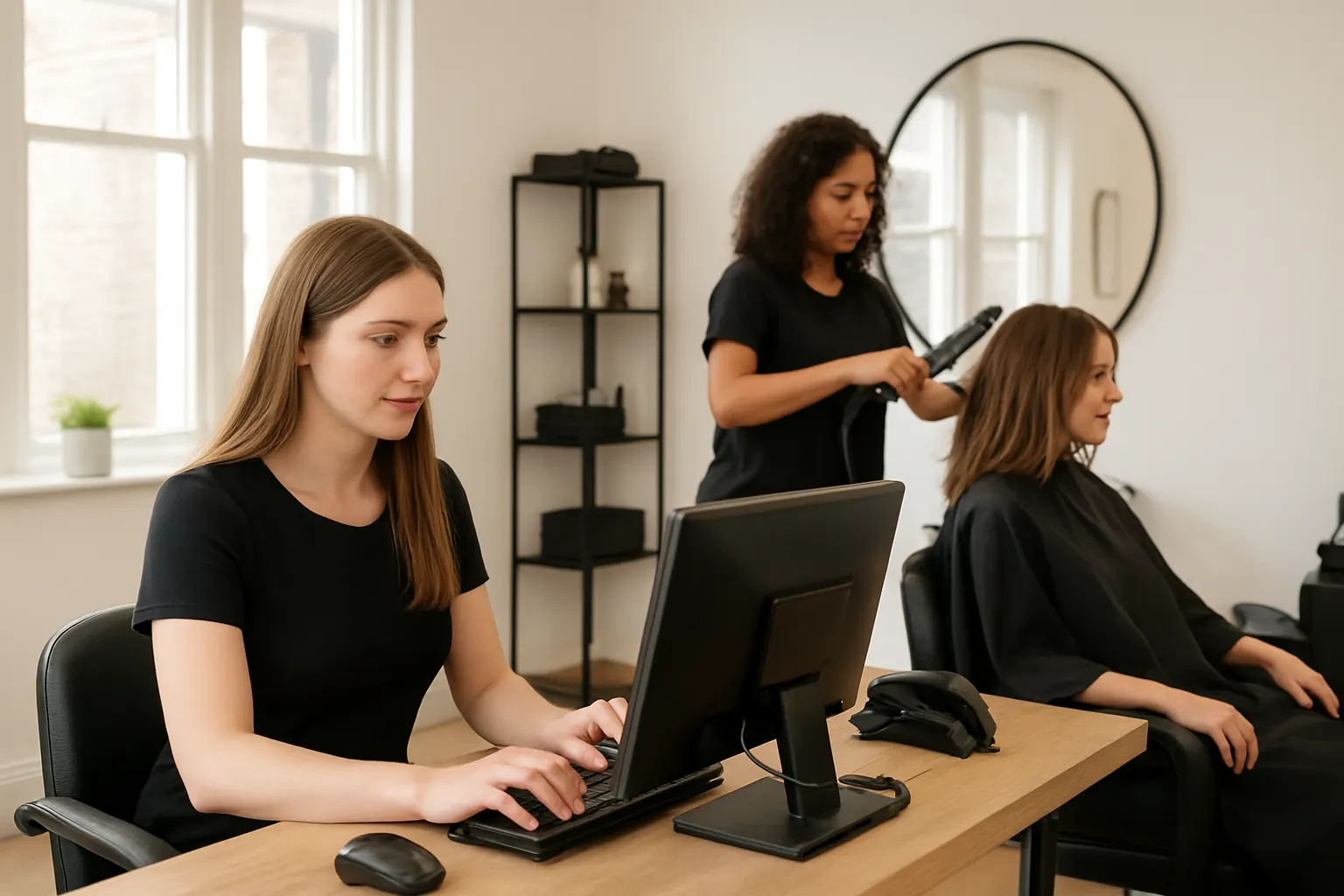
The Cost of Manual Work: Time, Errors, Compliance, Cashflow
Every minute spent manually updating multiple systems, chasing unconfirmed bookings, or correcting errors hits the bottom line. This drains resources:
- Time wasted on redundant data entry and chasing appointment confirmations
- Errors around availability leading to customer dissatisfaction and lost sales
- Compliance gaps putting customer privacy and payment permissions at risk
- Delayed payment processing weakening cashflow at a critical point for small businesses
- Missed client follow-up and membership renewals reducing repeat revenue
Piecemeal automation adds complexity and subscription fees without solving the root problem. Instead, salons need one connected operating system they own, designed around their actual way of working.
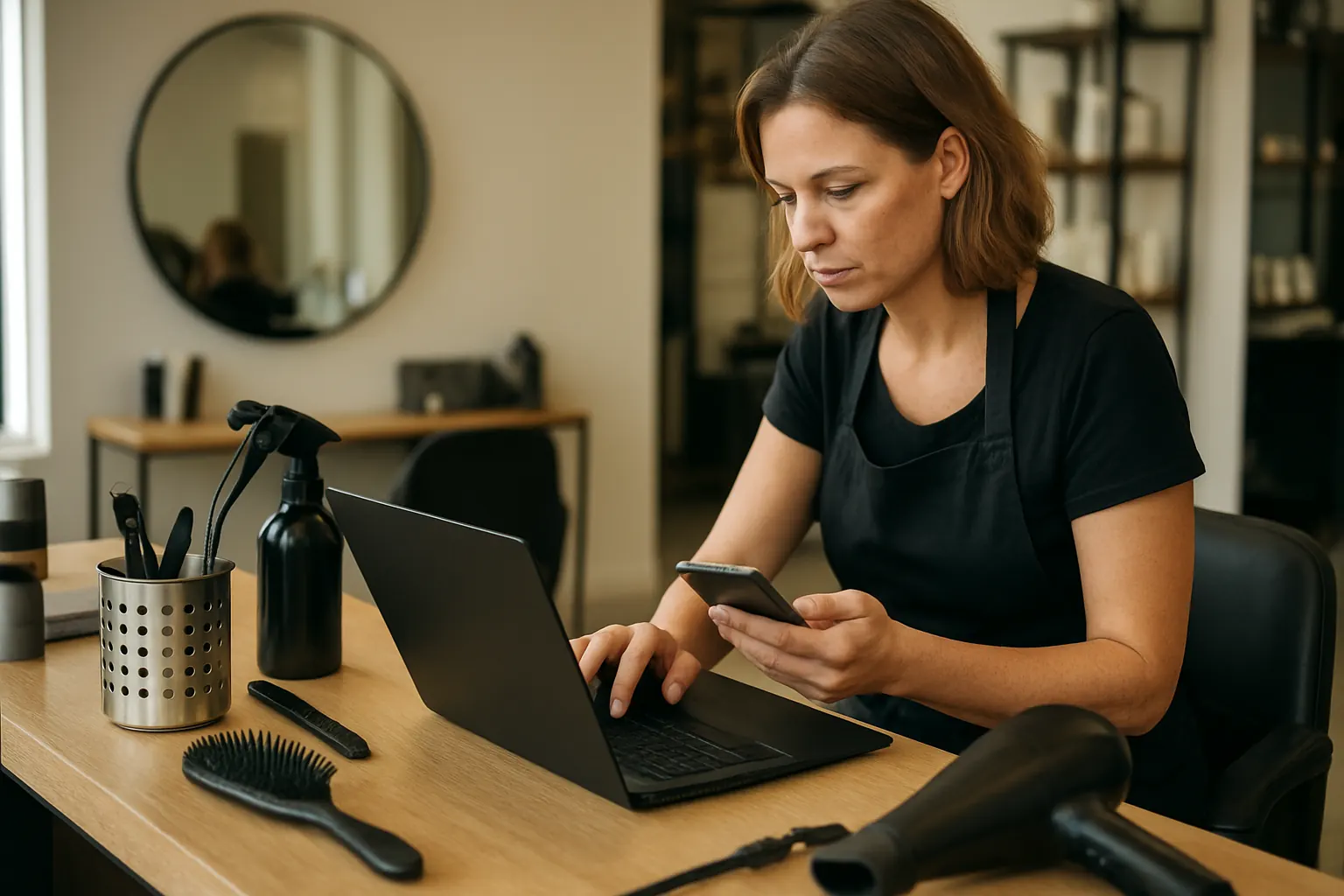
Enquiry to Booking Automation
Where bookings break down
Managing enquiries from phone, website and social media becomes chaotic without one booking workflow. Staff repeatedly copy details, check appointment scheduling across separate calendars and chase confirmations. The result is slower responses, avoidable gaps and frustrated clients.
How the connected workflow works
Automation extracts enquiry details and pre-fills booking forms. AI capabilities selectively classify enquiry types (e.g., appointment, product questions), summarise client preferences, and prioritise bookings by urgency. Deterministic rules manage calendar availability checks and restrict overbooking. Human approval remains on complex or high-value bookings to prevent errors.
Systems worth keeping
Use a single scheduling layer that connects the website, phone system and social enquiries directly to the booking calendar. Specialist services such as Twilio for messages or Stripe for payments can remain connected, while the booking logic and client record stay inside the salon’s own system.
Example: Messenger to confirmed booking
An enquiry arriving through Facebook Messenger is routed into the workspace. AI extracts the appointment type and preferred times. Scheduling rules check staff availability and propose suitable slots. Once the client confirms, the booking is added to the salon calendar and automated appointment reminders are scheduled for 48 and 24 hours beforehand.
Controls that stay with the salon
Keep client data inside the controlled business workspace, with role-based access for staff. Bookings flagged as exceptions require human approval, while an audit trail records changes and client communications.

Staff Rotas and Shift Scheduling
Why rota planning drifts
Schedules often clash, are manually prepared in spreadsheets, or rely on multiple disconnected tools, causing understaffing or overstaffing during peak times. Generic staff scheduling software can make this worse when it lacks live booking context. The result affects client satisfaction and operational efficiency.
Scheduling rules before AI
Rule-based automation generates initial rotas based on employee availability, skill sets, and historical booking volumes. AI can assist by analysing booking patterns and suggesting optimal staffing levels for upcoming weeks. Managers retain final control to approve changes.
Payroll and time-tracking connections
An owned rota module can pull live booking data directly into scheduling rules, eliminating mismatches. Payroll and time-tracking services can remain connected where they add specialist value, without forcing staff to maintain the same information twice.
Example: a weekly rota proposal
Each week, the system proposes a rota based on confirmed appointments and expected demand. Staff confirm shifts through an employee portal. Any coverage gap is flagged for a manager to review rather than being silently changed by AI.
Manager approval and staff privacy
Data privacy in rostering is critical. Ensure access controls limit visibility of personal employee data. Maintain a log of rota changes and approvals for audit compliance. Use approval workflows to manage overtime and shift swaps.

Client Rebooking and Membership Workflows
Where repeat revenue is lost
Hair and beauty salons depend heavily on repeat visits and memberships. Manually tracking last visits and contacting clients for rebooking or renewals is resource-intensive and prone to inconsistent follow-up.
Rebooking and renewal triggers
Automation monitors client visit histories and triggers rebooking reminders or membership renewal prompts via email or SMS. AI assists by summarising client preferences and prioritising high-value clients for personal follow-up. Routine reminders are handled automatically.
One client management record
An owned client management system stores visit history, preferences, consent and membership status in one place. Email and SMS providers can remain connected for delivery, without becoming separate stores of operational truth.
Example: a six-week rebooking journey
After a treatment, the client record logs the visit and schedules a rebooking reminder for six weeks later. AI can prioritise clients who may need personal follow-up, while routine reminders go by SMS. Replies update the same record immediately.
Consent and communication records
Record the lawful basis and communication preferences used for each message, and make opt-out controls easy to use. Collect only the information the workflow requires, following the ICO’s data minimisation guidance. Keep an audit trail of messages and responses.
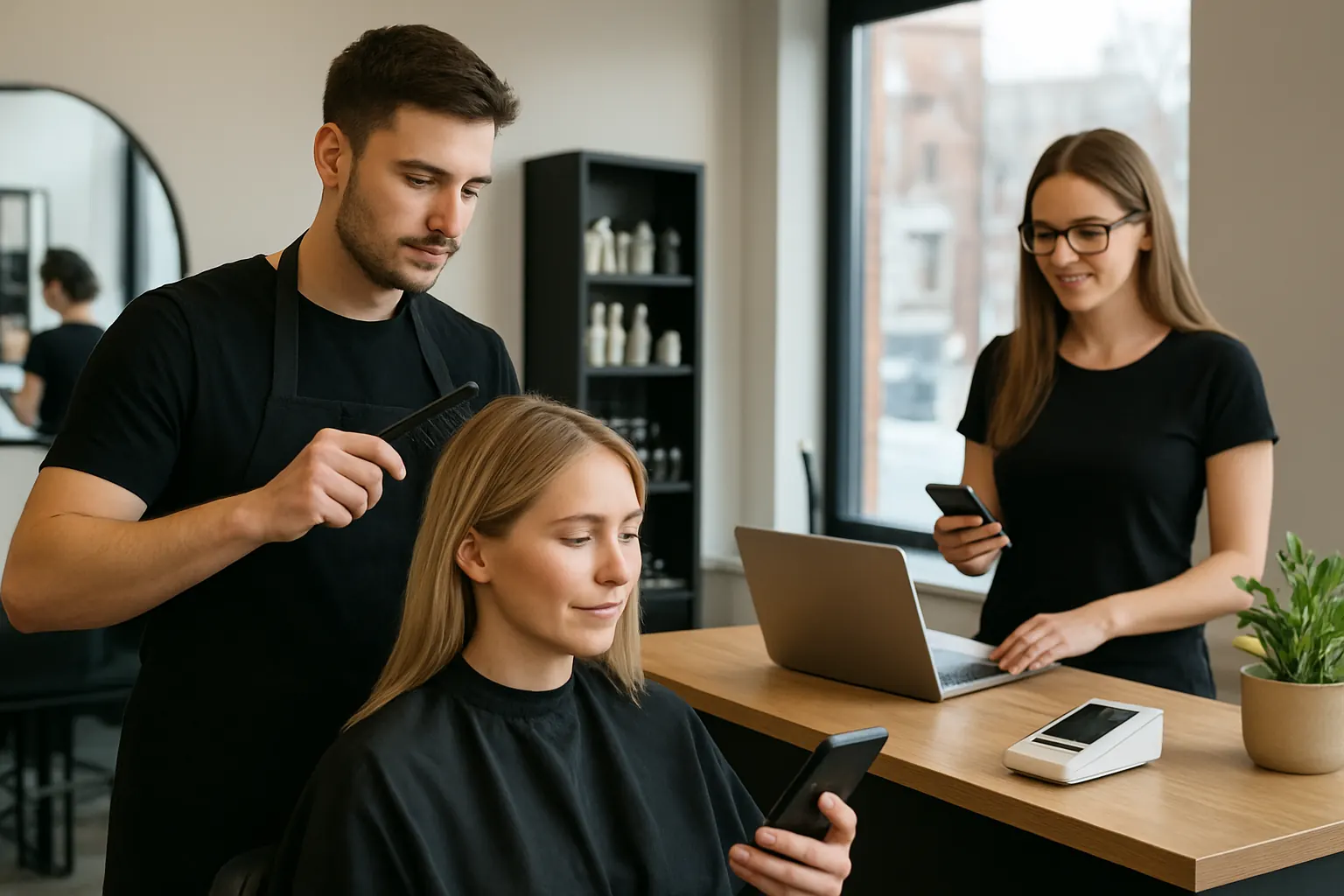
Appointment Reminders and Payment Processing
The cost of missed appointments
Missed appointments cost revenue and disrupt schedules. Manual appointment reminder calls or messages burden staff. Payment processing is often fragmented, causing reconciliation difficulties and errors.
Reminder and payment workflow
Automated appointment reminders can be sent at 48 and 24 hours, reducing avoidable no-shows. AI may summarise appointment details when a message needs personalisation, but fixed rules control timing, consent and delivery. Payment processing then connects to the same workflow for invoicing and reconciliation.
Payment services that remain external
Keep reminder rules and reconciliation inside the owned system while connecting a specialist payment service such as Stripe or GoCardless. This avoids storing card details unnecessarily and reduces reconciliation errors and subscription costs.
Example: reminder to reconciliation
The workflow sends an SMS reminder based on appointment type and client preference. A payment request follows booking confirmation, and the resulting transaction reconciles automatically in the salon’s financial dashboard.
Payment and consent controls
Use a suitable payment processor and follow the PCI Security Standards Council’s guidance for merchants. Reminders must respect client privacy settings and consent. Refunds, voids and unusual transactions should remain behind staff approval.

Reporting and Business Performance Dashboards
Why reports arrive too late
Salon owners spend hours collecting data from multiple systems to review appointments, staff utilisation, revenue, and client retention. Reports are often inconsistent or outdated, hindering timely decisions.
From source data to useful signals
Combine operational data into a single trustworthy record. Use deterministic aggregation rules to deliver accurate KPIs. AI summarises trends and flags anomalies for managerial attention. Dashboards provide real-time customisable views tailored to business needs.
One configurable dashboard
The owned operating layer consolidates booking, staffing, financial, customer and inventory-management data. Its dashboard is configurable for each role, removing the need for a separate BI subscription. Accounting exports and other specialist services can remain connected without duplicating records.
Example: spotting cancellation trends
A salon owner logs in to see daily appointment stats, staff performance, and cashflow on one screen. AI-driven alerts warn of booking cancellations trending upward, enabling proactive marketing outreach via membership workflows.
Access, audit and data quality
Ensure secure role-based access controls for sensitive business data. Maintain an immutable audit trail for all data updates and report generation. Use data encryption at rest and in transit to safeguard financial and personal data.

90-Day Rollout Plan for Salon Automation
Weeks 1–2: Discovery and system design
- Map current salon workflows and data sources comprehensively
- Define key automation priorities with management and staff input
- Identify external integrations (payments, communications) needed
- Design the connected operating system and decide which current tools to keep
Weeks 3–6: Development and Integration
- Build owned modules incrementally, starting with enquiry-to-booking automation
- Integrate communications and payment services selectively
- Implement deterministic rules and AI models for priority classification and summarisation
- Conduct initial staff training on platform use and compliance procedures
Weeks 7–12: Testing, Refinement, and Rollout
- Run parallel live testing with existing systems for all modules
- Collect staff and client feedback to refine workflows and UI
- Finalise compliance checks and approval workflows
- Deploy the completed system and retire redundant software subscriptions

How AI Implementation UK Connects, Replaces, and Automates Your Salon Operation
AI Implementation UK designs a connected operating platform that your hair and beauty salon owns and controls. It is built around the way the business actually works, connecting useful existing systems rather than replacing them without reason.
Our approach:
- Connect: Link enquiry sources, appointment scheduling, staff records, client management and finance into one coherent operation.
- Replace: Identify redundant software subscriptions and build owned modules that reduce your ongoing SaaS costs, while retaining specialist integrations such as payment gateways.
- Automate: Selectively apply AI capabilities for classification, summarisation, prioritisation, and decision support in workflows like enquiry handling, rebooking, and reminders. Deterministic rules drive predictable processes, retaining human approval for key decisions.
Our consultation and delivery focus on sustainable business value, visible controls and data privacy. To decide what to keep, connect, replace and automate, map the platform your salon needs or explore our workflow automation approach.