
Learn how fleet management companies can connect systems, reduce manual admin and automate booking to workshop with one tailored operating platform the business.
Fleet-management company workflow automation: What Breaks Daily
Fleet-management company workflow automation should connect bookings, people, communications and reporting in one reliable operating flow.
Fleet-management companies operate complex daily workflows involving vehicle status updates, maintenance scheduling, driver communications, and compliance monitoring. Yet, the reality often looks like this:
- Bookings and workshop repair jobs slip through communication gaps.
- Multiple systems track vehicle and parts data without sharing information.
- Manual admin consumes scarce team hours, increasing errors.
- Critical operational data is scattered, resulting in unclear oversight.
- Finance, safety checks, and maintenance sometimes rely on outdated records.
This complexity leads to delays, frustrations, and mounting operational risks. The challenge is how to automate fleet-management company workflows so that systems are connected, manual work reduces, and workflows flow as intended.

The Cost of Manual Work in Fleet Management
Manual data entry and disconnected systems exact a heavy price:
- Time lost logging and cross-checking vehicle booking details.
- Errors and missed deadlines that push back maintenance and inspections.
- Compliance risks if digital inspection evidence or driver records aren’t updated timely.
- Cashflow strain through avoidable late payments or poor parts inventory visibility.
- Limited visibility on asset status and operational KPIs, making decisions reactive.
Manual overhead amplifies operational complexity and produces costly administrative bottlenecks. Fleet-management company automation software can reduce, but only when combined into one connected working record and module set that the business owns and controls.
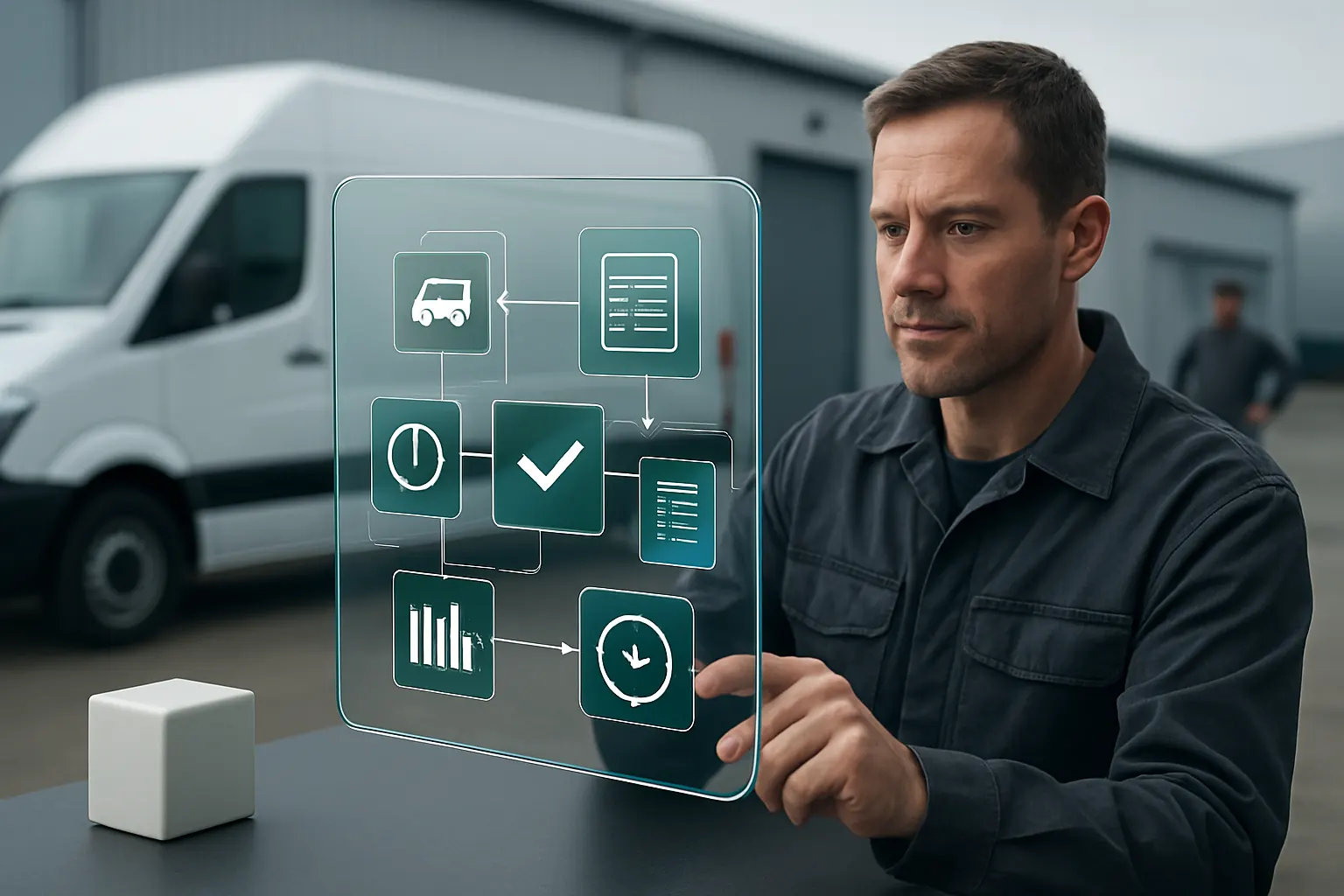
Booking to Workshop Workflow Integration for Seamless Job Management
Untangling Booking Delays and Communication Gaps
A common daily pain is the disconnect between customer booking, workshop schedule, and parts availability. Teams often juggle bookings manually via calls, spreadsheets or unrelated booking systems. This leads to duplication and missed slots.
Workflow Using One Owned Booking and Workshop Module
An interconnected booking record links directly to workshop scheduling and parts inventories. When a booking is made or updated:
- The workshop rota adjusts instantly.
- Parts required are flagged automatically.
- Real-time job progress updates flow through the same record.
Useful Integrations from Existing Systems
Fleet-management companies retain booking front-ends or CRM systems if preferred but link these via connectors to the owned booking/workshop module. Payment gateways (e.g., Stripe) and email tools integrate to notify customers and drivers.
Concrete Example
A business receives a booking for a vehicle needing brake work. The system:
- Confirms part stock levels.
- Reserves time on the technician rota.
- Sends booking confirmation and a reminder automatically.
The workshop manager views an up-to-date job board, avoiding overlaps or idle time.
Protecting Controls and Compliance
The booking system mandates a safety compliance check before job sign-off, retaining human review of inspection records to safeguard vehicle and driver safety. Date stamps and digital signatures ensure evidence is audit-ready.

Parts and Asset Tracking Unified into a Single Repository
Managing Complex Inventory and Asset Data
Parts ordering and asset tracking split across disparate vendor portals and spreadsheets create mismatches. Stock-outs or over-ordering waste cash and delay repairs.
Owned Parts and Asset Modules Improving Transparency
Centralising parts inventory and asset status records into one database eliminates these silos. The system:
- Tracks deliveries, assigned assets, and returns.
- Matches stock against upcoming bookings.
- Triggers alerts on low inventory or overdue asset returns.
Integrations with Suppliers and Finance Systems
Direct data feeds from major parts suppliers minimize manual stock updates. Integration with company finance software tracks procurement costs directly, supporting cashflow forecasting.
Practical Example
A scheduler spots a vehicle due for tyres replacement. The parts module shows only two sets left and auto-generates an order with preferred supplier. The purchase order links to finance for approval.
Controls on Asset Usage
Business rules restrict new orders without manager approval beyond budget limits. Usage reports are generated automatically to monitor part lifecycles and depreciation.

Digital Inspection Records Streamlining Vehicle Checks
The Challenge of Paper-Based Inspection Processes
Pre and post-journey vehicle inspections are vital for safety but often recorded on paper or separate apps disconnected from maintenance systems.
Digitising Inspections into One Connected Workflow
An owned inspection module stores photos, checklists, and driver remarks tied to vehicle ID and booking records. Alerts notify relevant teams on issues detected.
Helpful Device and Cloud Integrations
Mobile device apps feed data into the system in real time, reducing lag. Cloud storage preserves historical records safely and searchable on demand.
Example Use Case
A driver logs a tyre pressure warning on the inspection app. This update travels immediately to fleet managers, who schedule urgent maintenance and alert the workshop team.
Safety and Compliance Controls
Workflows require mandatory sign-offs from both driver and fleet manager before a vehicle returns to service. All inspection evidence is timestamped to uphold audit trails.

Driver Issue Monitoring and Resolution Tracking
The Ongoing Need to Manage Driver-Related Risks
Driver availability, licence checks, and issue reports traditionally involve lengthy manual follow-up. Lost or outdated data risks compliance and safety.
A Single Module for Driver Status and Actions
Driver profiles include licence expiry notifications, training records, and incident logs. Automated reminders prompt HR to review and address concerns proactively.
Linking to HR and Scheduling Systems
Data links to rota management for shift allocation based on driver certifications and availability. Integration with communication tools immediately informs drivers of any required actions.
Concrete Scenario
A driver nearing licence renewal date receives an automated notification. HR is alerted and arranges renewal training before expiry to prevent downtime.
Controls on Sensitive Data
Access permissions restrict confidential driver records to authorised personnel. Change histories are logged to support data integrity and compliance with data protection law; see ICO guidance.

Automating Booking Reminders and Workshop Notifications
The Burden of Manual Follow-Up Calls and Emails
Manual reminders for vehicle drop-offs, maintenance due dates, or parts availability consume admin time and can be inconsistent.
An Automated Notification Workflow
The system schedules tailored emails or texts from joined booking and workshop records. Notifications cover:
- Pre-service reminders.
- Parts arrival alerts.
- Estimated completion and collection times.
Integration with Communication Platforms
Connects to SMS gateways and email clients for reliable delivery. Template messages personalise content automatically per job details.
Real-World Use Example
A vehicle owner receives a text confirming that parts for repair have arrived, with an expected workshop start date and contact number for queries.
Safeguarding Customer Permissions
Unsubscribed customers are excluded from automatic messages. Message templates are logged for review to maintain communication standards per GOV.UK guidance.

A Single Financial Workflow Connecting Jobs, Costing and Billing
Fragmented Billing Systems Causing Payment Delays
Separating job management from invoicing leads to errors or slow billing cycles, impacting cashflow.
Owned Billing Module Linked to Job Records
Invoices generate directly from completed bookings and recorded parts use. Payment statuses update instantly, accessible through one dashboard.
Interfaces with Payment and Accounting Tools
Payment gateways like PayPal or Stripe integrate seamlessly, while exports link to standard accounting software for compliance and audit.
Example in Action
Following job completion, an automatic invoice is sent to the client with the exact cost breakdown, payment link, and payment due date. Finance managers monitor collections with real-time dashboard data.
Controls Over Financial Approvals
Invoices require manager review before dispatch if costs exceed configured thresholds. Payment reconciliation processes include manual checks where necessary.

Operational Data Consolidation into Tailored Dashboards
The Costs of Disjointed Reporting Tools
Managers waste time aggregating data from multiple sources to understand fleet health, vehicle availability or workshop utilisation.
Unified Workspace with Customisable Reporting
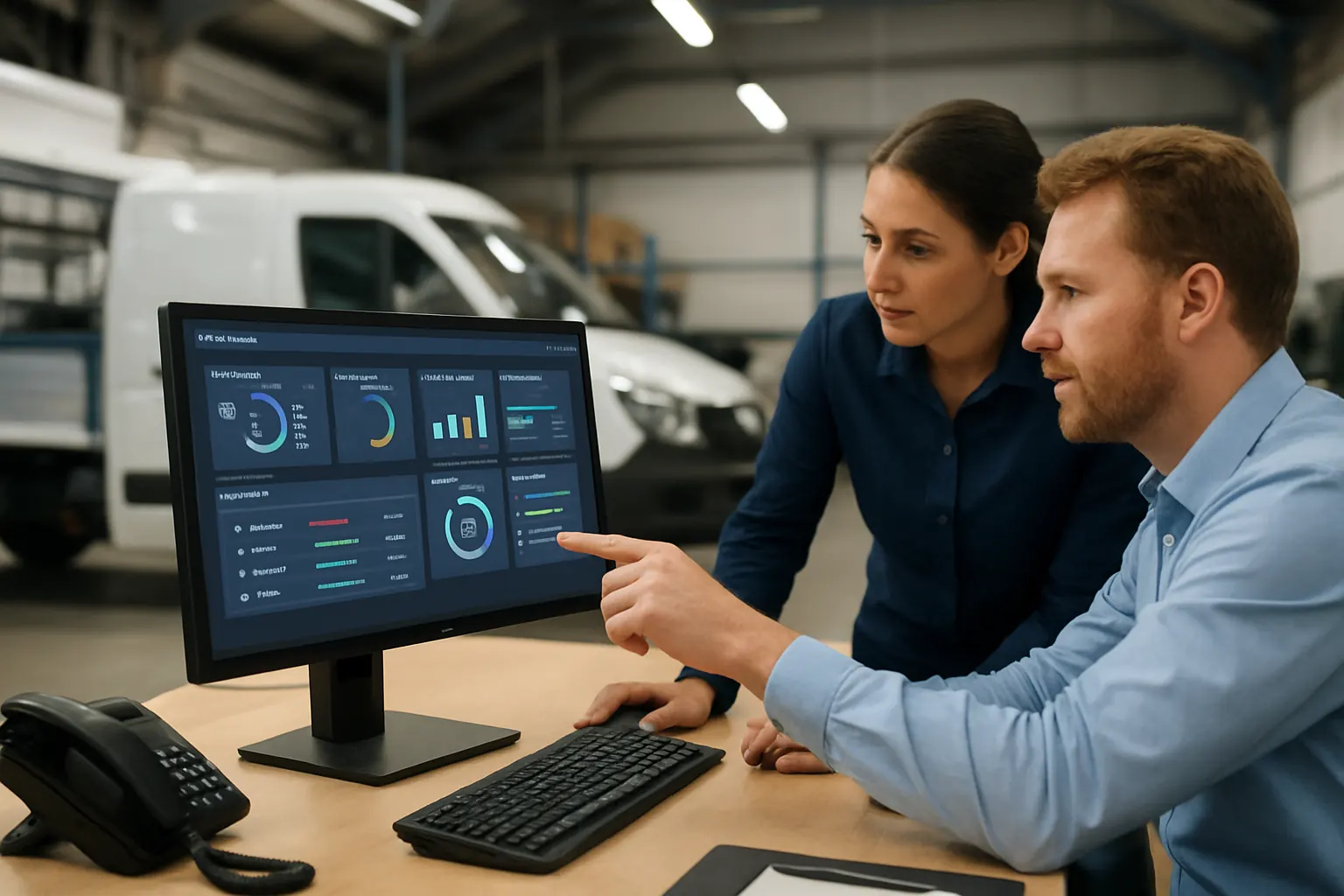
All operational data flows into a tailored dashboard reflecting key performance indicators (KPIs) relevant to the business. Widgets show real-time vehicle statuses, outstanding jobs, and parts levels.
Automatic Data Connectors and User Access
Existing systems are connected for live feeds, reducing manual exports. Access rights ensure users see data appropriate to their role.
Scenario Demonstration
A fleet manager views a single screen showing vehicles overdue for maintenance, driver availability shortly expiring licences, and job turnaround rates across workshops.
Data Accuracy and Audit Controls
Data validation rules highlight anomalies for review prior to report publication. Users can drill down into source records, ensuring decision transparency.
Selective AI Capabilities to Support Decision-Making without Losing Control
Avoiding Overreliance on AI for Critical Decisions
Fleet management workflows typically require deterministic rules rather than full automation. AI is best applied in targeted tasks.
Practical AI Uses Within the Owned System
- Vehicle issue classification from inspection notes.
- Summarising driver incident reports.
- Prioritising workshop jobs based on urgency and impact.
- Recommending maintenance schedules considering usage data.
Human-Machine Teaming
AI outputs serve as decision support, with final approval resting with qualified staff. Systems allow override and audit trails of AI-driven suggestions.
Example of AI Workflow
AI processes free-text driver reports, flags urgent brake issues, and suggests immediate service. A workshop manager reviews and confirms scheduling.
Governance and Risk Controls
AI models operate within transparent parameters. Users receive alerts on exceptions or uncertain classifications, supporting compliance with operational safety standards.

90-Day Rollout Plan to Minimise Disruption and Maximise Benefit
Weeks 1–2: Discovery and Foundations
- Map existing workflows and systems.
- Identify critical integrations and compliance needs.
- Establish data governance protocols.
- Set up core booking and workshop modules for pilot teams.
Weeks 3–6: Incremental Module Deployment and Integration
- Deploy parts and asset tracking modules.
- Link inspection records and driver monitoring functions.
- Configure automated notifications for live workflow trials.
- Train key personnel on system use and data entry.
Weeks 7–12: Consolidation, AI Enablement and Reporting
- Integrate finance workflows for unified billing.
- Introduce selective AI capabilities to support prioritisation.
- Configure management dashboards customised by role.
- Establish ongoing user feedback loops and compliance reviews.

How AI Implementation UK Connects, Replaces, and Automates Your Operation
AI Implementation UK specialises in delivering one connected operating system tailored to how your fleet-management company actually works. We do not recommend a disjointed collection of SaaS tools that increase complexity and recurring costs. Instead:
- We connect your current useful systems through custom integration layers.
- We replace unnecessary software subscriptions by building owned modules for booking, workshop scheduling, parts inventory, inspection records and more.
- We consolidate operational data into a single reliable record, accessible via tailored dashboards.
- We apply AI selectively to assist with variable tasks like classification and prioritisation, while deterministic rules handle predictable work.
- We retain human approval steps on safety, compliance and financial decisions, preserving control and traceability.
Our approach reduces manual admin, cuts errors, improves compliance, and accelerates cashflow recovery. As a result, you gain a fit-for-purpose working environment that grows with your business, not a tangled tech stack you don’t own.
Explore how we build automation workflows for fleet management at AI Implementation UK:
- Learn about our process automation and RPA services.
- Discover our approach to data infrastructure preparation.
- See real results in our case studies.
- Ready to transform your workflows? Use our plan my platform service to begin your automation journey.
All automation respects legal and security frameworks including data privacy and permissions aligned with ICO standards and operational safety protocols. Payment integrations follow best practices aligned with the PCI Security Standards Council.
Fleet-management company workflow automation is no longer about chasing endless disconnected software. It’s about gaining one owned, connected system that ties your people, processes and data together in a clear, manageable way. With AI Implementation UK, the promise of reduced admin, improved compliance and better decision-making can be delivered on schedule and with confidence.