
Learn how courier and parcel delivery firms can connect systems, reduce manual admin and automate order to dispatch with one tailored operating platform the.
Courier and parcel-delivery firm automation software: What Breaks Daily
Courier and parcel-delivery firm automation software should connect bookings, people, communications and reporting in one reliable operating flow.
Courier and parcel-delivery firms face constant pressure to manage a high volume of orders, allocate jobs efficiently, and resolve delivery exceptions swiftly. Every day, teams wrestle with disconnected systems—separate booking software, disparate driver apps, manual rota spreadsheets, and independent proof-of-delivery capture tools. These fractured workflows cause delays, miscommunications, and inconsistent data. Dispatchers often struggle to prioritise urgent deliveries when visibility is lacking. Drivers face redundant data entry, risking error and frustration. Managers lack a single trusted record for business-critical insights and compliance reporting.
In short, fragile information flow and a patchwork of software solutions break operational rhythm. The question is: how to reconnect these workflows into one owned, tailored system instead of piling on more SaaS subscriptions? That’s the challenge courier and parcel-delivery firms automation software must solve.

The Cost of Manual Work in Courier Operations
Manual work and unconnected tooling hit courier firms hard in four critical ways:
- Time wasted on repetitive tasks: Staff spend hours transferring data between systems and managing exceptions manually.
- Increased error rates: Manual entry and disconnected apps lead to booking mistakes or lost delivery evidence.
- Compliance risks: Regulatory obligations for driver access, chain of custody and goods handling require rigorous traceability, impossible without a reliable single record.
- Cashflow drag from delayed invoicing and payment: When operational data is siloed, billing delays or disputes escalate and negotiations fall behind.
Reducing these costs demands more than automation of individual functions. It requires connecting and owning the whole operational workspace so workflows flow naturally, and data automatically updates where needed.
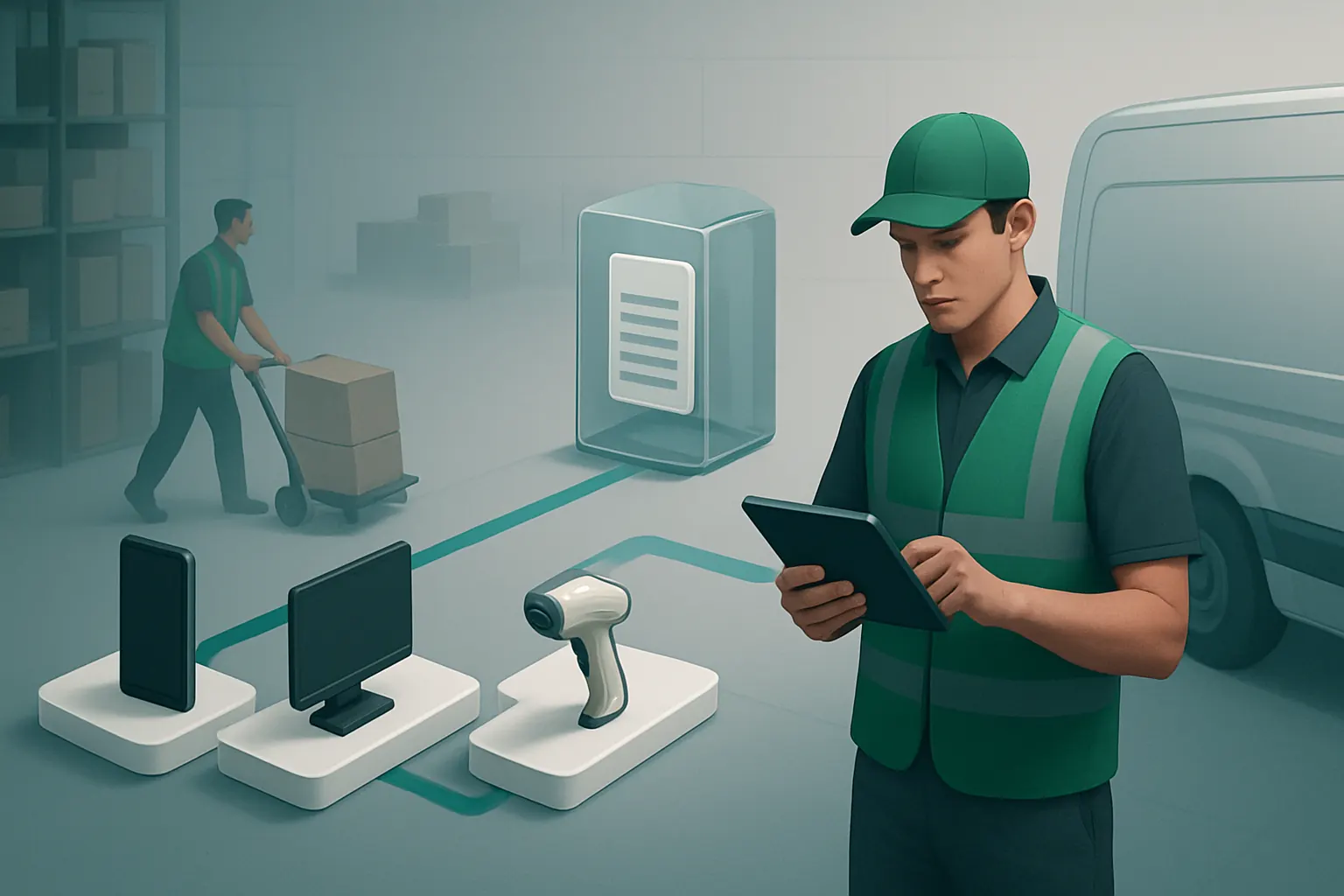
Streamlined Job Allocation: From Orders to Dispatch with One System
Fragmented Job Allocation Holds Back Efficiency
Most courier firms juggle order intake from multiple channels—phone, web, email—into separate booking tools or Excel sheets. Jobs are manually allocated or scheduled in stand-alone rotas. Staff race to check availability and update drivers individually, risking double-booking or missed slots.
Connected Workflow Drives Real-Time Dispatch
By owning a single booking record connected to a dynamic rota module, firms can automate job allocation based on driver availability, skills, and route optimisation. Orders flow directly into dispatch schedules, with delays or capacity conflicts flagged early. Drivers receive notifications instantly via an integrated app.
Maintaining Useful Integrations Without Fragmenting
Useful integrations remain with specialist external tools such as payment gateways and SMS communications, but core job scheduling and allocation live natively. This approach avoids avoidable subscription costs often incurred with standalone job allocation software.
Practical Example: Prioritising Urgent Parcel Delivery Automatically
A regional parcel-delivery firm implemented an owned dispatch workspace. Orders marked ‘urgent’ by customers triggered automatic driver assignment with highest priority slots. The rota’s live capacity view prevented overload, reducing manual rescheduling by 40%.
Controls for Reliable Operations and Accountability
The system enforces driver status controls, ensuring only authorised personnel receive job details. Booking changes surface for dispatcher review and approval. Roles and permissions maintain chain-of-custody compliance.

Centralised Route and Capacity Planning Optimised for Real-world Variables
Daily Planning Frustrations with Disconnected Tools
Route planning is often a crucial pain point. Many firms rely on separate route-optimisation services and capacity spreadsheets disconnected from live job data. Last-minute cancellations, traffic exceptions, or vehicle issues cause reactive re-planning or delays.
Owning the Route and Capacity Planning Module That Connects Live Data
An owned module built around live dispatch jobs and driver availability lets planners optimise routes with real-world factors included. Exceptions like failed deliveries are captured directly, triggering automated alerts and reallocation workflows within the same system.
Useful External Route Services Only When Fully Integrated
Specialist route planners or traffic data APIs may feed recommendations, but the route plan itself and driver capacity management reside in owned workflow modules avoiding recurring fees.
Realistic Use Case: Dynamic Planning to Handle Route Interruptions
One courier firm consolidated planning and operations into a connected system with live exception inputs from drivers. When traffic delays occurred, the system automatically rerouted parcels, notified customers, and informed planners without manual intervention.
Controls to Support Compliance and Exception Management
Driver access is strictly controlled in the planning workspace. All changes log details and require dispatcher confirmation for sensitive route or capacity changes. This supports compliance work with delivery timeframes and regulated goods handling.
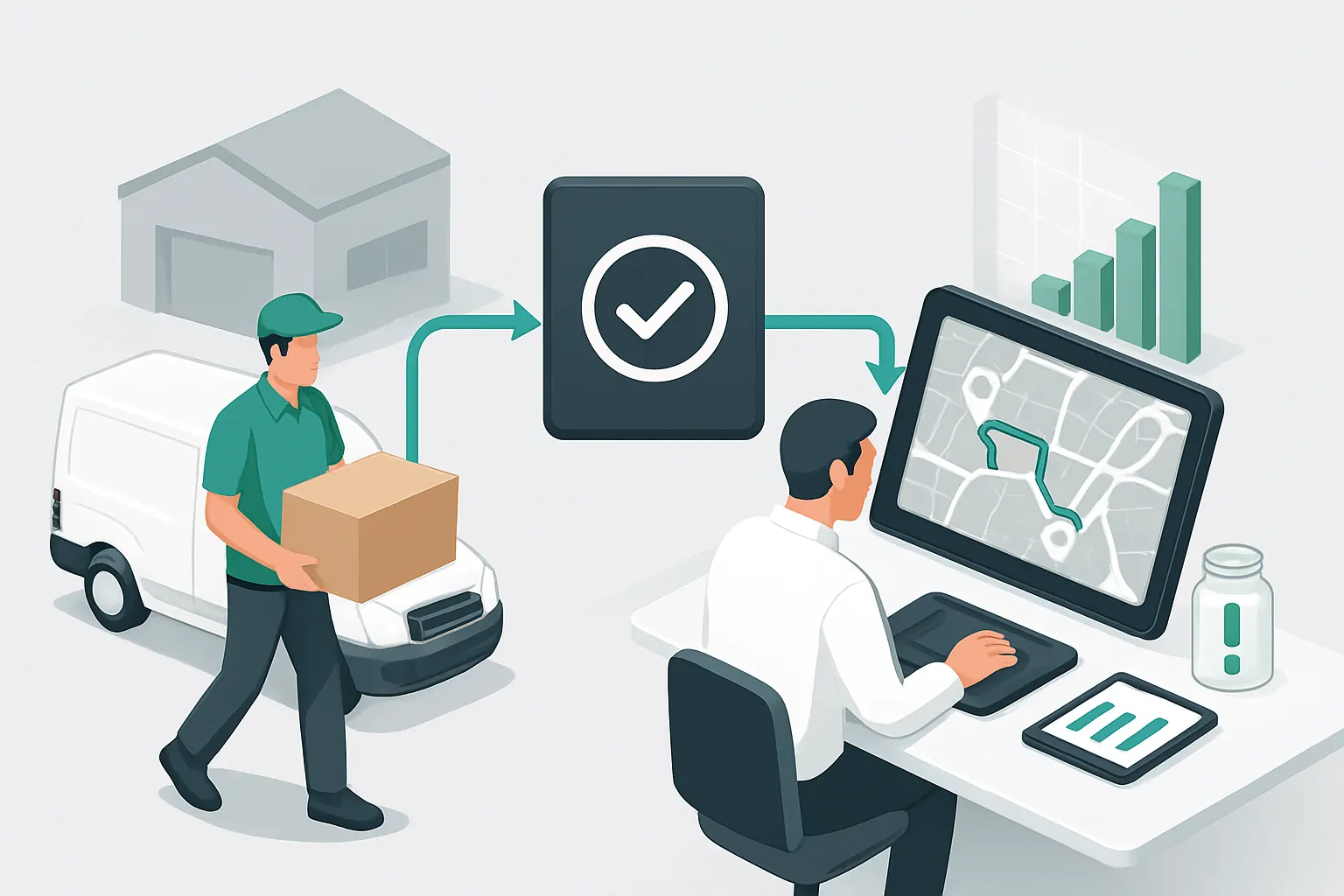
Reliable Proof-of-Delivery and Exception Handling in a Single Workspace
Challenges from Scattered Proof and Manual Exception Reporting
Proof of delivery (POD) often involves juggling photo apps, signature capture tools, and manual exception logs. This results in fragmented, error-prone records that delay invoicing and risk compliance issues.
Bringing POD and Delivery Exceptions into Owned Job Records
Embedding POD capture and exception logging within each dedicated delivery job record creates a single, trustworthy record of fulfillment. Data flows automatically to dispatchers and finance teams. Delivery evidence integrates with customer billing and feedback.
Functional Integration with Specialist Services Where Essential
Payment processing or customer communications are linked externally but initiated from within the owned workflow. For example, sending payment links after POD or automated SMS exception follow-ups enhance customer engagement without scattering core proof records.
Concrete Example: Digitised POD Cutting Billing Disputes
A courier business implemented owned POD capture via mobile devices linked directly to jobs. Exceptions like failed attempts triggered immediate alerts and rescheduling workflows. Billing cycles accelerated, cutting disputes and manual follow-up by 50%.
Robust Control for Chain-of-Custody and Data Integrity
Driver app permissions regulate POD submissions. All evidence timestamps, GPS data, and exceptions are stored immutably for audit and compliance. Management retains visibility for verification and dispute resolution.

Operational Dashboards with One Trusted Data Source
Daily Frustration: Fragmented ‘Truth’ Derailing Decisions
Managers routinely struggle to find reliable operational insights. Reports are cobbled together from multiple systems, leading to conflicting KPIs and slow or misguided decisions.
One Owned Dashboard Feeding Off Unified Operational Data
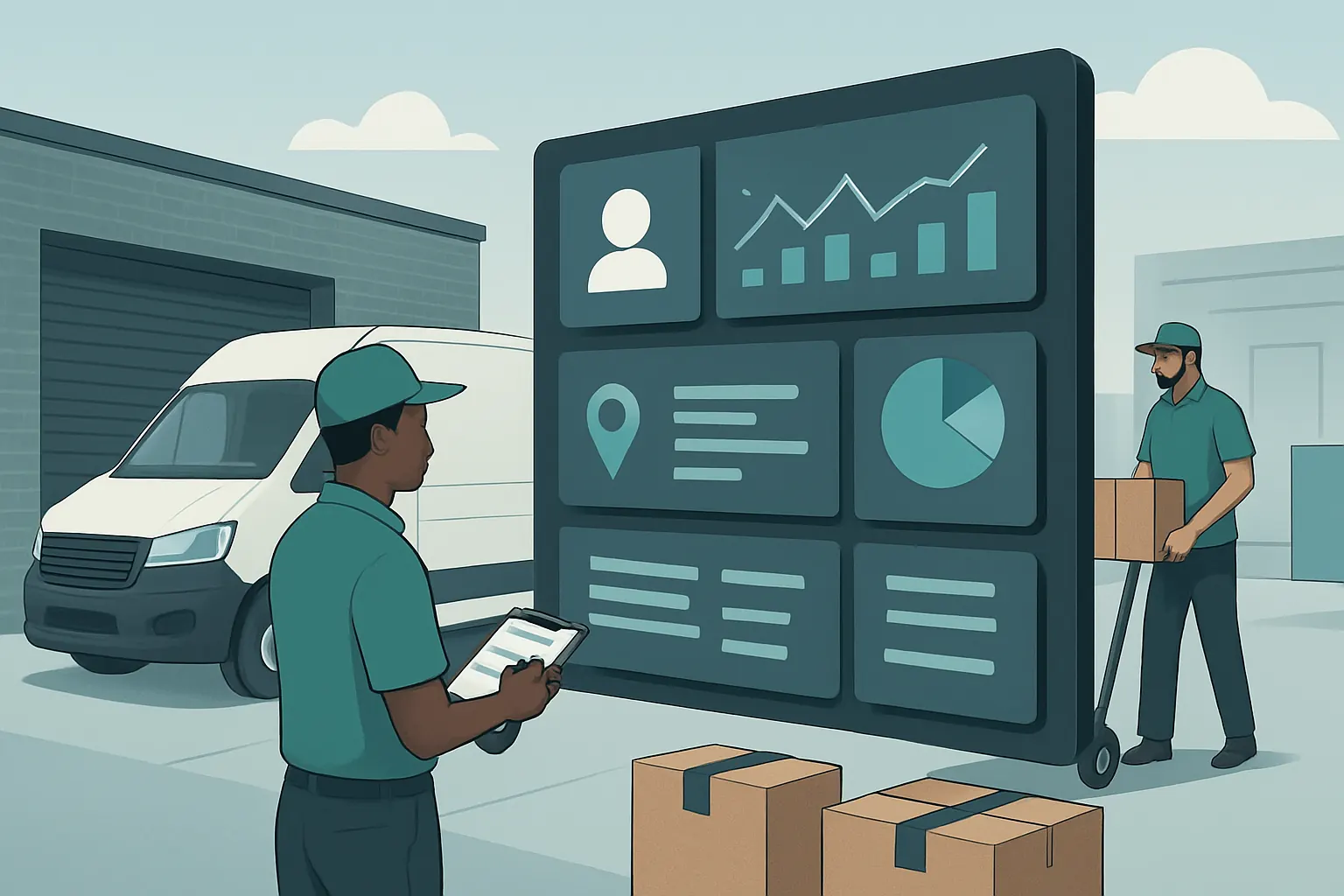
A tailored, connected dashboard pulls data from all modules—bookings, rotas, routes, POD, invoicing—forming a single source of truth. Users segment views by role, region, and status. Real-time alerts highlight concerns needing attention.
Purposeful Integrations for Specialist Reporting or Financial Tools
Where external finance or reporting tools are used, they receive cleansed, unified data exports from the owned system. This preserves data integrity throughout the workflow chain.
Practical Example: Real-time Performance Monitoring Enhancing Responsiveness
A national parcel-delivery firm gains live visibility of delivery performance, driver utilisation, and exception rates. Managers reallocate resources proactively and drill into individual workflows to optimise efficiencies.
Controls Ensuring Data Privacy and Authorised Access
Role-based access controls govern dashboard visibility. Audit logs track report generation and data exports, supporting data security obligations in line with ICO guidance.
Selective AI Capabilities Complementing Deterministic Controls
Automation Overuse Can Undermine Operational Reliability
AI is valuable to assist with variable tasks like classification, summarisation, prioritisation, and decision support. However, predictable, routine functions remain governed by deterministic rules. Human review stays central for important decisions.
Practical AI Use Cases within Owned Processes
- Automatic classification of delivery exceptions from driver notes
- Summarising daily route deviation reports for dispatcher review
- Prioritising urgent jobs flagged by order types and customer criteria
- Assisting decision support around complex routing or exception resolution
Integrations with Specialist AI Services Only When Embedded
When external AI services are employed, they operate within a connected system to prevent data fragmentation or duplication. The AI augments human workflows instead of replacing controls.
Example: AI-Enhanced Exception Prioritisation with Human Approval
In one example, AI analysed unstructured driver reports to flag exceptions for priority review. Dispatchers validated recommendations before confirming reassignments, reducing oversight errors and delay.
Controls for Transparency and Accountability with AI-Assisted Tasks
All AI recommendations are audit logged and presented transparently. Final authority lies with authorised staff who can override or request deeper investigation as part of compliance management.

90-Day Rollout Plan for Courier and Parcel-Delivery Firms Automation
Weeks 1–2: Assessment and Core Integration Design
- Map existing systems, identify useful integrations to retain
- Define operational workflows and compliance requirements
- Plan phased connected system build around owned booking and rota modules
Weeks 3–6: Core System Build and Early Data Migration
- Develop connected booking, job allocation, and rota workspace modules
- Integrate core supplier APIs (payments, SMS) as trusted external functions
- Migrate historical delivery and booking data into unified records
Weeks 7–12: User Training, AI Module Introduction and Dashboard Rollout
- Deploy mobile driver POD and exception capture with controlled app access
- Introduce AI-assisted classification and prioritisation tools for dispatchers
- Launch operational dashboards and monitoring with real-time alerts
- Organise hands-on training sessions and initial operational feedback loops
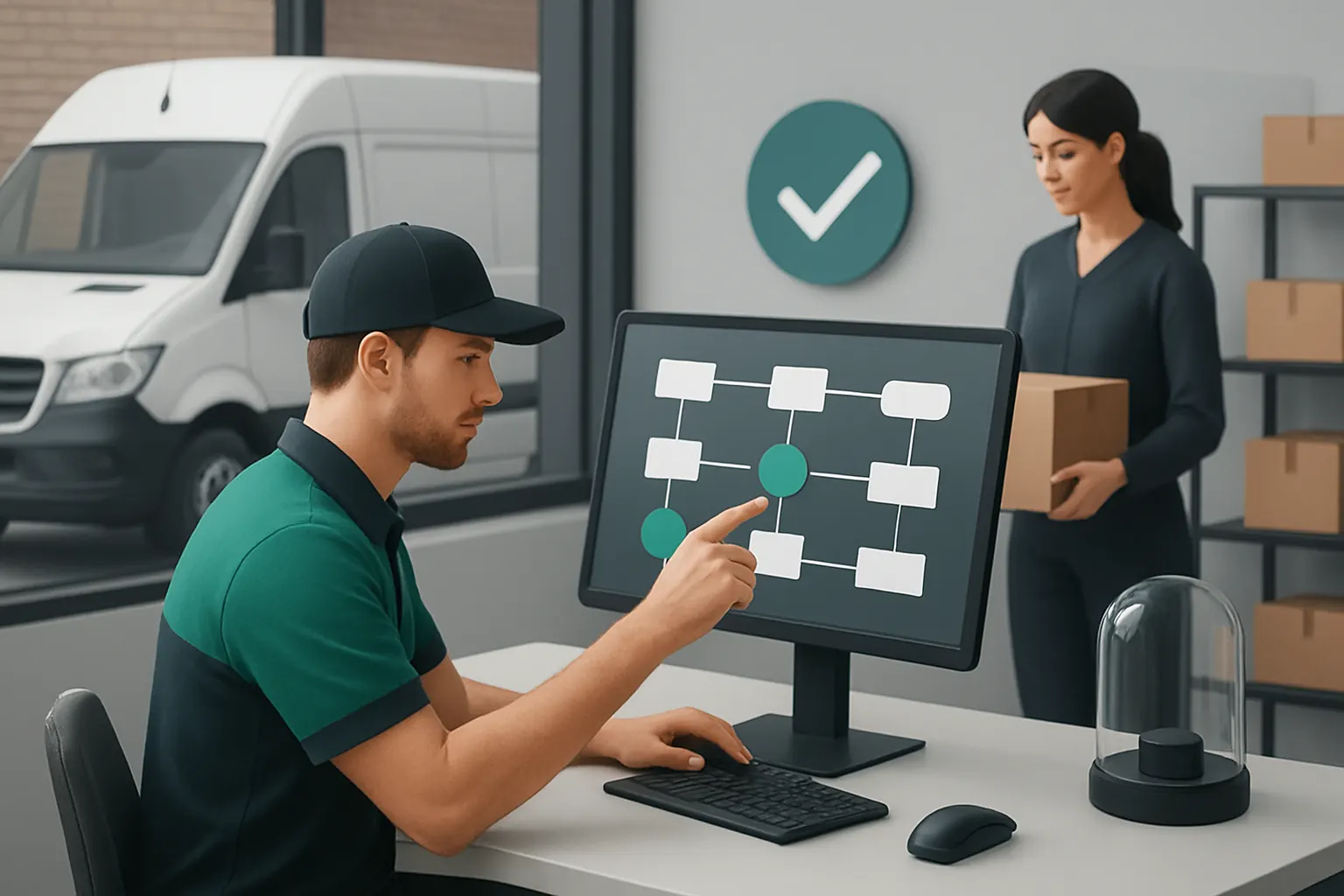
How AI Implementation UK Connects, Replaces and Automates for Courier Firms
At AI Implementation UK, we understand courier and parcel-delivery firm automation software must do more than add tools—it must unify the entire operational workflow within one connected system the client owns. Our tailored systems:
- Connect useful existing software to avoid disruption and extra subscriptions
- Replace fragmented tools with owned modules for booking, rota, routing and proof-of-delivery
- Automate workflows from order to dispatch, exception management, and billing
- Use selective AI capabilities as assistants, not decision-makers, layered on deterministic controls
- Maintain strict compliance controls over driver access, data capture, and chain of custody
Whether you need dispatch orchestration, real-time routing exception alerts, or delivery evidence capture with billing integration, our expert teams design a robust, scalable setup anchored in your day-to-day realities. By owning your system—not renting disconnected SaaS apps—you safeguard your data, reduce costs, and build resilience.
For a practical next step to future-proof your courier workflows, start with our process automation services or explore our data infrastructure preparation offerings. See how we’ve helped firms just like yours in our case studies.
Learn more about how you can own your connected courier operation at scale on terms that work for your business. Let us help you reduce complexity, speed execution and maintain control all the way.
For regulatory context on data security and privacy controls, visit the ICO’s guidance. For secure payment processing integration, see the PCI Security Standards Council.
To turn these priorities into one coherent system, map the platform your business needs or explore our workflow automation approach.