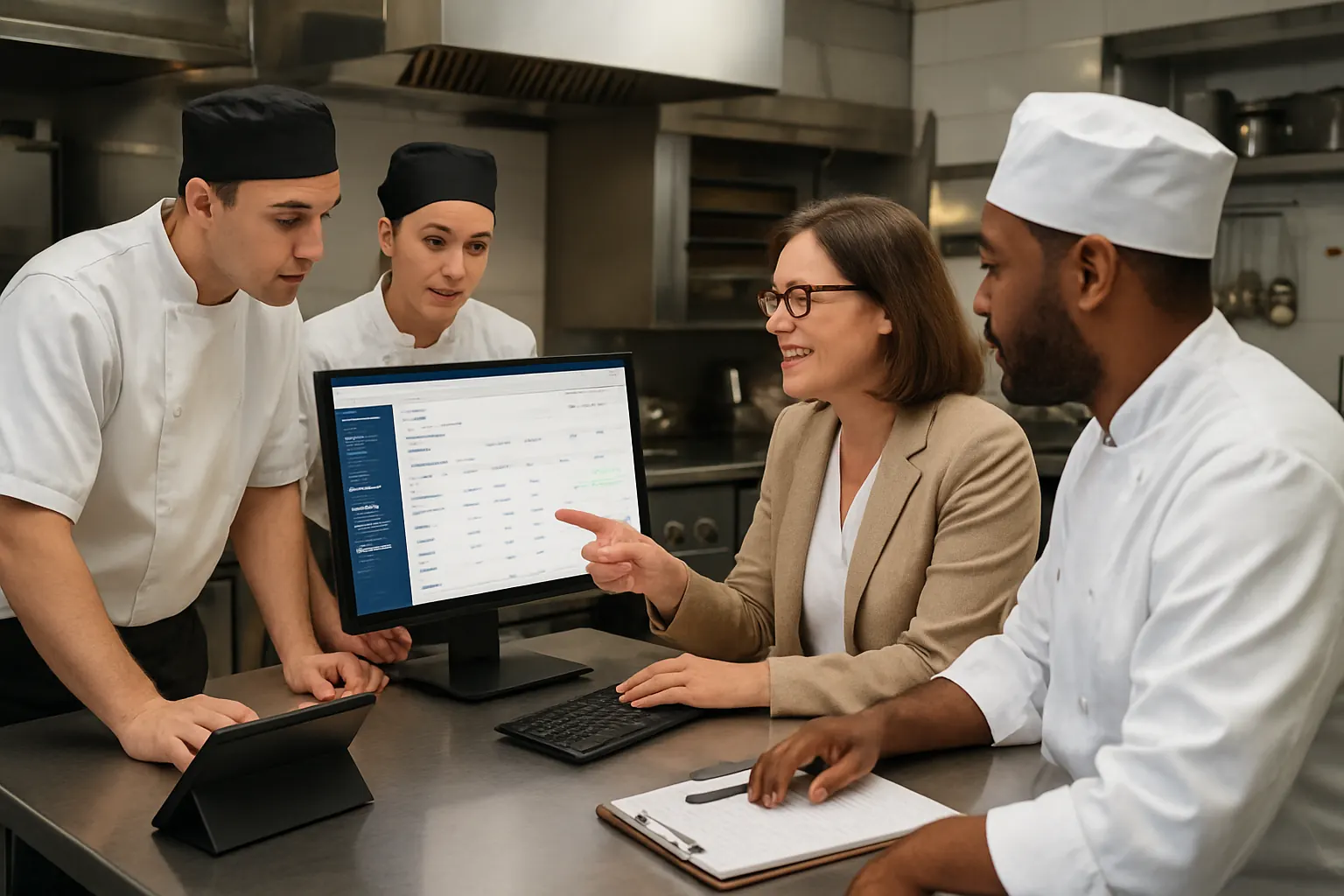
Learn how contract catering companies can connect systems, reduce manual admin and automate booking to service with one tailored operating platform the business.
Contract-catering company workflow automation: What Breaks Daily
Contract-catering companies manage a complex web of operations. From handling site-specific menus and staff rotas to coordinating supplier orders and guest communications, the daily grind often feels like fire-fighting. Key operational stages—booking, service provision, stock management, and compliance—can easily fall out of sync.
Menus designed in isolation risk inaccuracies in allergens or costings, leading to costly rework or regulatory scrutiny. Staff rotas assembled manually miss optimisations and cause scheduling conflicts. Supplier ordering can be reactive rather than proactive, increasing waste or shortages. Communicating with customers and guests is a manual, repetitive task prone to delays and inconsistent messaging.
Even with technology in place, many contract-catering companies suffer from disconnected systems, duplicated effort, and unreliable data. Without one connected view and workflow, decision-making is slow, compliance harder to prove, and operational costs balloon.
This article explains how contract-catering company workflow automation can transform these challenges into an integrated, efficient operation. We detail five practical steps to connect existing systems, replace unnecessary software subscriptions, and harness selective AI capabilities—all within a business-owned operating environment custom-built to your workflows.

The Real Cost of Manual Work in Contract Catering
Manual, disconnected processes impose hidden costs that accumulate daily:
- Time lost: Staff spend hours on repeated admin such as rescheduling, chasing supplier deliveries, or updating menus across sites.
- Errors increase risk: Data fragmentation creates inconsistent allergen information, incorrect stock counts, and misplaced bookings.
- Compliance burdens: Generating evidence on food safety, guest data privacy or payment controls involves laborious cross-checking.
- Cashflow pressures: Inventory shortages or surpluses impact margins; payment delays arise from fragmented finance workflows.
- Scaled complexity: Multi-site operations amplify these problems, multiplying manual tasks rather than streamlining them.
Contract-catering company automation software must focus on removing these inefficiencies through connected workflows that keep business data as a single source of truth. Automation reduces human error, enables regulatory controls, improves supplier coordination, and frees staff to focus on service quality.
Connecting Booking to Service for Seamless Operations
Booking Challenges Across Multiple Sites
Contract caterers handle multiple simultaneous bookings daily. Without integration, errors creep in: double-booked services, misrepresented guest counts, or last-minute changes missed in service planning. Disconnected booking systems cause confusion between front-of-house, kitchen, and suppliers.
Uniting Booking and Service in One Workflow
Integrate booking records into a connected system that synchronises real-time guest numbers, dietary requirements, and event specifics. Automate notifications across teams and sites. Confirmation, last-minute changes, and cancellations update instantly in rotas and supply planning.
Integrations That Work Without Overload
Keep current booking systems connected via APIs or shared data layers. Replace overlapping bookings software with owned modules controlling guest communication and service scheduling. Link specialist external providers handling payments or guest messaging to maintain transactional security and GDPR alignment.
Real Example: Booking Automation in Action
A client running multiple school contracts connected their booking system with kitchen rostering and stock management. Automated workflows alerted suppliers of menu changes and triggered rota adjustments without manual intervention. This reduced booking errors by over 30%, freeing staff 10 hours weekly.
Controls to Manage Risk and Confirm Accuracy
Employ deterministic rules to check booking data for conflicts before service day. Use AI selectively for classification and summarisation of booking notes. Key service decisions such as capacity changes remain authorised by managers, preserving human oversight.

Automating Site Menu Management and Costings
Complexity of Site-Specific Menus
Menus vary widely across sites due to client preferences and allergen concerns. Manual menu creation requires constant updates and cost recalculations, often involving spreadsheets prone to error.
Unified Menu Planning Workspace
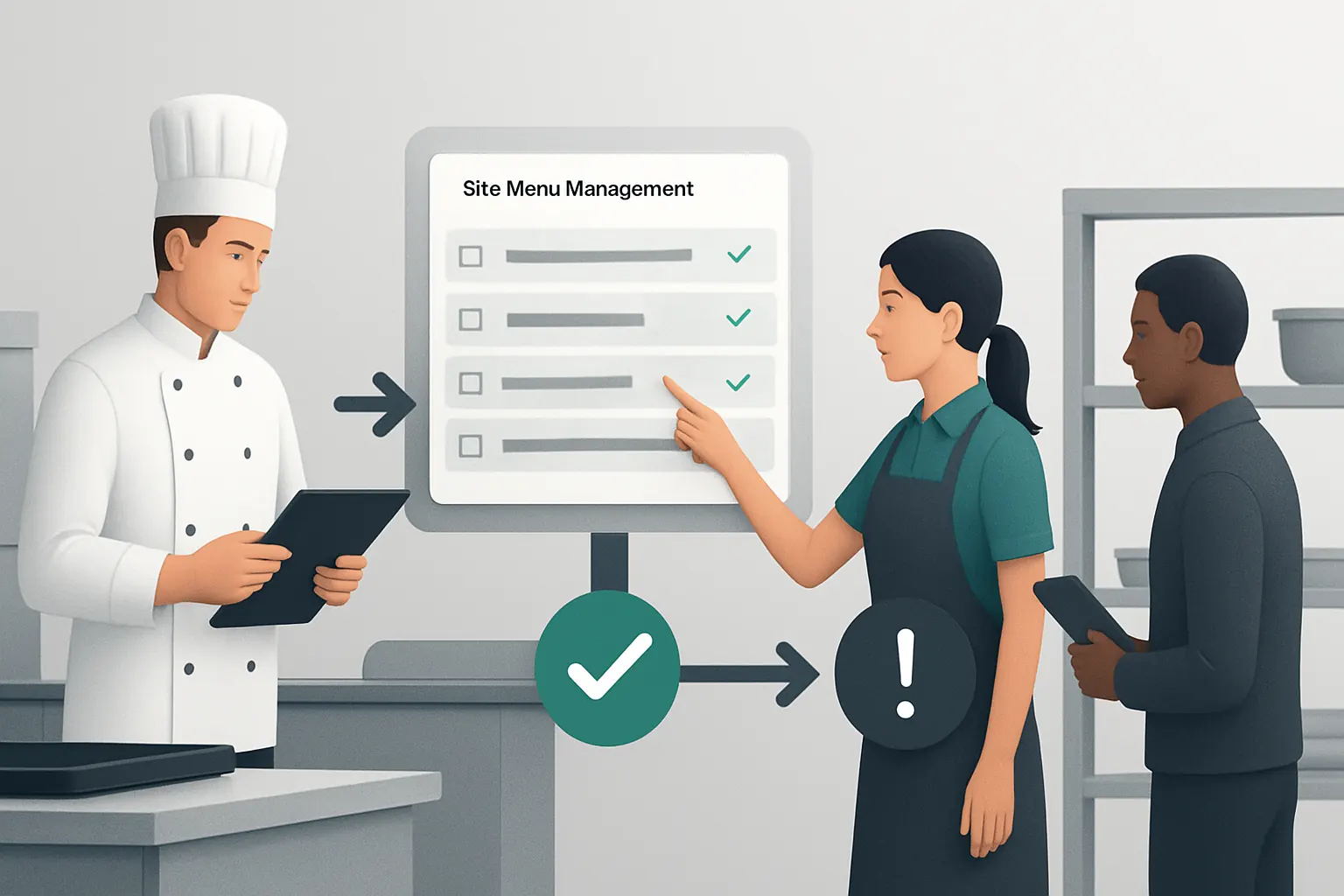
Implement a central menu management module controlling recipe details, ingredient lists, allergens, and nutritional scores. Use drag-and-drop interfaces to adapt menus rapidly while instantly updating costings. Menus automatically feed supplier ordering and production schedules.
Integration with Existing Systems
Retain useful current tools such as Civica or Saffron catering management software for core ingredient databases, while replacing piecemeal menu software subscriptions with owned modules. Integrate supplier portals to automate price updates and availability.
Practical Impact of Menu Automation
One contract caterer boosted accuracy in allergen declarations across 20 sites by centralising menu control. Stock orders aligned automatically with planned menus, reducing waste and ingredients stockouts. Kitchen teams received updated menus daily via tailored dashboards.
supporting compliance work and Quality
Automated alerts flag nutritional outliers or missing allergen information before menus are issued. Regular reports enable manual audits for food safety compliance. The system preserves a group-wide menu archive for traceability.
Staff Rota Scheduling with Built-in Notifications
Manual Rotas Cause Overlaps and Gaps
Rotas created via spreadsheets or isolated systems are prone to error, leading to overstaffing, staff dissatisfaction, and last-minute callouts. Lack of visibility on other site schedules complicates cross-site staff allocation.
Connected Rota Module with Notifications
A connected rota workspace pulls booking data, predicted guest numbers, and supplier delivery timings. It automates shift allocations according to contractual rules and qualification requirements. SMS and email alerts notify staff immediately of rota changes or shift swaps.
Useful Integrations to Retain
Current HR or payroll systems can remain linked to synchronise contracted hours and pay rates. Specialist communications tools focused on messaging remain attached, ensuring reliable delivery of notifications.
Example Outcome: Staffing Optimised
A multi-site contract caterer reduced rota adjustments by 40% after deploying connected staff scheduling. Automated hours tracking fed accurate pay calculations into payroll, cutting admin time by 25%. Staff engagement improved as shift updates arrived automatically.
Controls Over Shift Changes
Set hard rules for shift overlap, maximum hours, and skill requirements. Routine scenarios automate via deterministic logic; human managers approve exceptions. Audit logs track rota updates for compliance.
Supplier Order Automation and Inventory Synchronisation
Procurement Bottlenecks in Manual Ordering
Suppliers typically receive orders by email or phone, causing delays and inaccuracies. Stock levels often rely on manual counts, risking over-orders or shortages.
Centralised Supplier Order and Inventory Module
Link inventory data with planned menus and booking projections to generate automatic supplier orders. Update stock levels in real-time based on deliveries and consumption. Allow supplier portals to process orders directly, creating a closed supply loop.
Keeping Specialist Suppliers Connected
Continue using dedicated procurement platforms or e-invoicing services where appropriate. Automate data exchange and reconcile orders within the owned system’s environment for transparency.
Concrete Benefits Realised
A contract caterer managing 10 sites connected supplier orders with menu plans and stock control, reducing inventory waste by 15%. Instant visibility of stock shortages triggered alerts enabling advance supplier negotiations.
Supplier Data and Compliance Checks
Implement rule-based controls to prevent orders beyond budget thresholds or non-approved suppliers. Keep records to support audit trails and food provenance requirements.

Tailored Operational Dashboards Combining Data Streams
Fragmented Data Leads to Poor Decision-Making
Disparate systems create silos of operational information. Managers lack a single view of bookings, rotas, stocks, or compliance status, hampering rapid decisions.
One Reliable Record with Customised Insights
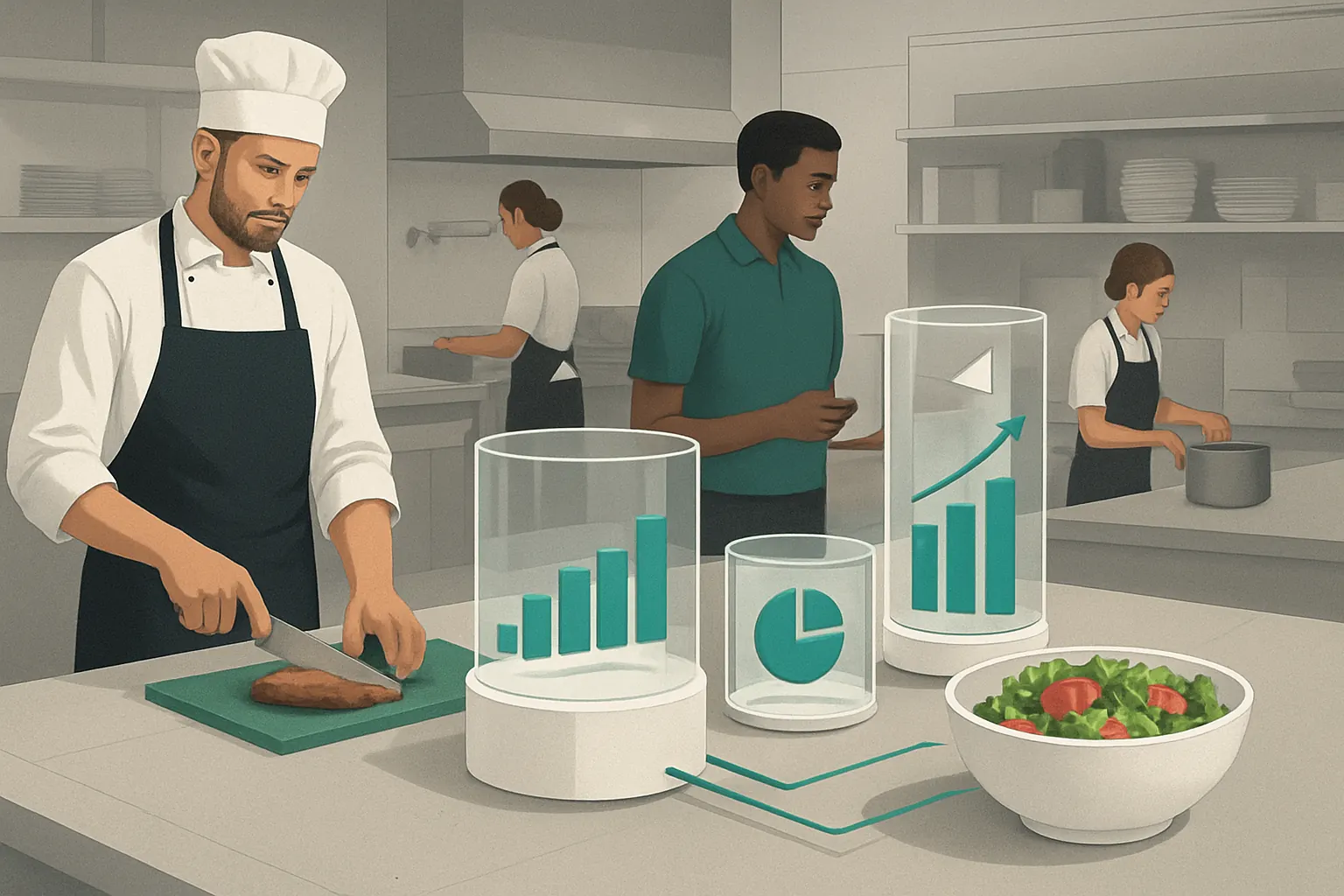
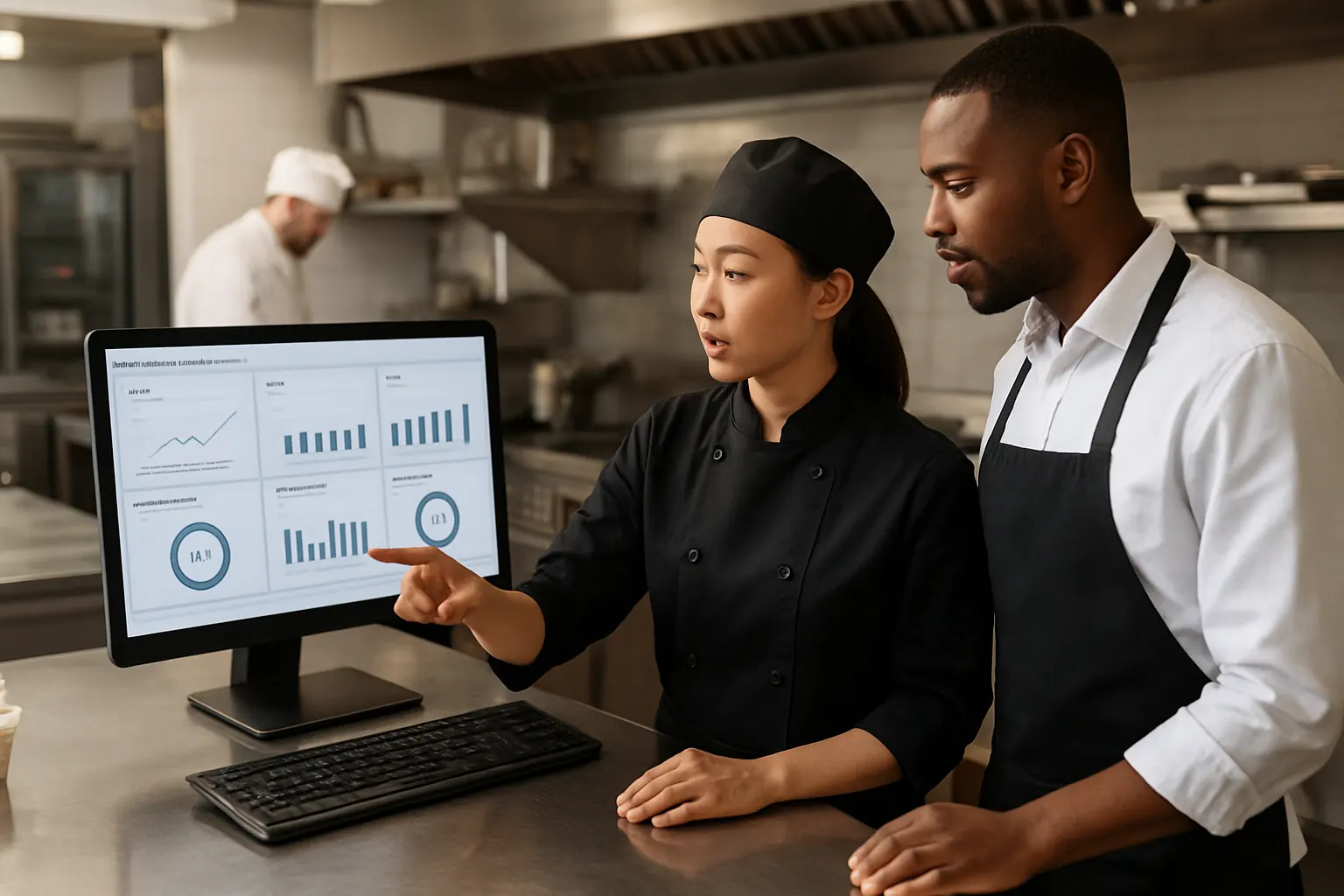
Aggregate data from all modules—booking, menus, rota, suppliers—into a single trusted database. Build tailored dashboards presenting KPIs on service performance, staff utilisation, supplier efficiency, and regulatory compliance.
Integration of Third-Party Specialist Tools
Embed external payment gateways and communication platforms into dashboards, maintaining workflow flow without switching apps.
Dashboard Impact Example
A contract-catering manager accessed a live view combining guest bookings, allergen flags, staff availability, and supplier order status. This enabled swift adjustments during service disruptions, improving guest satisfaction scores.
Controls to Maintain Data Integrity and Privacy
Set user roles controlling access to sensitive guest or financial data. Track changes with logs for compliance. Provide alerts on data anomalies or security events referencing ICO and NCSC guidance.
A Practical 90-Day Rollout Plan for Contract-Catering Automation
Weeks 1–2: Discovery and Integration Mapping
- Conduct process reviews identifying key workflows and data sources.
- Inventory existing software systems and determine integration options.
- Prioritise modules for early automation aligned with biggest manual pain points.
Weeks 3–6: Building and Connecting Core Modules
- Develop or configure booking-service and menu management workflows.
- Connect supplier interfaces for real-time pricing and order submissions.
- Replace redundant software subscriptions with owned modules.
Weeks 7–12: Staff Scheduling, Dashboards, and Controls
- Implement staff rota automation with notification services.
- Build tailored operational dashboards combining workflow data.
- Configure rule-based controls and approval processes for compliance.
- Train key staff and testers on the new environment and monitoring tools.
How AI Implementation UK Can Help You Own Connected Workflow Automation
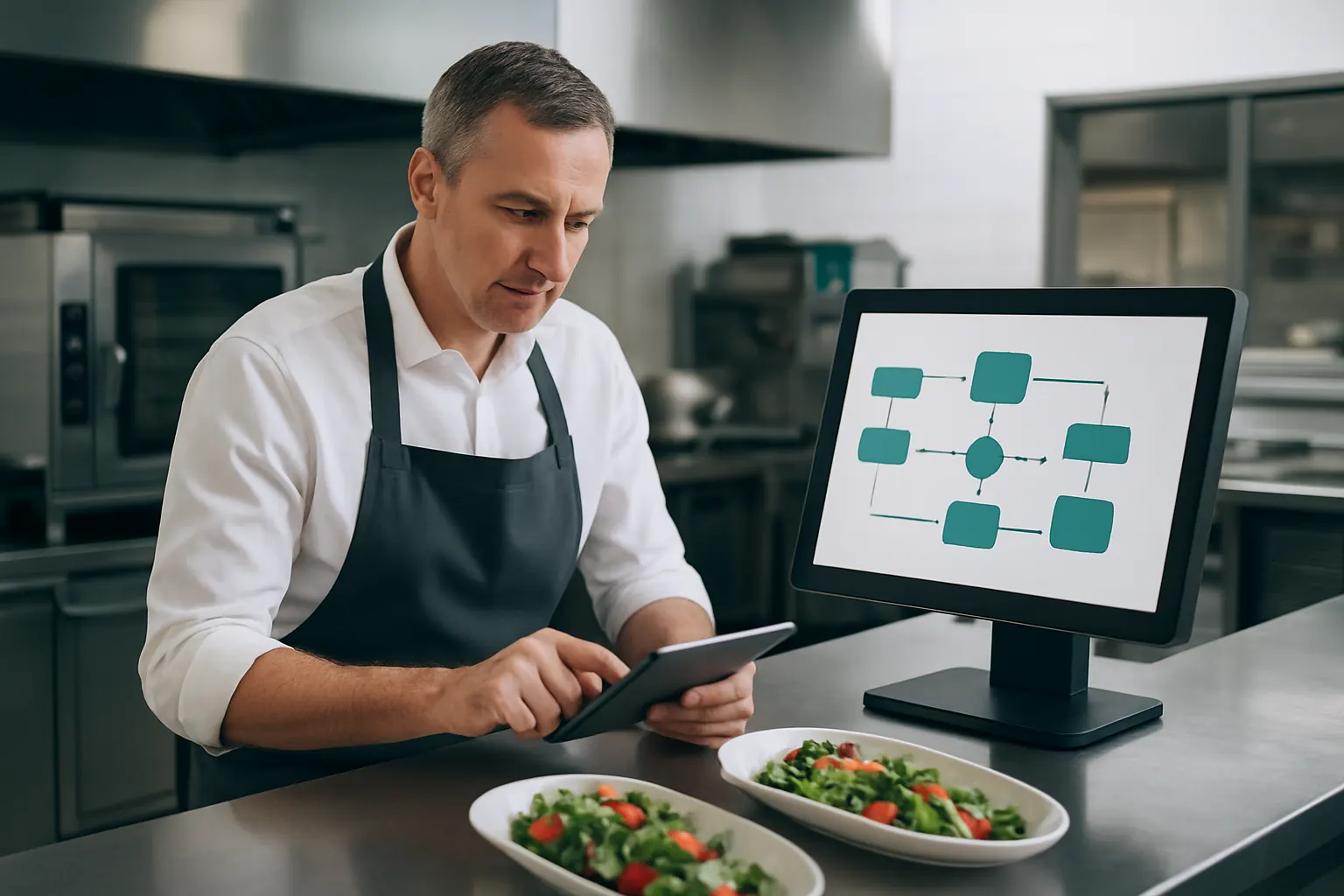
AI Implementation UK specialises in delivering one connected operating environment tailored to contract-catering businesses. We build a platform you own, shaped around how your teams work every day. This approach avoids patchwork SaaS products by:
- Connecting existing software like Civica catering management or specialist messaging into one cohesive system.
- Replacing unnecessary subscriptions with modules that you control, reducing costs and data fragmentation.
- Bringing operational data—booking, menus, rotas, supplier orders—into one trusted record for confident, timely decisions.
- Applying AI selectively—such as summarising booking notes or classifying supplier messages—but relying on deterministic rules for predictable tasks.
- Preserving human approval on critical decisions like changes in guest service configurations or compliance exceptions.
We help you keep external services that focus on specialist functions, such as payment processing or communications, ensuring they remain integrated without overcomplicating workflows.
Our end-to-end expertise spans process automation, data infrastructure preparation, and AI strategy roadmapping. Find linked services and case studies illustrating how we deliver measurable business improvements. When you are ready, use our detailed plans to roll out automation fast, efficiently, and with minimum disruption.
To explore how your contract-catering workflows can be transformed with a connected, owned system, start a conversation through our platform planning process. For broader automation needs, including robotic process automation, visit /services/process-automation-rpa. For preparing your data assets, see /services/data-infrastructure-preparation.
For guidance on data privacy and secure data handling, consult the ICO and NCSC. For payment handling best practice, the PCI Security Standards Council provides practical advice.
Contract-catering company workflow automation gains clarity, control, and efficiency when built around one owned connected system. AI Implementation UK can partner with you to make it a reality.