
Learn how civil engineering firms can connect systems, reduce manual admin and automate enquiry to estimate with one tailored operating platform the business owns.
Civil engineering firm automation software: What Breaks Daily
Civil engineering firm automation software should connect bookings, people, communications and reporting in one reliable operating flow.
Civil engineering firms face daily operational breakdowns that slow projects and escalate costs. Disconnected systems cause delays in converting enquiries to estimates. Manual admin saps valuable resource time in job scheduling, site record-keeping, and compliance tracking. Duplicate data entry leads to errors in plant allocation and project controls. Critical decisions often rely on incomplete insights drawn from spreadsheets and siloed tools. These inefficiencies risk site safety, delay certification, and disrupt cashflow.
Coping with this growing administrative burden drains focus from core engineering tasks and client relationships. Yet most firms cannot simply buy a collection of apps without compounding integration headaches. The challenge is clear: how to simplify and automate workflows with a unified, business-owned system that fits existing practices.


Streamline Enquiry to Estimate Workflows with Owned Modules
Enquiry conversion is the first frequent choke point
Civil engineering firms often patch together CRM systems, email, and spreadsheets to manage leads. This creates data silos and slow quotation cycles.
Connect enquiry data with estimating and resource planning
Using one connected workspace allows enquiries to flow automatically into estimating tools linked to resource availability and plant allocation. This reduces repetitive data capture and speeds turnaround.
Example: Auto-move incoming enquiry details to create standardised estimate drafts
The firm replaces multiple subscription services with a quoting module built around their pricing rules and linked inventory. Automated estimate generation reduces admin by over 40%.
Control: Ensure human review on each estimate before client submission
Deterministic automation handles classification and draft generation. Final approval by estimators preserves commercial accuracy and responsiveness.

Automate Job Scheduling With Real-Time Resource Visibility
Daily site delays caused by manual scheduling errors
Site engineers and plant operators suffer downtime when allocation is based on outdated spreadsheets or fragmented systems.
Create a dynamic scheduling workspace linked to plant, staff competencies, and job priorities
Connect operational data sources to maintain one live rota and allocation board. Automated alerts flag scheduling conflicts and compliance gaps.
Example: Schedule and dispatch engineers automatically based on job urgency, skillset, and vehicle availability
The system prioritises emergency tasks while optimising routine dispatches using embedded rules. Notifications streamline communication to the workforce.
Controls: Manual override retains flexibility; approvals required for safety-critical role assignments
This method combines deterministic rule-based allocations with human validation to maintain safety and operational control.
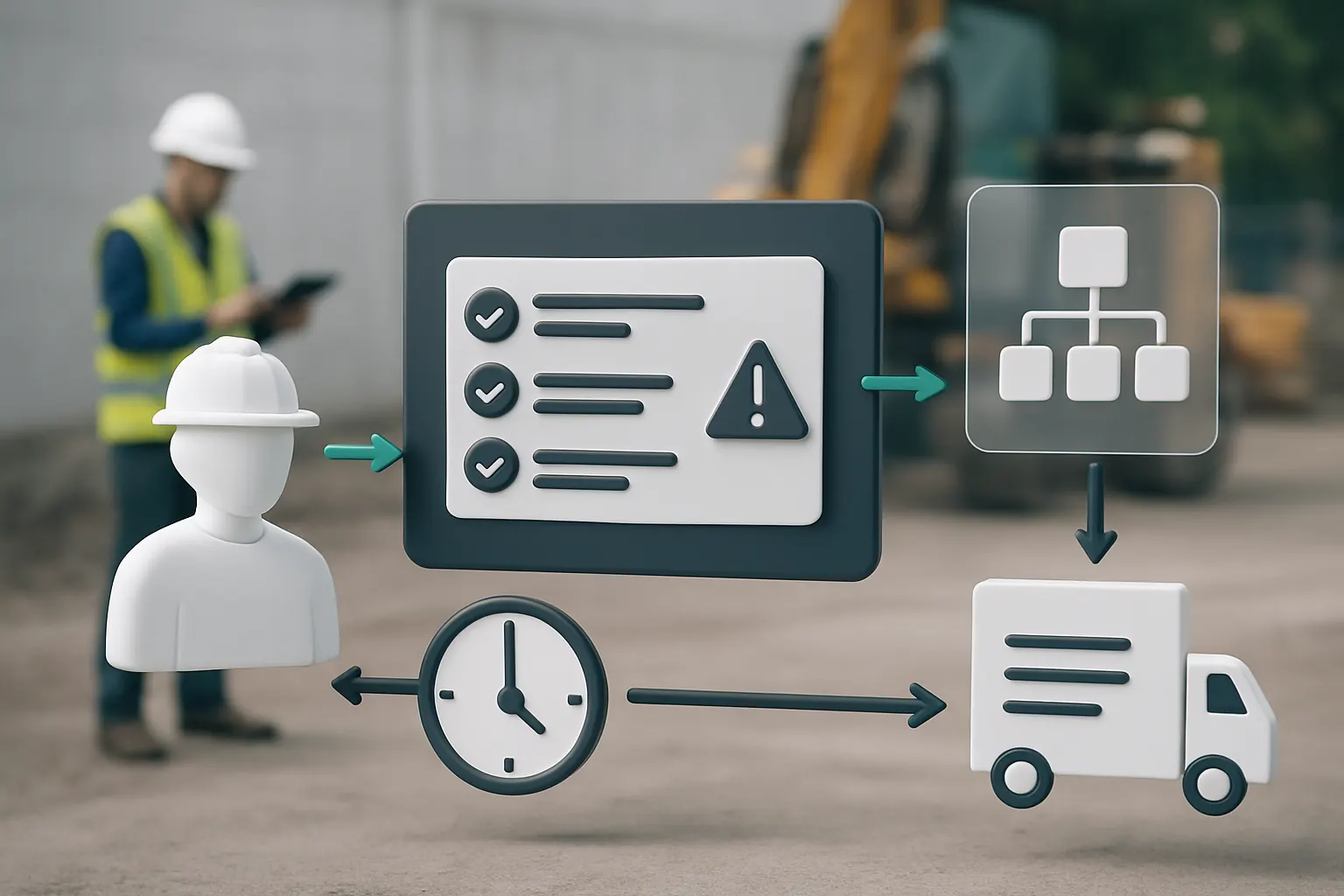
Integrate Site Records, Photographic Evidence, and Compliance Checks
Fragmented data slows project monitoring and certification
Site reports are often collated manually and stored in disconnected folders, delaying insight and certification processes.
Build a central record system integrating site logs, photos, and subcontractor safety checklists
Operational data enters a single trusted record linked to each project and site stage for easy review and audit.
Example: Automated generation of site job packs and prompt inclusion of evidence for client and regulator review
Templates reduce manual assembly while ensuring completeness. Digital signatures support compliance and seamless certificate issuance.
Controls: Site managers approve records before locking
Maintaining human review at key points ensures adherence to safety and competency requirements, supporting compliance obligations (ICO guidance on data processing).

Replace Redundant Subscription Software with Owned Operational Modules
Excess SaaS tools add cost and complexity without integration
Many firms pay for multiple disconnected packages that duplicate functionality yet fail to share data properly.
Consolidate workflows into owned systems tailored to the firm’s methods
This avoids ongoing software subscriptions and creates a more resilient technology foundation customised for the civil engineering workflow.
Example: Migrating from multiple project controls and document systems to one platform
The firm saves substantially and eliminates reconciliation errors caused by inconsistent data entry across tools.
Controls: Modular approach allows phased rollouts and fallback
Non-critical SaaS services remain integrated only when necessary, such as payment gateways or communications providers.

Centralise Operational Data to Create One Reliable Record and Dashboard
Disconnected data sources hinder real-time insight
Project status, financials, resource metrics, and compliance data typically live in separate silos that don’t talk to each other.
Consolidate data into a central dashboard tailored for multiple stakeholders
Project managers, finance teams and site supervisors access relevant, trusted information through bespoke views derived from one connected source.
Example: Tailored dashboards display project progress, risk alerts, and cashflow impact automatically
The single source of truth improves decision-making and proactive intervention on delays or resource bottlenecks.
Controls: Role-based access and audit logs maintain data integrity and privacy (NCSC data security recommendations).

Use AI Selectively for Classification, Prioritisation and Decision Support
AI is not a replacement for engineers but an efficiency tool
Repetitive tasks such as classifying documents, summarising site notes, prioritising job requests and supporting decisions consume significant time.
Embed AI modules to assist in variable, knowledge-heavy tasks
Use deterministic automation for predictable work like data validation but retain human approval for complex or safety-critical decisions.
Example: AI triages incoming client requests and flags urgent quotes for prioritisation
Natural language processing assists with summarising large volumes of project documentation without replacing expert review.
Controls: Human override prompts and audit trails ensure accountability and compliance with governance standards (GOV.UK guidance on AI and automation).

Automate Quote Follow-Up and Client Communication
Lost follow-ups cause missed business opportunities
Manual reminders and fragmented client communications impede tender success and customer satisfaction.
Connect enquiry, estimate and communication modules for automatic follow-up workflows
Trigger timely emails or SMS updates to clients based on customised rules aligned to business priorities.
Example: After sending a quote, the system sends scheduled personalised reminders and escalations
A unified system tracks outcomes and schedules calls or meetings efficiently without duplicate effort.
Controls: Client opt-out preferences and message content approval safeguard compliance with marketing consent laws (ICO guidelines).

Generate Job Packs and Certificates Automatically to Speed Approval
Preparing job documentation is labour-intensive and error-prone
Engineers require complete and accurate job packs on time to avoid site delays or non-compliance.
Automate job pack assembly pulling approved site data, safety checks and compliance evidence
Templates reduce manual work while ensuring regulatory needs are met swiftly.
Example: Once site records are signed off, certificates are generated and routed for client acceptance automatically
This accelerates client payment cycles and enhances audit readiness.
Controls: Signature verifications and exception handling maintain compliance standards.

Connect Plant Allocation to Project Schedules and Maintenance Records
Plant downtime from poor allocation disrupts projects and inflates costs
Separate systems for plant management and project controls lead to inefficient resource use.
Link plant inventory, maintenance schedules and project requirements in one operational workspace
Real-time status and automatic conflict detection reduce duplication and breakdown risks.
Example: The system alerts when plant allocation conflicts with maintenance requirements or site availability
This avoids costly overruns and enhances resource planning.
Controls: Maintenance overrides and usage approvals provide operational safeguards.

Embed Competency and Safety Records in Daily Workflow Approvals
Compliance failures and safety breaches lead to fines and delays
Tracking engineer competencies and safety certifications often involves multiple stand-alone records.
Integrate competency databases and safety checklists into operational approvals and dispatch workflows
Rejecting or flagging unsafe allocations helps ensure only qualified personnel deploy to specific site roles.
Example: Automated competency verification prevents dispatch of unqualified personnel
Compliance authorities can access audit trails evidencing adherence to site safety regulations.
Controls: Multi-level approval processes and secure record retention meet regulatory expectations (UK HSE site safety compliance).

Rolling Out Automation in 90 Days: A Realistic Civil Engineering Plan
Weeks 1–2: Discovery and System Mapping
- Conduct detailed process mapping and stakeholder interviews
- Identify existing systems to connect or replace
- Define automation rules and integration points
Weeks 3–6: Development and Integration of Core Modules
- Build enquiry to estimate and scheduling workflows
- Develop data integration layers for live resource and project control data
- Test initial automation pilots with focused teams
Weeks 7–12: Scaling, User Training and Control Refinement
- Roll out site record consolidation and job pack automation
- Integrate AI-assisted classification and communication modules
- Train users on controls and exception handling for compliance
- Collect feedback and optimise dashboards and workflows
This phased approach delivers rapid operational improvements with manageable change control and continuous governance.

How AI Implementation UK Enables Civil Engineering Firms to Own and Automate Their Operations
At AI Implementation UK, we build one connected operating system for each civil engineering firm. We focus on designing a tailored solution that the business owns and controls. Our approach connects your existing tools, replaces avoidable software costs with built-in modules and consolidates operational data for one trusted record.
We embed AI capabilities carefully, applying them only where they add value such as document classification, summarisation and prioritisation. Deterministic rules handle predictable workflows while critical decisions stay with your human experts. We integrate specialist external services like payment processors and communication platforms only when indispensable and set up robust controls that protect safety, compliance and data integrity.
Our services cover from initial process automation and data infrastructure preparation to AI strategy and seamless rollout support. Visit our case studies here to see how we have transformed workflows for the construction and trades sector.
If you want to modernise your enquiry to estimate cycles, job scheduling, site records and project controls without fragmenting your operations, speak to us today via our plan my platform service.
By connecting systems end-to-end in a platform owned by your firm, you can reduce admin time, improve compliance assurance and accelerate cashflow. This strategic automation ensures your civil engineering projects keep moving forward, safely and profitably.
To turn these priorities into one coherent system, map the platform your business needs or explore our workflow automation approach.