
Learn how business process outsourcing providers can connect systems, reduce manual admin and automate enquiry to contract with one tailored operating platform the.
Business process outsourcing providers work queues automation software review: What Breaks Daily
Business process outsourcing providers work queues automation software review should connect bookings, people, communications and reporting in one reliable operating flow.
Business-process outsourcing (BPO) providers consistently face the challenge of managing high volumes of client enquiries, contracts, workforce rosters, service delivery evidence, and invoicing efficiently. These everyday operations often break down under pressure from disconnected IT systems, manual data entry, missed SLAs, and fragmented reporting. Providers frequently juggle multiple SaaS applications required for CRM, document handling, scheduling, and payments, creating operational silos. Such fragmentation increases the workload on teams, who struggle to maintain queue transparency and timely client reporting, while lacking a single, reliable source of truth. This pressure results in bottlenecks, escalated client dissatisfaction, and creeping operational risks.
The reality for BPO providers is that existing systems can be useful, but they rarely talk to each other smoothly. Work queues build up unnoticed, and manual effort grows as exceptions rise. Without an integrated, tailored work management environment that reflects the way each business operates from enquiry to contract, service delivery, and invoicing, efficiency stalls and costs escalate.
In the search for better automation, providers often encounter incomplete solutions offering fragmented AI agents, robotic process automation (RPA), or separate SaaS workflow tools. While these can help in parts, they don’t deliver the connected experience needed. What is needed instead is one connected operating system that the client owns, built exactly around their workflows, connecting existing technology, reducing unnecessary subscriptions, and bringing operational data into a single, trustworthy record with dashboards tailored for real-time decision making.

What the Cost of Manual Work Looks Like in BPO Operations
The daily cost of manual, disconnected processes for BPO providers is high and multifaceted:
- Time wasted: Repetitive data entry and manual queue monitoring consume staff hours that could be spent on revenue-generating tasks.
- Errors multiply: Incomplete or duplicated data entries, missed updates, and manual handoffs increase the risk of billing errors and contract mismanagement.
- Compliance risk: Without clear, auditable records, providers risk failing regulatory or contractual obligations to clients.
- Cashflow delays: Billing and invoicing lag behind service completion, leading to slower cash inflows.
- Frustrated teams: Overloaded employees face stress from unpredictable workloads and reactive firefighting.
- Inconsistent client reporting: Inadequate business intelligence weakens client retention and upsell opportunities.
Addressing these pain points requires a deliberate, connected workflow automation approach, focused on the tasks that add value and supported by a controlled application of AI where it enhances capability.

Integrated Enquiry to Contract Workflow Automation
Tackling the Challenge of Fragmented Client Onboarding
BPO providers often struggle with the initial move from new enquiries to signed contracts due to unlinked CRM systems, document storage, and contract approval tools. Enquiries can be lost, duplicated, or processed inconsistently, costing time and risking compliance.
Creating a Single Connected Enquiry Record
A tailored enquiry-to-contract workflow connects CRM data, document templates, and approvals in one system. This owned workflow module aligns with the provider’s contract management rules and automatically tracks SLA deadlines for client responses and internal approvals.
Useful Integrations for Smooth Transitions
Existing CRM tools and electronic signature services can be integrated to retain useful capabilities. Specialised payment gateways handle contract deposits without disrupting the owned system workflow.
Example: Automating SLA Alerts for Contract Sign-Off
When an enquiry arrives, the system advances it through stages, sending automatic alerts ahead of client or internal SLA deadlines. Managers gain a dashboard view of pending contracts and responses, preventing bottlenecks.
Control Measures for Compliance and Accuracy
Permissions restrict who can modify contract terms or approve final sign-off. Detailed audit logs document all changes and client interactions, supporting regulatory compliance and contract validation.

Dynamic Work Queue and Task Allocation Automation
The Daily Toll of Manual Work Allocation
Dispatching jobs and managing shifting workloads in BPO services is often manual or spreadsheet-dependent. This causes queues to lengthen, task priorities to go unheeded, and resource utilisation to be suboptimal.
Designing a Responsive Work Queue System
A connected work queue module automatically pulls assignments from client agreements and forecast volumes. It allocates tasks based on available worker skills, locations, and shift patterns defined in an integrated rota module.
Embedded Integrations for Scheduling and Communications
This module syncs with workforce management systems and communication tools like Microsoft Teams or Slack for instant task updates and messaging without moving users off the main operating workspace.
Practical Impact: Prioritising SLA Exceptions Automatically
The system flags work items approaching SLA breach or those with complicated exceptions, escalating them to supervisors. This ensures timely intervention and sustained service quality in high-pressure environments.
Approvals and Workforce Controls
Managers control task reassignments and override rules when necessary, ensuring human oversight. Access restrictions enforce appropriate worker permissions linked to site security requirements.
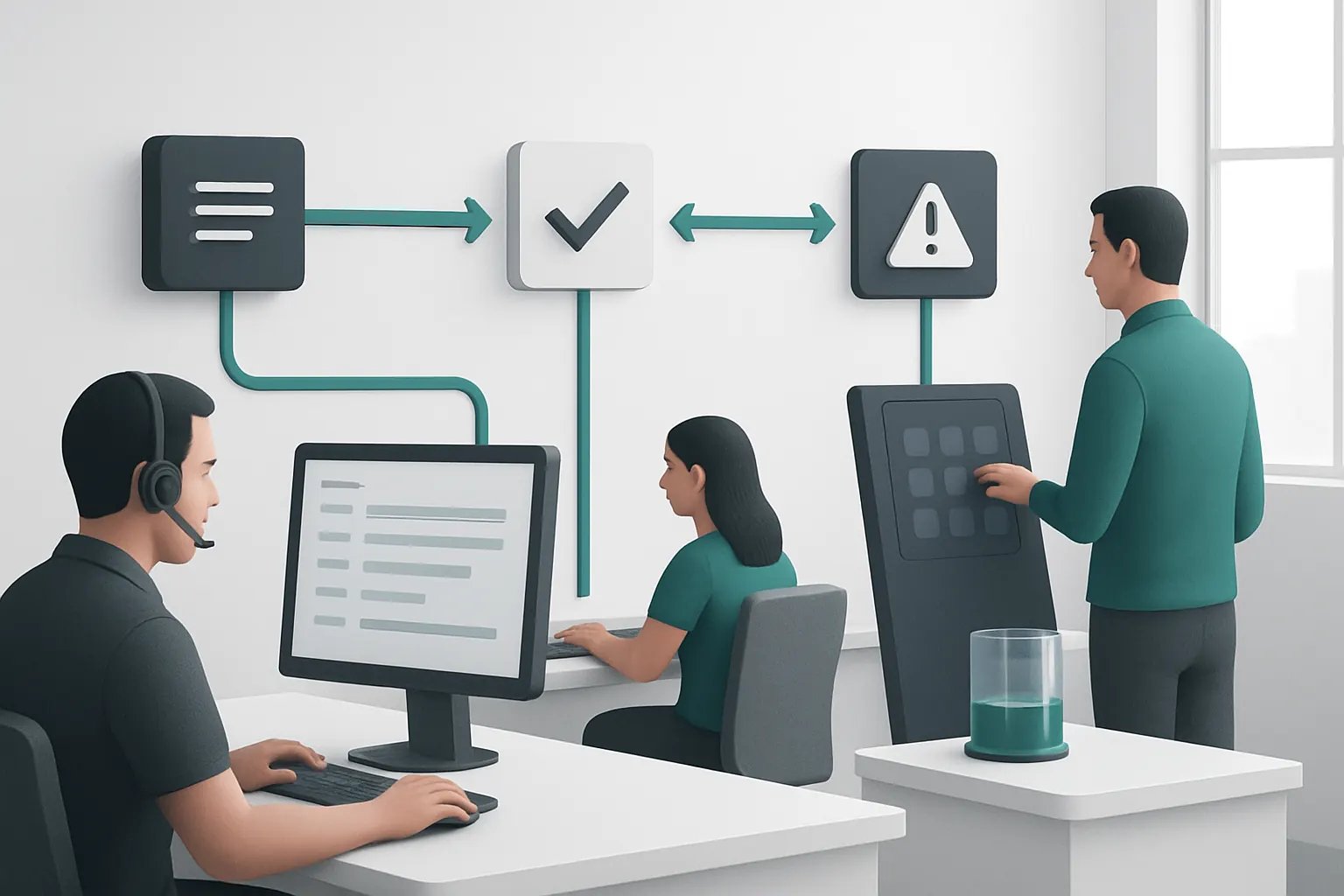
Owned Service Evidence Capture and Verification
Problem: Inconsistent Collection of Proof of Service
Providers increasingly require timely and reliable evidence of work performed, often relying on phone or email trails, risking loss or error.
Centralising Service Records in an Owned System
Bespoke mobile or web service logs connect to the owned system, where evidence such as site visits, photos, or client acknowledgements are captured and timestamped automatically.
Specialist External Tools for Mobile Data Capture
Where needed, external mobile capture apps provide barcode scanning or signature capture integrated directly into the owned evidence module.
Example: Verifiable Site Visit Records Linked to Invoicing
Each service entry links automatically to the corresponding contract task. Supervisors review and approve evidence before triggering invoice generation, improving billing integrity.
Security and Access Restrictions
Field worker app permissions limit access to assigned jobs only. Data encryption and audit trails protect sensitive client information as required by GDPR and ICO guidelines.

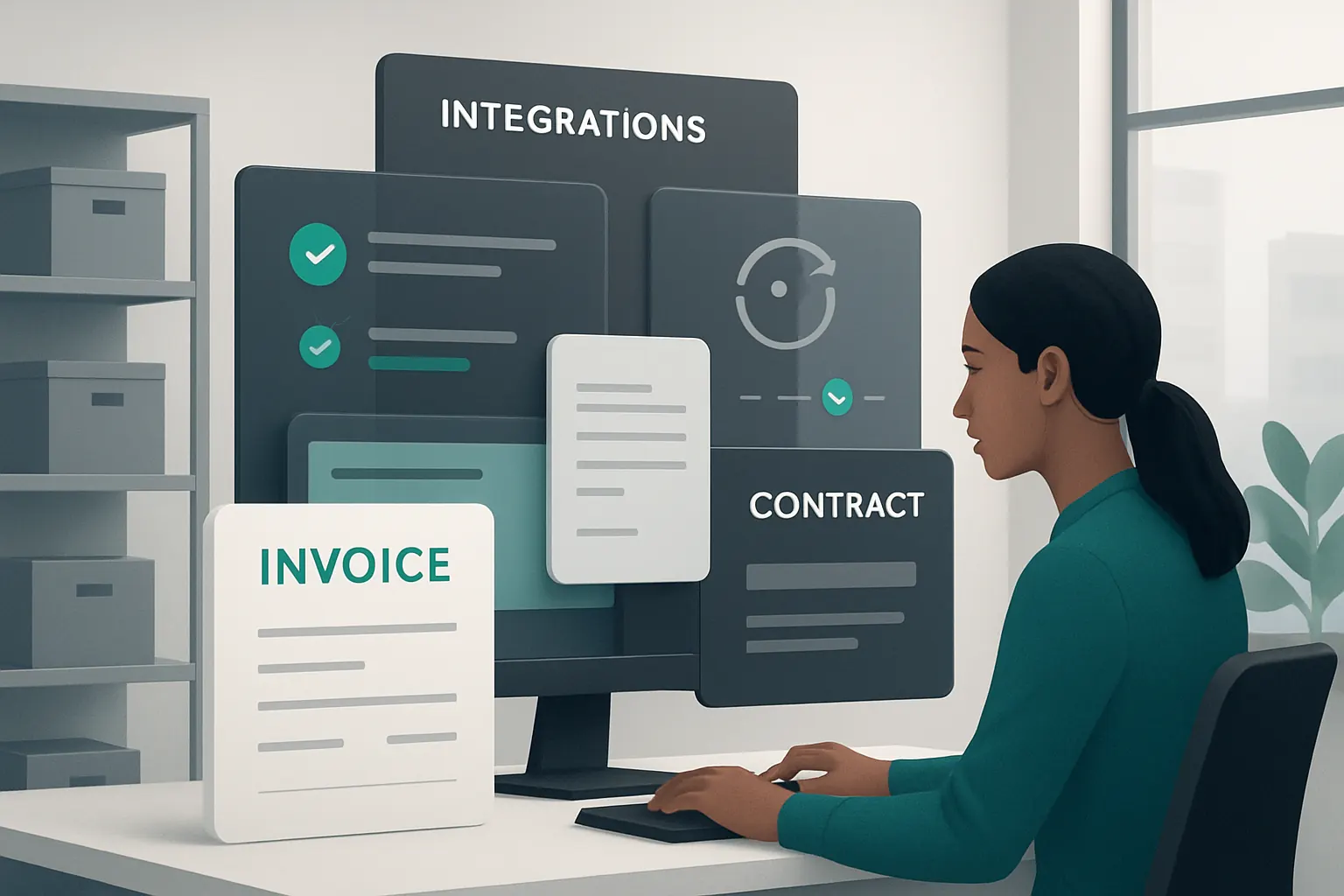
Invoice Automation Aligned with Contract Terms
Manual Billing Delays and Disputes
BPO billing is often slowed by reliance on manual invoice preparation and inconsistencies between services delivered and contract terms.
Automating Invoices from Verified Service Data
The owned operating system automatically compiles verified service records into invoices following contract pricing rules without intermediate manual input.
Integrations with Finance and Payment Systems
Integrate with accounting software such as Sage or Xero, and specialist payment platforms to ensure invoicing accuracy and faster client payments without leaving the system.
Everyday Outcome: Faster Cashflow and Reduced Queries
Automated invoices reduce queries caused by manual errors, improving cashflow predictability and enabling finance teams to focus on exceptions rather than routine tasks.
Controls over Pricing and Credit Notes
Invoice generation rules are configurable and transparent. Managers approve credit notes or discounts to maintain financial oversight and audit trails.
Real-Time Client Reporting and SLA Monitoring Dashboards
Gap: Lack of Transparent Reporting on Service Delivery
BPO clients demand clear, up-to-date visibility into volumes processed, queue status, and SLA compliance, yet existing dispersed tools fall short.
Building Custom Dashboards from Unified Data
A tailored dashboard module pulls operational data from work queues, service records, and contracts into real-time views. Filters and visual alerts highlight SLA risks, volumes, and exceptions.
Leveraging Business Intelligence (BI) Integration Where Needed
BI tools can access the shared data repository for advanced analytics while daily operations happen inside the connected workspace.
Illustrative Use Case: Weekly Client SLA Scorecards
Automated weekly reports compile SLA adherence statistics, backed by drill-down features for root cause analysis and continuous improvement discussions.
User Access Controls and Data Privacy
Client portal access is limited to their data scope. Role-based access ensures internal user reports respect confidentiality and regulatory standards.

Selective AI for Classification and Prioritisation Tasks
Manual Classification Drags Down Speed and Accuracy
Sorting high volumes of documents and enquiries manually adds delays and creates inconsistent prioritisation.
Employing AI Where It Adds Tangible Value
AI modules integrated into the platform selectively classify incoming requests, summarise document contents, and prioritise work based on business rules.
Hybrid Approach Combining AI with Deterministic Automation
AI-generated results feed into deterministic rules that route enquiries or flag priorities, but human review is retained for exceptions and key decisions to safeguard quality.
Real-World Benefit: Faster Processing of Complex Client Requests
Classification AI filters enquiries by client or issue type. Staff then focus only on exceptions or approval steps, streamlining throughput without risk.
Transparency and Auditability of AI Decisions
Decision rules and AI outputs are logged to allow review, compliance checks, and tuning without hiding automation logic from human operators.

Coordinated Workforce Scheduling with Operational Workflows
Strain of Separate Scheduling and Job Systems
When rota and task allocation operate on different systems, workforce utilisation suffers, and frontline staff face confusion.
Linking Rota, Shift Patterns and Job Assignments
An integrated rota module aligned with work queues dynamically updates shifts based on workload forecasts and real-time service volumes.
Leveraging Existing HR System Interfaces
Integration with HR and time-keeping software ensures payroll accuracy and adherence to labour regulations without duplication.
Application Example: Responsive Rota Adjustments for SLA Peaks
During peak demand, the system suggests overtime or additional hires, routed to authorised managers for approvals, ensuring workforce readiness.
Compliance and Worker Safety Controls
Shift patterns and access permissions meet safety policies, while workforce data is secured and retained in accordance with ICO guidance.

Automated Alerts and Exception Handling Framework
Manual Exception Detection Leads to Missed SLAs
Providers frequently discover SLA breaches or exceptions too late to react proactively, harming client trust.
System-Driven SLA Alert and Exception Workflows
Built-in rules identify exceptions immediately, triggering alerts via email or messaging to responsible staff and escalating unhandled cases.
Integration with Specialist Communication Services
Alerts flow through integrated channels like Microsoft Teams or Twilio messaging, ensuring no delay in critical escalation.
Positive Impact: Proactive Issue Resolution and SLA Performance
Managers monitor alerts on dashboards and can reallocate resources swiftly, reducing penalty risks and improving client satisfaction.
Governance and Dispute Resolution Controls
Exception workflows include steps for human review and resolution logging, supporting dispute management and compliance documentation.

90-Day Rollout Plan for BPO Workflow Automation
Weeks 1–2: Discovery and Baseline Review
- Map existing enquiry to contract and service workflows in detail.
- Identify key pain points, systems, and manual processes.
- Agree on priority modules to replace manual effort.
- Collect user requirements for dashboards and reporting.
Weeks 3–6: System Build and Integration
- Develop core enquiry-to-contract and work queue modules tailored to client rules.
- Integrate existing CRM, finance, and communication services.
- Configure AI capabilities for selective classification and prioritisation.
- Set up access and security controls.
Weeks 7–12: Testing, Training and Go-Live
- Conduct staged user acceptance testing with operational teams.
- Train users on new workflows and exception handling.
- Deploy dashboard and reporting modules.
- Monitor performance and refine automation rules.

How AI Implementation UK Connects and Automates Your Operation with an Owned System
At AI Implementation UK, we specialise in delivering one connected operating system tailored to your business-process outsourcing workflows. Unlike assembling a patchwork of disconnected SaaS products, we build your digital operation around the way your business works, leveraging and connecting your useful current technology.
Our approach systematically replaces avoidable software subscriptions with owned modules that you control, reducing long-term costs and risk. We consolidate operational data into a single source of truth with reliable records, governed by approval controls that retain human oversight on critical decisions.
We apply AI judiciously—as an enhancement for variable, high-value tasks such as classification, summarisation, prioritisation, and decision support—while deterministic rules manage routine, predictable work. This hybrid model brings consistency, speed, and quality to your workflows without compromising compliance or operational safety.
Whether automating enquiry to contract, coordinating scheduling with queue management, capturing service evidence, or automating invoicing and client reporting, the platform we deliver becomes your owned system of record. It works with integrations where specialist external tools are irreplaceable—such as payments or communications—but always keeps your operation connected and controllable.
For BPO providers aiming to reduce manual admin, boost accuracy, comply with client SLAs, and accelerate cashflow, our bespoke operating system is not just software—it’s a fully integrated work environment built for scale and resilience.
For more details on how we can help, explore our process automation services, data infrastructure preparation, or book a session to plan your platform.
For data privacy and security, we advise aligning your implementation with ICO guidance and applying robust controls consistent with government cybersecurity standards (see NCSC). For handling payments, refer to the PCI Security Standards Council.