
Learn how vehicle repair and MOT centres can connect systems, reduce manual admin and automate booking to workshop with one tailored operating platform the.
Booking to workshop automation for vehicle repair and mot centres: What Breaks Daily
Vehicle repair and MOT centres face an ongoing challenge in managing their booking-to-workshop workflow efficiently. Daily struggles involve double-bookings, lost communication between front desk and workshop, delayed approvals for parts, and complex compliance tracking. These problems disrupt workshop flow, hinder customer satisfaction, and threaten safety standards. Many centres rely on disjointed software or manual processes, creating operational silos where appointment data, inspection notes, and parts information fail to unify. This fragmentation wastes time, increases errors, and restricts real-time visibility.
The solution lies in booking to workshop automation for vehicle repair and MOT centres that connects every step from initial booking through to inspection and handover, harnessing automation selectively while preserving essential human decision points. Automating workflows reduces operational friction, freeing workshops to focus on delivering timely and reliable vehicle servicing.

The Cost of Manual Work in Vehicle Repair Operations
Manual administration in workshops generates hidden costs that impact profitability and compliance:
- Time-consuming tasks: Staff spend excessive hours juggling booking confirmations, parts orders, and inspection record updates. Manual reminders and approvals slow down daily operations.
- Increased errors: Data re-entry and disconnected systems lead to double bookings, overlooked alerts for parts shortages, and incomplete inspection documentation.
- Compliance risks: Accurate MOT reporting demands consistent workflows and up-to-date evidence. Manual processes increase the risk of missing critical checks or regulatory details.
- Cashflow delays: Late invoicing and unclear parts approval affect payment schedules and vehicle handover timing.
- Customer dissatisfaction: Lack of timely updates and transparency into workshop status erodes trust and repeat business.
For vehicle repair and MOT centres, automating the booking to workshop process is no longer a luxury but a necessity to modernise workflows, reduce avoidable subscriptions, and unify data into a reliable, single source of truth.

Streamlined Booking Management with Connected Records
Daily booking challenges from multiple disconnected sources
Receptionists often juggle calls, emails, and walk-ins, manually logging appointments in separate spreadsheets or legacy software. This scattered information causes double bookings, missed slots, and inconvenient scheduling conflicts for mechanics.
Integrating existing booking tools into one connected record
Rather than replacing all booking software at once, our approach retains usable systems while connecting data streams through one platform the centre owns. Integrations ensure that bookings across all channels feed into a single source of truth visible to both workshop and admin.
Example of booking flow automation in practice
When a booking is made online, a confirmation message, workshop slot allocation, and parts availability check trigger automatically. If parts are unavailable, a delay notice is flagged early for customer communication, avoiding last-minute cancellations.
Controls and human oversight on booking changes
Automated booking adjustments based on parts stock or mechanic availability require user approval before confirmation is sent. This ensures that unpredictable changes remain under human control and reduces disruptions.

Automated Reminders and Customer Engagement
Preventing no-shows with automated reminders
Vehicle repair and MOT centres lose valuable time and revenue to missed appointments. Manual calls or messages are resource-intensive and inconsistent.
Using tailored automated messaging workflows
Our owned system sends personalised reminders by SMS or email, aligned to the customer’s preferred contact method. It also confirms any required vehicle preparation steps and presents options for rescheduling.
Practical example: Reducing cancellations through proactive communication
Customers receive a text 48 hours before their appointment, another on the day, and a follow-up if no-show occurs, all orchestrated by the connected system. This optimises capacity utilisation and workshop efficiency.
Maintaining designed to support UK GDPR obligations consent management
Consent management features track and audit customer communication preferences. The system prompts re-consent periodically to comply with ICO guidelines on electronic messaging.
Parts Inventory and Order Approval Automation
Daily pain points tracking parts needed versus availability
Mechanics often lose time waiting for parts or ordering redundant stock due to manual tracking. Parts approval workflows involve customers and finance staff, introducing delays.
Connecting parts data with bookings and approvals in one workflow
Our platform links inspection outputs and repair bookings to parts inventory in near real-time. Automated alerts notify approvers when parts orders require authorisation, with visibility over expected delivery times.
Example workflow for parts order sequencing
When a mechanic flags a necessary part during inspection, the system cross-checks stock levels. If out of stock, an automatic quotation is sent for customer approval. Finance approval is systematically tracked before order confirmation, avoiding disputed costs.
Retaining human approval controls on parts spending
Workflow rules require explicit authenticators’ sign-off on parts usage above configured thresholds, promoting budget discipline and financial compliance.

Digital Inspection Recording with Evidence Capture
The challenge of manual inspection notes and paperwork
MOT and vehicle safety inspections with paper forms slow down workshop handover times. Paper records risk loss and inconsistent data capture.
Integrating digital records and photographic evidence into one system
Our platform provides workshop operatives with tablet-based inspection forms linked to the customer booking. Photos and videos of vehicle condition attach directly to the inspection record for compliance and transparency.
Concrete example: Seamless digital handover reports for customers
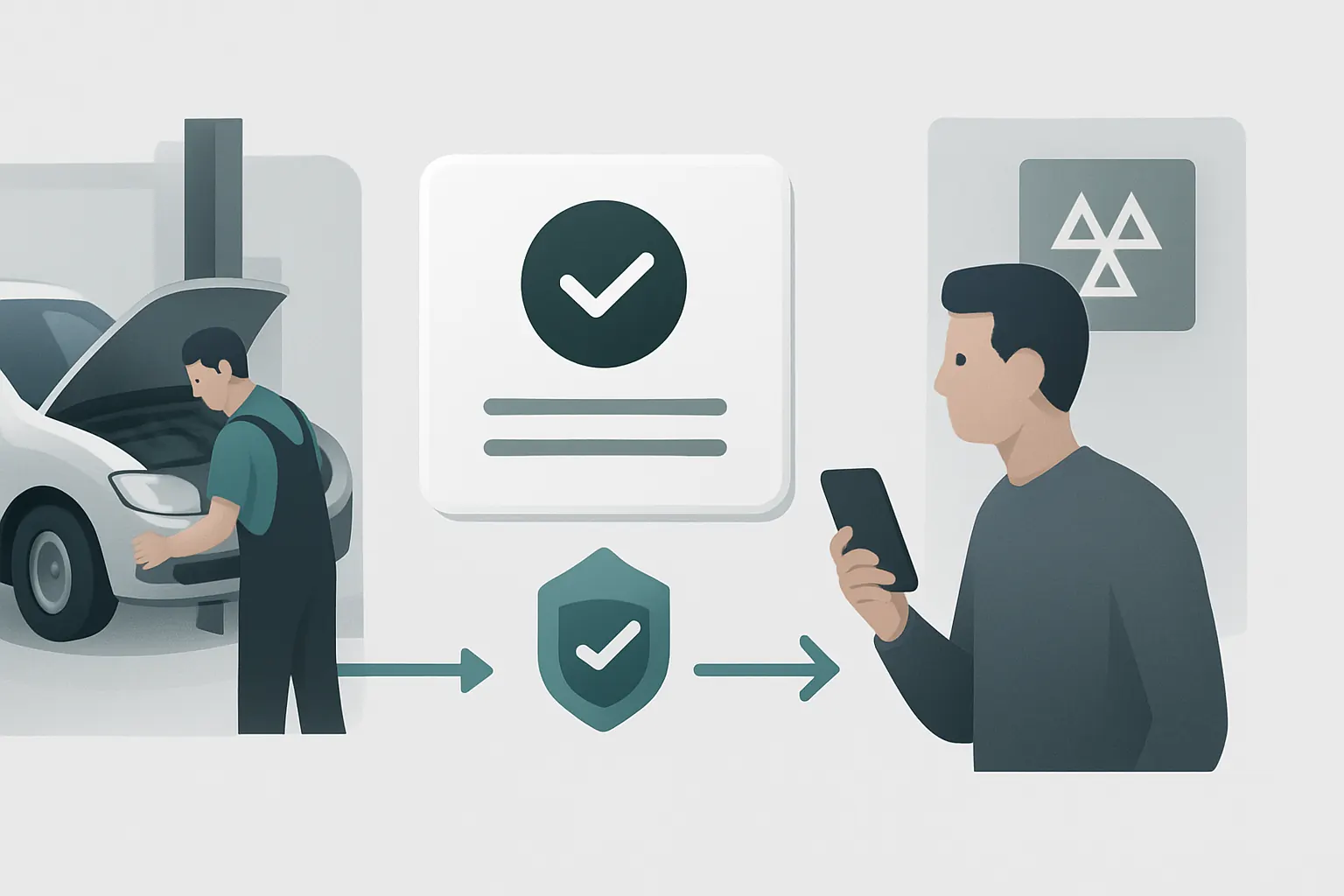
After inspection, customers receive a digital summary of findings, detected faults, and next steps. Evidence documentation supports service recommendations and complaint resolutions.
Compliance controls for inspection record integrity
Records include mandatory fields and audit trails. Any deviation or missing data triggers a workflow alert requiring supervisory review, supporting the centre’s regulatory obligations under DVSA MOT standards.

Workshop Scheduling with Workload Balancing
Daily confusion over mechanic availability and job prioritisation
Workshops often suffer from uneven resource utilisation, last-minute job juggling, and conflicting customer expectations.
Using a connected rota module for efficient workshop load management
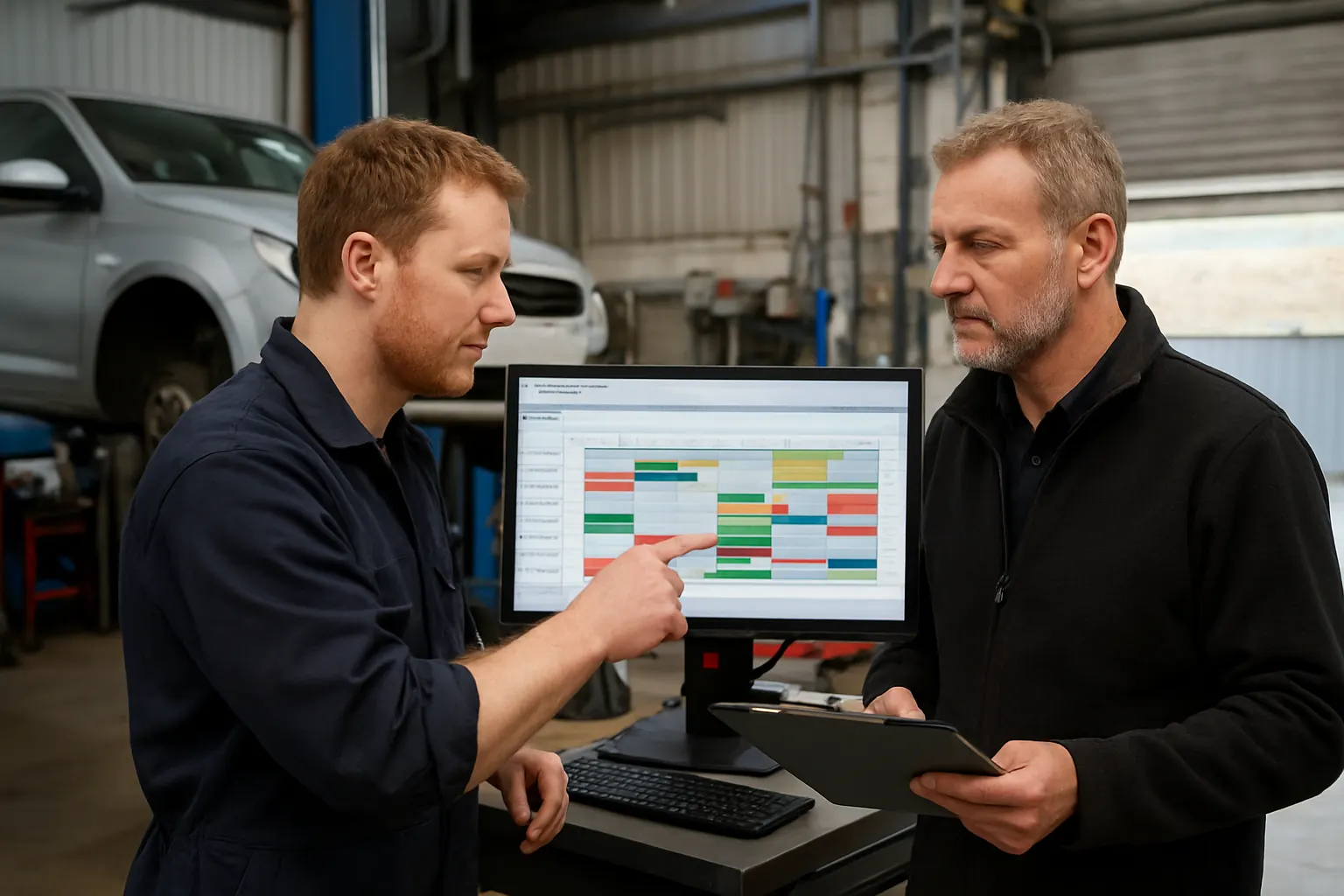
Our system visualises allocations by mechanic skills, job duration, and parts readiness. Jobs can be reprioritised with drag-and-drop simplicity to respond to urgent tasks without losing sight of capacity constraints.
Example scenario: Dynamic job rescheduling with a balanced workload
When a high-priority MOT booking arrives, lower-priority repairs shift automatically based on agreed rules, subject to manager approval, maintaining workflow smoothness.
Controls preserving human judgement for high-impact changes
Automated job assignments provide recommendations only; human dispatch managers retain final decision rights to maintain performance standards.
Integrating Payments and Invoicing Seamlessly
The complexity of closing the loop on payments in fragmented systems
Workshops using multiple disconnected finance tools risk cashflow delays and manual reconciliation errors.
Connecting payment gateways and invoicing within owned workflows
Where external payment providers are used, our platform integrates with secure PCI-compliant gateways, linking payment status directly to invoicing and job completion records.
Example: Automated invoice generation triggered by job completion
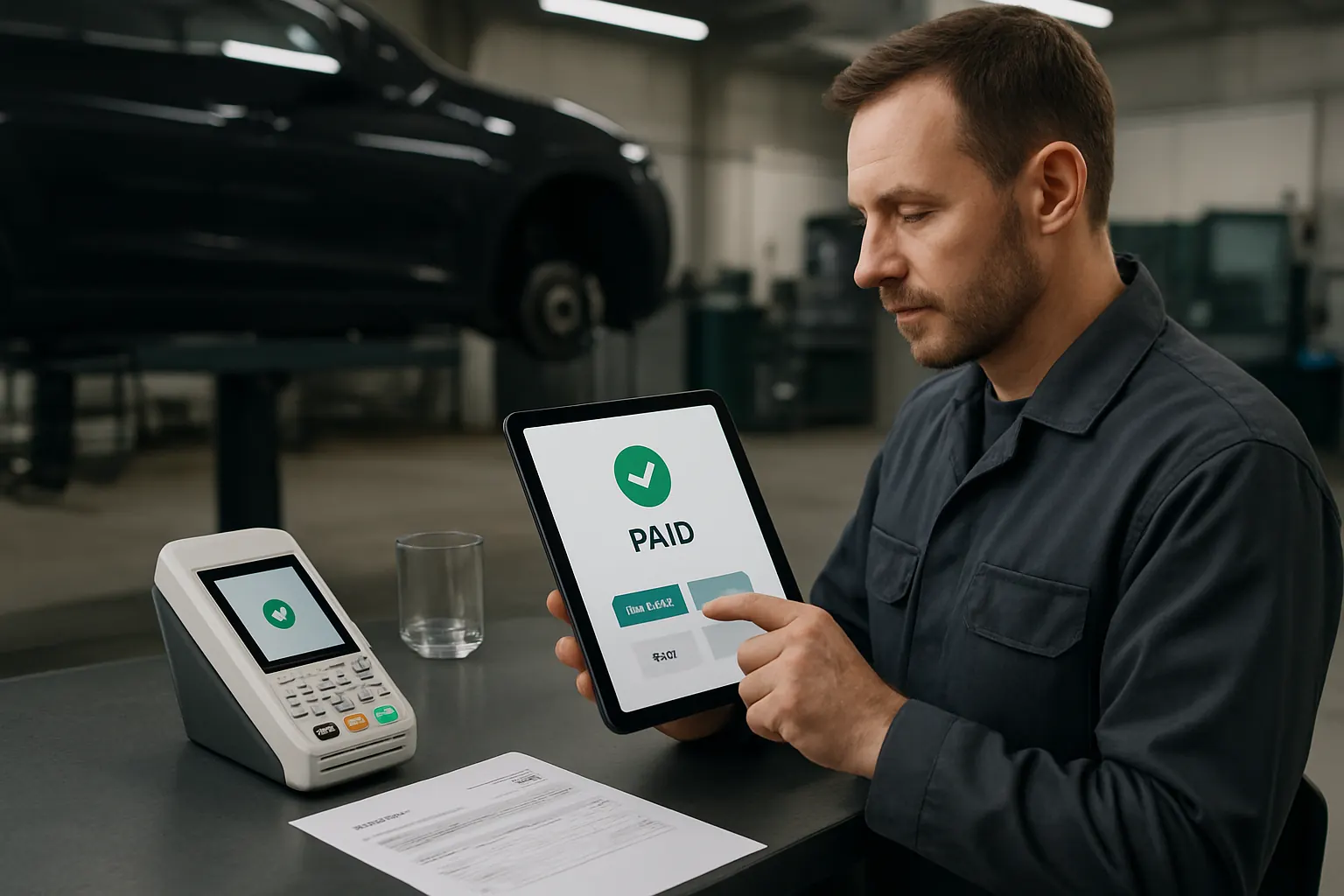
Once vehicle work is signed off, an invoice automatically generates and sends by email. Payment reminders are timed based on the agreed payment terms.
Control mechanisms for finance compliance and audit
Invoices are generated following configured business rules and corrected if exceptions arise. Audit trails preserve data for financial reviews, supporting HMRC requirements.
See PCI Security Standards Council for guidance on secure payment processing.
Real-Time Operational Dashboards for Transparent Decision-Making
Daily struggles accessing reliable KPIs and performance insights
Managers waste time gathering data from multiple reports. Delays obscure workload bottlenecks and financial gaps.
Bringing operational data into one customisable dashboard
Our solution aggregates booking status, parts availability, job progress, and finance data to generate role-specific dashboards accessible anytime on any device.
Concrete example: Workshop manager dashboard
A shop manager views daily jobs, late parts orders, mechanic utilisation and outstanding customer approvals from one screen. Alerts flag jobs at risk of missing deadlines.
Controls over data visibility and customisation
Data access levels are configured by user role. Users customise views but cannot alter underlying transaction data, protecting integrity.

Selective Use of AI for Task Prioritisation and Decision Support
Avoiding over-automation pitfalls with critical human oversight
AI is most beneficial when used selectively for variable, cognitive tasks such as classifying inspection notes, summarising repair histories, or prioritising urgent work. Predictable, rule-based tasks rely on deterministic workflows.
Incorporating AI to support, not replace, human decisions
For example, AI algorithms suggest which repairs to prioritise based on safety risk assessments, parts lead times, and vehicle usage patterns. Humans validate final decisions for customer communication and compliance.
Example: AI-powered triage for deferred repairs
Deferred work flagged during MOT can be automatically categorised by urgency, with recommended next inspection dates generated. A service advisor reviews and adjusts any recommendations before confirming.
Control frameworks preserving responsible decision-making
Transparency around AI outputs is key. Operators see AI confidence levels and justification for decisions, ensuring that ultimate responsibility remains with authorised staff.
Learn more about AI deployment strategies at our AI Strategy Roadmapping.

A 90-Day Rollout Plan for Booking to Workshop Automation
Weeks 1–2: Discovery and System Audit
- Map existing booking, parts, inspection, and finance workflows
- Identify current usable applications and integration points
- Define user roles and control requirements for approvals and compliance
Weeks 3–6: Build and Integrate Core Modules
- Develop connected booking record and workshop schedule workspace
- Integrate parts inventory alerts and digital inspection forms
- Configure automated reminders and customer communication workflows
Weeks 7–12: Testing, Training and Go-Live
- Pilot workflows with real-day bookings and workshop jobs
- Train staff on new automation features and controls
- Launch connected dashboards and payment integration
- Monitor early performance and adjust workflows as needed
This staged approach minimises disruption and delivers measurable efficiency gains early in the project.
How AI Implementation UK Connects, Replaces and Automates Your Operation
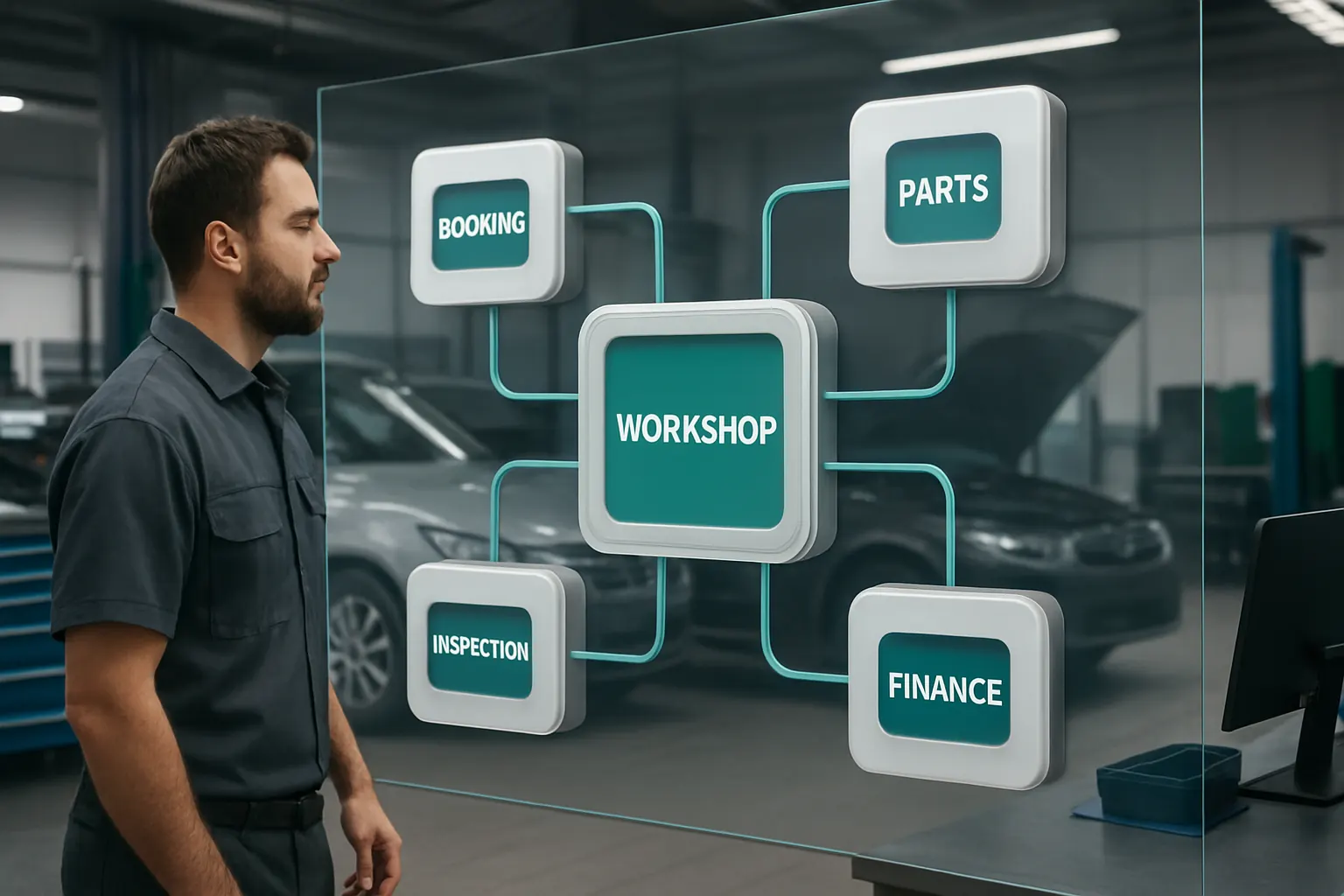
Our tailored offer is a single connected operating system wholly owned by your business. It is designed around your precise workflows rather than forcing you to adapt to off-the-shelf software. By connecting your current useful systems, replacing avoidable external subscriptions with owned modules, and unifying operational data in one reliable record, we enable transparency and automation where it counts.
We implement vehicle repair and MOT centre workflow automation software that:
- Links booking, parts, inspection, and finance workflows seamlessly
- Automates routine reminders, status alerts, and document generation
- Uses AI thoughtfully for classification, summarisation, prioritisation, and decision support
- Retains deterministic rules and human approvals for compliance-critical steps
- Integrates specialist tools like secure payments and communications only when essential
Our proven process ensures you rapidly realise the benefits of workshop bookings automation software without the burden of disconnected solutions.
Explore how we can help you automate your booking to workshop journey via our Process Automation services and Data Infrastructure Preparation solutions. For real-world examples, visit our case studies demonstrating how UK vehicle repair centres modernise operations while meeting strict regulatory standards.
Vehicle repair and MOT centres in the UK face complex operational challenges that require more than fragmented software solutions. Booking to workshop automation implemented with clarity, control, and ownership drives stronger customer service, operational transparency, and workshop productivity. Partner with AI Implementation UK for a connected solution built around how your business works—and build efficiency you can depend on.