
How gyms can connect membership, booking, payment and communication data in one owned platform, reducing subscriptions, repetitive admin and delays.
The real problem is not a lack of software
Gyms and fitness centres rarely suffer from a complete lack of software. The more common problem is that membership records, class bookings, payments, website enquiries, email, messaging and management reports all live in different places.
That fragmentation creates repetitive work. A member changes a detail in one system, but the booking platform still has the old information. A website enquiry reaches a shared inbox, then somebody retypes it into a CRM. A failed payment creates one alert while the membership record and follow-up task remain unchanged. Managers export spreadsheets because no single view can answer a simple operational question.
The answer is not automatically to buy another subscription. A stronger approach is to create a connected operating platform around the gym. It can retain systems that work, connect the data they hold, replace subscriptions that add little value, and give staff one tailored interface for the work they actually perform.
The UK health and fitness sector is growing: the ukactive 2025 market report reported 11.5 million members and sector income of GBP 5.7 billion for 2024. Growth makes disconnected processes more visible. More enquiries, bookings and payments mean more hand-offs unless the underlying operation is designed as one system.

What an owned gym platform connects
An owned platform does not need to recreate every external service. Payment processing, email delivery, SMS and some specialist access-control hardware may still come from third parties. The platform sits above those services and controls how information moves between them.
Its core is one reliable operational record. Each member, prospect or organisation can have the relevant contact details, membership status, consent, bookings, attendance, payments, communications, tasks and exceptions brought together. Staff see the information appropriate to their role without jumping between tabs or maintaining shadow spreadsheets.
A practical architecture follows four decisions:
- Keep a current system when it performs a specialist job well.
- Connect it securely when its data is needed elsewhere.
- Replace an unnecessary subscription with an owned module where that is commercially sensible.
- Automate the hand-offs, checks and repetitive actions between each stage.
This is also where AI should be used selectively. Predictable work, such as sending a reminder at a set time, should use clear rules. AI is useful when the system needs to classify an enquiry, summarise a conversation, identify an unusual pattern or recommend a priority. Important decisions should remain explainable, logged and available for human review.

Turn every enquiry into one usable prospect record
The real daily problem
Prospects contact a gym through forms, phone calls, email and social channels. When each route creates a separate inbox item, staff must decide who owns it, copy details into another system and remember the follow-up. Delays are common during classes, evenings and busy reception periods.
The connected automation
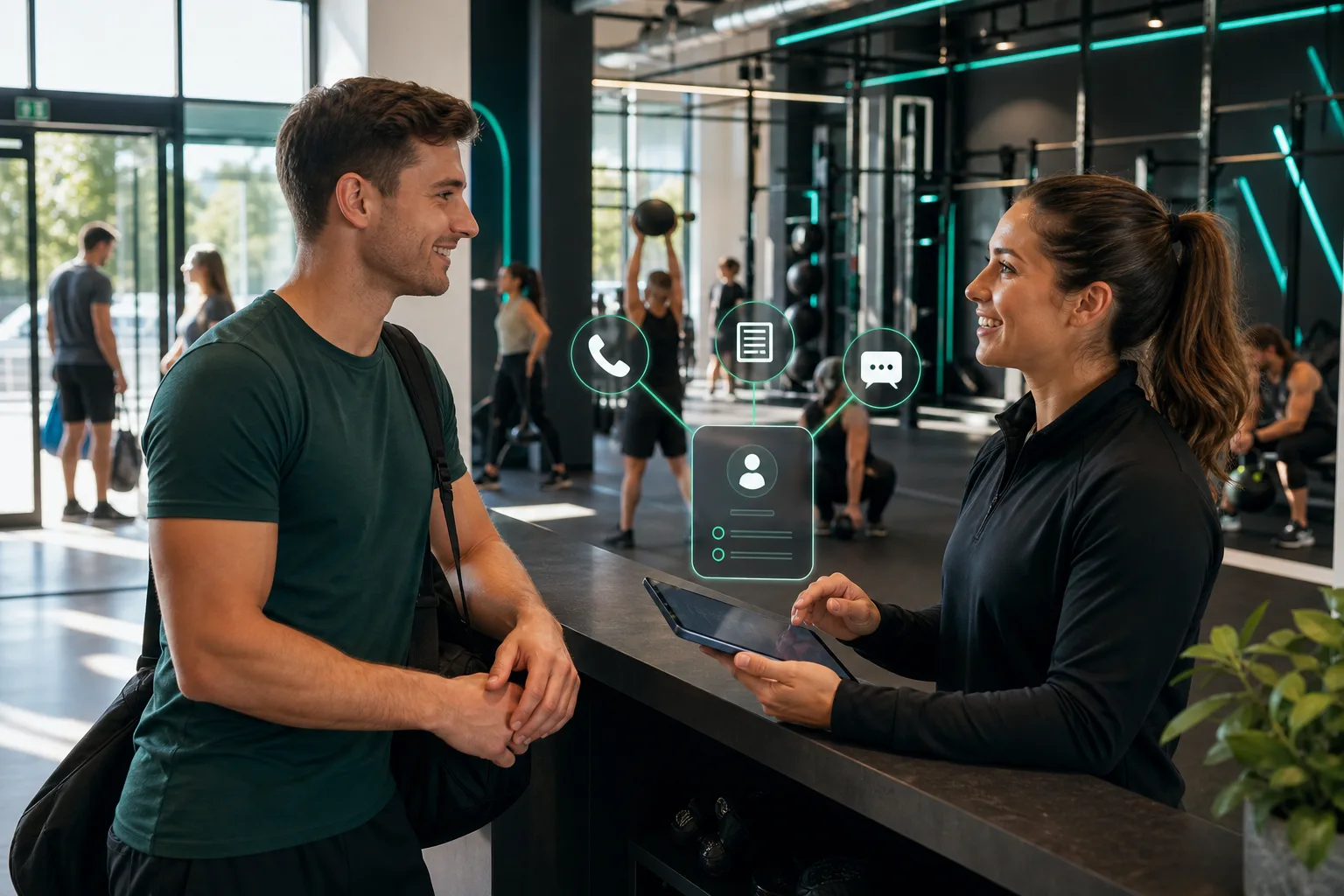
Every permitted enquiry can feed the same prospect record. The platform records the source, requested service, preferred location or class, consent status and next action. It can acknowledge the enquiry immediately, show suitable trial or consultation times and create a staff task when human help is needed.
AI can classify free-text enquiries into useful categories such as membership, personal training, corporate fitness or an existing-member issue. It can prepare a short summary, but it should not invent missing details or promise availability before checking the live booking data.
What staff see
Reception and sales staff work from one queue showing new enquiries, response status, booked trials and overdue follow-ups. The same record follows the person if they become a member, so the original context is not lost.
Controls to include
- Capture marketing consent separately from the information needed to answer an enquiry.
- Record the source and time of each message.
- Route safeguarding, complaint or health-related messages to a person.
- Prevent duplicate records when somebody contacts the gym through two channels.
Coordinate onboarding, membership and renewals
The real daily problem
Joining can involve terms, payment authority, health information, an induction, access credentials and welcome communication. If those steps are split across systems, staff cannot easily tell whether a member is ready to use the facility or which action is holding the process up.
The connected automation
The platform can create a checklist from the selected membership type, request only the required information, confirm payment status, offer induction times and activate the next permitted step. Renewal reminders can be driven by the membership record rather than a separate marketing list.
The member-facing journey and the internal dashboard use the same status. A receptionist can see that payment is confirmed but an induction is outstanding without opening several products.
Where ownership saves money
Standard forms, document collection, task management, reminders and internal status screens are often spread across multiple subscriptions. These can frequently become owned modules, while specialist payment and access services remain connected through secure integrations.
Controls to include
Membership terms, recurring payment information and cancellation routes must be clear. The Competition and Markets Authority's guidance on fair contracts explains why renewal and cancellation terms need to be transparent. The workflow should retain the accepted version of the terms, record changes and make exceptions visible to authorised staff.

Run classes, capacity and waitlists from live data
The real daily problem
Capacity changes throughout the day. Cancellations create spaces, waitlists need attention, instructor availability changes and no-shows affect planning. Separate booking and communication systems can leave staff working from an outdated list.
The connected automation
A booking change updates one live class record. A cancellation can offer the space to the next eligible person, apply the gym's timing rules and update reception and instructor views. Reminders use the same booking data, so messages stop when a booking is cancelled or moved.
The platform can combine demand, attendance and resource information in a management view. AI may help identify patterns or suggest classes that deserve review, but schedule changes remain a management decision unless the gym has explicitly approved a rule.
What this replaces
The goal is not always to replace a proven class-booking product. If it works well, connect it. The owned layer can replace the spreadsheet exports, manual waitlist checks, separate task boards and duplicated reporting that surround it.
Controls to include
- Define who can change capacity, instructors and cancellation rules.
- Log booking and waitlist changes for dispute resolution.
- Make the member interface accessible and mobile-friendly.
- Alert a person when an exception cannot be resolved by an approved rule.

Focus retention work on the members who need attention
The real daily problem
Generic campaigns treat every member alike. Meanwhile, useful signals such as repeated booking cancellations, unresolved complaints, failed payments or a long attendance gap sit in different systems. Staff either miss them or spend time assembling lists manually.
The connected automation
The platform can turn agreed signals into a service queue. A simple rule might flag an unresolved complaint after one working day. AI can summarise previous contact or classify feedback so the right team sees it sooner. Staff then choose the response from the full member context.
This is decision support, not an autonomous judgement about a person's value. The system should show why an item was prioritised, what information was used and who approved the resulting action.
A better member experience
Connected data prevents clumsy messages. A member who has already raised an injury, cancellation or billing concern should not automatically receive an unrelated re-engagement offer. Suppression and consent rules apply across every connected channel.
Controls to include
The ICO's guidance on AI and data protection emphasises lawfulness, fairness, transparency, data minimisation and accountability. Any profiling should have a documented purpose, appropriate access controls, retention rules and a straightforward route for human intervention.

Connect payments, exceptions and management reporting
The real daily problem
Payment providers know whether a transaction succeeded, membership software knows the account status, and accounting software records the financial entry. When those systems do not communicate reliably, teams chase the wrong people, update records late and build management reports by hand.
The connected automation
Payment events can update the operational record and create the appropriate next action. A failed payment might start an approved retry sequence, notify the member clearly and create a task if the issue remains unresolved. Successful payment, refund and cancellation events should update the same timeline.
Management reporting then uses connected operational data rather than copied totals. Leaders can see membership movement, enquiry conversion, class utilisation, outstanding exceptions and workflow delays from one dashboard, subject to the definitions and permissions the business has approved.
Where AI helps
AI can explain unusual movements, group recurring reasons and prepare a narrative summary for review. Financial calculations, access changes, refunds and account status should remain deterministic and auditable. High-impact actions can require approval from an authorised person.
Controls to include
- Use regulated, PCI-compliant providers for card processing rather than storing card details in the platform.
- Reconcile provider events against the accounting record.
- Require approval for refunds, credits and manual membership changes above agreed limits.
- Keep an audit trail showing the event, rule, action and responsible user.

A practical 90-day route to one platform
Weeks 1-2: map the operation
List the subscriptions, spreadsheets, inboxes and manual hand-offs involved in the five workflows. Identify which system currently owns each important field and where duplicate records are created. Measure the present subscription cost and the staff time spent moving or checking information.
Classify each component as Keep, Connect, Replace or Automate. This prevents a rushed rebuild and protects useful investments.
Weeks 3-6: establish the connected record
Choose one contained journey, such as enquiry to trial booking. Build the shared data model, role permissions, audit log and integrations needed for that journey. Give staff one working view and test normal cases, exceptions and failure recovery with real users.
Weeks 7-12: extend and remove duplication
Connect the next operational workflow only after the first is stable. Replace duplicated forms, task boards or reports where the owned platform now covers the requirement. Train staff, document responsibilities and compare the new process with the baseline.
Useful measures include response time, manual touches per enquiry, duplicate records, unresolved exceptions, staff time spent reporting and monthly software cost. The purpose is not automation for its own sake. It is a simpler operation with fewer subscriptions, faster work and clearer ownership.
Plan a gym platform your business owns
AI Implementation UK designs and builds custom operating platforms around the way a business actually works. For a gym or fitness centre, that could mean connecting the membership and payment services worth keeping, replacing avoidable admin subscriptions, centralising operational data and automating repetitive hand-offs behind one tailored dashboard.
You own the platform, its code and its operating structure. External services such as hosting, payments, communications or AI usage may still carry their own charges, but the core business system is not another rented dashboard that dictates your process.
Plan your platform to map the systems you use now, the bottlenecks your team faces and the first workflow worth improving. The result is a practical starting brief, not a generic list of software to buy.