
Contact centres are the beating heart of customer interaction in business and operational services. Yet, despite advances in technology, many still grapple with broken processes that slow operations and degrade service quality. Manual da...
What’s Breaking Daily in Contact Centres
Contact centres are the beating heart of customer interaction in business and operational services. Yet, despite advances in technology, many still grapple with broken processes that slow operations and degrade service quality. Manual data entry, inefficient call routing, poor workforce scheduling, and error-prone outcome reporting persist as daily headaches. Agents are bogged down by repetitive admin tasks, supervisors struggle with timely quality monitoring, and managers lack a single reliable source of operational truth.
These issues ultimately translate into wasted time, frustrated customers, missed SLAs, and compliance risks — all affecting the contact centre’s bottom line and reputation. The reality is clear: contact centres need streamlined, automated workflows tightly connected around their actual working patterns. This demands an owned, integrated platform — not a patchwork of disparate SaaS tools — that unites existing systems, cuts unnecessary subscriptions, and surfaces trustworthy data into tailored dashboards.
AI has a role, but it must be selective and supportive, supplementing deterministic rules, not replacing human oversight where important decisions lie. This article outlines 10 ways contact centres can achieve tangible, practical automation of daily admin tasks while reducing errors and improving operational control.

The Cost of Manual Work: Time, Errors, Compliance, Cashflow
Manual handling of core contact centre processes drains valuable time from agents and supervisors alike. Studies show that over 30% of contact centre operations still rely heavily on repetitive manual work, causing delays and bottlenecks. Time spent logging interactions, making routing decisions, and chasing approvals pulls focus from higher-value activities.
Errors from manual data entry and disconnected systems contribute to inaccurate service evidence, invoicing mistakes, and SLA breaches. Compliance risk increases when audit trails are inconsistent and approvals are informal or bypassed. Cashflow suffers as invoicing is delayed or challenged due to poor record keeping.
Manual processes also limit the scalability of contact centres and restrict their ability to adapt to changing workloads or service models such as self-service. The solution lies in an integrated platform that automates and connects workflows end-to-end, while retaining human control and transparent governance.

Automated Interaction Routing to Reduce Wait Times and Bottlenecks
The real daily problem
Manual routing rules are time-consuming to manage and often lead to inefficient call handling. Agents receive misrouted interactions, causing delays and frustrating customers.
The automation/AI approach
Use AI-driven decision-making to route calls and enquiries based on real-time variables such as agent skills, workloads, and customer priority. Predictive routing removes guesswork and bottlenecks.
Owned platform pattern and useful integrations
A central routing engine in the owned platform connects existing telephony and CRM systems. Integration with workforce management software ensures alignment between routing and agent availability.
A simple implementation example
Automatically route high-value customer calls to experienced agents while deflecting routine enquiries to self-service modules, reducing wait times and freeing up skilled staff.
Risks and controls (data privacy, approval, audit trail)
Routing decisions follow deterministic business rules, reviewed periodically. Data privacy is maintained through encrypted customer records. All routing choices and overrides are logged for audit.

Quality Monitoring with Intelligent Sampling and Alerts
The real daily problem
Supervisors spend hours manually reviewing calls and interactions, often too late to correct course or provide feedback.
The automation/AI approach
Apply AI to classify interactions by sentiment, compliance risks, or key phrases, and intelligently sample calls requiring immediate attention. Generate alerts for SLA breaches or agent underperformance.
Owned platform pattern and useful integrations
Integrate voice analytics and agent performance data inside the owned platform. Connect with workforce scheduling for proactive coaching sessions.
A simple implementation example
Automatically flag calls where customers mention product failures or escalate issues, enabling supervisors to intervene quickly.
Risks and controls (data privacy, approval, audit trail)
Speech data is processed with consent under UK GDPR guidelines. Supervisor overrides and feedback sessions are logged. AI output is advisory and human-reviewed.

Automating Workforce Scheduling and Shift Allocation
The real daily problem
Manual workforce scheduling is error-prone and slow to adapt to changing call volumes or absences.
The automation/AI approach
Combine deterministic rules with AI forecasting to dynamically allocate shifts based on predicted enquiry volumes and agent capabilities.
Owned platform pattern and useful integrations
Use existing HR and scheduling software connectivity to centralise shift management within the platform. Mobilise shift updates and approvals via mobile access.
A simple implementation example
Automatically generate weekly rosters optimised for workload peaks, sending calendar invites and real-time alerts for changes.
Risks and controls (data privacy, approval, audit trail)
Agent personal data is securely stored and accessible only with permission. Scheduling changes require manager approval and are auditable.

Integrated Service Evidence Collection for Accurate Reporting
The real daily problem
Service evidence is often scattered across disconnected tools, requiring manual collation for SLA reporting or invoicing.
The automation/AI approach
Enable mobile and desktop access to service record modules that feed directly into one connected operational record, capturing evidence in real time.
Owned platform pattern and useful integrations
Connect CRM, telephony, and invoicing systems into a unified module that staff can update during or immediately after interactions.
A simple implementation example
Agents use mobile tablets to log visit outcomes or call resolutions, automatically timestamped and linked to customer records.
Risks and controls (data privacy, approval, audit trail)
Data entry follows structured fields with validation for accuracy. Records require sign-off from managers before final report generation. Audit trails are embedded.

AI-Supported Classification, Summarisation, and Prioritisation of Enquiries
The real daily problem
Agents waste time deciding the nature and urgency of incoming enquiries without clear prioritisation.
The automation/AI approach
Deploy AI classifiers to tag and summarise interactions, prioritising based on rules aligned with business impact and customer profiles.
Owned platform pattern and useful integrations
Classifications drive alert dashboards and queue management in the owned platform. Integrate with CRM to reflect enquiry status updates.
A simple implementation example
Automatically flag and escalate complaints vs routine queries, summarising key points for agent review before engagement.
Risks and controls (data privacy, approval, audit trail)
Classification models are regularly reviewed for bias. Summaries are verified by agents. Sensitive information is protected with role-based access.

Streamlined Contract Generation Through Automated Workflow
The real daily problem
Manual contract assembly and approvals lead to delays and inconsistent document versions.
The automation/AI approach
Use rule-based document assembly modules with AI-assisted summarisation of negotiation points to speed contract creation.
Owned platform pattern and useful integrations
Integrate contract modules with CRM and document management systems allowing single-click generation inside the owned platform.
A simple implementation example
After enquiry conversion, generate standard contracts pre-populated from customer records and predefined templates, prompting approval workflows.
Risks and controls (data privacy, approval, audit trail)
All contract documents are version-controlled and digitally signed with software compliant to eSignature regulations. Approval flows are transparent and logged.

SLA Compliance Tracking with Real-Time Alerts
The real daily problem
Manual monitoring of SLA performance is reactive, resulting in missed commitments and customer dissatisfaction.
The automation/AI approach
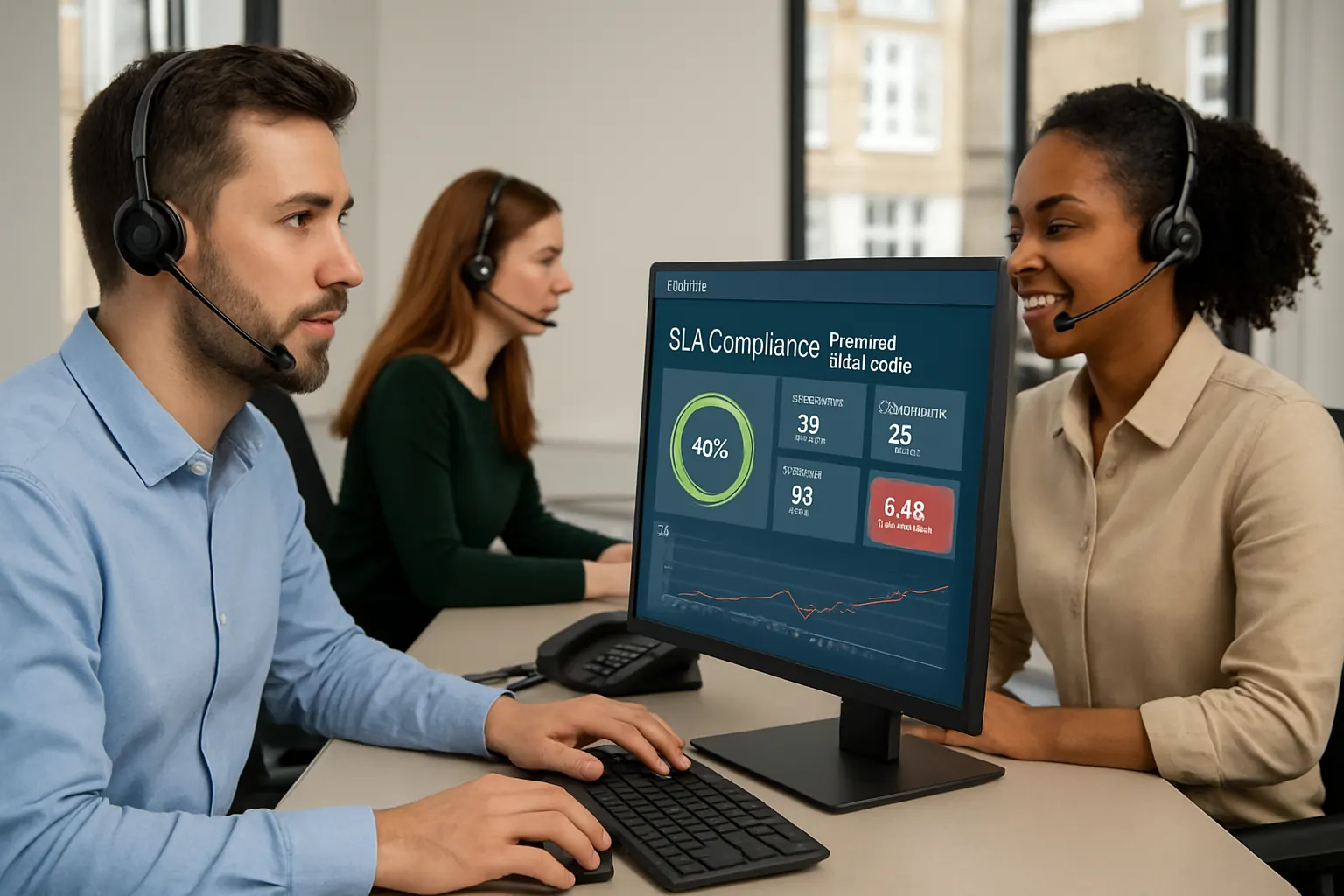
Implement real-time SLA tracking with alerts based on defined thresholds, supported by AI to predict imminent breaches.
Owned platform pattern and useful integrations
Combine telephony, CRM, and workforce data into a dashboard providing live SLA metrics and alert notifications.
A simple implementation example
Trigger notifications to supervisors when a high-priority enquiry is at risk of breaching SLA response times, allowing immediate intervention.
Risks and controls (data privacy, approval, audit trail)
Alert thresholds are set by business users. All SLA breaches and responses are recorded with corresponding action logs.
Mobile Access to Service Records with Role-Based Controls
The real daily problem
Field or remote agents struggle to update service records promptly due to limited system access.
The automation/AI approach
Provide secure mobile access to relevant service record modules with customised data entry forms and offline capabilities.
Owned platform pattern and useful integrations
Seamlessly sync mobile data with the core platform ensuring data consistency and timely availability for administrative workflows.
A simple implementation example
Field agents update job status and customer feedback on-site via mobile apps, triggering downstream workflows automatically.
Risks and controls (data privacy, approval, audit trail)
Role-based access strictly controls who can view and edit records. Device security policies and encrypted connections protect data integrity.

Automated Invoice Preparation Linked to Verified Service Records
The real daily problem
Billing delays arise from disconnected invoicing systems and manual verification of service completion.
The automation/AI approach
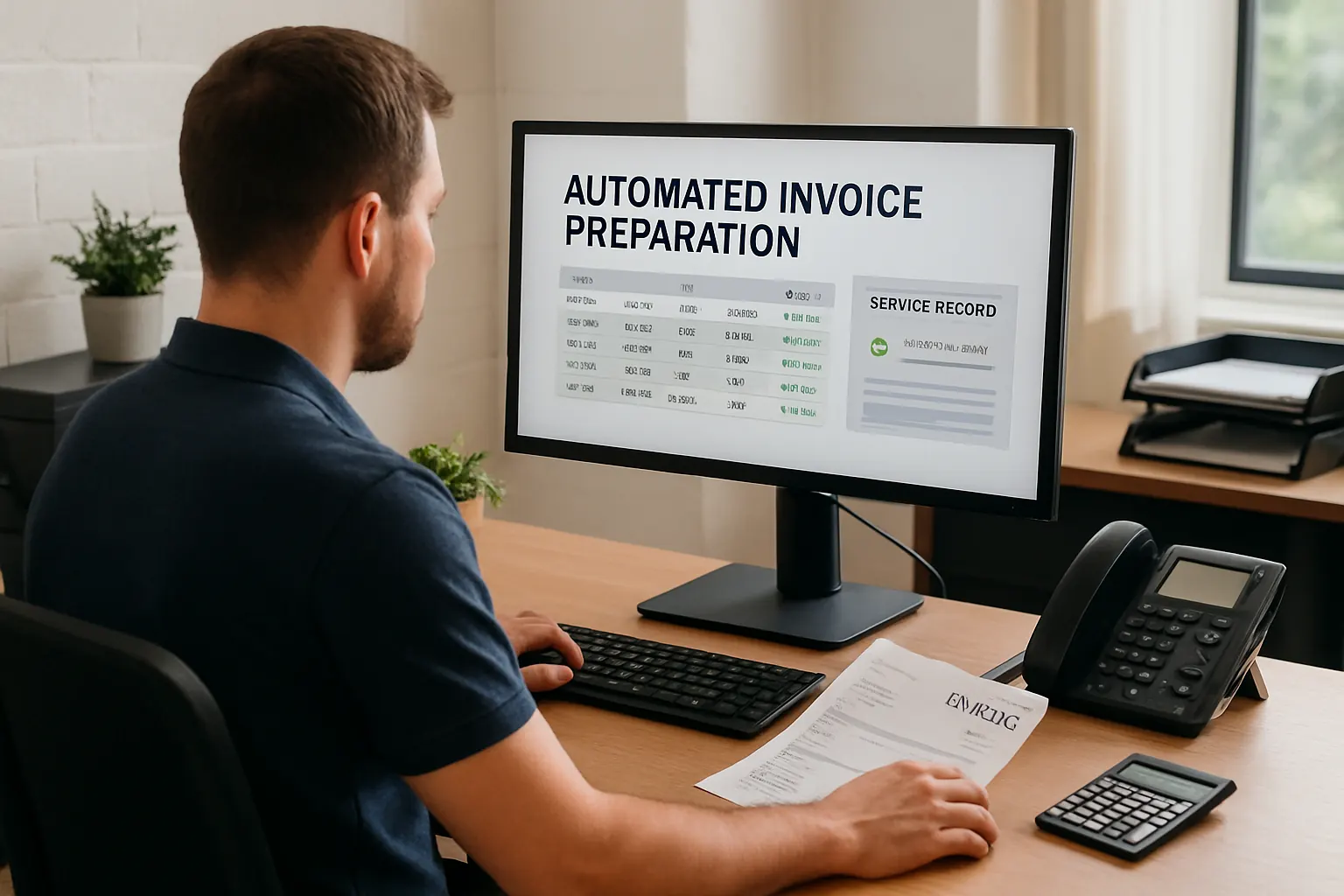
Automate invoice drafting by linking invoicing modules to approved and timestamped service records, ensuring accuracy and speed.
Owned platform pattern and useful integrations
Integrate finance and invoicing tools like Sage or Xero within the owned platform for end-to-end billing workflows.
A simple implementation example
Post-service completion approval triggers automatic invoice generation and notification for dispatch to customers.
Risks and controls (data privacy, approval, audit trail)
Invoices are generated only from verified records with manager sign-off. All billing actions are fully auditable for compliance.
Decision Support Dashboards for Managers With Human Approval Gates
The real daily problem
Managers lack consolidated insights and rely on spreadsheets and manual reports prone to errors.
The automation/AI approach
Create tailored dashboards combining AI summarisation with deterministic data queries to highlight performance trends and exceptions.
Owned platform pattern and useful integrations
Dashboards pull data from all connected modules, including routing, quality, scheduling, and financial systems.
A simple implementation example
Generate weekly performance summaries with flagged areas needing manager review or decision, such as resource reallocation proposals.
Risks and controls (data privacy, approval, audit trail)
Access controlled by role permissions. Decision workflows include approval steps with automated logging for accountability.

90-Day Rollout Plan for Contact Centre Automation
Weeks 1–2: Discovery and Process Mapping
- Conduct detailed workshops to map current processes vs desired automated workflows.
- Identify existing systems to connect and potential redundant software for replacement.
- Define key performance indicators (KPIs) and compliance requirements.
Weeks 3–6: Platform Configuration and Integration
- Build and configure owned operating platform with core modules addressing routing, scheduling, and service records.
- Integrate existing CRM, telephony, HR, and finance systems.
- Set initial AI models for interaction classification and routing.
Weeks 7–12: Testing, Training and Go-Live
- Run pilots with limited agent groups, collecting feedback and fine-tuning AI and automation rules.
- Train supervisors and agents on new workflows and mobile tools.
- Launch dashboards and alert systems for managers.
- Place governance controls on data privacy, approvals, and audit trails.

How AI Implementation UK Connects, Replaces and Automates Contact Centre Operations
At AI Implementation UK, we believe contact centres should own their digital transformation journey through one connected operating platform, built exactly around how their business works. Our approach enables you to:
-
Keep Your Current Systems. We do not recommend replacing your essential telephony or CRM tools if they work well. Instead, we connect and integrate them seamlessly within your owned platform to maintain investment value.
-
Replace Unnecessary Subscriptions. Many contact centres bear hidden costs for multiple SaaS applications with overlapping features. We identify and replace avoidable subscriptions with owned modules tailored to your workflows, reducing ongoing spend while improving control.
-
Unify Operational Data. Bringing all interaction, scheduling, quality, and financial data into a single reliable record eliminates inconsistencies and manual reconciliation. Our tailored dashboards put critical insights and alerts in your managers’ hands in real time.
-
Use AI Selectively and Responsibly. AI capabilities such as classification, summarisation, prioritisation, and decision support are embedded to support agents and supervisors but always underpinned by deterministic rules for predictable tasks. Human approval remains central for important decisions, ensuring accuracy and compliance.
-
Implement with Strong Safeguards. Worker access is strictly managed through role-based permissions, site security is a priority, and service verification checkpoints enforce quality standards. Transparent audit trails track all actions for accountability and regulatory compliance.
By partnering with AI Implementation UK, your contact centre moves beyond fragmented software stacks towards a resilient, efficient, and agile operation — all on a platform you own, control, and continuously enhance.
Transform your contact centre operations today. Reduce manual admin, cut errors, and empower your teams with automation built for real-world business results. Contact AI Implementation UK for a tailored evaluation and roadmap.