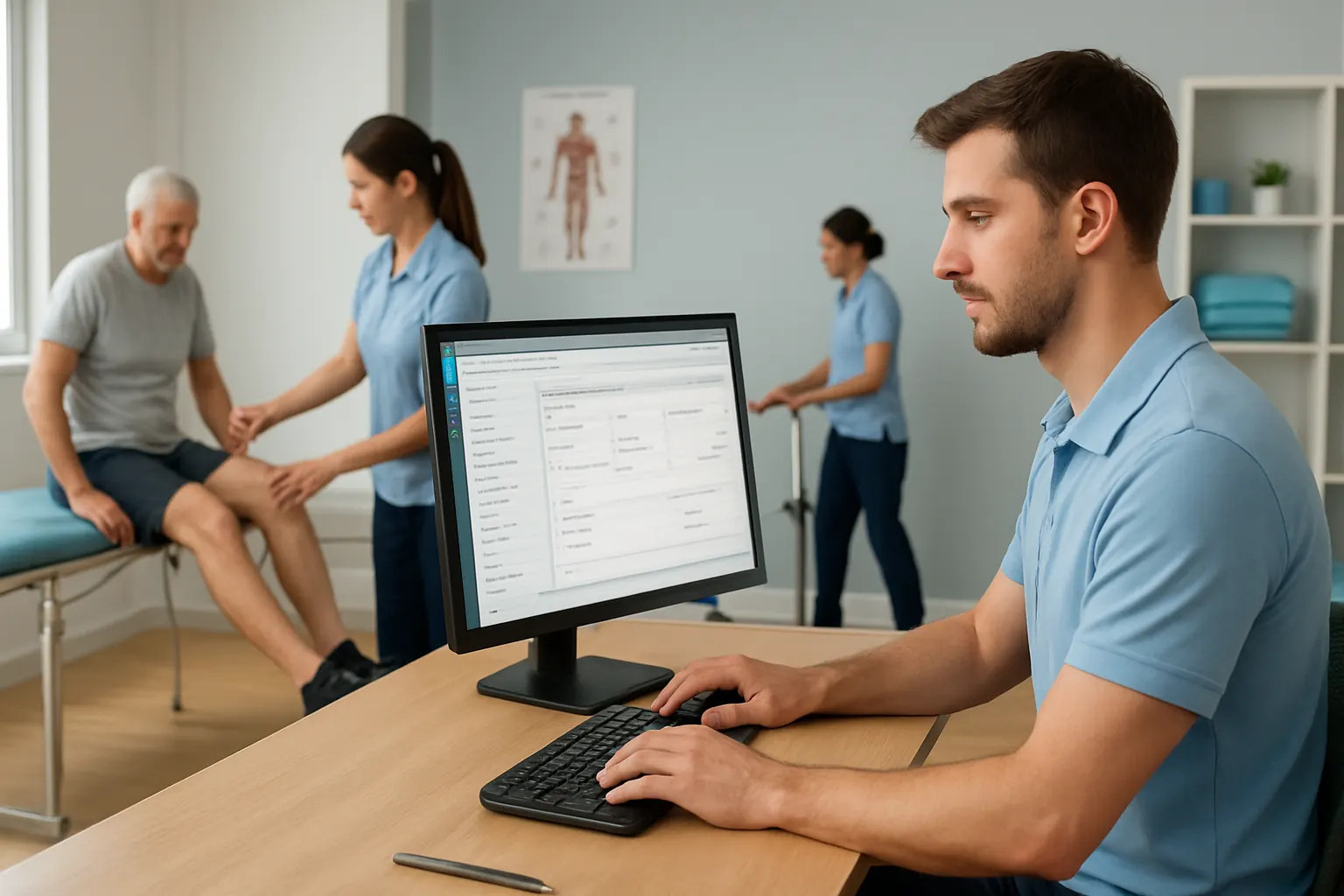
Learn how physiotherapy and rehabilitation clinics can connect systems, reduce manual admin and automate referral to appointment with one tailored operating.
Physiotherapy and rehabilitation clinics referrals automation software: What Breaks Daily
Physiotherapy and rehabilitation clinics referrals automation software should connect bookings, people, communications and reporting in one reliable operating flow.
Physiotherapy and rehabilitation clinics operate within complex, patient-centred workflows. From initial referrals through treatment plans to follow-ups, these processes are tightly linked but often fractured by manual handoffs, redundant administration, and disconnected systems.
Clinicians face inconsistent referral information, appointment backlogs, and lost visibility over patient progress. Admin teams juggle scheduling changes, communications, and patient records without a reliable single source of truth. Managers endure siloed reports, making workforce allocation and financial tracking guesswork.
This fragmentation disrupts care continuity, delays treatment starts, risks privacy breaches, increases operational costs, and frustrates staff.
Efficiently managing referrals and related workflows requires an integrated, business-owned operating system tailored to physiotherapy’s unique demands—one that connects existing software, cuts avoidable subscriptions and manual entry, and brings all operational data into one trusted record and adaptable dashboard.

The Cost of Manual Work in Physiotherapy Clinics
Manual processing wastes time and invites errors.
- Administrative delays cause lost appointment slots and incomplete referrals.
- Data inconsistencies risk clinical miscommunications and compliance gaps with GDPR and NHS info governance.
- Unnecessary software subscriptions proliferate costs without delivering true workflow integration.
- Poor visibility limits forecasting and resource planning.
- Cashflow impacts arise when invoicing and payments systems are separate or unreliable.
The result: clinics spend more on admin than clinical activity, stretching tight budgets while risking patient dissatisfaction and audit failures.
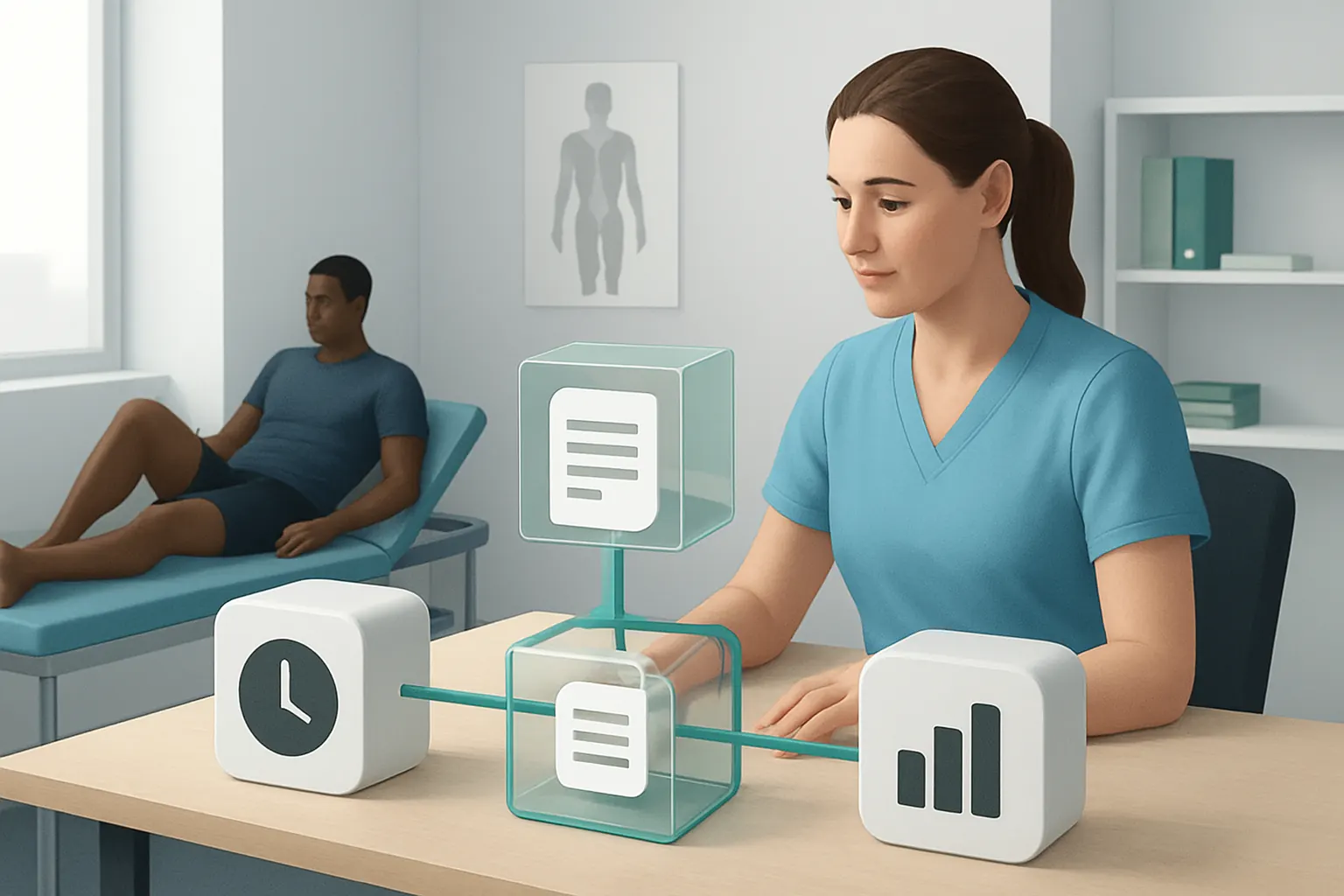
Referral Intake Integration – Streamlining Entry with Existing Tools
A Daily Challenge: Fragmented referral sources slow patient onboarding.
Clinics receive referrals from varied sources: GPs, hospital discharge teams, or self-referrals via websites and phone calls. These often arrive as emails, PDFs or paper, requiring duplicate manual data entry into spreadsheets and booking systems.
A Connected Workflow: Capture referrals into one editable record.
Our approach connects your existing email, website forms, and document upload systems to automatically extract and standardise referral data into a single owned intake workspace. This avoids re-keying and ensures no referrals slip through unnoticed.
Useful Integrations: Email gateways, e-forms, OCR modules.
Extracted data can be validated by standard deterministic rules—such as minimum patient info completeness—before allowing staff to triage or escalate for clinical review.
Concrete Example: Auto-capture referral data from NHS e-referral systems into your owned record, prompting admin to assign urgency and communicate patient confirmation directly within the same workspace.
Controls for Compliance: All referrals processed with logged timestamps, audit trails, and role-based access controls uphold data security regulations per ICO recommendations.

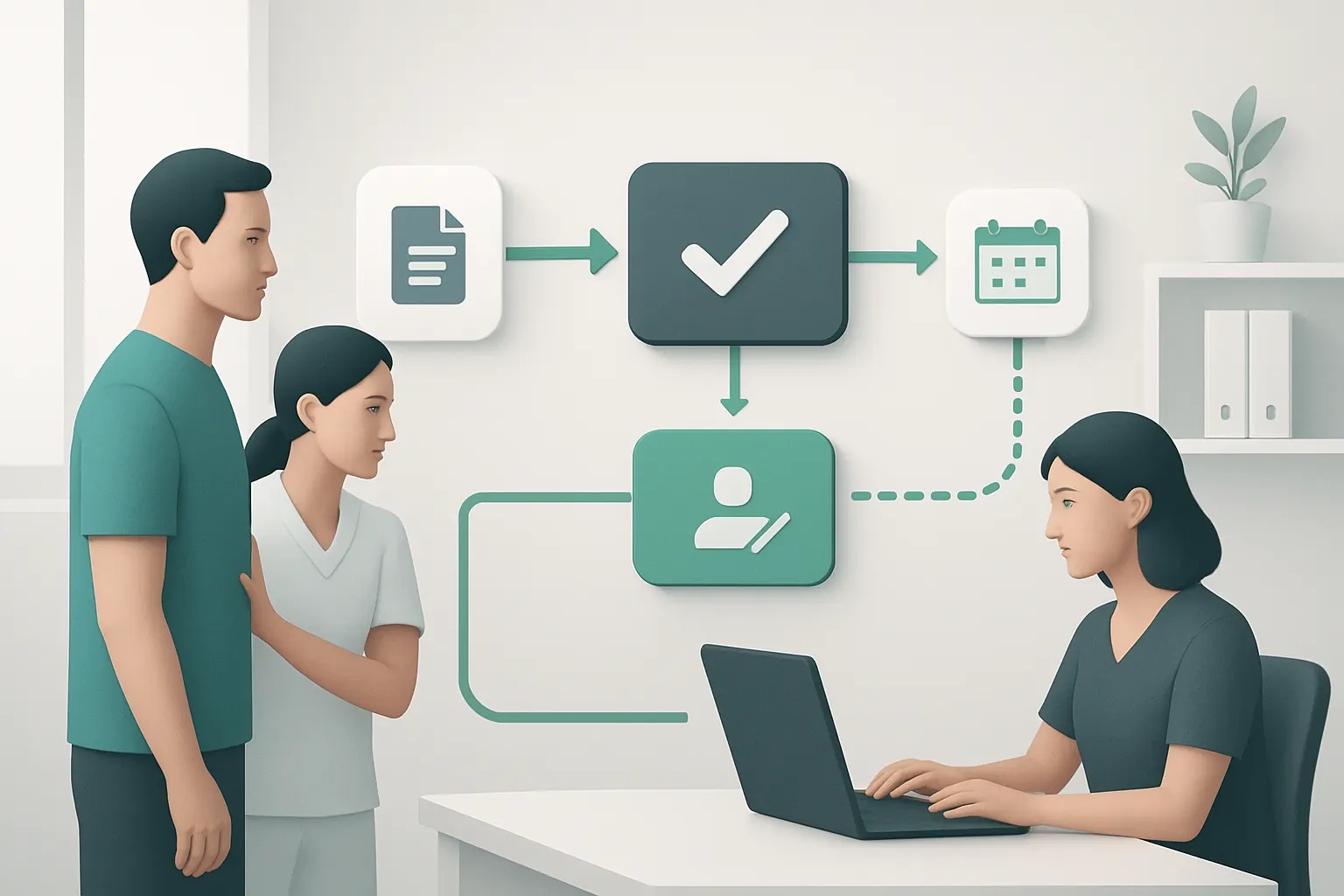
Referral to Appointment Workflow – Automating Patient Booking
Operational Pain: Scheduling mismatches and untracked appointment offers.
Manual phone calls or emails to book patients lead to delays and double bookings. Staff struggle to update shared calendars and patient records consistently.
Streamlined Booking Flow: Workflow automation routes referrals to booking teams with intelligent scheduling.
Our owned booking module prioritises appointment slots by therapist speciality, availability, and patient preference. It triggers automated patient communications with appointment offers and collects confirmations or reschedule requests.
Integrations with External Services: SMS gateways and NHS patient communication portals remain connected here, preserving familiar channels for patients.
Example: A referral is flagged urgent; the booking module suggests accelerated slots and sends a text invite. Patient replies update the owned booking record automatically, visible to clinicians and admin alike.
Control Mechanisms: Human approval checkpoints for urgent or complex cases preserve clinical oversight and appointment accuracy.
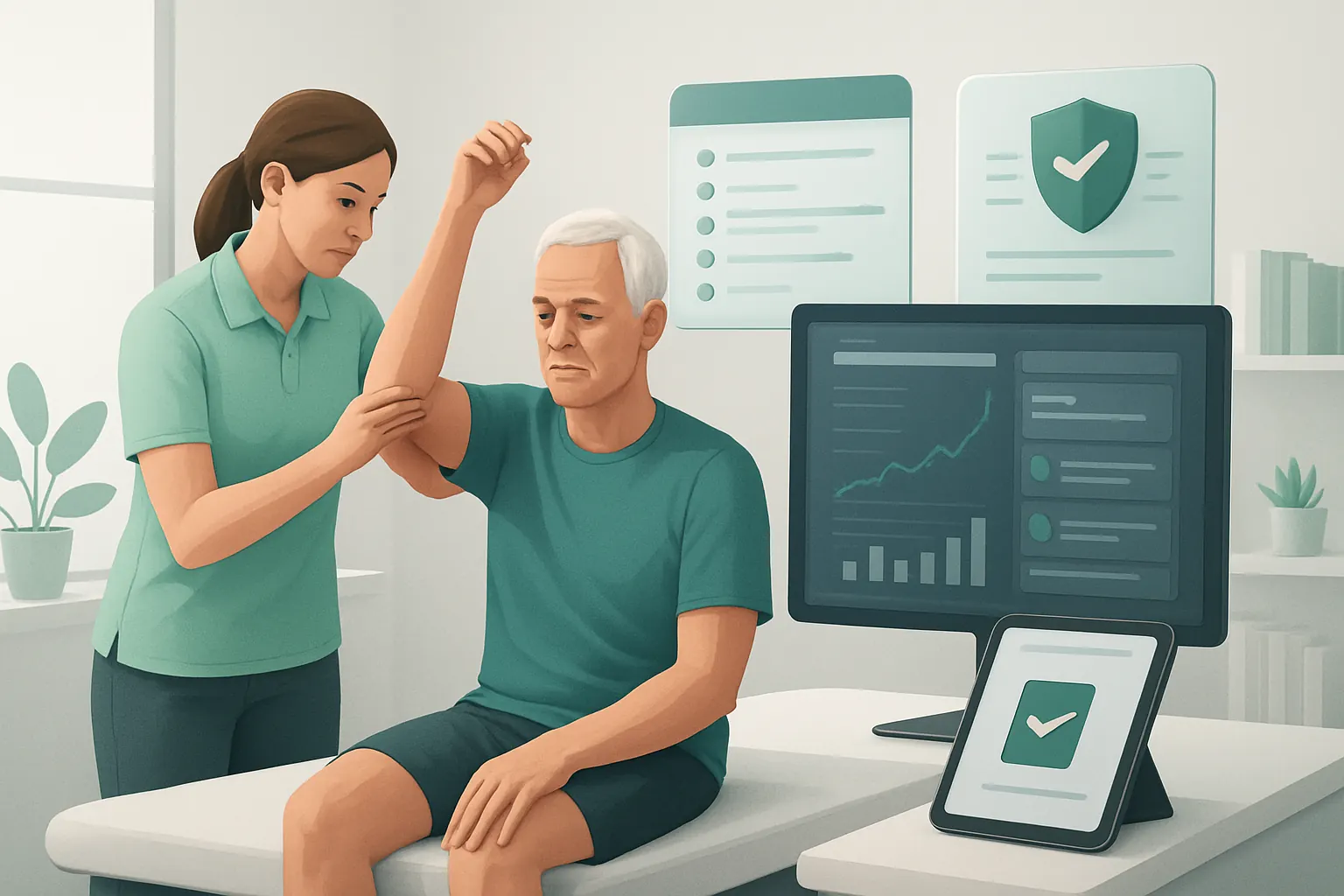
Treatment Plan Management – Connecting Care Delivery Records
Common Disruption: Treatment plans saved across multiple unlinked systems.
Exercising, manual therapies, and exercise videos are often managed in separate apps or paper forms, creating fragmented care documentation.
Integrated Plan Workspace: Owned modules link referral details to personalised treatment plans.
Therapists update care tasks, prescribe home exercises, and document progress notes in one system, mapped directly to each patient’s record.
Helpful Integrations: Video content libraries for rehabilitation classes or exercise demonstrations are embedded or linked with seamless access.
Concrete Scenario: A post-surgery rehab plan that automatically adjusts tasks as patients log completed home exercises, visible on clinician dashboards.
Safety and Compliance: Structured templates and clinical sign-off stages ensure therapy plans meet audit and care continuity policies.

Patient Exercise Monitoring – Automating Follow-up Tasks
Operational Issue: Patient adherence and exercise logging often missed or inconsistently recorded.
Currently, therapists rely on verbal feedback or spreadsheet tracking, making real assessment and task routing difficult.
Workflow Automation: Owned systems send reminders and collect exercise logs via secure patient portals.
AI capabilities summarise patient feedback to highlight compliance trends or flag concerns for review.
Valid Tools in the Mix: Specialist wearables or app integrations can be linked when validated for long-term use, feeding data into the owned clinical record.
Example: A physiotherapy patient receives automated daily exercise reminders and updates their progress through a portal, while the therapist sees the consolidated view per patient.
Data Controls: Patients’ sensitive health data remain encrypted; audit trails help demonstrate GDPR compliance.
Referral Triage Support – Selective AI for Clinical Efficiency
Frontline Problem: Large referral volumes require rapid, accurate triage decisions.
Clinicians face high workloads that delay patient prioritisation.
AI-Enhanced Workflow: AI modules assist classification and summarisation of referral content to suggest urgency categories.
Deterministic rules handle routine triage steps, with all recommendations requiring human review before clinical decisions.
Specialist Integration: NHS or hospital systems may supply standard prioritisation protocols for AI training.
Use Case: AI flags likely post-operative referrals for expedited booking but alerts clinicians for review if key red flags appear.
Oversight: Human clinicians retain final triage authority with a fully auditable decision log.

Appointment Communication – Automating Patient and Staff Notifications
Daily Issue: Manual communications create errors and overlook patients.
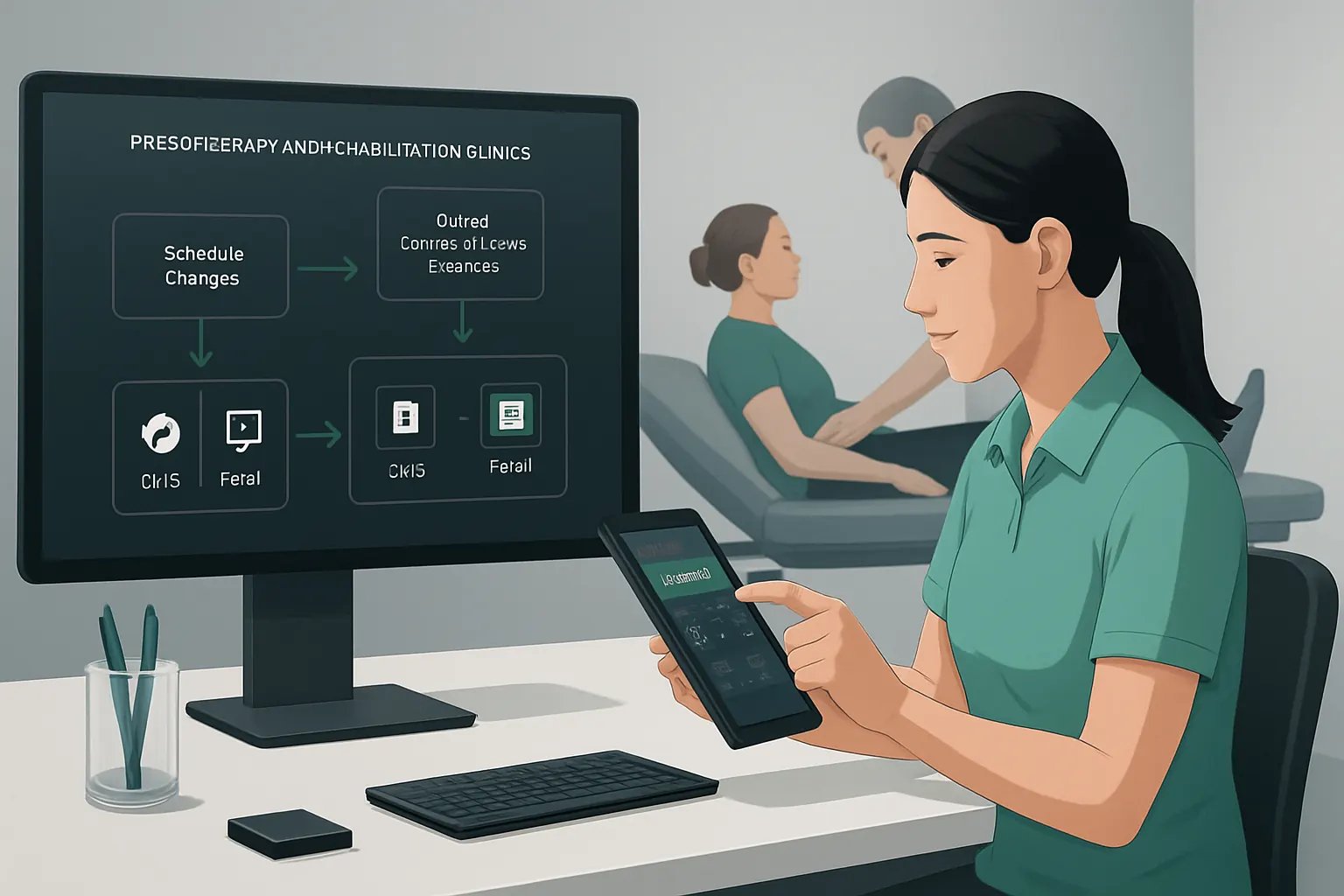
Appointment reminders, cancellations, and changes often rely on phone calls or disconnected email.
Connected Messaging Workflow: Owned communication modules send multi-channel updates—SMS, email, or portal—triggered automatically by schedule changes.
Response tracking ensures confirmation or escalation if patients do not reply.
External Tools: SMS gateway or NHS digital messaging services integrate while the clinic retains messaging history in one place.
Example: Last-minute reschedules generate immediate alerts to affected patients and therapists via their preferred contact method.
Governance: Consent management and opt-out functionality comply with UK data protection guidelines.
Treatment Record Routing – Automating Clinical Documentation
Challenge: Paper notes and standalone software hinder timely care coordination.
Critical clinical information often arrives late to administrative workflows or is missing during handovers.
Digital Workflow: Patient encounter notes, therapy outcomes and follow-up plans enter the owned system in structured form.
Data routes to billing, audit, and clinical supervisors through internal task queues.
Useful Integrations: Legacy EMR systems or scanned documents can feed into the owned clinical record with contextual indexing.
Example: On completing a session, a therapist updates outcomes that automatically route to billing for invoicing and to managers for quality review.
Compliance Layer: Data retention and access governed by configured role privileges support regulatory requirements.

Billing and Payment Automation – Bridging Finance and Care Systems
Pain Point: Finance operations often operate separately from clinical workflows causing invoicing delays.
Integrated Finance Module: Clinic-owned billing records generate invoices linked directly to patient sessions and treatment plans.
Payment status tracking updates care managers on outstanding balances impacting patient scheduling.
Specialist Integration: PCI-compliant payment gateways can be linked for secure card processing without uncontrolled external tools.
Concrete Application: Automated posting of invoice reminders and payment confirmations integrated into patient accounts reduces admin overhead.
Controls: Financial data access and user permissions follow strict organisational policies and audit trails.
Management Dashboards – Consolidating Insights in One View
Problem Faced: Managers cannot easily access reliable real-time clinic performance data.
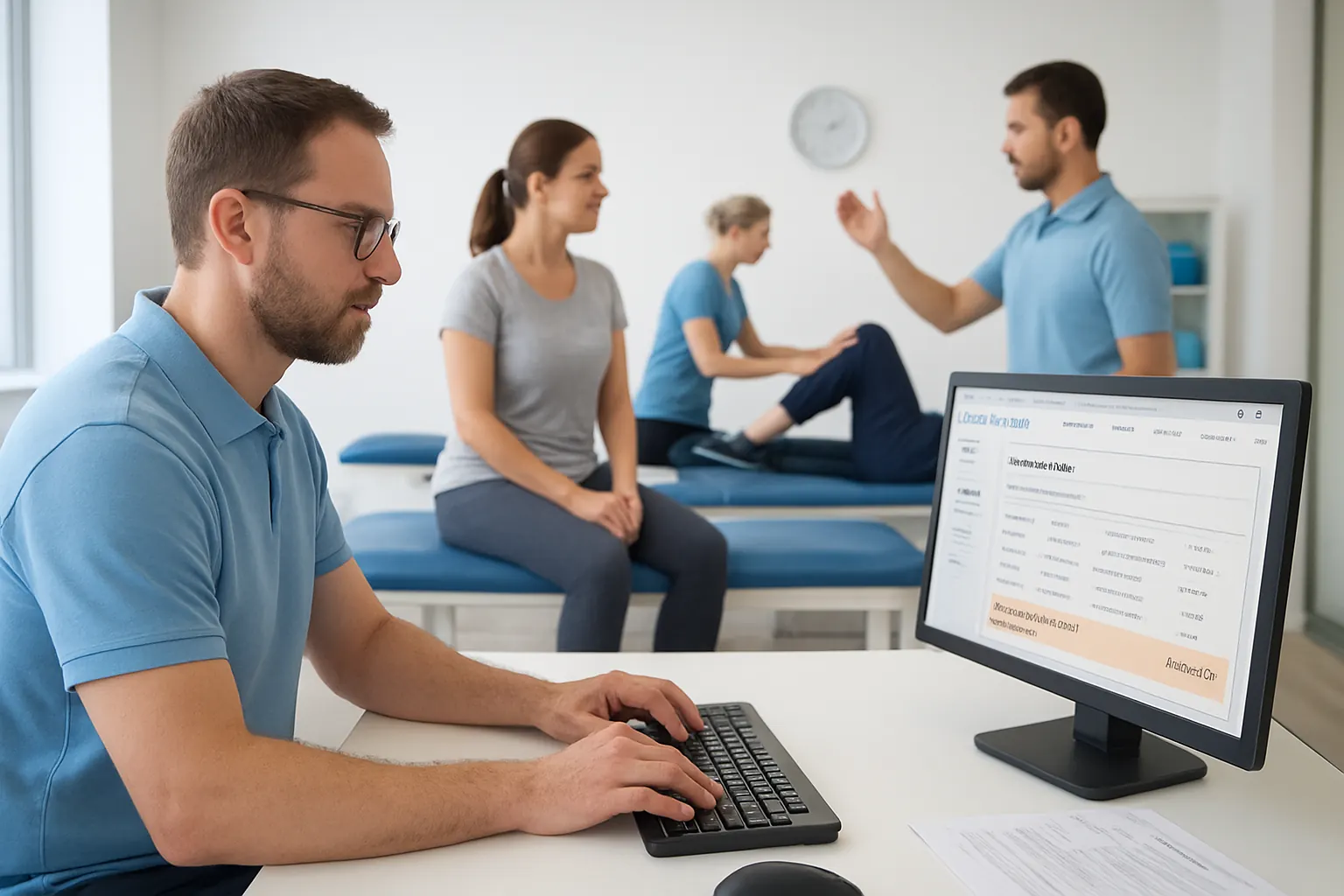
Owned Dashboard Solution: Operational data from referral intake, bookings, treatments, and finance flows into configurable dashboards.
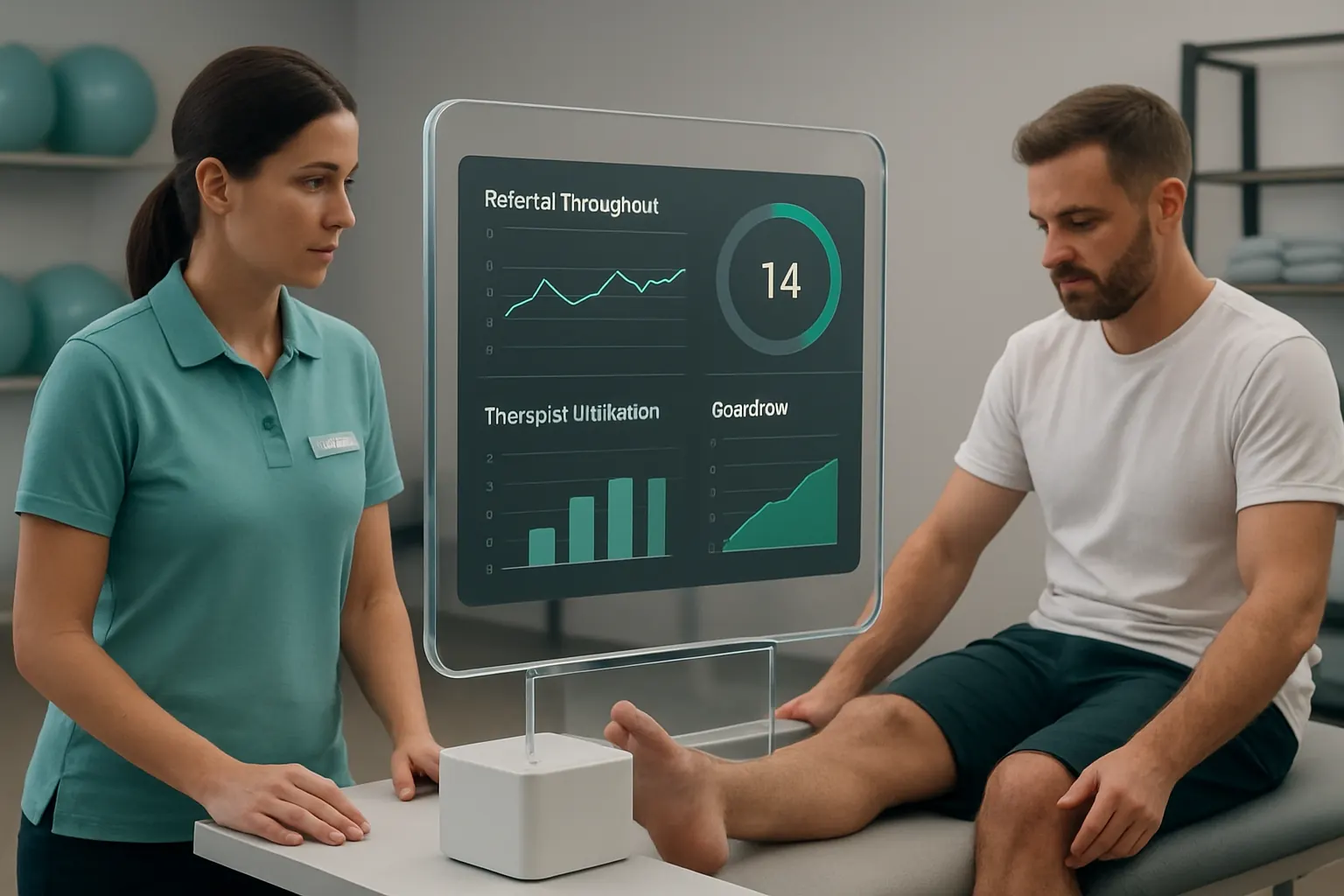
Automated KPIs show waiting times, referral throughput, therapist utilisation, and cashflow snapshots.
External Links for Context: See best practices in data infrastructure preparation for healthcare settings.
Use Case: Daily clinic standups informed by real-time dashboards enable proactive load balancing across therapists.
Access Control: Dashboards provide role-specific views maintaining confidentiality and information security policies.
Audit and Compliance Tracking – Automating Records for Governance
Critical Issue: Manual collation of audit records is labour-intensive and error-prone.
Automating Audit Trail Creation: All workflows from referrals, decisions, treatments, and payments create detailed logs stored in an owned, secure system.
Alerts notify compliance officers of exceptions or data anomalies.
Compliance Tools: Supports NHS and ICO guidance on record keeping and access rights.
Example: A clinic audit finds all referral approvals and patient consents logged with timestamps and responsible parties clearly identified.
Controls: Workflow exceptions require investigation and authorised sign-off, reinforcing internal governance.

90-Day Rollout Plan for Automation in Physiotherapy Clinics
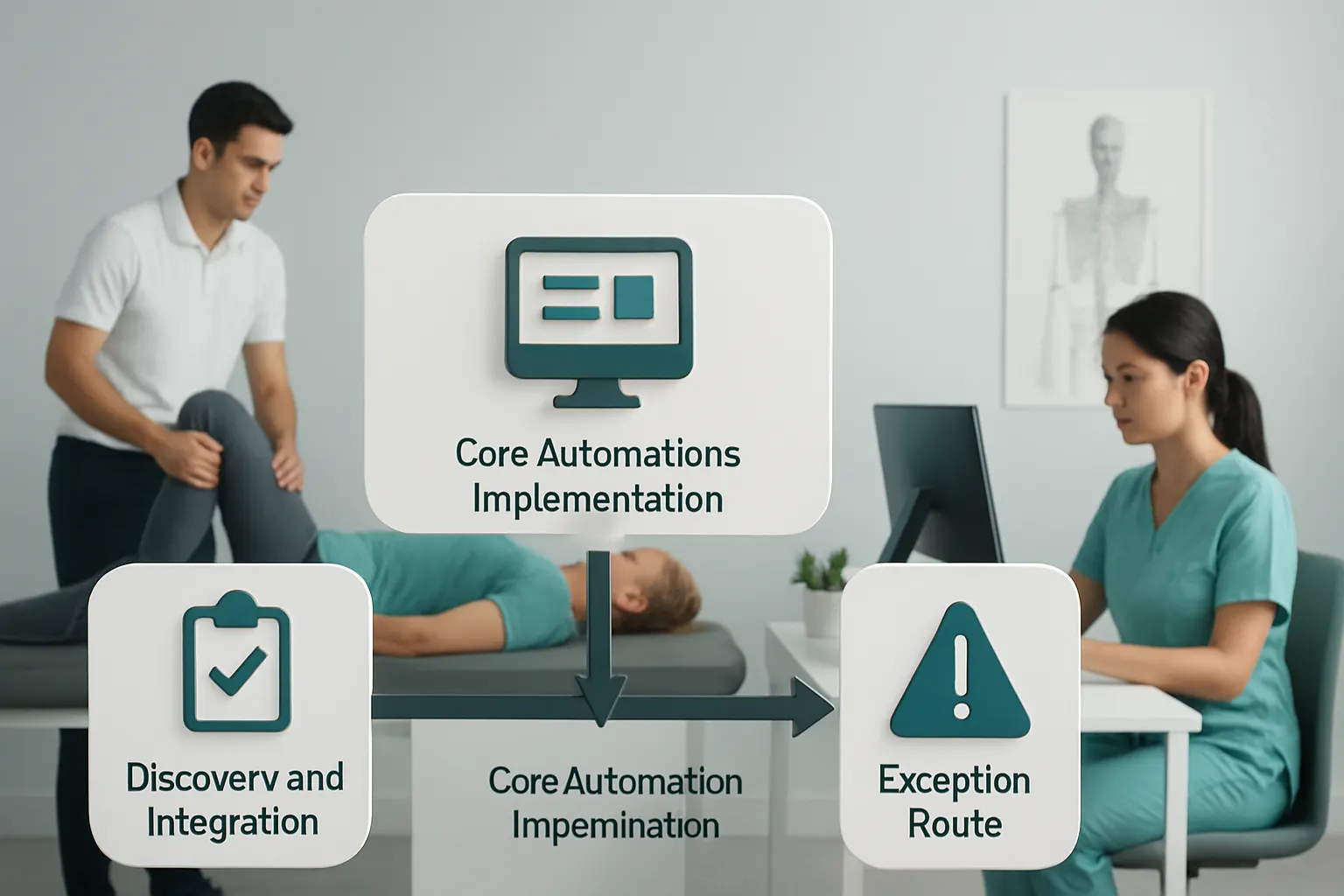
Weeks 1–2: Discovery and Integration Design
- Analyse existing referral systems, communication channels, and clinical workflows
- Identify software to retain and modules to replace or connect
- Build data mapping for referral intake and booking processes
Weeks 3–6: Core Automations Implementation
- Deploy referral intake and appointment booking automation with communication workflows
- Train admin and clinical staff on new owned modules
- Set up data security controls and audit logging
Weeks 7–12: Workflow Expansion and Dashboard Deployment
- Extend automation to treatment plan management and exercise monitoring
- Integrate billing module and financial workflows
- Launch management dashboards and compliance tracking tools
- Evaluate AI triage support in pilot mode and adjust rules with clinician feedback
How AI Implementation UK Connects, Replaces, and Automates Your Clinic’s Operations
At AI Implementation UK, we deliver one connected operational record tailored precisely to your physiotherapy and rehabilitation clinic’s way of working. We avoid layering disconnected SaaS products by building owned workspaces, dashboards, and workflows around your existing useful systems while replacing duplicated or costly subscriptions with our modular capabilities.
Our solution preserves the consistency and security of patient data, supports human clinical oversight with selective AI aid, and automates routine and variable tasks alike—from referral intake and appointment booking, through treatment plan tracking and communication, to billing and audit-ready compliance records.
This business-owned approach provides superior control over your operations and costs, reduces risk, speeds patient pathways from referral to recovery, and frees your team to focus on care.
Explore how we can help you automate your physiotherapy and rehabilitation workflows with technology designed to fit, not dictate your practice. Contact us to learn more or start your journey with our proven process automation and RPA services and comprehensive AI strategy and planning solutions.
For information on data protection standards relevant to healthcare, visit the Information Commissioner’s Office and NHS Digital resources. For secure payment processes, refer to the PCI Security Standards Council.
To turn these priorities into one coherent system, map the platform your business needs or explore our workflow automation approach.