
The UK healthcare sector, especially GP clinics and private providers, faces an unprecedented strain. Over half of Britons struggle to secure timely GP appointments, adding pressure to already overstretched teams. Administrative complexi...
Why Automation is Essential: What’s Breaking in GP Clinics and Private Healthcare Today?
The UK healthcare sector, especially GP clinics and private providers, faces an unprecedented strain. Over half of Britons struggle to secure timely GP appointments, adding pressure to already overstretched teams. Administrative complexity, fragmented systems, and escalating workloads threaten patient care and practice viability. In this environment, automation and AI offer practical solutions to streamline daily administrative tasks, reduce errors, and improve efficiency. This article explores 10 ways healthcare providers can leverage automation systematically — with clear steps, tool suggestions, risk controls, and simple implementation ideas.
GP practices and private clinics are drowning in paperwork and fragmented IT systems. Common challenges include:
- Difficulty managing appointment bookings as demand surges sharply.
- Time-consuming patient data entry prone to transcription errors.
- Labour-intensive referral and follow-up processes.
- Inconsistent prescription management causing delays or mistakes.
- Overwhelming email and document handling.
- Manual reporting amid complex regulatory requirements.
These daily breakdowns lead to wasted clinician time, frustrated patients, delayed care, and compliance risks. Without automation, it is increasingly difficult to meet rising patient expectations or government targets such as the NHS’s 10 Year Health Plan goals.

The True Cost of Manual Administrative Work
Manual workloads result in:
- Excess clinician and admin staff hours diverted from care.
- Higher procedural errors, e.g., in referrals or coding.
- Poor patient experience due to appointment delays or miscommunication.
- Financial leakage from incorrect billing or missed follow-ups.
- Compliance risks from data handling errors or audit gaps.
- Cashflow disruptions linked to slow invoicing or claims.
Automating routine processes frees up staff to focus on patient care, improves accuracy, stabilises revenue, and embeds auditability — without requiring large new teams.

10 Practical Automation Approaches for GP Clinics and Private Healthcare
Each item below contains a real-world problem, an AI/automation solution, suggested tools or process patterns, a simple example, and risk controls.

Automated Appointment Scheduling and Reminders
Problem:
Patients struggle to get timely appointments; staff spend hours managing calendars and chasing no-shows.
Automation Approach:
Use AI-driven scheduling platforms that dynamically allocate slots based on patient urgency and clinician availability, coupled with automated SMS/email reminders.
Tools/System Patterns:
- Online booking portals with AI availability optimisation.
- Automated reminder engines with two-way communication (e.g., Textlocal, Accurx).
Example:
A private clinic integrates an online portal where patients book themselves; the system suggests earliest available slots based on clinician load and sends automated reminders 48 and 24 hours before appointments.
Risks/Controls:
- Data privacy: Ensure NHS Digital standards for patient contact info and GDPR compliance.
- Approval: Staff validate urgent cases flagged by AI.
- Audit trail: Log all booking changes with timestamps.

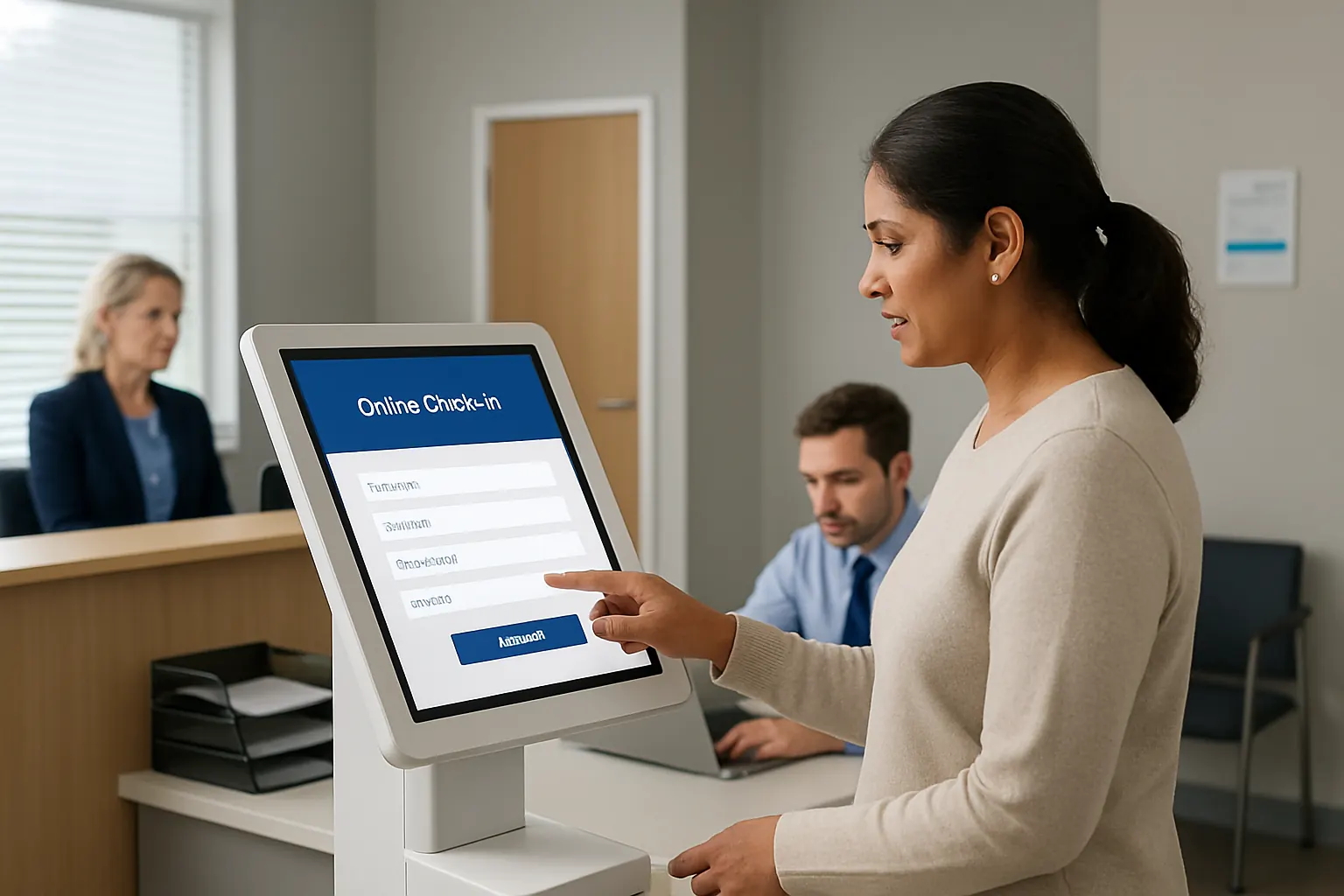
Intelligent Patient Intake and Registration
Problem:
Manual data entry during patient check-in causes errors and consumes frontline staff time.
Automation Approach:
Deploy AI-powered virtual assistants or e-forms that collect patient demographics, medical history, and consent digitally before or at arrival.
Tools/System Patterns:
- Interactive kiosks or web portals with NLP for form completion.
- EHR integration for seamless data flow (e.g., EMIS, SystmOne API).
Example:
A GP practice sends new patients a mobile form 2 days before the appointment, which auto-populates the EHR, freeing reception staff.
Risks/Controls:
- Data privacy: Encrypt personal medical data in transit and rest.
- Approval: Patients confirm form accuracy onsite.
- Audit trail: Store version histories of submitted data.
Automated Referral Management
Problem:
Referral pathways are convoluted, manual follow-ups cause delays, and patient tracking is inconsistent.
Automation Approach:
Use workflow automation tools to track, escalate, and notify staff and patients of referral status changes.
Tools/System Patterns:
- Referral tracking software integrated with existing clinical systems.
- Rule-based automation triggering alerts (e.g., Microsoft Power Automate, Zapier).
Example:
After issuing a referral, the system auto-notifies the patient and GP admin team of status updates, and flags any lack of feedback after 7 days.
Risks/Controls:
- Data privacy: Only authorised staff access referral details.
- Approval: Clinicians verify referral content before automation triggers.
- Audit trail: Complete referral log available for review.

Prescription Validation and e-Prescribing Automation
Problem:
Prescription errors, repeated queries from pharmacies, and delayed medication delivery.
Automation Approach:
Implement AI tools that validate prescription entries against patient records and formularies before electronic submission.
Tools/System Patterns:
- Clinical decision support integrated with e-prescribing modules.
- Controlled vocabulary and error-detection algorithms (e.g., MJOG, DrDoctor modules).
Example:
A GP practice’s system flags dosage inconsistencies during typing and prompts the doctor for confirmation before e-prescribing.
Risks/Controls:
- Data privacy: Prescription data encrypted; access audited.
- Approval: Final prescribing rights remain with licensed clinicians.
- Audit trail: Immutable prescription histories stored.

Automated Document and Correspondence Management
Problem:
Misplaced or delayed referral letters, test results, and patient correspondence increase risk and lower service quality.
Automation Approach:
Employ AI-driven document classification and routing systems to manage incoming and outgoing communications.
Tools/System Patterns:
- Optical character recognition (OCR) with natural language processing.
- Document management systems with automated tagging and workflow tools.
Example:
Scan incoming letters, auto-tag by patient or category, and route urgent reports to relevant clinicians instantly.
Risks/Controls:
- Data privacy: Secure encrypted storage and transmission channels.
- Approval: Staff verify urgent document routing rules.
- Audit trail: Full tracking of document lifecycle.

Claims Processing and Billing Automation
Problem:
Manual billing errors delay payment cycles, causing cashflow issues.
Automation Approach:
Use AI to match clinical codes against patient visits and automate invoice generation and submission.
Tools/System Patterns:
- Billing software integrated with clinical systems and NHS tariff schedules.
- AI audit systems flagging mismatches or anomalous claims.
Example:
Post-consultation, the system auto-generates a claim based on recorded activity and prompts finance for quick approval.
Risks/Controls:
- Data privacy: Payment data compliance with PCI DSS and privacy laws.
- Approval: Finance or billing staff review flagged claims.
- Audit trail: Complete, archived billing records.

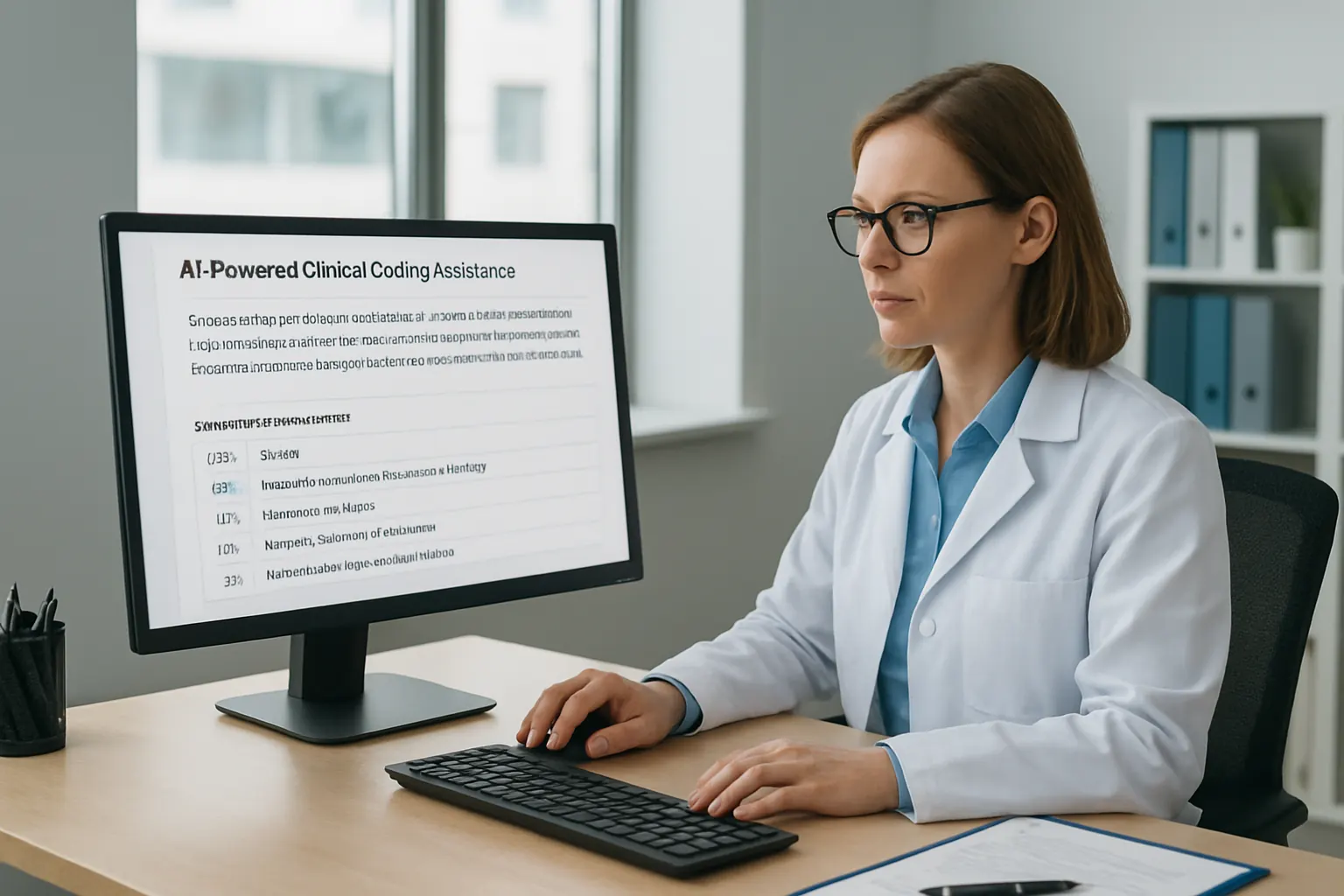
AI-Powered Clinical Coding Assistance
Problem:
Inconsistent or incorrect coding impacts referrals, billing, and performance data accuracy.
Automation Approach:
Integrate AI that suggests clinical codes based on consultation notes or diagnoses.
Tools/System Patterns:
- Natural language processing tools analysing free text notes.
- Coding engines connected to national coding standards (e.g., SNOMED CT).
Example:
After clinician note entry, the system proposes likely codes for confirmation, reducing manual lookup time.
Risks/Controls:
- Data privacy: Secure handling of clinical notes.
- Approval: Clinician final code selection mandatory.
- Audit trail: Code change logs stored.
Automated Compliance Monitoring and Reporting
Problem:
Satisfying regulatory reporting demands consumes significant admin hours and can be error prone.
Automation Approach:
Automate data collection, validation, and report generation for compliance monitoring (e.g., infection control, data security).
Tools/System Patterns:
- Business intelligence and reporting platform connected to clinical and administrative databases.
- Scheduled automated report distribution to regulators.
Example:
System generates a monthly compliance report on patient data access logs and sends it to practice managers.
Risks/Controls:
- Data privacy: Restrict report access appropriately.
- Approval: Compliance officer reviews reports before submission.
- Audit trail: Retain historic reports with metadata.

Patient Communication and Feedback Automation
Problem:
Collecting and managing patient feedback manually is inefficient and irregular.
Automation Approach:
Use AI-powered survey tools triggered post-appointment to collect structured feedback.
Tools/System Patterns:
- Automated surveys via SMS/email with sentiment analysis.
- Dashboard for clinicians and managers.
Example:
After an appointment, the system automatically sends a brief patient satisfaction survey and aggregates results weekly.
Risks/Controls:
- Data privacy: Anonymise responses when shared with clinicians.
- Approval: Patients opt in to follow-up communications.
- Audit trail: Store all feedback data securely.

Workforce Scheduling and Leave Management Automation
Problem:
Manual staff rota planning leads to shifts gaps, overwork, and scheduling conflicts.
Automation Approach:
Use AI-driven staff scheduling software that aligns staff availability, workload forecasts, and leave requests.
Tools/System Patterns:
- Workforce management platforms with predictive staffing models.
- Self-service portals for leave submission and shift swaps.
Example:
A private healthcare provider implements a rostering app where clinicians input availabilities; the system optimises shifts accordingly.
Risks/Controls:
- Data privacy: Protect personal staff data under HR policies.
- Approval: Line managers approve final schedules.
- Audit trail: Track schedule changes and approvals.

A 90-Day Rollout Plan for Automation in GP Clinics and Private Healthcare
Weeks 1–2: Assessment and Planning
- Map current admin workflows and pain points.
- Prioritise 2-3 processes for immediate automation based on impact and feasibility.
- Engage stakeholders (clinicians, admin, IT).
- Identify available systems and integration possibilities.
Weeks 3–6: Pilot Implementation
- Deploy automation tools for selected workflows (e.g., appointment scheduling, electronic intake forms).
- Train staff on new systems and address concerns.
- Monitor user feedback and system performance closely.
- Begin developing policies for data privacy and approvals.
Weeks 7–12: Scale and Optimise
- Expand automation to additional areas such as referral management and billing.
- Integrate audit trails and compliance controls fully.
- Refine AI algorithms based on real data.
- Report efficiency gains and error reductions to leadership.
- Plan next phase of automation rollouts.

Conclusion and Next Steps
UK GP clinics and private healthcare organisations must urgently address administrative overload and error risks to meet the growing demand for care. Intelligent automation and AI offer proven, scalable ways to reduce manual workloads, enhance accuracy, and improve patient experience while maintaining compliance and control.
For practices ready to take the next step, AIImplementation.uk provides tailored audits and implementation support to design and deploy these automation solutions efficiently. Book a call today to assess your practice’s readiness, map key pain points, and create a practical 90-day plan tailored to your needs.
Take control of your practice’s administrative future—reduce errors, save time, and focus on patient care with AI-driven automation. Contact AIImplementation.uk now for your personalised consultation.